

Alphonse Mucha
 |
Description
Book Introduction
“Everyone has the right to enjoy beauty.”
Alphonse Mucha, an artist who penetrated the public eye
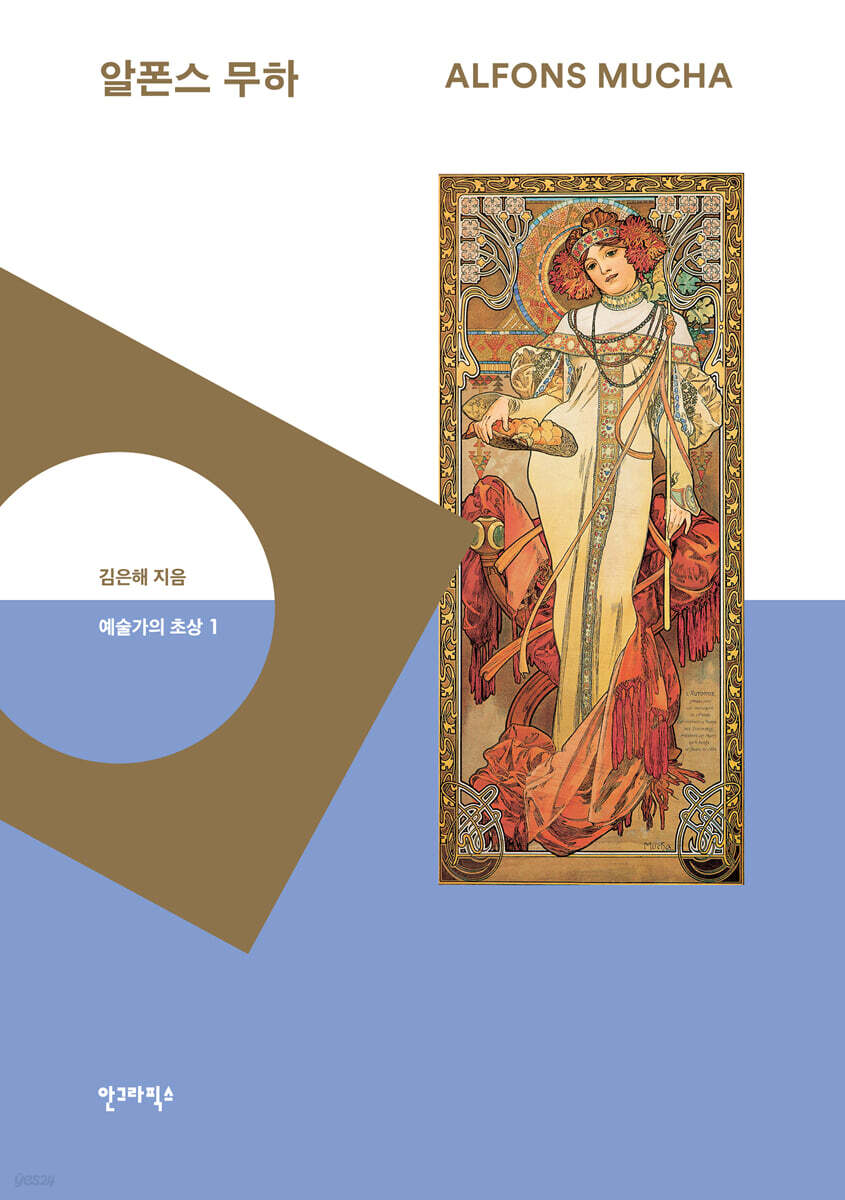
"Alphonse Mucha" is the first book in the "Portraits of Artists" series, which introduces artists we have previously overlooked and awakens us to their true value.
In the 19th century, Alphonse Mucha, a synonym and brand of Art Nouveau, created works that satisfied the public's thirst for art in everyday life and their desire for consumption.
Symbols inspired by nature, flowing curves, and decorative patterns, such as Mucha's posters depicting the greatest stars of the time, such as [Gismonda], [The Lovers], and [Sarah Bernhardt's Day], thrilled the Parisians.
In the 20th century, as a new era began, Mucha did not hide his passion for pure art, along with his challenge of new genres.
During his long journey from Paris to New York to Prague, Alphonse Mucha posed the question, “What is it that I truly love?” and “Where do I come from?” These questions were not only about identity but also about creative inspiration and sources.
Ultimately, Alphonse Mucha gave a clear answer: his inspiration was his 'homeland and the Slavic people.'
These sources became the driving force behind his work as a Czech citizen, including the design of the Prague Municipal House and the creation of [Slavic Epic].
This book has been redesigned and republished after going out of print.
Through the fantastical and universally beloved works of Alphonse Mucha and the artist's life story, we hope to find vitality and inspiration in everyday life through art.
Alphonse Mucha, an artist who penetrated the public eye
"Alphonse Mucha" is the first book in the "Portraits of Artists" series, which introduces artists we have previously overlooked and awakens us to their true value.
In the 19th century, Alphonse Mucha, a synonym and brand of Art Nouveau, created works that satisfied the public's thirst for art in everyday life and their desire for consumption.
Symbols inspired by nature, flowing curves, and decorative patterns, such as Mucha's posters depicting the greatest stars of the time, such as [Gismonda], [The Lovers], and [Sarah Bernhardt's Day], thrilled the Parisians.
In the 20th century, as a new era began, Mucha did not hide his passion for pure art, along with his challenge of new genres.
During his long journey from Paris to New York to Prague, Alphonse Mucha posed the question, “What is it that I truly love?” and “Where do I come from?” These questions were not only about identity but also about creative inspiration and sources.
Ultimately, Alphonse Mucha gave a clear answer: his inspiration was his 'homeland and the Slavic people.'
These sources became the driving force behind his work as a Czech citizen, including the design of the Prague Municipal House and the creation of [Slavic Epic].
This book has been redesigned and republished after going out of print.
Through the fantastical and universally beloved works of Alphonse Mucha and the artist's life story, we hope to find vitality and inspiration in everyday life through art.
- You can preview some of the book's contents.
Preview
index
prolog
Branding 'me'
1.
Homo ludens, take flight
2.
I need something extra
3.
Art Nouveau, immersed in nature
4.
Young Muha, ready to take flight
Wear a tone of color, Paris
1.
Bohemian at the Académie Julien
2.
Artists with Harmonium
3.
Renaissance Theater, Holding the Hand of Midas
4.
Paris into the wave of graphic art
5.
Broken psychological boundaries
6.
She's challenging and she's provocative
7.
Design Hegemony in the Post-Industrial Revolution
8.
Fusion art that transcends time and space
9.
Strategic Observation and Oriental Objects
10.
The curtain rises on a new century
New York, the birthplace of modern art
1.
Towards the unknown world
2.
Where do we come from?
3.
Make me known to the world
4.
Self-portrait of comedy and tragedy
5.
Dedicated to beauty
6.
From Lens to Eternity
7.
The intersection of art and science
8.
The discovery of Mecenat
Prague, the heart of Europe
1.
The Return of the Master: I Am 'Muha'
2.
Life is short, art is long
3.
Muha! Riding the public's hand
4.
From Russia to the Balkans
5.
Dedicated to 'The Magnificent Play'
6.
Slavic Epic 1 - "We" Exist, History Begins
7.
Slavic Epic 2 - A Symphony of Harmony Resonates on the Canvas
8.
Slavic Epic 3 - Breaking the Frame
9.
The power to enforce silence
10 Neither completely right nor completely wrong
Muha Chronology
References
Branding 'me'
1.
Homo ludens, take flight
2.
I need something extra
3.
Art Nouveau, immersed in nature
4.
Young Muha, ready to take flight
Wear a tone of color, Paris
1.
Bohemian at the Académie Julien
2.
Artists with Harmonium
3.
Renaissance Theater, Holding the Hand of Midas
4.
Paris into the wave of graphic art
5.
Broken psychological boundaries
6.
She's challenging and she's provocative
7.
Design Hegemony in the Post-Industrial Revolution
8.
Fusion art that transcends time and space
9.
Strategic Observation and Oriental Objects
10.
The curtain rises on a new century
New York, the birthplace of modern art
1.
Towards the unknown world
2.
Where do we come from?
3.
Make me known to the world
4.
Self-portrait of comedy and tragedy
5.
Dedicated to beauty
6.
From Lens to Eternity
7.
The intersection of art and science
8.
The discovery of Mecenat
Prague, the heart of Europe
1.
The Return of the Master: I Am 'Muha'
2.
Life is short, art is long
3.
Muha! Riding the public's hand
4.
From Russia to the Balkans
5.
Dedicated to 'The Magnificent Play'
6.
Slavic Epic 1 - "We" Exist, History Begins
7.
Slavic Epic 2 - A Symphony of Harmony Resonates on the Canvas
8.
Slavic Epic 3 - Breaking the Frame
9.
The power to enforce silence
10 Neither completely right nor completely wrong
Muha Chronology
References
Detailed image

Into the book
The dilemma between his aspirations as an artist, suffering from the agony of creation, and the existential challenge of not being able to abandon commercialism was not a problem for Mucha.
Rather, Muha intuitively realized that if a work of art spreads into everyday life, it would have a huge market.
--- p.13, from “Prologue Alphonse Mucha, an artist who succeeded in the middle of art and practicality”
Mucha's Gismonda poster appeared on the streets of Paris on New Year's Day, 1895.
This poster stopped people in their tracks and completely captured their attention.
Muha differentiated his posters with their unconventional full-body size and decorative patterns intertwined with flowing curves.
Mucha's name could be seen on walls all over Paris.
'Le Stil Mucha', born in this way, became synonymous with Art Nouveau and Mucha's brand.
--- p.80, from “Renaissance Theater, Holding the Hand of Midas”
Graphic art is a work where printing and art meet, and the streets of Paris at the end of the century were being swept by a wave of posters heavily influenced by symbolism.
Mucha is a true representative artist of Parisian Art Nouveau, and he embodies the Art Nouveau style with his outstanding skills in graphic art works such as posters and book illustrations.
As the honeymoon relationship between commerce and art deepened, Mucha in Paris now took the path of a thoroughly popular artist.
It was the golden age of Muha, and the whirlwind of graphic art evolution was raging.
--- p.93, from “Paris in the Wave of Graphic Art”
Art Nouveau is characterized by its decorative tendency, and for Art Nouveau artists, decoration was not something added simply for the purpose of decoration, but the essence of art itself.
These characteristics of Art Nouveau were not limited to architecture or painting, but were widely applied to furniture, tableware, clothing, accessories, book illustrations, and posters that pursued truly practical designs.
One of the slogans of Art Nouveau was 'Poor people have the right to beauty too'.
In this sense, Art Nouveau as a practical art form was able to meet the public without any barriers.
--- p.130-131, from “Design Hegemony in the Post-Industrial Revolution”
Around 1900, all the so-called great painters felt the pressure of being called 'modern'.
But neither the storm that blew through Van Gogh, nor the curved lines of Gauguin or Schirat, nor the simplified line drawings of Toulouse-Lautrec's prints created anything called 'style'.
From Prague, a strange city ablaze with color, a revival of curves has arrived, and the Czech artist Mucha has become a truly world-class painter.
He was a great traveler and brought international fame to a long-held national dream.
--- p.158, from “Strategic Observation and Oriental Objects”
Now, Muha was in need of a 'change'.
He wanted to break away from commercial art and focus on pure art.
Although he achieved success through 'doing what he enjoyed', he also felt a sense of emptiness.
In Muha's mind, who longed for 'what he truly loved', the question of identity, 'Where did I come from?' never ceased.
Mucha wanted to depict the myths and history of the Slavic peoples in a panoramic manner.
Leaving Paris behind, where he had enjoyed glory as an artist, Mucha's heart was already beating its wings vigorously in search of a new world.
--- p.166-168, from “The Prelude to a New Century Rises”
"The Slavic Epic" is a masterpiece that embodies the "magnificent play" that Alphonse Mucha, a homo ludens, dedicated his life to, and a visual art form that pays homage to the humanities and the origins of human existence.
Mucha enjoyed creating the Slavic Epic and devoted himself to it for nearly 20 years.
The spectacular scenes of the Slavic Epic take us on a long journey back in time, tracing the history of the Slavic people from ancient times to the 20th century.
He dedicated half of this series of twenty works to the history of the Czech people, creating a symphony on canvas depicting the harmony and peace of the Slavic people.
--- p.282, from “On the ‘Magnificent Play’”
“The purpose of the work is to build a bridge.
Because the hope that all of humanity will become closer and that we will thus be able to know each other better and better encourages us all.
“If, with my feeble strength, I can achieve this realization, at least for us, for our Slavic people, I will be happy.”
Rather, Muha intuitively realized that if a work of art spreads into everyday life, it would have a huge market.
--- p.13, from “Prologue Alphonse Mucha, an artist who succeeded in the middle of art and practicality”
Mucha's Gismonda poster appeared on the streets of Paris on New Year's Day, 1895.
This poster stopped people in their tracks and completely captured their attention.
Muha differentiated his posters with their unconventional full-body size and decorative patterns intertwined with flowing curves.
Mucha's name could be seen on walls all over Paris.
'Le Stil Mucha', born in this way, became synonymous with Art Nouveau and Mucha's brand.
--- p.80, from “Renaissance Theater, Holding the Hand of Midas”
Graphic art is a work where printing and art meet, and the streets of Paris at the end of the century were being swept by a wave of posters heavily influenced by symbolism.
Mucha is a true representative artist of Parisian Art Nouveau, and he embodies the Art Nouveau style with his outstanding skills in graphic art works such as posters and book illustrations.
As the honeymoon relationship between commerce and art deepened, Mucha in Paris now took the path of a thoroughly popular artist.
It was the golden age of Muha, and the whirlwind of graphic art evolution was raging.
--- p.93, from “Paris in the Wave of Graphic Art”
Art Nouveau is characterized by its decorative tendency, and for Art Nouveau artists, decoration was not something added simply for the purpose of decoration, but the essence of art itself.
These characteristics of Art Nouveau were not limited to architecture or painting, but were widely applied to furniture, tableware, clothing, accessories, book illustrations, and posters that pursued truly practical designs.
One of the slogans of Art Nouveau was 'Poor people have the right to beauty too'.
In this sense, Art Nouveau as a practical art form was able to meet the public without any barriers.
--- p.130-131, from “Design Hegemony in the Post-Industrial Revolution”
Around 1900, all the so-called great painters felt the pressure of being called 'modern'.
But neither the storm that blew through Van Gogh, nor the curved lines of Gauguin or Schirat, nor the simplified line drawings of Toulouse-Lautrec's prints created anything called 'style'.
From Prague, a strange city ablaze with color, a revival of curves has arrived, and the Czech artist Mucha has become a truly world-class painter.
He was a great traveler and brought international fame to a long-held national dream.
--- p.158, from “Strategic Observation and Oriental Objects”
Now, Muha was in need of a 'change'.
He wanted to break away from commercial art and focus on pure art.
Although he achieved success through 'doing what he enjoyed', he also felt a sense of emptiness.
In Muha's mind, who longed for 'what he truly loved', the question of identity, 'Where did I come from?' never ceased.
Mucha wanted to depict the myths and history of the Slavic peoples in a panoramic manner.
Leaving Paris behind, where he had enjoyed glory as an artist, Mucha's heart was already beating its wings vigorously in search of a new world.
--- p.166-168, from “The Prelude to a New Century Rises”
"The Slavic Epic" is a masterpiece that embodies the "magnificent play" that Alphonse Mucha, a homo ludens, dedicated his life to, and a visual art form that pays homage to the humanities and the origins of human existence.
Mucha enjoyed creating the Slavic Epic and devoted himself to it for nearly 20 years.
The spectacular scenes of the Slavic Epic take us on a long journey back in time, tracing the history of the Slavic people from ancient times to the 20th century.
He dedicated half of this series of twenty works to the history of the Czech people, creating a symphony on canvas depicting the harmony and peace of the Slavic people.
--- p.282, from “On the ‘Magnificent Play’”
“The purpose of the work is to build a bridge.
Because the hope that all of humanity will become closer and that we will thus be able to know each other better and better encourages us all.
“If, with my feeble strength, I can achieve this realization, at least for us, for our Slavic people, I will be happy.”
--- p.287, from “On the ‘Magnificent Play’”
Publisher's Review
In the midst of the anxiety and chaos of Paris at the end of the century
The Art Nouveau master who satiated the public's artistic thirst
The first volume of the 'Portraits of the Artist' series, 'Alphonse Mucha', follows Alphonse Mucha's artistic journey from Paris to New York and on to Prague, allowing us to understand the characteristics of his works at each period.
In "Wear the Tone of Color, Paris," we examine the work and career of Mucha, who left his native Czech Republic for Paris and popularized the Art Nouveau style in graphic art.
The works of this period display a feminine beauty with bright and vivid colors, clear outlines, and ideal beauty.
The decorative panel "Four Seasons," which can be considered a masterpiece, is a painting that personifies each season, depicting spring in shy and soft bloom, hot summer with clouds languidly hanging as if a strong shower had passed, deep autumn like ripe red wine, and winter in the snow that has elegantly settled on tree branches.
Mucha also had the chance to draw a poster for the play Gismonda starring the famous actress Sarah Bernhardt. This poster immediately captured the public's attention with its shocking full-length size, decorative patterns intertwined with flowing curves, and bright yet soft colors of translucent green, brown, purple, pink, and gold.
Afterwards, he worked on posters for plays such as “The Lovers,” “Lorenzaccio,” “The Samaritan Woman,” and “Medee,” showcasing his unique and unconventional style of painting.
These posters, according to author Kim Eun-hae, give off a feeling that is “fantastic yet somehow unsettling.”
This is also related to the situation in Paris at the turn of the century, when he was active.
In the midst of rapid social change brought about by industrial society and the advancement of science and technology, Muha captures the public's feelings of anxiety and alienation, and devotes great effort to specifically depicting the inner world and emotions of his characters.
His experience of devouring books on art and history in his youth shines through when he draws characters from works inspired by the Bible and mythology, such as the colored lithograph “Salome” and the illustration “Samson and Delilah.”
Through these characters, Muha wanted to reveal the inner feelings of contemporary people who feel a sense of crisis and anxiety.
Meanwhile, Mucha artistically expressed everyday objects within the public's reach, working on advertising posters for biscuits, liquor, and bicycles.
The advertising posters he drew featured beauties who were either alluring and sensual or possessed a fresh and pastoral purity.
For example, the Perfecta bicycle advertising poster evokes the exhilarating and dynamic image of cycling through the image of a beautiful woman's hair blowing in the wind.
Muha not only conveyed the healthy and sensual image of the product through beautiful female models, but also expressed the desire of women who want to lead a proactive life as provocative new women.
This was also enough to satisfy the desires of men who dream of a femme fatale.
Mucha was a clever artist who penetrated the psychology of men and women at the end of the century and created consumption by romantically and powerfully depicting the image of women desired by the times.
In "New York, the Birthplace of Modern Art," we follow in the footsteps of Mucha, who chose to move to New York to become a world-renowned painter.
During his time in New York, Mucha took photographs as a preliminary step for his paintings and graphic art, envisioning the overall composition of his finished works.
He also lectures on his own artistic philosophy, establishing three concepts—the golden ratio, nature, and nation—that combine aesthetic principles and creative themes, and fosters the dream of expressing the spirit of the nation and its cultural content in his works.
And he diligently met people and built connections to find sponsors who would provide financial support for his dream.
A lifelong dream: 'The Grand Play'
Dedicated to art for the motherland
Mucha viewed art as the soul of a nation and a part of the human soul, and throughout his time in the United States, he aspired to create art with a national theme.
To that extent, his homeland was a force that motivated him to pursue art.
In "Prague, the Heart of Europe," we explore Mucha's art, which, after returning to his homeland, projected the pathos of folklore and the nation, expressing the great human spirit.
Muha is considered a representative artist who participated in public art in his home country.
He designed Czechoslovakia's banknotes, national emblems, government letterheads, military uniforms, and stamps, including the ceiling fresco of the Market Hall of the Municipal House in Prague, and incorporated rich storytelling into his designs to help the public easily understand and connect with the history of his country.
And finally, after 20 years, he completed the masterpiece “Slavic Epic”, which contains Czech history and nationalism.
To complete this series of paintings, Mucha embarked on a long journey from Russia to the Balkans, armed with a camera and sketchbook.
Through this, the records he left behind of the history, legends, folk art, and customs of the Slavic people became valuable materials that provided insight into the times.
Muha, who enjoys the humanities and art through storytelling as if it were play.
He was a master who sought to reflect on the meaning of human existence and find solutions to life through art.
The life and works of Muha depicted in this book suggest to us, living in the modern age, ways to brand ourselves and create consumption through art, and soothe the inner self of humans who feel anxious about the uncertainty of life.
It will also provide hints on the question of self-realization that not only artists but everyone should pursue: "Am I doing what I love?"
The Art Nouveau master who satiated the public's artistic thirst
The first volume of the 'Portraits of the Artist' series, 'Alphonse Mucha', follows Alphonse Mucha's artistic journey from Paris to New York and on to Prague, allowing us to understand the characteristics of his works at each period.
In "Wear the Tone of Color, Paris," we examine the work and career of Mucha, who left his native Czech Republic for Paris and popularized the Art Nouveau style in graphic art.
The works of this period display a feminine beauty with bright and vivid colors, clear outlines, and ideal beauty.
The decorative panel "Four Seasons," which can be considered a masterpiece, is a painting that personifies each season, depicting spring in shy and soft bloom, hot summer with clouds languidly hanging as if a strong shower had passed, deep autumn like ripe red wine, and winter in the snow that has elegantly settled on tree branches.
Mucha also had the chance to draw a poster for the play Gismonda starring the famous actress Sarah Bernhardt. This poster immediately captured the public's attention with its shocking full-length size, decorative patterns intertwined with flowing curves, and bright yet soft colors of translucent green, brown, purple, pink, and gold.
Afterwards, he worked on posters for plays such as “The Lovers,” “Lorenzaccio,” “The Samaritan Woman,” and “Medee,” showcasing his unique and unconventional style of painting.
These posters, according to author Kim Eun-hae, give off a feeling that is “fantastic yet somehow unsettling.”
This is also related to the situation in Paris at the turn of the century, when he was active.
In the midst of rapid social change brought about by industrial society and the advancement of science and technology, Muha captures the public's feelings of anxiety and alienation, and devotes great effort to specifically depicting the inner world and emotions of his characters.
His experience of devouring books on art and history in his youth shines through when he draws characters from works inspired by the Bible and mythology, such as the colored lithograph “Salome” and the illustration “Samson and Delilah.”
Through these characters, Muha wanted to reveal the inner feelings of contemporary people who feel a sense of crisis and anxiety.
Meanwhile, Mucha artistically expressed everyday objects within the public's reach, working on advertising posters for biscuits, liquor, and bicycles.
The advertising posters he drew featured beauties who were either alluring and sensual or possessed a fresh and pastoral purity.
For example, the Perfecta bicycle advertising poster evokes the exhilarating and dynamic image of cycling through the image of a beautiful woman's hair blowing in the wind.
Muha not only conveyed the healthy and sensual image of the product through beautiful female models, but also expressed the desire of women who want to lead a proactive life as provocative new women.
This was also enough to satisfy the desires of men who dream of a femme fatale.
Mucha was a clever artist who penetrated the psychology of men and women at the end of the century and created consumption by romantically and powerfully depicting the image of women desired by the times.
In "New York, the Birthplace of Modern Art," we follow in the footsteps of Mucha, who chose to move to New York to become a world-renowned painter.
During his time in New York, Mucha took photographs as a preliminary step for his paintings and graphic art, envisioning the overall composition of his finished works.
He also lectures on his own artistic philosophy, establishing three concepts—the golden ratio, nature, and nation—that combine aesthetic principles and creative themes, and fosters the dream of expressing the spirit of the nation and its cultural content in his works.
And he diligently met people and built connections to find sponsors who would provide financial support for his dream.
A lifelong dream: 'The Grand Play'
Dedicated to art for the motherland
Mucha viewed art as the soul of a nation and a part of the human soul, and throughout his time in the United States, he aspired to create art with a national theme.
To that extent, his homeland was a force that motivated him to pursue art.
In "Prague, the Heart of Europe," we explore Mucha's art, which, after returning to his homeland, projected the pathos of folklore and the nation, expressing the great human spirit.
Muha is considered a representative artist who participated in public art in his home country.
He designed Czechoslovakia's banknotes, national emblems, government letterheads, military uniforms, and stamps, including the ceiling fresco of the Market Hall of the Municipal House in Prague, and incorporated rich storytelling into his designs to help the public easily understand and connect with the history of his country.
And finally, after 20 years, he completed the masterpiece “Slavic Epic”, which contains Czech history and nationalism.
To complete this series of paintings, Mucha embarked on a long journey from Russia to the Balkans, armed with a camera and sketchbook.
Through this, the records he left behind of the history, legends, folk art, and customs of the Slavic people became valuable materials that provided insight into the times.
Muha, who enjoys the humanities and art through storytelling as if it were play.
He was a master who sought to reflect on the meaning of human existence and find solutions to life through art.
The life and works of Muha depicted in this book suggest to us, living in the modern age, ways to brand ourselves and create consumption through art, and soothe the inner self of humans who feel anxious about the uncertainty of life.
It will also provide hints on the question of self-realization that not only artists but everyone should pursue: "Am I doing what I love?"
GOODS SPECIFICS
- Publication date: April 30, 2021
- Page count, weight, size: 368 pages | 145*207*30mm
- ISBN13: 9788970595603
- ISBN10: 8970595600
You may also like
카테고리
korean


korean

![GQ KOREA Mark (Monthly): December [2025]](http://librairie.coreenne.fr/cdn/shop/files/8ef265dbbfbf186523ed75ba7319009d.jpg?v=1765340328&width=3840)


