

42 Colors of the Heart
 |
Description
Book Introduction
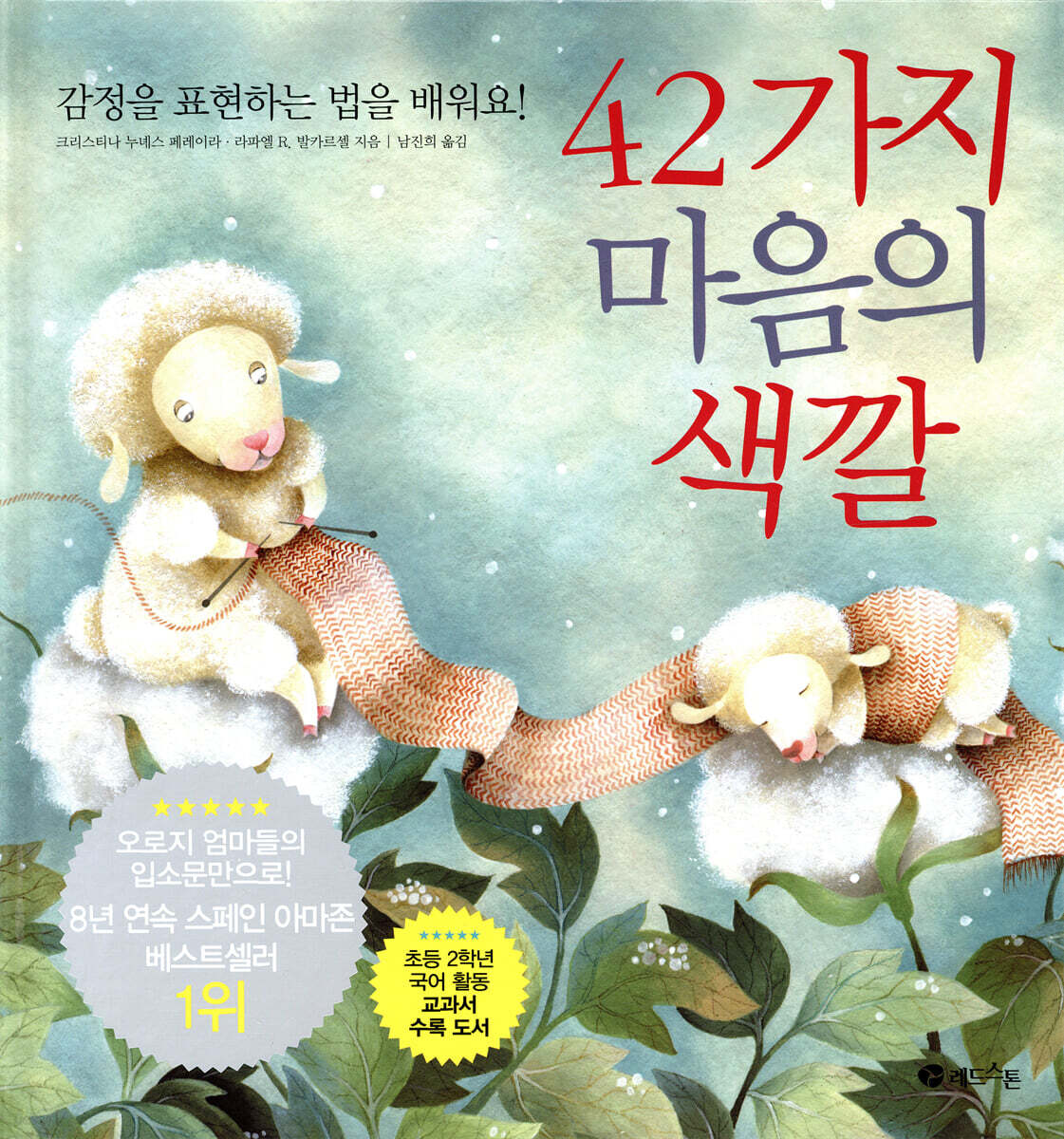
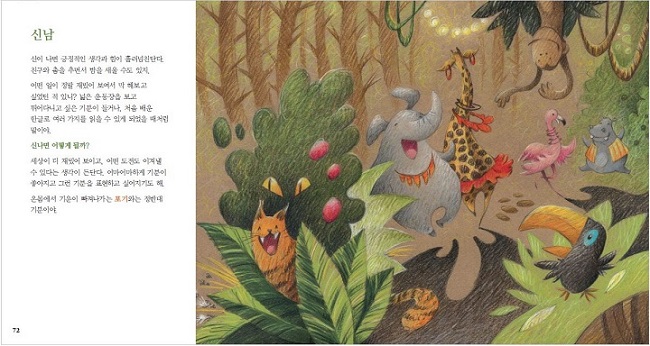
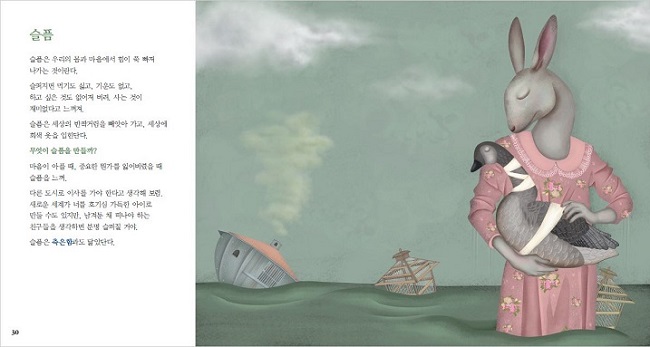
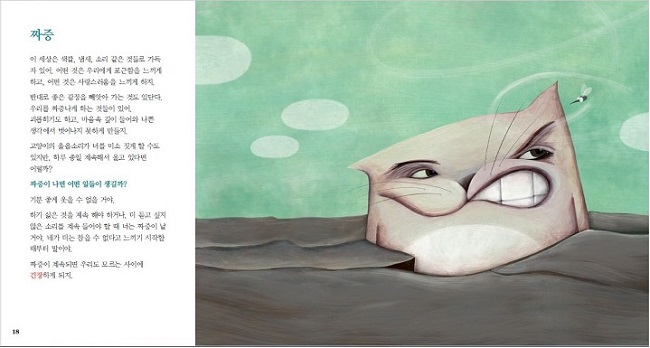
Spain's National Picture Book: A Winding Emotional Journey [42 Colors of the Heart] is a guidebook for children who will travel through the world of countless emotions. It consists of 42 names of emotions, descriptions of each emotion, and 42 paintings expressing the emotions. The sequence begins with the familiar feeling of 'warmth' for children, then moves on to the warm feeling of 'love', then to 'hatred', the opposite emotion of love, then to 'anger', which is the result of growing hatred, and finally, at the end of the journey of various emotions, talks about 'gratitude'. The author created this book by weaving together emotions that are similar, opposing, or often felt together, in the hope that children will actually express and communicate their emotions in real life. But it would also be a fun journey for the child to start with the emotion that interests him the most and run around freely here and there. |
- You can preview some of the book's contents.
Preview
index
Warmth → Love → Hatred → Anger → Annoyance → Tension → Relief → Calmness → Happiness → Joy → Sadness → Compassion → Regret → Remorse → Shame → Anxiety → Timidity → Embarrassment → Fear → Surprise → Disgust → Antipathy → Generosity → Lack of Understanding → Loneliness → Solitude → Longing → Depression → Boredom → Hope → Passion → Excitement → Giving Up → Disappointment → Frustration → Admiration → Spring → Hope → Satisfaction → Pride → Joy → Gratitude
Detailed image
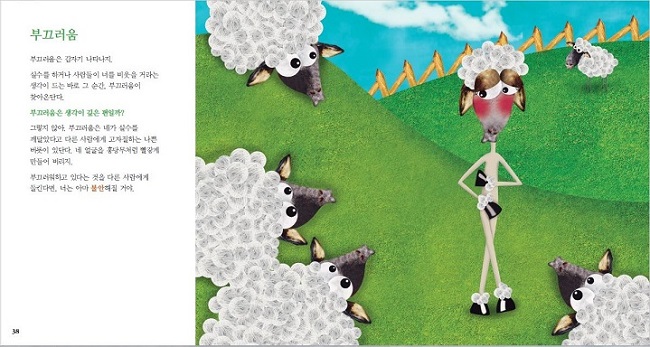
Into the book
[Warmth]
My grandmother's warm embrace, a lamb with soft fur, a fluffy blanket prepared for me...
The warmth is soft and warm, so it feels comfortable.
We can feel warmth from animals, people, objects, and sometimes even from a warm winter breeze.
Warmth is similar to a feeling of affection or closeness, and a feeling of wanting to be hugged.
Where is the warmth?
Warmth is in your heart.
When I see a little rabbit shivering or a crying friend, I want to give them a warm hug.
And warmth is said to bring about 'love'.
[love]
Of all emotions, love is the strongest.
It brings us bright smiles and makes us shed tears like a waterfall.
How do we change when we love?
- Sometimes it gets really strong.
We become brave to protect our beloved mother, our young and weak sibling, and our cute puppy.
- Sometimes it gets very weak.
When a friend you love moves away or your mom scolds you, you might feel so heartbroken that you cry.
The opposite of love is 'hate'.
[hate]
There are times when you don't like someone and they annoy you.
That kind of feeling is called hatred.
What if a friend you were playing with at the playground broke your toy? What if your younger sibling ate the snack you were saving? You'd hate both your friend and your younger sibling.
How long will hatred last?
Sometimes, hatred lasts for a long time.
But there are times when they stay for a short while and then leave.
You may feel resentful towards your younger sibling for taking away your snacks, but you may soon forgive them and give them a warm hug.
If hate is expressed in action, it is probably 'anger'.
[fury]
Anger is an incredibly harsh and unbearable feeling.
Anger really comes quickly.
Don't let me steal your heart in an instant and run wild.
When you feel wronged, when your peace of mind is broken, anger creeps into your heart.
Is anger even useful?
That's not the case where we live.
Anger is an emotion that prevents you from thinking.
Makes you act like an animal.
Like an animal that has been attacked.
Because we live among people, not wild animals, an unwise reaction will only make bad things worse.
If you can't get over the 'annoying' moments, you sometimes get angry.
My grandmother's warm embrace, a lamb with soft fur, a fluffy blanket prepared for me...
The warmth is soft and warm, so it feels comfortable.
We can feel warmth from animals, people, objects, and sometimes even from a warm winter breeze.
Warmth is similar to a feeling of affection or closeness, and a feeling of wanting to be hugged.
Where is the warmth?
Warmth is in your heart.
When I see a little rabbit shivering or a crying friend, I want to give them a warm hug.
And warmth is said to bring about 'love'.
[love]
Of all emotions, love is the strongest.
It brings us bright smiles and makes us shed tears like a waterfall.
How do we change when we love?
- Sometimes it gets really strong.
We become brave to protect our beloved mother, our young and weak sibling, and our cute puppy.
- Sometimes it gets very weak.
When a friend you love moves away or your mom scolds you, you might feel so heartbroken that you cry.
The opposite of love is 'hate'.
[hate]
There are times when you don't like someone and they annoy you.
That kind of feeling is called hatred.
What if a friend you were playing with at the playground broke your toy? What if your younger sibling ate the snack you were saving? You'd hate both your friend and your younger sibling.
How long will hatred last?
Sometimes, hatred lasts for a long time.
But there are times when they stay for a short while and then leave.
You may feel resentful towards your younger sibling for taking away your snacks, but you may soon forgive them and give them a warm hug.
If hate is expressed in action, it is probably 'anger'.
[fury]
Anger is an incredibly harsh and unbearable feeling.
Anger really comes quickly.
Don't let me steal your heart in an instant and run wild.
When you feel wronged, when your peace of mind is broken, anger creeps into your heart.
Is anger even useful?
That's not the case where we live.
Anger is an emotion that prevents you from thinking.
Makes you act like an animal.
Like an animal that has been attacked.
Because we live among people, not wild animals, an unwise reaction will only make bad things worse.
If you can't get over the 'annoying' moments, you sometimes get angry.
--- p.10-16
Publisher's Review
Only by word of mouth from mothers!
#1 bestseller in Spain for two consecutive years
"no!"
“I hate you, Mom!”
“Eww.”
Children have difficulty expressing their emotions.
From around the age of 3, children show their emotions with their whole body, and from around the age of 5, they empathize with the emotions of others, but they are not accustomed to expressing them in words.
Especially during times when the desire for self-expression is growing, people may use strong vulgar language to express their anger.
The mother is embarrassed by her child's behavior and is troubled by all sorts of things, but the child's true feelings are not like that.
It's just that you have a strong desire to express your feelings, but you don't know how.
Why is that? Children learn by observing adults.
However, adults usually only use 4 or 5 concepts to express their emotions.
But we don't realize it.
If parents describe an orange by only mentioning the colors orange and yellow, the child will likely describe it in the same way.
Because the most important source of information a child receives is example, that is, the behavior of adults.
Aware of this fact, many teachers and parents in Spain are using [42 Colors of the Heart].
By enriching the colors between emotions, children can learn numerous words to express their feelings.
Age-specific usage guide
- When reading to a child aged 3 to 6
Start with drawings that express the most basic emotions: warmth, shame, hate, boredom, happiness.
Please talk about what happened to the animals in the picture, how the picture makes you feel, and why.
When your child experiences an emotion he or she is not yet aware of, you can find it in this book and read it to him or her.
Then the child will compare what he or she feels with what he or she has learned.
This may have a calming, sedative effect and may also have the effect of normalizing your emotions.
- When reading to a child aged 7 to 9
Share with your child an experience where you felt a particular emotion.
It will create a strong bond.
Your child will be surprised to learn that his or her parents experience fears and anxieties just like he or she does.
This will strengthen your child's empathy and ability to see things from another person's perspective.
- When reading to a child aged 10 to 12
Children at this age begin to experience amazing and mysterious physical and mental changes.
This book will be a strong companion for children during times of great change.
By reflecting on all the emotions you've experienced through daily reading, you'll help yourself feel your own emotions more vividly.
It's a privilege to be able to feel
To develop the ability to create our own happiness, we must learn to integrate emotional wisdom throughout our mental development.
[42 Colors of the Heart] is the most basic educational aid that will help children develop wisdom about emotions.
By understanding the emotions of others, expressing their own emotions accurately, and comparing them to those of others, children will learn to create their own happiness and build a foundation for relationships.
The first step in human relationships: expressing emotions
Emotions are something that even adults cannot properly control.
It is entirely mine, but it is difficult to handle with my own strength.
Especially strong emotions like 'anger', 'hatred', and 'annoyance' can easily paralyze my reason.
The best way to resolve such things is not to tolerate them, but to express them and receive empathy.
Children cry not because of the situation, but because of their emotions.
Even in the same situation, if the parents accept and understand the child's emotions, the child will quickly stop crying.
Through emotional communication with your parents, you learn to manage your own emotions and learn from the behaviors your parents have shown you.
And the results of this emotional learning are clearly evident throughout a child's development.
Children who have good emotional communication with their parents also have good communication skills with their friends, and such communication skills are the foundation for building good relationships.
Share your feelings with your child and express them honestly.
It will help you build stronger trust in each other and create a stronger relationship.
#1 bestseller in Spain for two consecutive years
"no!"
“I hate you, Mom!”
“Eww.”
Children have difficulty expressing their emotions.
From around the age of 3, children show their emotions with their whole body, and from around the age of 5, they empathize with the emotions of others, but they are not accustomed to expressing them in words.
Especially during times when the desire for self-expression is growing, people may use strong vulgar language to express their anger.
The mother is embarrassed by her child's behavior and is troubled by all sorts of things, but the child's true feelings are not like that.
It's just that you have a strong desire to express your feelings, but you don't know how.
Why is that? Children learn by observing adults.
However, adults usually only use 4 or 5 concepts to express their emotions.
But we don't realize it.
If parents describe an orange by only mentioning the colors orange and yellow, the child will likely describe it in the same way.
Because the most important source of information a child receives is example, that is, the behavior of adults.
Aware of this fact, many teachers and parents in Spain are using [42 Colors of the Heart].
By enriching the colors between emotions, children can learn numerous words to express their feelings.
Age-specific usage guide
- When reading to a child aged 3 to 6
Start with drawings that express the most basic emotions: warmth, shame, hate, boredom, happiness.
Please talk about what happened to the animals in the picture, how the picture makes you feel, and why.
When your child experiences an emotion he or she is not yet aware of, you can find it in this book and read it to him or her.
Then the child will compare what he or she feels with what he or she has learned.
This may have a calming, sedative effect and may also have the effect of normalizing your emotions.
- When reading to a child aged 7 to 9
Share with your child an experience where you felt a particular emotion.
It will create a strong bond.
Your child will be surprised to learn that his or her parents experience fears and anxieties just like he or she does.
This will strengthen your child's empathy and ability to see things from another person's perspective.
- When reading to a child aged 10 to 12
Children at this age begin to experience amazing and mysterious physical and mental changes.
This book will be a strong companion for children during times of great change.
By reflecting on all the emotions you've experienced through daily reading, you'll help yourself feel your own emotions more vividly.
It's a privilege to be able to feel
To develop the ability to create our own happiness, we must learn to integrate emotional wisdom throughout our mental development.
[42 Colors of the Heart] is the most basic educational aid that will help children develop wisdom about emotions.
By understanding the emotions of others, expressing their own emotions accurately, and comparing them to those of others, children will learn to create their own happiness and build a foundation for relationships.
The first step in human relationships: expressing emotions
Emotions are something that even adults cannot properly control.
It is entirely mine, but it is difficult to handle with my own strength.
Especially strong emotions like 'anger', 'hatred', and 'annoyance' can easily paralyze my reason.
The best way to resolve such things is not to tolerate them, but to express them and receive empathy.
Children cry not because of the situation, but because of their emotions.
Even in the same situation, if the parents accept and understand the child's emotions, the child will quickly stop crying.
Through emotional communication with your parents, you learn to manage your own emotions and learn from the behaviors your parents have shown you.
And the results of this emotional learning are clearly evident throughout a child's development.
Children who have good emotional communication with their parents also have good communication skills with their friends, and such communication skills are the foundation for building good relationships.
Share your feelings with your child and express them honestly.
It will help you build stronger trust in each other and create a stronger relationship.
GOODS SPECIFICS
- Date of issue: August 5, 2015
- Format: Hardcover book binding method guide
- Page count, weight, size: 96 pages | 686g | 225*240*15mm
- ISBN13: 9791195588602
- ISBN10: 1195588607
You may also like
카테고리
korean


korean

![GQ KOREA Mark (Monthly): December [2025]](http://librairie.coreenne.fr/cdn/shop/files/8ef265dbbfbf186523ed75ba7319009d.jpg?v=1765340328&width=3840)


