

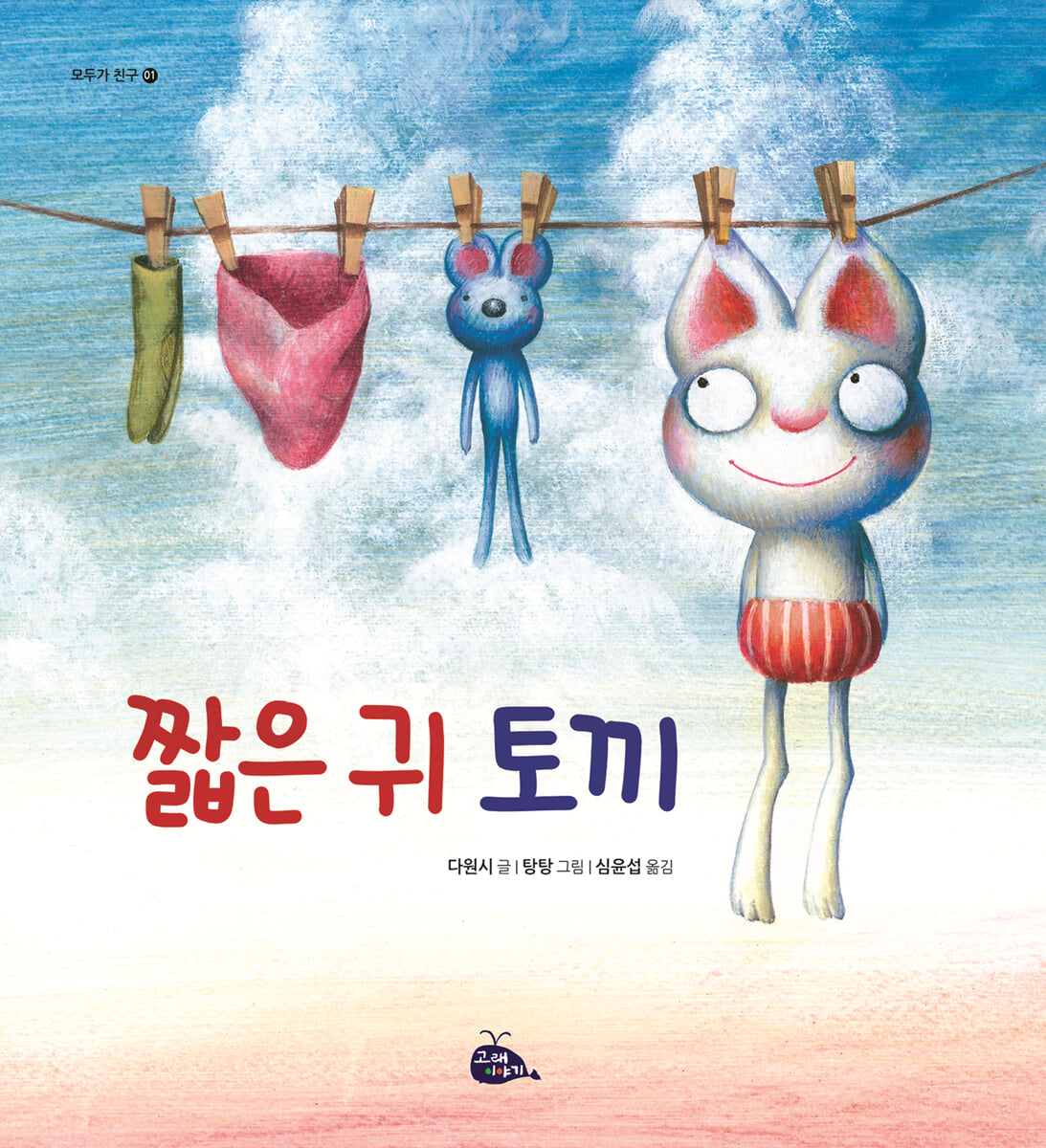
short-eared rabbit
 |
Description
Book Introduction
A positive attitude toward complexes and disabilities
We are inspired by the stories of people who have overcome complexes and obstacles and achieved success.
However, it is often overlooked that while it is possible to acknowledge physical shortcomings or disabilities and discover and develop your own talents, it is impossible to cure or fix them.
Dongdong, the main character of this book, also fails to make his short ears, which is his complex, longer.
Instead, they hone their talents and confidently create their own place as members of the world.
"Short-Eared Rabbit" is a book that tells the story of a young rabbit who accepts his complexes, discovers his own talents, and grows up proudly.
It shows young children who are discouraged by disabilities or complexes that if they work hard to find their dreams, their disabilities or complexes may not be a problem.
This book is filled with hopes and encouragement for all children in the world to grow up wonderfully in their own way.
We are inspired by the stories of people who have overcome complexes and obstacles and achieved success.
However, it is often overlooked that while it is possible to acknowledge physical shortcomings or disabilities and discover and develop your own talents, it is impossible to cure or fix them.
Dongdong, the main character of this book, also fails to make his short ears, which is his complex, longer.
Instead, they hone their talents and confidently create their own place as members of the world.
"Short-Eared Rabbit" is a book that tells the story of a young rabbit who accepts his complexes, discovers his own talents, and grows up proudly.
It shows young children who are discouraged by disabilities or complexes that if they work hard to find their dreams, their disabilities or complexes may not be a problem.
This book is filled with hopes and encouragement for all children in the world to grow up wonderfully in their own way.
- You can preview some of the book's contents.
Preview
Detailed image
Into the book
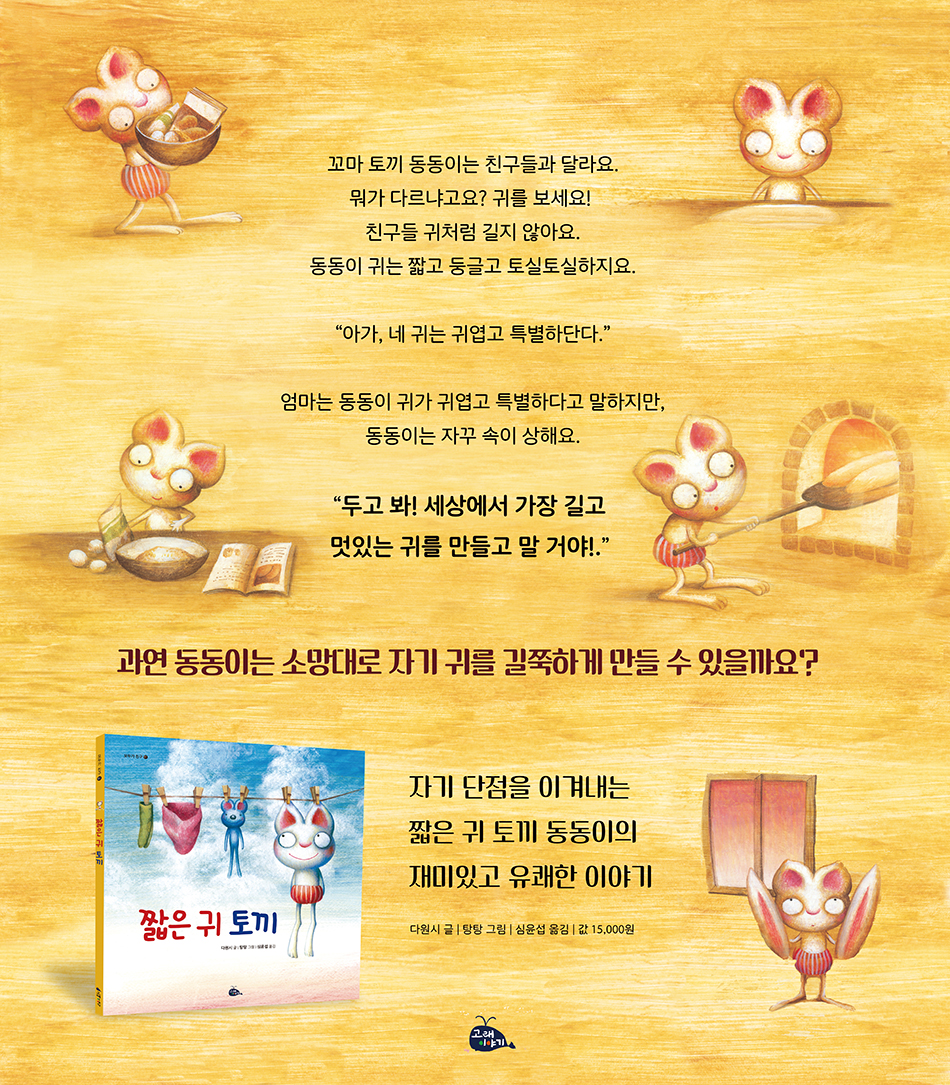
Little rabbit Dongdongi is different from his friends.
What's the difference? Look at the ears!
My friends' ears aren't as long as mine.
Dongdong's ears are short, round, and plump.
'What's wrong with short ears?'
Dongdong runs fast,
I thought it was more important to be able to jump high.
--- p.2
Dongdong eats carrots and cabbage every day.
I ate a lot.
I hope my ears grow longer quickly.
One month, two months, three months passed,
Dongdong has grown a lot.
--- p.6
One day, Dongdong saw his father watering the vegetable garden.
'Yes! This is it!'
Dongdongi, after his father watered the vegetables
I thought of vegetable leaves growing long and large.
Dongdong decided to water his ears every morning.
--- p.10
Dongdong was so upset that he cried in front of the mirror for a long time.
Then I looked in the mirror and swore.
'Just wait! I'll make you the longest and coolest ears in the world.'
--- p.18
Dongdong put 'rabbit ear' buns on his head with corn syrup and went to find Mimi.
“Mimi, how do my ears look? Aren’t they nice?”
What's the difference? Look at the ears!
My friends' ears aren't as long as mine.
Dongdong's ears are short, round, and plump.
'What's wrong with short ears?'
Dongdong runs fast,
I thought it was more important to be able to jump high.
--- p.2
Dongdong eats carrots and cabbage every day.
I ate a lot.
I hope my ears grow longer quickly.
One month, two months, three months passed,
Dongdong has grown a lot.
--- p.6
One day, Dongdong saw his father watering the vegetable garden.
'Yes! This is it!'
Dongdongi, after his father watered the vegetables
I thought of vegetable leaves growing long and large.
Dongdong decided to water his ears every morning.
--- p.10
Dongdong was so upset that he cried in front of the mirror for a long time.
Then I looked in the mirror and swore.
'Just wait! I'll make you the longest and coolest ears in the world.'
--- p.18
Dongdong put 'rabbit ear' buns on his head with corn syrup and went to find Mimi.
“Mimi, how do my ears look? Aren’t they nice?”
--- p.22
Publisher's Review
A picture book you should read before The Ugly Duckling
You know the stories "The Ugly Duckling" and "Cinderella," right? They're classics about overcoming harsh realities and finding happiness.
But in most classic stories, including "The Ugly Duckling" and "Cinderella," the protagonist always finds happiness through external help or innate factors.
It conveys a passive message that 'even if you are not welcomed in the world, if you endure quietly, happiness will come to you someday.'
Whether created to propagate the ideology of the ruling class or based on naive reflection and then modified and passed down, the influence of these fairy tales remains immense to this day.
In contrast, Dongdong, the main character of 'Short-Eared Rabbit', is positive and active.
Despite many failures, he remains firm in his will.
Set goals for yourself and follow through with your plan to achieve them.
This is the power that allows this picture book to overcome the limitations of the classics and its virtue.
A delightful story about overcoming complexes
In this picture book, Dongdong is ultimately unable to grow his short ears, which is his complex.
Instead, he develops his talents through bread making, one of the valuable experiences he has gained through his efforts.
Children, and of course adults too, all have their own complexes.
Short stature, ugly face, fat body, timid personality, etc.
When I get teased by my friends, I hate that about myself even more and feel embarrassed.
But I can't stay depressed forever.
This picture book naturally conveys the message to children that if they constantly strive like Dongdong, they will discover strengths that will overcome their weaknesses.
This picture book also provides some tips for parents to keep in mind.
No matter what, when you are young, your parents' stories and attitudes are the most important.
You should carefully observe what kind of complexes your child has, and if he or she has a complex, you should support that part.
Dissatisfaction with one's appearance does not arise from the appearance itself, but from the mind of the person looking at the appearance.
If parents first love and embrace the areas where their children feel dissatisfied, their children's dissatisfaction will gradually subside.
Just like Dongdong's mother did, she kisses the child's short ears and whispers that the child's short ears are so cute and lovely that she cannot help but kiss them.
Picture books that captivate children with their whimsical imagination and fun.
When Tang Tang, a world-renowned Taiwanese illustrator, had his son Toto, he received the story "The Short-Eared Rabbit" as a gift from his friend and author, Da Yuanshi.
I hadn't worked on a picture book for a while, but the intensity of the story made me want to draw again.
I drew it while worrying about how to express not only the main character's appearance, but even a single blade of grass.
I managed to finish five drawings, but had to stop due to other work.
When he tried to start working again, Tangtang's son was no longer a child.
But as I watched my child grow, I felt a surge of inspiration that I hadn't felt when I first tried it.
I discarded the five drawings I had already done and started drawing new ones.
"Short-Eared Rabbit" uses acrylic pigments to create the soft effect of oil painting.
Every movement of the young rabbit Dongdongi is depicted with a soft brush stroke.
The shy look while wearing a hat, the serious look while making a cake, etc.
The scenes, which are warm and humorous yet harmonious with the tense flow of the story, make you feel as if you are watching a movie.
Readers will find themselves imagining themselves alongside Dongdong, trying out different methods to lengthen his ears, baking bread of hope together in the kitchen, and dodging eagles in the vast grasslands.
Tangtang creates tension like a fun and well-structured comedy through various compositions and colors.
You know the stories "The Ugly Duckling" and "Cinderella," right? They're classics about overcoming harsh realities and finding happiness.
But in most classic stories, including "The Ugly Duckling" and "Cinderella," the protagonist always finds happiness through external help or innate factors.
It conveys a passive message that 'even if you are not welcomed in the world, if you endure quietly, happiness will come to you someday.'
Whether created to propagate the ideology of the ruling class or based on naive reflection and then modified and passed down, the influence of these fairy tales remains immense to this day.
In contrast, Dongdong, the main character of 'Short-Eared Rabbit', is positive and active.
Despite many failures, he remains firm in his will.
Set goals for yourself and follow through with your plan to achieve them.
This is the power that allows this picture book to overcome the limitations of the classics and its virtue.
A delightful story about overcoming complexes
In this picture book, Dongdong is ultimately unable to grow his short ears, which is his complex.
Instead, he develops his talents through bread making, one of the valuable experiences he has gained through his efforts.
Children, and of course adults too, all have their own complexes.
Short stature, ugly face, fat body, timid personality, etc.
When I get teased by my friends, I hate that about myself even more and feel embarrassed.
But I can't stay depressed forever.
This picture book naturally conveys the message to children that if they constantly strive like Dongdong, they will discover strengths that will overcome their weaknesses.
This picture book also provides some tips for parents to keep in mind.
No matter what, when you are young, your parents' stories and attitudes are the most important.
You should carefully observe what kind of complexes your child has, and if he or she has a complex, you should support that part.
Dissatisfaction with one's appearance does not arise from the appearance itself, but from the mind of the person looking at the appearance.
If parents first love and embrace the areas where their children feel dissatisfied, their children's dissatisfaction will gradually subside.
Just like Dongdong's mother did, she kisses the child's short ears and whispers that the child's short ears are so cute and lovely that she cannot help but kiss them.
Picture books that captivate children with their whimsical imagination and fun.
When Tang Tang, a world-renowned Taiwanese illustrator, had his son Toto, he received the story "The Short-Eared Rabbit" as a gift from his friend and author, Da Yuanshi.
I hadn't worked on a picture book for a while, but the intensity of the story made me want to draw again.
I drew it while worrying about how to express not only the main character's appearance, but even a single blade of grass.
I managed to finish five drawings, but had to stop due to other work.
When he tried to start working again, Tangtang's son was no longer a child.
But as I watched my child grow, I felt a surge of inspiration that I hadn't felt when I first tried it.
I discarded the five drawings I had already done and started drawing new ones.
"Short-Eared Rabbit" uses acrylic pigments to create the soft effect of oil painting.
Every movement of the young rabbit Dongdongi is depicted with a soft brush stroke.
The shy look while wearing a hat, the serious look while making a cake, etc.
The scenes, which are warm and humorous yet harmonious with the tense flow of the story, make you feel as if you are watching a movie.
Readers will find themselves imagining themselves alongside Dongdong, trying out different methods to lengthen his ears, baking bread of hope together in the kitchen, and dodging eagles in the vast grasslands.
Tangtang creates tension like a fun and well-structured comedy through various compositions and colors.
GOODS SPECIFICS
- Date of issue: May 20, 2020
- Format: Hardcover book binding method guide
- Pages, weight, size: 42 pages | 392g | 235*256*10mm
- ISBN13: 9791192827049
- ISBN10: 119282704X
- KC Certification: Certification Type: Conformity Confirmation
You may also like
카테고리
korean


korean

![GQ KOREA Mark (Monthly): December [2025]](http://librairie.coreenne.fr/cdn/shop/files/8ef265dbbfbf186523ed75ba7319009d.jpg?v=1765340328&width=3840)


