

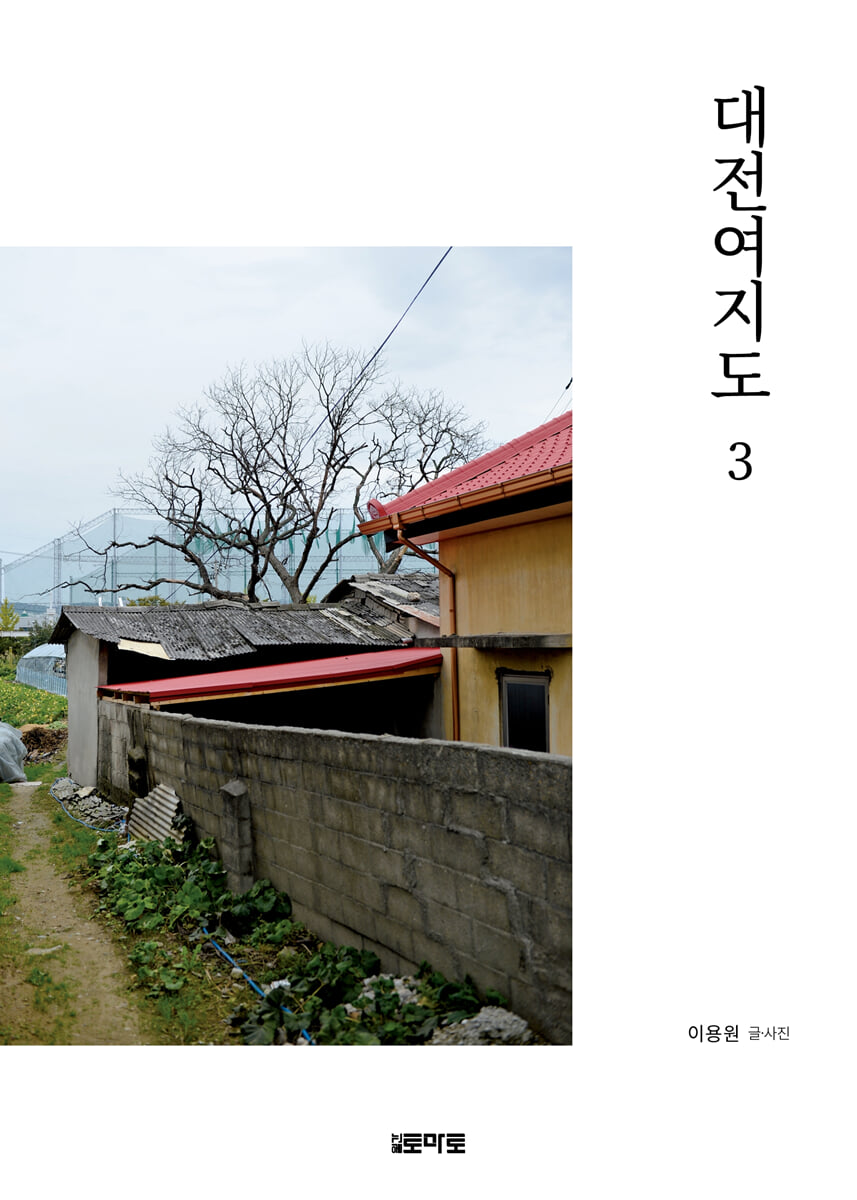
Daejeon Yeojido 3
 |
Description
Book Introduction
After presenting the first book in the 'Daejeon Yeojido' series to the world in 2017, we are publishing the third book.
Following Jung-gu and Dong-gu, this is Yuseong-gu.
It has the largest area among the five districts of Daejeon.
According to records, it was Nosajihyeon during the Baekje period, but in the 16th year of King Gyeongdeok of Silla (757), it was changed to Yuseong and made a county under Bipung-gun.
It's a very long history.
Over the past thousand years, various memories must have permeated the air in the Yuseong-gu area, but many places have been covered in concrete.
It feels a bit embarrassing to visit a few villages in this place that holds so many memories, record them, and then compile them into a book.
Nevertheless, the reason we continue to publish the Daejeon Yeojido series without rest is because we believe that the attempt to preserve 'memory' is the duty of recorders like us.
These "records" are areas where actions cannot be determined by the standards imposed by capital. While compiling this book, I reconfirmed the appearances of the elders I met in the village through photographs.
I would like to express my sincere gratitude to those who opened their hearts to a stranger who suddenly appeared without much hesitation.
These are the people who taught me what it means to treat other people as other people.
I encourage readers to share their memories and trace the scents that permeate the village through this book, even if it's a mere record. The first edition was published on June 20, 2019.
This time, we are publishing a revised edition.
Following Jung-gu and Dong-gu, this is Yuseong-gu.
It has the largest area among the five districts of Daejeon.
According to records, it was Nosajihyeon during the Baekje period, but in the 16th year of King Gyeongdeok of Silla (757), it was changed to Yuseong and made a county under Bipung-gun.
It's a very long history.
Over the past thousand years, various memories must have permeated the air in the Yuseong-gu area, but many places have been covered in concrete.
It feels a bit embarrassing to visit a few villages in this place that holds so many memories, record them, and then compile them into a book.
Nevertheless, the reason we continue to publish the Daejeon Yeojido series without rest is because we believe that the attempt to preserve 'memory' is the duty of recorders like us.
These "records" are areas where actions cannot be determined by the standards imposed by capital. While compiling this book, I reconfirmed the appearances of the elders I met in the village through photographs.
I would like to express my sincere gratitude to those who opened their hearts to a stranger who suddenly appeared without much hesitation.
These are the people who taught me what it means to treat other people as other people.
I encourage readers to share their memories and trace the scents that permeate the village through this book, even if it's a mere record. The first edition was published on June 20, 2019.
This time, we are publishing a revised edition.
index
Recommended Article_ Looking back at the origins of the city called Daejeon
Opening remarks_ Humanity transcends generations through 'memory'.
1.
Sanmak Village and Anmal Village in Oesam-dong, Yuseong-gu, Daejeon - Sammicheon (三美川) with good water, rice, and kindness
2.
Dongchon Village and Seosaetteul Village in Ansan-dong, Yuseong-gu, Daejeon_ Humbly holding up the sky
3.
Daejeon Yuseong-gu Ansan-dong Jinjeong-i Village_ The wind coming down from Dongsalmi sweeps through the village and heads to Dongchon
4.
Daejeon Yuseong-gu Ansan-dong Eodeukun Village_ An aging village is not a waste.
5.
Daejeon Yuseong-gu Shindong Yangjipyeon Village_ Spring sunlight has descended upon the village.
6.
Nokgol Village, Sindong, Yuseong-gu, Daejeon_ A village where the wind from the Geumgang River blows over the other side of Baramsil Pass
7.
Seowonmal Village, Wonchon-dong, Yuseong-gu, Daejeon_ Time ran, leaving the village behind.
8.
Moganamugol Village in Daejeon, Yuseong-gu, Daejeon - A village that embraces the blue autumn sky
9.
Yongmeori Village, Daejeon, Yuseong-gu, Daejeon_ The dragon hid itself and lay quietly.
10.
Daejeon Yuseong-gu Daejeon Jurubawoo Village_ A village where the rising sun touches Sikjangsan Mountain
11.
Oksalmi Village, Yonggye-dong, Yuseong-gu, Daejeon_ A rabbit curled up in a low, circular mountain
12.
Daejeon Yuseong-gu Sedong Seongdong Village_ Blue sky overhead, bright sunlight shining on the long valley of Sedong
13.
Daejeon Yuseong-gu Sedong Jungjeong-dong Village_ A still warm village leaning against the ridge of Gyeryongsan Mountain
14.
Saewoonae Village in Bangdong, Yuseong-gu, Daejeon: The waterways changed due to the tide, and now the water is being held back.
15.
Janggogae Village in Gung-dong, Yuseong-gu, Daejeon - A village that breathes quietly, alone, where all neighboring villages have disappeared.
16.
Dongjami Village, Gung-dong, Yuseong-gu, Daejeon_Where did Seondong, who built a house and lived there, go?
17.
Changmal Village, Guam-dong, Yuseong-gu, Daejeon - A beautiful, lush green village rustling in the dryness.
18.
Anjinbae Village, Gap-dong, Yuseong-gu, Daejeon - An airport, a national cemetery, and the best housing complex
Opening remarks_ Humanity transcends generations through 'memory'.
1.
Sanmak Village and Anmal Village in Oesam-dong, Yuseong-gu, Daejeon - Sammicheon (三美川) with good water, rice, and kindness
2.
Dongchon Village and Seosaetteul Village in Ansan-dong, Yuseong-gu, Daejeon_ Humbly holding up the sky
3.
Daejeon Yuseong-gu Ansan-dong Jinjeong-i Village_ The wind coming down from Dongsalmi sweeps through the village and heads to Dongchon
4.
Daejeon Yuseong-gu Ansan-dong Eodeukun Village_ An aging village is not a waste.
5.
Daejeon Yuseong-gu Shindong Yangjipyeon Village_ Spring sunlight has descended upon the village.
6.
Nokgol Village, Sindong, Yuseong-gu, Daejeon_ A village where the wind from the Geumgang River blows over the other side of Baramsil Pass
7.
Seowonmal Village, Wonchon-dong, Yuseong-gu, Daejeon_ Time ran, leaving the village behind.
8.
Moganamugol Village in Daejeon, Yuseong-gu, Daejeon - A village that embraces the blue autumn sky
9.
Yongmeori Village, Daejeon, Yuseong-gu, Daejeon_ The dragon hid itself and lay quietly.
10.
Daejeon Yuseong-gu Daejeon Jurubawoo Village_ A village where the rising sun touches Sikjangsan Mountain
11.
Oksalmi Village, Yonggye-dong, Yuseong-gu, Daejeon_ A rabbit curled up in a low, circular mountain
12.
Daejeon Yuseong-gu Sedong Seongdong Village_ Blue sky overhead, bright sunlight shining on the long valley of Sedong
13.
Daejeon Yuseong-gu Sedong Jungjeong-dong Village_ A still warm village leaning against the ridge of Gyeryongsan Mountain
14.
Saewoonae Village in Bangdong, Yuseong-gu, Daejeon: The waterways changed due to the tide, and now the water is being held back.
15.
Janggogae Village in Gung-dong, Yuseong-gu, Daejeon - A village that breathes quietly, alone, where all neighboring villages have disappeared.
16.
Dongjami Village, Gung-dong, Yuseong-gu, Daejeon_Where did Seondong, who built a house and lived there, go?
17.
Changmal Village, Guam-dong, Yuseong-gu, Daejeon - A beautiful, lush green village rustling in the dryness.
18.
Anjinbae Village, Gap-dong, Yuseong-gu, Daejeon - An airport, a national cemetery, and the best housing complex
Into the book
It's a great place to put down your load after chopping wood on the mountain, wash your hands and feet, and take a break.
There was a large rock right below the embankment, which appears to be General Rock.
It is said that a general once made straw sandals there and wore them, and that the footprints he left behind are still there, but this could not be confirmed.
A tree is growing on the rock, giving it an unusual appearance.
--- p.49
Unfortunately, I was unable to confirm with the locals I met in the village exactly why this place was called 'Jinjeongi'.
I asked grandfathers in their 80s and grandmothers in their 90s, but I couldn't get a definitive answer.
Instead, I could hear jokes passed down in the neighborhood.
"They say that when the gong is rung, you wake up and start working."
There was another story.
“I asked at Munae-mi and stayed up all night at Saejae…
"I sat down in Ansan, then calmed down in Jinjeong-i and started out, but it got dark in Eodogi-i, so I slept in Jagol."
The grandmothers, who were trying to piece together the story by recalling their memories, raised their hands as a signal to laugh out loud.
In the end, I didn't hear the exact story.
This story was probably a joke created by a local storyteller.
It was not the creation of one person, but rather it was created by several people over time, adding and subtracting.
This story features both Jinjeong and the names of the surrounding villages.
I focused on the sound of the place name and told the story with meaning in mind.
--- p.54
The village nestled in the valley looks as comfortable as a child snuggling into its mother's embrace.
The hillside on which the village leans feels solid rather than uncomfortable, and the stream flowing in front of the village gives a sense of stability, as if it will never dry up, no matter how dry the weather. The village, where the sound of children crying is never heard, seems to be aging along with its residents, but even that doesn't seem to be a problem.
The village also feels like it has naturally permeated the ecological cycle.
Eodeukun was quietly and gracefully growing old, basking in the warm sunlight.
--- pp.76~77
The grandmother lives alone in a house that looks as old as a well.
The house facing south is I-shaped.
The kitchen is placed to the west.
Although it was repaired with cement, the kitchen door and shape still retain their old appearance, when wood was used as firewood.
When you stand on the veranda, you can see Gwangsaegol and Gwangsae in the distance.
It is a place you can see when you cross the road in front of the village.
Before the land was cleared, there was a mix of rice paddies and dry fields, but now most of it is rice paddies.
It is a valley rice paddy, not a wide plain, but the land has been well managed.
To the east of the yard is a warehouse where farm machinery is stored and where it seems that at one time a pig was also raised.
To the west of the yard, a sarangchae was built.
On the pillars of the Sarangchae hang several martens, which were caught after they entered the room last winter, drying up.
I left Grandma Yun Chae-sun's house and climbed the mountain ridge.
The village headman, Jo Bang-wook, explained that the mountain range on which the village leans is a ridge that extends from Somunsanseong Fortress to the east of the village.
--- pp.91~92
As I was going west along the road, I came across a chicken.
He still looks young, but he's a chicken.
The feathers sparkle with mysterious colors in the sunlight.
It's not an unfamiliar sight to see them freely roaming the alleys, digging the ground and pecking at bugs, but it's been a while since I've seen them, so it's enjoyable.
"Grandma, what's that chicken's name?"
"Oh, what's the chicken's name? It's just a chicken!"
Looks like you had a lot of fun, yeah, it's not common to name chickens.
This is especially true for chickens raised free in rural areas like this.
Grandmother Lee Bok-gu (83) was on her way back from a senior center near Yongmeori Village.
"Someone recently moved into the house in that alley, and someone I know gave it to me as a gift.
I used to live with the front door wide open, but because of that guy, I can't open the door.
"I've picked up everything that was spread out in the yard."
I don't know who gave a chicken as a gift to an acquaintance who moved from the city to a rural village, but it seems like they put a lot of thought into it.
I think I would have been very happy if I had received a chicken as a gift in the same situation.
--- p.126
The village alleyways were tangled like a spider's web.
Like any other rural village, there are a few houses left in ruins and abandoned, and the bamboo forest path, which has been growing larger due to lack of maintenance, remains beautiful.
There are few houses on what is considered the summit of the hill, and most houses are located on the southern slope.
This is the main street of Dongjami Village.
There are several pretty houses with carefully tended gardens.
The alley is clean and quiet.
Even a dog tied up in the yard can only blink its sleepy eyes in the drowsy spring sunlight and not bark at strangers.
The palm-sized rice paddies, which are not yet ready for planting, are filled with sunlight that melts the frozen ground throughout the winter.
There was a large rock right below the embankment, which appears to be General Rock.
It is said that a general once made straw sandals there and wore them, and that the footprints he left behind are still there, but this could not be confirmed.
A tree is growing on the rock, giving it an unusual appearance.
--- p.49
Unfortunately, I was unable to confirm with the locals I met in the village exactly why this place was called 'Jinjeongi'.
I asked grandfathers in their 80s and grandmothers in their 90s, but I couldn't get a definitive answer.
Instead, I could hear jokes passed down in the neighborhood.
"They say that when the gong is rung, you wake up and start working."
There was another story.
“I asked at Munae-mi and stayed up all night at Saejae…
"I sat down in Ansan, then calmed down in Jinjeong-i and started out, but it got dark in Eodogi-i, so I slept in Jagol."
The grandmothers, who were trying to piece together the story by recalling their memories, raised their hands as a signal to laugh out loud.
In the end, I didn't hear the exact story.
This story was probably a joke created by a local storyteller.
It was not the creation of one person, but rather it was created by several people over time, adding and subtracting.
This story features both Jinjeong and the names of the surrounding villages.
I focused on the sound of the place name and told the story with meaning in mind.
--- p.54
The village nestled in the valley looks as comfortable as a child snuggling into its mother's embrace.
The hillside on which the village leans feels solid rather than uncomfortable, and the stream flowing in front of the village gives a sense of stability, as if it will never dry up, no matter how dry the weather. The village, where the sound of children crying is never heard, seems to be aging along with its residents, but even that doesn't seem to be a problem.
The village also feels like it has naturally permeated the ecological cycle.
Eodeukun was quietly and gracefully growing old, basking in the warm sunlight.
--- pp.76~77
The grandmother lives alone in a house that looks as old as a well.
The house facing south is I-shaped.
The kitchen is placed to the west.
Although it was repaired with cement, the kitchen door and shape still retain their old appearance, when wood was used as firewood.
When you stand on the veranda, you can see Gwangsaegol and Gwangsae in the distance.
It is a place you can see when you cross the road in front of the village.
Before the land was cleared, there was a mix of rice paddies and dry fields, but now most of it is rice paddies.
It is a valley rice paddy, not a wide plain, but the land has been well managed.
To the east of the yard is a warehouse where farm machinery is stored and where it seems that at one time a pig was also raised.
To the west of the yard, a sarangchae was built.
On the pillars of the Sarangchae hang several martens, which were caught after they entered the room last winter, drying up.
I left Grandma Yun Chae-sun's house and climbed the mountain ridge.
The village headman, Jo Bang-wook, explained that the mountain range on which the village leans is a ridge that extends from Somunsanseong Fortress to the east of the village.
--- pp.91~92
As I was going west along the road, I came across a chicken.
He still looks young, but he's a chicken.
The feathers sparkle with mysterious colors in the sunlight.
It's not an unfamiliar sight to see them freely roaming the alleys, digging the ground and pecking at bugs, but it's been a while since I've seen them, so it's enjoyable.
"Grandma, what's that chicken's name?"
"Oh, what's the chicken's name? It's just a chicken!"
Looks like you had a lot of fun, yeah, it's not common to name chickens.
This is especially true for chickens raised free in rural areas like this.
Grandmother Lee Bok-gu (83) was on her way back from a senior center near Yongmeori Village.
"Someone recently moved into the house in that alley, and someone I know gave it to me as a gift.
I used to live with the front door wide open, but because of that guy, I can't open the door.
"I've picked up everything that was spread out in the yard."
I don't know who gave a chicken as a gift to an acquaintance who moved from the city to a rural village, but it seems like they put a lot of thought into it.
I think I would have been very happy if I had received a chicken as a gift in the same situation.
--- p.126
The village alleyways were tangled like a spider's web.
Like any other rural village, there are a few houses left in ruins and abandoned, and the bamboo forest path, which has been growing larger due to lack of maintenance, remains beautiful.
There are few houses on what is considered the summit of the hill, and most houses are located on the southern slope.
This is the main street of Dongjami Village.
There are several pretty houses with carefully tended gardens.
The alley is clean and quiet.
Even a dog tied up in the yard can only blink its sleepy eyes in the drowsy spring sunlight and not bark at strangers.
The palm-sized rice paddies, which are not yet ready for planting, are filled with sunlight that melts the frozen ground throughout the winter.
--- p.236
Publisher's Review
Looking back at the origins of the city called Daejeon
There are many heartbreaking stories that have been scoured through the nooks and crannies of Yuseong-gu, where the waves of urbanization are steadily approaching.
These photos, capturing the affectionate landscapes of various places in Yuseong with warm eyes and the wrinkled faces deeply imbued with a history of honest labor, make us look back on the origins of the city of Daejeon.
『Daejeon Yeojido 3』 is like the city's inner self revealed without any embellishment.
It is also the intimate story of the people of Hanbatgol, slowly and quietly revealed.
The town and its history are both fascinating history and a dream of a beautiful time we can return to at any time.
Lee Yong-won's steps, which he says "write to remember," are unhurried.
Sammicheon, where the water is good, the rice is good, and the people are kind, a village where the blue wind of Geumgang River blows, a sunny village leaning against the ridge of Gyeryongsan Mountain, a village where the surroundings have disappeared and breathes quietly alone…
He walks quietly down an alley where a very old stone wall is crumbling down, and leans against the walls of houses whose mud walls are crumbling silently.
In the front yard of the village hall, where the rustling of door panels echoes through the verandas of every house, I listen intently to the words of the elders whose eyes I meet.
Thus, 『Daejeon Yeojido 3』 is a story of vague memories of an octogenarian living in Yuseong, a sad family history that has now been scattered, and the history of a village that is in danger.
This is a meticulous human geography book that everyone living today can relate to, and it will be passed down as a very useful local history to future generations.
Now, Lee Yong-won's 'Daejeon Yeojido' series has become a source of pride that boosts the self-esteem of Daejeon residents and a valuable resource that reveals the true face of Daejeon.
It is also a useful guide for those who document local areas and publish local books and magazines throughout the country.
『Daejeon Yeojido 3』 does not stop at the story of Yuseong and Daejeon.
The extremely Korean scenery of mountains and rivers, rice paddies and fields, trees and forests, villages and people gives a gentle feeling regardless of where you live.
There are many heartbreaking stories that have been scoured through the nooks and crannies of Yuseong-gu, where the waves of urbanization are steadily approaching.
These photos, capturing the affectionate landscapes of various places in Yuseong with warm eyes and the wrinkled faces deeply imbued with a history of honest labor, make us look back on the origins of the city of Daejeon.
『Daejeon Yeojido 3』 is like the city's inner self revealed without any embellishment.
It is also the intimate story of the people of Hanbatgol, slowly and quietly revealed.
The town and its history are both fascinating history and a dream of a beautiful time we can return to at any time.
Lee Yong-won's steps, which he says "write to remember," are unhurried.
Sammicheon, where the water is good, the rice is good, and the people are kind, a village where the blue wind of Geumgang River blows, a sunny village leaning against the ridge of Gyeryongsan Mountain, a village where the surroundings have disappeared and breathes quietly alone…
He walks quietly down an alley where a very old stone wall is crumbling down, and leans against the walls of houses whose mud walls are crumbling silently.
In the front yard of the village hall, where the rustling of door panels echoes through the verandas of every house, I listen intently to the words of the elders whose eyes I meet.
Thus, 『Daejeon Yeojido 3』 is a story of vague memories of an octogenarian living in Yuseong, a sad family history that has now been scattered, and the history of a village that is in danger.
This is a meticulous human geography book that everyone living today can relate to, and it will be passed down as a very useful local history to future generations.
Now, Lee Yong-won's 'Daejeon Yeojido' series has become a source of pride that boosts the self-esteem of Daejeon residents and a valuable resource that reveals the true face of Daejeon.
It is also a useful guide for those who document local areas and publish local books and magazines throughout the country.
『Daejeon Yeojido 3』 does not stop at the story of Yuseong and Daejeon.
The extremely Korean scenery of mountains and rivers, rice paddies and fields, trees and forests, villages and people gives a gentle feeling regardless of where you live.
GOODS SPECIFICS
- Date of issue: October 7, 2024
- Page count, weight, size: 268 pages | 150*210*16mm
- ISBN13: 9791191651249
- ISBN10: 119165124X
You may also like
카테고리
korean


korean

![GQ KOREA Mark (Monthly): December [2025]](http://librairie.coreenne.fr/cdn/shop/files/8ef265dbbfbf186523ed75ba7319009d.jpg?v=1765340328&width=3840)


