

MLOps Practical Guide
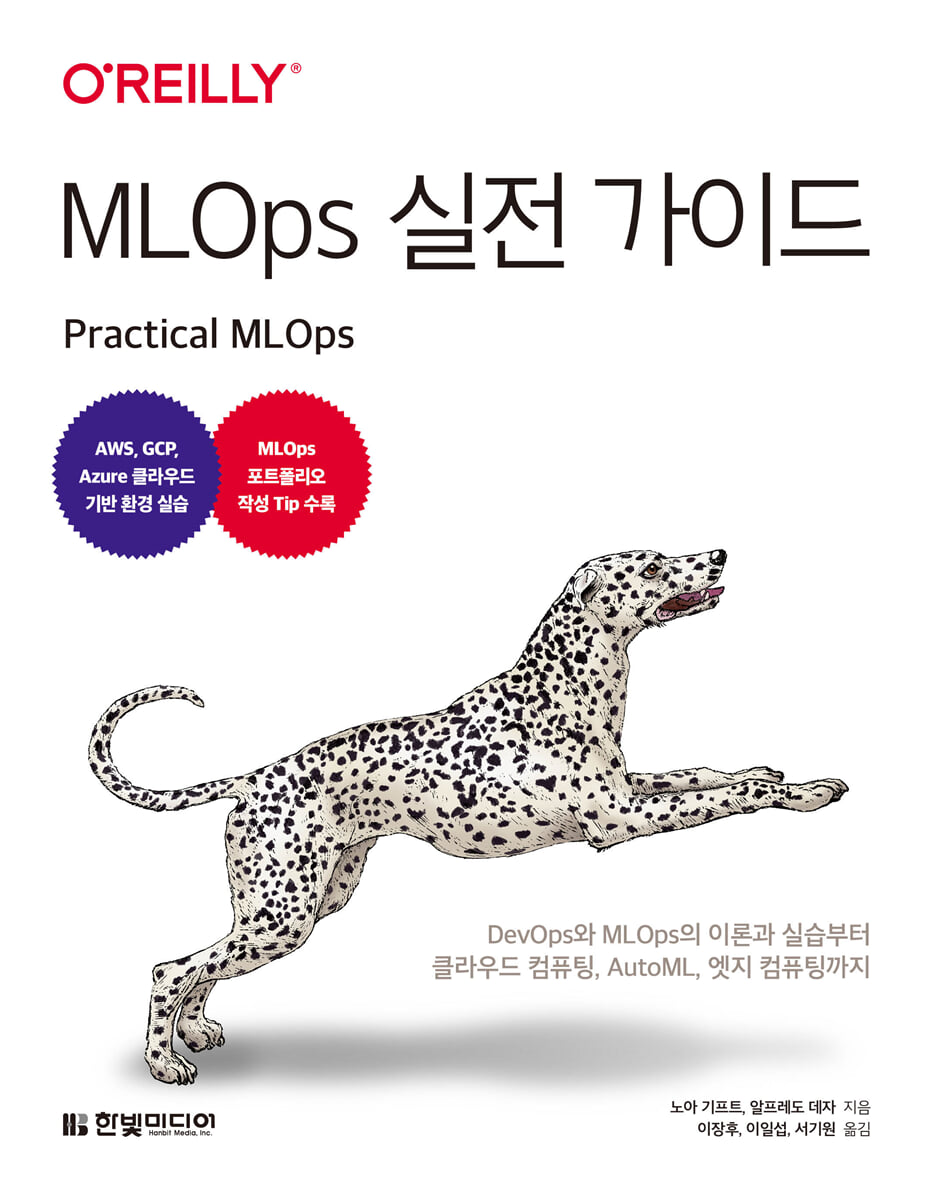 |
Description
Book Introduction
* MLOps engineering know-how for stable operation of machine learning models and successful CI/CD
* Includes tips for writing an MLOps portfolio and interviews with MLOps practitioners.
* Added translator's notes based on the latest content and reflected source code refactoring
This book provides a comprehensive understanding of MLOps and DevOps concepts and includes various practical exercises to facilitate in-depth learning.
We cover deployment methods for stable operation of machine learning models, as well as key technology areas of MLOps, including AutoML, containers, edge computing, and model portability.
In addition, we provide hands-on training to help you gain MLOps experience on various cloud platforms, including AWS, Azure, and GCP.
It also introduces MLOps cases based on the author's real-life experience and interviews with MLOps practitioners.
The appendix provides considerations for implementing MLOps, interview questions to prepare for an MLOps career, and tips for writing a technical portfolio to help you easily apply the knowledge in practice.
* Includes tips for writing an MLOps portfolio and interviews with MLOps practitioners.
* Added translator's notes based on the latest content and reflected source code refactoring
This book provides a comprehensive understanding of MLOps and DevOps concepts and includes various practical exercises to facilitate in-depth learning.
We cover deployment methods for stable operation of machine learning models, as well as key technology areas of MLOps, including AutoML, containers, edge computing, and model portability.
In addition, we provide hands-on training to help you gain MLOps experience on various cloud platforms, including AWS, Azure, and GCP.
It also introduces MLOps cases based on the author's real-life experience and interviews with MLOps practitioners.
The appendix provides considerations for implementing MLOps, interview questions to prepare for an MLOps career, and tips for writing a technical portfolio to help you easily apply the knowledge in practice.
- You can preview some of the book's contents.
Preview
index
CHAPTER 1: Invitation to the World of MLOps
_1.1 The Rise of Machine Learning Engineers and MLOps
_1.2 What is MLOps?
_1.3 DevOps and MLOps
_1.4 MLOps Hierarchy of Needs Theory
__1.4.1 DevOps Implementation
__1.4.2 Configuring continuous integration using GitHub Actions
__1.4.3 DataOps and Data Engineering
__1.4.4 Platform Automation
__1.4.5 MLOps
_1.5 In conclusion
Try it out
Think about it
CHAPTER 2 Basic Concepts for Getting Started with MLOps
_2.1 Bash and the Linux Command Line
_2.2 Cloud Shell Development Environment
_2.3 Bash shell and commands
__2.3.1 File List
__2.3.2 Execution Command
__2.3.3 File Navigation
__2.3.4 Shell Input/Output
__2.3.5 Shell Settings
__2.3.6 Writing a shell script
_2.4 Cloud Computing Foundation and Components
_2.5 Getting Started with Cloud Computing
_2.6 Python Crash Course
_2.7 Python Tutorial for Minimalists
_2.8 Math Crash Course for Programmers
__2.8.1 Descriptive Statistics and the Normal Distribution
__2.8.2 Optimization
__[Translator's Note]
_2.9 Core Concepts of Machine Learning
_2.10 Trying Data Science
_2.11 Building a Simple Pipeline from Scratch
_2.12 In conclusion
Try it out
Think about it
CHAPTER 3 MLOps for Containers and Edge Devices
_3.1 Container
__3.1.1 Container Runtime
__3.1.2 Creating a container
__3.1.3 Running a container
__3.1.4 Container Best Practices
__3.1.5 Serving Models via HTTP
_3.2 Edge Devices
__3.2.1 Google Coral
__3.2.2 Azure Percept
__3.2.3 TensorFlow Hub
__3.2.4 Google Coral Edge TPU Compiler
_3.3 Containers for Fully Managed Machine Learning Systems
__3.3.1 Trading MLOps Containers
__3.3.2 Containers in various uses
_3.4 In conclusion
Try it out
Think about it
CHAPTER 4: Implementing Continuous Delivery in Machine Learning Applications
_4.1 Packaging Machine Learning Models
_4.2 Code-as-infrastructure for continuous deployment of machine learning models
_4.3 Using Cloud Pipelines
__4.3.1 Controlling Model Distribution
__4.3.2 Testing Strategy for Model Deployment
_4.4 In conclusion
Try it out
Think about it
CHAPTER 5 AutoML and KaizenML
_5.1 AutoML
__5.1.1 MLOps Industrial Revolution
__5.1.2 AutoML vs. KaizenML
__5.1.3 Feature Store
_5.2 Apple Ecosystem
__5.2.1 Apple's AutoML: Create ML
__5.2.2 Apple's Core ML
_5.3 Google's AutoML and Edge Computer Vision
_5.4 AutoML on Azure
_5.5 AWS AutoML
_5.6 Open Source AutoML
__5.6.1 Ludwig
__5.6.2 FLAML
_5.7 Model Explanation Power
_5.8 In conclusion
Try it out
Think about it
CHAPTER 6 MONITORING AND LOGGING
_6.1 Cloud MLOps and Observability
__[Translator's Note]
_6.2 Logging Basics
_6.3 Practicing Logging in Python
__[Translator's Note]
__6.3.1 Setting the log level
__6.3.2 Logging Multiple Applications Simultaneously
_6.4 Monitoring and Observability
__6.4.1 Basics of Model Monitoring
__6.4.2 Monitoring Drift in AWS SageMaker
_6.5 Monitoring Drift in Azure Machine Learning
_6.6 In conclusion
Try it out
Think about it
CHAPTER 7 MLOps with AWS
_7.1 Getting Started with AWS
__7.1.1 Trying AWS Products
__7.1.2 AWS and MLOps
_7.2 MLOps Recipe Using AWS
__7.2.1 Command Line Interface Tools
__7.2.2 Flask Microservices
_7.3 AWS Lambda Recipe
__7.3.1 AWS Lambda-SAM: Using it in a Local Environment
__7.3.2 AWS Lambda-SAM: Containerizing and Deploying
_7.4 AWS Machine Learning Products and Advice for Solving Real-World Problems
__[Interview] Case Study of a Sports SNS Service
__[Interview] Career Advice from AWS Machine Learning Evangelist Julien
_7.5 In conclusion
Try it out
Think about it
CHAPTER 8 Azure Environment and MLOps
_8.1 Azure CLI and Python SDK
_8.2 Certification
__8.2.1 Service Subject
__8.2.2 API Service Authentication
_8.3 Compute Instance
_8.4 distribution
__8.4.1 Model Registration
__8.4.2 Dataset Version Management
__[Translator's Note]
_8.5 Deploying Models to a Compute Cluster
__8.5.1 Configuring a Cluster
__8.5.2 Deploying the Model
_8.6 Troubleshooting Deployment Issues
__8.6.1 Searching logs
__8.6.2 Application Insights
__8.6.3 Debugging in a local environment
_8.7 Azure Machine Learning Pipeline
__8.7.1 Publishing Pipeline
__8.7.2 Azure Machine Learning Designer
_8.8 Machine Learning Life Cycle
_8.9 In conclusion
Try it out
Think about it
CHAPTER 9 Google Cloud Platform and Kubernetes
_9.1 Google Cloud Platform Overview
__9.1.1 Continuous Integration and Continuous Deployment
__9.1.2 hello world kubernetes
__9.1.3 Cloud-Native Database Selection and Design
_9.2 DataOps on Google Cloud Platform
_9.3 Machine Learning Model Operation
_9.4 In conclusion
Try it out
Think about it
CHAPTER 10 Machine Learning Interoperability
_10.1 Why Interoperability Matters
_10.2 ONNX: Open Neural Network Exchange
__10.2.1 ONNX Model Zoo
__10.2.2 Converting PyTorch to ONNX
__10.2.3 Converting TensorFlow to ONNX
__10.2.4 Deploying ONNX Models on Azure
_10.3 Apple's Core ML and ONNX
_10.4 Edge Integration
_10.5 In conclusion
Try it out
Think about it
CHAPTER 11 MLOps Command-Line Tools and Microservices Building
_11.1 Python Packaging
_11.2 Requirements file
_11.3 Command Line Tools
__11.3.1 Creating a dataset linter
__11.3.2 Command-line tool modularization
_11.4 Microservices
__11.4.1 Creating a Serverless Function
__11.4.2 Cloud Function Authentication
__11.4.3 Building a Cloud-Based Command-Line Interface
_11.5 Machine Learning Command Line Interface Workflow
_11.6 In conclusion
Try it out
Think about it
CHAPTER 12 MLOps Case Studies
_12.1 The Unexpected Benefits of Ignorance in Machine Learning
_12.2 MLOps Project for Sports Social Networks
__12.2.1 Mechanical Repetitive Task: Data Labeling
__12.2.2 Influencer Level
__12.2.3 Artificial Intelligence Products
_12.3 Reality vs. Perfect Technology
_12.4 Important Challenges of MLOps
__12.4.1 Ethical Issues and Unintended Consequences
__12.4.2 Lack of operational capabilities
__12.4.3 Should we focus on technology or business?
__[Interview] Piero Molino, MLOps Practitioner
__[Interview] MLOps Practitioner Francesca Lazzeri
_12.5 Final Recommendations for Implementing MLOps
__12.5.1 Data Governance and Cybersecurity
__12.5.2 Frequently mentioned concepts and tools when implementing MLOps
_12.6 In conclusion
Try it out
Think about it
Appendix A.
technical qualifications
Appendix B. Tips for Creating a Technology Portfolio for MLOps
_1.1 The Rise of Machine Learning Engineers and MLOps
_1.2 What is MLOps?
_1.3 DevOps and MLOps
_1.4 MLOps Hierarchy of Needs Theory
__1.4.1 DevOps Implementation
__1.4.2 Configuring continuous integration using GitHub Actions
__1.4.3 DataOps and Data Engineering
__1.4.4 Platform Automation
__1.4.5 MLOps
_1.5 In conclusion
Try it out
Think about it
CHAPTER 2 Basic Concepts for Getting Started with MLOps
_2.1 Bash and the Linux Command Line
_2.2 Cloud Shell Development Environment
_2.3 Bash shell and commands
__2.3.1 File List
__2.3.2 Execution Command
__2.3.3 File Navigation
__2.3.4 Shell Input/Output
__2.3.5 Shell Settings
__2.3.6 Writing a shell script
_2.4 Cloud Computing Foundation and Components
_2.5 Getting Started with Cloud Computing
_2.6 Python Crash Course
_2.7 Python Tutorial for Minimalists
_2.8 Math Crash Course for Programmers
__2.8.1 Descriptive Statistics and the Normal Distribution
__2.8.2 Optimization
__[Translator's Note]
_2.9 Core Concepts of Machine Learning
_2.10 Trying Data Science
_2.11 Building a Simple Pipeline from Scratch
_2.12 In conclusion
Try it out
Think about it
CHAPTER 3 MLOps for Containers and Edge Devices
_3.1 Container
__3.1.1 Container Runtime
__3.1.2 Creating a container
__3.1.3 Running a container
__3.1.4 Container Best Practices
__3.1.5 Serving Models via HTTP
_3.2 Edge Devices
__3.2.1 Google Coral
__3.2.2 Azure Percept
__3.2.3 TensorFlow Hub
__3.2.4 Google Coral Edge TPU Compiler
_3.3 Containers for Fully Managed Machine Learning Systems
__3.3.1 Trading MLOps Containers
__3.3.2 Containers in various uses
_3.4 In conclusion
Try it out
Think about it
CHAPTER 4: Implementing Continuous Delivery in Machine Learning Applications
_4.1 Packaging Machine Learning Models
_4.2 Code-as-infrastructure for continuous deployment of machine learning models
_4.3 Using Cloud Pipelines
__4.3.1 Controlling Model Distribution
__4.3.2 Testing Strategy for Model Deployment
_4.4 In conclusion
Try it out
Think about it
CHAPTER 5 AutoML and KaizenML
_5.1 AutoML
__5.1.1 MLOps Industrial Revolution
__5.1.2 AutoML vs. KaizenML
__5.1.3 Feature Store
_5.2 Apple Ecosystem
__5.2.1 Apple's AutoML: Create ML
__5.2.2 Apple's Core ML
_5.3 Google's AutoML and Edge Computer Vision
_5.4 AutoML on Azure
_5.5 AWS AutoML
_5.6 Open Source AutoML
__5.6.1 Ludwig
__5.6.2 FLAML
_5.7 Model Explanation Power
_5.8 In conclusion
Try it out
Think about it
CHAPTER 6 MONITORING AND LOGGING
_6.1 Cloud MLOps and Observability
__[Translator's Note]
_6.2 Logging Basics
_6.3 Practicing Logging in Python
__[Translator's Note]
__6.3.1 Setting the log level
__6.3.2 Logging Multiple Applications Simultaneously
_6.4 Monitoring and Observability
__6.4.1 Basics of Model Monitoring
__6.4.2 Monitoring Drift in AWS SageMaker
_6.5 Monitoring Drift in Azure Machine Learning
_6.6 In conclusion
Try it out
Think about it
CHAPTER 7 MLOps with AWS
_7.1 Getting Started with AWS
__7.1.1 Trying AWS Products
__7.1.2 AWS and MLOps
_7.2 MLOps Recipe Using AWS
__7.2.1 Command Line Interface Tools
__7.2.2 Flask Microservices
_7.3 AWS Lambda Recipe
__7.3.1 AWS Lambda-SAM: Using it in a Local Environment
__7.3.2 AWS Lambda-SAM: Containerizing and Deploying
_7.4 AWS Machine Learning Products and Advice for Solving Real-World Problems
__[Interview] Case Study of a Sports SNS Service
__[Interview] Career Advice from AWS Machine Learning Evangelist Julien
_7.5 In conclusion
Try it out
Think about it
CHAPTER 8 Azure Environment and MLOps
_8.1 Azure CLI and Python SDK
_8.2 Certification
__8.2.1 Service Subject
__8.2.2 API Service Authentication
_8.3 Compute Instance
_8.4 distribution
__8.4.1 Model Registration
__8.4.2 Dataset Version Management
__[Translator's Note]
_8.5 Deploying Models to a Compute Cluster
__8.5.1 Configuring a Cluster
__8.5.2 Deploying the Model
_8.6 Troubleshooting Deployment Issues
__8.6.1 Searching logs
__8.6.2 Application Insights
__8.6.3 Debugging in a local environment
_8.7 Azure Machine Learning Pipeline
__8.7.1 Publishing Pipeline
__8.7.2 Azure Machine Learning Designer
_8.8 Machine Learning Life Cycle
_8.9 In conclusion
Try it out
Think about it
CHAPTER 9 Google Cloud Platform and Kubernetes
_9.1 Google Cloud Platform Overview
__9.1.1 Continuous Integration and Continuous Deployment
__9.1.2 hello world kubernetes
__9.1.3 Cloud-Native Database Selection and Design
_9.2 DataOps on Google Cloud Platform
_9.3 Machine Learning Model Operation
_9.4 In conclusion
Try it out
Think about it
CHAPTER 10 Machine Learning Interoperability
_10.1 Why Interoperability Matters
_10.2 ONNX: Open Neural Network Exchange
__10.2.1 ONNX Model Zoo
__10.2.2 Converting PyTorch to ONNX
__10.2.3 Converting TensorFlow to ONNX
__10.2.4 Deploying ONNX Models on Azure
_10.3 Apple's Core ML and ONNX
_10.4 Edge Integration
_10.5 In conclusion
Try it out
Think about it
CHAPTER 11 MLOps Command-Line Tools and Microservices Building
_11.1 Python Packaging
_11.2 Requirements file
_11.3 Command Line Tools
__11.3.1 Creating a dataset linter
__11.3.2 Command-line tool modularization
_11.4 Microservices
__11.4.1 Creating a Serverless Function
__11.4.2 Cloud Function Authentication
__11.4.3 Building a Cloud-Based Command-Line Interface
_11.5 Machine Learning Command Line Interface Workflow
_11.6 In conclusion
Try it out
Think about it
CHAPTER 12 MLOps Case Studies
_12.1 The Unexpected Benefits of Ignorance in Machine Learning
_12.2 MLOps Project for Sports Social Networks
__12.2.1 Mechanical Repetitive Task: Data Labeling
__12.2.2 Influencer Level
__12.2.3 Artificial Intelligence Products
_12.3 Reality vs. Perfect Technology
_12.4 Important Challenges of MLOps
__12.4.1 Ethical Issues and Unintended Consequences
__12.4.2 Lack of operational capabilities
__12.4.3 Should we focus on technology or business?
__[Interview] Piero Molino, MLOps Practitioner
__[Interview] MLOps Practitioner Francesca Lazzeri
_12.5 Final Recommendations for Implementing MLOps
__12.5.1 Data Governance and Cybersecurity
__12.5.2 Frequently mentioned concepts and tools when implementing MLOps
_12.6 In conclusion
Try it out
Think about it
Appendix A.
technical qualifications
Appendix B. Tips for Creating a Technology Portfolio for MLOps
Detailed image

Publisher's Review
MLOps is known as DevOps evolved for the AI era.
Simply put, MLOps is the process of automating machine learning using DevOps methodologies.
MLOps follows in the footsteps of DevOps in emphasizing the importance of automation, one of the core philosophies of DevOps.
"MLOps Practical Guide" comprehensively covers not only the theory of MLOps and DevOps, but also how to deploy and manage machine learning models in real-world operating environments, continuous integration (CI) and continuous delivery (CD), which are essential elements of automation, and even the concept of Kaizen, which means continuous improvement.
It also includes practical examples of MLOps implementation on platforms such as AWS, Azure, and Google Cloud Platform, as well as practical examples of MLOps from the translator's own experience.
This book aims to provide insightful explanations of the concepts of MLOps.
Rather than using ChatGPT for translation, our translators directly translate the original text and refactor the source code to provide hands-on practice code for each case.
Additionally, the 'Translator's Note' in the text is an explanation added directly by the translator by referring to the latest information to help readers understand better.
At the end of each chapter, you can review what you've learned, think critically, and gain various insights into MLOps through 'Practice' and 'Think' exercises.
Target audience
- Software developers who need to write documentation along with MLOps code
- Developers who want to experience MLOps on various platforms
- Developers who are curious about engineering for actual service deployment along with machine learning development.
Simply put, MLOps is the process of automating machine learning using DevOps methodologies.
MLOps follows in the footsteps of DevOps in emphasizing the importance of automation, one of the core philosophies of DevOps.
"MLOps Practical Guide" comprehensively covers not only the theory of MLOps and DevOps, but also how to deploy and manage machine learning models in real-world operating environments, continuous integration (CI) and continuous delivery (CD), which are essential elements of automation, and even the concept of Kaizen, which means continuous improvement.
It also includes practical examples of MLOps implementation on platforms such as AWS, Azure, and Google Cloud Platform, as well as practical examples of MLOps from the translator's own experience.
This book aims to provide insightful explanations of the concepts of MLOps.
Rather than using ChatGPT for translation, our translators directly translate the original text and refactor the source code to provide hands-on practice code for each case.
Additionally, the 'Translator's Note' in the text is an explanation added directly by the translator by referring to the latest information to help readers understand better.
At the end of each chapter, you can review what you've learned, think critically, and gain various insights into MLOps through 'Practice' and 'Think' exercises.
Target audience
- Software developers who need to write documentation along with MLOps code
- Developers who want to experience MLOps on various platforms
- Developers who are curious about engineering for actual service deployment along with machine learning development.
GOODS SPECIFICS
- Date of issue: July 7, 2023
- Page count, weight, size: 496 pages | 880g | 183*235*20mm
- ISBN13: 9791169211215
- ISBN10: 1169211216
You may also like
카테고리
korean


korean

![GQ KOREA Mark (Monthly): December [2025]](http://librairie.coreenne.fr/cdn/shop/files/8ef265dbbfbf186523ed75ba7319009d.jpg?v=1765340328&width=3840)


