

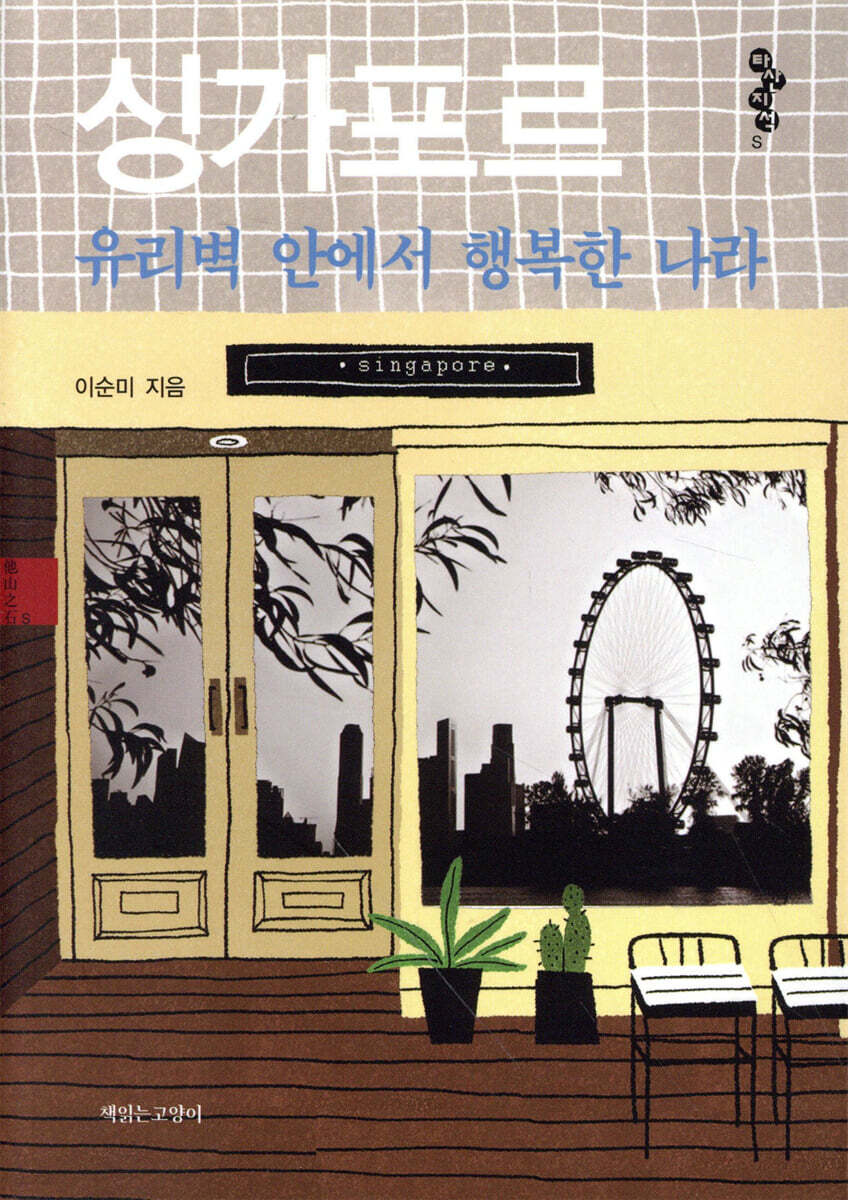
A happy country within Singapore's glass walls
 |
Description
Book Introduction
This book explores Singapore's unique culture of light and dark, from the Singapore inside the glass walls, which is characterized by cleanliness and safety, to the Singapore outside the glass walls, which is characterized by heat, multi-ethnicity, and control. It also explains the driving force behind Singapore's transformation from a barren equatorial country into a sophisticated city-state characterized by wealth and transparency, and how people of different ethnicities, cultures, and religions can coexist and live together.
- You can preview some of the book's contents.
Preview
index
Prologue: Perhaps this is a human-made fake Eden.
Part 1.
The power to make Volmoji a place you want to visit
21_A country that covers the entire island with light bulbs
28_Building a Forsaken Land into Southeast Asia's Greatest Nation
37_The Power of Singlish
51_The fuss about a 'safe country'
63_Clean and Green Policy
Part 2.
The island of dictatorship where carrots and sticks dance
71_Singapore's taxi drivers are talkative.
80_Secret Police and Singaporean Whips
93_A Different Dictatorship Through Discussion and Persuasion
99_Successful control that emphasizes transparency
109_I'm willing to accept this level of control.
121_How to Live Under Control
124_Perfect gender equality achieved through the sacrifice of maids
136_A country that provides job opportunities
140_Everyone works to make a living
Part 3.
Singapore remembered by its smell
157_The unbearable smell of a confined space
165_A place filled with various smells, the hawker center
179_The smell you must endure in Singapore: durian
190_True encounters occur when people share the same scent.
Part 4.
How Multiethnic People Survive in the Heat
197_Classical performances also end with a dance performance.
205_A Fierce Singaporean Party and Wedding
209_People who need stimulation
215_Singaporeans Caught in the Korean Wave
225_Diverse Religions of Multiethnic Peoples
238_The Multi-ethnic Lifestyle
248_Oriental on the outside, Western on the inside
Part 5.
An equatorial country where you can forget the heat
257_Equatorial Marathon Runners Running on the Boiling Asphalt
264_Singaporeans pretending not to be hot
279_Waltzing Alone in the Tropical Night
285_College Entrance Exams at the Equator
291_Living in a West-Facing House at the Equator
298_Unattractive, boring, and dull heat
303_Slow and lazy is normal
309_Day to the heat, night to the mosquitoes
314_Air conditioning to beat the heat in Singapore
Epilogue: Comfort Trapped in Time
Part 1.
The power to make Volmoji a place you want to visit
21_A country that covers the entire island with light bulbs
28_Building a Forsaken Land into Southeast Asia's Greatest Nation
37_The Power of Singlish
51_The fuss about a 'safe country'
63_Clean and Green Policy
Part 2.
The island of dictatorship where carrots and sticks dance
71_Singapore's taxi drivers are talkative.
80_Secret Police and Singaporean Whips
93_A Different Dictatorship Through Discussion and Persuasion
99_Successful control that emphasizes transparency
109_I'm willing to accept this level of control.
121_How to Live Under Control
124_Perfect gender equality achieved through the sacrifice of maids
136_A country that provides job opportunities
140_Everyone works to make a living
Part 3.
Singapore remembered by its smell
157_The unbearable smell of a confined space
165_A place filled with various smells, the hawker center
179_The smell you must endure in Singapore: durian
190_True encounters occur when people share the same scent.
Part 4.
How Multiethnic People Survive in the Heat
197_Classical performances also end with a dance performance.
205_A Fierce Singaporean Party and Wedding
209_People who need stimulation
215_Singaporeans Caught in the Korean Wave
225_Diverse Religions of Multiethnic Peoples
238_The Multi-ethnic Lifestyle
248_Oriental on the outside, Western on the inside
Part 5.
An equatorial country where you can forget the heat
257_Equatorial Marathon Runners Running on the Boiling Asphalt
264_Singaporeans pretending not to be hot
279_Waltzing Alone in the Tropical Night
285_College Entrance Exams at the Equator
291_Living in a West-Facing House at the Equator
298_Unattractive, boring, and dull heat
303_Slow and lazy is normal
309_Day to the heat, night to the mosquitoes
314_Air conditioning to beat the heat in Singapore
Epilogue: Comfort Trapped in Time
Publisher's Review
From abandoned land to the best country in Southeast Asia
Singapore is a country that achieved independence through forced secession from Malaysia in 1965.
What was the driving force that transformed an equatorial island nation with no water, no resources, and nothing but heat into the best country in Southeast Asia?
Over 80% of Singapore's population is comprised of ethnic Chinese who fled the chaos that broke out every day in mainland China and settled on an island off the coast of Malaysia.
Malaysian Prime Minister Tunku, who was troubled by the Singaporeans' drive to leave the country, the wealth of resourceful overseas Chinese, and the growing interference in the mainland, had no choice but to push for Singapore's secession in order to cut off the influence of the Singaporean overseas Chinese.
However, the Chinese who left the continent had to hold on to this land, no matter how desolate or terrible it was.
Accordingly, Singapore's Prime Minister Lee Kuan Yew began to nurture Singapore.
He led Singapore by suppressing the buds of the dead, waking up the lazy with air conditioning, and punishing the lawless with whipping.
Above all, we have made constant efforts to achieve economic growth.
The city's advantage as a trading port since ancient times was used as a driving force for economic development, enabling faster unloading and loading operations compared to other ports.
It has also become a transit port for not only ships but also airplanes crossing the East and West.
Singapore's Changi Airport has attracted airlines from around the world with its speedy system that allows passengers to clear immigration and collect their luggage within 20 minutes of landing.
Foreigners coming to attend academic conferences, international conferences, or for business have always been given special treatment, and a one-stop service has been provided for multinational corporations without a union.
Taxes are incomparably lower than in Korea, and the legal procedures and processes for investment are simple.
Whether it's a seminar or something else, the operating expenses are the same as anywhere else in the world.
Its incomparable affordability makes it a suitable place to hold international conferences.
Singapore's unique resources were created to focus the world's attention on the once desolate island nation.
Nurturing talent is the only way to survive.
The Singapore government has been actively involved in nurturing talented individuals, believing that the future of a resource-poor country depends entirely on talented individuals.
In fact, Singapore's educational standards are highly regarded.
Even if we look at college entrance exams, they are not limited to domestic universities, but are aimed at universities around the world.
Raffles Junior College, Singapore's most prestigious high school, has over 100 graduates entering Ivy League schools each year, and 50%, or about 300 graduates, are entering prestigious universities in the United States.
The high rate of Singaporean students progressing to universities around the world is a testament to the direction and quality of Singapore's education.
There was a good reason why the number of Korean students taking flights to Singapore was increasing day by day.
In Singapore, grades are determined in the fourth grade of elementary school, and if you don't get the chance to advance to a higher level of school at that point, it's nearly impossible to turn your life around.
Thanks to effective teaching methods and the selection of only the most qualified students, Singapore's secondary school students' abilities have reached the world's highest level.
Thanks to this series of events, Singapore has become a hub for education in Southeast Asia and the world. However, while excellent talent is being cultivated, the negative side effect of also creating inferior people cannot be ignored.
Singapore also placed importance on recruiting female talent.
In talent scouting, not a single person, regardless of gender, should be wasted.
So the policy that was put forward was the maid system.
A maid is a type of housekeeper.
Having someone to help with housework and childcare is very important to women.
Having someone do the housework for you is like giving women an opportunity.
The maids are mainly from neighboring Southeast Asian countries.
Therefore, although the negative side effect of conflict between maids and their owners becoming a social problem cannot be ignored, it shows that there are sufficient reasons and effects to maintain this system.
A country where even the most nonexistent things become resources
Singapore has no water, no resources, and only heat, but these limitations have not been a problem.
Singapore, which does not produce a single drop of water, imports water from Malaysia, but it does not stop there; it purifies the water and resells it at a higher price.
So, if people from all over the world come to see how purified water is made, they will be even more impressed by the Singaporean's selling skills.
Singapore is a small island that doesn't produce a single drop of oil, but it is one of the world's three largest oil refining countries.
Since the 1970s, the world's most advanced refinery facilities have been used to convert crude oil imported from the Middle East into petroleum, which is then sold back to the Middle Eastern market.
Even the equatorial heat is no barrier.
It is no exaggeration to say that Singapore is a country covered in air conditioning under the sky.
Air conditioning sent people sprawled out to work, and the scorching heat left machines with no time to rest.
The city's major buildings are connected underground, so you can avoid experiencing the real heat if you want.
Tourists flock to the equatorial nation of Singapore for a unique Christmas experience, complete with artificial snow.
Moreover, the Singaporeans' ingenuity in transforming even the blistering heat into a rare commodity by hosting a marathon on the equator is remarkable.
Prime Minister Lee Kuan Yew and the happiness within the glass walls he created
In Singapore, 83 of the 89 members of parliament are from the ruling People's Action Party.
That's why people also call the People's Action Party the Lee Kuan Yew Party.
For Koreans, Prime Minister Lee Kuan Yew is often compared to President Park Chung-hee, who ruled in a similar way at a similar time.
But when it comes to evaluation, they are polar opposites.
While some disparage Prime Minister Lee Kuan Yew as a dictator, others envy his political abilities and sometimes even look up to him for his clean politics.
In the face of Singapore's social democracy, which prioritizes the public interest, Singaporeans, whether it be dictatorship or control, put up with minor inconveniences and evaluate the government by saying, "If there had been no Prime Minister Lee Kuan Yew, there would be no Singapore."
In a country where even individual abilities must be thoroughly evaluated by the state, if one's abilities are not recognized as a child, one must be taught that there is no such thing as a noble or base profession and must devote oneself to vocational training.
Singapore, a country where secret police are still talked about, and where even daily newspapers publish photos, identities, and even crimes of petty criminals in detail to raise awareness, perhaps the minor(?) inconvenience of giving up freedom is what solidifies Singapore's comfortable glass walls.
A fiery country of apathetic people
Singapore, a country where the days are hot and the nights are hot.
In the sweltering equatorial heat that makes even thinking, let alone moving, impossible, one cannot blame Singaporeans for their laziness and slowness.
In hawker centers, where Singaporeans eat from morning to night, even those with a clean, unblemished appearance drinking their morning coffee are not at all embarrassed.
Whether it's the heat or the stifling pressure of being controlled, Singaporeans, who have fallen into a state of lethargy, always seek out new pleasures.
I feel satisfied when I dance the waltz at night, have a grand wedding or party, celebrate any anniversary with a grand ceremony, and end a classical concert with a dance party.
Singapore, a multi-ethnic country, has diverse religions, cuisines, and festivals.
As a nation that must unite its people, Singapore has a constant stream of festivals, embracing all of these.
And these festivals and various foods are used as important means of attracting tourists.
Singapore is a country with a population of 4.8 million and 10 million tourists.
One thing that makes Singapore accessible to everyone, whether Western or Eastern, is English, the common language of its multicultural population.
Singlish, Singapore's English, has a different word order and strange pronunciation, but Singaporeans who use Singlish are not ashamed of it.
Because Singlish is their national language.
Rather, they confidently complain that they cannot understand authentic English.
Singaporeans, who have used English for a long time, may look Asian on the outside, but are Westerners on the inside.
Being good at English means you are familiar with British culture.
It wasn't just English they learned.
Although he is usually quiet, when he gets into a discussion, he becomes cold and indifferent, debating like a British or Westerner.
There is no appearance of being burdened by strict discipline and restrictions.
No more shy Singaporeans of old.
Singapore is a country that achieved independence through forced secession from Malaysia in 1965.
What was the driving force that transformed an equatorial island nation with no water, no resources, and nothing but heat into the best country in Southeast Asia?
Over 80% of Singapore's population is comprised of ethnic Chinese who fled the chaos that broke out every day in mainland China and settled on an island off the coast of Malaysia.
Malaysian Prime Minister Tunku, who was troubled by the Singaporeans' drive to leave the country, the wealth of resourceful overseas Chinese, and the growing interference in the mainland, had no choice but to push for Singapore's secession in order to cut off the influence of the Singaporean overseas Chinese.
However, the Chinese who left the continent had to hold on to this land, no matter how desolate or terrible it was.
Accordingly, Singapore's Prime Minister Lee Kuan Yew began to nurture Singapore.
He led Singapore by suppressing the buds of the dead, waking up the lazy with air conditioning, and punishing the lawless with whipping.
Above all, we have made constant efforts to achieve economic growth.
The city's advantage as a trading port since ancient times was used as a driving force for economic development, enabling faster unloading and loading operations compared to other ports.
It has also become a transit port for not only ships but also airplanes crossing the East and West.
Singapore's Changi Airport has attracted airlines from around the world with its speedy system that allows passengers to clear immigration and collect their luggage within 20 minutes of landing.
Foreigners coming to attend academic conferences, international conferences, or for business have always been given special treatment, and a one-stop service has been provided for multinational corporations without a union.
Taxes are incomparably lower than in Korea, and the legal procedures and processes for investment are simple.
Whether it's a seminar or something else, the operating expenses are the same as anywhere else in the world.
Its incomparable affordability makes it a suitable place to hold international conferences.
Singapore's unique resources were created to focus the world's attention on the once desolate island nation.
Nurturing talent is the only way to survive.
The Singapore government has been actively involved in nurturing talented individuals, believing that the future of a resource-poor country depends entirely on talented individuals.
In fact, Singapore's educational standards are highly regarded.
Even if we look at college entrance exams, they are not limited to domestic universities, but are aimed at universities around the world.
Raffles Junior College, Singapore's most prestigious high school, has over 100 graduates entering Ivy League schools each year, and 50%, or about 300 graduates, are entering prestigious universities in the United States.
The high rate of Singaporean students progressing to universities around the world is a testament to the direction and quality of Singapore's education.
There was a good reason why the number of Korean students taking flights to Singapore was increasing day by day.
In Singapore, grades are determined in the fourth grade of elementary school, and if you don't get the chance to advance to a higher level of school at that point, it's nearly impossible to turn your life around.
Thanks to effective teaching methods and the selection of only the most qualified students, Singapore's secondary school students' abilities have reached the world's highest level.
Thanks to this series of events, Singapore has become a hub for education in Southeast Asia and the world. However, while excellent talent is being cultivated, the negative side effect of also creating inferior people cannot be ignored.
Singapore also placed importance on recruiting female talent.
In talent scouting, not a single person, regardless of gender, should be wasted.
So the policy that was put forward was the maid system.
A maid is a type of housekeeper.
Having someone to help with housework and childcare is very important to women.
Having someone do the housework for you is like giving women an opportunity.
The maids are mainly from neighboring Southeast Asian countries.
Therefore, although the negative side effect of conflict between maids and their owners becoming a social problem cannot be ignored, it shows that there are sufficient reasons and effects to maintain this system.
A country where even the most nonexistent things become resources
Singapore has no water, no resources, and only heat, but these limitations have not been a problem.
Singapore, which does not produce a single drop of water, imports water from Malaysia, but it does not stop there; it purifies the water and resells it at a higher price.
So, if people from all over the world come to see how purified water is made, they will be even more impressed by the Singaporean's selling skills.
Singapore is a small island that doesn't produce a single drop of oil, but it is one of the world's three largest oil refining countries.
Since the 1970s, the world's most advanced refinery facilities have been used to convert crude oil imported from the Middle East into petroleum, which is then sold back to the Middle Eastern market.
Even the equatorial heat is no barrier.
It is no exaggeration to say that Singapore is a country covered in air conditioning under the sky.
Air conditioning sent people sprawled out to work, and the scorching heat left machines with no time to rest.
The city's major buildings are connected underground, so you can avoid experiencing the real heat if you want.
Tourists flock to the equatorial nation of Singapore for a unique Christmas experience, complete with artificial snow.
Moreover, the Singaporeans' ingenuity in transforming even the blistering heat into a rare commodity by hosting a marathon on the equator is remarkable.
Prime Minister Lee Kuan Yew and the happiness within the glass walls he created
In Singapore, 83 of the 89 members of parliament are from the ruling People's Action Party.
That's why people also call the People's Action Party the Lee Kuan Yew Party.
For Koreans, Prime Minister Lee Kuan Yew is often compared to President Park Chung-hee, who ruled in a similar way at a similar time.
But when it comes to evaluation, they are polar opposites.
While some disparage Prime Minister Lee Kuan Yew as a dictator, others envy his political abilities and sometimes even look up to him for his clean politics.
In the face of Singapore's social democracy, which prioritizes the public interest, Singaporeans, whether it be dictatorship or control, put up with minor inconveniences and evaluate the government by saying, "If there had been no Prime Minister Lee Kuan Yew, there would be no Singapore."
In a country where even individual abilities must be thoroughly evaluated by the state, if one's abilities are not recognized as a child, one must be taught that there is no such thing as a noble or base profession and must devote oneself to vocational training.
Singapore, a country where secret police are still talked about, and where even daily newspapers publish photos, identities, and even crimes of petty criminals in detail to raise awareness, perhaps the minor(?) inconvenience of giving up freedom is what solidifies Singapore's comfortable glass walls.
A fiery country of apathetic people
Singapore, a country where the days are hot and the nights are hot.
In the sweltering equatorial heat that makes even thinking, let alone moving, impossible, one cannot blame Singaporeans for their laziness and slowness.
In hawker centers, where Singaporeans eat from morning to night, even those with a clean, unblemished appearance drinking their morning coffee are not at all embarrassed.
Whether it's the heat or the stifling pressure of being controlled, Singaporeans, who have fallen into a state of lethargy, always seek out new pleasures.
I feel satisfied when I dance the waltz at night, have a grand wedding or party, celebrate any anniversary with a grand ceremony, and end a classical concert with a dance party.
Singapore, a multi-ethnic country, has diverse religions, cuisines, and festivals.
As a nation that must unite its people, Singapore has a constant stream of festivals, embracing all of these.
And these festivals and various foods are used as important means of attracting tourists.
Singapore is a country with a population of 4.8 million and 10 million tourists.
One thing that makes Singapore accessible to everyone, whether Western or Eastern, is English, the common language of its multicultural population.
Singlish, Singapore's English, has a different word order and strange pronunciation, but Singaporeans who use Singlish are not ashamed of it.
Because Singlish is their national language.
Rather, they confidently complain that they cannot understand authentic English.
Singaporeans, who have used English for a long time, may look Asian on the outside, but are Westerners on the inside.
Being good at English means you are familiar with British culture.
It wasn't just English they learned.
Although he is usually quiet, when he gets into a discussion, he becomes cold and indifferent, debating like a British or Westerner.
There is no appearance of being burdened by strict discipline and restrictions.
No more shy Singaporeans of old.
GOODS SPECIFICS
- Date of publication: June 8, 2018
- Page count, weight, size: 320 pages | 318g | 131*186*23mm
- ISBN13: 9791186274361
- ISBN10: 1186274360
You may also like
카테고리
korean


korean

![ELLE 엘르 스페셜 에디션 A형 : 12월 [2025]](http://librairie.coreenne.fr/cdn/shop/files/b8e27a3de6c9538896439686c6b0e8fb.jpg?v=1766436872&width=3840)


