

Tokyo's nights come quickly
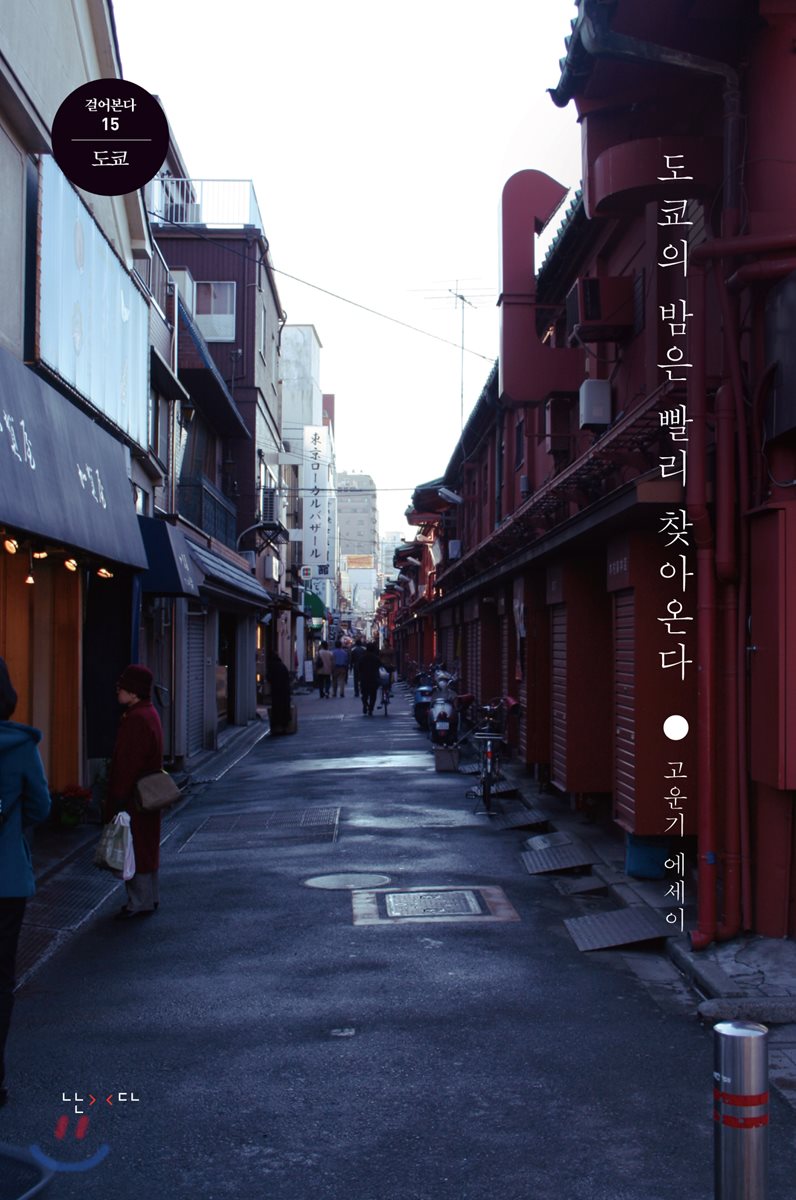 |
Description
Book Introduction
The real Tokyo story of Professor Koh Woon-ki of Hanyang University's Department of Cultural Contents, who went to study abroad in Tokyo in 1999 at the age of 38.
Even after returning from studying abroad, he frequently visited Tokyo and lived without losing touch with the connection between Tokyo and Korea, so I think it was that tense feeling that allowed him to complete this book.
In particular, for nearly ten years since 2008, he has been at the forefront of the "Snow Country Literature Tour," acting as a "Snow Country Guide," experiencing with his own eyes and feet the vivid scenes of Japanese literature that are alive throughout Tokyo.
In some ways, he is even more deeply immersed in Japanese literature than any other Japanese writer. This book, in the rare experience of unfolding the pages of literature along a visible course, is a story of Tokyo we have never known before, and I dare to say that it will become the story of Tokyo we will come to know from now on.
It would not be an exaggeration to call his every step through Tokyo a "stroll," but the strides and accompanying explanations are light, and the fact that he remembers this process as a significant footstep is probably due to his humble "attitude," which does not hide his love and respect for literature, especially among the classics.
He always seemed to have his head bowed about 15 degrees, following silently, following behind the fear of the inexplicable world.
What course have you taken to visit Tokyo so far?
If you can follow Professor Koun-gi's guidance and explore the literature overflowing with stories throughout Tokyo, buried in snow, you will have a lasting, enriching memory.
Especially in this snowy winter in Tokyo.
Even after returning from studying abroad, he frequently visited Tokyo and lived without losing touch with the connection between Tokyo and Korea, so I think it was that tense feeling that allowed him to complete this book.
In particular, for nearly ten years since 2008, he has been at the forefront of the "Snow Country Literature Tour," acting as a "Snow Country Guide," experiencing with his own eyes and feet the vivid scenes of Japanese literature that are alive throughout Tokyo.
In some ways, he is even more deeply immersed in Japanese literature than any other Japanese writer. This book, in the rare experience of unfolding the pages of literature along a visible course, is a story of Tokyo we have never known before, and I dare to say that it will become the story of Tokyo we will come to know from now on.
It would not be an exaggeration to call his every step through Tokyo a "stroll," but the strides and accompanying explanations are light, and the fact that he remembers this process as a significant footstep is probably due to his humble "attitude," which does not hide his love and respect for literature, especially among the classics.
He always seemed to have his head bowed about 15 degrees, following silently, following behind the fear of the inexplicable world.
What course have you taken to visit Tokyo so far?
If you can follow Professor Koun-gi's guidance and explore the literature overflowing with stories throughout Tokyo, buried in snow, you will have a lasting, enriching memory.
Especially in this snowy winter in Tokyo.
- You can preview some of the book's contents.
Preview
index
PROLOGUE Ashtray … 6
1.
Thursday, January 28, 2016 … 12
My first purchase in Tokyo—September 1999… 21
Yuzawa… Three Days in the Land of Snow—January 2008… 25
Faces and Voices: Yasunari Kawabata's "Snow Country" and Geisha Matsue… 31
2.
Friday, January 29, 2016 … 43
Long tunnel at the border… 49
Mirror of the Evening Scenery… 58
Bottom of the Night… 68
3.
Saturday, January 30, 2016 … 77
The Game of Death: Akutagawa and Park Young-geun… 88
Akutagawa Prize…93
The Fate of Bilingual Novels—A Meeting with Author Lee Hoe-seong, September 2000… 98
4.
Sunday, January 31, 2016 … 133
Tokyo's Profile—September 2001… 147
Some Political Issues—October 2001… 154
Kinokuniya Bookstore - January 2012 … 162
5.
Monday, February 1, 2016 … 172
Even the rules are small—October 2001… 193
Naomi: A Modern Life - Jun'ichirō Tanizaki's "The Love of a Fool"... 198
Mita Women's Association - May 2001… 211
Tokyo University of Foreign Studies, Department of Korean Language—October 2001… 217
Mr. Saegusa Toshikatsu… 222
Mr. Kiyotami Doi… 230
6.
Tuesday, February 2, 2016 … 238
Living Gentleman, Dead Bowing—December 2001… 247
The Last Samurai, Saigō Takamori—April 2007… 256
Children Who Know the Earth is Round—October 2007… 262
Oh my goodness—October 2008… 264
Clear Plowing, Rain Reading - August 2010 … 269
7.
Wednesday, February 3, 2016 … 277
EPILOGUE Author's Note … 286
1.
Thursday, January 28, 2016 … 12
My first purchase in Tokyo—September 1999… 21
Yuzawa… Three Days in the Land of Snow—January 2008… 25
Faces and Voices: Yasunari Kawabata's "Snow Country" and Geisha Matsue… 31
2.
Friday, January 29, 2016 … 43
Long tunnel at the border… 49
Mirror of the Evening Scenery… 58
Bottom of the Night… 68
3.
Saturday, January 30, 2016 … 77
The Game of Death: Akutagawa and Park Young-geun… 88
Akutagawa Prize…93
The Fate of Bilingual Novels—A Meeting with Author Lee Hoe-seong, September 2000… 98
4.
Sunday, January 31, 2016 … 133
Tokyo's Profile—September 2001… 147
Some Political Issues—October 2001… 154
Kinokuniya Bookstore - January 2012 … 162
5.
Monday, February 1, 2016 … 172
Even the rules are small—October 2001… 193
Naomi: A Modern Life - Jun'ichirō Tanizaki's "The Love of a Fool"... 198
Mita Women's Association - May 2001… 211
Tokyo University of Foreign Studies, Department of Korean Language—October 2001… 217
Mr. Saegusa Toshikatsu… 222
Mr. Kiyotami Doi… 230
6.
Tuesday, February 2, 2016 … 238
Living Gentleman, Dead Bowing—December 2001… 247
The Last Samurai, Saigō Takamori—April 2007… 256
Children Who Know the Earth is Round—October 2007… 262
Oh my goodness—October 2008… 264
Clear Plowing, Rain Reading - August 2010 … 269
7.
Wednesday, February 3, 2016 … 277
EPILOGUE Author's Note … 286
Into the book
On January 31, 1999, an ordinary grandmother of geisha descent passed away.
Kiku Kodaka, aged 84.
Even while lying in bed, he enjoyed reading books.
A nurse passes by and asks absentmindedly.
Do you read romance novels?
The grandmother put down the book she was reading, looked up at the nurse, and answered.
?Love is not something you read, it's something you do.
He has a unique wit when it comes to speaking.
This grandmother, who lived as a geisha until her mid-twenties in Yuzawa, Niigata, famous for its hot springs, had a fateful encounter with Yasunari Kawabata, who had come to write a novel in the winter of 1934, when she was just turning twenty.
And that's where "Snow Country" was born.
As a geisha, her name was Matsue.
Matsue is known as the model for Komako, the main character of "Snow Country."
The woman's impression was unexpectedly clean.
I thought that even the crevices under my toes would be clean.
This is the scene where the male protagonist Shimamura first meets Komako at a hot spring inn.
And if you go further back, you will see a more detailed description.
A slender yet sharp nose, lips as smooth as the rim of a beautiful purple annelid, eyebrows that seemed to droop slightly, eyes that were neither upturned nor droopy, but seemed to have been drawn straight on purpose, and skin as fresh as a lily or an onion bulb that could be said to have been dyed with the color of a mountain.
And this appearance can be summed up in one word: “bright and clean.”
Shimamura is a person who enjoys traveling and studying dance without doing anything special.
I came to a hot spring town that had become prosperous with the introduction of the train, and was just lounging around, hiking, and such.
The name of the village does not appear in the novel.
But it is certain that Yuzawa is the stage.
Kiku Kodaka, aged 84.
Even while lying in bed, he enjoyed reading books.
A nurse passes by and asks absentmindedly.
Do you read romance novels?
The grandmother put down the book she was reading, looked up at the nurse, and answered.
?Love is not something you read, it's something you do.
He has a unique wit when it comes to speaking.
This grandmother, who lived as a geisha until her mid-twenties in Yuzawa, Niigata, famous for its hot springs, had a fateful encounter with Yasunari Kawabata, who had come to write a novel in the winter of 1934, when she was just turning twenty.
And that's where "Snow Country" was born.
As a geisha, her name was Matsue.
Matsue is known as the model for Komako, the main character of "Snow Country."
The woman's impression was unexpectedly clean.
I thought that even the crevices under my toes would be clean.
This is the scene where the male protagonist Shimamura first meets Komako at a hot spring inn.
And if you go further back, you will see a more detailed description.
A slender yet sharp nose, lips as smooth as the rim of a beautiful purple annelid, eyebrows that seemed to droop slightly, eyes that were neither upturned nor droopy, but seemed to have been drawn straight on purpose, and skin as fresh as a lily or an onion bulb that could be said to have been dyed with the color of a mountain.
And this appearance can be summed up in one word: “bright and clean.”
Shimamura is a person who enjoys traveling and studying dance without doing anything special.
I came to a hot spring town that had become prosperous with the introduction of the train, and was just lounging around, hiking, and such.
The name of the village does not appear in the novel.
But it is certain that Yuzawa is the stage.
---From "Face and Voice - Yasunari Kawabata's 'Snow Country' and Geisha Matsue"
Publisher's Review
Author's Note
I walked around Tokyo from January 28th to February 3rd, 2016.
It was a trip to look back on my life in Japan over the past four years, including a visit to Yuzawa in Niigata.
The two things I remember from the pleasant walk over the past week are as follows.
I lived in Tokyo as a visiting researcher at Keio University for three years from 1999, and as a visiting professor at Meiji University for one year in 2007. It was a lifelong journey, sparked by the Samguk Yusa (Memorabilia of the Three Kingdoms), in which I set out to find Japanese literature comparable to our classical literature.
All sorts of relationships are intertwined.
From 2008, I guided the 'Snow Country Literature Tour' hosted by Kyobo Book Centre and Daesan Cultural Foundation for 10 years.
This was a trip to visit the snowiest locations in the Yuzawa mountain village of Niigata, the setting of the novel “Snow Country,” with a fan of the work, between late January and early February.
There are still many things to talk about.
The joy and pain that I shake off by writing like this are mine, but the writing of a scholar is inherently eager to teach, so I hope that the reader will not think that this is a truly enjoyable walk in Tokyo.
November 2017
Goun-gi
I walked around Tokyo from January 28th to February 3rd, 2016.
It was a trip to look back on my life in Japan over the past four years, including a visit to Yuzawa in Niigata.
The two things I remember from the pleasant walk over the past week are as follows.
I lived in Tokyo as a visiting researcher at Keio University for three years from 1999, and as a visiting professor at Meiji University for one year in 2007. It was a lifelong journey, sparked by the Samguk Yusa (Memorabilia of the Three Kingdoms), in which I set out to find Japanese literature comparable to our classical literature.
All sorts of relationships are intertwined.
From 2008, I guided the 'Snow Country Literature Tour' hosted by Kyobo Book Centre and Daesan Cultural Foundation for 10 years.
This was a trip to visit the snowiest locations in the Yuzawa mountain village of Niigata, the setting of the novel “Snow Country,” with a fan of the work, between late January and early February.
There are still many things to talk about.
The joy and pain that I shake off by writing like this are mine, but the writing of a scholar is inherently eager to teach, so I hope that the reader will not think that this is a truly enjoyable walk in Tokyo.
November 2017
Goun-gi
GOODS SPECIFICS
- Publication date: November 30, 2017
- Page count, weight, size: 288 pages | 442g | 140*210*17mm
- ISBN13: 9791196152468
- ISBN10: 1196152462
You may also like
카테고리
korean


korean

![GQ KOREA Mark (Monthly): December [2025]](http://librairie.coreenne.fr/cdn/shop/files/8ef265dbbfbf186523ed75ba7319009d.jpg?v=1765340328&width=3840)


