

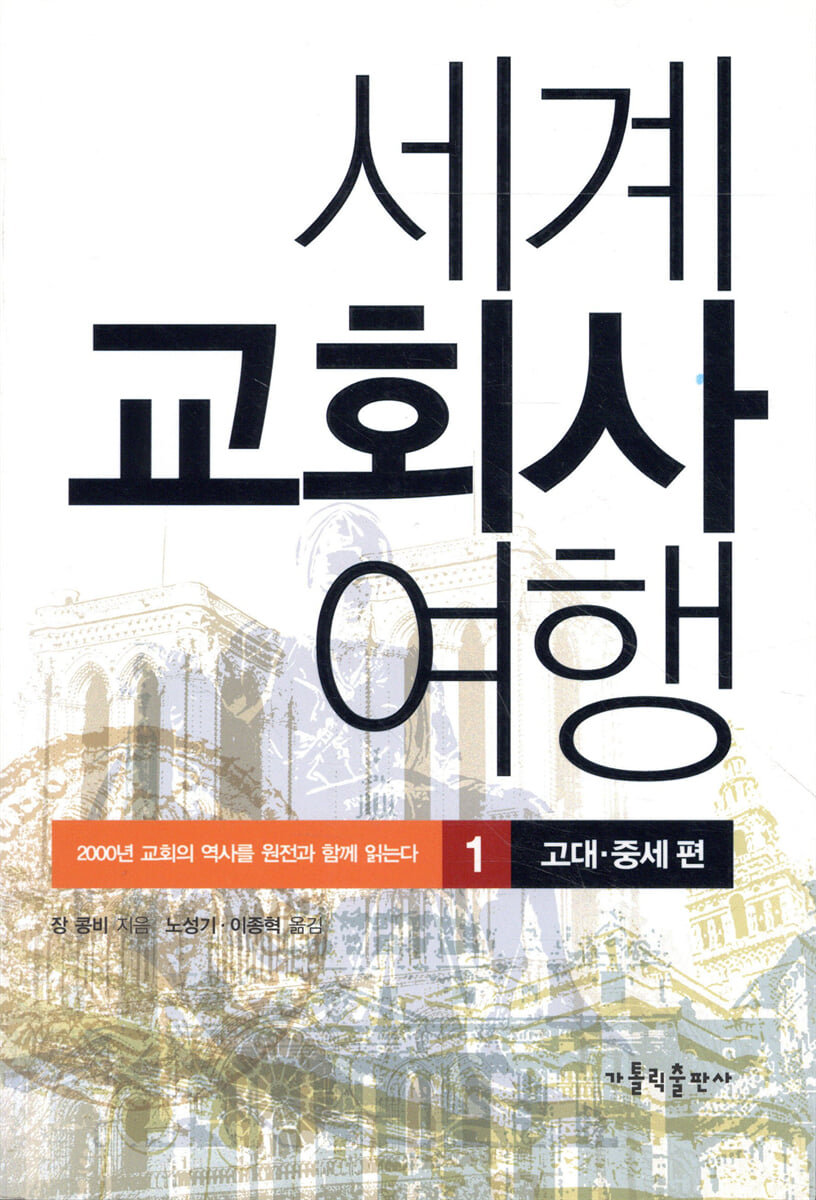
World Church History Journey 1
 |
Description
Book Introduction
A single book that provides a glimpse into the history of the church and its numerous original texts!
『A Journey Through the History of the World Church』 is a book written by French priest Jean Combi, who compiled 2000 years of church history in an interesting story format. Volume 1 contains stories from the time the apostles preached the gospel to the Middle Ages when the church dominated Europe.
Unlike church history books that mainly list only historical facts, its biggest feature is that it includes original texts that well reflect the circumstances of the time.
You can see at a glance the original texts that are essential for understanding church history, but are usually difficult to access, such as the Didache, Apostolic Traditions, Eusebius's Ecclesiastical History, and The Shepherd of Hermas.
It also includes unique illustrations, making it even more enjoyable to read.
This book is a must-read for those interested in church history, as it will help you vividly experience historical events and naturally understand the flow of church history.
『A Journey Through the History of the World Church』 is a book written by French priest Jean Combi, who compiled 2000 years of church history in an interesting story format. Volume 1 contains stories from the time the apostles preached the gospel to the Middle Ages when the church dominated Europe.
Unlike church history books that mainly list only historical facts, its biggest feature is that it includes original texts that well reflect the circumstances of the time.
You can see at a glance the original texts that are essential for understanding church history, but are usually difficult to access, such as the Didache, Apostolic Traditions, Eusebius's Ecclesiastical History, and The Shepherd of Hermas.
It also includes unique illustrations, making it even more enjoyable to read.
This book is a must-read for those interested in church history, as it will help you vividly experience historical events and naturally understand the flow of church history.
- You can preview some of the book's contents.
Preview
index
A Word of Recommendation - Studying History is a Compass That Leads You to a Happy Future
A Word of Recommendation - Studying History is a Path to Learning Life Wisdom
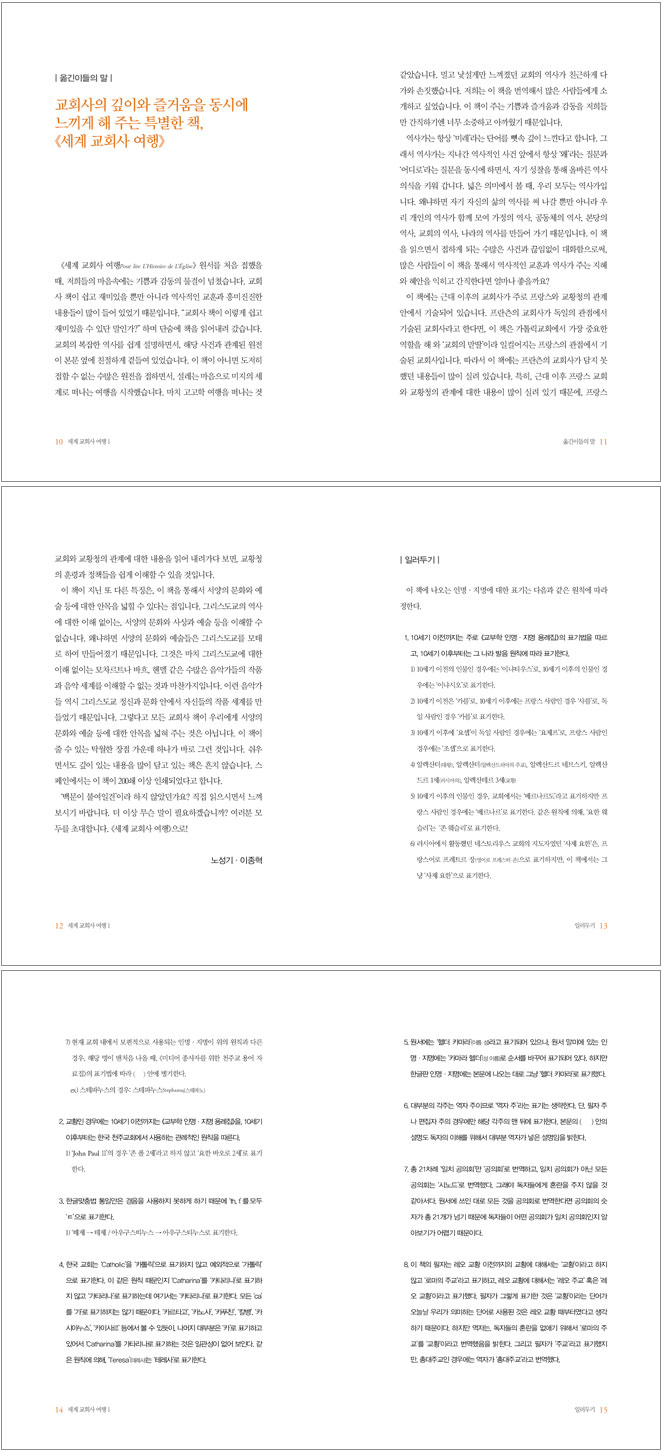
Translator's Note - A special book that allows you to experience both the depth and joy of church history: "A Journey Through World Church History."
Note
preface
Chapter 1: The Birth of the Church
Chapter 2: Christians in a Hostile World
Chapter 3: The Appearance of Early Christians
Chapter 4: The Church under the Christian Empire
Chapter 5: Formation of the Nerve
Chapter 6: The Fathers
Chapter 7: Early Middle Ages
Chapter 8: Christendom: The Fundamental Foundation of Society
Chapter 9 Christendom: Expansion, Challenges, and Defense
Chapter 10: The Decline of Christendom
Timeline
References
index
A Word of Recommendation - Studying History is a Path to Learning Life Wisdom
Translator's Note - A special book that allows you to experience both the depth and joy of church history: "A Journey Through World Church History."
Note
preface
Chapter 1: The Birth of the Church
Chapter 2: Christians in a Hostile World
Chapter 3: The Appearance of Early Christians
Chapter 4: The Church under the Christian Empire
Chapter 5: Formation of the Nerve
Chapter 6: The Fathers
Chapter 7: Early Middle Ages
Chapter 8: Christendom: The Fundamental Foundation of Society
Chapter 9 Christendom: Expansion, Challenges, and Defense
Chapter 10: The Decline of Christendom
Timeline
References
index
Detailed image
Into the book
Although baptisms were primarily for adults, children, regardless of age, could be baptized at the same time as their parents.
On the other hand, if the parents were already believers, their children were baptized separately later.
However, many church fathers opposed child baptism.
Tertullian, a controversial lawyer from Carthage, said:
“One is not born a Christian, but becomes one.” --- pp.164-165
The conditions imposed on the penitent were very strict and demanding.
The penitent was forced to wear beggar's clothes, was not allowed to bathe, and was required to fast and abstain from meat while giving alms.
Penitents were forbidden to engage in certain businesses and were also forbidden to have sexual relations.
Even after being forgiven of their sins, there were cases where they were forbidden from engaging in business or having sexual relations until death.
--- p.254
Every Sunday, in the church, the Nicene-Constantinopolitan Creed is used to profess one's faith.
This doctrine was not established through a peaceful exchange of theological ideas, but through fierce debate.
However, the heated debate did not necessarily arise only over doctrinal issues.
The formation of the Nicene-Constantinople Creed was also marked by conflicts between peoples, cultures, and regions, exiles, bloodshed, and military and police intervention.
--- p.286
Greeks and Latins had some contact, but rather than understanding each other, they thoroughly despised each other.
In the eyes of the Eastern Church, the Western Church's people were children of darkness, country bumpkins, gluttons, and ignorant barbarians.
In the eyes of the Western Church, the Eastern Church's people were apostates, (petty) schismatics, and weak women.
Therefore, the West used the adjective 'Byzantine' to mock and despise the East.
--- p.439
Nowadays, because of the sound system, the preacher preaches from the lectern next to the altar, but at that time, the preacher did not use the lectern, but came down to the pews and preached.
In some churches, such large crowds gathered that sermons had to be held outdoors.
Saint Dominic also preached near a mill.
--- p.489
In the Middle Ages, anyone who rebelled against the teachings of the Church was immediately labeled a "heretic."
We know about heretics only from official Church sources, especially those that document the very harsh interrogations they underwent.
However, these materials do not deal with heretics from a fair and objective standpoint.
Most of the materials written by the heretics themselves have been lost, and many of the rumors circulating about them are difficult to believe.
Just as rumors about Christians were rampant in the early days of Christianity, so too were rumors about a minority group of heretics.
On the other hand, if the parents were already believers, their children were baptized separately later.
However, many church fathers opposed child baptism.
Tertullian, a controversial lawyer from Carthage, said:
“One is not born a Christian, but becomes one.” --- pp.164-165
The conditions imposed on the penitent were very strict and demanding.
The penitent was forced to wear beggar's clothes, was not allowed to bathe, and was required to fast and abstain from meat while giving alms.
Penitents were forbidden to engage in certain businesses and were also forbidden to have sexual relations.
Even after being forgiven of their sins, there were cases where they were forbidden from engaging in business or having sexual relations until death.
--- p.254
Every Sunday, in the church, the Nicene-Constantinopolitan Creed is used to profess one's faith.
This doctrine was not established through a peaceful exchange of theological ideas, but through fierce debate.
However, the heated debate did not necessarily arise only over doctrinal issues.
The formation of the Nicene-Constantinople Creed was also marked by conflicts between peoples, cultures, and regions, exiles, bloodshed, and military and police intervention.
--- p.286
Greeks and Latins had some contact, but rather than understanding each other, they thoroughly despised each other.
In the eyes of the Eastern Church, the Western Church's people were children of darkness, country bumpkins, gluttons, and ignorant barbarians.
In the eyes of the Western Church, the Eastern Church's people were apostates, (petty) schismatics, and weak women.
Therefore, the West used the adjective 'Byzantine' to mock and despise the East.
--- p.439
Nowadays, because of the sound system, the preacher preaches from the lectern next to the altar, but at that time, the preacher did not use the lectern, but came down to the pews and preached.
In some churches, such large crowds gathered that sermons had to be held outdoors.
Saint Dominic also preached near a mill.
--- p.489
In the Middle Ages, anyone who rebelled against the teachings of the Church was immediately labeled a "heretic."
We know about heretics only from official Church sources, especially those that document the very harsh interrogations they underwent.
However, these materials do not deal with heretics from a fair and objective standpoint.
Most of the materials written by the heretics themselves have been lost, and many of the rumors circulating about them are difficult to believe.
Just as rumors about Christians were rampant in the early days of Christianity, so too were rumors about a minority group of heretics.
--- p.527
Publisher's Review
A completely new form of church history, different from the history of the church so far.
To properly understand the church today, it is essential to know its history.
However, there are not many books on church history, and most of the books that are available are heavy in content and limited to historical descriptions.
As a result, not only ordinary people but even those interested in church history may feel somewhat burdened when reading books related to church history.
Here is a church history written in a completely new format, different from any church history books published so far.
This is the book “A Journey Through the History of the World Church” written by Father Jean Combi of France in 2000, which compiles the history of the church along with original texts.
The fact that this book has become widely known worldwide, having been translated into about ten languages, including English, Spanish, and Italian, is because it embodies all the essential elements of church history.
A fully prepared book with all the qualifications for a correct understanding of church history.
To correctly understand church history, the following conditions must be met.
First, the history of the church and the history of the world must not be separated.
Second, we must utilize all traces of the past, including buildings, works of art, and archaeological excavations.
Third, you must read the original texts related to historical events.
This book satisfies all three.
It is precisely for this reason that this book can be said to be fully prepared for a correct and proper understanding of church history.
Let's look at this in more detail:
First, the history of the church and the history of the world must not be separated.
This book connects world history and the history of the church by showing the key role Christianity played in and responded to major and important events that occurred around the world, such as the discovery of the New World, World Wars I and II, and the Cold War.
Through this, the reader comes to realize how closely the history of the church and the world have influenced each other and formed a close relationship.
Second, we must utilize all the footsteps of the past.
This book provides a glimpse into what was happening at that historical point in time, with key architectural, artistic, and archaeological excavations, all essential for a proper understanding of the times.
Third, you must read the original texts related to historical events.
Most church history books often only cite a very small portion of historical sources.
However, this book contains a large number of original sources, which are considered the most important among the sources, almost as much as the main text, providing readers with the opportunity to read a variety of original sources at a glance.
By reading the original text, readers are able to enter directly into the scene of church history and understand the flow of church history much more naturally than by reading a text that only lists facts.
This point in particular can be said to be the most special merit of this book.
Covers key aspects of church history, from the birth of the Church to Pope John Paul II.
《A Journey Through World Church History》 is published in two volumes, with Volume 1 being published first and Volume 2 scheduled to be released soon.
One volume covers the period from ancient times, when the apostles preached the gospel, to the Middle Ages, when the church dominated Europe.
Volume 2 covers the period from the beginning of the Renaissance to the early 2000s, during the reign of Pope John Paul II, and up to the present day.
The ancient and medieval periods covered in “World Church History Journey 1” were the most important foundational periods in church history.
Volume 1 contains many works that are difficult for the general public to read, such as the Didache, Eusebius's Ecclesiastical History, and The Shepherd of Hermas.
It also covers the most crucial parts of church history, including the persecution of the Roman Empire, the recognition of Christianity, the appearance of the early Christian community, the formation of the creed through the Council, the lives and thoughts of the Church Fathers, and the conflict between the Eastern and Western Churches.
For those studying or majoring in church history, "A Journey Through World Church History" will be the ultimate guidebook that will help you understand church history correctly and properly by reading numerous original texts at once, and will be the best book to experience the joy of studying history.
To properly understand the church today, it is essential to know its history.
However, there are not many books on church history, and most of the books that are available are heavy in content and limited to historical descriptions.
As a result, not only ordinary people but even those interested in church history may feel somewhat burdened when reading books related to church history.
Here is a church history written in a completely new format, different from any church history books published so far.
This is the book “A Journey Through the History of the World Church” written by Father Jean Combi of France in 2000, which compiles the history of the church along with original texts.
The fact that this book has become widely known worldwide, having been translated into about ten languages, including English, Spanish, and Italian, is because it embodies all the essential elements of church history.
A fully prepared book with all the qualifications for a correct understanding of church history.
To correctly understand church history, the following conditions must be met.
First, the history of the church and the history of the world must not be separated.
Second, we must utilize all traces of the past, including buildings, works of art, and archaeological excavations.
Third, you must read the original texts related to historical events.
This book satisfies all three.
It is precisely for this reason that this book can be said to be fully prepared for a correct and proper understanding of church history.
Let's look at this in more detail:
First, the history of the church and the history of the world must not be separated.
This book connects world history and the history of the church by showing the key role Christianity played in and responded to major and important events that occurred around the world, such as the discovery of the New World, World Wars I and II, and the Cold War.
Through this, the reader comes to realize how closely the history of the church and the world have influenced each other and formed a close relationship.
Second, we must utilize all the footsteps of the past.
This book provides a glimpse into what was happening at that historical point in time, with key architectural, artistic, and archaeological excavations, all essential for a proper understanding of the times.
Third, you must read the original texts related to historical events.
Most church history books often only cite a very small portion of historical sources.
However, this book contains a large number of original sources, which are considered the most important among the sources, almost as much as the main text, providing readers with the opportunity to read a variety of original sources at a glance.
By reading the original text, readers are able to enter directly into the scene of church history and understand the flow of church history much more naturally than by reading a text that only lists facts.
This point in particular can be said to be the most special merit of this book.
Covers key aspects of church history, from the birth of the Church to Pope John Paul II.
《A Journey Through World Church History》 is published in two volumes, with Volume 1 being published first and Volume 2 scheduled to be released soon.
One volume covers the period from ancient times, when the apostles preached the gospel, to the Middle Ages, when the church dominated Europe.
Volume 2 covers the period from the beginning of the Renaissance to the early 2000s, during the reign of Pope John Paul II, and up to the present day.
The ancient and medieval periods covered in “World Church History Journey 1” were the most important foundational periods in church history.
Volume 1 contains many works that are difficult for the general public to read, such as the Didache, Eusebius's Ecclesiastical History, and The Shepherd of Hermas.
It also covers the most crucial parts of church history, including the persecution of the Roman Empire, the recognition of Christianity, the appearance of the early Christian community, the formation of the creed through the Council, the lives and thoughts of the Church Fathers, and the conflict between the Eastern and Western Churches.
For those studying or majoring in church history, "A Journey Through World Church History" will be the ultimate guidebook that will help you understand church history correctly and properly by reading numerous original texts at once, and will be the best book to experience the joy of studying history.
GOODS SPECIFICS
- Date of issue: April 13, 2012
- Page count, weight, size: 640 pages | 852g | 153*224*35mm
- ISBN13: 9788932112510
- ISBN10: 8932112517
You may also like
카테고리
korean


korean

![GQ KOREA Mark (Monthly): December [2025]](http://librairie.coreenne.fr/cdn/shop/files/8ef265dbbfbf186523ed75ba7319009d.jpg?v=1765340328&width=3840)


