

Travel diary
 |
Description
Book Introduction
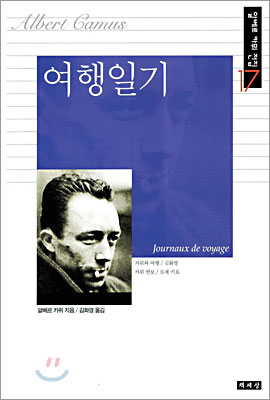
Albert Camus' travel diary, a collection of his travel records.
This book is a compilation of two diary-style notes about a trip to the United States from March to May 1946 and a trip to South America from June to August 1949, compiled in 1978 by Roger Quillot, the editor-in-chief of Camus's complete works for the French publisher Gallimard.
This book is particularly significant in that, unlike a finished literary work, it contains fragmentary notes from daily life and reveals a more personal realm.
The fragments of his thoughts on an unfamiliar world reveal the author's intellectual explorations, his private interactions and conversations hint at Camus's life as a person, and his spontaneous notes reveal the outlines of his works.
Another interesting aspect is that it deals with the records of the unfamiliarity, anxiety, and strong impressions that arise from the extraordinary experience of travel.
But the real reason this journey is worth paying attention to is that it records the birth pangs of a great writer named Camus.
"Travel Journal" reveals the circumstances under which Camus's masterpiece, "La Peste," was conceived, and also provides clues to how the theme of the awakening of the absurd deepened into the restoration of human bonds.
Therefore, this book is not simply a record of a journey, but is even more valuable as a resource that hints at the process by which one writer progresses to become a master.
This book is a compilation of two diary-style notes about a trip to the United States from March to May 1946 and a trip to South America from June to August 1949, compiled in 1978 by Roger Quillot, the editor-in-chief of Camus's complete works for the French publisher Gallimard.
This book is particularly significant in that, unlike a finished literary work, it contains fragmentary notes from daily life and reveals a more personal realm.
The fragments of his thoughts on an unfamiliar world reveal the author's intellectual explorations, his private interactions and conversations hint at Camus's life as a person, and his spontaneous notes reveal the outlines of his works.
Another interesting aspect is that it deals with the records of the unfamiliarity, anxiety, and strong impressions that arise from the extraordinary experience of travel.
But the real reason this journey is worth paying attention to is that it records the birth pangs of a great writer named Camus.
"Travel Journal" reveals the circumstances under which Camus's masterpiece, "La Peste," was conceived, and also provides clues to how the theme of the awakening of the absurd deepened into the restoration of human bonds.
Therefore, this book is not simply a record of a journey, but is even more valuable as a resource that hints at the process by which one writer progresses to become a master.
Publisher's Review
America, 1946: A place where encounters with the sober life are absent.
Camus's three-month trip to the United States from March to May 1946 was his fourth long journey, following trips to mainland France, the Czech Republic, and Italy before the war.
This journey involves meeting others, that is, carrying out a cultural mission through lectures, meetings, and discussions.
1946 was the year Camus began to make a name for himself as a writer, but he was better known as the editor of the resistance newspaper Combat.
On March 25, two weeks after leaving France, Camus arrived at the port of New York.
He entered the country under strict security by the American police, and upon entering, he refused to answer the question, "Are you a communist or have any friends who are communists?", so French embassy officials eventually came and rescued him.
He has given several lectures and discussions on the 'crisis of civilization' and 'theater' to the public at Harvard University and other institutions.
However, Camus's diary does not record any impressions of this.
It only contains the impressions he received as a traveler and the concept of the novel The Plague, which was published the following year.
Camus, who came from the ruins of war, is of course amazed by the progress of America, but the writer is also disturbed by the absence of places where he can encounter the real life he loves, the bustling and disciplined life.
News of Camus's arrival in New York was announced across a full page in the March 24 edition of the New York Herald Tribune Weekly Book Review.
Camus, one of the two or three most outstanding writers in France.
Sartre opened the way for him.
Verkor praised him in New York, Chicago, and San Francisco.
“Our literary journals have also begun to mention his name with a kind of reverence,” wrote Justin O’Brien, chairman of the Romance Languages and Literatures Department at Columbia University.
This is one of the most sincere and accurate introductions written about Camus during his stay in New York.
Travel, a form of self-fulfillment
For Camus, travel meant “an interest in difficulties and a love of the unknown.”
In other words, travel was a kind of asceticism for him, a form of self-fulfillment, or a means of discovering the true face of life through 'making it strange'.
If Camus's journey before the war was a process of asceticism and self-fulfillment, then in his journey after enduring the tremendous experience of war, Camus added the purpose of realizing a sense of solidarity through understanding and discovery of others.
In 1948, two years after returning from the United States, Camus planned a trip to Egypt.
It was to meet Jean Grenier, an old teacher and friend who worked there.
However, this plan did not come to fruition.
He also declines an invitation from Japan, which offered him a huge reward.
At the time, not only was his health not conducive to long-distance travel, but he also suffered from claustrophobia, which made him extremely reluctant to travel by air.
His health condition is reflected in his travel diary.
Compared to air travel, which allows for relatively quick arrival at the destination, sea travel offers opportunities for reflection, meditation, and writing due to the special environment of long periods of leisure, monotony, confinement, leisure, and solitude.
Also, as I wrote in my diary during my trip to the United States, on board a ship “all human relationships are formed at a rapid pace” and become objects of observation in themselves.
As Rose Kiyo reveals in her 'Editor's Note', these writings are undoubtedly travelogues that were supposed to be published separately from the notes in 'Carnets'.
However, rather than being a record of a new 'discovery' of an unknown world, it has more of the character of a notebook written from the perspective of the 'writer' writing the work.
He always gives the impression that he is doing research for a piece he will write someday.
During his travels in South America, Camus wrote about the art of taking notes:
“I don’t want to write anything internal, but I plan to write down everything that happened that day, without forgetting a single thing.”
Travel to South America, a land of vast spaces and nature.
The trip to South America was Camus's second and last overseas trip as a cultural envoy.
His official purpose was to promote cultural solidarity, exchange, and unity between the Latin American empires and France.
In early 1949, Roger Seydoux of the French Foreign Ministry's Cultural Exchange Bureau offered him a trip to South America, provided he gave five lectures.
At the time, Camus was preparing an essay on rebellion (later titled “The Rebel”), but there was little progress, and the Paris literary and intellectual world was divided between those supporting and opposing the Soviet Union.
The Soviet Union attempted to mobilize the masses through a 'peace movement' supported by a group of intellectuals who advocated for pacifism, but Camus was critical of both the Soviet Union and the United States.
Because of these various circumstances, he wanted to leave Paris, but he ended up choosing to travel to South America.
However, on this trip, Camus is overworked by a hectic program that includes meetings with people from all walks of life, lectures and discussions, festival attendance, and prison visits.
In the twelve years since this trip, I have rarely been accepted to give lectures abroad.
Despite the arduous journey, Camus, a European burdened by a long history, finds a uniquely positive inspiration in the vast spaces and landscapes of South America and the raw power of nature.
And this trip not only provided Camus with material for his work, but also gave him insight into the true nature of humanity and the world.
America in Crisis, South America Discovers Potential
A city filled with skyscrapers, noise, and large advertisements dominating the streets.
The image of American society through Camus's eyes was starkly different from that of Europe, which had not yet recovered from the chaos of the post-war period.
But rather than being overwhelmed by the grandeur of this city's dazzling economic success, Camus sees the fabricated illusions and packaged lies of the American fairy tale.
It is a breathtaking sight, “despite the fog, or perhaps because of the fog.”
Order, power, and economic power are there.
This is clearly revealed in the expression, “My heart trembles in the face of such astonishing inhumanity.”
Meanwhile, on his trip to South America, he notes the continent's rugged vitality.
The untouched landscapes of South America were not only awe-inspiring in themselves, but also seemed like a third possibility for overcoming the conflicts in the world that were being reorganized into East and West camps.
“Two great empires set out to conquer their continents… if some new civilization were to arise and South America could help to moderate some of its mechanical follies, there would be only hope,” and “Brazil, with its slender modern skeleton over this vast continent teeming with all the forces of nature and primordial power, resembles a building being eaten away by invisible termites.”
From the awakening of absurdity to the restoration of human bonds
Camus's engaging writing style, with its deep thoughts, dense sentences, and captivating readership, is also evident in this book.
However, compared to meticulously conceived works, notes written spontaneously are less refined and have a raw charm that conveys the author's emotions intact.
The admiration for a beautiful landscape or the intense anger at an absurd situation allows the reader to breathe directly with the author Camus, without going through the medium of a character.
Another fun aspect of reading this book is finding out how the ideas for the novel and episodes from the travels that appear in the diary were reproduced in later works.
In the special circumstances of his travels, Camus gained and developed many new ideas.
First of all, the American trip is filled with notes on the interests of the time scattered throughout the Writer's Notebooks of 1945 and 1946, notes on the novel The Plague published in 1947, and parts of the diary reappear in the completed manuscript.
And the intuition he gained during his voyage to South America became important material for his prose poems and the long novel “L'Ete”, and the episode in Iguape became important material for his short story “The Enemy and the Kingdom”.
For Camus, travel outside of everyday life was not a rest, but rather a part of his intense life. However, it was not merely a painful process, but rather an opportunity to discover and understand others.
This "Travel Journal" is situated in the process where the theme of Camus's literature gradually expands from the awakening of the absurd to the restoration of human bonds.
Camus's three-month trip to the United States from March to May 1946 was his fourth long journey, following trips to mainland France, the Czech Republic, and Italy before the war.
This journey involves meeting others, that is, carrying out a cultural mission through lectures, meetings, and discussions.
1946 was the year Camus began to make a name for himself as a writer, but he was better known as the editor of the resistance newspaper Combat.
On March 25, two weeks after leaving France, Camus arrived at the port of New York.
He entered the country under strict security by the American police, and upon entering, he refused to answer the question, "Are you a communist or have any friends who are communists?", so French embassy officials eventually came and rescued him.
He has given several lectures and discussions on the 'crisis of civilization' and 'theater' to the public at Harvard University and other institutions.
However, Camus's diary does not record any impressions of this.
It only contains the impressions he received as a traveler and the concept of the novel The Plague, which was published the following year.
Camus, who came from the ruins of war, is of course amazed by the progress of America, but the writer is also disturbed by the absence of places where he can encounter the real life he loves, the bustling and disciplined life.
News of Camus's arrival in New York was announced across a full page in the March 24 edition of the New York Herald Tribune Weekly Book Review.
Camus, one of the two or three most outstanding writers in France.
Sartre opened the way for him.
Verkor praised him in New York, Chicago, and San Francisco.
“Our literary journals have also begun to mention his name with a kind of reverence,” wrote Justin O’Brien, chairman of the Romance Languages and Literatures Department at Columbia University.
This is one of the most sincere and accurate introductions written about Camus during his stay in New York.
Travel, a form of self-fulfillment
For Camus, travel meant “an interest in difficulties and a love of the unknown.”
In other words, travel was a kind of asceticism for him, a form of self-fulfillment, or a means of discovering the true face of life through 'making it strange'.
If Camus's journey before the war was a process of asceticism and self-fulfillment, then in his journey after enduring the tremendous experience of war, Camus added the purpose of realizing a sense of solidarity through understanding and discovery of others.
In 1948, two years after returning from the United States, Camus planned a trip to Egypt.
It was to meet Jean Grenier, an old teacher and friend who worked there.
However, this plan did not come to fruition.
He also declines an invitation from Japan, which offered him a huge reward.
At the time, not only was his health not conducive to long-distance travel, but he also suffered from claustrophobia, which made him extremely reluctant to travel by air.
His health condition is reflected in his travel diary.
Compared to air travel, which allows for relatively quick arrival at the destination, sea travel offers opportunities for reflection, meditation, and writing due to the special environment of long periods of leisure, monotony, confinement, leisure, and solitude.
Also, as I wrote in my diary during my trip to the United States, on board a ship “all human relationships are formed at a rapid pace” and become objects of observation in themselves.
As Rose Kiyo reveals in her 'Editor's Note', these writings are undoubtedly travelogues that were supposed to be published separately from the notes in 'Carnets'.
However, rather than being a record of a new 'discovery' of an unknown world, it has more of the character of a notebook written from the perspective of the 'writer' writing the work.
He always gives the impression that he is doing research for a piece he will write someday.
During his travels in South America, Camus wrote about the art of taking notes:
“I don’t want to write anything internal, but I plan to write down everything that happened that day, without forgetting a single thing.”
Travel to South America, a land of vast spaces and nature.
The trip to South America was Camus's second and last overseas trip as a cultural envoy.
His official purpose was to promote cultural solidarity, exchange, and unity between the Latin American empires and France.
In early 1949, Roger Seydoux of the French Foreign Ministry's Cultural Exchange Bureau offered him a trip to South America, provided he gave five lectures.
At the time, Camus was preparing an essay on rebellion (later titled “The Rebel”), but there was little progress, and the Paris literary and intellectual world was divided between those supporting and opposing the Soviet Union.
The Soviet Union attempted to mobilize the masses through a 'peace movement' supported by a group of intellectuals who advocated for pacifism, but Camus was critical of both the Soviet Union and the United States.
Because of these various circumstances, he wanted to leave Paris, but he ended up choosing to travel to South America.
However, on this trip, Camus is overworked by a hectic program that includes meetings with people from all walks of life, lectures and discussions, festival attendance, and prison visits.
In the twelve years since this trip, I have rarely been accepted to give lectures abroad.
Despite the arduous journey, Camus, a European burdened by a long history, finds a uniquely positive inspiration in the vast spaces and landscapes of South America and the raw power of nature.
And this trip not only provided Camus with material for his work, but also gave him insight into the true nature of humanity and the world.
America in Crisis, South America Discovers Potential
A city filled with skyscrapers, noise, and large advertisements dominating the streets.
The image of American society through Camus's eyes was starkly different from that of Europe, which had not yet recovered from the chaos of the post-war period.
But rather than being overwhelmed by the grandeur of this city's dazzling economic success, Camus sees the fabricated illusions and packaged lies of the American fairy tale.
It is a breathtaking sight, “despite the fog, or perhaps because of the fog.”
Order, power, and economic power are there.
This is clearly revealed in the expression, “My heart trembles in the face of such astonishing inhumanity.”
Meanwhile, on his trip to South America, he notes the continent's rugged vitality.
The untouched landscapes of South America were not only awe-inspiring in themselves, but also seemed like a third possibility for overcoming the conflicts in the world that were being reorganized into East and West camps.
“Two great empires set out to conquer their continents… if some new civilization were to arise and South America could help to moderate some of its mechanical follies, there would be only hope,” and “Brazil, with its slender modern skeleton over this vast continent teeming with all the forces of nature and primordial power, resembles a building being eaten away by invisible termites.”
From the awakening of absurdity to the restoration of human bonds
Camus's engaging writing style, with its deep thoughts, dense sentences, and captivating readership, is also evident in this book.
However, compared to meticulously conceived works, notes written spontaneously are less refined and have a raw charm that conveys the author's emotions intact.
The admiration for a beautiful landscape or the intense anger at an absurd situation allows the reader to breathe directly with the author Camus, without going through the medium of a character.
Another fun aspect of reading this book is finding out how the ideas for the novel and episodes from the travels that appear in the diary were reproduced in later works.
In the special circumstances of his travels, Camus gained and developed many new ideas.
First of all, the American trip is filled with notes on the interests of the time scattered throughout the Writer's Notebooks of 1945 and 1946, notes on the novel The Plague published in 1947, and parts of the diary reappear in the completed manuscript.
And the intuition he gained during his voyage to South America became important material for his prose poems and the long novel “L'Ete”, and the episode in Iguape became important material for his short story “The Enemy and the Kingdom”.
For Camus, travel outside of everyday life was not a rest, but rather a part of his intense life. However, it was not merely a painful process, but rather an opportunity to discover and understand others.
This "Travel Journal" is situated in the process where the theme of Camus's literature gradually expands from the awakening of the absurd to the restoration of human bonds.
GOODS SPECIFICS
- Date of issue: September 15, 2005
- Page count, weight, size: 202 pages | 326g | 153*224*20mm
- ISBN13: 9788970135328
- ISBN10: 8970135324
You may also like
카테고리
korean


korean

![ELLE 엘르 스페셜 에디션 A형 : 12월 [2025]](http://librairie.coreenne.fr/cdn/shop/files/b8e27a3de6c9538896439686c6b0e8fb.jpg?v=1766436872&width=3840)


