

12/12
 |
Description
Book Introduction
The only book recommended to those curious about the historical truth of December 12th!
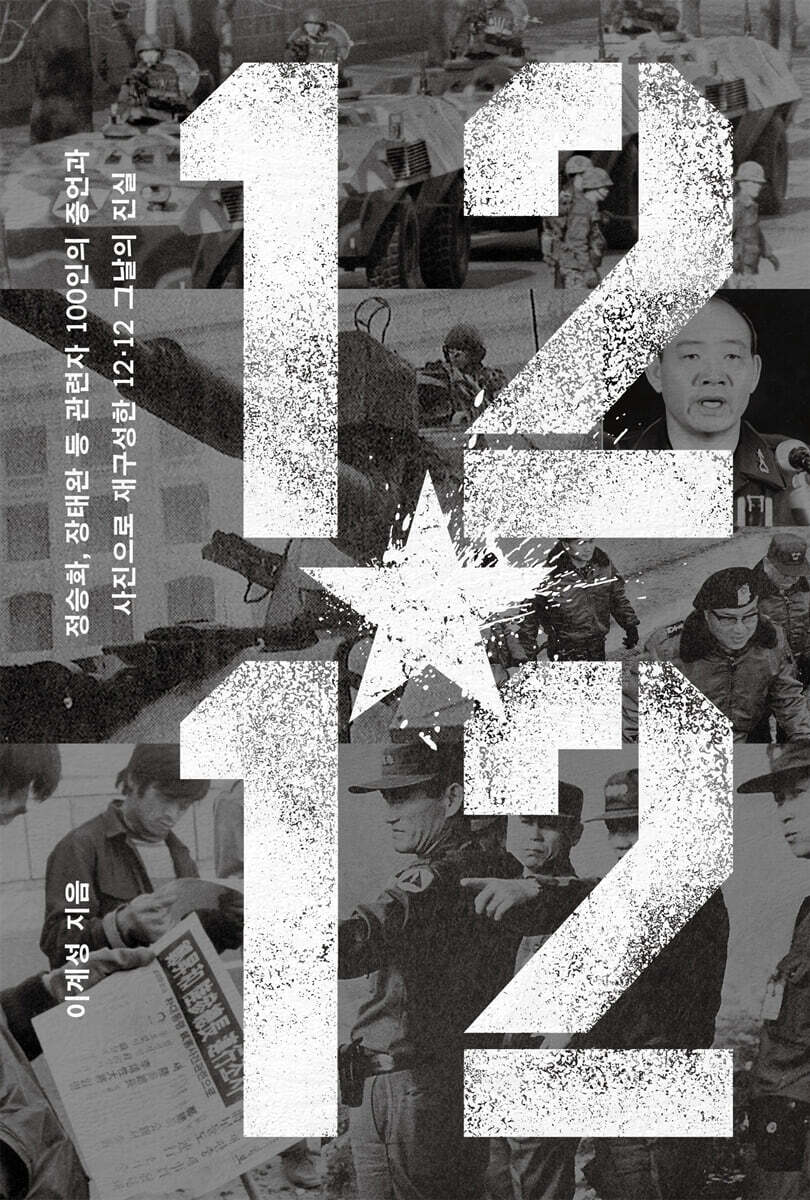
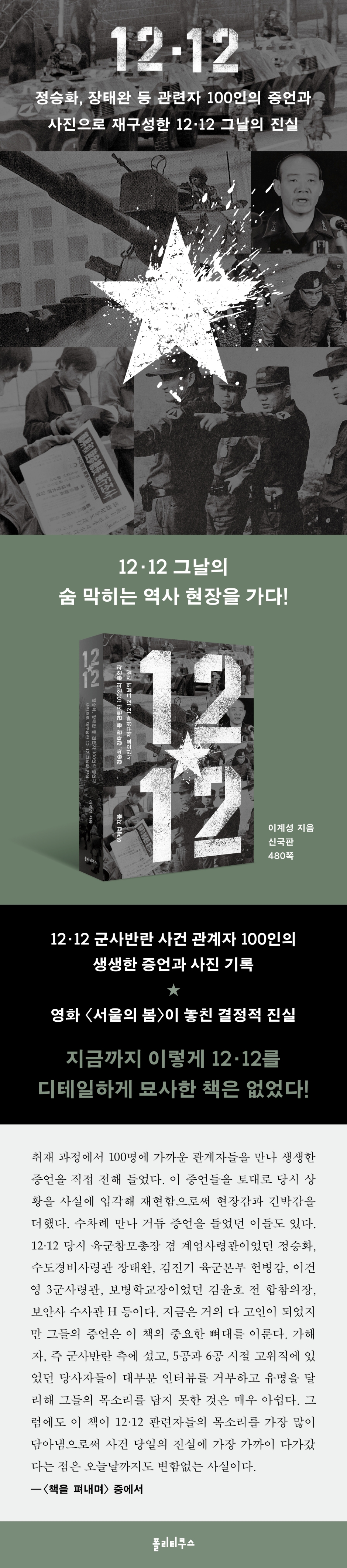
A book that reconstructs the day of December 12, 1979, which changed the history of the Republic of Korea, through the testimonies and photographs of 100 people involved.
In 1993, after President Kim Young-sam took office, the author, who was a reporter for the Hankook Ilbo at the time of the surprise investigation into the December 12 military coup and the purge of the Hanahoe, conducted in-depth interviews and reports on over 100 people related to the December 12 coup, including key figures Jeong Seung-hwa and Jang Tae-wan, and serialized the story in the newspaper for a year. The records from that time became the basis for this book, “12/12.”
This book vividly depicts the tense situation of December 12, 1979, using the reporter's characteristic reporting and writing skills. It not only reconstructs the historical scene in three dimensions, but also captures the vivid voices of those most involved, conveying the truth of that day as it was. To aid readers of the MZ generation's understanding, a prologue and epilogue provide a look into the context surrounding the December 12 military coup, and the book is rich in detailed annotations and relevant photographs.
A book that reconstructs the day of December 12, 1979, which changed the history of the Republic of Korea, through the testimonies and photographs of 100 people involved.
In 1993, after President Kim Young-sam took office, the author, who was a reporter for the Hankook Ilbo at the time of the surprise investigation into the December 12 military coup and the purge of the Hanahoe, conducted in-depth interviews and reports on over 100 people related to the December 12 coup, including key figures Jeong Seung-hwa and Jang Tae-wan, and serialized the story in the newspaper for a year. The records from that time became the basis for this book, “12/12.”
This book vividly depicts the tense situation of December 12, 1979, using the reporter's characteristic reporting and writing skills. It not only reconstructs the historical scene in three dimensions, but also captures the vivid voices of those most involved, conveying the truth of that day as it was. To aid readers of the MZ generation's understanding, a prologue and epilogue provide a look into the context surrounding the December 12 military coup, and the book is rich in detailed annotations and relevant photographs.
- You can preview some of the book's contents.
Preview
index
At the Book's Publication: A Look Back at the Truth and Facts of December 12th
After the First Edition: A Hunger for Historical Facts and Truth
prolog
The Historical Significance of Chun Doo-hwan's Appointment as Commander of the Security Command | The Essence of the 1973 Yun Pil-yong Incident |
Political situation after the inauguration of Chun Doo-hwan as commander of the Security Command
Part 1: Preliminary Battle
1.
The power of the Martial Law Command's Joint Investigation Headquarters
Chun Doo-hwan and Chung Seung-hwa's differences in perception of the military's role | November 1979: General Jang Tae-wan's appointment as Capital Defense Commander and the backlash
2.
Jeong Seung-hwa and Chun Doo-hwan decide to part ways.
Golf meeting three days before the December 12 military coup | How did rumors of Chun Doo-hwan's dismissal begin? | The meticulously planned arrest plan for Prosecutor General Chung Seung-hwa.
3.
Military rebellion code: "Birthday party"
Why Chun Doo-hwan organized the Gyeongbokgung Palace 30th Security Brigade Meeting | How did the code name "Birthday Party" come about? | The Gyeongbokgung Palace 30th Security Brigade Meeting, which gathered without a single defector.
4.
Gunshots in Hannam-dong
The December 12th Incident, which began with a gunshot at 7:20 PM | The operation to arrest President Jeong Seung-hwa finally carried out | The gunshot that changed the course of history
5.
Chief Prosecutor Jeong Seung-hwa was taken away amidst gunfire.
Mr. President, Let's Go! | Conflicting Statements: Whose Story is True?
6.
A fierce battle in front of the embassy at a late hour
The Seven-Minute Arrest Operation | Back at the Coast Guard Barracks | Testimony from Chief of Staff Jeong Seung-hwa's Wife, Ms. Shin | Marines Subdue Military Police from the Joint Investigation Headquarters
7.
A nationwide state of emergency has been declared.
A Jindo dog triggers an emergency alert | Army Headquarters meeting at Bunker B2 | Three generals at a fairy house in Yeonhui-dong | Chun Doo-hwan's face flushed with shame after receiving a report on the situation at the President's residence | Security at the outpost outside the residence strengthened
8.
Chun Doo-hwan's special forces and operation to lure the commander of the Capital Defense Command
A pre-planned engagement with three generals | 7:35 PM: Reports of a shooting at the president's residence arrive.
9.
Commander of the Capital Defense Command Jang Tae-wan declares a forced siege of Gyeongbokgung Palace.
Commander of the Capital Defense Command Jang Tae-wan's Rapid Response | Staff Gathered at Army Headquarters B2 Bunker
10.
Chun Doo-hwan seals the presidential residence
Chun Doo-hwan pressured President Choi Kyu-hah | Army Headquarters' belated assessment of the situation | Prime Minister's official residence cut off from the outside world
Part 2: The Night of December 12th, Records of That Day
11.
Emergency command of the 3rd Army Corps
December 12, 7:00 PM, Martial Law Meeting in Yongin, Gyeonggi Province | December 12, 9:00 PM, Response from the Pil-dong Capital Defense Command | A Very Impure Prank
12.
New military generals collectively demand President Choi's approval.
"Your Majesty, you must grant my approval." | President Choi Kyu-hah: "I almost died last night." | Defense Minister Noh Jae-hyun disappeared for two hours. | Chun Doo-hwan's swift response.
13.
Army Headquarters moves to Suyeongsa
Urgent news arrives at Army Headquarters | Army Headquarters' blunder in abandoning a solid underground bunker | 'Phone war' between Army Headquarters and the Joint Chiefs of Staff
14.
A Night of Disobedience and Betrayal
Request for mobilization of the Chungcheongbuk-do Army | Testimony of Defense Minister Roh Jae-hyun | The Broken Gentleman's Agreement
15.
The 9th Airborne Brigade, which could have changed the course of December 12th.
The 9th Airborne Brigade, the only unit under Army Headquarters command | The 9th Airborne Brigade's Deployment and Retreat
16.
The troop blockade made possible by the Security Command's control of communications
The 9th Airborne Brigade's Fate-Changing Retreat | The Fortune of Controlling Security Command Communications
Part 3: The Great Migration at Dawn on December 13th
17.
The 1st Airborne Brigade entered Seoul via Haengju Bridge.
Chun Doo-hwan's orders to 1st Airborne Brigade Commander Park Hee-do | The 1st Airborne Brigade's entry into Seoul
18.
The 1st Airborne Brigade bloodily seizes control of the Army Headquarters and the Ministry of National Defense.
The 1st Airborne Brigade seizes the empty shell of the Army Headquarters | The Ministry of National Defense building, blasted with Vulcan cannons | General Yoo Byung-hyun arrives in the car of Commander of US Forces Korea Wickham | The Ministry of National Defense under the control of the Airborne Troops
19.
The missing Minister of National Defense Roh Jae-hyun
Occupying the Office of the Minister of National Defense without a Minister | From Simple Mutiny to Military Coup | Visiting Minister of National Defense Noh Jae-hyun
20.
Operation to capture Commander Jeong Byeong-ju of the 3rd Airborne Brigade
Jeon Du orders the arrest of Commander Jeong Byeong-ju | Commander Jeong Byeong-ju betrayed by 3rd Airborne Brigade Commander Choi Se-chang | The tragic death of Major Kim Oh-rang | The aftermath of Jeong Byeong-ju's night of betrayal
21.
Roh Tae-woo mobilizes the 9th Division to Seoul.
Major General Roh Tae-woo's Decision | The Deployment of a Loaded Tank Battalion | A Choice Prioritizing Their Own Safety Over Their Nation's
22.
Commander of the Capital Defense Command Jang Tae-wan prepares for a tank attack by the Security Command and the 30th Security Brigade.
The Fallout from the Cancellation of the Seobinggo Attack Operation | Commander Jang Tae-wan's Seven Commandments | Jang Tae-wan Faces Opposition to Troop Mobilization
23.
The 8th US Army's response
The December 12 Incident, Which Even the US Knew | A US Intelligence Source Who Was Keeping a Close Eye on Chun Doo-hwan | "A Major Incident Has Occurred Within the ROK Military," Urgent Telegram to Washington | Did the US Abet or Connive at the December 12 Incident? | The US Orders Additional Strengthened Vigilance Against North Korea
24.
The Suyeongsa Military Police Unit arrested the Army Headquarters Command.
Jang Tae-wan, ready to deploy, but | The goddess of victory leans toward the Joint Investigation Team | The Joint Investigation Team captures the Capital Defense Command
25.
President Choi Kyu-hah granted his approval ten hours after the arrest of the president.
Defense Minister Roh Jae-hyun finally appears | President Choi Kyu-hah finally receives his approval
Part 4 Under the Blade of the New Military Regime
26.
Are the charges against President Jeong Seung-hwa at the time of the December 12 Incident justified?
How to View the December 12 Incident | Are the Charges Against Prosecutor General Jeong Seung-hwa Raised by Chun Doo-hwan True?
27.
Chun Doo-hwan had been planning military reforms since before December 12.
Major General Kim Yun-ho delivers military reform proposals to Chun Doo-hwan | Suspicious behavior among Hanahoe members
28.
Going back to December 12th
Chun Doo-hwan was flustered by the summons of Prosecutor General Jeong Seung-hwa on the day of the coup. | Where did Chun Doo-hwan's confidence in the operation to arrest the Prosecutor General come from? | December 12, 1942, packaged as a national interest
29.
What happened to the kidnapped President Jeong Seung-hwa?
President Jeong's torture investigation continued overnight | "I will live to reveal the truth" | Others questioned over the loss of Seobinggo
30.
The new military junta forms a special committee.
Six Generals Embark on Military Power Surgery | The New Military Government Embarks on Internal Restructuring
31.
Stars Falling Under the New Military's Sword
The Star Massacre | The Star Feast of the New Military Regime, Which Completely Controls the Military
32.
The new military junta's multi-pronged strategy to secure US approval for the December 12th Coup.
Director Kim Yun-ho Visits the US Embassy in Korea | America's Realistic Choices
33.
Conflict between Wickham, the commander of US Forces Korea, and Chun Doo-hwan
The uproar over Commander Wickham's resignation | The war of nerves between Wickham and Chun Doo-hwan
34.
The trial of Prosecutor General Jeong Seung-hwa proceeded at lightning speed.
Spring in Seoul | Trial of the Aiding and Abetting Case Concludes in Eight Days
35.
Chun Doo-hwan seizes the nation's core power
Chun Doo-hwan, Commander of the Security Command, concurrently serves as Director of the Korean Central Intelligence Agency | Chun Doo-hwan's growing ambition to seize power
36.
The new military junta's May 17 nationwide martial law expansion and the beginning of its "seizure of power"
The All-Army Commanders' Meeting Ends with a Blank Proxy | The Significance of the Expansion of Martial Law
37.
After Chun Doo-hwan entered the Blue House
Chun Doo-hwan Succeeds in Entering the Blue House | The Civilian Government Condemns the Fifth Republic | Lessons from the December 12 Incident
Epilogue
The "Spring of Seoul" Missing from the Film "Spring in Seoul" | Kim Dae-jung, the Sacrificial Lamb of the New Military Regime
After the First Edition: A Hunger for Historical Facts and Truth
prolog
The Historical Significance of Chun Doo-hwan's Appointment as Commander of the Security Command | The Essence of the 1973 Yun Pil-yong Incident |
Political situation after the inauguration of Chun Doo-hwan as commander of the Security Command
Part 1: Preliminary Battle
1.
The power of the Martial Law Command's Joint Investigation Headquarters
Chun Doo-hwan and Chung Seung-hwa's differences in perception of the military's role | November 1979: General Jang Tae-wan's appointment as Capital Defense Commander and the backlash
2.
Jeong Seung-hwa and Chun Doo-hwan decide to part ways.
Golf meeting three days before the December 12 military coup | How did rumors of Chun Doo-hwan's dismissal begin? | The meticulously planned arrest plan for Prosecutor General Chung Seung-hwa.
3.
Military rebellion code: "Birthday party"
Why Chun Doo-hwan organized the Gyeongbokgung Palace 30th Security Brigade Meeting | How did the code name "Birthday Party" come about? | The Gyeongbokgung Palace 30th Security Brigade Meeting, which gathered without a single defector.
4.
Gunshots in Hannam-dong
The December 12th Incident, which began with a gunshot at 7:20 PM | The operation to arrest President Jeong Seung-hwa finally carried out | The gunshot that changed the course of history
5.
Chief Prosecutor Jeong Seung-hwa was taken away amidst gunfire.
Mr. President, Let's Go! | Conflicting Statements: Whose Story is True?
6.
A fierce battle in front of the embassy at a late hour
The Seven-Minute Arrest Operation | Back at the Coast Guard Barracks | Testimony from Chief of Staff Jeong Seung-hwa's Wife, Ms. Shin | Marines Subdue Military Police from the Joint Investigation Headquarters
7.
A nationwide state of emergency has been declared.
A Jindo dog triggers an emergency alert | Army Headquarters meeting at Bunker B2 | Three generals at a fairy house in Yeonhui-dong | Chun Doo-hwan's face flushed with shame after receiving a report on the situation at the President's residence | Security at the outpost outside the residence strengthened
8.
Chun Doo-hwan's special forces and operation to lure the commander of the Capital Defense Command
A pre-planned engagement with three generals | 7:35 PM: Reports of a shooting at the president's residence arrive.
9.
Commander of the Capital Defense Command Jang Tae-wan declares a forced siege of Gyeongbokgung Palace.
Commander of the Capital Defense Command Jang Tae-wan's Rapid Response | Staff Gathered at Army Headquarters B2 Bunker
10.
Chun Doo-hwan seals the presidential residence
Chun Doo-hwan pressured President Choi Kyu-hah | Army Headquarters' belated assessment of the situation | Prime Minister's official residence cut off from the outside world
Part 2: The Night of December 12th, Records of That Day
11.
Emergency command of the 3rd Army Corps
December 12, 7:00 PM, Martial Law Meeting in Yongin, Gyeonggi Province | December 12, 9:00 PM, Response from the Pil-dong Capital Defense Command | A Very Impure Prank
12.
New military generals collectively demand President Choi's approval.
"Your Majesty, you must grant my approval." | President Choi Kyu-hah: "I almost died last night." | Defense Minister Noh Jae-hyun disappeared for two hours. | Chun Doo-hwan's swift response.
13.
Army Headquarters moves to Suyeongsa
Urgent news arrives at Army Headquarters | Army Headquarters' blunder in abandoning a solid underground bunker | 'Phone war' between Army Headquarters and the Joint Chiefs of Staff
14.
A Night of Disobedience and Betrayal
Request for mobilization of the Chungcheongbuk-do Army | Testimony of Defense Minister Roh Jae-hyun | The Broken Gentleman's Agreement
15.
The 9th Airborne Brigade, which could have changed the course of December 12th.
The 9th Airborne Brigade, the only unit under Army Headquarters command | The 9th Airborne Brigade's Deployment and Retreat
16.
The troop blockade made possible by the Security Command's control of communications
The 9th Airborne Brigade's Fate-Changing Retreat | The Fortune of Controlling Security Command Communications
Part 3: The Great Migration at Dawn on December 13th
17.
The 1st Airborne Brigade entered Seoul via Haengju Bridge.
Chun Doo-hwan's orders to 1st Airborne Brigade Commander Park Hee-do | The 1st Airborne Brigade's entry into Seoul
18.
The 1st Airborne Brigade bloodily seizes control of the Army Headquarters and the Ministry of National Defense.
The 1st Airborne Brigade seizes the empty shell of the Army Headquarters | The Ministry of National Defense building, blasted with Vulcan cannons | General Yoo Byung-hyun arrives in the car of Commander of US Forces Korea Wickham | The Ministry of National Defense under the control of the Airborne Troops
19.
The missing Minister of National Defense Roh Jae-hyun
Occupying the Office of the Minister of National Defense without a Minister | From Simple Mutiny to Military Coup | Visiting Minister of National Defense Noh Jae-hyun
20.
Operation to capture Commander Jeong Byeong-ju of the 3rd Airborne Brigade
Jeon Du orders the arrest of Commander Jeong Byeong-ju | Commander Jeong Byeong-ju betrayed by 3rd Airborne Brigade Commander Choi Se-chang | The tragic death of Major Kim Oh-rang | The aftermath of Jeong Byeong-ju's night of betrayal
21.
Roh Tae-woo mobilizes the 9th Division to Seoul.
Major General Roh Tae-woo's Decision | The Deployment of a Loaded Tank Battalion | A Choice Prioritizing Their Own Safety Over Their Nation's
22.
Commander of the Capital Defense Command Jang Tae-wan prepares for a tank attack by the Security Command and the 30th Security Brigade.
The Fallout from the Cancellation of the Seobinggo Attack Operation | Commander Jang Tae-wan's Seven Commandments | Jang Tae-wan Faces Opposition to Troop Mobilization
23.
The 8th US Army's response
The December 12 Incident, Which Even the US Knew | A US Intelligence Source Who Was Keeping a Close Eye on Chun Doo-hwan | "A Major Incident Has Occurred Within the ROK Military," Urgent Telegram to Washington | Did the US Abet or Connive at the December 12 Incident? | The US Orders Additional Strengthened Vigilance Against North Korea
24.
The Suyeongsa Military Police Unit arrested the Army Headquarters Command.
Jang Tae-wan, ready to deploy, but | The goddess of victory leans toward the Joint Investigation Team | The Joint Investigation Team captures the Capital Defense Command
25.
President Choi Kyu-hah granted his approval ten hours after the arrest of the president.
Defense Minister Roh Jae-hyun finally appears | President Choi Kyu-hah finally receives his approval
Part 4 Under the Blade of the New Military Regime
26.
Are the charges against President Jeong Seung-hwa at the time of the December 12 Incident justified?
How to View the December 12 Incident | Are the Charges Against Prosecutor General Jeong Seung-hwa Raised by Chun Doo-hwan True?
27.
Chun Doo-hwan had been planning military reforms since before December 12.
Major General Kim Yun-ho delivers military reform proposals to Chun Doo-hwan | Suspicious behavior among Hanahoe members
28.
Going back to December 12th
Chun Doo-hwan was flustered by the summons of Prosecutor General Jeong Seung-hwa on the day of the coup. | Where did Chun Doo-hwan's confidence in the operation to arrest the Prosecutor General come from? | December 12, 1942, packaged as a national interest
29.
What happened to the kidnapped President Jeong Seung-hwa?
President Jeong's torture investigation continued overnight | "I will live to reveal the truth" | Others questioned over the loss of Seobinggo
30.
The new military junta forms a special committee.
Six Generals Embark on Military Power Surgery | The New Military Government Embarks on Internal Restructuring
31.
Stars Falling Under the New Military's Sword
The Star Massacre | The Star Feast of the New Military Regime, Which Completely Controls the Military
32.
The new military junta's multi-pronged strategy to secure US approval for the December 12th Coup.
Director Kim Yun-ho Visits the US Embassy in Korea | America's Realistic Choices
33.
Conflict between Wickham, the commander of US Forces Korea, and Chun Doo-hwan
The uproar over Commander Wickham's resignation | The war of nerves between Wickham and Chun Doo-hwan
34.
The trial of Prosecutor General Jeong Seung-hwa proceeded at lightning speed.
Spring in Seoul | Trial of the Aiding and Abetting Case Concludes in Eight Days
35.
Chun Doo-hwan seizes the nation's core power
Chun Doo-hwan, Commander of the Security Command, concurrently serves as Director of the Korean Central Intelligence Agency | Chun Doo-hwan's growing ambition to seize power
36.
The new military junta's May 17 nationwide martial law expansion and the beginning of its "seizure of power"
The All-Army Commanders' Meeting Ends with a Blank Proxy | The Significance of the Expansion of Martial Law
37.
After Chun Doo-hwan entered the Blue House
Chun Doo-hwan Succeeds in Entering the Blue House | The Civilian Government Condemns the Fifth Republic | Lessons from the December 12 Incident
Epilogue
The "Spring of Seoul" Missing from the Film "Spring in Seoul" | Kim Dae-jung, the Sacrificial Lamb of the New Military Regime
Detailed image
Into the book
The fact that the film “Spring in Seoul,” which clearly showed that the December 12 Incident was a military rebellion by the new military regime of Chun Doo-hwan, caused such a stir is significant.
The meaning is clear.
The fact is that no matter how much the surviving members of the December 12 military rebellion and those with biased historical perceptions try to go against history, the people will not tolerate it.
It is also very interesting that more than half of the moviegoers were young people born after the December 12 Incident.
After watching the movie, they say they searched for information to learn more about the December 12 Incident and created social media groups to share knowledge and information and hold discussions.
It was to respond to this fervor and atmosphere that I published this newly revised book, which focuses on the truth about December 12.
Since the movie "Spring in Seoul" is a work of fiction, many viewers are curious about how much of it is based on real events.
Due to time constraints, some parts have been omitted.
This book will greatly quench that curiosity and thirst for facts.
--- p.5, from “Publishing a Book”
In order to uncover the truth behind the 12/12 incident, it is necessary to examine in detail the circumstances and nature of the 30th Security Brigade meeting at Gyeongbokgung Palace, known by the code name "Birthday Party."
It was around December 5th that the Joint Chiefs of Staff of the Chun Doo-hwan faction made the final decision to arrest and question Army Chief of Staff Jeong Seung-hwa, the martial law commander.
Chief of the Joint Investigation Headquarters, Chun Doo-hwan, felt that the power of the Joint Investigation Headquarters alone was not enough to arrest the Army Chief of Staff and Martial Law Commander, and felt the need to organize a strong support force.
So, what was arranged was the 30th Security Brigade meeting.
--- p.64, 「3.
From the military rebellion code 'Birthday Party'
The sudden, powerful sound of rifle fire shattered the tranquility of the early evening.
It was exactly 7:20 pm.
The gunshots were heard from the Jang Gwan-gwan village on the hillside of Hannam-dong.
Surprised passersby looked around, their chests tight, not knowing what was going on.
At that moment, two black passenger cars sped out of the main entrance of the official residence, immediately turned right, weaved between the cars ahead, and disappeared from sight in an instant.
It was about 7 minutes after the gunshots were heard.
This is how the December 12 Incident, which changed the course of modern Korean history, began.
--- p.75, 「4.
From "Gunshots in Hannam-dong"
Around 7:40 PM, just before the emergency declaration, at a restaurant in Yeonhui-dong, Seoul.
Special Warfare Command Commander Major General Jeong Byeong-ju, Capital Defense Command Commander Major General Jang Tae-wan, Military Police Commander Brigadier General Kim Jin-gi, Security Command Chief of Staff Brigadier General Woo Guk-il, and Capital Defense Command Military Police Command Commander Colonel Cho Hong were having a dinner meeting.
The host of the dinner was former Security Command Commander Chun Doo-hwan, who was the head of the Joint Chiefs of Staff.
--- p.113, 「7.
From "The entire military is on high alert"
If Commander Jeong Byeong-ju had informed the 9th Airborne Brigade of the details of the incident from the beginning and continued to encourage their deployment, the 9th Airborne Brigade would have crossed the Han River, and the December 12 incident would have unfolded in a completely different way.
That night, the Joint Investigation Team faced several critical crises, but each time, the goddess of fate smiled on them.
The crisis surrounding the 9th Airborne Brigade's deployment and return was one such example.
Upon receiving the report of the 9th Airborne Brigade's return, Joint Chiefs of Staff Chief Jeon Du-hwan jumped up from his seat and asked, "Really? Who's the Chief of Staff?"
“Shin Soo-ho? Which base?” he asked with a smile.
Other generals from the Joint Chiefs of Staff also cheered and rejoiced.
Color finally began to appear on their faces.
This scene supports how surprised they were by the news of the 9th Airborne Brigade's deployment.
--- p.221, 「16.
From "The blockade of troops made possible by the security command's control of communications"
At the time of the December 12 Incident, Major Kim Oh-rang, who was the chief of staff to Commander Jeong Byeong-ju of the Special Warfare Command, was killed after responding with a pistol when the 3rd Airborne Brigade troops attacked the headquarters and attempted to arrest Commander Jeong while firing.
He was later promoted to lieutenant colonel in recognition of his strong military spirit.
The photo shows his wife, Baek Young-ok, visiting the grave of Major Kim, who is buried in the National Cemetery, on Memorial Day in 1990, and paying her respects while receiving the posthumous rank of lieutenant colonel.
The following year, Mr. Baek died by jumping from the roof of a building after overdosing on tranquilizers.
--- p.271, 「20.
From the "Operation to Arrest Commander Jeong Byeong-ju of the 3rd Airborne Brigade"
At this moment, the first floor information room of the Capital Defense Command.
Lieutenant Colonel Shin Yun-hee, deputy commander of the military police corps, was secretly gathering the military police company commanders.
He had already received instructions from the Joint Chiefs of Staff, Chun Doo-hwan, to arrest the commander of the Capital Defense Command, Jang Tae-wan, and disarm the Army Headquarters before midnight.
He faithfully followed the orders of the formal chain of command in the early stages of the situation, such as rushing to the residence of the Army Chief of Staff in Hannam-dong at the direction of Commander Jang Tae-wan immediately after a gunfight broke out there. However, as time passed, he accepted the logic of the Joint Investigation Team and, following the instructions of the Joint Investigation Team, began to arrest his direct commander.
--- p.317, 「24.
From "The Suyeongsa Military Police Unit Arrests the Army Headquarters Command"
When the Joint Chiefs of Staff, Chun Doo-hwan, reported that he would arrest and investigate Prosecutor General Jeong Seung-hwa, President Choi Kyu-hah, who had been holding out for about 10 hours citing procedural issues, could no longer delay approval when the Minister of National Defense appeared and said that Prosecutor General Jeong Seung-hwa needed to be arrested and investigated.
It was the moment when the victory of the Joint Chiefs of Staff was officially recognized.
A series of events that completely overturned the military's chain of command, including the forcible deportation of the martial law commander and Army Chief of Staff, the departure of commanders from their posts under martial law, the mobilization of troops outside the formal chain of command, and the shooting and arrest of direct superiors, began to take on the appearance of legality from this moment on.
So, during the 5th and 6th Republics, the series of events carried out by the Joint Investigation Team that night could not be subject to judicial judgment.
--- p.322, 「25.
President Choi Kyu-hah's posthumous approval of the president's arrest ten hours later
Although not well known, Major General Kim Yun-ho was one of the people who played a key role in the immediate aftermath of the December 12 Incident and in the military reorganization process.
Although he did not directly participate in the December 12 Incident, he was deeply involved in the issues of US-North Korea relations and military reorganization as a member of the six-member committee (Lieutenant Generals Cha Kyu-heon, Yu Hak-seong, and Hwang Young-si, and Major Generals Kim Yun-ho, Chun Doo-hwan, and Roh Tae-woo) informally formed by the core leaders of the December 12 Incident on the 13th, the day after the incident.
--- p.349, 「27.
From "Chun Doo-hwan, planning military reorganization even before December 12"
The new military junta, which seized power through the December 12 Coup, filled key military posts with its own forces and then began a large-scale operation to weed out generals who opposed the December 12 Coup or were classified as members of the Kim Jae-gyu and Jeong Seung-hwa factions.
It was an operation to remove factors that were hindering their ability to establish their own leadership within the military.
This was further justified by the need for generational change in the aging military.
Numerous generals were stripped of their military uniforms by the standards unilaterally drawn up by the new military junta.
An unprecedented 'massacre of the stars' has occurred since the founding of the country.
The six-member committee comprised of key members of the 12/12 movement and the Security Command led this 'massacre of the stars'.
--- p.392, 「31.
From “Stars Falling Under the Blade of the New Military Regime”
Ultimately, the United States chose a realistic alternative.
In other words, the strategy was to not impose direct sanctions on the new military junta that had seized power, but to express support for President Choi Kyu-hah's civilian government whenever possible and to emphasize opposition to military intervention in politics.
However, General John Wickham, commander of the US Forces Korea, showed no signs of softening his feelings toward General Chun Doo-hwan's group.
A serious war of nerves continued for some time between General Chun Doo-hwan's group and General Wickham.
It is known that Chun Doo-hwan struggled so much in this fight that he became neurotic.
--- p.412, 「32.
The new military junta's multi-pronged operation to obtain approval from the United States on December 12th
Thirteen years later, in February 1993, a civilian government was launched.
Kim Young-sam, one of the three Kims who had been rejected by the military junta 13 years ago, was inaugurated as the 14th president.
So what were those 13 years in our history?
The primary condemnation of the Fifth Republic was carried out by the Sixth Republic.
Chun Doo-hwan and his wife were imprisoned at Baekdamsa Temple for two years.
47 key figures of the 5th Republic, including 10 of his relatives, were arrested, and 29 were indicted without detention.
It is said that this is the first time in world history that a former head of state has been treated this way without a revolution.
The meaning is clear.
The fact is that no matter how much the surviving members of the December 12 military rebellion and those with biased historical perceptions try to go against history, the people will not tolerate it.
It is also very interesting that more than half of the moviegoers were young people born after the December 12 Incident.
After watching the movie, they say they searched for information to learn more about the December 12 Incident and created social media groups to share knowledge and information and hold discussions.
It was to respond to this fervor and atmosphere that I published this newly revised book, which focuses on the truth about December 12.
Since the movie "Spring in Seoul" is a work of fiction, many viewers are curious about how much of it is based on real events.
Due to time constraints, some parts have been omitted.
This book will greatly quench that curiosity and thirst for facts.
--- p.5, from “Publishing a Book”
In order to uncover the truth behind the 12/12 incident, it is necessary to examine in detail the circumstances and nature of the 30th Security Brigade meeting at Gyeongbokgung Palace, known by the code name "Birthday Party."
It was around December 5th that the Joint Chiefs of Staff of the Chun Doo-hwan faction made the final decision to arrest and question Army Chief of Staff Jeong Seung-hwa, the martial law commander.
Chief of the Joint Investigation Headquarters, Chun Doo-hwan, felt that the power of the Joint Investigation Headquarters alone was not enough to arrest the Army Chief of Staff and Martial Law Commander, and felt the need to organize a strong support force.
So, what was arranged was the 30th Security Brigade meeting.
--- p.64, 「3.
From the military rebellion code 'Birthday Party'
The sudden, powerful sound of rifle fire shattered the tranquility of the early evening.
It was exactly 7:20 pm.
The gunshots were heard from the Jang Gwan-gwan village on the hillside of Hannam-dong.
Surprised passersby looked around, their chests tight, not knowing what was going on.
At that moment, two black passenger cars sped out of the main entrance of the official residence, immediately turned right, weaved between the cars ahead, and disappeared from sight in an instant.
It was about 7 minutes after the gunshots were heard.
This is how the December 12 Incident, which changed the course of modern Korean history, began.
--- p.75, 「4.
From "Gunshots in Hannam-dong"
Around 7:40 PM, just before the emergency declaration, at a restaurant in Yeonhui-dong, Seoul.
Special Warfare Command Commander Major General Jeong Byeong-ju, Capital Defense Command Commander Major General Jang Tae-wan, Military Police Commander Brigadier General Kim Jin-gi, Security Command Chief of Staff Brigadier General Woo Guk-il, and Capital Defense Command Military Police Command Commander Colonel Cho Hong were having a dinner meeting.
The host of the dinner was former Security Command Commander Chun Doo-hwan, who was the head of the Joint Chiefs of Staff.
--- p.113, 「7.
From "The entire military is on high alert"
If Commander Jeong Byeong-ju had informed the 9th Airborne Brigade of the details of the incident from the beginning and continued to encourage their deployment, the 9th Airborne Brigade would have crossed the Han River, and the December 12 incident would have unfolded in a completely different way.
That night, the Joint Investigation Team faced several critical crises, but each time, the goddess of fate smiled on them.
The crisis surrounding the 9th Airborne Brigade's deployment and return was one such example.
Upon receiving the report of the 9th Airborne Brigade's return, Joint Chiefs of Staff Chief Jeon Du-hwan jumped up from his seat and asked, "Really? Who's the Chief of Staff?"
“Shin Soo-ho? Which base?” he asked with a smile.
Other generals from the Joint Chiefs of Staff also cheered and rejoiced.
Color finally began to appear on their faces.
This scene supports how surprised they were by the news of the 9th Airborne Brigade's deployment.
--- p.221, 「16.
From "The blockade of troops made possible by the security command's control of communications"
At the time of the December 12 Incident, Major Kim Oh-rang, who was the chief of staff to Commander Jeong Byeong-ju of the Special Warfare Command, was killed after responding with a pistol when the 3rd Airborne Brigade troops attacked the headquarters and attempted to arrest Commander Jeong while firing.
He was later promoted to lieutenant colonel in recognition of his strong military spirit.
The photo shows his wife, Baek Young-ok, visiting the grave of Major Kim, who is buried in the National Cemetery, on Memorial Day in 1990, and paying her respects while receiving the posthumous rank of lieutenant colonel.
The following year, Mr. Baek died by jumping from the roof of a building after overdosing on tranquilizers.
--- p.271, 「20.
From the "Operation to Arrest Commander Jeong Byeong-ju of the 3rd Airborne Brigade"
At this moment, the first floor information room of the Capital Defense Command.
Lieutenant Colonel Shin Yun-hee, deputy commander of the military police corps, was secretly gathering the military police company commanders.
He had already received instructions from the Joint Chiefs of Staff, Chun Doo-hwan, to arrest the commander of the Capital Defense Command, Jang Tae-wan, and disarm the Army Headquarters before midnight.
He faithfully followed the orders of the formal chain of command in the early stages of the situation, such as rushing to the residence of the Army Chief of Staff in Hannam-dong at the direction of Commander Jang Tae-wan immediately after a gunfight broke out there. However, as time passed, he accepted the logic of the Joint Investigation Team and, following the instructions of the Joint Investigation Team, began to arrest his direct commander.
--- p.317, 「24.
From "The Suyeongsa Military Police Unit Arrests the Army Headquarters Command"
When the Joint Chiefs of Staff, Chun Doo-hwan, reported that he would arrest and investigate Prosecutor General Jeong Seung-hwa, President Choi Kyu-hah, who had been holding out for about 10 hours citing procedural issues, could no longer delay approval when the Minister of National Defense appeared and said that Prosecutor General Jeong Seung-hwa needed to be arrested and investigated.
It was the moment when the victory of the Joint Chiefs of Staff was officially recognized.
A series of events that completely overturned the military's chain of command, including the forcible deportation of the martial law commander and Army Chief of Staff, the departure of commanders from their posts under martial law, the mobilization of troops outside the formal chain of command, and the shooting and arrest of direct superiors, began to take on the appearance of legality from this moment on.
So, during the 5th and 6th Republics, the series of events carried out by the Joint Investigation Team that night could not be subject to judicial judgment.
--- p.322, 「25.
President Choi Kyu-hah's posthumous approval of the president's arrest ten hours later
Although not well known, Major General Kim Yun-ho was one of the people who played a key role in the immediate aftermath of the December 12 Incident and in the military reorganization process.
Although he did not directly participate in the December 12 Incident, he was deeply involved in the issues of US-North Korea relations and military reorganization as a member of the six-member committee (Lieutenant Generals Cha Kyu-heon, Yu Hak-seong, and Hwang Young-si, and Major Generals Kim Yun-ho, Chun Doo-hwan, and Roh Tae-woo) informally formed by the core leaders of the December 12 Incident on the 13th, the day after the incident.
--- p.349, 「27.
From "Chun Doo-hwan, planning military reorganization even before December 12"
The new military junta, which seized power through the December 12 Coup, filled key military posts with its own forces and then began a large-scale operation to weed out generals who opposed the December 12 Coup or were classified as members of the Kim Jae-gyu and Jeong Seung-hwa factions.
It was an operation to remove factors that were hindering their ability to establish their own leadership within the military.
This was further justified by the need for generational change in the aging military.
Numerous generals were stripped of their military uniforms by the standards unilaterally drawn up by the new military junta.
An unprecedented 'massacre of the stars' has occurred since the founding of the country.
The six-member committee comprised of key members of the 12/12 movement and the Security Command led this 'massacre of the stars'.
--- p.392, 「31.
From “Stars Falling Under the Blade of the New Military Regime”
Ultimately, the United States chose a realistic alternative.
In other words, the strategy was to not impose direct sanctions on the new military junta that had seized power, but to express support for President Choi Kyu-hah's civilian government whenever possible and to emphasize opposition to military intervention in politics.
However, General John Wickham, commander of the US Forces Korea, showed no signs of softening his feelings toward General Chun Doo-hwan's group.
A serious war of nerves continued for some time between General Chun Doo-hwan's group and General Wickham.
It is known that Chun Doo-hwan struggled so much in this fight that he became neurotic.
--- p.412, 「32.
The new military junta's multi-pronged operation to obtain approval from the United States on December 12th
Thirteen years later, in February 1993, a civilian government was launched.
Kim Young-sam, one of the three Kims who had been rejected by the military junta 13 years ago, was inaugurated as the 14th president.
So what were those 13 years in our history?
The primary condemnation of the Fifth Republic was carried out by the Sixth Republic.
Chun Doo-hwan and his wife were imprisoned at Baekdamsa Temple for two years.
47 key figures of the 5th Republic, including 10 of his relatives, were arrested, and 29 were indicted without detention.
It is said that this is the first time in world history that a former head of state has been treated this way without a revolution.
--- p.458, 「37.
From "After Chun Doo-hwan Entered the Blue House"
From "After Chun Doo-hwan Entered the Blue House"
Publisher's Review
Uncovering modern Korean history!
Relive the breathtaking historical moments of December 12th in real time.
On October 26, 1979, Kim Jae-gyu shot President Park Chung-hee.
A month and a half later, on Wednesday, December 12, a military rebellion broke out in the capital, Seoul.
This military rebellion, which was started by the Joint Investigation Headquarters chief and Security Commander Chun Doo-hwan, who mobilized the military's secret organization Hanahoe, began that evening when he illegally arrested Army Chief of Staff and Martial Law Commander Jeong Seung-hwa from the chief's official residence in Hannam-dong and invited Capital Defense Commander Jang Tae-wan, Special Warfare Commander Jeong Byeong-ju, and Army Headquarters Military Police Superintendent Kim Jin-gi to a dinner at a restaurant in Yeonhui-dong to lure them in order to block the mobilization of troops on the chief's side in advance.
On that day that changed the fate of the Republic of Korea, why and how did the incident occur?
This book realistically depicts that day, marked by disobedience and betrayal, by reconstructing in real time the suffocating standoff between Chun Doo-hwan's Joint Investigation Headquarters and the Army Headquarters from the evening of December 12th to the morning of the 13th.
In particular, by covering the events leading up to the December 12 Military Rebellion and the aftermath of the rebellion, it allows us to realize once again how December 12 distorted our modern history.
Vivid testimonies from 100 people involved, including Jeong Seung-hwa and Jang Tae-wan
The Truth of December 12 Reconstructed Through Photographs
After the December 12 military coup, the history of the Republic of Korea continues through the Seoul Spring of 1980, the May 17 and May 18 Gwangju Massacres, and finally the inauguration of Chun Doo-hwan as president in August of that year.
Because of this, the history of that day, December 12th, which was unknown even to most Seoul citizens, was forgotten from public interest for a long time.
The truth about the December 12 military coup was revealed in 1993 when the Kim Young-sam civilian government carried out a purge of the Hanahoe.
The author of this book also met with the main victims of December 12, such as Jeong Seung-hwa and Jang Tae-wan, during this period, and began serializing their experiences of December 12 in a newspaper.
In particular, the author had the experience of being mercilessly beaten by the boots of airborne troops at school during the nationwide expansion of martial law on May 17, 1980, when he was a senior in college.
As real history and personal experience were connected, the author approached the reporting with a sense of mission to document this event.
The number of people I met that way is around 100.
Although some people were left unnamed and the perpetrators were not available for interviews, their vivid accounts tell the story of the tense situation at the time.
The meticulously planned arrest of Prosecutor General Jeong Seung-hwa by Chun Doo-hwan, the blockade of the embassy to approve the death of President Choi Kyu-hah before his inauguration, the whereabouts of Minister of National Defense Noh Jae-hyun who disappeared in the meantime, the standoff between Jang Tae-wan's Capital Defense Command and the Defense Security Command, and the reason why the 9th Airborne Brigade, which was under command of the Army Headquarters despite the 1st, 3rd, and 5th Airborne Brigades siding with the Joint Investigation Headquarters, had no choice but to make a dramatic withdrawal, etc. The constant battles between the two sides are gripping.
It details what power the Chun Doo-hwan Joint Chiefs of Staff were trying to gain through the movement of troops, even at the risk of a troop vacuum at the front lines, what logic justified it at the time, and what the US military's response before and after the incident meant.
Additionally, the story of the victims of the December 12 Incident was also included in detail, including the story of Major Kim Oh-rang, the chief of staff to the Special Warfare Commander, who was killed during the process of arresting Special Warfare Commander Jeong Byeong-ju, and the story of Sergeant Jeong Seon-yeop, who died while protecting the Ministry of National Defense building.
In particular, the important photographs and military movement maps provided by the Hankook Ilbo before and after the incident help us understand the December 12 military rebellion in a three-dimensional way.
This book, which reads like a historical novel recreated in real time, makes you think about "what if" every time you see a number of fateful situations, such as the seven minutes when General Jeong was taken away and the withdrawal of the 9th Airborne Brigade, although there are no "what ifs" in history, making it an absorbing read.
The Crucial Truth Missed in the Film "Spring in Seoul"
This article, which was written and interviewed while most of the people involved were still alive, was able to meet readers again thanks to the success of the film “Spring in Seoul.”
Thanks to this film, which has been seen by over 13 million people, interest in the December 12 Incident has grown among the younger generation, leading to the publication of this book, which faithfully contains interviews with key figures from the actual incident.
Since the movie "Spring in Seoul" is a work of fiction, many viewers are curious about how much of it is based on real events.
Some parts were omitted due to screening time constraints.
In particular, many parts of the story about Capital Defense Command Commander Jang Tae-wan, played by Jung Woo-sung, were added for dramatic effect.
In addition to this, you can see differences from the movie in several other detailed parts.
This book goes beyond satisfying readers' curiosity about reality and thirst for facts, offering the fun of examining the differences between history and fiction one by one.
Relive the breathtaking historical moments of December 12th in real time.
On October 26, 1979, Kim Jae-gyu shot President Park Chung-hee.
A month and a half later, on Wednesday, December 12, a military rebellion broke out in the capital, Seoul.
This military rebellion, which was started by the Joint Investigation Headquarters chief and Security Commander Chun Doo-hwan, who mobilized the military's secret organization Hanahoe, began that evening when he illegally arrested Army Chief of Staff and Martial Law Commander Jeong Seung-hwa from the chief's official residence in Hannam-dong and invited Capital Defense Commander Jang Tae-wan, Special Warfare Commander Jeong Byeong-ju, and Army Headquarters Military Police Superintendent Kim Jin-gi to a dinner at a restaurant in Yeonhui-dong to lure them in order to block the mobilization of troops on the chief's side in advance.
On that day that changed the fate of the Republic of Korea, why and how did the incident occur?
This book realistically depicts that day, marked by disobedience and betrayal, by reconstructing in real time the suffocating standoff between Chun Doo-hwan's Joint Investigation Headquarters and the Army Headquarters from the evening of December 12th to the morning of the 13th.
In particular, by covering the events leading up to the December 12 Military Rebellion and the aftermath of the rebellion, it allows us to realize once again how December 12 distorted our modern history.
Vivid testimonies from 100 people involved, including Jeong Seung-hwa and Jang Tae-wan
The Truth of December 12 Reconstructed Through Photographs
After the December 12 military coup, the history of the Republic of Korea continues through the Seoul Spring of 1980, the May 17 and May 18 Gwangju Massacres, and finally the inauguration of Chun Doo-hwan as president in August of that year.
Because of this, the history of that day, December 12th, which was unknown even to most Seoul citizens, was forgotten from public interest for a long time.
The truth about the December 12 military coup was revealed in 1993 when the Kim Young-sam civilian government carried out a purge of the Hanahoe.
The author of this book also met with the main victims of December 12, such as Jeong Seung-hwa and Jang Tae-wan, during this period, and began serializing their experiences of December 12 in a newspaper.
In particular, the author had the experience of being mercilessly beaten by the boots of airborne troops at school during the nationwide expansion of martial law on May 17, 1980, when he was a senior in college.
As real history and personal experience were connected, the author approached the reporting with a sense of mission to document this event.
The number of people I met that way is around 100.
Although some people were left unnamed and the perpetrators were not available for interviews, their vivid accounts tell the story of the tense situation at the time.
The meticulously planned arrest of Prosecutor General Jeong Seung-hwa by Chun Doo-hwan, the blockade of the embassy to approve the death of President Choi Kyu-hah before his inauguration, the whereabouts of Minister of National Defense Noh Jae-hyun who disappeared in the meantime, the standoff between Jang Tae-wan's Capital Defense Command and the Defense Security Command, and the reason why the 9th Airborne Brigade, which was under command of the Army Headquarters despite the 1st, 3rd, and 5th Airborne Brigades siding with the Joint Investigation Headquarters, had no choice but to make a dramatic withdrawal, etc. The constant battles between the two sides are gripping.
It details what power the Chun Doo-hwan Joint Chiefs of Staff were trying to gain through the movement of troops, even at the risk of a troop vacuum at the front lines, what logic justified it at the time, and what the US military's response before and after the incident meant.
Additionally, the story of the victims of the December 12 Incident was also included in detail, including the story of Major Kim Oh-rang, the chief of staff to the Special Warfare Commander, who was killed during the process of arresting Special Warfare Commander Jeong Byeong-ju, and the story of Sergeant Jeong Seon-yeop, who died while protecting the Ministry of National Defense building.
In particular, the important photographs and military movement maps provided by the Hankook Ilbo before and after the incident help us understand the December 12 military rebellion in a three-dimensional way.
This book, which reads like a historical novel recreated in real time, makes you think about "what if" every time you see a number of fateful situations, such as the seven minutes when General Jeong was taken away and the withdrawal of the 9th Airborne Brigade, although there are no "what ifs" in history, making it an absorbing read.
The Crucial Truth Missed in the Film "Spring in Seoul"
This article, which was written and interviewed while most of the people involved were still alive, was able to meet readers again thanks to the success of the film “Spring in Seoul.”
Thanks to this film, which has been seen by over 13 million people, interest in the December 12 Incident has grown among the younger generation, leading to the publication of this book, which faithfully contains interviews with key figures from the actual incident.
Since the movie "Spring in Seoul" is a work of fiction, many viewers are curious about how much of it is based on real events.
Some parts were omitted due to screening time constraints.
In particular, many parts of the story about Capital Defense Command Commander Jang Tae-wan, played by Jung Woo-sung, were added for dramatic effect.
In addition to this, you can see differences from the movie in several other detailed parts.
This book goes beyond satisfying readers' curiosity about reality and thirst for facts, offering the fun of examining the differences between history and fiction one by one.
GOODS SPECIFICS
- Date of issue: May 18, 2024
- Page count, weight, size: 480 pages | 152*225*27mm
- ISBN13: 9791157063536
You may also like
카테고리
korean


korean

![GQ KOREA Mark (Monthly): December [2025]](http://librairie.coreenne.fr/cdn/shop/files/8ef265dbbfbf186523ed75ba7319009d.jpg?v=1765340328&width=3840)


