

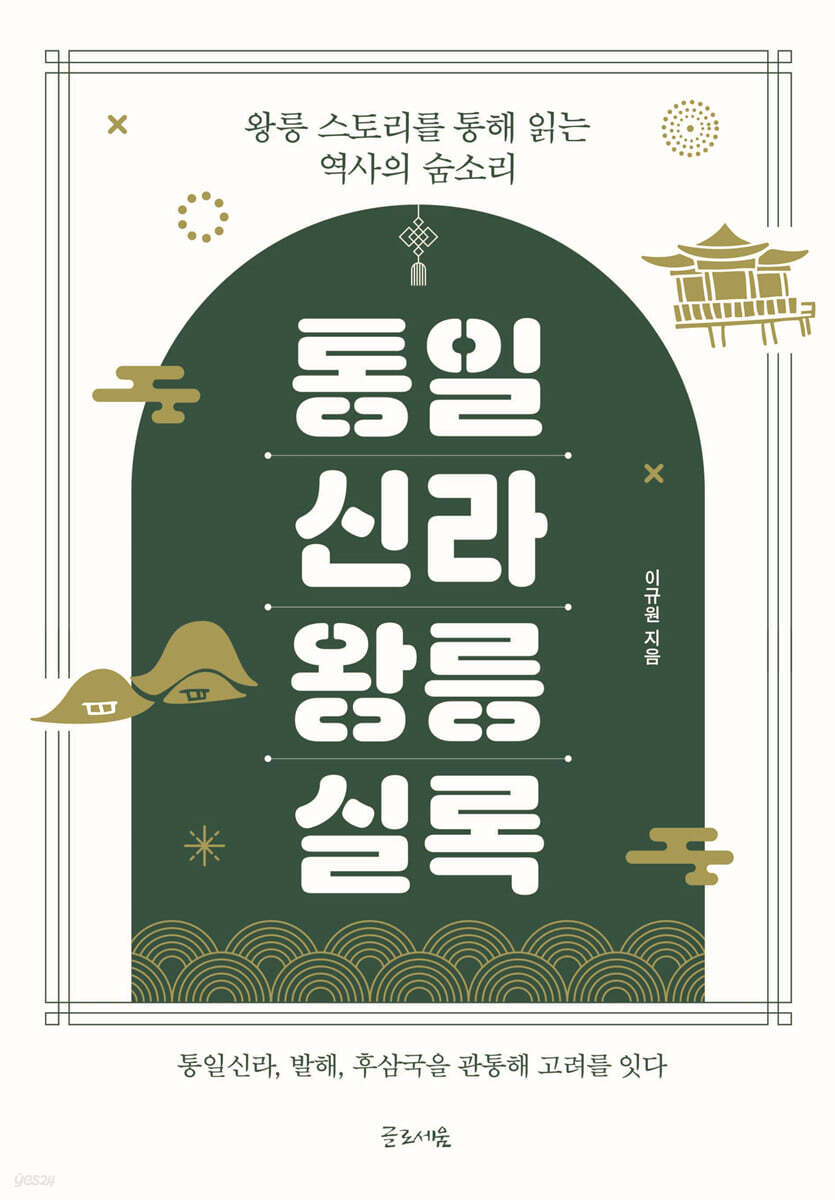
Unified Silla Royal Tombs Annals
 |
Description
Book Introduction
This book is a sequel to the Annals of the Three Kingdoms, which covers the official history from the founding of Silla (57 BC) to the reign of King Munmu, when the three kingdoms were unified (668).
This is also a record of the author's field research, written over a long period of time, detailing the revival and fate of Unified Silla from King Sinmun, the 31st king of Silla, to King Gyeongsun, the 56th king who ended the millennium of Silla, and even adding feng shui figures.
In particular, the history books that dealt with ancient history up to now wrote the history of the three kingdoms separately, which was difficult to understand and inconvenient to read.
However, this book uses a syntactic narrative technique to provide a clear overview of the history of the Three Kingdoms in one page.
In addition, he easily explained the indigenous feng shui of Silla and the feng shui of royal tombs that became popular after the Unified Silla period, and traced the functional relationship between nature and the land.
Flowing along the course of history, inspirations and a sense of connection that transcends time and space are all well-blended.
Fragments of history, enumerated in fragments, are described in detail in every corner of this book.
This is also a record of the author's field research, written over a long period of time, detailing the revival and fate of Unified Silla from King Sinmun, the 31st king of Silla, to King Gyeongsun, the 56th king who ended the millennium of Silla, and even adding feng shui figures.
In particular, the history books that dealt with ancient history up to now wrote the history of the three kingdoms separately, which was difficult to understand and inconvenient to read.
However, this book uses a syntactic narrative technique to provide a clear overview of the history of the Three Kingdoms in one page.
In addition, he easily explained the indigenous feng shui of Silla and the feng shui of royal tombs that became popular after the Unified Silla period, and traced the functional relationship between nature and the land.
Flowing along the course of history, inspirations and a sense of connection that transcends time and space are all well-blended.
Fragments of history, enumerated in fragments, are described in detail in every corner of this book.
- You can preview some of the book's contents.
Preview
index
Introduction · 8
Connecting history and culture
Countries and Territories
A nation must have territory to survive, and it cannot be conquered through war or bought and sold. 20
Administrative systems and government of the Three Kingdoms
The core of national governance is politics and national defense. Territorial expansion makes government reorganization inevitable. · 34
ancient history books
History must be recorded to be recognized for its value. For monarchs, history books are an object of fear. 50
Unifying Silla through Royal Tombs
Silla's 31st King of Newspapers
Putting an end to the civil war and focusing on domestic affairs · 68
King Hyoso, the 32nd king of Silla
Ascending the Golden Dragon, but Relying on the Regency of the Queen Mother · 80
Balhae
Declaring the succession of Goguryeo and establishing the Haedong Seongguk · 90
King Seongdeok, the 33rd king of Silla
Demonstrate outstanding governance based on political stability · 102
King Hyoseong, the 34th king of Silla
The Decline of Absolute Monarchy, Sacrificial Lamb in the Power Struggle over Political Marriage · 114
King Gyeongdeok, the 35th king of Silla
Pro-Tang diplomacy stabilized the people's livelihood, but Silla lost its identity. · 124
King Hyegong, the 36th king of Silla
The unfortunate king who became king at the age of eight and was assassinated by the noble royal family as regent · 136
Silla's 37th queen, Seondeok
He was assassinated and placed on the throne, but remained uneasy for the entire 4 years and 9 months of his reign. 148
King Wonseong, the 38th king of Silla
The noble faction overpowered the true bone faction, changing the lineage of succession to the throne. · 158
King Soseong, the 39th king of Silla
Due to his frail constitution from childhood, he died suddenly after only one year and five months on the throne. · 170
King Aejang, the 40th king of Silla
Reforms to Strengthen Royal Power Face Challenges from the Established · 180
King Heondeok, the 41st king of Silla
After murdering his nephew and ascending to the throne, securing legitimacy became a top priority. · 190
King Heungdeok, the 42nd king of Silla
I've reached the top, but power is nothing. Only national trials pile up. · 202
King Huigang, the 43rd king of Silla
He ascended to the throne as the embodiment of desire, but ended his life by suicide. It was a miserable end. · 214
King Min-ae, the 44th king of Silla
Usurpating the throne by force Usurpating the throne by force · 224
King Sinmu, the 45th king of Silla
Avenging the Father's Enemy, Yet Becoming the Shortest-Lived King · 234
King Munseong, the 46th king of Silla
A natural disaster, unreasonable personnel demands, and countless other calamities threaten to bring no peace. · 246
King Heonan, the 47th king of Silla
Even after witnessing the tragedy of the struggle for the throne between blood relatives, I lack the strength to remain calm. · 260
King Gyeongmun, the 48th king of Silla
The throne was passed to his son-in-law, resulting in a smooth transition of power · 272
King Heongang, the 49th king of Silla
Promoting national revival and royal well-being through the construction of a Buddhist Pure Land through Buddhist power · 284
King Jeonggang, 50th king of Silla
He is sickly and gentle by nature, but his handsome physique makes him a pretext for treason. · 296
Queen Jinseong, the 51st queen of Silla
The Later Three Kingdoms period began on the Korean Peninsula due to the female monarch's lack of leadership and laxity. · 306
King Hyogong, the 52nd king of Silla
When an illegitimate son ascended the throne, his authority was at an all-time low, so he gave up on state affairs and devoted himself solely to lust. · 318
King Shindeok, the 53rd king of Silla
The Kim Dynasty falls and the Park family, the founding royal family, takes the throne. 328
King Gyeongmyeong, the 54th king of Silla
I want to protect the fate of a fading nation, but the tide is already turning. · 338
Gung Ye of Later Goguryeo
Born as a prince of Silla, he was abandoned and, sharpening his sword of revenge, founded a new nation. · 348
Wang Geon of Goryeo
He was elected to replace the tyrannical monarch and succeeded Goguryeo, renaming it Goryeo · 360
King Gyeongae, the 55th king of Silla
The Park Dynasty came to an end when he was discovered by Gyeon Hwon and took his own life. · 378
Later Baekje Gyeon Hwon
A life full of ups and downs, with both father and son becoming enemies · 390
King Gyeongsun, the 56th king of Silla
The king of a fallen nation offered a thousand years of sacrifice and lived a long life, but how could he be so resentful? · 402
supplement
Ancient Korean Pharmacist
From 700,000 BC to the founding of Geumgwan Gaya in AD 42 · 420
supplement
Silla Dynasty (57 BC–935 AD) Genealogy · 437
Silla Royal Family Genealogy at the Peak of the Struggle for Royal Power · 440
Silla Pungwolju (Hwarangdo) Genealogy · 442
Goguryeo Dynasty (37 BC–AD 668) Genealogy · 444
Genealogy of the Baekje Dynasty (18 BC–AD 660) · 446
Genealogy of the Geumgwan Gaya Dynasty (1842-532) · 448
Later Gaya Dynasty (mid-5th century–562) Genealogy · 448
Genealogy of the Balhae Dynasty (698–926) · 449
Genealogy of the Tang Emperors (618–907) · 450
Genealogy of the Emperors of Japan (660 BC–present) · 451
Connecting history and culture
Countries and Territories
A nation must have territory to survive, and it cannot be conquered through war or bought and sold. 20
Administrative systems and government of the Three Kingdoms
The core of national governance is politics and national defense. Territorial expansion makes government reorganization inevitable. · 34
ancient history books
History must be recorded to be recognized for its value. For monarchs, history books are an object of fear. 50
Unifying Silla through Royal Tombs
Silla's 31st King of Newspapers
Putting an end to the civil war and focusing on domestic affairs · 68
King Hyoso, the 32nd king of Silla
Ascending the Golden Dragon, but Relying on the Regency of the Queen Mother · 80
Balhae
Declaring the succession of Goguryeo and establishing the Haedong Seongguk · 90
King Seongdeok, the 33rd king of Silla
Demonstrate outstanding governance based on political stability · 102
King Hyoseong, the 34th king of Silla
The Decline of Absolute Monarchy, Sacrificial Lamb in the Power Struggle over Political Marriage · 114
King Gyeongdeok, the 35th king of Silla
Pro-Tang diplomacy stabilized the people's livelihood, but Silla lost its identity. · 124
King Hyegong, the 36th king of Silla
The unfortunate king who became king at the age of eight and was assassinated by the noble royal family as regent · 136
Silla's 37th queen, Seondeok
He was assassinated and placed on the throne, but remained uneasy for the entire 4 years and 9 months of his reign. 148
King Wonseong, the 38th king of Silla
The noble faction overpowered the true bone faction, changing the lineage of succession to the throne. · 158
King Soseong, the 39th king of Silla
Due to his frail constitution from childhood, he died suddenly after only one year and five months on the throne. · 170
King Aejang, the 40th king of Silla
Reforms to Strengthen Royal Power Face Challenges from the Established · 180
King Heondeok, the 41st king of Silla
After murdering his nephew and ascending to the throne, securing legitimacy became a top priority. · 190
King Heungdeok, the 42nd king of Silla
I've reached the top, but power is nothing. Only national trials pile up. · 202
King Huigang, the 43rd king of Silla
He ascended to the throne as the embodiment of desire, but ended his life by suicide. It was a miserable end. · 214
King Min-ae, the 44th king of Silla
Usurpating the throne by force Usurpating the throne by force · 224
King Sinmu, the 45th king of Silla
Avenging the Father's Enemy, Yet Becoming the Shortest-Lived King · 234
King Munseong, the 46th king of Silla
A natural disaster, unreasonable personnel demands, and countless other calamities threaten to bring no peace. · 246
King Heonan, the 47th king of Silla
Even after witnessing the tragedy of the struggle for the throne between blood relatives, I lack the strength to remain calm. · 260
King Gyeongmun, the 48th king of Silla
The throne was passed to his son-in-law, resulting in a smooth transition of power · 272
King Heongang, the 49th king of Silla
Promoting national revival and royal well-being through the construction of a Buddhist Pure Land through Buddhist power · 284
King Jeonggang, 50th king of Silla
He is sickly and gentle by nature, but his handsome physique makes him a pretext for treason. · 296
Queen Jinseong, the 51st queen of Silla
The Later Three Kingdoms period began on the Korean Peninsula due to the female monarch's lack of leadership and laxity. · 306
King Hyogong, the 52nd king of Silla
When an illegitimate son ascended the throne, his authority was at an all-time low, so he gave up on state affairs and devoted himself solely to lust. · 318
King Shindeok, the 53rd king of Silla
The Kim Dynasty falls and the Park family, the founding royal family, takes the throne. 328
King Gyeongmyeong, the 54th king of Silla
I want to protect the fate of a fading nation, but the tide is already turning. · 338
Gung Ye of Later Goguryeo
Born as a prince of Silla, he was abandoned and, sharpening his sword of revenge, founded a new nation. · 348
Wang Geon of Goryeo
He was elected to replace the tyrannical monarch and succeeded Goguryeo, renaming it Goryeo · 360
King Gyeongae, the 55th king of Silla
The Park Dynasty came to an end when he was discovered by Gyeon Hwon and took his own life. · 378
Later Baekje Gyeon Hwon
A life full of ups and downs, with both father and son becoming enemies · 390
King Gyeongsun, the 56th king of Silla
The king of a fallen nation offered a thousand years of sacrifice and lived a long life, but how could he be so resentful? · 402
supplement
Ancient Korean Pharmacist
From 700,000 BC to the founding of Geumgwan Gaya in AD 42 · 420
supplement
Silla Dynasty (57 BC–935 AD) Genealogy · 437
Silla Royal Family Genealogy at the Peak of the Struggle for Royal Power · 440
Silla Pungwolju (Hwarangdo) Genealogy · 442
Goguryeo Dynasty (37 BC–AD 668) Genealogy · 444
Genealogy of the Baekje Dynasty (18 BC–AD 660) · 446
Genealogy of the Geumgwan Gaya Dynasty (1842-532) · 448
Later Gaya Dynasty (mid-5th century–562) Genealogy · 448
Genealogy of the Balhae Dynasty (698–926) · 449
Genealogy of the Tang Emperors (618–907) · 450
Genealogy of the Emperors of Japan (660 BC–present) · 451
Publisher's Review
Recently, lifelong education through planned travel and character exploration has been gaining popularity.
In particular, it focuses on the humanities and history sectors through field trips.
We visit not only royal tombs but also the tombs of historical figures who influenced an era.
The aim is to add wisdom to life through the remaining traces of the underground protagonist.
The reality of our society is that no matter how much wealth and power the rich have, if they lack humanistic knowledge, they are ignored.
The UNESCO World Heritage Committee registered the Gaya Tombs, submitted by Korea, as a World Heritage site at its 45th session held in Riyadh, Saudi Arabia on September 17, 2023.
The committee evaluated that “the geographical distribution, location, structure and scale of the tomb complex, and the grave goods show well that Gaya maintained a unique autonomous and horizontal system,” and that “it serves as important evidence that witnesses the diversity of ancient East Asian civilization.”
The Gaya Tombs, recently registered as a World Heritage Site, are a federation heritage site consisting of seven tombs that existed in the southern part of the Korean Peninsula from the 1st to the mid-6th centuries.
With this, Korea now has 16 world cultural heritage sites.
In the field of history, Korean royal tombs are classified by ancient, medieval, and modern eras.
Most of the ancient tombs are Silla royal tombs, and surprisingly, there are not many preserved royal tombs from the Middle Ages.
Only 40 of the Joseon royal tombs in South Korea are fully preserved and were registered as a UNESCO World Heritage Site on June 26, 2009.
The author encountered hundreds of tombs of famous figures who shaped Korean and world history from ancient times to the present.
Although it was an encounter through a graveyard rather than a face-to-face meeting, the value was truly overwhelming and the feeling was special.
How historical figures and their value are remembered is more important than how they are buried.
Human history is inevitably written primarily about politics, people, and war.
The everyday life of ordinary people farming and fishing cannot be highlighted in the forefront of history.
This is because the mainstream movements and wars that have driven history are actually rooted in the vagaries of futile human desire and the rise and fall of power.
Excessive assumptions and resentment while reflecting on history are nothing more than empty talk.
What can we do today if we regret and feel resentment for the land that was taken away thousands or hundreds of years ago?
The reckless will to recover the land soon leads directly to war.
The ongoing territorial conflicts and wars around the world (Israel-Palestine, Russia-Ukraine, etc.) are clashes over sovereignty over the Goto Islands.
Territory was also a subject of bargaining between the warring parties.
The victorious powers in the war either confiscated the occupied land or demanded a division of territory as compensation for the costs of the war.
Borders were redrawn and the nationalities of the people in the border areas changed frequently.
They indiscriminately captured the soldiers of the defeated country and sent them back to fight in the war against their own country.
The essence of running a country is for a ruler to use his country's past history as a lesson and prepare for crises in advance or to avoid repeating them.
Because the course of history contains countless wisdom and lessons.
This book is a sequel to the Annals of the Three Kingdoms, which covers the official history from the founding of Silla (57 BC) to the reign of King Munmu, when the three kingdoms were unified (668).
This is also a record of the author's field research, written over a long period of time, detailing the revival and fate of Unified Silla from King Sinmun, the 31st king of Silla, to King Gyeongsun, the 56th king who ended the millennium of Silla, and even adding feng shui figures.
In particular, the history books that dealt with ancient history up to now wrote the history of the three kingdoms separately, which was difficult to understand and inconvenient to read.
However, this book uses a syntactic narrative technique to provide a clear overview of the history of the Three Kingdoms in one page.
In addition, he easily explained the indigenous feng shui of Silla and the feng shui of royal tombs that became popular after the Unified Silla period, and traced the functional relationship between nature and the land.
Flowing along the course of history, inspirations and a sense of connection that transcends time and space are all well-blended.
Fragments of history, enumerated in fragments, are described in detail in every corner of this book.
Some people even speculate that ancient humans were ignorant and uncivilized compared to modern humans.
For them, survival itself was the reason for living, and they lived purely by instinct rather than by thought.
Will the future human race of a thousand years from now surpass today's human population as an advanced human race?
Science changes and theories are overturned.
History progresses and civilization reverses.
Through this book, the author is tirelessly working to discover, remember, and record a cross-section of our ancient history.
In particular, it focuses on the humanities and history sectors through field trips.
We visit not only royal tombs but also the tombs of historical figures who influenced an era.
The aim is to add wisdom to life through the remaining traces of the underground protagonist.
The reality of our society is that no matter how much wealth and power the rich have, if they lack humanistic knowledge, they are ignored.
The UNESCO World Heritage Committee registered the Gaya Tombs, submitted by Korea, as a World Heritage site at its 45th session held in Riyadh, Saudi Arabia on September 17, 2023.
The committee evaluated that “the geographical distribution, location, structure and scale of the tomb complex, and the grave goods show well that Gaya maintained a unique autonomous and horizontal system,” and that “it serves as important evidence that witnesses the diversity of ancient East Asian civilization.”
The Gaya Tombs, recently registered as a World Heritage Site, are a federation heritage site consisting of seven tombs that existed in the southern part of the Korean Peninsula from the 1st to the mid-6th centuries.
With this, Korea now has 16 world cultural heritage sites.
In the field of history, Korean royal tombs are classified by ancient, medieval, and modern eras.
Most of the ancient tombs are Silla royal tombs, and surprisingly, there are not many preserved royal tombs from the Middle Ages.
Only 40 of the Joseon royal tombs in South Korea are fully preserved and were registered as a UNESCO World Heritage Site on June 26, 2009.
The author encountered hundreds of tombs of famous figures who shaped Korean and world history from ancient times to the present.
Although it was an encounter through a graveyard rather than a face-to-face meeting, the value was truly overwhelming and the feeling was special.
How historical figures and their value are remembered is more important than how they are buried.
Human history is inevitably written primarily about politics, people, and war.
The everyday life of ordinary people farming and fishing cannot be highlighted in the forefront of history.
This is because the mainstream movements and wars that have driven history are actually rooted in the vagaries of futile human desire and the rise and fall of power.
Excessive assumptions and resentment while reflecting on history are nothing more than empty talk.
What can we do today if we regret and feel resentment for the land that was taken away thousands or hundreds of years ago?
The reckless will to recover the land soon leads directly to war.
The ongoing territorial conflicts and wars around the world (Israel-Palestine, Russia-Ukraine, etc.) are clashes over sovereignty over the Goto Islands.
Territory was also a subject of bargaining between the warring parties.
The victorious powers in the war either confiscated the occupied land or demanded a division of territory as compensation for the costs of the war.
Borders were redrawn and the nationalities of the people in the border areas changed frequently.
They indiscriminately captured the soldiers of the defeated country and sent them back to fight in the war against their own country.
The essence of running a country is for a ruler to use his country's past history as a lesson and prepare for crises in advance or to avoid repeating them.
Because the course of history contains countless wisdom and lessons.
This book is a sequel to the Annals of the Three Kingdoms, which covers the official history from the founding of Silla (57 BC) to the reign of King Munmu, when the three kingdoms were unified (668).
This is also a record of the author's field research, written over a long period of time, detailing the revival and fate of Unified Silla from King Sinmun, the 31st king of Silla, to King Gyeongsun, the 56th king who ended the millennium of Silla, and even adding feng shui figures.
In particular, the history books that dealt with ancient history up to now wrote the history of the three kingdoms separately, which was difficult to understand and inconvenient to read.
However, this book uses a syntactic narrative technique to provide a clear overview of the history of the Three Kingdoms in one page.
In addition, he easily explained the indigenous feng shui of Silla and the feng shui of royal tombs that became popular after the Unified Silla period, and traced the functional relationship between nature and the land.
Flowing along the course of history, inspirations and a sense of connection that transcends time and space are all well-blended.
Fragments of history, enumerated in fragments, are described in detail in every corner of this book.
Some people even speculate that ancient humans were ignorant and uncivilized compared to modern humans.
For them, survival itself was the reason for living, and they lived purely by instinct rather than by thought.
Will the future human race of a thousand years from now surpass today's human population as an advanced human race?
Science changes and theories are overturned.
History progresses and civilization reverses.
Through this book, the author is tirelessly working to discover, remember, and record a cross-section of our ancient history.
GOODS SPECIFICS
- Date of issue: March 15, 2024
- Page count, weight, size: 456 pages | 868g | 162*230*26mm
- ISBN13: 9791186578995
- ISBN10: 1186578998
You may also like
카테고리
korean


korean

![GQ KOREA Mark (Monthly): December [2025]](http://librairie.coreenne.fr/cdn/shop/files/8ef265dbbfbf186523ed75ba7319009d.jpg?v=1765340328&width=3840)


