

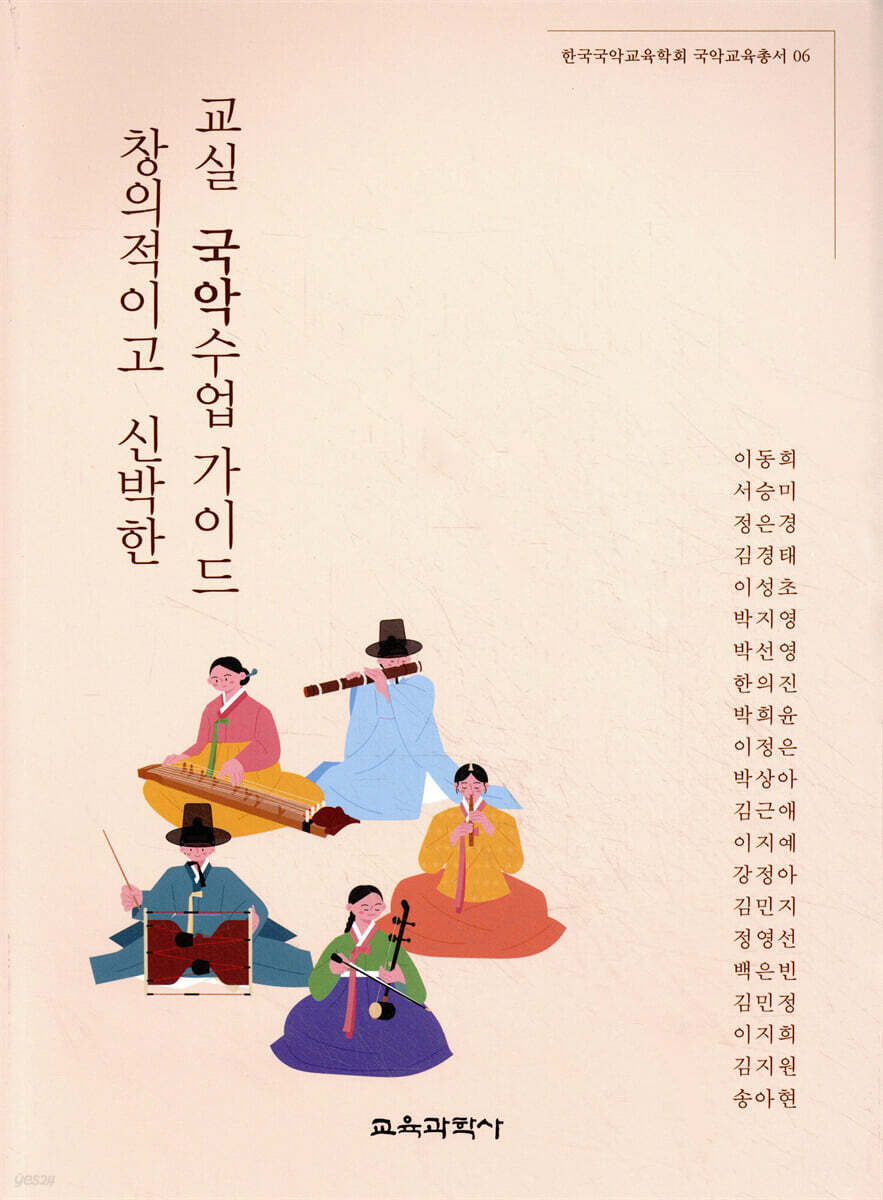
A Guide to Creative and Innovative Classroom Korean Traditional Music Lessons
 |
Description
Book Introduction
This academic series was planned to provide teachers and art instructors with a variety of case studies to help them conduct traditional Korean music classes in a creative and smooth manner with a new perspective before the 2025 school year, when classes based on the revised 2022 curriculum will be fully implemented in elementary, middle, and high schools.
21 educators have tried to vividly write about 19 different and diverse topics related to Korean traditional music, including new teaching approaches to Jeongak such as Jongmyo Jeryeak, Yeongsanhoesang, and Sijo; new ways to sing Pansori, Seodo Minyo, Arirang, and traditional children's songs in a different way than before; teaching and learning methods for instrumental music such as Sogeum, Danso, Gayageum, Samulnori, and Nongak; and integration with other subjects, play-based activities, digital-based creation, metaverse exhibitions, and ensemble classes, based on their direct experiences in the field.
21 educators have tried to vividly write about 19 different and diverse topics related to Korean traditional music, including new teaching approaches to Jeongak such as Jongmyo Jeryeak, Yeongsanhoesang, and Sijo; new ways to sing Pansori, Seodo Minyo, Arirang, and traditional children's songs in a different way than before; teaching and learning methods for instrumental music such as Sogeum, Danso, Gayageum, Samulnori, and Nongak; and integration with other subjects, play-based activities, digital-based creation, metaverse exhibitions, and ensemble classes, based on their direct experiences in the field.
index
Preface / 3
Part 1: Anyone Can Perform Jongmyo Jeryeak ·········································································9
Part 2: Practical Korean Traditional Music Lessons Using Flipped Learning ··········································29
Part 3: Designing Integrated Elementary Classes Using Genre Painting ·······················································49
Part 4: Creating Your First Korean Traditional Music Is Too Difficult? Try Scratching It ········································69
Part 5: Seodo Folk Song Jajin Nanbongga Class Instruction Plan ·························································85
Part 6: Discovering Korean Traditional Music Elements through Multisensory Activities ····················································101
Part 7: Our Story in Five Colors: WeㆍAㆍLess ···································································115
Part 8: A Slightly Slower Lesson ················································································137
Part 9: How Far Can Nongak Be Used? ··································································153
Part 10: Sijo Flows Through Korean Language, History, and Art Curriculum ·············································181
Part 11: Hearing Pictures, Moving Music ·································································201
Part 12: Korean Traditional Music in Everyday Life ·························································································217
Part 13: Digital Encounters with the Spiritual Spirit ················································································································233
Part 14: Student-Led Korean Traditional Music Ensemble Classes Using Technology ·················································255
Part 15: Creating a Map of Joy, Anger, Sorrow, and Pleasure Using the Approach of the Heart ······················275
Part 16: Creating Our Own Arirang ·················································································291
Part 17: Interdisciplinary and Cross-Area Linked Lessons Using Traditional Children's Songs ····················································307
Part 18: Creating a Metaverse Traditional Korean Music Exhibition ····························································································································································································329
Part 19: Creating a Samuljangdan using Recycled Instruments ·········································347
Search ·············································································································362
Part 1: Anyone Can Perform Jongmyo Jeryeak ·········································································9
Part 2: Practical Korean Traditional Music Lessons Using Flipped Learning ··········································29
Part 3: Designing Integrated Elementary Classes Using Genre Painting ·······················································49
Part 4: Creating Your First Korean Traditional Music Is Too Difficult? Try Scratching It ········································69
Part 5: Seodo Folk Song Jajin Nanbongga Class Instruction Plan ·························································85
Part 6: Discovering Korean Traditional Music Elements through Multisensory Activities ····················································101
Part 7: Our Story in Five Colors: WeㆍAㆍLess ···································································115
Part 8: A Slightly Slower Lesson ················································································137
Part 9: How Far Can Nongak Be Used? ··································································153
Part 10: Sijo Flows Through Korean Language, History, and Art Curriculum ·············································181
Part 11: Hearing Pictures, Moving Music ·································································201
Part 12: Korean Traditional Music in Everyday Life ·························································································217
Part 13: Digital Encounters with the Spiritual Spirit ················································································································233
Part 14: Student-Led Korean Traditional Music Ensemble Classes Using Technology ·················································255
Part 15: Creating a Map of Joy, Anger, Sorrow, and Pleasure Using the Approach of the Heart ······················275
Part 16: Creating Our Own Arirang ·················································································291
Part 17: Interdisciplinary and Cross-Area Linked Lessons Using Traditional Children's Songs ····················································307
Part 18: Creating a Metaverse Traditional Korean Music Exhibition ····························································································································································································329
Part 19: Creating a Samuljangdan using Recycled Instruments ·········································347
Search ·············································································································362
GOODS SPECIFICS
- Date of issue: January 10, 2025
- Page count, weight, size: 374 pages | 188*257*30mm
- ISBN13: 9788925419992
- ISBN10: 8925419998
You may also like
카테고리
korean


korean

![GQ KOREA Mark (Monthly): December [2025]](http://librairie.coreenne.fr/cdn/shop/files/8ef265dbbfbf186523ed75ba7319009d.jpg?v=1765340328&width=3840)


