

Let the story disappear
 |
Description
Book Introduction
We sometimes get lost in books and sometimes find another path.
A Story About Stories by Novelist Koo Byung-mo
Novelist Gu Byeong-mo, who has unfolded a world of diverse possibilities with his genre-crossing imagination, is rewriting the 'world of stories' this time.
"Let Stories Disappear," the twenty-eighth volume in the "First Encounter with Novels" series, depicts a world where the stories in all books have become digitalized and become "content data."
The encounter between 'Inge', who escaped from the data, and 'Librarian Q', who was dispatched to capture her, leads to an unexpected ending and reflection on what a story is.
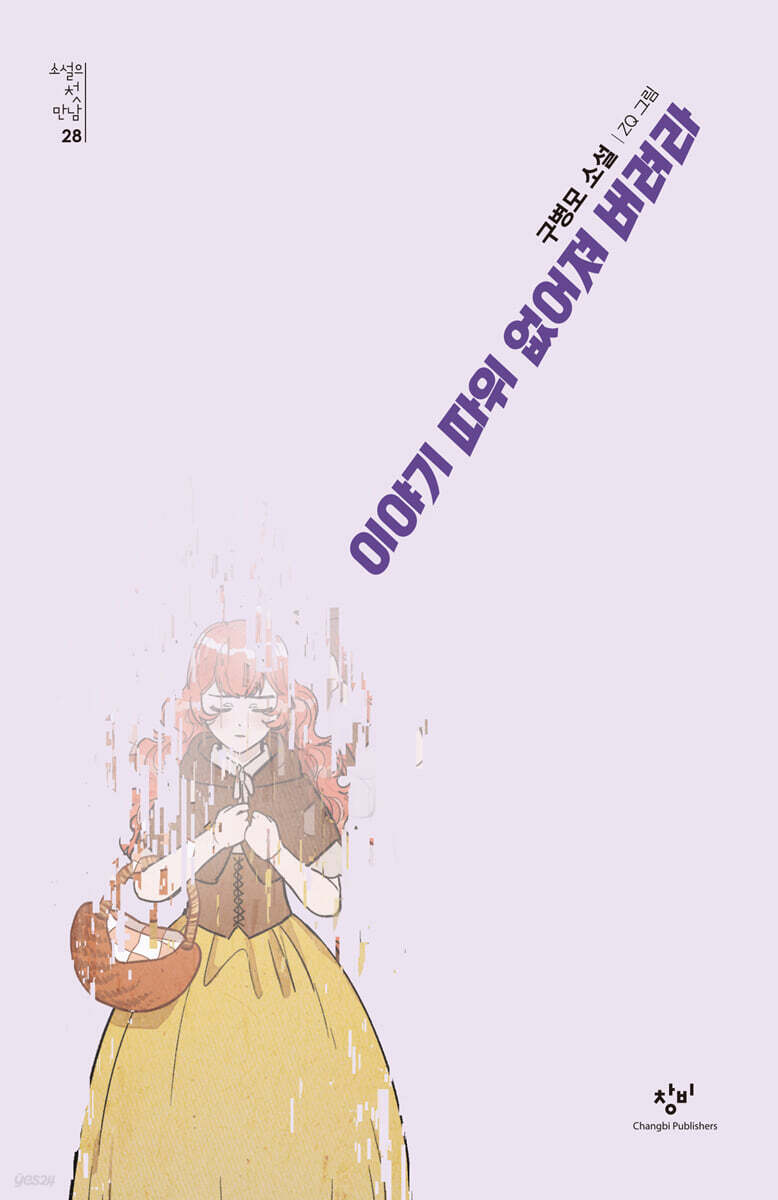
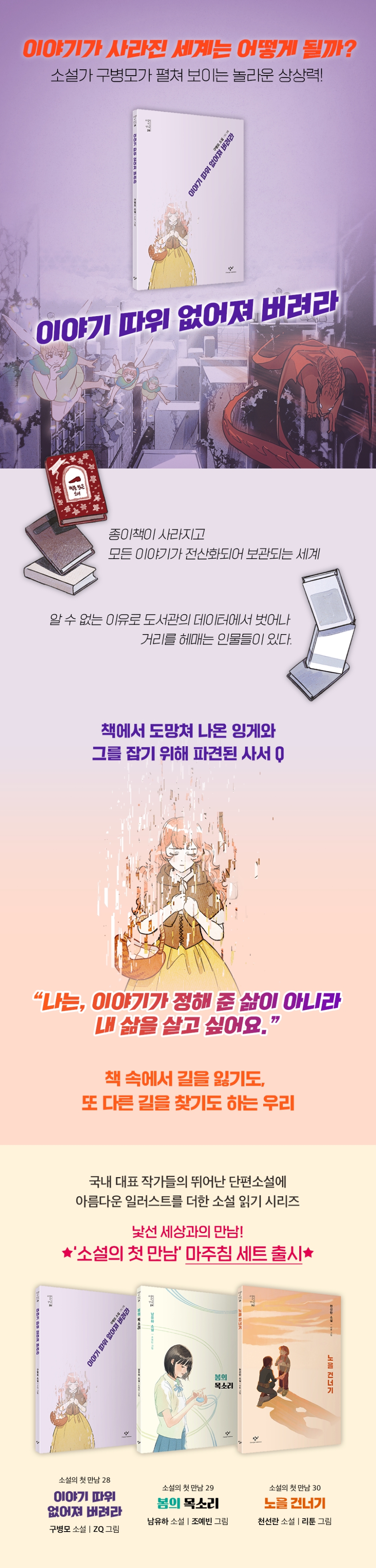
Illustrator ZQ's illustrations, which contrast a monotone, devastated city with the colorful figures wandering within it, expand the multi-layered imagination of the encounter between two different worlds surrounding the story.
In an age where diverse forms of content are readily available, even outside of books, this is a special novel that I confidently recommend to those curious about the meaning and future of stories, asking them to ponder it together.
A Story About Stories by Novelist Koo Byung-mo
Novelist Gu Byeong-mo, who has unfolded a world of diverse possibilities with his genre-crossing imagination, is rewriting the 'world of stories' this time.
"Let Stories Disappear," the twenty-eighth volume in the "First Encounter with Novels" series, depicts a world where the stories in all books have become digitalized and become "content data."
The encounter between 'Inge', who escaped from the data, and 'Librarian Q', who was dispatched to capture her, leads to an unexpected ending and reflection on what a story is.
Illustrator ZQ's illustrations, which contrast a monotone, devastated city with the colorful figures wandering within it, expand the multi-layered imagination of the encounter between two different worlds surrounding the story.
In an age where diverse forms of content are readily available, even outside of books, this is a special novel that I confidently recommend to those curious about the meaning and future of stories, asking them to ponder it together.
- You can preview some of the book's contents.
Preview
index
Let the story disappear
Author's Note
Author's Note
Detailed image
Publisher's Review
A world where stories disappear
Wandering characters and the librarians who set out to find them
In a future where people have long since stopped reading books.
Books with thick bindings and volumes are gone, and stories are computerized and archived for future content production.
But one day, the data is corrupted by a hacker attack, and the characters in the story start wandering around the city in real life.
In the 'new age library' where all the books have disappeared, the librarian's job is to go out and catch such people.
Librarian Q is assigned 'Inge' as a new target for capture, and Q sets out to 'collect' Inge.
Meanwhile, Inge, who was on her way home on a long-awaited vacation from her landlady, gets lost in the forest and finds herself wandering in an unfamiliar, gray land.
The city is so different from the world he used to live in.
Inge doesn't see anyone for a few days, and then suddenly runs into someone and is so shocked that she loses her mind...
“That’s not me.”
Not a life that someone has decided for you,
For my real life
Q explains the whole story to Inge, who has come to her senses.
Inge is the protagonist of the fairy tale "The Girl Who Stepped on Bread", and his mission is to retrieve Inge and return her to a data state. In the fairy tale, Inge is destined to go to hell as payment for her sins.
But Inge feels wronged.
This is because the things that Q said were sins Inge committed are all either false or have not yet happened.
“Should I listen to you, return quietly to the book, become a part of it, commit acts I never wanted to commit, and go to hell?” (Page 64)
Librarian D, who was nearby, also raises questions about Inge's story and the content of the story.
I wonder if a story with a clearly defined path, a story that “seems like pushing children on their backs to go that way” (page 65), still has any meaning in today’s world.
After hearing Inge's words and struggling, Q decides to make a decision that he should not make as a librarian.
What will Q's choice be and what will become of Inge's fate?
In the midst of overflowing data
Which story should we believe?
In an age where access to diverse content like movies, dramas, and webtoons is readily available, what does "story" mean, and what will it look like in the future? "To ensure the story is conveyed clearly and without ambiguity.
As if a highway had been opened to the destination.
“And so, to make a quick profit.” (Page 28) As this utility becomes more important, fewer people are looking for books, and the elaborate decoration and outer covering also disappear.
The new-age library featured in "Let's Make Stories Disappear" maximizes this trend, depicting a world where books have disappeared and only stories that can be replaced by information remain.
Meanwhile, due to changing values of the times, the lessons conveyed in old stories are facing new interpretations.
In this work, which is also a retelling of Andersen's fairy tale "The Girl Who Stepped on the Bread," novelist Koo Byeong-mo not only subjectively reinterprets the protagonist Inge, but also leads to a multifaceted appreciation as a "story about a story."
It's time to delve deep into the colorful imagination and questions of what a story is.
This is a story.
A story you won't believe.
If you were me, you would laugh it off and say, "Where in the world would such a thing happen?"
So, it's a story that ends up not happening in the first place.
(Page 7)
Author's Note
In the midst of unexpected events, forever.
The first path to encountering a novel
A welcome reading for those who have grown distant from books, a first encounter with a novel.
'First Encounter with a Novel' is a thin and beautiful paperback book decorated with a new sensibility.
A literary masterpiece, this short story is richly illustrated.
With engaging stories, short volumes of less than 100 pages, and captivating illustrations, it allows even those who lack time or are unfamiliar with reading to easily access excellent contemporary works.
For adolescent readers who have stopped reading at fairy tales, it will serve as a stepping stone to novels.
To pump water from a deep well, you must pour a bucket of water from above.
The "First Encounter with a Novel" series will serve as a welcome aid to those who have become increasingly distant from literature, helping them reconnect with books and inject fresh vitality into our reading culture.
Wandering characters and the librarians who set out to find them
In a future where people have long since stopped reading books.
Books with thick bindings and volumes are gone, and stories are computerized and archived for future content production.
But one day, the data is corrupted by a hacker attack, and the characters in the story start wandering around the city in real life.
In the 'new age library' where all the books have disappeared, the librarian's job is to go out and catch such people.
Librarian Q is assigned 'Inge' as a new target for capture, and Q sets out to 'collect' Inge.
Meanwhile, Inge, who was on her way home on a long-awaited vacation from her landlady, gets lost in the forest and finds herself wandering in an unfamiliar, gray land.
The city is so different from the world he used to live in.
Inge doesn't see anyone for a few days, and then suddenly runs into someone and is so shocked that she loses her mind...
“That’s not me.”
Not a life that someone has decided for you,
For my real life
Q explains the whole story to Inge, who has come to her senses.
Inge is the protagonist of the fairy tale "The Girl Who Stepped on Bread", and his mission is to retrieve Inge and return her to a data state. In the fairy tale, Inge is destined to go to hell as payment for her sins.
But Inge feels wronged.
This is because the things that Q said were sins Inge committed are all either false or have not yet happened.
“Should I listen to you, return quietly to the book, become a part of it, commit acts I never wanted to commit, and go to hell?” (Page 64)
Librarian D, who was nearby, also raises questions about Inge's story and the content of the story.
I wonder if a story with a clearly defined path, a story that “seems like pushing children on their backs to go that way” (page 65), still has any meaning in today’s world.
After hearing Inge's words and struggling, Q decides to make a decision that he should not make as a librarian.
What will Q's choice be and what will become of Inge's fate?
In the midst of overflowing data
Which story should we believe?
In an age where access to diverse content like movies, dramas, and webtoons is readily available, what does "story" mean, and what will it look like in the future? "To ensure the story is conveyed clearly and without ambiguity.
As if a highway had been opened to the destination.
“And so, to make a quick profit.” (Page 28) As this utility becomes more important, fewer people are looking for books, and the elaborate decoration and outer covering also disappear.
The new-age library featured in "Let's Make Stories Disappear" maximizes this trend, depicting a world where books have disappeared and only stories that can be replaced by information remain.
Meanwhile, due to changing values of the times, the lessons conveyed in old stories are facing new interpretations.
In this work, which is also a retelling of Andersen's fairy tale "The Girl Who Stepped on the Bread," novelist Koo Byeong-mo not only subjectively reinterprets the protagonist Inge, but also leads to a multifaceted appreciation as a "story about a story."
It's time to delve deep into the colorful imagination and questions of what a story is.
This is a story.
A story you won't believe.
If you were me, you would laugh it off and say, "Where in the world would such a thing happen?"
So, it's a story that ends up not happening in the first place.
(Page 7)
Author's Note
In the midst of unexpected events, forever.
The first path to encountering a novel
A welcome reading for those who have grown distant from books, a first encounter with a novel.
'First Encounter with a Novel' is a thin and beautiful paperback book decorated with a new sensibility.
A literary masterpiece, this short story is richly illustrated.
With engaging stories, short volumes of less than 100 pages, and captivating illustrations, it allows even those who lack time or are unfamiliar with reading to easily access excellent contemporary works.
For adolescent readers who have stopped reading at fairy tales, it will serve as a stepping stone to novels.
To pump water from a deep well, you must pour a bucket of water from above.
The "First Encounter with a Novel" series will serve as a welcome aid to those who have become increasingly distant from literature, helping them reconnect with books and inject fresh vitality into our reading culture.
GOODS SPECIFICS
- Date of issue: August 18, 2023
- Page count, weight, size: 88 pages | 146g | 122*188*10mm
- ISBN13: 9788936431150
- ISBN10: 8936431153
You may also like
카테고리
korean


korean

![GQ KOREA Mark (Monthly): December [2025]](http://librairie.coreenne.fr/cdn/shop/files/8ef265dbbfbf186523ed75ba7319009d.jpg?v=1765340328&width=3840)


