

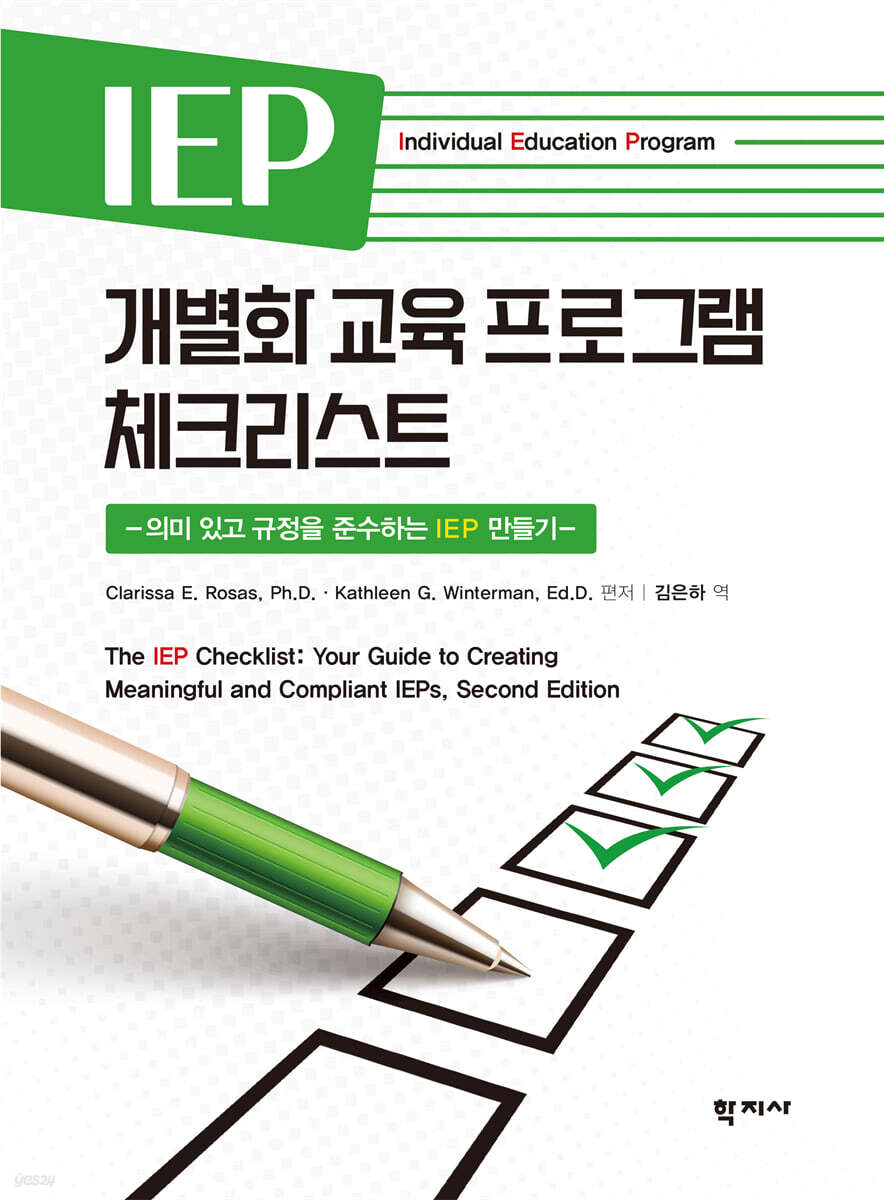
IEP Individualized Education Program Checklist
 |
Description
Book Introduction
How can we design effective IEPs that improve student academic achievement and meet legal requirements?
This book provides the answers you need to create and implement a successful IEP. It begins with a theoretical introduction to IEPs and explains their purpose, key components, and the legal obligations they must meet.
You'll then get a comprehensive framework for IEP development that breaks down the entire IEP process into detailed, manageable steps, featuring unique, in-depth checklists to guide you through each step.
Filled with valuable planning tips, vivid examples, and hands-on activities, this book is a step-by-step guide for the entire school team to create meaningful, compliant IEPs that help students achieve their goals and meet standards.
This book provides the answers you need to create and implement a successful IEP. It begins with a theoretical introduction to IEPs and explains their purpose, key components, and the legal obligations they must meet.
You'll then get a comprehensive framework for IEP development that breaks down the entire IEP process into detailed, manageable steps, featuring unique, in-depth checklists to guide you through each step.
Filled with valuable planning tips, vivid examples, and hands-on activities, this book is a step-by-step guide for the entire school team to create meaningful, compliant IEPs that help students achieve their goals and meet standards.
index
Translator's Preface
Author's Preface
Part 1: Foundations of Developing Meaningful IEPs
Chapter 1: Overview of the History and Legal Perspectives of Special Education
1.
The law that shaped special education
2. IEP Rubric
3.
summation
4.
activity
Chapter 2: IEP Considerations for Culturally and Linguistically Diverse Learners
1.
Demographic trends of culturally and linguistically diverse students
2.
historical discrimination
3.
summation
4.
activity
Chapter 3: Building a Collaborative Team for Better IEPs
1.
Understanding the legal perspective
2. Review IEP meeting participants
3.
Student-Led IEP Meetings
4.
Developing a Team
5.
summation
6. IEP Checklist: Special Factors
7.
activity
Part 2: Key Areas of IEP Development
Chapter 4 Current Academic Achievement and Functional Performance Level
1.
Understanding the legal perspective
2.
Academic achievement and functional performance
3.
Improvement Target Areas
4.
summation
5. IEP Checklist: Current Academic Achievement and Functional Performance Level
6.
activity
Chapter 5 Objectives
1.
Understanding the legal perspective
2.
Are general education teachers responsible for implementing IEP goals?
3.
Write measurable, observable, and meaningful goals
4.
Goals that reflect culture
5.
summation
6. IEP Checklist: Goals
7.
activity
Chapter 6 Short-Term Goals
1.
Understanding the legal perspective
2.
short-term goals
3.
summation
4. IEP Checklist: Short-Term Goals
5.
activity
Chapter 7 Measuring and Reporting Progress
1.
Understanding the legal perspective
2.
Progress Check Evaluation
3.
Data collection
4.
Progress report
5.
summation
6. IEP Checklist: Measuring and Reporting Progress
7.
activity
Part 3: Concepts Supporting IEP Development
Chapter 8 Minimum Restrictive Environment
1.
Understanding the legal perspective
2.
The 2004 Act on the Improvement of Education for Individuals with Disabilities and the Least Restrictive Environment
3.
Implications for Instructional Decisions
4.
Least Restrictive Environment Continuum
5.
Support for minimally restrictive environment technologies
6. Include a Least Restrictive Environment Statement in the IEP
7.
Full integration and mainstreaming
8.
summation
9. IEP Checklist: Least Restrictive Environment
10.
activity
Chapter 9 Adjustments and Modifications
1.
Understanding the legal perspective
2.
adjustment
3.
correction
4.
Effective Integration in Practice
5.
summation
6. IEP Checklist: Adjustments and Modifications
7.
activity
Chapter 10: Building a Transition Team - Meeting Postsecondary Needs
1.
Conversion according to the Disabled Persons Education Act
2.
Understanding the legal perspective
3. IEP transition-related factors
4.
Using the Transition Planning Framework
5.
summation
6. IEP Checklist: Transition
7.
activity
Chapter 11: Designing a Behavior Intervention Plan
1.
Understanding the legal perspective
2.
The need for fair practice
3.
Culturally Reflective Positive Behavioral Interventions and Supports (PBIS)
4.
Functional Behavioral Assessment
5.
Writing Quality Behavioral IEP Goals
6.
Check your progress
7.
summation
8. IEP Checklist: Behavioral Goals
9.
activity
Chapter 12: Support for Students with Disabilities in Private and Religious Schools
1.
Understanding the legal perspective
2.
Private school placement
3. ISP and IEP
4.
summation
5. IEP Checklist: Private and Religious Schools
6.
activity
References
Glossary
Appendix: IEP Checklist
Search
Author's Preface
Part 1: Foundations of Developing Meaningful IEPs
Chapter 1: Overview of the History and Legal Perspectives of Special Education
1.
The law that shaped special education
2. IEP Rubric
3.
summation
4.
activity
Chapter 2: IEP Considerations for Culturally and Linguistically Diverse Learners
1.
Demographic trends of culturally and linguistically diverse students
2.
historical discrimination
3.
summation
4.
activity
Chapter 3: Building a Collaborative Team for Better IEPs
1.
Understanding the legal perspective
2. Review IEP meeting participants
3.
Student-Led IEP Meetings
4.
Developing a Team
5.
summation
6. IEP Checklist: Special Factors
7.
activity
Part 2: Key Areas of IEP Development
Chapter 4 Current Academic Achievement and Functional Performance Level
1.
Understanding the legal perspective
2.
Academic achievement and functional performance
3.
Improvement Target Areas
4.
summation
5. IEP Checklist: Current Academic Achievement and Functional Performance Level
6.
activity
Chapter 5 Objectives
1.
Understanding the legal perspective
2.
Are general education teachers responsible for implementing IEP goals?
3.
Write measurable, observable, and meaningful goals
4.
Goals that reflect culture
5.
summation
6. IEP Checklist: Goals
7.
activity
Chapter 6 Short-Term Goals
1.
Understanding the legal perspective
2.
short-term goals
3.
summation
4. IEP Checklist: Short-Term Goals
5.
activity
Chapter 7 Measuring and Reporting Progress
1.
Understanding the legal perspective
2.
Progress Check Evaluation
3.
Data collection
4.
Progress report
5.
summation
6. IEP Checklist: Measuring and Reporting Progress
7.
activity
Part 3: Concepts Supporting IEP Development
Chapter 8 Minimum Restrictive Environment
1.
Understanding the legal perspective
2.
The 2004 Act on the Improvement of Education for Individuals with Disabilities and the Least Restrictive Environment
3.
Implications for Instructional Decisions
4.
Least Restrictive Environment Continuum
5.
Support for minimally restrictive environment technologies
6. Include a Least Restrictive Environment Statement in the IEP
7.
Full integration and mainstreaming
8.
summation
9. IEP Checklist: Least Restrictive Environment
10.
activity
Chapter 9 Adjustments and Modifications
1.
Understanding the legal perspective
2.
adjustment
3.
correction
4.
Effective Integration in Practice
5.
summation
6. IEP Checklist: Adjustments and Modifications
7.
activity
Chapter 10: Building a Transition Team - Meeting Postsecondary Needs
1.
Conversion according to the Disabled Persons Education Act
2.
Understanding the legal perspective
3. IEP transition-related factors
4.
Using the Transition Planning Framework
5.
summation
6. IEP Checklist: Transition
7.
activity
Chapter 11: Designing a Behavior Intervention Plan
1.
Understanding the legal perspective
2.
The need for fair practice
3.
Culturally Reflective Positive Behavioral Interventions and Supports (PBIS)
4.
Functional Behavioral Assessment
5.
Writing Quality Behavioral IEP Goals
6.
Check your progress
7.
summation
8. IEP Checklist: Behavioral Goals
9.
activity
Chapter 12: Support for Students with Disabilities in Private and Religious Schools
1.
Understanding the legal perspective
2.
Private school placement
3. ISP and IEP
4.
summation
5. IEP Checklist: Private and Religious Schools
6.
activity
References
Glossary
Appendix: IEP Checklist
Search
GOODS SPECIFICS
- Date of issue: March 20, 2025
- Format: Paperback book binding method guide
- Page count, weight, size: 320 pages | 188*255*13mm
- ISBN13: 9788999733376
You may also like
카테고리
korean


korean

![GQ KOREA Mark (Monthly): December [2025]](http://librairie.coreenne.fr/cdn/shop/files/8ef265dbbfbf186523ed75ba7319009d.jpg?v=1765340328&width=3840)


