

First encounter with integrated society
 |
Description
Book Introduction
News becomes textbooks, and textbooks become news.
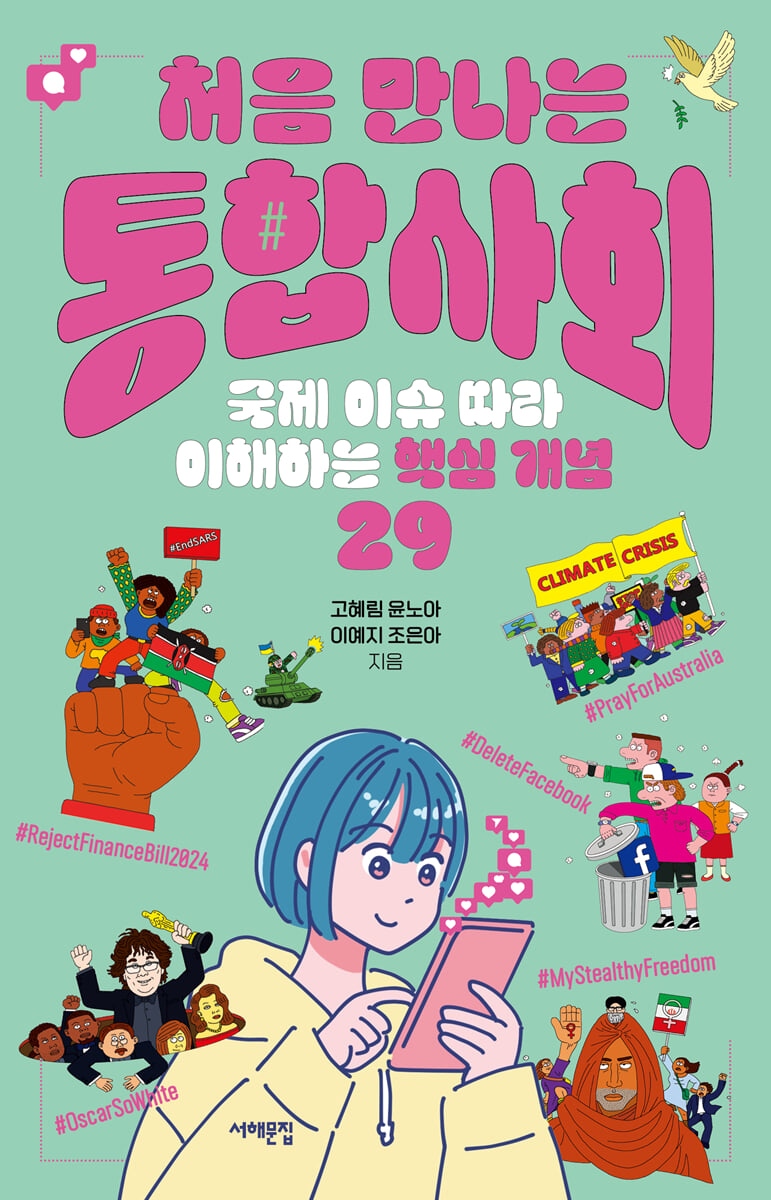
My First Integrated Social Studies: Learning About International Issues and #Hashtags
A book designed to help students new to integrated social studies understand the subject more easily and enjoyably.
The vast topic of international issues is not an abstract concept in a textbook, but rather a vivid reality unfolding through hashtag movements and news spread on social media.
You'll learn how the Russo-Ukrainian war and the McDonald's boycott are connected, how the Facebook data breach changed the world, why Iranian women took to the streets and cried out for "freedom," and how the collapse of a building in Bangladesh is connected to the clothes I'm wearing.
As I read the book, I feel that events outside the country that seem unrelated to me are rapidly approaching our daily lives.
Each issue contains 29 concepts that must be learned in the integrated social studies subject, allowing students to naturally grasp the core of the subject.
Social studies teachers, who know better than anyone what students find difficult and what will pique their curiosity, explain complex topics in a simple way and questions in a clear way.
Additionally, we created a 'History, Geography, Ethics, and Terminology Talk' section to provide sufficient background knowledge so that you can accurately understand new and unfamiliar terms that appear in each chapter.
It also presents the achievement standards of the 2022 revised curriculum and the inquiry activities that can be conducted in each unit, making it helpful for teachers considering the design and operation of integrated social studies classes.
My First Integrated Social Studies: Learning About International Issues and #Hashtags
A book designed to help students new to integrated social studies understand the subject more easily and enjoyably.
The vast topic of international issues is not an abstract concept in a textbook, but rather a vivid reality unfolding through hashtag movements and news spread on social media.
You'll learn how the Russo-Ukrainian war and the McDonald's boycott are connected, how the Facebook data breach changed the world, why Iranian women took to the streets and cried out for "freedom," and how the collapse of a building in Bangladesh is connected to the clothes I'm wearing.
As I read the book, I feel that events outside the country that seem unrelated to me are rapidly approaching our daily lives.
Each issue contains 29 concepts that must be learned in the integrated social studies subject, allowing students to naturally grasp the core of the subject.
Social studies teachers, who know better than anyone what students find difficult and what will pique their curiosity, explain complex topics in a simple way and questions in a clear way.
Additionally, we created a 'History, Geography, Ethics, and Terminology Talk' section to provide sufficient background knowledge so that you can accurately understand new and unfamiliar terms that appear in each chapter.
It also presents the achievement standards of the 2022 revised curriculum and the inquiry activities that can be conducted in each unit, making it helpful for teachers considering the design and operation of integrated social studies classes.
- You can preview some of the book's contents.
Preview
index
Opening Remarks: Beginning the Integrated Society Hashtag Journey
1.
The Story of African Generation Z
#RejectFinanceBill2024
What's happening to Africa's Generation Z?
What is the 'happy life' that African youth dream of?
2.
Mega Fire, the spark of environmental movement!
#PrayForAustralia
Why aren't the Australian bushfires going away?
Forest fires, one after another?
3.
uninvited guest
#RefugeesWelcome
Where should refugees who have lost their country go?
Why have refugees become a hot potato in Europe?
How does Korea accept refugees?
4.
Digital Breakup: Facebook and We're Now Breaking Up
#DeleteFacebook
Facebook, the US presidential election, and Brexit: What's the connection?
Can you handle the aftermath of a personal data breach?
Is your personal information really safe?
5.
Shouting 'My Secret Freedom'
#MyStealthyFreedom
Why did Iranian women take to the streets?
How did hashtags become a weapon for Iranian women?
What did Iranian women really want?
6.
Still, I have a dream
#OscarSoWhite
Why did this overly 'white' awards ceremony last so long?
What can we do to overcome racism?
Is our country free from the problem of racial discrimination?
7.
Life without a Big Mac
#BoycottMcDonalds
Why did Russia and Ukraine go to war?
Can one hamburger change world history?
How will a war in a distant land change your life?
8.
Wanna meet the person who made your clothes?
#WhoMadeMyClothes?
My clothes and the Bangladesh collapse are connected?
Are there any clothes that can be made justly and worn happily?
2022 Revised Integrated Social Linkage Achievement Standards
References
1.
The Story of African Generation Z
#RejectFinanceBill2024
What's happening to Africa's Generation Z?
What is the 'happy life' that African youth dream of?
2.
Mega Fire, the spark of environmental movement!
#PrayForAustralia
Why aren't the Australian bushfires going away?
Forest fires, one after another?
3.
uninvited guest
#RefugeesWelcome
Where should refugees who have lost their country go?
Why have refugees become a hot potato in Europe?
How does Korea accept refugees?
4.
Digital Breakup: Facebook and We're Now Breaking Up
#DeleteFacebook
Facebook, the US presidential election, and Brexit: What's the connection?
Can you handle the aftermath of a personal data breach?
Is your personal information really safe?
5.
Shouting 'My Secret Freedom'
#MyStealthyFreedom
Why did Iranian women take to the streets?
How did hashtags become a weapon for Iranian women?
What did Iranian women really want?
6.
Still, I have a dream
#OscarSoWhite
Why did this overly 'white' awards ceremony last so long?
What can we do to overcome racism?
Is our country free from the problem of racial discrimination?
7.
Life without a Big Mac
#BoycottMcDonalds
Why did Russia and Ukraine go to war?
Can one hamburger change world history?
How will a war in a distant land change your life?
8.
Wanna meet the person who made your clothes?
#WhoMadeMyClothes?
My clothes and the Bangladesh collapse are connected?
Are there any clothes that can be made justly and worn happily?
2022 Revised Integrated Social Linkage Achievement Standards
References
Detailed image

Into the book
In fact, at first, the Kenyan government thought that if they suppressed the protests forcefully, the situation would quickly calm down.
But what the heck.
As protesters died during the violent crackdown, more people took to the streets.
The anger of young people, who were better educated than any previous generation but dissatisfied with the lack of job opportunities and rising taxes and living costs, was not insignificant.
The government, belatedly recognizing the reality, attempted to appease the youth by withdrawing the financial bill and dismissing all ministers.
Kenyan President William Ruto pledged to "listen to the voice of the people" and engage more with Generation Z, who have been protesting, at a press conference announcing the bill's withdrawal.
And he said, “What the people want is not tax increases, but spending cuts, and the Office of the President will take the lead in this right away.”
So, has the youth's anger subsided by now? As you might have guessed from the question, the answer is "no." The protests are now shifting from rejecting the bill to demanding the president's resignation.
The government is so incompetent.
We need to create jobs for young people and work towards economic development, but we are not doing so.
Why did Generation Z think this way?
--- p.24~25
Actually, we too have been refugees.
During the Japanese colonial period, many people had to emigrate or seek refuge abroad to escape Japan's political, economic, and social persecution.
Under Japanese colonial rule, independence activists had no choice but to seek asylum in other countries to escape the threat of oppression and arrest.
Kim Gu, Yun Bong-gil, Ahn Jung-geun, and others fled to China and the Russian Maritime Province to fight for independence.
You know the Provisional Government of the Republic of Korea in Shanghai? Many independence activists took refuge in the Provisional Government of the Republic of Korea in Shanghai, China.
Shanghai and the Manchuria region were the centers of the Korean independence movement.
At that time, many exiles were active there.
Japan took away land and exploited resources from Joseon, which was its colony.
So many farmers lost their livelihood and had to leave their hometowns.
Those who left their homeland mainly moved to Manchuria, northeastern China, Siberia, and mainland Japan.
Even after the war ended, they were unable to return to their homeland and ended up in a refugee-like situation.
After liberation, many Koreans tried to return, but it was difficult for various political and economic reasons.
Even after returning, it was difficult to make a living because there was war going on and the country was divided, and I felt alienated as if I were a foreigner.
When I think about how we, too, have been in the same situation as refugees and experienced similar pain, I feel very conflicted about how to view the Yemeni refugee crisis.
Have you ever felt like an uninvited, inconvenient guest? The refugees we're facing right now might be feeling that way.
--- p.83~84
The Academy Awards is the world's most famous film awards ceremony, which began in 1929.
The winners receive a trophy called an "Oscar", so they are often called the "Oscars."
But in 2015, the hashtag #OscarSoWhite emerged.
All the actors nominated in the acting categories were white.
The Academy Awards have been held a total of 87 times as of 2015, but black actors have only won awards 15 times.
It varies slightly every year, but on average, awards are given in about 20 to 25 categories at one awards ceremony.
So, by the 87th ceremony in 2015, a total of 1,800 awards had been presented in that category. Considering that 15 of those awards were given, you can imagine how rare it was for a black actor to win.
--- p.140~142
One of the characteristics of fast fashion is its low price.
To produce clothes at a low price, production costs must be low.
That's why multinational fashion companies look for developing countries (countries with lower economic development and lower average living standards than developed countries) like Bangladesh that produce clothes with cheap labor.
Workers in developing countries are forced to work long hours to quickly produce clothes for wages that are barely enough to make a living.
Are workplaces truly safe? Companies often cut costs by failing to install ventilation systems, fire hazard warning devices, and complying with safety standards.
It has become an unfair structure that turns a blind eye to poor working conditions and labor exploitation in order to produce cheap clothes.
But what the heck.
As protesters died during the violent crackdown, more people took to the streets.
The anger of young people, who were better educated than any previous generation but dissatisfied with the lack of job opportunities and rising taxes and living costs, was not insignificant.
The government, belatedly recognizing the reality, attempted to appease the youth by withdrawing the financial bill and dismissing all ministers.
Kenyan President William Ruto pledged to "listen to the voice of the people" and engage more with Generation Z, who have been protesting, at a press conference announcing the bill's withdrawal.
And he said, “What the people want is not tax increases, but spending cuts, and the Office of the President will take the lead in this right away.”
So, has the youth's anger subsided by now? As you might have guessed from the question, the answer is "no." The protests are now shifting from rejecting the bill to demanding the president's resignation.
The government is so incompetent.
We need to create jobs for young people and work towards economic development, but we are not doing so.
Why did Generation Z think this way?
--- p.24~25
Actually, we too have been refugees.
During the Japanese colonial period, many people had to emigrate or seek refuge abroad to escape Japan's political, economic, and social persecution.
Under Japanese colonial rule, independence activists had no choice but to seek asylum in other countries to escape the threat of oppression and arrest.
Kim Gu, Yun Bong-gil, Ahn Jung-geun, and others fled to China and the Russian Maritime Province to fight for independence.
You know the Provisional Government of the Republic of Korea in Shanghai? Many independence activists took refuge in the Provisional Government of the Republic of Korea in Shanghai, China.
Shanghai and the Manchuria region were the centers of the Korean independence movement.
At that time, many exiles were active there.
Japan took away land and exploited resources from Joseon, which was its colony.
So many farmers lost their livelihood and had to leave their hometowns.
Those who left their homeland mainly moved to Manchuria, northeastern China, Siberia, and mainland Japan.
Even after the war ended, they were unable to return to their homeland and ended up in a refugee-like situation.
After liberation, many Koreans tried to return, but it was difficult for various political and economic reasons.
Even after returning, it was difficult to make a living because there was war going on and the country was divided, and I felt alienated as if I were a foreigner.
When I think about how we, too, have been in the same situation as refugees and experienced similar pain, I feel very conflicted about how to view the Yemeni refugee crisis.
Have you ever felt like an uninvited, inconvenient guest? The refugees we're facing right now might be feeling that way.
--- p.83~84
The Academy Awards is the world's most famous film awards ceremony, which began in 1929.
The winners receive a trophy called an "Oscar", so they are often called the "Oscars."
But in 2015, the hashtag #OscarSoWhite emerged.
All the actors nominated in the acting categories were white.
The Academy Awards have been held a total of 87 times as of 2015, but black actors have only won awards 15 times.
It varies slightly every year, but on average, awards are given in about 20 to 25 categories at one awards ceremony.
So, by the 87th ceremony in 2015, a total of 1,800 awards had been presented in that category. Considering that 15 of those awards were given, you can imagine how rare it was for a black actor to win.
--- p.140~142
One of the characteristics of fast fashion is its low price.
To produce clothes at a low price, production costs must be low.
That's why multinational fashion companies look for developing countries (countries with lower economic development and lower average living standards than developed countries) like Bangladesh that produce clothes with cheap labor.
Workers in developing countries are forced to work long hours to quickly produce clothes for wages that are barely enough to make a living.
Are workplaces truly safe? Companies often cut costs by failing to install ventilation systems, fire hazard warning devices, and complying with safety standards.
It has become an unfair structure that turns a blind eye to poor working conditions and labor exploitation in order to produce cheap clothes.
--- p.197
Publisher's Review
With the 2028 college entrance system reform, high school 'Integrated Social Studies' has become a required subject for the CSAT.
The importance of this subject has increased as the system of selecting two subjects from 17 social studies and science inquiry areas has been abolished and all test takers will now take the integrated social studies and integrated science exams.
However, it is not easy to learn about an integrated society that combines various fields such as history, geography, economics, politics, law, and ethics.
This is especially true for large-scale and complex international social issues.
Why did Australia's wildfires take so long to be extinguished?
Where should refugees who have lost their country go?
A war in a distant land changes my life?
Why are Iranian women taking to the streets?
My clothes are linked to the Bangladesh collapse?
Starting from international issues and riding the #hashtag
My First Integrated Social Studies Journey: 29 Core Concepts
《First Encounter with Integrated Social Studies》 is designed to teach essential concepts of integrated social studies based on actual international news, such as the Russia-Ukraine War, the Iranian women's human rights movement, and the Syrian and Yemeni refugee crises.
The most notable feature is the complete combination of eight international issues and 29 subject concepts.
The book follows the movements of Kenyan youth, part of Generation Z, who have recently attracted global attention with large-scale protests, examining unemployment and demographics, and exploring the Anthropocene and climate change through the Australian bushfires.
The Facebook data breach incident highlights the intersection between social media and global politics.
These contents are closely linked to the Integrated Social Studies Achievement Standards of the 2022 Revised Curriculum and are directly linked to subject learning.
Above all, it leads students who have found social studies boring because they considered it a matter of memorization to discover the value and appeal of the subject called 'Integrated Social Studies'.
For example, when students learn that the cheap "fast fashion" brands we easily buy and wear were produced in Bangladesh's sweatshops, resulting in the deaths of countless people, they gain an intuitive understanding of how consumers and producers are connected in the globalized economic structure.
Rather than simply memorizing abstract concepts like “globalization,” “international division of labor,” or “ethical consumption,” you will learn through concrete experiences that show how your everyday choices can have a real impact on the lives of someone on the other side of the world.
The fact that our favorite McDonald's Big Macs are now funding Russia's war effort, perpetuating the suffering of Ukrainian civilians, directly demonstrates the impact of multinational corporations' business activities on international conflicts.
The concepts of 'consumer sovereignty', 'international conflict and cooperation', and 'positive peace' are naturally learned through the incident of the Russian McDonald's boycott.
From knowledge-oriented learners to inquiring citizens
Social studies that develop the ability to read and interpret the world
Integrated Social Studies is no longer a subject for memorization.
This approach helps young people connect concepts in textbooks to the present, think critically, and grow into people who connect with people around the world.
Ultimately, this book can be seen as a place for learning that allows students to encounter integrated society as a 'living reality' rather than a subject to be memorized.
At the end of each chapter, activities are provided to explore the topic more broadly and deeply.
These are practical ways to expand your thinking through action, such as creating data-driven infographics, utilizing interviews and word clouds, participating in campaigns, and writing newsletters.
This will also help students move beyond being mere knowledge recipients to becoming active global citizens who analyze global issues and seek solutions.
The moment the world's story becomes my own, integrated society is no longer a difficult subject.
"First Encounter with Integrated Society" will provide an enjoyable reading experience for students who want to understand the meaning behind the countless news stories they encounter every day.
It will serve as a reliable guide, fostering the ability to comprehensively interpret global trends, understanding the connections between international issues and integrated social studies concepts, and fostering the critical thinking skills to transform abstract concepts into concrete realities.
The importance of this subject has increased as the system of selecting two subjects from 17 social studies and science inquiry areas has been abolished and all test takers will now take the integrated social studies and integrated science exams.
However, it is not easy to learn about an integrated society that combines various fields such as history, geography, economics, politics, law, and ethics.
This is especially true for large-scale and complex international social issues.
Why did Australia's wildfires take so long to be extinguished?
Where should refugees who have lost their country go?
A war in a distant land changes my life?
Why are Iranian women taking to the streets?
My clothes are linked to the Bangladesh collapse?
Starting from international issues and riding the #hashtag
My First Integrated Social Studies Journey: 29 Core Concepts
《First Encounter with Integrated Social Studies》 is designed to teach essential concepts of integrated social studies based on actual international news, such as the Russia-Ukraine War, the Iranian women's human rights movement, and the Syrian and Yemeni refugee crises.
The most notable feature is the complete combination of eight international issues and 29 subject concepts.
The book follows the movements of Kenyan youth, part of Generation Z, who have recently attracted global attention with large-scale protests, examining unemployment and demographics, and exploring the Anthropocene and climate change through the Australian bushfires.
The Facebook data breach incident highlights the intersection between social media and global politics.
These contents are closely linked to the Integrated Social Studies Achievement Standards of the 2022 Revised Curriculum and are directly linked to subject learning.
Above all, it leads students who have found social studies boring because they considered it a matter of memorization to discover the value and appeal of the subject called 'Integrated Social Studies'.
For example, when students learn that the cheap "fast fashion" brands we easily buy and wear were produced in Bangladesh's sweatshops, resulting in the deaths of countless people, they gain an intuitive understanding of how consumers and producers are connected in the globalized economic structure.
Rather than simply memorizing abstract concepts like “globalization,” “international division of labor,” or “ethical consumption,” you will learn through concrete experiences that show how your everyday choices can have a real impact on the lives of someone on the other side of the world.
The fact that our favorite McDonald's Big Macs are now funding Russia's war effort, perpetuating the suffering of Ukrainian civilians, directly demonstrates the impact of multinational corporations' business activities on international conflicts.
The concepts of 'consumer sovereignty', 'international conflict and cooperation', and 'positive peace' are naturally learned through the incident of the Russian McDonald's boycott.
From knowledge-oriented learners to inquiring citizens
Social studies that develop the ability to read and interpret the world
Integrated Social Studies is no longer a subject for memorization.
This approach helps young people connect concepts in textbooks to the present, think critically, and grow into people who connect with people around the world.
Ultimately, this book can be seen as a place for learning that allows students to encounter integrated society as a 'living reality' rather than a subject to be memorized.
At the end of each chapter, activities are provided to explore the topic more broadly and deeply.
These are practical ways to expand your thinking through action, such as creating data-driven infographics, utilizing interviews and word clouds, participating in campaigns, and writing newsletters.
This will also help students move beyond being mere knowledge recipients to becoming active global citizens who analyze global issues and seek solutions.
The moment the world's story becomes my own, integrated society is no longer a difficult subject.
"First Encounter with Integrated Society" will provide an enjoyable reading experience for students who want to understand the meaning behind the countless news stories they encounter every day.
It will serve as a reliable guide, fostering the ability to comprehensively interpret global trends, understanding the connections between international issues and integrated social studies concepts, and fostering the critical thinking skills to transform abstract concepts into concrete realities.
GOODS SPECIFICS
- Date of issue: October 31, 2025
- Page count, weight, size: 224 pages | 135*210*15mm
- ISBN13: 9791194413691
- ISBN10: 1194413692
You may also like
카테고리
korean


korean

![GQ KOREA Mark (Monthly): December [2025]](http://librairie.coreenne.fr/cdn/shop/files/8ef265dbbfbf186523ed75ba7319009d.jpg?v=1765340328&width=3840)


