

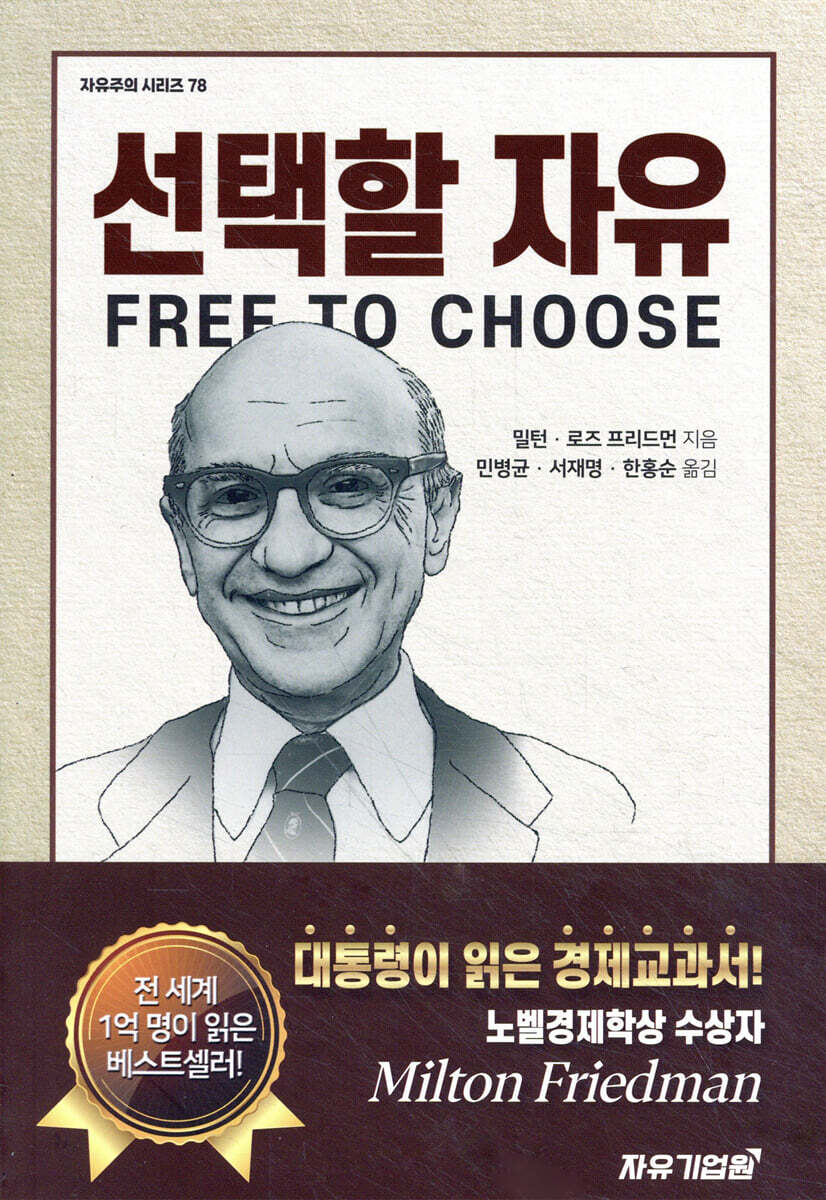
freedom to choose
 |
Description
Book Introduction
It can be said to be a book that determined the new flow of history in the latter half of the 20th century.
Liberalism, which was re-evaluated through Friedman, led to policies such as privatization and tax cuts in the United States and the United Kingdom.
The author, Friedman, opposes 'excessive government restrictions on freedom.'
In his book, Friedman discusses how government policies aimed at achieving equality of outcome infringe on individual freedom.
Human beings have the right to pursue what they want.
That is the freedom to choose.
When the government takes away the people's right to choose for any purpose, it is likely to be used by interest groups or to increase the government's power.
Modern society overlooks this point and consistently emphasizes the role of government.
We, living in the 21st century, must read "Freedom to Choose" and reflect on the true value of freedom.
Liberalism, which was re-evaluated through Friedman, led to policies such as privatization and tax cuts in the United States and the United Kingdom.
The author, Friedman, opposes 'excessive government restrictions on freedom.'
In his book, Friedman discusses how government policies aimed at achieving equality of outcome infringe on individual freedom.
Human beings have the right to pursue what they want.
That is the freedom to choose.
When the government takes away the people's right to choose for any purpose, it is likely to be used by interest groups or to increase the government's power.
Modern society overlooks this point and consistently emphasizes the role of government.
We, living in the 21st century, must read "Freedom to Choose" and reflect on the true value of freedom.
index
Translator's Preface
Harvest/HBJ edition preface
introduction
introduction
Chapter 1: The Power of the Market
1.
Cooperation through voluntary exchange
2.
The role of price
3.
Social structure and selfishness
4.
The role of government
5.
The reality of a police state
Chapter 2: The Tyrant Called Control
1.
international trade
2.
centralized economic planning
3.
Control and freedom
Chapter 3: Anatomy of the Great Depression
1.
Origins of the Federal Reserve System
2.
Early Federal Reserve System
3.
The onset of the Great Depression
4.
financial panic
5.
Truth and Claim
Chapter 4: From the Cradle to the Grave
1.
The emergence of the modern welfare state
2.
The consequences of the welfare state
3.
Misconceptions about the welfare state
4.
conclusion
Chapter 5: Equality gone astray
1.
Equality before God
2.
Equality of opportunity
3.
equality of outcome
4.
Who supports equality of outcome?
5.
The results of egalitarian policies
6.
Capitalism and Equality
7.
conclusion
Chapter 6: School Education: What's the Problem?
1.
Primary and secondary education issues
2.
Elementary, middle, and high school tuition coupon system
3.
Obstacles to the tuition coupon system
4.
Higher education issues
5.
Solutions to Higher Education Problems
6.
conclusion
Chapter 7 Who Protects Consumers?
1.
Interstate Commerce Commission (ICC)
2.
Food and Drug Administration (FDA)
3.
Consumer Product Safety Commission
4.
environmental protection
5.
Energy
6.
market
7.
conclusion
Chapter 8 Who Protects Workers?
1.
Trade unions and workers
2.
Government and workers
3.
Workers without protection
4.
Competition between users
5.
conclusion
Chapter 9 Treatment of Inflation
1.
Various forms of currency
2.
Root causes of inflation
3.
Causes of excessive money supply
4.
Government revenue generated from inflation
5.
Inflation measures
6.
Side effects of curing inflation
7.
How to reduce side effects
8.
Case study on Japan
9.
conclusion
Chapter 10: The Tide is Changing
1.
The importance of intellectual climate
2.
Public opinion and public behavior
3.
The rise of interest groups
4.
What can we do?
5.
Limits on taxes and expenditures
6.
Other constitutional amendments
7.
conclusion
Appendix A: The 1928 American Socialist Party Platform
Appendix B: Constitutional Amendment to Limit Federal Spending
annotation
Harvest/HBJ edition preface
introduction
introduction
Chapter 1: The Power of the Market
1.
Cooperation through voluntary exchange
2.
The role of price
3.
Social structure and selfishness
4.
The role of government
5.
The reality of a police state
Chapter 2: The Tyrant Called Control
1.
international trade
2.
centralized economic planning
3.
Control and freedom
Chapter 3: Anatomy of the Great Depression
1.
Origins of the Federal Reserve System
2.
Early Federal Reserve System
3.
The onset of the Great Depression
4.
financial panic
5.
Truth and Claim
Chapter 4: From the Cradle to the Grave
1.
The emergence of the modern welfare state
2.
The consequences of the welfare state
3.
Misconceptions about the welfare state
4.
conclusion
Chapter 5: Equality gone astray
1.
Equality before God
2.
Equality of opportunity
3.
equality of outcome
4.
Who supports equality of outcome?
5.
The results of egalitarian policies
6.
Capitalism and Equality
7.
conclusion
Chapter 6: School Education: What's the Problem?
1.
Primary and secondary education issues
2.
Elementary, middle, and high school tuition coupon system
3.
Obstacles to the tuition coupon system
4.
Higher education issues
5.
Solutions to Higher Education Problems
6.
conclusion
Chapter 7 Who Protects Consumers?
1.
Interstate Commerce Commission (ICC)
2.
Food and Drug Administration (FDA)
3.
Consumer Product Safety Commission
4.
environmental protection
5.
Energy
6.
market
7.
conclusion
Chapter 8 Who Protects Workers?
1.
Trade unions and workers
2.
Government and workers
3.
Workers without protection
4.
Competition between users
5.
conclusion
Chapter 9 Treatment of Inflation
1.
Various forms of currency
2.
Root causes of inflation
3.
Causes of excessive money supply
4.
Government revenue generated from inflation
5.
Inflation measures
6.
Side effects of curing inflation
7.
How to reduce side effects
8.
Case study on Japan
9.
conclusion
Chapter 10: The Tide is Changing
1.
The importance of intellectual climate
2.
Public opinion and public behavior
3.
The rise of interest groups
4.
What can we do?
5.
Limits on taxes and expenditures
6.
Other constitutional amendments
7.
conclusion
Appendix A: The 1928 American Socialist Party Platform
Appendix B: Constitutional Amendment to Limit Federal Spending
annotation
Into the book
Just ten years ago, many people believed that socialism would survive.
Moreover, he believed that it was the best system that promised both material abundance and human freedom.
Nowadays, no one in the world believes that.
Of course, there are still those who believe in socialism as an ideal.
However, they exist only in some ivory towers in the West, and in other regions they remain only in very backward places.
Just a decade ago, market-based capitalism was believed to be a fundamentally flawed system that could not promise prosperity and freedom.
But today, we have come to believe that capitalism is the only answer.
---From the "Preface"
America's success is often attributed to its abundant natural resources and vast land area.
That makes sense.
But if resources and territory are decisive, why did Britain and Japan in the 19th century, and Hong Kong in the 20th century, succeed?
--- From the text
A truly free man would not ask what his country can do for him, nor would he ask what he can do for his country.
Moreover, he believed that it was the best system that promised both material abundance and human freedom.
Nowadays, no one in the world believes that.
Of course, there are still those who believe in socialism as an ideal.
However, they exist only in some ivory towers in the West, and in other regions they remain only in very backward places.
Just a decade ago, market-based capitalism was believed to be a fundamentally flawed system that could not promise prosperity and freedom.
But today, we have come to believe that capitalism is the only answer.
---From the "Preface"
America's success is often attributed to its abundant natural resources and vast land area.
That makes sense.
But if resources and territory are decisive, why did Britain and Japan in the 19th century, and Hong Kong in the 20th century, succeed?
--- From the text
A truly free man would not ask what his country can do for him, nor would he ask what he can do for his country.
---From the translator's preface
Publisher's Review
- A masterpiece of the 20th century, translated into 24 languages
- A must-read to understand the meaning and value of freedom.
- Re-examined as President Yoon Seok-yeol's "life book"
The recently popular book, "Freedom to Choose," has been revised and published.
This book is receiving renewed attention as President Yoon Seok-yeol referred to it as a “book of life.”
It is attracting attention as a must-read book to predict the current government's policy direction for the next five years.
The book sold 400,000 copies immediately after its first publication in the United States in 1980 and has been translated into more than 24 languages worldwide.
The Free Enterprise Institute first published a translation of “Freedom to Choose” in 2003.
Then, we recently published it with a refined writing style and a sophisticated design so that even readers who are new to economics books can easily read it.
This is the 78th book in the Free Enterprise Institute's Liberalism series, and can be purchased at domestic online and offline bookstores, including Kyobo Bookstore and Yes24.
Milton Friedman is one of the most influential economists of the 20th century.
He directly criticized Keynesianism, which was the mainstream economics at the time.
Keynes was an economist who advocated active government intervention.
Keynesianism led the advanced countries of the time to socialism.
On the other hand, Friedman advocated liberalism and a market economy, emphasizing small government and freedom.
Friedman emerged as a counterweight to the global economy's departure from Keynesianism.
Friedman's theory also had a great social impact.
His theories also influenced the policies of the Reagan administration.
He won the 1976 Nobel Prize in Economics for his achievements in revitalizing the economy.
In 1988, he received the Presidential Medal of Freedom.
Human beings have the right to pursue what they want.
We have the right to choose all aspects of life, including politics, religion, and society, and that is the freedom to choose.
When the government takes away the people's right to choose for any purpose, it is likely to be used by interest groups or to increase the government's power.
This government interventionism has plunged the world economy into crisis.
But when the market was freed from government intervention, the economy came alive.
The value of freedom is that it can enrich humanity.
This has already been proven throughout human history.
This book begins with "Chapter 1: The Power of the Market," followed by "Chapter 2: The Tyrant Called Control," "Chapter 3: Anatomy of the Great Depression," "Chapter 4: From the Cradle to the Grave," "Chapter 5: Equality Wrong," "Chapter 6: What's Wrong with School Education?" "Chapter 7: Who Protects Consumers?" "Chapter 8: Who Protects Workers?" "Chapter 9: A Cure for Inflation," and "Chapter 10: The Tide Is Changing."
Chapters 1 through 10 present problems and solutions that arise when the government intervenes excessively in various fields such as economy, society, education, and the market.
It will be of great help to readers who are contemplating the value of freedom and the meaning and role of government.
Modern society consistently emphasizes the role of government, overlooking the problems that arise when government intervenes excessively.
However, excessive regulation hinders the growth of individuals and industries.
Such cases still occur frequently.
This is why we, living in the 21st century, must read “Freedom to Choose.”
- A must-read to understand the meaning and value of freedom.
- Re-examined as President Yoon Seok-yeol's "life book"
The recently popular book, "Freedom to Choose," has been revised and published.
This book is receiving renewed attention as President Yoon Seok-yeol referred to it as a “book of life.”
It is attracting attention as a must-read book to predict the current government's policy direction for the next five years.
The book sold 400,000 copies immediately after its first publication in the United States in 1980 and has been translated into more than 24 languages worldwide.
The Free Enterprise Institute first published a translation of “Freedom to Choose” in 2003.
Then, we recently published it with a refined writing style and a sophisticated design so that even readers who are new to economics books can easily read it.
This is the 78th book in the Free Enterprise Institute's Liberalism series, and can be purchased at domestic online and offline bookstores, including Kyobo Bookstore and Yes24.
Milton Friedman is one of the most influential economists of the 20th century.
He directly criticized Keynesianism, which was the mainstream economics at the time.
Keynes was an economist who advocated active government intervention.
Keynesianism led the advanced countries of the time to socialism.
On the other hand, Friedman advocated liberalism and a market economy, emphasizing small government and freedom.
Friedman emerged as a counterweight to the global economy's departure from Keynesianism.
Friedman's theory also had a great social impact.
His theories also influenced the policies of the Reagan administration.
He won the 1976 Nobel Prize in Economics for his achievements in revitalizing the economy.
In 1988, he received the Presidential Medal of Freedom.
Human beings have the right to pursue what they want.
We have the right to choose all aspects of life, including politics, religion, and society, and that is the freedom to choose.
When the government takes away the people's right to choose for any purpose, it is likely to be used by interest groups or to increase the government's power.
This government interventionism has plunged the world economy into crisis.
But when the market was freed from government intervention, the economy came alive.
The value of freedom is that it can enrich humanity.
This has already been proven throughout human history.
This book begins with "Chapter 1: The Power of the Market," followed by "Chapter 2: The Tyrant Called Control," "Chapter 3: Anatomy of the Great Depression," "Chapter 4: From the Cradle to the Grave," "Chapter 5: Equality Wrong," "Chapter 6: What's Wrong with School Education?" "Chapter 7: Who Protects Consumers?" "Chapter 8: Who Protects Workers?" "Chapter 9: A Cure for Inflation," and "Chapter 10: The Tide Is Changing."
Chapters 1 through 10 present problems and solutions that arise when the government intervenes excessively in various fields such as economy, society, education, and the market.
It will be of great help to readers who are contemplating the value of freedom and the meaning and role of government.
Modern society consistently emphasizes the role of government, overlooking the problems that arise when government intervenes excessively.
However, excessive regulation hinders the growth of individuals and industries.
Such cases still occur frequently.
This is why we, living in the 21st century, must read “Freedom to Choose.”
GOODS SPECIFICS
- Publication date: July 30, 2022
- Page count, weight, size: 628 pages | 153*223mm
- ISBN13: 9788984292482
- ISBN10: 8984292486
You may also like
카테고리
korean


korean

![GQ KOREA Mark (Monthly): December [2025]](http://librairie.coreenne.fr/cdn/shop/files/8ef265dbbfbf186523ed75ba7319009d.jpg?v=1765340328&width=3840)


