

Vietnam as it is
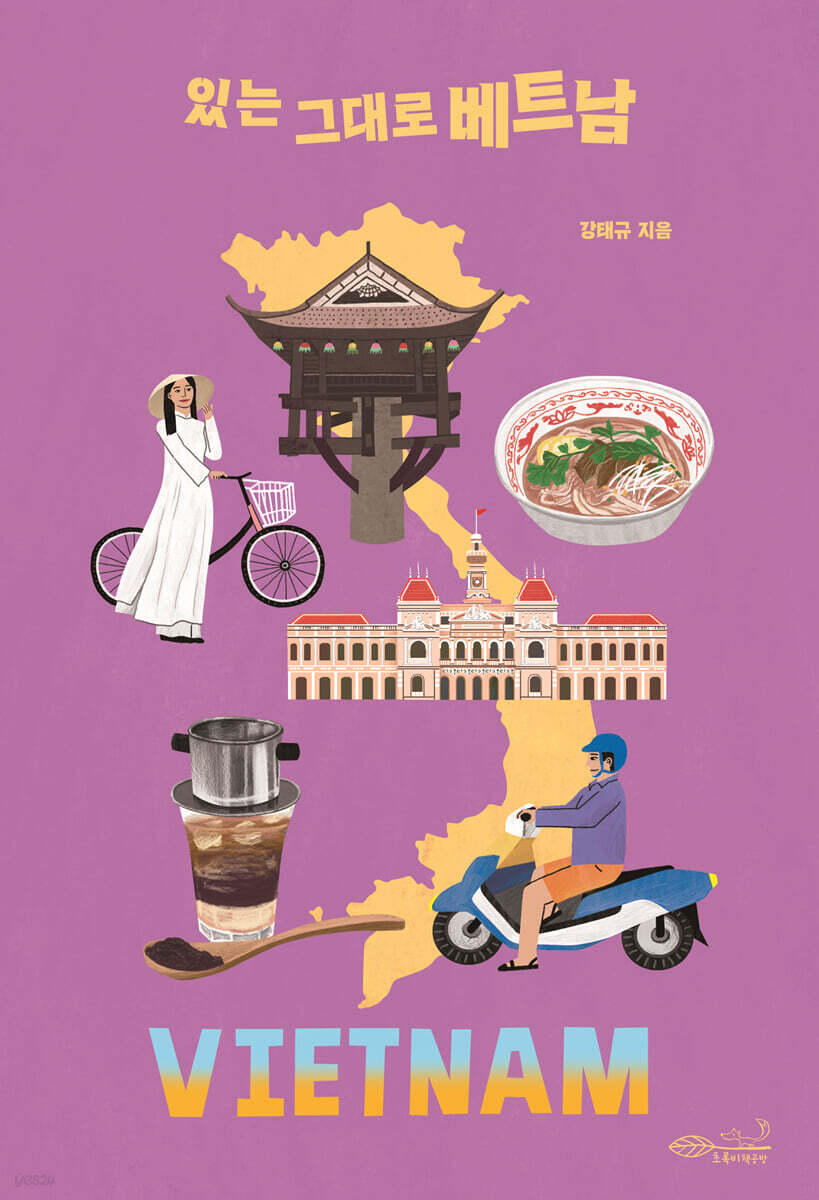 |
Description
Book Introduction
How much do you know about our neighboring country, Vietnam?
Stories steeped in people, history, and culture,
Taking a deeper look into Vietnam
Vietnam, a country teeming with motorbikes and filled with the aroma of rice noodles and coffee, a country steeped in history and tradition, a rapidly growing economic powerhouse, and a country resembling Korea in many ways.
But how much do we really know about this country? Throughout history, Vietnam has experienced constant challenges and change.
Vietnam, which has forged its own path through French colonial rule, independence, division, and war, is similar yet different from Korea, and yet close yet distant.
This book takes a multi-faceted look at the country of Vietnam.
It covers a wide range of topics, from geography, history, culture, and people's lives, and tells a unique story of Vietnam.
From Vietnam's traditional attire, the "Ao Dai," and coffee culture to its rapidly growing industries and social changes, the author illuminates the diverse facets of Vietnam from the perspective of a local, not a tourist, based on stories he witnessed and experienced firsthand while living in Vietnam from 2019 to 2022.
For readers unfamiliar with Vietnam, it will offer a new perspective, while for those familiar with it, it will offer a deeper understanding.
Stories steeped in people, history, and culture,
Taking a deeper look into Vietnam
Vietnam, a country teeming with motorbikes and filled with the aroma of rice noodles and coffee, a country steeped in history and tradition, a rapidly growing economic powerhouse, and a country resembling Korea in many ways.
But how much do we really know about this country? Throughout history, Vietnam has experienced constant challenges and change.
Vietnam, which has forged its own path through French colonial rule, independence, division, and war, is similar yet different from Korea, and yet close yet distant.
This book takes a multi-faceted look at the country of Vietnam.
It covers a wide range of topics, from geography, history, culture, and people's lives, and tells a unique story of Vietnam.
From Vietnam's traditional attire, the "Ao Dai," and coffee culture to its rapidly growing industries and social changes, the author illuminates the diverse facets of Vietnam from the perspective of a local, not a tourist, based on stories he witnessed and experienced firsthand while living in Vietnam from 2019 to 2022.
For readers unfamiliar with Vietnam, it will offer a new perspective, while for those familiar with it, it will offer a deeper understanding.
- You can preview some of the book's contents.
Preview
index
prolog
Meet Vietnam through quizzes
Part 1: Xin Chao! Vietnam
Vietnam, a young country
Geography and Climate of Vietnam
National symbols of Vietnam: flag, national anthem, and national flower
Easy-to-read Vietnamese
Part 2: The Ins and Outs of the Vietnamese People
Ao Dai, Vietnam's traditional dress
Various means of transportation in Vietnam
Vietnam, the country of coffee
Vietnam's fervent educational fervor
Unique Vietnamese houses
Different types of markets
Vietnam's industry teeming with young workers
Vietnam through History Part 3
The Dai Viet Kingdom, which led the era of revival
Nguyen Dynasty and French colonial rule
Independence and division of Vietnam
The Vietnam War and Modern History
Part 4: Vietnam through Culture
Vietnamese cuisine, which is rich in rice dishes
Vietnam loves soccer
Festivals in Vietnam
Religion in Vietnam
Vietnamese culture and arts
Part 5: If you go here, you will see Vietnam.
Hanoi, the capital of Vietnam
Sapa, the city of fog where you can meet ethnic minorities
Hue and Hoi An, UNESCO World Heritage cities
Resort towns along the coast: Nha Trang, Quy Nhon, Phan Thiet, and Phu Quoc
Ho Chi Minh City, Vietnam's largest commercial city
Dalat, the city of eternal spring
Meet Vietnam through quizzes
Part 1: Xin Chao! Vietnam
Vietnam, a young country
Geography and Climate of Vietnam
National symbols of Vietnam: flag, national anthem, and national flower
Easy-to-read Vietnamese
Part 2: The Ins and Outs of the Vietnamese People
Ao Dai, Vietnam's traditional dress
Various means of transportation in Vietnam
Vietnam, the country of coffee
Vietnam's fervent educational fervor
Unique Vietnamese houses
Different types of markets
Vietnam's industry teeming with young workers
Vietnam through History Part 3
The Dai Viet Kingdom, which led the era of revival
Nguyen Dynasty and French colonial rule
Independence and division of Vietnam
The Vietnam War and Modern History
Part 4: Vietnam through Culture
Vietnamese cuisine, which is rich in rice dishes
Vietnam loves soccer
Festivals in Vietnam
Religion in Vietnam
Vietnamese culture and arts
Part 5: If you go here, you will see Vietnam.
Hanoi, the capital of Vietnam
Sapa, the city of fog where you can meet ethnic minorities
Hue and Hoi An, UNESCO World Heritage cities
Resort towns along the coast: Nha Trang, Quy Nhon, Phan Thiet, and Phu Quoc
Ho Chi Minh City, Vietnam's largest commercial city
Dalat, the city of eternal spring
Detailed image

Into the book
This book contains many stories to help you understand Vietnam, including Vietnam's reform and opening-up policy, historical relations with France, a food culture centered around rice, mouth-watering night markets and various markets, people gathering in groups of three or five to play jegichagi, lively wedding culture, unique Vietnamese houses, the Vietnamese alphabet that is surprisingly easy to learn, parents who are passionate about their children's education, and stories about the traditional dress, the Ao Dai.
Through this book, I hope that readers will not only discover fascinating travel destinations in Vietnam, but also gain a deeper understanding and appreciation of Vietnam's history, its rapidly growing economy, and the Vietnamese society that has formed on the basis of these similarities.
Of course, it would also be a great pleasure to learn about Vietnam's delicious food culture.
All you need to understand Vietnamese culture is an open mind and a little interest.
--- pp.5-6
Although it is a socialist country, Vietnam has many young people who resemble Korea.
It is like that historically and also in the national character.
First, let's look at the similarities in terms of history: both countries were under colonial rule and were divided into North and South after colonial rule.
Vietnam was a French colony from the late 19th century to the early 20th century.
The previous system of dynasty rule was destroyed.
After World War II, colonial rule ended, but the National Liberation Front (North Vietnam) led by the Viet Minh (short for the Vietnam Independence League) in the north and the Republic of Vietnam (South Vietnam) in the south continued to clash.
At this time, the Soviet Union and China sided with North Vietnam, which emphasized socialism, while the United States sided with South Vietnam, which emphasized liberal democracy.
And a civil war broke out between the two camps.
It is a historical situation similar to the Korean War.
--- pp.32-33
Vietnam is considered one of the countries with the most motorcycles in the world.
As of 2023, there are approximately 70 million motorcycles.
Since Vietnam has a population of about 100 million, this means there are two cars for every three people.
Why are there so many motorbikes in Vietnam? There are several reasons.
First, because public transportation is not developed.
Because public transportation such as buses and subways were not properly provided, personal transportation was necessary.
Second, motorcycles were cheap to buy.
Vietnam's per capita GDP in 2022 will be approximately $4,160, making motorbikes the best option considering its economic power.
Third, the problem of traffic congestion in the city center is serious.
The more severe the traffic congestion, the more effective the motorcycle becomes, as it can move freely on the road.
Finally, the marketing of Japanese motorcycle manufacturers also played a role.
Japanese brands such as Honda, Yamaha, and Suzuki have dominated the market by meeting diverse needs in line with Vietnam's economic liberalization policy.
The proliferation of motorbikes has also created new cultures in Vietnam, such as motorbike parking services.
If you go to a relatively large store or restaurant, you can often see a 'motorcycle parking attendant' in front of the store who organizes motorcycles and creates parking spaces.
--- pp.63-65
Condensed milk coffee is a unique coffee that originates from the climate of Vietnam.
Vietnam has a high average annual temperature, making it difficult to store milk, so they used condensed milk with high preservation properties.
Condensed milk is made by boiling down milk with about 40% sugar, so it has a high sugar content and excellent preservation properties.
The sweetness of condensed milk goes well with the strong roasted flavor of Robusta coffee, creating a sweet and nutty coffee.
Condensed milk coffee becomes richer in flavor when served warm as the coffee and condensed milk mix well.
Egg coffee is considered a must-try when visiting Hanoi, and its origins are quite interesting.
It all started in the 1940s when Nguyen Giang, who was working at the Sofitel Legend Hotel in Hanoi, was having trouble because he ran out of milk. He mixed egg yolks and condensed milk to make coffee instead of milk.
Nowadays, it is made by mixing egg yolks, condensed milk, milk, sugar, and vanilla flavoring to create a soft, sweet foam on top of coffee.
Egg coffee has some similarities to Korea's 'dalgona coffee'.
When coffee, sugar, water, and milk are stirred more than 400 times, the sugar becomes trapped in the milk proteins and turns into cream. Dalgona coffee is made by placing this cream on top of the milk.
Egg coffee is made by mixing sugar, water, and egg yolk and placing a foam on top of the coffee.
Both coffees are easy to make, so you might want to give them a try.
--- pp.76-77
The 'Doi Moi policy' is a policy that means economic reform and opening up in Vietnam.
Doiđo?i means 'change' and m?i means 'new', so doi moi means 'to change in a new way'.
In Korean, it is called the 'renewal policy'.
The core of this policy, announced at the 6th National Congress of the Communist Party of Vietnam in 1986, is to develop Vietnam through economic reform and opening up and promote its transition to a market economy.
(Omitted) At the 6th National Congress in 1986, the Doi Moi policy was officially announced, beginning a large-scale reform of the Vietnamese economy.
First, the centrally planned economy was abolished and a transition to a market economy was achieved.
Second, we comprehensively reformed the national management system to introduce a management system suited to the new economic system.
Although these changes initially presented a crisis, Vietnam's economy gradually developed, laying the foundation for modernization and industrialization.
--- pp.143-144
Vietnam's Mid-Autumn Festival is similar to Korea's Chuseok, but there are also some differences.
Chuseok in Korea is a Thanksgiving holiday to express gratitude to ancestors during the harvest season.
Vietnam's Mid-Autumn Festival was originally a day to offer sacrifices to the Dragon God to pray for a good harvest, but in the 20th century it changed into a 'children's holiday'.
During the Chuseok holiday, parents buy masks and lantern toys for their children, and the children go out with their parents holding lanterns to look at the full moon and have a great time.
Lantern exhibitions are also held throughout Vietnam's cities, with streets filled with colorful lanterns and children marching and singing while carrying lanterns.
Lanterns in various designs, such as star-shaped and lotus-shaped, make the Mid-Autumn Festival night even more beautiful.
Through this book, I hope that readers will not only discover fascinating travel destinations in Vietnam, but also gain a deeper understanding and appreciation of Vietnam's history, its rapidly growing economy, and the Vietnamese society that has formed on the basis of these similarities.
Of course, it would also be a great pleasure to learn about Vietnam's delicious food culture.
All you need to understand Vietnamese culture is an open mind and a little interest.
--- pp.5-6
Although it is a socialist country, Vietnam has many young people who resemble Korea.
It is like that historically and also in the national character.
First, let's look at the similarities in terms of history: both countries were under colonial rule and were divided into North and South after colonial rule.
Vietnam was a French colony from the late 19th century to the early 20th century.
The previous system of dynasty rule was destroyed.
After World War II, colonial rule ended, but the National Liberation Front (North Vietnam) led by the Viet Minh (short for the Vietnam Independence League) in the north and the Republic of Vietnam (South Vietnam) in the south continued to clash.
At this time, the Soviet Union and China sided with North Vietnam, which emphasized socialism, while the United States sided with South Vietnam, which emphasized liberal democracy.
And a civil war broke out between the two camps.
It is a historical situation similar to the Korean War.
--- pp.32-33
Vietnam is considered one of the countries with the most motorcycles in the world.
As of 2023, there are approximately 70 million motorcycles.
Since Vietnam has a population of about 100 million, this means there are two cars for every three people.
Why are there so many motorbikes in Vietnam? There are several reasons.
First, because public transportation is not developed.
Because public transportation such as buses and subways were not properly provided, personal transportation was necessary.
Second, motorcycles were cheap to buy.
Vietnam's per capita GDP in 2022 will be approximately $4,160, making motorbikes the best option considering its economic power.
Third, the problem of traffic congestion in the city center is serious.
The more severe the traffic congestion, the more effective the motorcycle becomes, as it can move freely on the road.
Finally, the marketing of Japanese motorcycle manufacturers also played a role.
Japanese brands such as Honda, Yamaha, and Suzuki have dominated the market by meeting diverse needs in line with Vietnam's economic liberalization policy.
The proliferation of motorbikes has also created new cultures in Vietnam, such as motorbike parking services.
If you go to a relatively large store or restaurant, you can often see a 'motorcycle parking attendant' in front of the store who organizes motorcycles and creates parking spaces.
--- pp.63-65
Condensed milk coffee is a unique coffee that originates from the climate of Vietnam.
Vietnam has a high average annual temperature, making it difficult to store milk, so they used condensed milk with high preservation properties.
Condensed milk is made by boiling down milk with about 40% sugar, so it has a high sugar content and excellent preservation properties.
The sweetness of condensed milk goes well with the strong roasted flavor of Robusta coffee, creating a sweet and nutty coffee.
Condensed milk coffee becomes richer in flavor when served warm as the coffee and condensed milk mix well.
Egg coffee is considered a must-try when visiting Hanoi, and its origins are quite interesting.
It all started in the 1940s when Nguyen Giang, who was working at the Sofitel Legend Hotel in Hanoi, was having trouble because he ran out of milk. He mixed egg yolks and condensed milk to make coffee instead of milk.
Nowadays, it is made by mixing egg yolks, condensed milk, milk, sugar, and vanilla flavoring to create a soft, sweet foam on top of coffee.
Egg coffee has some similarities to Korea's 'dalgona coffee'.
When coffee, sugar, water, and milk are stirred more than 400 times, the sugar becomes trapped in the milk proteins and turns into cream. Dalgona coffee is made by placing this cream on top of the milk.
Egg coffee is made by mixing sugar, water, and egg yolk and placing a foam on top of the coffee.
Both coffees are easy to make, so you might want to give them a try.
--- pp.76-77
The 'Doi Moi policy' is a policy that means economic reform and opening up in Vietnam.
Doiđo?i means 'change' and m?i means 'new', so doi moi means 'to change in a new way'.
In Korean, it is called the 'renewal policy'.
The core of this policy, announced at the 6th National Congress of the Communist Party of Vietnam in 1986, is to develop Vietnam through economic reform and opening up and promote its transition to a market economy.
(Omitted) At the 6th National Congress in 1986, the Doi Moi policy was officially announced, beginning a large-scale reform of the Vietnamese economy.
First, the centrally planned economy was abolished and a transition to a market economy was achieved.
Second, we comprehensively reformed the national management system to introduce a management system suited to the new economic system.
Although these changes initially presented a crisis, Vietnam's economy gradually developed, laying the foundation for modernization and industrialization.
--- pp.143-144
Vietnam's Mid-Autumn Festival is similar to Korea's Chuseok, but there are also some differences.
Chuseok in Korea is a Thanksgiving holiday to express gratitude to ancestors during the harvest season.
Vietnam's Mid-Autumn Festival was originally a day to offer sacrifices to the Dragon God to pray for a good harvest, but in the 20th century it changed into a 'children's holiday'.
During the Chuseok holiday, parents buy masks and lantern toys for their children, and the children go out with their parents holding lanterns to look at the full moon and have a great time.
Lantern exhibitions are also held throughout Vietnam's cities, with streets filled with colorful lanterns and children marching and singing while carrying lanterns.
Lanterns in various designs, such as star-shaped and lotus-shaped, make the Mid-Autumn Festival night even more beautiful.
--- pp.171-172
Publisher's Review
A country similar to Korea but with a different charm
The real face of Vietnam, approached without prejudice
Vietnam is a country with a story similar to Korea.
The history of overcoming French colonial rule to achieve independence and the current state created by rapid economic growth leave us, who once went through similar experiences, with deep thoughts.
People's passion, their emphasis on family, and their desire to learn are very similar to our own lives.
But Vietnam is also a country with a different charm from ours.
From the quaint streets of Hanoi to the fertile lands of the Mekong Delta, Vietnam boasts diverse landscapes and cultures across its regions.
The traditions of ethnic minorities, the traces of the Central Highlands in a cup of coffee, and the lives of Vietnamese people crossing borders are filled with unique stories.
This book shows the way to understand different worlds through various topics such as Vietnam's geography, climate, history, culture, food, education, and industry.
In particular, it helps to understand Vietnam not only as a travel destination but also as a country with an independent culture and history.
It presents an opportunity to ask questions and think through similar yet different stories.
A country where past, present, and future coexist
From ancient dynasties to French colonialism, the Vietnam War, and modern economic reforms, Vietnam has a long history.
Vietnam has been constantly changing and developing during its unification after roughly 1,000 years of Chinese rule, 100 years of French rule, and about 20 years of war with the United States.
Today, Vietnam is one of the fastest-growing countries in Southeast Asia, creating a unique society that blends tradition and modernity.
This book explores how this traditional culture is integrated into modern Vietnamese society and vividly portrays the daily lives of Vietnamese people.
Discovering Vietnam through Culture and Life
Vietnam is famous for its traditional attire, the Ao Dai, the Non La (traditional hat), rice noodles, and coffee culture.
But if you look closely, Vietnamese culture is much richer and more diverse.
Even in a social structure strongly influenced by Buddhism and Confucianism, modern thinking is quickly taking hold, and family-centered values still play an important role.
Additionally, the enthusiasm for education is high, so many parents put effort into their children's education, and social solidarity is strong, so there is a great passion for sports, including soccer.
Vietnamese people have a flexible mindset that harmoniously embraces tradition and modernity.
Rapidly growing economy and urbanization
Since the Doi Moi policy in 1986, Vietnam has adopted an open economy and achieved rapid growth.
Foreign investment and manufacturing development have fueled economic growth, and major cities like Hanoi and Ho Chi Minh City are emerging as global financial and technology hubs.
However, even amid rapid urbanization and economic development, agriculture remains an important industry, showing the coexistence of traditional and modern lifestyles.
A country with beautiful natural scenery and a great place to travel
The capital, Hanoi, is the political and cultural center of the country and is filled with French colonial architecture and historical sites.
Ho Chi Minh City is an economic hub and is famous for its vibrant cityscape and unique street food culture.
Beach cities like Da Nang and Nha Trang are attracting attention as fantastic vacation destinations, while natural wonders like Ha Long Bay and Sapa are beloved by travelers from all over the world.
This book introduces not only Vietnam's representative tourist attractions, but also lesser-known hidden gems.
In this way, this book helps us see Vietnam as more than just a travel destination.
Beyond simple information, it includes a variety of photos, illustrations, quizzes, and discussion topics to help you gain a deeper understanding of Vietnam's history, culture, and people's lives.
Through this, readers will not only gain a deeper understanding of Vietnam's charms, but also discover the similarities and differences between Vietnam and Korea, broadening their perspectives as global citizens.
Recommended for those planning to travel to or live in Vietnam, those seeking a deeper understanding of Vietnamese history and culture, youth and educators interested in multicultural education and global citizenship education, and those preparing for business and exchanges with Vietnam.
*** This book is composed of post-reading activity sheets with topics and questions related to various topics.
What is my first multicultural class series?
It explains the diverse cultures of various countries around the world that young people have heard of but are not familiar with in an easy and fun way.
It focuses on fostering cultural diversity, an open-minded perspective, and a broad perspective on the world.
The real face of Vietnam, approached without prejudice
Vietnam is a country with a story similar to Korea.
The history of overcoming French colonial rule to achieve independence and the current state created by rapid economic growth leave us, who once went through similar experiences, with deep thoughts.
People's passion, their emphasis on family, and their desire to learn are very similar to our own lives.
But Vietnam is also a country with a different charm from ours.
From the quaint streets of Hanoi to the fertile lands of the Mekong Delta, Vietnam boasts diverse landscapes and cultures across its regions.
The traditions of ethnic minorities, the traces of the Central Highlands in a cup of coffee, and the lives of Vietnamese people crossing borders are filled with unique stories.
This book shows the way to understand different worlds through various topics such as Vietnam's geography, climate, history, culture, food, education, and industry.
In particular, it helps to understand Vietnam not only as a travel destination but also as a country with an independent culture and history.
It presents an opportunity to ask questions and think through similar yet different stories.
A country where past, present, and future coexist
From ancient dynasties to French colonialism, the Vietnam War, and modern economic reforms, Vietnam has a long history.
Vietnam has been constantly changing and developing during its unification after roughly 1,000 years of Chinese rule, 100 years of French rule, and about 20 years of war with the United States.
Today, Vietnam is one of the fastest-growing countries in Southeast Asia, creating a unique society that blends tradition and modernity.
This book explores how this traditional culture is integrated into modern Vietnamese society and vividly portrays the daily lives of Vietnamese people.
Discovering Vietnam through Culture and Life
Vietnam is famous for its traditional attire, the Ao Dai, the Non La (traditional hat), rice noodles, and coffee culture.
But if you look closely, Vietnamese culture is much richer and more diverse.
Even in a social structure strongly influenced by Buddhism and Confucianism, modern thinking is quickly taking hold, and family-centered values still play an important role.
Additionally, the enthusiasm for education is high, so many parents put effort into their children's education, and social solidarity is strong, so there is a great passion for sports, including soccer.
Vietnamese people have a flexible mindset that harmoniously embraces tradition and modernity.
Rapidly growing economy and urbanization
Since the Doi Moi policy in 1986, Vietnam has adopted an open economy and achieved rapid growth.
Foreign investment and manufacturing development have fueled economic growth, and major cities like Hanoi and Ho Chi Minh City are emerging as global financial and technology hubs.
However, even amid rapid urbanization and economic development, agriculture remains an important industry, showing the coexistence of traditional and modern lifestyles.
A country with beautiful natural scenery and a great place to travel
The capital, Hanoi, is the political and cultural center of the country and is filled with French colonial architecture and historical sites.
Ho Chi Minh City is an economic hub and is famous for its vibrant cityscape and unique street food culture.
Beach cities like Da Nang and Nha Trang are attracting attention as fantastic vacation destinations, while natural wonders like Ha Long Bay and Sapa are beloved by travelers from all over the world.
This book introduces not only Vietnam's representative tourist attractions, but also lesser-known hidden gems.
In this way, this book helps us see Vietnam as more than just a travel destination.
Beyond simple information, it includes a variety of photos, illustrations, quizzes, and discussion topics to help you gain a deeper understanding of Vietnam's history, culture, and people's lives.
Through this, readers will not only gain a deeper understanding of Vietnam's charms, but also discover the similarities and differences between Vietnam and Korea, broadening their perspectives as global citizens.
Recommended for those planning to travel to or live in Vietnam, those seeking a deeper understanding of Vietnamese history and culture, youth and educators interested in multicultural education and global citizenship education, and those preparing for business and exchanges with Vietnam.
*** This book is composed of post-reading activity sheets with topics and questions related to various topics.
What is my first multicultural class series?
It explains the diverse cultures of various countries around the world that young people have heard of but are not familiar with in an easy and fun way.
It focuses on fostering cultural diversity, an open-minded perspective, and a broad perspective on the world.
GOODS SPECIFICS
- Date of issue: February 20, 2025
- Page count, weight, size: 248 pages | 322g | 140*205*15mm
- ISBN13: 9791193296820
- ISBN10: 119329682X
You may also like
카테고리
korean


korean

![GQ KOREA Mark (Monthly): December [2025]](http://librairie.coreenne.fr/cdn/shop/files/8ef265dbbfbf186523ed75ba7319009d.jpg?v=1765340328&width=3840)


