

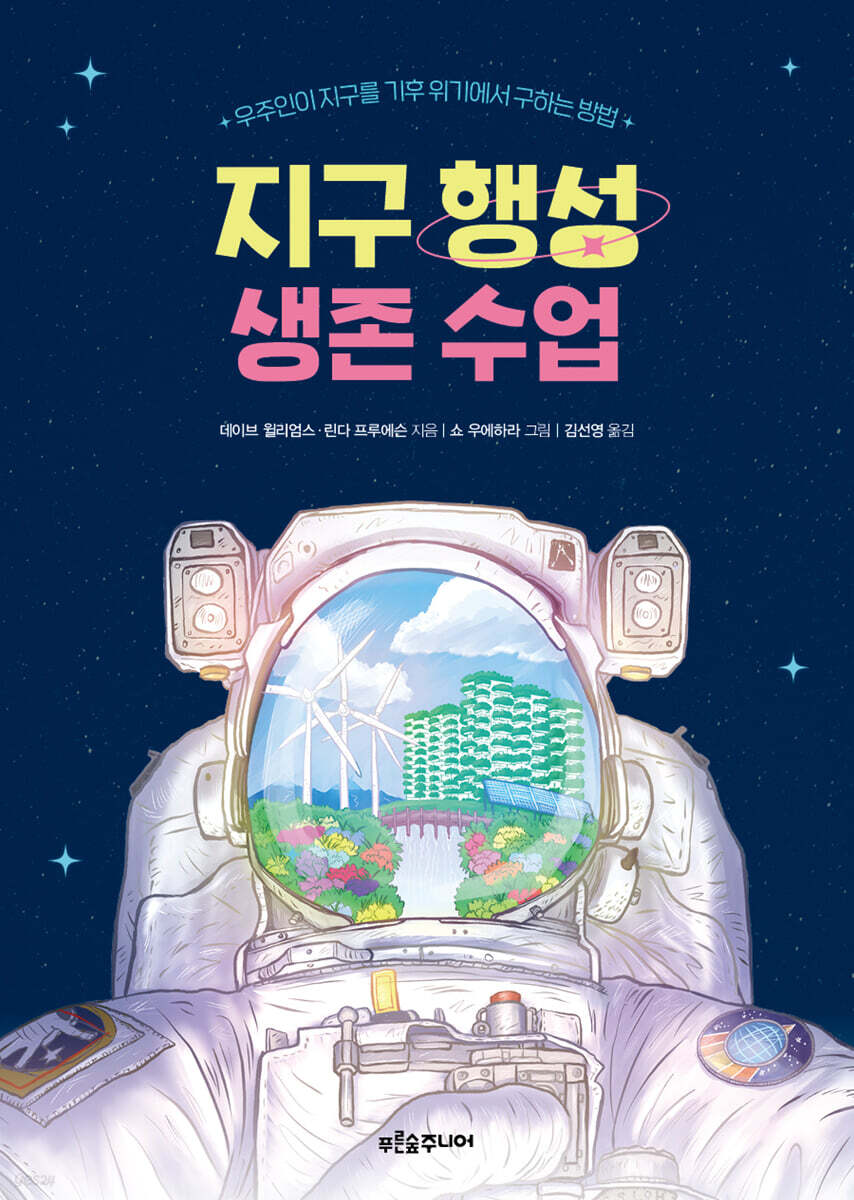
Planet Earth Survival Lessons
 |
Description
Book Introduction
Water shortage, air pollution, energy depletion…
The Earth is now in a climate crisis!
Earth isn't that different from the International Space Station.
Let's think of Earth as a spaceship.
In May 2024, heavy snow fell in Gangwon-do, making it an unprecedented 'White Teacher's Day'.
In the spring, it snowed, and in the summer, record-breaking heat waves continued day after day.
In September, we celebrated the hottest Chuseok ever, breaking the record for the highest daily temperature.
Due to these climate changes, the production of squid and crab, which were specialties of the East Sea, has plummeted, and apples, which were a specialty of Gyeongsangbuk-do, are now also produced in Gangwon-do.
In this way, the Earth is moving beyond ‘warming’ to ‘heating.’
It cannot be a more dire reality than the disaster movies on screen.
People with a growing sense of crisis are trying to slow climate change by reducing their use of plastic, becoming vegetarian, and upcycling.
However, this method alone clearly has limitations.
Well, at this point, why not take some inspiration from astronauts, who are experts at conserving and recycling resources?
"Planet Earth Survival Lessons" tells the story of those astronauts' conservation and recycling of resources.
This book, written by Dr. Dave Williams, an astronaut who has been on two space missions for NASA, introduces various ways to conserve limited resources in space, such as regenerating water, reviving air, and creating energy.
It doesn't stop there, but details practical examples of how the technology has been applied on Earth, including solar energy water purification plants, hydroponic farms, biogas facilities, and smart cities.
From now on, let's think of the planet Earth, which is in crisis, as the spaceship Earth.
And we're going to apply the same methods astronauts use to conserve and recycle resources on the space station back on Earth!
The Earth is now in a climate crisis!
Earth isn't that different from the International Space Station.
Let's think of Earth as a spaceship.
In May 2024, heavy snow fell in Gangwon-do, making it an unprecedented 'White Teacher's Day'.
In the spring, it snowed, and in the summer, record-breaking heat waves continued day after day.
In September, we celebrated the hottest Chuseok ever, breaking the record for the highest daily temperature.
Due to these climate changes, the production of squid and crab, which were specialties of the East Sea, has plummeted, and apples, which were a specialty of Gyeongsangbuk-do, are now also produced in Gangwon-do.
In this way, the Earth is moving beyond ‘warming’ to ‘heating.’
It cannot be a more dire reality than the disaster movies on screen.
People with a growing sense of crisis are trying to slow climate change by reducing their use of plastic, becoming vegetarian, and upcycling.
However, this method alone clearly has limitations.
Well, at this point, why not take some inspiration from astronauts, who are experts at conserving and recycling resources?
"Planet Earth Survival Lessons" tells the story of those astronauts' conservation and recycling of resources.
This book, written by Dr. Dave Williams, an astronaut who has been on two space missions for NASA, introduces various ways to conserve limited resources in space, such as regenerating water, reviving air, and creating energy.
It doesn't stop there, but details practical examples of how the technology has been applied on Earth, including solar energy water purification plants, hydroponic farms, biogas facilities, and smart cities.
From now on, let's think of the planet Earth, which is in crisis, as the spaceship Earth.
And we're going to apply the same methods astronauts use to conserve and recycle resources on the space station back on Earth!
- You can preview some of the book's contents.
Preview
index
Introduction
1.
The Earth is getting drier?
1st Period: The World is Facing a Water Shortage Crisis
2nd period: 90% of water is recycled in space?
3rd period clean, or without water?
4th Period Thinking Like an Astronaut
Dr. Dave's Space Life: Showering in Space
Dr. Dave's Experimental Classroom Water Purifier Making
2.
Air pollution is making the planet sick
1st Period: Greenhouse Gases, the Main Cause of Air Pollution
2nd Period How to Breathe in Space
3rd Period: Planet Earth's Air Purifier
4th Period Thinking Like an Astronaut
Dr. Dave's space life requires circulation of air.
Observing pollutants in Dr. Dave's laboratory classroom
3.
Growing population, shrinking food supply
1st Period Unsustainable Production Methods
2nd Period: Space Food Growing Project
3rd period Without soil, without land, even in cold regions
4th Period Thinking Like an Astronaut
Dr. Dave's Space Life: Dining in Space
Dr. Dave's Lab Classroom: Growing Hydroponically at Home
4.
Trash island created by humans
1st period Earth is now a garbage dump
2nd Period: The Rebirth of Space Debris
3rd Period: Trash Transformed into Energy
4th Period Thinking Like an Astronaut
Dr. Dave's Space Life: What Fruits to Eat on a Spaceship?
Dr. Dave's Experimental Classroom Hanging Planter Making
5.
Fossil fuels, the main culprit of the climate crisis
1st Period The most important and dangerous energy source
2nd Period: Creating Infinite Energy with the Sun
3rd Period: Leaping into Renewable Energy
4th Period Thinking Like an Astronaut
Dr. Dave's Space Life: Very Dangerous Work
Dr. Dave's Experimental Classroom: Building a Solar Tower
Going out words
Explanation of confusing terms
1.
The Earth is getting drier?
1st Period: The World is Facing a Water Shortage Crisis
2nd period: 90% of water is recycled in space?
3rd period clean, or without water?
4th Period Thinking Like an Astronaut
Dr. Dave's Space Life: Showering in Space
Dr. Dave's Experimental Classroom Water Purifier Making
2.
Air pollution is making the planet sick
1st Period: Greenhouse Gases, the Main Cause of Air Pollution
2nd Period How to Breathe in Space
3rd Period: Planet Earth's Air Purifier
4th Period Thinking Like an Astronaut
Dr. Dave's space life requires circulation of air.
Observing pollutants in Dr. Dave's laboratory classroom
3.
Growing population, shrinking food supply
1st Period Unsustainable Production Methods
2nd Period: Space Food Growing Project
3rd period Without soil, without land, even in cold regions
4th Period Thinking Like an Astronaut
Dr. Dave's Space Life: Dining in Space
Dr. Dave's Lab Classroom: Growing Hydroponically at Home
4.
Trash island created by humans
1st period Earth is now a garbage dump
2nd Period: The Rebirth of Space Debris
3rd Period: Trash Transformed into Energy
4th Period Thinking Like an Astronaut
Dr. Dave's Space Life: What Fruits to Eat on a Spaceship?
Dr. Dave's Experimental Classroom Hanging Planter Making
5.
Fossil fuels, the main culprit of the climate crisis
1st Period The most important and dangerous energy source
2nd Period: Creating Infinite Energy with the Sun
3rd Period: Leaping into Renewable Energy
4th Period Thinking Like an Astronaut
Dr. Dave's Space Life: Very Dangerous Work
Dr. Dave's Experimental Classroom: Building a Solar Tower
Going out words
Explanation of confusing terms
Detailed image
.jpg)
Into the book
The water that astronauts will drink for several months arrives at the space station in waterproof bags aboard space cargo ships.
So, astronauts have no choice but to conserve water, even down to the last drop.
We need to reduce our use as much as possible, reuse and recycle.
Astronauts are experts at conserving water! There are no sinks, showers, drains, or faucets in space.
I brush my teeth, wash my teeth, and shower with water from a small water bottle.
Because there is no gravity, water sticks to your skin like water droplets on leaves.
Astronauts rub these droplets on their bodies and then wait for the water to evaporate.
You can also wet a towel with water and wipe your body.
- On page 17
--- p.17 From “Chapter 1_2nd Period: 90% of water is recycled in space?”
Plants such as trees and grass have incredible abilities.
Because we breathe in carbon dioxide and breathe out oxygen.
It's like they're born with the ability to purify the air.
Based on this fact, NASA has been studying the power of plants for decades.
Cities around the world are also turning to plants to help solve air pollution problems.
In Italy, China, the Netherlands, Singapore… … and many other countries around the world, urban planners and architects are building ‘vertical forests’ that will help purify urban air.
It's about growing large and small trees in layers in apartments and buildings.
--- p.48-49 From “Chapter 2_3rd Period: Planet Earth’s Air Purifier”
To use energy more efficiently, entire cities could be made smart.
Frankfurt, Germany, aims to make the city climate neutral by 2050.
This means ensuring that the amount of greenhouse gases emitted by cities does not exceed what the Earth can naturally remove.
Frankfurt is seeking help from experts to devise ways to achieve its goals.
The plan is to use solar panels, biomass fuels, and geothermal energy to heat homes and buildings, easing the strain on the city's power grid.
So, astronauts have no choice but to conserve water, even down to the last drop.
We need to reduce our use as much as possible, reuse and recycle.
Astronauts are experts at conserving water! There are no sinks, showers, drains, or faucets in space.
I brush my teeth, wash my teeth, and shower with water from a small water bottle.
Because there is no gravity, water sticks to your skin like water droplets on leaves.
Astronauts rub these droplets on their bodies and then wait for the water to evaporate.
You can also wet a towel with water and wipe your body.
- On page 17
--- p.17 From “Chapter 1_2nd Period: 90% of water is recycled in space?”
Plants such as trees and grass have incredible abilities.
Because we breathe in carbon dioxide and breathe out oxygen.
It's like they're born with the ability to purify the air.
Based on this fact, NASA has been studying the power of plants for decades.
Cities around the world are also turning to plants to help solve air pollution problems.
In Italy, China, the Netherlands, Singapore… … and many other countries around the world, urban planners and architects are building ‘vertical forests’ that will help purify urban air.
It's about growing large and small trees in layers in apartments and buildings.
--- p.48-49 From “Chapter 2_3rd Period: Planet Earth’s Air Purifier”
To use energy more efficiently, entire cities could be made smart.
Frankfurt, Germany, aims to make the city climate neutral by 2050.
This means ensuring that the amount of greenhouse gases emitted by cities does not exceed what the Earth can naturally remove.
Frankfurt is seeking help from experts to devise ways to achieve its goals.
The plan is to use solar panels, biomass fuels, and geothermal energy to heat homes and buildings, easing the strain on the city's power grid.
--- p.129 From “Chapter 5_3rd Period: Leaping into Renewable Energy”
Publisher's Review
Survival lessons to save the planet from the climate crisis!
As mentioned earlier, Planet Earth Survival Lessons puts the concept of finding ways to overcome the climate crisis facing Earth in space at the forefront.
It is structured as a survival lesson on a planet called Earth, and is systematically divided into units of time like school classes.
That is, in periods 1 to 3, we examine the reality of Earth, introduce space technology, and then learn how to apply it.
The last 4th period experiential activity presents specific plans that readers can put into practice.
To put it simply, the first period will examine in detail the crises facing the Earth, such as water shortage, air pollution, food crisis, waste problem, and energy crisis.
In the second period, we learn about water conservation, air regeneration, and food production from astronauts who spend months living on the International Space Station, which is the size of a soccer field.
In the third period, we will learn about specific examples of how astronauts' ideas were applied to Earth.
Waterless toilets, 100-meter-tall air purification towers, and crops grown without soil.
All of this is amazing technology that started in space and developed on Earth.
Finally, the experiential activity covers practical ways to save the Earth by thinking like an astronaut.
Here, Dr. Dave's vivid story of life in space is included, along with a hands-on experimental classroom.
When you close this book, you will be able to say with certainty:
There are countless amazing and innovative ideas to protect our planet, as numerous as the stars in the Milky Way!
A sustainable future we create together
Many ideas for the International Space Station are already becoming a reality.
Following in the footsteps of astronauts who recycle 90 percent of their limited water, Bill Gates is developing a toilet that operates without water and eliminates toxic byproducts (1.
The Earth is getting drier?)
The technology to regenerate air was born in Xi'an, China with a 100-meter-tall air purification tower (2.
(Air pollution is making the Earth sick), the technology of growing plants in space without soil has been transformed into hydroponics, which can easily grow plants even in poor soil (3.
(Increasing population, decreasing food supply).
New technology that transforms waste into water and gas has made it possible to turn cow dung into natural gas energy, which can be used as fuel in kitchens (4.
(A garbage island created by humans).
So what about renewable energy? Space technology that harnesses 100 percent solar energy has accelerated the creation of a smart city in Singapore that maximizes energy efficiency (5.
Fossil fuels, the main culprit of the climate crisis).
This new perspective, this broader view of Earth from space, offers new ways to overcome the climate crisis and make a sustainable future possible.
Now, it's our turn to save Spaceship Earth from the perspective of an astronaut!
As mentioned earlier, Planet Earth Survival Lessons puts the concept of finding ways to overcome the climate crisis facing Earth in space at the forefront.
It is structured as a survival lesson on a planet called Earth, and is systematically divided into units of time like school classes.
That is, in periods 1 to 3, we examine the reality of Earth, introduce space technology, and then learn how to apply it.
The last 4th period experiential activity presents specific plans that readers can put into practice.
To put it simply, the first period will examine in detail the crises facing the Earth, such as water shortage, air pollution, food crisis, waste problem, and energy crisis.
In the second period, we learn about water conservation, air regeneration, and food production from astronauts who spend months living on the International Space Station, which is the size of a soccer field.
In the third period, we will learn about specific examples of how astronauts' ideas were applied to Earth.
Waterless toilets, 100-meter-tall air purification towers, and crops grown without soil.
All of this is amazing technology that started in space and developed on Earth.
Finally, the experiential activity covers practical ways to save the Earth by thinking like an astronaut.
Here, Dr. Dave's vivid story of life in space is included, along with a hands-on experimental classroom.
When you close this book, you will be able to say with certainty:
There are countless amazing and innovative ideas to protect our planet, as numerous as the stars in the Milky Way!
A sustainable future we create together
Many ideas for the International Space Station are already becoming a reality.
Following in the footsteps of astronauts who recycle 90 percent of their limited water, Bill Gates is developing a toilet that operates without water and eliminates toxic byproducts (1.
The Earth is getting drier?)
The technology to regenerate air was born in Xi'an, China with a 100-meter-tall air purification tower (2.
(Air pollution is making the Earth sick), the technology of growing plants in space without soil has been transformed into hydroponics, which can easily grow plants even in poor soil (3.
(Increasing population, decreasing food supply).
New technology that transforms waste into water and gas has made it possible to turn cow dung into natural gas energy, which can be used as fuel in kitchens (4.
(A garbage island created by humans).
So what about renewable energy? Space technology that harnesses 100 percent solar energy has accelerated the creation of a smart city in Singapore that maximizes energy efficiency (5.
Fossil fuels, the main culprit of the climate crisis).
This new perspective, this broader view of Earth from space, offers new ways to overcome the climate crisis and make a sustainable future possible.
Now, it's our turn to save Spaceship Earth from the perspective of an astronaut!
GOODS SPECIFICS
- Date of issue: November 30, 2024
- Page count, weight, size: 148 pages | 288g | 153*215*9mm
- ISBN13: 9791172545161
- ISBN10: 1172545162
You may also like
카테고리
korean


korean

![GQ KOREA Mark (Monthly): December [2025]](http://librairie.coreenne.fr/cdn/shop/files/8ef265dbbfbf186523ed75ba7319009d.jpg?v=1765340328&width=3840)


