

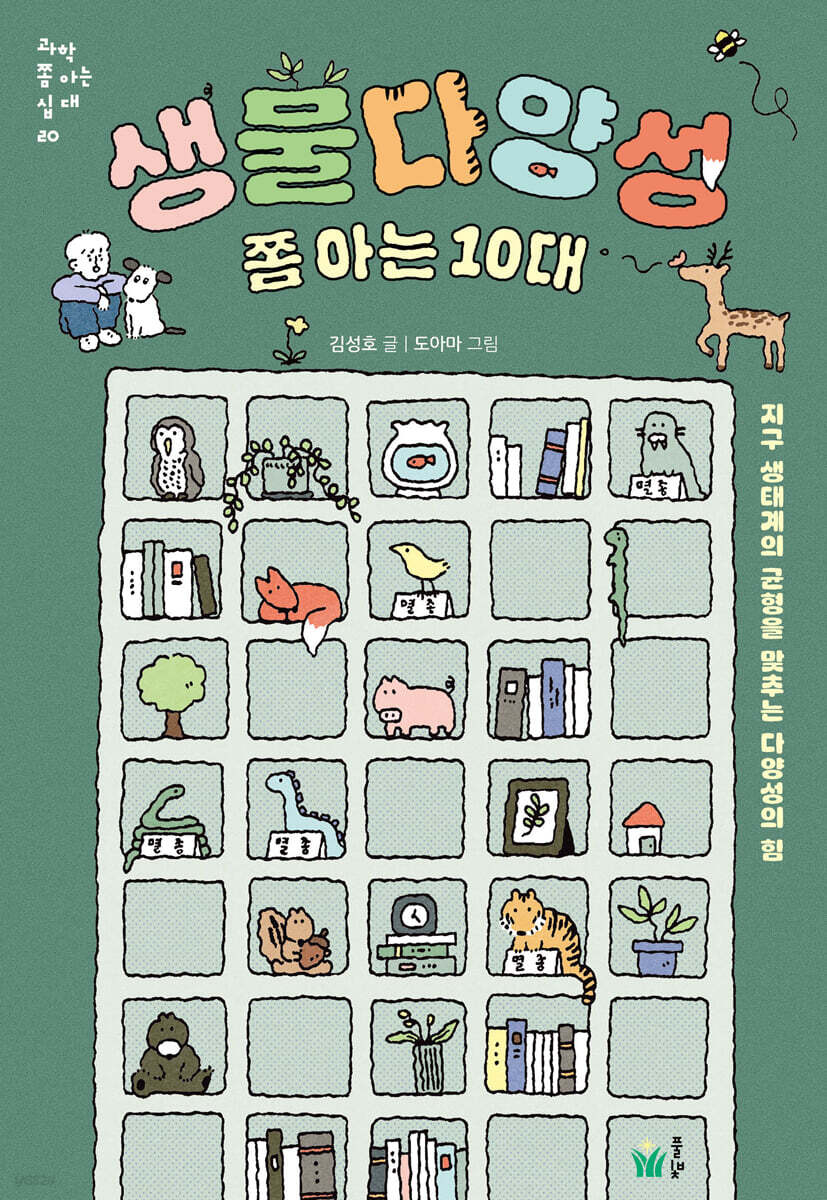
10 teenagers who know a little about biodiversity
 |
Description
Book Introduction
Biodiversity, the force that balances the Earth's ecosystem!
What is biodiversity and how can we protect it?
Biodiversity and Extinction Stories for Youth
What if the world were devoid of life? A sky without pigeons or magpies, without flies, a forest without squirrels or frogs, without moss or grass, not even a streamside loach.
No one can survive in this environment.
What would it be like to have mountains with only one type of tree, fields with only one type of flower, and an ocean with only one type of fish? No one would want to live in such a place.
But unfortunately, the world is becoming more and more simple like this.
Instead of this world, what creates a richer and more colorful world is ‘biodiversity.’
Biodiversity is literally a measure of how diverse living things are.
It is confirmed through three major things.
Species diversity, genetic diversity, and ecosystem diversity.
We hope that diverse creatures live on Earth, that even within the same species, we hope that our genes are diverse, and that various ecosystems are preserved.
The creatures and nature that surround us are not simply a background.
We create a world where everyone can live by balancing air, water, and soil.
Biodiversity is the health of the planet.
In other words, biodiversity is essential for the health of all living things.
『10 Things You Should Know About Biodiversity』 is the twentieth book in the "10 Things You Should Know About Science" series, which contains stories about biodiversity and extinction that will determine the future of all living things, including humans.
Professor Kim Seong-ho, who has observed life for a long time and written easy and fun stories about life, conveys biodiversity in an easy-to-understand way in this book.
As I follow the teacher's story leisurely, as if walking along a country road, I soon come to understand the importance of biodiversity and the preciousness of life, which had previously sounded unfamiliar.
If you want to protect even one more species in the future, open a book now!
What is biodiversity and how can we protect it?
Biodiversity and Extinction Stories for Youth
What if the world were devoid of life? A sky without pigeons or magpies, without flies, a forest without squirrels or frogs, without moss or grass, not even a streamside loach.
No one can survive in this environment.
What would it be like to have mountains with only one type of tree, fields with only one type of flower, and an ocean with only one type of fish? No one would want to live in such a place.
But unfortunately, the world is becoming more and more simple like this.
Instead of this world, what creates a richer and more colorful world is ‘biodiversity.’
Biodiversity is literally a measure of how diverse living things are.
It is confirmed through three major things.
Species diversity, genetic diversity, and ecosystem diversity.
We hope that diverse creatures live on Earth, that even within the same species, we hope that our genes are diverse, and that various ecosystems are preserved.
The creatures and nature that surround us are not simply a background.
We create a world where everyone can live by balancing air, water, and soil.
Biodiversity is the health of the planet.
In other words, biodiversity is essential for the health of all living things.
『10 Things You Should Know About Biodiversity』 is the twentieth book in the "10 Things You Should Know About Science" series, which contains stories about biodiversity and extinction that will determine the future of all living things, including humans.
Professor Kim Seong-ho, who has observed life for a long time and written easy and fun stories about life, conveys biodiversity in an easy-to-understand way in this book.
As I follow the teacher's story leisurely, as if walking along a country road, I soon come to understand the importance of biodiversity and the preciousness of life, which had previously sounded unfamiliar.
If you want to protect even one more species in the future, open a book now!
- You can preview some of the book's contents.
Preview
index
Entering_
What does the Earth need for a healthy life? Biodiversity!
Chapter 1: Biodiversity: A Tool for Assessing the Health of the Planet
1.
I'm curious about biodiversity
Species diversity - the more the better
Genetic Diversity: Being Different Makes Us Stronger
Ecosystem Diversity: There should be places like this and places like that.
2.
Why is biodiversity necessary?
If all the bees disappeared
Nature provides us with what we need
All living things are precious because they have life.
Chapter 2: Biodiversity Yesterday, Today, and Tomorrow
1.
Life that disappeared from Earth
Looking back at the mass extinction
When will the sixth mass extinction occur?
2.
Life disappearing from Earth
Red List, a red light warning of extinction
The present and future of our country's species
Chapter 3: Turning Biodiversity Obstacles into Stepping Stones
1.
Climate change and disruption of ecological cycles
What happens when the Earth gets hotter?
Ecosystem balance in exchange for convenience
A broken ecological cycle
Humanity's response to our one and only Earth
2.
Indiscriminate development and habitat loss
Overdevelopment that takes away the habitat of life
Disconnected Habitats, Their Pain, and Solutions
Efforts to restore habitats and species
3.
Introduction of alien species and overexploitation of species
Alien species that cause ecosystem disruption
Overfishing destroys biodiversity
Seed Wars and Seed Banks
4.
How can we protect biodiversity?
We are connected as one
Green living in everyday life that saves lives
What does the Earth need for a healthy life? Biodiversity!
Chapter 1: Biodiversity: A Tool for Assessing the Health of the Planet
1.
I'm curious about biodiversity
Species diversity - the more the better
Genetic Diversity: Being Different Makes Us Stronger
Ecosystem Diversity: There should be places like this and places like that.
2.
Why is biodiversity necessary?
If all the bees disappeared
Nature provides us with what we need
All living things are precious because they have life.
Chapter 2: Biodiversity Yesterday, Today, and Tomorrow
1.
Life that disappeared from Earth
Looking back at the mass extinction
When will the sixth mass extinction occur?
2.
Life disappearing from Earth
Red List, a red light warning of extinction
The present and future of our country's species
Chapter 3: Turning Biodiversity Obstacles into Stepping Stones
1.
Climate change and disruption of ecological cycles
What happens when the Earth gets hotter?
Ecosystem balance in exchange for convenience
A broken ecological cycle
Humanity's response to our one and only Earth
2.
Indiscriminate development and habitat loss
Overdevelopment that takes away the habitat of life
Disconnected Habitats, Their Pain, and Solutions
Efforts to restore habitats and species
3.
Introduction of alien species and overexploitation of species
Alien species that cause ecosystem disruption
Overfishing destroys biodiversity
Seed Wars and Seed Banks
4.
How can we protect biodiversity?
We are connected as one
Green living in everyday life that saves lives
Detailed image

Into the book
Biodiversity is a measure of how biologically healthy the Earth is.
There are three main things we want to see in diversity: species, genes, and ecosystems.
We call it species diversity, genetic diversity, and ecosystem diversity.
It is a wish for various species to live on Earth, for the same species to have diverse genes, and for the diverse ecosystem to be preserved without being destroyed.
--- p.28
Until now, mass extinctions were caused by unavoidable natural phenomena such as asteroid impacts, volcanic eruptions, tsunamis, and major earthquakes.
However, the sixth mass extinction is caused by climate change, which is caused by humans' endless greed and excessive laziness.
There are also many opinions that it will be an extinction that progresses at an extremely rapid pace.
Some scholars say that a mass extinction has already begun.
Moreover, the extinction that is happening right before our eyes is said to be occurring 100 to 1,000 times faster than the original natural frequency.
--- p.51
The root cause of biodiversity loss can be said to be environmental changes, including climate change.
To be more precise, it is environmental destruction.
The original ecosystem has the ability to purify itself.
Even if it is damaged or dirty, it has the power to return to its original form over time to a certain extent.
But there are limits to midnight power.
It means that once you cross a certain line, there is no going back.
Even though the limits of our midnight abilities are quite flexible, humans try to exceed even that margin.
--- p.73
Habitat destruction caused by excessive development, such as forest destruction, reclamation of wetlands including tidal flats, and road construction, is a direct cause of biodiversity loss.
As habitat area decreases, the number of species living within it inevitably decreases.
Because both intra- and inter-species competition is becoming fierce.
As space decreases and populations decline, the probability of inbreeding also increases.
The increase in inbreeding means that species are on the extinction train.
--- p.95
What do you think when you see Sihwa Lake? Isn't it so sad and painful? It makes you reproach yourself for what a terrible thing we've done.
It's like breaking a perfectly good, healthy leg on purpose and spending a lot of time and money to recover it to half its original size.
What's even more frustrating is that even now, more Sihwahos are being created here and there in our country.
--- p.112
The price paid for unification through unification rice was enormous.
If you only look at one and there's a problem with that one, it's bound to fall apart.
If it's perfect, that's fine.
But no breed manipulated by humans can be perfect.
It's always been like that.
This time, they said it was perfect, but it's never been perfect.
It will be like that in the future too.
There is only one thing you can trust completely.
The truth is that variety is healthy.
--- p.133
I believe that the most important thing for restoring and conserving biodiversity is to remember that nature and all living things within it are interconnected.
Wouldn't the idea of maintaining nature in a sustainable state and the effort to preserve that idea follow? If we understand the importance of biodiversity, we will value the sustainability of the ecosystem above immediate profits or convenience.
There are three main things we want to see in diversity: species, genes, and ecosystems.
We call it species diversity, genetic diversity, and ecosystem diversity.
It is a wish for various species to live on Earth, for the same species to have diverse genes, and for the diverse ecosystem to be preserved without being destroyed.
--- p.28
Until now, mass extinctions were caused by unavoidable natural phenomena such as asteroid impacts, volcanic eruptions, tsunamis, and major earthquakes.
However, the sixth mass extinction is caused by climate change, which is caused by humans' endless greed and excessive laziness.
There are also many opinions that it will be an extinction that progresses at an extremely rapid pace.
Some scholars say that a mass extinction has already begun.
Moreover, the extinction that is happening right before our eyes is said to be occurring 100 to 1,000 times faster than the original natural frequency.
--- p.51
The root cause of biodiversity loss can be said to be environmental changes, including climate change.
To be more precise, it is environmental destruction.
The original ecosystem has the ability to purify itself.
Even if it is damaged or dirty, it has the power to return to its original form over time to a certain extent.
But there are limits to midnight power.
It means that once you cross a certain line, there is no going back.
Even though the limits of our midnight abilities are quite flexible, humans try to exceed even that margin.
--- p.73
Habitat destruction caused by excessive development, such as forest destruction, reclamation of wetlands including tidal flats, and road construction, is a direct cause of biodiversity loss.
As habitat area decreases, the number of species living within it inevitably decreases.
Because both intra- and inter-species competition is becoming fierce.
As space decreases and populations decline, the probability of inbreeding also increases.
The increase in inbreeding means that species are on the extinction train.
--- p.95
What do you think when you see Sihwa Lake? Isn't it so sad and painful? It makes you reproach yourself for what a terrible thing we've done.
It's like breaking a perfectly good, healthy leg on purpose and spending a lot of time and money to recover it to half its original size.
What's even more frustrating is that even now, more Sihwahos are being created here and there in our country.
--- p.112
The price paid for unification through unification rice was enormous.
If you only look at one and there's a problem with that one, it's bound to fall apart.
If it's perfect, that's fine.
But no breed manipulated by humans can be perfect.
It's always been like that.
This time, they said it was perfect, but it's never been perfect.
It will be like that in the future too.
There is only one thing you can trust completely.
The truth is that variety is healthy.
--- p.133
I believe that the most important thing for restoring and conserving biodiversity is to remember that nature and all living things within it are interconnected.
Wouldn't the idea of maintaining nature in a sustainable state and the effort to preserve that idea follow? If we understand the importance of biodiversity, we will value the sustainability of the ecosystem above immediate profits or convenience.
--- p.138
Publisher's Review
From climate change to overdevelopment and the introduction of alien species
All the extinctions that threaten life on our land
What can be done to prevent further loss?
To prevent the decline of biodiversity, we must prevent extinction.
Extinction is the complete disappearance of a species.
It is something that will definitely live on Earth someday and then never be seen again.
We all know about the extinction of dinosaurs in the distant past, but few know how many plants and animals have disappeared from this land now.
In this book, Professor Kim Seong-ho, who has been actively working to protect life on our land, introduces creatures of the Korean Peninsula that are now difficult to encounter or impossible to encounter.
Tiger, lynx, fox, stork, ibis, crane, magpie… … .
How can we protect even one more beloved name? First, we must understand what threatens biodiversity.
Climate change, which has a huge impact on the lives of animals and plants, overdevelopment and indiscriminate overfishing that take away the habitats of living things, and alien species that disrupt the ecosystem are representative obstacles to biodiversity.
《10 Things You Need to Know About Biodiversity》 is well organized with the latest statistical data from the Korea Forest Service and the Ministry of Environment, as well as photographic data from the National Institute of Ecology, so you can understand it at a glance.
Through this, we naturally learn about everything from lifestyles that can be implemented immediately to the direction our society should take.
Reduce greenhouse gas emissions, ban overfishing…
Because all living things are connected in some way
Let's learn about biodiversity that can save us and the world!
We need to reduce greenhouse gas emissions to escape the climate crisis, minimize development to preserve habitats, prevent alien species from entering the ecosystem, and ban overexploitation and overfishing…
There is still so much that can be done to protect biodiversity.
Above all, this book emphasizes that we must remember that all living things are connected in some way.
No living thing can stand alone.
If you take for granted the fact that a single creature is invisible, it will end up like a Jenga game that crumbles at some point.
Before that, we must properly understand and cherish biodiversity.
Teacher Kim Seong-ho wrote this book while reminiscing about the countryside where he played as a child.
The teacher's words, "I just hope that young readers won't face more extinctions than I did," make them feel the value of biodiversity with their hearts, not just their heads.
Doama's illustrations, which stimulate the senses with their dreamy pictures, also awaken sensitivity towards life.
If you are even slightly concerned about biodiversity, as author of "Splendid Extinction" and former director of the National Science Museum in Gwacheon said, "Read this book first, which explains biodiversity and extinction in an easy and detailed way, and then join us in protecting biodiversity."
All the extinctions that threaten life on our land
What can be done to prevent further loss?
To prevent the decline of biodiversity, we must prevent extinction.
Extinction is the complete disappearance of a species.
It is something that will definitely live on Earth someday and then never be seen again.
We all know about the extinction of dinosaurs in the distant past, but few know how many plants and animals have disappeared from this land now.
In this book, Professor Kim Seong-ho, who has been actively working to protect life on our land, introduces creatures of the Korean Peninsula that are now difficult to encounter or impossible to encounter.
Tiger, lynx, fox, stork, ibis, crane, magpie… … .
How can we protect even one more beloved name? First, we must understand what threatens biodiversity.
Climate change, which has a huge impact on the lives of animals and plants, overdevelopment and indiscriminate overfishing that take away the habitats of living things, and alien species that disrupt the ecosystem are representative obstacles to biodiversity.
《10 Things You Need to Know About Biodiversity》 is well organized with the latest statistical data from the Korea Forest Service and the Ministry of Environment, as well as photographic data from the National Institute of Ecology, so you can understand it at a glance.
Through this, we naturally learn about everything from lifestyles that can be implemented immediately to the direction our society should take.
Reduce greenhouse gas emissions, ban overfishing…
Because all living things are connected in some way
Let's learn about biodiversity that can save us and the world!
We need to reduce greenhouse gas emissions to escape the climate crisis, minimize development to preserve habitats, prevent alien species from entering the ecosystem, and ban overexploitation and overfishing…
There is still so much that can be done to protect biodiversity.
Above all, this book emphasizes that we must remember that all living things are connected in some way.
No living thing can stand alone.
If you take for granted the fact that a single creature is invisible, it will end up like a Jenga game that crumbles at some point.
Before that, we must properly understand and cherish biodiversity.
Teacher Kim Seong-ho wrote this book while reminiscing about the countryside where he played as a child.
The teacher's words, "I just hope that young readers won't face more extinctions than I did," make them feel the value of biodiversity with their hearts, not just their heads.
Doama's illustrations, which stimulate the senses with their dreamy pictures, also awaken sensitivity towards life.
If you are even slightly concerned about biodiversity, as author of "Splendid Extinction" and former director of the National Science Museum in Gwacheon said, "Read this book first, which explains biodiversity and extinction in an easy and detailed way, and then join us in protecting biodiversity."
GOODS SPECIFICS
- Date of issue: October 18, 2024
- Page count, weight, size: 144 pages | 228g | 140*203*10mm
- ISBN13: 9791161729671
- ISBN10: 1161729674
You may also like
카테고리
korean


korean

![GQ KOREA Mark (Monthly): December [2025]](http://librairie.coreenne.fr/cdn/shop/files/8ef265dbbfbf186523ed75ba7319009d.jpg?v=1765340328&width=3840)


