

Landmarks and Cities of the World
 |
Description
Book Introduction
When you look at landmarks, you can see the history of the city!
A children's humanities book that teaches the history, culture, and art of the city through landmarks.
Learn about world history by following urban civilizations that have lasted for thousands of years.
Exciting world city tour with landmarks
Why did the Peruvian Incas build a city in the sky on a mountaintop? How did the colossal Statue of Liberty cross the ocean to New York? Why does the Manneken Pis statue in Brussels wear a hanbok? These fascinating and fascinating stories about these landmarks unfold.
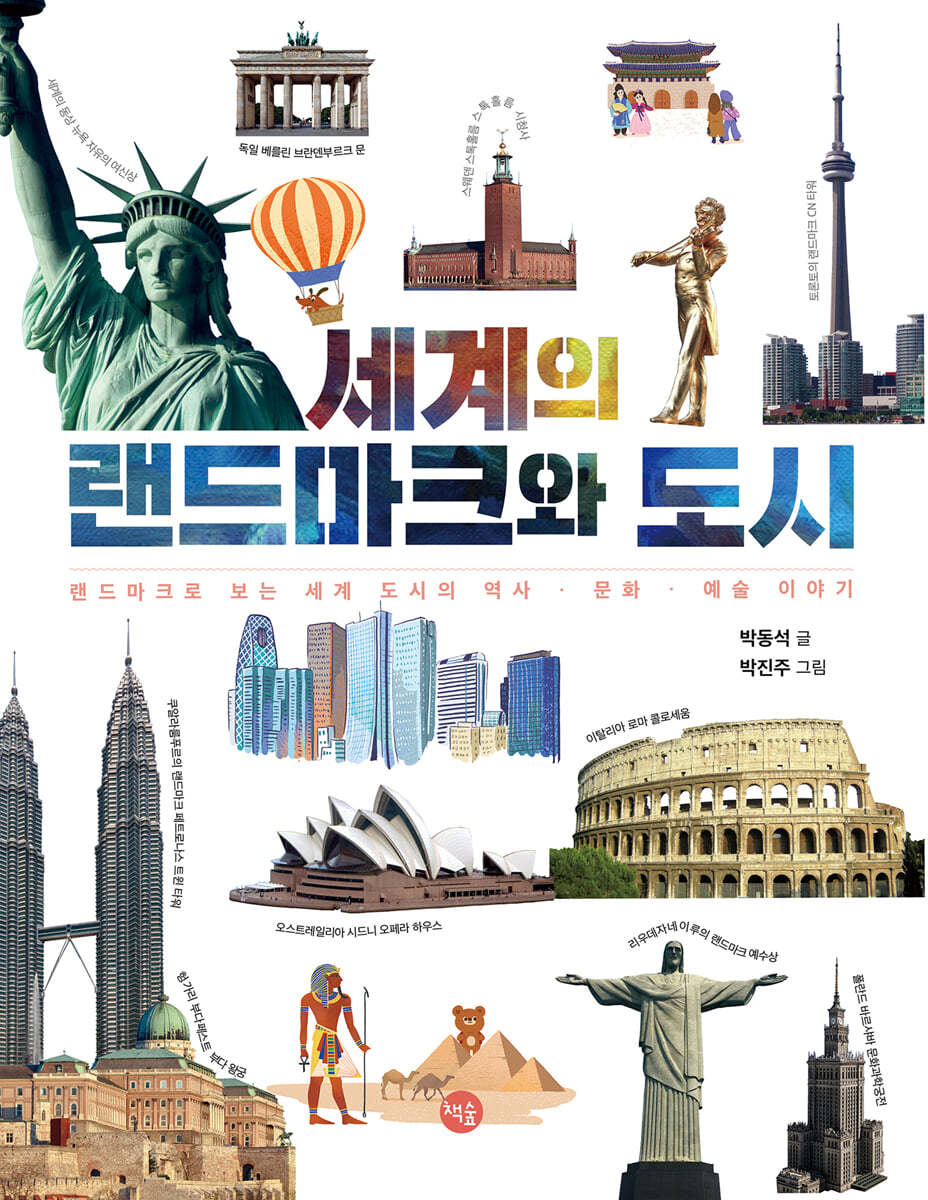
This book, "Landmarks and Cities of the World," is a humanities book for children and teenagers that introduces the history, culture, and art of cities by including 41 landmarks and cities from around the world.
It includes 41 landmarks, ranging from familiar landmarks like the Eiffel Tower in Paris and the Statue of Liberty in New York to less familiar ones like the Stockholm City Hall in Stockholm, the Monument to the Independence of Mexico City, and the Petra ruins in Jordan.
It explains the history and culture of world cities such as New York, Brussels, Athens, Istanbul, and Rio de Janeiro, which are frequently covered in elementary school curriculum, through landmarks.
Through landmarks and city tours, we explore the city's history, culture, architecture, and art, along with the footsteps of humanity.
The endless city stories presented in this book help us understand ourselves more deeply and see the world from a broader perspective.
A children's humanities book that teaches the history, culture, and art of the city through landmarks.
Learn about world history by following urban civilizations that have lasted for thousands of years.
Exciting world city tour with landmarks
Why did the Peruvian Incas build a city in the sky on a mountaintop? How did the colossal Statue of Liberty cross the ocean to New York? Why does the Manneken Pis statue in Brussels wear a hanbok? These fascinating and fascinating stories about these landmarks unfold.
This book, "Landmarks and Cities of the World," is a humanities book for children and teenagers that introduces the history, culture, and art of cities by including 41 landmarks and cities from around the world.
It includes 41 landmarks, ranging from familiar landmarks like the Eiffel Tower in Paris and the Statue of Liberty in New York to less familiar ones like the Stockholm City Hall in Stockholm, the Monument to the Independence of Mexico City, and the Petra ruins in Jordan.
It explains the history and culture of world cities such as New York, Brussels, Athens, Istanbul, and Rio de Janeiro, which are frequently covered in elementary school curriculum, through landmarks.
Through landmarks and city tours, we explore the city's history, culture, architecture, and art, along with the footsteps of humanity.
The endless city stories presented in this book help us understand ourselves more deeply and see the world from a broader perspective.
- You can preview some of the book's contents.
Preview
index
Opening remarks _ Want to go on a trip to a mysterious and amazing landmark city?
Part 1: The Tower of the World
Eiffel Tower, Paris, France
TIP! Another Paris landmark: the Louvre Museum
Big Ben, London, England
TIP! Another London landmark, Tower Bridge
Belem Tower, Lisbon, Portugal
TIP! Another Lisbon landmark, the Jerónimos Monastery
Petronas Twin Towers, Kuala Lumpur, Malaysia
TIP! Kuala Lumpur, a city with many skyscrapers
Monas Tower, Jakarta, Indonesia
TIP! Homo erectus fossils, Javan man
Tokyo Tower, Tokyo, Japan
TIP! The world's tallest broadcasting tower, Tokyo Skytree
CN Tower, Toronto, Canada
TIP! Another Toronto landmark, Rogers Centre
Mexico City, Mexico, Independence Monument
TIP! Another landmark in Mexico City: the Monument to the Revolution
Obelisk, Buenos Aires, Argentina
TIP! Buenos Aires, the birthplace of tango
Palaces and Castles of the World Part 2
Hermitage Museum, St. Petersburg, Russia
TIP! St. Petersburg and Leningrad
Prague Castle, Prague, Czech Republic
TIP! Another landmark in Prague: Charles Bridge
Buda Castle, Budapest, Hungary
TIP! Another landmark in Budapest: the Chain Bridge
Palace of Culture and Science, Warsaw, Poland
TIP! Warsaw's Historic Center, a Newly Reborn City
Forbidden City, Beijing, China
TIP! Another landmark in Beijing: the Great Wall
Gyeongbokgung Palace, Seoul, South Korea
TIP! Another landmark in Seoul: Namsan Seoul Tower
Part 3: The Cathedral of the World
Hagia Sophia, Istanbul, Turkey
TIP! Another landmark in Istanbul: the Blue Mosque
Cathedral of the Holy Family, Barcelona, Spain
TIP! Another Barcelona attraction: the Picasso Museum
St. Stephen's Cathedral, Vienna, Austria
TIP! Where Musicians Sleep: Central Cemetery
Zagreb Cathedral, Zagreb, Croatia
TIP! Another landmark in Zagreb: St. Mark's Cathedral
Helsinki Cathedral, Helsinki, Finland
TIP! Another Helsinki landmark: Uspenski Cathedral
Part 4: Buildings and Hotels of the World
Oslo City Hall, Oslo, Norway
TIP! Another must-see attraction in Oslo: Vigeland Sculpture Park
Stockholm City Hall, Stockholm, Sweden
TIP! Stockholm Syndrome: A More Interesting Story When You Know It
Marina Bay Sands Hotel, Singapore
TIP! The Merlion, Singapore's iconic symbol
Burj Khalifa, Dubai, United Arab Emirates
TIP! Another landmark in Dubai: the Burj Al Arab Hotel
Taipei 101, Taipei, Taiwan
TIP! Taiwan's famous landmark, the National Palace Museum
Statues of the World Part 5
The Little Mermaid statue in Copenhagen, Denmark
TIP! The Father of Fairy Tales, Andersen
Manneken Pis statue in Brussels, Belgium
TIP! Another landmark in Brussels, the Grand Place
Statue of Liberty, New York, USA
TIP! Another New York landmark, the Empire State Building
Christ the Redeemer statue in Rio de Janeiro, Brazil
TIP! The World's Greatest Festival, the Rio Carnival
Part 6: Temples and Shrines of the World
Parthenon, Athens, Greece
TIP! Is the Parthenon the first UNESCO World Heritage Site?
Kaaba Shrine, Mecca, Saudi Arabia
TIP! Hajj, the Islamic Pilgrimage
Angkor Wat, Siem Reap, Cambodia
TIP! Another ruin in Siem Reap, Angkor Thom
Part 7: Ancient Ruins of the World
Jordan, Petra ruins
TIP! The Seven Wonders of the World: Even More Interesting Stories to Know
Iran, Persepolis
TIP! Tehran, Iran, Tehran-ro, Seoul
Cusco and Machu Picchu, Peru
TIP! The Inca Empire, the conquerors who ruled South America
Part 8: The Grave of the World
Taj Mahal, Agra, India
TIP! The Last Eight Years of Emperor Shah Jahan
Pyramids of Giza, Cairo, Egypt
TIP! Sphinx, the guardian deity of the pyramids
Part 9: Special Landmarks of the World
Colosseum, Rome, Italy
TIP! Another landmark in Rome: the Trevi Fountain
Sydney Opera House, Australia
TIP! Another Sydney landmark, the Harbour Bridge
Brandenburg Gate, Berlin, Germany
TIP! The Berlin Wall, a symbol of division
Table Mountain, Cape Town, South Africa
TIP! Racial discrimination policy, apartheid
Part 1: The Tower of the World
Eiffel Tower, Paris, France
TIP! Another Paris landmark: the Louvre Museum
Big Ben, London, England
TIP! Another London landmark, Tower Bridge
Belem Tower, Lisbon, Portugal
TIP! Another Lisbon landmark, the Jerónimos Monastery
Petronas Twin Towers, Kuala Lumpur, Malaysia
TIP! Kuala Lumpur, a city with many skyscrapers
Monas Tower, Jakarta, Indonesia
TIP! Homo erectus fossils, Javan man
Tokyo Tower, Tokyo, Japan
TIP! The world's tallest broadcasting tower, Tokyo Skytree
CN Tower, Toronto, Canada
TIP! Another Toronto landmark, Rogers Centre
Mexico City, Mexico, Independence Monument
TIP! Another landmark in Mexico City: the Monument to the Revolution
Obelisk, Buenos Aires, Argentina
TIP! Buenos Aires, the birthplace of tango
Palaces and Castles of the World Part 2
Hermitage Museum, St. Petersburg, Russia
TIP! St. Petersburg and Leningrad
Prague Castle, Prague, Czech Republic
TIP! Another landmark in Prague: Charles Bridge
Buda Castle, Budapest, Hungary
TIP! Another landmark in Budapest: the Chain Bridge
Palace of Culture and Science, Warsaw, Poland
TIP! Warsaw's Historic Center, a Newly Reborn City
Forbidden City, Beijing, China
TIP! Another landmark in Beijing: the Great Wall
Gyeongbokgung Palace, Seoul, South Korea
TIP! Another landmark in Seoul: Namsan Seoul Tower
Part 3: The Cathedral of the World
Hagia Sophia, Istanbul, Turkey
TIP! Another landmark in Istanbul: the Blue Mosque
Cathedral of the Holy Family, Barcelona, Spain
TIP! Another Barcelona attraction: the Picasso Museum
St. Stephen's Cathedral, Vienna, Austria
TIP! Where Musicians Sleep: Central Cemetery
Zagreb Cathedral, Zagreb, Croatia
TIP! Another landmark in Zagreb: St. Mark's Cathedral
Helsinki Cathedral, Helsinki, Finland
TIP! Another Helsinki landmark: Uspenski Cathedral
Part 4: Buildings and Hotels of the World
Oslo City Hall, Oslo, Norway
TIP! Another must-see attraction in Oslo: Vigeland Sculpture Park
Stockholm City Hall, Stockholm, Sweden
TIP! Stockholm Syndrome: A More Interesting Story When You Know It
Marina Bay Sands Hotel, Singapore
TIP! The Merlion, Singapore's iconic symbol
Burj Khalifa, Dubai, United Arab Emirates
TIP! Another landmark in Dubai: the Burj Al Arab Hotel
Taipei 101, Taipei, Taiwan
TIP! Taiwan's famous landmark, the National Palace Museum
Statues of the World Part 5
The Little Mermaid statue in Copenhagen, Denmark
TIP! The Father of Fairy Tales, Andersen
Manneken Pis statue in Brussels, Belgium
TIP! Another landmark in Brussels, the Grand Place
Statue of Liberty, New York, USA
TIP! Another New York landmark, the Empire State Building
Christ the Redeemer statue in Rio de Janeiro, Brazil
TIP! The World's Greatest Festival, the Rio Carnival
Part 6: Temples and Shrines of the World
Parthenon, Athens, Greece
TIP! Is the Parthenon the first UNESCO World Heritage Site?
Kaaba Shrine, Mecca, Saudi Arabia
TIP! Hajj, the Islamic Pilgrimage
Angkor Wat, Siem Reap, Cambodia
TIP! Another ruin in Siem Reap, Angkor Thom
Part 7: Ancient Ruins of the World
Jordan, Petra ruins
TIP! The Seven Wonders of the World: Even More Interesting Stories to Know
Iran, Persepolis
TIP! Tehran, Iran, Tehran-ro, Seoul
Cusco and Machu Picchu, Peru
TIP! The Inca Empire, the conquerors who ruled South America
Part 8: The Grave of the World
Taj Mahal, Agra, India
TIP! The Last Eight Years of Emperor Shah Jahan
Pyramids of Giza, Cairo, Egypt
TIP! Sphinx, the guardian deity of the pyramids
Part 9: Special Landmarks of the World
Colosseum, Rome, Italy
TIP! Another landmark in Rome: the Trevi Fountain
Sydney Opera House, Australia
TIP! Another Sydney landmark, the Harbour Bridge
Brandenburg Gate, Berlin, Germany
TIP! The Berlin Wall, a symbol of division
Table Mountain, Cape Town, South Africa
TIP! Racial discrimination policy, apartheid
Detailed image

Into the book
When the Eiffel Tower was built, it was criticized by many intellectuals and artists for damaging the Parisian landscape.
A representative example was the novelist Maupassant.
There is an interesting anecdote.
It is said that Maupassant always had lunch at the restaurant inside the Eiffel Tower observation deck.
Why did I have lunch at the Eiffel Tower, the place I hated so much? Because it was the only place where I couldn't see the Eiffel Tower.
--- p.21 From "Part 1: The Tower of the World"
Among the many buildings in St. Petersburg, the most beautiful one is undoubtedly the Winter Palace.
This is a palace built by the Russian Tsar for his winter stay.
It is now used as the State Hermitage Museum.
The Winter Palace, built in 1711, was decorated simply and without extravagance, in keeping with the frugal wishes of Peter the Great.
The person who transformed the palace into its current state of luxury was Elizabeth, daughter of Peter the Great.
--- p.72 From “Part 2: Palaces and Castles of the World”
Justinian I, who was so captivated by the grandeur and beauty of Hagia Sophia, exclaimed at its consecration ceremony, “King Solomon, I have conquered you!”
It was an expression of the overwhelming joy of having built a building that surpassed the temple of the ancient kingdom of Israel.
Since then, Hagia Sophia has stood firm as a cathedral representing the Eastern Roman Empire and Christianity, without collapsing even in large or small earthquakes.
--- p.116 From “The Cathedral of the World, Part 3”
If you were to name the most unusually shaped hotel in the world, it would probably be the Marina Bay Sands.
It consists of three 55-story buildings.
There are a whopping 2,561 rooms.
What's most surprising is that the building is tilted at 52 degrees.
What's even more surprising is that the massive ship-shaped structure sits on top of three buildings.
The structure at the very top is the swimming pool.
You can swim in an open-air skyscraper.
This innovative hotel has been hailed as a 21st-century architectural miracle and has been praised by architects around the world.
--- p.159 From “Part 4: Buildings and Hotels of the World”
The naked boy statue has a lot of interesting things going on.
One of them is the daily routine of wearing clothes sent from all over the world.
The tradition of dressing in different clothes began with Louis XV of France.
It is said that the French king returned the statue of a boy that had been looted and sent it back dressed in French nobleman's clothes.
After that, whenever heads of state from various countries visited Belgium, they presented costumes to the Manneken Pis statue.
The naked boy was able to wear a variety of clothes.
So far, I've received about 700 pieces of clothing as gifts.
They say that in our country, too, hanbok was given as a gift.
--- p.184 From “Statues of the World, Part 5”
Angkor lay dormant in the jungle for 400 years after the fall of the Khmer Dynasty.
The Angkor Wat temple, built in the early 12th century, was also abandoned without anyone knowing about it.
Then, in the 19th century, it began to see the light of day as it became known to the world.
Angkor Wat was built by Suryavarman II.
The purpose of its construction was to be dedicated to the Hindu god Vishnu, but he wanted to have his remains buried in the temple and become Vishnu forever.
--- p.216 From “Part 6: Temples and Shrines of the World”
The king who led the golden age was Darius the Great.
Darius made Persepolis his capital in 518 BC.
Persepolis soon became the central city of the world.
Moreover, as it was a central trade route, it was always bustling with merchants.
But the city's glory has been shattered.
In 330 BC, Alexander the Great of Macedon invaded Persia and Persepolis was completely destroyed.
Today, only the remains of the stone columns, palace ruins, walls, and buildings remain of Persepolis.
We can only imagine what it must have been like in the past.
--- p.230 From "Part 7: Ancient Ruins of the World"
The reporter is located 13 kilometers southwest of Cairo.
Of the three pyramids, the pyramid of Khufu is the largest.
The length of one side of the floor is 227 meters, and the height is 146 meters.
It is said that 2.3 million stones weighing 2.5 tons were stacked.
The stones were placed precisely without a single centimeter of error.
You can see how great the Egyptian architectural skills were at the time.
Given its scale, we estimate that it took over 200,000 people over 20 years to build.
--- p.249 From "Part 8: The Grave of the World"
The Brandenburg Gate was damaged by bombing during World War II, but was not completely destroyed.
The horse sculpture at the top suffered damage, with three of its four heads blown off. The missing heads are now stored in the museum and have been remade and restored.
After World War II, East and West Germany worked together to restore the Brandenburg Gate.
German citizens could freely travel between East and West Berlin through this gate.
However, after the Berlin Wall was built in 1961, only authorized people were allowed to cross.
A representative example was the novelist Maupassant.
There is an interesting anecdote.
It is said that Maupassant always had lunch at the restaurant inside the Eiffel Tower observation deck.
Why did I have lunch at the Eiffel Tower, the place I hated so much? Because it was the only place where I couldn't see the Eiffel Tower.
--- p.21 From "Part 1: The Tower of the World"
Among the many buildings in St. Petersburg, the most beautiful one is undoubtedly the Winter Palace.
This is a palace built by the Russian Tsar for his winter stay.
It is now used as the State Hermitage Museum.
The Winter Palace, built in 1711, was decorated simply and without extravagance, in keeping with the frugal wishes of Peter the Great.
The person who transformed the palace into its current state of luxury was Elizabeth, daughter of Peter the Great.
--- p.72 From “Part 2: Palaces and Castles of the World”
Justinian I, who was so captivated by the grandeur and beauty of Hagia Sophia, exclaimed at its consecration ceremony, “King Solomon, I have conquered you!”
It was an expression of the overwhelming joy of having built a building that surpassed the temple of the ancient kingdom of Israel.
Since then, Hagia Sophia has stood firm as a cathedral representing the Eastern Roman Empire and Christianity, without collapsing even in large or small earthquakes.
--- p.116 From “The Cathedral of the World, Part 3”
If you were to name the most unusually shaped hotel in the world, it would probably be the Marina Bay Sands.
It consists of three 55-story buildings.
There are a whopping 2,561 rooms.
What's most surprising is that the building is tilted at 52 degrees.
What's even more surprising is that the massive ship-shaped structure sits on top of three buildings.
The structure at the very top is the swimming pool.
You can swim in an open-air skyscraper.
This innovative hotel has been hailed as a 21st-century architectural miracle and has been praised by architects around the world.
--- p.159 From “Part 4: Buildings and Hotels of the World”
The naked boy statue has a lot of interesting things going on.
One of them is the daily routine of wearing clothes sent from all over the world.
The tradition of dressing in different clothes began with Louis XV of France.
It is said that the French king returned the statue of a boy that had been looted and sent it back dressed in French nobleman's clothes.
After that, whenever heads of state from various countries visited Belgium, they presented costumes to the Manneken Pis statue.
The naked boy was able to wear a variety of clothes.
So far, I've received about 700 pieces of clothing as gifts.
They say that in our country, too, hanbok was given as a gift.
--- p.184 From “Statues of the World, Part 5”
Angkor lay dormant in the jungle for 400 years after the fall of the Khmer Dynasty.
The Angkor Wat temple, built in the early 12th century, was also abandoned without anyone knowing about it.
Then, in the 19th century, it began to see the light of day as it became known to the world.
Angkor Wat was built by Suryavarman II.
The purpose of its construction was to be dedicated to the Hindu god Vishnu, but he wanted to have his remains buried in the temple and become Vishnu forever.
--- p.216 From “Part 6: Temples and Shrines of the World”
The king who led the golden age was Darius the Great.
Darius made Persepolis his capital in 518 BC.
Persepolis soon became the central city of the world.
Moreover, as it was a central trade route, it was always bustling with merchants.
But the city's glory has been shattered.
In 330 BC, Alexander the Great of Macedon invaded Persia and Persepolis was completely destroyed.
Today, only the remains of the stone columns, palace ruins, walls, and buildings remain of Persepolis.
We can only imagine what it must have been like in the past.
--- p.230 From "Part 7: Ancient Ruins of the World"
The reporter is located 13 kilometers southwest of Cairo.
Of the three pyramids, the pyramid of Khufu is the largest.
The length of one side of the floor is 227 meters, and the height is 146 meters.
It is said that 2.3 million stones weighing 2.5 tons were stacked.
The stones were placed precisely without a single centimeter of error.
You can see how great the Egyptian architectural skills were at the time.
Given its scale, we estimate that it took over 200,000 people over 20 years to build.
--- p.249 From "Part 8: The Grave of the World"
The Brandenburg Gate was damaged by bombing during World War II, but was not completely destroyed.
The horse sculpture at the top suffered damage, with three of its four heads blown off. The missing heads are now stored in the museum and have been remade and restored.
After World War II, East and West Germany worked together to restore the Brandenburg Gate.
German citizens could freely travel between East and West Berlin through this gate.
However, after the Berlin Wall was built in 1961, only authorized people were allowed to cross.
--- p.269 From “Part 9: Special Landmarks of the World”
Publisher's Review
★ Includes 41 landmarks from around the world that you must know!
★ A children's humanities book that contains various stories about landmarks and the history and culture of cities, and helps build background knowledge of world history and city history while being fun to read and see.
★ Includes stories about the history, culture, and art of cities around the world, including New York, Brussels, Athens, Istanbul, and Rio de Janeiro, which are frequently covered in elementary school curriculum.
Landmarks are precious heritages left behind by mankind.
Follow in the footsteps of humanity and learn about the city's history, culture, and art.
Why did the Peruvian Incas build a city in the sky atop a 2,400-meter mountain? How did the 225-ton Statue of Liberty cross the ocean to New York? Why does the Manneken Pis statue in Brussels wear clothing from around the world?
A unique and interesting city story unfolds around landmarks.
Cities around the world have histories ranging from as short as 200 years to as long as 6,000 years.
Cities that are formed naturally as people gather can prosper for over a thousand years and then fall into ruin in an instant.
We experience all kinds of invasions and wars, and we also face unexpected disasters such as natural disasters.
These landmarks preserve the history of the city intact.
This book tells the secrets of the city hidden in its landmarks.
It contains historical and cultural stories that we did not know much about, such as the fact that the black stone embedded in the Kaaba in Mecca was a sacred relic given to Abraham by the angel Gabriel, that the ruins of Persepolis in Iran are traces of a brilliant ancient city civilization from 2,500 years ago, and that the ruins of Petra, a rock-cut city from 2,500 years ago, are still an unsolved mystery.
Barcelona, revived by the Holy Family Cathedral, created by the genius architect Gaudi, and Angkor Wat and Machu Picchu, discovered after 400 years buried in the jungle, demonstrate the greatness of urban civilization.
Explore cities in greater depth through unique landmarks around the globe, including Dubai's Burj Khalifa, completed with cutting-edge architectural technology, and the Sydney Opera House, considered one of the world's most beautiful structures.
City landmarks are a great legacy created by mankind.
A landmark city tour offers a broad look at the city's history, culture, architecture, and art, along with the footsteps of humanity.
The book's endless urban stories help us understand ourselves more deeply and see the world from a broader perspective.
《Landmarks and Cities of the World》 is a humanities book for children and teenagers that includes 41 landmarks and cities from around the world.
You can experience the city's history, culture, and art in a new way with full-color photos and illustrations.
Contains 41 must-know landmarks from around the world!
High-quality photos and illustrations vividly convey landmarks and historical and cultural information about the city!
This book, Landmarks and Cities of the World, introduces 41 landmarks and cities from around the world.
It includes landmarks we are familiar with, such as the Eiffel Tower in Paris and the Statue of Liberty in New York, as well as less familiar landmarks, such as Stockholm City Hall in Stockholm, the Monument to the Independence of Mexico City, and the Petra ruins in Jordan.
It explains the history and culture of world cities such as New York, Brussels, Athens, Istanbul, and Rio de Janeiro, which are frequently covered in elementary school curriculum, in an easy and fun way through landmarks.
High-quality photos and humorous, colorful illustrations deliver landmarks and city information more clearly and provide a fun viewing experience.
Additionally, 41 tips are included for each city, providing episodes and various background knowledge related to the city.
Vivid editing using photographs and illustrations, landmark city stories that capture cultural diversity and multiculturalism help us understand our surroundings and the world in a more interesting way.
Part 1: The Tower of the World
The tower is a representative symbol of a city, conveying religious meaning, achievements of independence, or technological value.
The book tells the interesting stories of the Eiffel Tower in Paris and the Tokyo Tower, which were built as transmission towers and are now highly regarded as artistic symbols.
The story of Big Ben, London's most popular landmark, is also new.
Learn about the city's history in a fun way through its iconic landmarks, such as the Monas Tower, the Independence Monument, and Toronto's CN Tower, which remind the people of India and Mexico of the value of independence.
Palaces and Castles of the World Part 2
Cities around the world that have been under the rule of kings for thousands of years are rich in palaces and castles.
The greater the king's power, the more magnificent and luxurious his palace becomes.
The Winter Palace in St. Petersburg, built 300 years ago, is now the Hermitage Museum, but its former splendor and value are still preserved.
We explore the legacy of the splendid former kingdoms, including the venerable Prague Castle, built over a thousand years, the Forbidden City in Beijing with its 980 buildings, the Palace of Culture and Science, a favorite among Warsaw citizens, and Gyeongbokgung Palace in Seoul.
Part 3: The Cathedral of the World
Learn about the history of faith in religious buildings such as cathedrals and mosques.
As we look back on the history of religious architecture that developed alongside the history of Christianity, we also learn about the sufferings of religious wars and persecution.
We explore the fascinating story of Hagia Sophia, which was built as a Christian cathedral but transformed into an Islamic cathedral, as well as great traces of religious heritage such as the Holy Family Cathedral in Barcelona and St. Stephen's Cathedral in Vienna, to which Gaudí dedicated his entire life.
Part 4: Buildings and Hotels of the World
We introduce buildings and hotels that are amazing to look at and have great value as landmarks.
Here you can see some of the world's most stunning and quirky buildings and hotels, including Oslo City Hall, where the Nobel Peace Prize ceremony is held; the Marina Bay Sands hotel, which features a swimming pool atop a three-building structure; the Burj Khalifa, the world's tallest building; and the bamboo-shaped Taipei 101 skyscraper.
Statues of the World Part 5
We introduce statues from around the world that have great historical and religious value and that inspire people.
We explore cultural heritage sites with great aesthetic value and symbolism, such as the Statue of Liberty, which became the dream and hope of New York immigrants; the Little Mermaid statue in Copenhagen, which conveys the emotion of Andersen's fairy tale; the Manneken Pis statue in Brussels, beloved by people around the world; and the Christ the Redeemer statue in Rio de Janeiro, which conveys a message of love and peace.
Part 6: Temples and Shrines of the World
Shrines and temples are cultural heritages where gods are worshipped and religious activities are performed.
Since ancient times, religious buildings have been the center of national development, and we can see outstanding architectural techniques.
You can explore the history of mysterious religions at places such as the Parthenon, which is dedicated to the goddess Athena, the Kaaba in Mecca, a holy place for pilgrims, and the Hindu temple of Angkor Wat.
Part 7: Ancient Ruins of the World
We follow in the footsteps of a once-glorious urban civilization that has now disappeared.
We encounter the fascinating history of cities we never knew about, such as the ruins of Petra, a rock-cut city built on a giant rock 2,500 years ago; Persepolis, an Iranian trading city that flourished 2,500 years ago; and Machu Picchu, a city in the sky built on a mountaintop.
Part 8: The Grave of the World
Cities around the world are home to many tombs that offer glimpses into history and the times.
Tombs for the dead royals were built large and ornately in the belief that there was an afterlife.
Representative examples include the Taj Mahal in Agra, India and the pyramids in Cairo.
Beyond simple tombs, we can see the evolution of rituals dealing with death in tomb architecture that has artistic value.
Part 9: Special Landmarks of the World
You can encounter various landmarks that reveal the unique beauty and charm of cities around the world.
Learn more about world history and culture through the stories behind landmarks and cities like the Colosseum in Rome, the Brandenburg Gate in Berlin, and Table Mountain in Cape Town.
Author's Note
How much do you know about cities like New York, Paris, Dubai, and Istanbul?
You may know the name of the city, but you probably don't know much about its history, culture, or art.
The city has a long history and culture hidden within it.
Cities like Athens have a history of over 3,000 years, and cities like Cairo have a history of over 6,000 years.
Cities around the world hold an infinite wealth of cultural and historical stories created by city dwellers since ancient times.
From now on, we will explore the interesting history and cultural stories hidden in the city through landmarks.
- Author: Park Dong-seok
★ A children's humanities book that contains various stories about landmarks and the history and culture of cities, and helps build background knowledge of world history and city history while being fun to read and see.
★ Includes stories about the history, culture, and art of cities around the world, including New York, Brussels, Athens, Istanbul, and Rio de Janeiro, which are frequently covered in elementary school curriculum.
Landmarks are precious heritages left behind by mankind.
Follow in the footsteps of humanity and learn about the city's history, culture, and art.
Why did the Peruvian Incas build a city in the sky atop a 2,400-meter mountain? How did the 225-ton Statue of Liberty cross the ocean to New York? Why does the Manneken Pis statue in Brussels wear clothing from around the world?
A unique and interesting city story unfolds around landmarks.
Cities around the world have histories ranging from as short as 200 years to as long as 6,000 years.
Cities that are formed naturally as people gather can prosper for over a thousand years and then fall into ruin in an instant.
We experience all kinds of invasions and wars, and we also face unexpected disasters such as natural disasters.
These landmarks preserve the history of the city intact.
This book tells the secrets of the city hidden in its landmarks.
It contains historical and cultural stories that we did not know much about, such as the fact that the black stone embedded in the Kaaba in Mecca was a sacred relic given to Abraham by the angel Gabriel, that the ruins of Persepolis in Iran are traces of a brilliant ancient city civilization from 2,500 years ago, and that the ruins of Petra, a rock-cut city from 2,500 years ago, are still an unsolved mystery.
Barcelona, revived by the Holy Family Cathedral, created by the genius architect Gaudi, and Angkor Wat and Machu Picchu, discovered after 400 years buried in the jungle, demonstrate the greatness of urban civilization.
Explore cities in greater depth through unique landmarks around the globe, including Dubai's Burj Khalifa, completed with cutting-edge architectural technology, and the Sydney Opera House, considered one of the world's most beautiful structures.
City landmarks are a great legacy created by mankind.
A landmark city tour offers a broad look at the city's history, culture, architecture, and art, along with the footsteps of humanity.
The book's endless urban stories help us understand ourselves more deeply and see the world from a broader perspective.
《Landmarks and Cities of the World》 is a humanities book for children and teenagers that includes 41 landmarks and cities from around the world.
You can experience the city's history, culture, and art in a new way with full-color photos and illustrations.
Contains 41 must-know landmarks from around the world!
High-quality photos and illustrations vividly convey landmarks and historical and cultural information about the city!
This book, Landmarks and Cities of the World, introduces 41 landmarks and cities from around the world.
It includes landmarks we are familiar with, such as the Eiffel Tower in Paris and the Statue of Liberty in New York, as well as less familiar landmarks, such as Stockholm City Hall in Stockholm, the Monument to the Independence of Mexico City, and the Petra ruins in Jordan.
It explains the history and culture of world cities such as New York, Brussels, Athens, Istanbul, and Rio de Janeiro, which are frequently covered in elementary school curriculum, in an easy and fun way through landmarks.
High-quality photos and humorous, colorful illustrations deliver landmarks and city information more clearly and provide a fun viewing experience.
Additionally, 41 tips are included for each city, providing episodes and various background knowledge related to the city.
Vivid editing using photographs and illustrations, landmark city stories that capture cultural diversity and multiculturalism help us understand our surroundings and the world in a more interesting way.
Part 1: The Tower of the World
The tower is a representative symbol of a city, conveying religious meaning, achievements of independence, or technological value.
The book tells the interesting stories of the Eiffel Tower in Paris and the Tokyo Tower, which were built as transmission towers and are now highly regarded as artistic symbols.
The story of Big Ben, London's most popular landmark, is also new.
Learn about the city's history in a fun way through its iconic landmarks, such as the Monas Tower, the Independence Monument, and Toronto's CN Tower, which remind the people of India and Mexico of the value of independence.
Palaces and Castles of the World Part 2
Cities around the world that have been under the rule of kings for thousands of years are rich in palaces and castles.
The greater the king's power, the more magnificent and luxurious his palace becomes.
The Winter Palace in St. Petersburg, built 300 years ago, is now the Hermitage Museum, but its former splendor and value are still preserved.
We explore the legacy of the splendid former kingdoms, including the venerable Prague Castle, built over a thousand years, the Forbidden City in Beijing with its 980 buildings, the Palace of Culture and Science, a favorite among Warsaw citizens, and Gyeongbokgung Palace in Seoul.
Part 3: The Cathedral of the World
Learn about the history of faith in religious buildings such as cathedrals and mosques.
As we look back on the history of religious architecture that developed alongside the history of Christianity, we also learn about the sufferings of religious wars and persecution.
We explore the fascinating story of Hagia Sophia, which was built as a Christian cathedral but transformed into an Islamic cathedral, as well as great traces of religious heritage such as the Holy Family Cathedral in Barcelona and St. Stephen's Cathedral in Vienna, to which Gaudí dedicated his entire life.
Part 4: Buildings and Hotels of the World
We introduce buildings and hotels that are amazing to look at and have great value as landmarks.
Here you can see some of the world's most stunning and quirky buildings and hotels, including Oslo City Hall, where the Nobel Peace Prize ceremony is held; the Marina Bay Sands hotel, which features a swimming pool atop a three-building structure; the Burj Khalifa, the world's tallest building; and the bamboo-shaped Taipei 101 skyscraper.
Statues of the World Part 5
We introduce statues from around the world that have great historical and religious value and that inspire people.
We explore cultural heritage sites with great aesthetic value and symbolism, such as the Statue of Liberty, which became the dream and hope of New York immigrants; the Little Mermaid statue in Copenhagen, which conveys the emotion of Andersen's fairy tale; the Manneken Pis statue in Brussels, beloved by people around the world; and the Christ the Redeemer statue in Rio de Janeiro, which conveys a message of love and peace.
Part 6: Temples and Shrines of the World
Shrines and temples are cultural heritages where gods are worshipped and religious activities are performed.
Since ancient times, religious buildings have been the center of national development, and we can see outstanding architectural techniques.
You can explore the history of mysterious religions at places such as the Parthenon, which is dedicated to the goddess Athena, the Kaaba in Mecca, a holy place for pilgrims, and the Hindu temple of Angkor Wat.
Part 7: Ancient Ruins of the World
We follow in the footsteps of a once-glorious urban civilization that has now disappeared.
We encounter the fascinating history of cities we never knew about, such as the ruins of Petra, a rock-cut city built on a giant rock 2,500 years ago; Persepolis, an Iranian trading city that flourished 2,500 years ago; and Machu Picchu, a city in the sky built on a mountaintop.
Part 8: The Grave of the World
Cities around the world are home to many tombs that offer glimpses into history and the times.
Tombs for the dead royals were built large and ornately in the belief that there was an afterlife.
Representative examples include the Taj Mahal in Agra, India and the pyramids in Cairo.
Beyond simple tombs, we can see the evolution of rituals dealing with death in tomb architecture that has artistic value.
Part 9: Special Landmarks of the World
You can encounter various landmarks that reveal the unique beauty and charm of cities around the world.
Learn more about world history and culture through the stories behind landmarks and cities like the Colosseum in Rome, the Brandenburg Gate in Berlin, and Table Mountain in Cape Town.
Author's Note
How much do you know about cities like New York, Paris, Dubai, and Istanbul?
You may know the name of the city, but you probably don't know much about its history, culture, or art.
The city has a long history and culture hidden within it.
Cities like Athens have a history of over 3,000 years, and cities like Cairo have a history of over 6,000 years.
Cities around the world hold an infinite wealth of cultural and historical stories created by city dwellers since ancient times.
From now on, we will explore the interesting history and cultural stories hidden in the city through landmarks.
- Author: Park Dong-seok
GOODS SPECIFICS
- Date of issue: April 27, 2024
- Page count, weight, size: 280 pages | 622g | 175*225*16mm
- ISBN13: 9791186342688
- ISBN10: 1186342684
- KC Certification: Certification Type: Conformity Confirmation
You may also like
카테고리
korean


korean

![GQ KOREA Mark (Monthly): December [2025]](http://librairie.coreenne.fr/cdn/shop/files/8ef265dbbfbf186523ed75ba7319009d.jpg?v=1765340328&width=3840)


