

Elements and the periodic table
 |
Description
Book Introduction
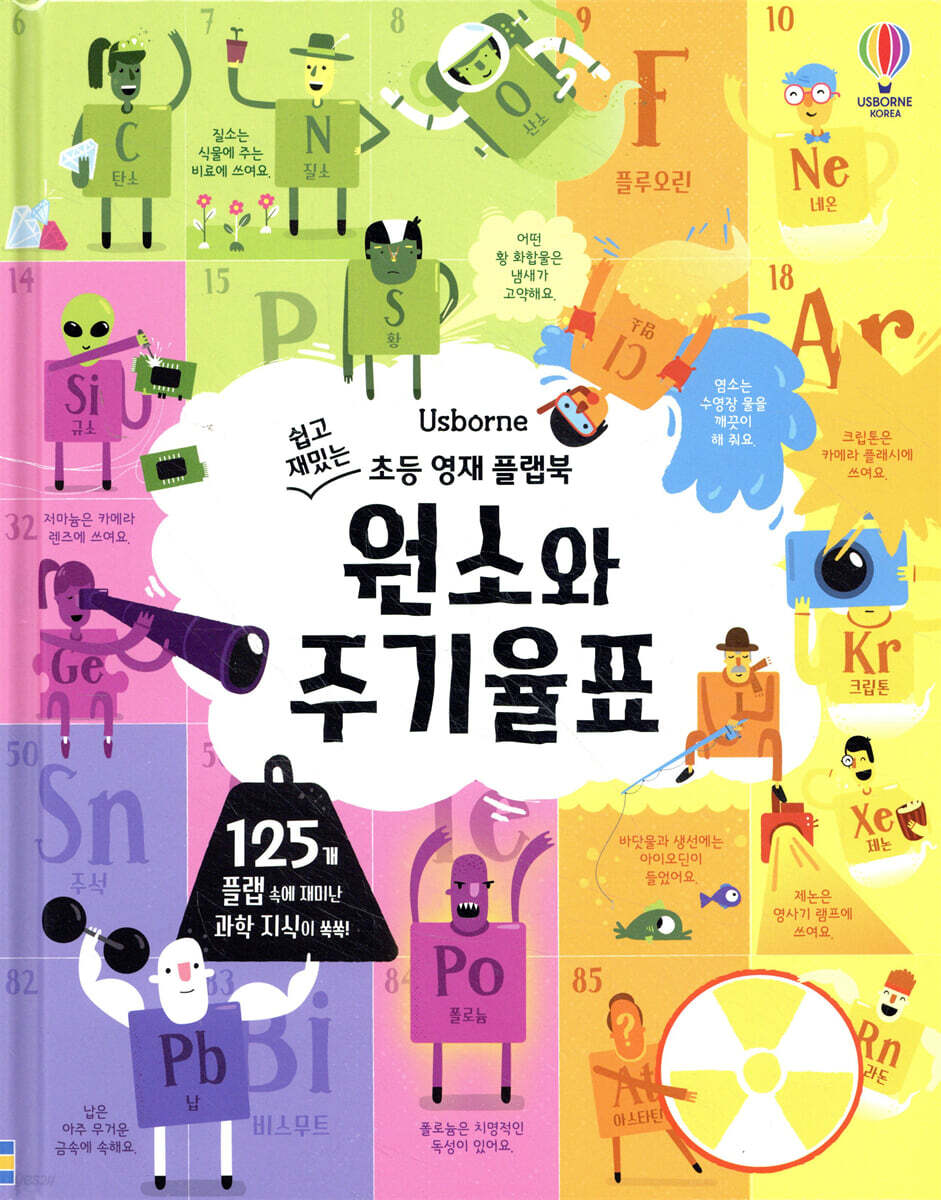
Open 125 flaps to learn the concept of elements. Scientific thinking and understanding of materials are growing! *Linked to elementary science curriculum 3-1 Our life and matter, 3-2 Liquids and gases, 4-1 Separation of mixtures, 6-1 Various gases The first step for even ordinary children to become smart and gifted, an easy and fun elementary gifted flap book! The "Easy and Fun Elementary Gifted Flap Book" series, which contains in-depth and interesting knowledge in each field essential for elementary school students, has been published. Each volume covers a variety of topics, from computers and coding related to elementary school learning to math, science, art, sports, and history. The flap within the flap that opens again when you open it stimulates curiosity, fosters concentration, and leads to deeper and deeper exploration. Say goodbye to difficult textbooks! From basic concepts to understanding principles, you'll gain deeper learning outcomes. |
- You can preview some of the book's contents.
Preview
index
What is the periodic table on page 1?
Composition of the 3-page periodic table
Elements that make a sound or explode on page 5
Page 7: Hard and shiny elements
Page 9 Non-shiny and soft elements
Page 11 Elements necessary for life
Page 13 Solid, Liquid, and Gaseous Elements
Page 14: The Lonely Element
Page 15 Danger! Radioactive Elements
Composition of the 3-page periodic table
Elements that make a sound or explode on page 5
Page 7: Hard and shiny elements
Page 9 Non-shiny and soft elements
Page 11 Elements necessary for life
Page 13 Solid, Liquid, and Gaseous Elements
Page 14: The Lonely Element
Page 15 Danger! Radioactive Elements
Detailed image

Publisher's Review
◆ What materials are the world around us made of?
Open 125 flaps to learn about different elements and the periodic table!
Let's open the flaps here and there and look at the concept of 'element', and learn about the meaning and composition of the 'periodic table' and the types of elements that make up the periodic table.
You can learn what an element is, what name and symbol an element is represented by, what an element is made of, and what properties it has.
You can take a quick look at the types of elements classified on the periodic table according to their different properties and easily learn the characteristics of each element.
You'll understand just how many different elements there are in the world, from those that make noise or explode when they come into contact with other elements, to those that don't react at all, to those that contain dangerous radioactivity.
You can check the characteristics of each element through the information contained on the outside and inside of the flap.
The knowledge on the outside of the flap and inside the flap are connected to help children think three-dimensionally, allowing them to comprehensively understand the concepts of all 118 elements.
◆ If you understand the concept of ‘element’ in your daily life,
‘Scientific thinking’ and ‘understanding’ of materials are improved!
What are elements? They are tiny substances found everywhere around us, in our bodies, in the air and water we breathe, in the objects we use, and even in nature.
The periodic table is a table that was organized by a scientist named Mendeleev based on the characteristics of the elements.
Later, scientists added new elements they discovered to the periodic table.
The periodic table has its own rules.
The further to the right in a horizontal row, the more protons an element contains, and the lower an element is in a vertical row, the heavier it is.
Each element has an unfamiliar foreign name and symbol, so it may feel stiff and difficult at first, but each has its own distinct personality, so it's fun to get to know them.
This book helps you learn about elements in a more familiar way by explaining the origins of each element's name, various properties, and uses.
For example, the element curium is named after the famous scientist Marie Curie, sapphire is blue because of the iron in it, and sodium turns to salt when combined with chlorine.
By opening the flaps and learning about the characteristics of each element, you will understand what materials the objects and nature around us are made of and effectively grasp related subject knowledge.
Furthermore, by observing how elements react and change differently depending on the situation, you can increase your curiosity about scientific phenomena and develop your thinking and exploratory skills.
◆ Friendly explanations and humorous illustrations that are perfect for elementary school students
Clear and in-depth explanations are perfect for elementary school students.
It provides kind and detailed explanations to children who have no basic understanding at all.
On the other hand, for children who already have a basic understanding or have a vague understanding, it solidifies their understanding of concepts and principles.
It also features interesting illustrations and compositions that will pique the interest of most children who have not yet encountered the elements in elementary school.
In the picture, each element is expressed in a different color depending on its type and in a different shape depending on the properties of the substance, such as solid, liquid, or gas, to help you easily understand the characteristics of the element.
Also, the scene where the elements talk to the children reading the book is made more interesting as it is composed of speech bubbles like a cartoon.
As you read along, you will understand the book more and more.
Open 125 flaps to learn about different elements and the periodic table!
Let's open the flaps here and there and look at the concept of 'element', and learn about the meaning and composition of the 'periodic table' and the types of elements that make up the periodic table.
You can learn what an element is, what name and symbol an element is represented by, what an element is made of, and what properties it has.
You can take a quick look at the types of elements classified on the periodic table according to their different properties and easily learn the characteristics of each element.
You'll understand just how many different elements there are in the world, from those that make noise or explode when they come into contact with other elements, to those that don't react at all, to those that contain dangerous radioactivity.
You can check the characteristics of each element through the information contained on the outside and inside of the flap.
The knowledge on the outside of the flap and inside the flap are connected to help children think three-dimensionally, allowing them to comprehensively understand the concepts of all 118 elements.
◆ If you understand the concept of ‘element’ in your daily life,
‘Scientific thinking’ and ‘understanding’ of materials are improved!
What are elements? They are tiny substances found everywhere around us, in our bodies, in the air and water we breathe, in the objects we use, and even in nature.
The periodic table is a table that was organized by a scientist named Mendeleev based on the characteristics of the elements.
Later, scientists added new elements they discovered to the periodic table.
The periodic table has its own rules.
The further to the right in a horizontal row, the more protons an element contains, and the lower an element is in a vertical row, the heavier it is.
Each element has an unfamiliar foreign name and symbol, so it may feel stiff and difficult at first, but each has its own distinct personality, so it's fun to get to know them.
This book helps you learn about elements in a more familiar way by explaining the origins of each element's name, various properties, and uses.
For example, the element curium is named after the famous scientist Marie Curie, sapphire is blue because of the iron in it, and sodium turns to salt when combined with chlorine.
By opening the flaps and learning about the characteristics of each element, you will understand what materials the objects and nature around us are made of and effectively grasp related subject knowledge.
Furthermore, by observing how elements react and change differently depending on the situation, you can increase your curiosity about scientific phenomena and develop your thinking and exploratory skills.
◆ Friendly explanations and humorous illustrations that are perfect for elementary school students
Clear and in-depth explanations are perfect for elementary school students.
It provides kind and detailed explanations to children who have no basic understanding at all.
On the other hand, for children who already have a basic understanding or have a vague understanding, it solidifies their understanding of concepts and principles.
It also features interesting illustrations and compositions that will pique the interest of most children who have not yet encountered the elements in elementary school.
In the picture, each element is expressed in a different color depending on its type and in a different shape depending on the properties of the substance, such as solid, liquid, or gas, to help you easily understand the characteristics of the element.
Also, the scene where the elements talk to the children reading the book is made more interesting as it is composed of speech bubbles like a cartoon.
As you read along, you will understand the book more and more.
GOODS SPECIFICS
- Date of issue: January 5, 2018
- Format: Hardcover book binding method guide
- Page count, weight, size: 16 pages | 731g | 223*282*15mm
- ISBN13: 9791186872932
- ISBN10: 1186872934
- KC Certification: Certification Type: Safety Confirmation Certification Number: CB061R5423-0004
You may also like
카테고리
korean


korean

![GQ KOREA Mark (Monthly): December [2025]](http://librairie.coreenne.fr/cdn/shop/files/8ef265dbbfbf186523ed75ba7319009d.jpg?v=1765340328&width=3840)


