

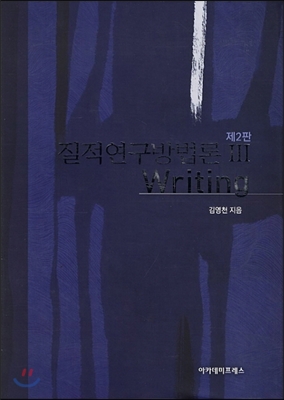
Qualitative Research Methodology 3
 |
Description
index
Part 1: Social Science and Qualitative Writing
Chapter 1.
Qualitative Writing as a Subject of Inquiry
1.
Recent Trends in Writing Research in Qualitative Research
2.
Problems with quantitative writing
3.
Exploring Writing Appropriate for Qualitative Research
4.
Post-genre writing
5.
Postmodern writing
6.
Conclusion
Chapter 2. APA Writing Style: Scientific Academic Writing
1. Structure of APA format and guidelines
2.
Thesis writing
3.
How to write effectively
4. APA Editing Format
5.
References
6.
Conclusion
Chapter 3.
Transboundary, Hybrid, and Postmodern Writing:
Qualitative Research Writing Workshop 1
Chapter 4.
Writing as a Sociologist: Advice from Howard Becker
1.
Guidelines for Beginning Writing
2.
Guidelines to refer to while writing
3.
Guidelines to refer to during the revision and editing stages
Chapter 5.
Academic and Personal Writing Methods Using Me: SPN
1.
The concept of academic and personal writing
2.
Ten Guidelines for Academic and Personal Writing
3.
An example of academic and personal writing: What Happened in the Elevator
Chapter 6.
Effective Strategies for Writing Your Experiences: St.
Martin's advice
1.
The three elements that make up memory
2.
Representative works that use effective memory expression strategies
Chapter 7.
How to Make Your Qualitative Writing Compelling: Advice from Four Scholars
1.
Elliott et al., "Guidelines for Writing Qualitative Papers in Psychology"
2.
How to Write a Qualitative Research Report as Creative Nonfiction
3.
Goodall's Guide to Narrative Writing
Part 2: Different Writing Methods
Chapter 8.
Reality, Media, and the Diversity of Representation: Qualitative Research Writing Workshop 2
Chapter 9.
Factual/Traditional Writing
1.
The concept and characteristics of factual writing
2.
A representative work of realistic writing
Chapter 10.
Field-based writing
1.
The concept and characteristics of field work writing
2.
Representative works of field-based writing
Chapter 11.
Phenomenological writing
1.
Strategies for Phenomenological Writing
2.
Representative works of phenomenological writing
Chapter 12.
autobiographical writing
1.
The concept and purpose of autobiographical writing
2.
The Effects of Autobiographical Ethnography
3.
Representative works expressed as autobiographical cultural descriptions in the field of qualitative research
Chapter 13.
poetic writing
1.
The concept and purpose of poetic writing
2.
The Effects of Poetic Writing
3.
Representative works of poetic writing
Chapter 14.
Novel writing
1.
The concept and purpose of novel writing
2.
The Effects of Novel Writing: The Diversity of Reactions and Interpretations
3.
Representative works expressed in the form of novels in the field of qualitative research
Chapter 15.
dramatic writing
1.
The concept and purpose of dramatic writing
2.
The Effects of Dramatic Writing
3.
Representative works of dramatic writing
Chapter 16.
Postmodern writing
1.
The concept of postmodern writing
2.
Representative works of postmodern writing
Part 3: Korean Experiences with Qualitative Writing
Chapter 17.
A Season in Hell: A Qualitative Researcher's Narrative
1.
Hwang In-sil's story
2.
A story of mobility
3.
Cha Heon-ju's story
4.
Kim Myung-ae's story
5.
Kim Ji-hye's story
6.
The story of Joo Soo-eon
Chapter 18.
My Writing World 1: Kim Young-cheon's Story of the Past 20 Years
1.
uninvited guest
2.
New rights as a full-time professor
3.
Quantitative paper critique in departmental thesis review
4.
Quantitative Research Dissertation Re-examination Process
5.
Encouraging qualitative researchers from other universities
6.
Invited lectures and workshops
7.
Conclusion
Chapter 19.
My Writing World 2: Kim Young-cheon's Writing Strategies
1.
Managing daily life
2.
psychological management
3.
Practical writing techniques
4.
Final work after finishing writing
Epilogue
Chapter 1.
Qualitative Writing as a Subject of Inquiry
1.
Recent Trends in Writing Research in Qualitative Research
2.
Problems with quantitative writing
3.
Exploring Writing Appropriate for Qualitative Research
4.
Post-genre writing
5.
Postmodern writing
6.
Conclusion
Chapter 2. APA Writing Style: Scientific Academic Writing
1. Structure of APA format and guidelines
2.
Thesis writing
3.
How to write effectively
4. APA Editing Format
5.
References
6.
Conclusion
Chapter 3.
Transboundary, Hybrid, and Postmodern Writing:
Qualitative Research Writing Workshop 1
Chapter 4.
Writing as a Sociologist: Advice from Howard Becker
1.
Guidelines for Beginning Writing
2.
Guidelines to refer to while writing
3.
Guidelines to refer to during the revision and editing stages
Chapter 5.
Academic and Personal Writing Methods Using Me: SPN
1.
The concept of academic and personal writing
2.
Ten Guidelines for Academic and Personal Writing
3.
An example of academic and personal writing: What Happened in the Elevator
Chapter 6.
Effective Strategies for Writing Your Experiences: St.
Martin's advice
1.
The three elements that make up memory
2.
Representative works that use effective memory expression strategies
Chapter 7.
How to Make Your Qualitative Writing Compelling: Advice from Four Scholars
1.
Elliott et al., "Guidelines for Writing Qualitative Papers in Psychology"
2.
How to Write a Qualitative Research Report as Creative Nonfiction
3.
Goodall's Guide to Narrative Writing
Part 2: Different Writing Methods
Chapter 8.
Reality, Media, and the Diversity of Representation: Qualitative Research Writing Workshop 2
Chapter 9.
Factual/Traditional Writing
1.
The concept and characteristics of factual writing
2.
A representative work of realistic writing
Chapter 10.
Field-based writing
1.
The concept and characteristics of field work writing
2.
Representative works of field-based writing
Chapter 11.
Phenomenological writing
1.
Strategies for Phenomenological Writing
2.
Representative works of phenomenological writing
Chapter 12.
autobiographical writing
1.
The concept and purpose of autobiographical writing
2.
The Effects of Autobiographical Ethnography
3.
Representative works expressed as autobiographical cultural descriptions in the field of qualitative research
Chapter 13.
poetic writing
1.
The concept and purpose of poetic writing
2.
The Effects of Poetic Writing
3.
Representative works of poetic writing
Chapter 14.
Novel writing
1.
The concept and purpose of novel writing
2.
The Effects of Novel Writing: The Diversity of Reactions and Interpretations
3.
Representative works expressed in the form of novels in the field of qualitative research
Chapter 15.
dramatic writing
1.
The concept and purpose of dramatic writing
2.
The Effects of Dramatic Writing
3.
Representative works of dramatic writing
Chapter 16.
Postmodern writing
1.
The concept of postmodern writing
2.
Representative works of postmodern writing
Part 3: Korean Experiences with Qualitative Writing
Chapter 17.
A Season in Hell: A Qualitative Researcher's Narrative
1.
Hwang In-sil's story
2.
A story of mobility
3.
Cha Heon-ju's story
4.
Kim Myung-ae's story
5.
Kim Ji-hye's story
6.
The story of Joo Soo-eon
Chapter 18.
My Writing World 1: Kim Young-cheon's Story of the Past 20 Years
1.
uninvited guest
2.
New rights as a full-time professor
3.
Quantitative paper critique in departmental thesis review
4.
Quantitative Research Dissertation Re-examination Process
5.
Encouraging qualitative researchers from other universities
6.
Invited lectures and workshops
7.
Conclusion
Chapter 19.
My Writing World 2: Kim Young-cheon's Writing Strategies
1.
Managing daily life
2.
psychological management
3.
Practical writing techniques
4.
Final work after finishing writing
Epilogue
GOODS SPECIFICS
- Date of publication: June 28, 2013
- Page count, weight, size: 748 pages | 188*254*40mm
- ISBN13: 9788997544325
- ISBN10: 8997544322
You may also like
카테고리
korean


korean

![GQ KOREA Mark (Monthly): December [2025]](http://librairie.coreenne.fr/cdn/shop/files/8ef265dbbfbf186523ed75ba7319009d.jpg?v=1765340328&width=3840)


