

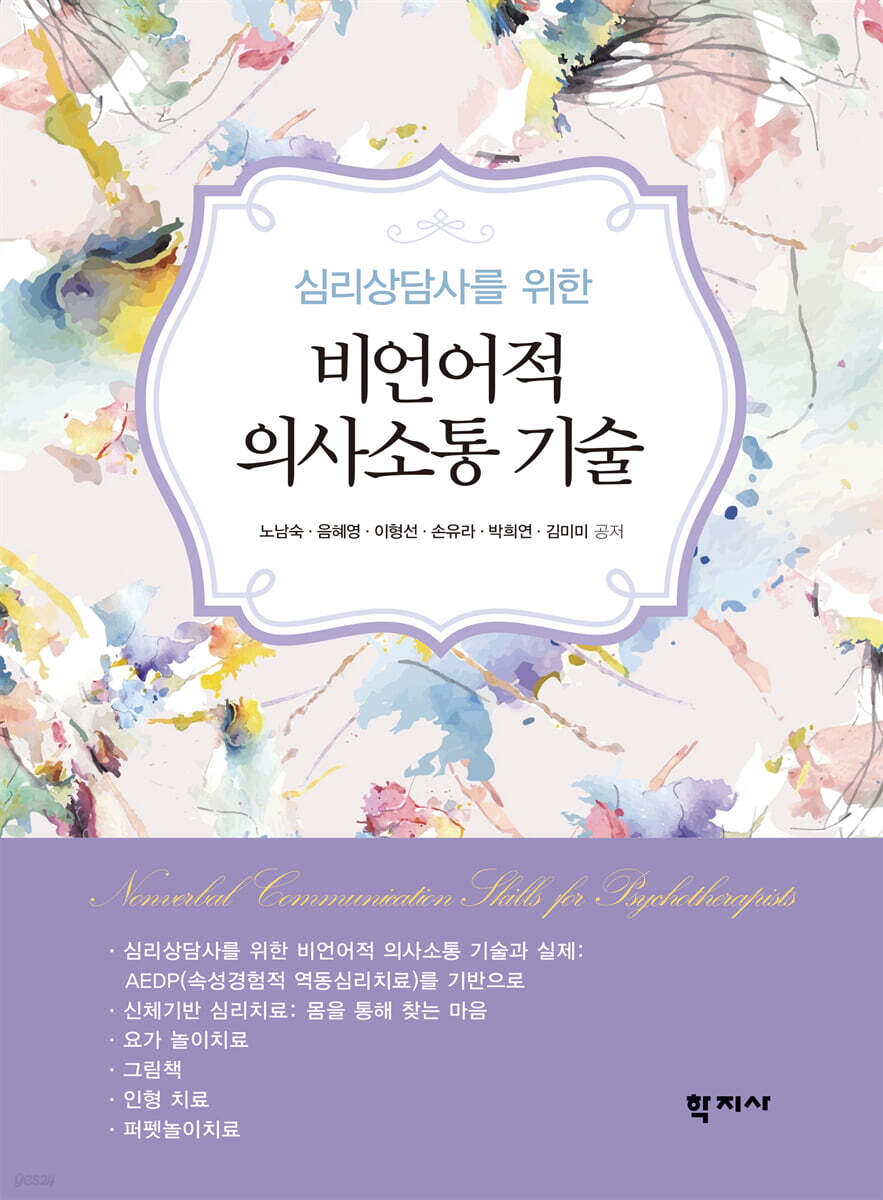
Nonverbal Communication Skills for Psychotherapists
 |
Description
Book Introduction
This book was written with the aim of broadly publicizing the importance of communication in human development, particularly nonverbal communication and practical approaches to effectively utilizing nonverbal communication techniques.
The co-authors of this book, doctoral students majoring in play therapy at Myongji University's Department of Psychological Rehabilitation, are currently play counseling experts who, while meeting a variety of clients in the field, felt a strong need for a textbook on nonverbal communication skills for communicating with clients and their parents.
However, while there have been basic books on communication, there has been no textbook on customized nonverbal communication skills for psychologists.
In particular, while I, the lead author, was preparing a course syllabus for a doctoral course called 'Nonverbal Communication Skills', I looked for related books, but there were no suitable textbooks dealing with nonverbal communication, so I had no choice but to utilize foreign materials and papers.
After teaching a class with doctoral students specializing in play therapy for one semester, we decided to integrate the basic course materials and student feedback to redefine the main themes related to nonverbal communication skills and co-author a main textbook that would organize the theory and practice sections.
However, despite the strong motivation to create this textbook, the burden on my mind increased as time was delayed due to various circumstances.
Even though I still have many shortcomings and feel like I want to keep avoiding them, I decided to write this book because, for psychological counselors, applying nonverbal communication skills is just as important as verbal communication skills.
Although it is embarrassing, I hope that through this book, psychological counselors who have been struggling due to the lack of basic or introductory books on nonverbal communication skills will grow together through practical application in clinical settings.
The co-authors of this book, doctoral students majoring in play therapy at Myongji University's Department of Psychological Rehabilitation, are currently play counseling experts who, while meeting a variety of clients in the field, felt a strong need for a textbook on nonverbal communication skills for communicating with clients and their parents.
However, while there have been basic books on communication, there has been no textbook on customized nonverbal communication skills for psychologists.
In particular, while I, the lead author, was preparing a course syllabus for a doctoral course called 'Nonverbal Communication Skills', I looked for related books, but there were no suitable textbooks dealing with nonverbal communication, so I had no choice but to utilize foreign materials and papers.
After teaching a class with doctoral students specializing in play therapy for one semester, we decided to integrate the basic course materials and student feedback to redefine the main themes related to nonverbal communication skills and co-author a main textbook that would organize the theory and practice sections.
However, despite the strong motivation to create this textbook, the burden on my mind increased as time was delayed due to various circumstances.
Even though I still have many shortcomings and feel like I want to keep avoiding them, I decided to write this book because, for psychological counselors, applying nonverbal communication skills is just as important as verbal communication skills.
Although it is embarrassing, I hope that through this book, psychological counselors who have been struggling due to the lack of basic or introductory books on nonverbal communication skills will grow together through practical application in clinical settings.
index
Recommendation
preface
Chapter 1 Nonverbal Communication Skills and Practice for Psychotherapists: Based on AEDP (Attributive Experiential Dynamic Psychotherapy)
1.
nonverbal communication
2.
Nonverbal Communication Skills for Psychotherapists
3.
Nonverbal communication skills in practice for psychotherapists: Based on AEDP (Attributive Experiential Dynamic Psychotherapy)
Let's summarize
Let's get active
References
Chapter 2: Body-Based Psychotherapy: Finding the Mind Through the Body
1.
Recent trends in psychotherapy
2.
Theoretical Background of Body-Based Therapy
3.
What is Soma
4.
Somatic education
5.
Somatic psychotherapy
6.
Trauma-Related Psychotherapy
7.
Mindfulness-based psychotherapy
Let's get active
References
Chapter 3 Yoga Play Therapy
1.
What is Yoga Therapy
2.
What is Yoga Play Therapy?
3.
Practicing Yoga Play Therapy as Nonverbal Communication
4.
Practical Applications of Yoga Play Therapy
Let's summarize
Let's get active
supplement
References
Chapter 4 Picture Books
1.
What is a picture book?
2.
Nonverbal components of picture books
3.
The psychological meaning and therapeutic effects of picture books
4.
Picture books that make you friendly with your brain
5.
How to Use Picture Books in Psychotherapy
6.
Practice of nonverbal communication skills using picture books
Let's summarize
Let's get active
supplement
References
Chapter 5: Doll Therapy
1.
doll therapy
2.
Theoretical Background of Doll Therapy
3.
Puppets as Nonverbal Communication
4.
Evaluation using dolls
5.
'Encountering' through dolls
Let's summarize
Let's get active
References
Chapter 6 Puppet Play Therapy
1.
Puppet play therapy
2.
Puppets as Nonverbal Communication
3.
Introduction to Puppet Evaluation
4.
Practical Applications of Puppet Play Therapy
5.
Meet me at Puppet
Let's summarize
Let's get active
References
Search
preface
Chapter 1 Nonverbal Communication Skills and Practice for Psychotherapists: Based on AEDP (Attributive Experiential Dynamic Psychotherapy)
1.
nonverbal communication
2.
Nonverbal Communication Skills for Psychotherapists
3.
Nonverbal communication skills in practice for psychotherapists: Based on AEDP (Attributive Experiential Dynamic Psychotherapy)
Let's summarize
Let's get active
References
Chapter 2: Body-Based Psychotherapy: Finding the Mind Through the Body
1.
Recent trends in psychotherapy
2.
Theoretical Background of Body-Based Therapy
3.
What is Soma
4.
Somatic education
5.
Somatic psychotherapy
6.
Trauma-Related Psychotherapy
7.
Mindfulness-based psychotherapy
Let's get active
References
Chapter 3 Yoga Play Therapy
1.
What is Yoga Therapy
2.
What is Yoga Play Therapy?
3.
Practicing Yoga Play Therapy as Nonverbal Communication
4.
Practical Applications of Yoga Play Therapy
Let's summarize
Let's get active
supplement
References
Chapter 4 Picture Books
1.
What is a picture book?
2.
Nonverbal components of picture books
3.
The psychological meaning and therapeutic effects of picture books
4.
Picture books that make you friendly with your brain
5.
How to Use Picture Books in Psychotherapy
6.
Practice of nonverbal communication skills using picture books
Let's summarize
Let's get active
supplement
References
Chapter 5: Doll Therapy
1.
doll therapy
2.
Theoretical Background of Doll Therapy
3.
Puppets as Nonverbal Communication
4.
Evaluation using dolls
5.
'Encountering' through dolls
Let's summarize
Let's get active
References
Chapter 6 Puppet Play Therapy
1.
Puppet play therapy
2.
Puppets as Nonverbal Communication
3.
Introduction to Puppet Evaluation
4.
Practical Applications of Puppet Play Therapy
5.
Meet me at Puppet
Let's summarize
Let's get active
References
Search
GOODS SPECIFICS
- Date of issue: September 20, 2025
- Format: Paperback book binding method guide
- Page count, weight, size: 328 pages | 173*235*15mm
- ISBN13: 9788999735295
You may also like
카테고리
korean


korean

![GQ KOREA Mark (Monthly): December [2025]](http://librairie.coreenne.fr/cdn/shop/files/8ef265dbbfbf186523ed75ba7319009d.jpg?v=1765340328&width=3840)


