

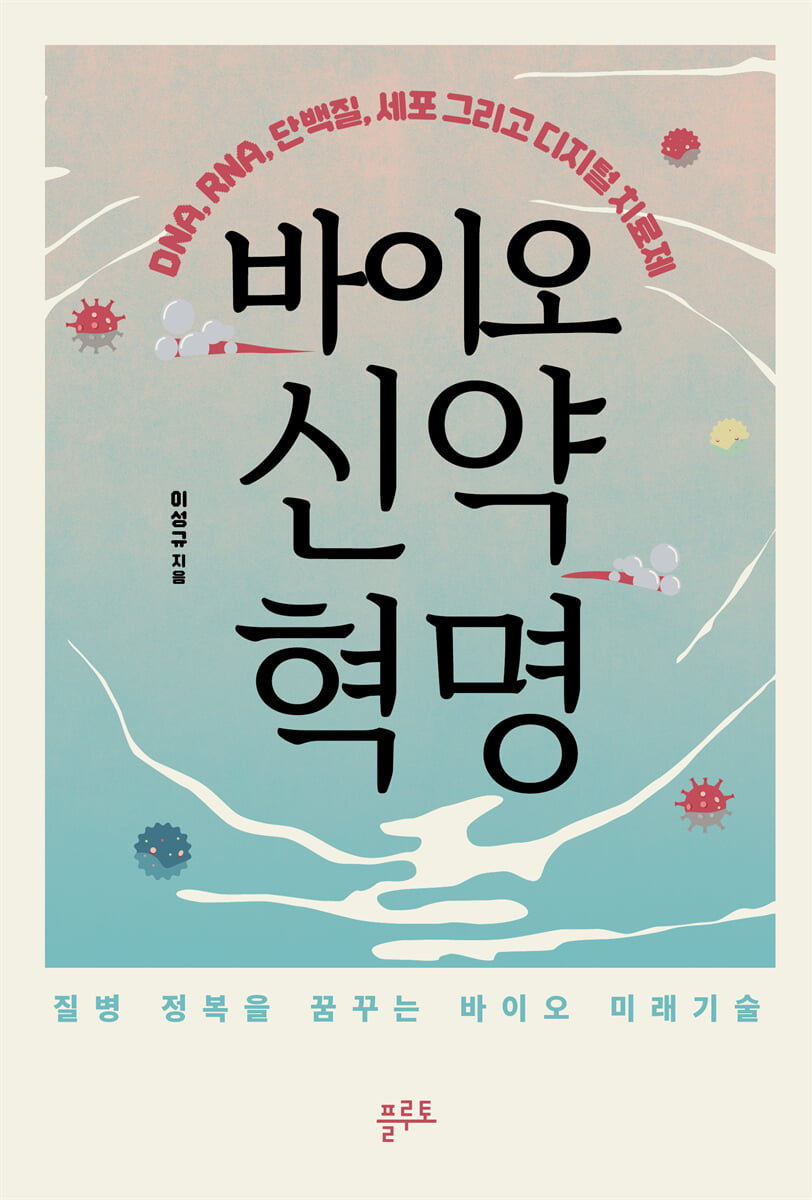
Biopharmaceutical Revolution
 |
Description
Book Introduction
Not only science and technology, but also biotechnology has advanced by leaps and bounds. The term "biotechnology," once a term reserved for science fiction novels and movies, is no longer a fantasy.
Biotechnology is still developing, and we don't know what amazing technologies will emerge in the future.
But despite these dazzling technological advancements, humanity still struggles with disease.
Cancer kills more people than any other cause, including traffic accidents, and AIDS remains incurable.
What about dementia?
Moreover, we have not even completely conquered colds or flu.
Especially during the COVID-19 pandemic, we have had to experience firsthand how terrifying a nightmare a virus attack can be.
Watching the process of developing vaccines and treatments in real time, I realized once again how difficult and arduous the process of developing new drugs is.
Even in this age where science and technology have advanced to the point where we can peer into another universe beyond our own galaxy, we still have yet to conquer a microcosm: the human body.
In the current situation where we are still fighting disease while dealing with DNA so small it is invisible to the naked eye, "Bio-Pharmaceutical Revolution" examines the core and limitations of biotechnology, as well as future technologies to overcome them, and explores the changes in the healthcare and medical fields that biotechnology innovation will bring.
The author, a science journalist, explained in an easy-to-understand manner the process of creating an original new drug and the process of selling and distributing the new drug in the bio market in his previous work, 『New Drug Development War』. In this book, 『Bio New Drug Revolution』, he introduces various fields of biopharmaceuticals, which are considered to be among the most innovative in the world of biotechnology, and predicts which biotechnology will be in the spotlight in the future.
"Bio-New Drug Revolution" will serve as a guide not only for those working in the bio industry, but also for those majoring in related fields preparing to start a bio company or find employment, those considering investing in the pharmaceutical and biotech fields, and readers curious about the present and future of new drug development and biopharmaceuticals.
Biotechnology is still developing, and we don't know what amazing technologies will emerge in the future.
But despite these dazzling technological advancements, humanity still struggles with disease.
Cancer kills more people than any other cause, including traffic accidents, and AIDS remains incurable.
What about dementia?
Moreover, we have not even completely conquered colds or flu.
Especially during the COVID-19 pandemic, we have had to experience firsthand how terrifying a nightmare a virus attack can be.
Watching the process of developing vaccines and treatments in real time, I realized once again how difficult and arduous the process of developing new drugs is.
Even in this age where science and technology have advanced to the point where we can peer into another universe beyond our own galaxy, we still have yet to conquer a microcosm: the human body.
In the current situation where we are still fighting disease while dealing with DNA so small it is invisible to the naked eye, "Bio-Pharmaceutical Revolution" examines the core and limitations of biotechnology, as well as future technologies to overcome them, and explores the changes in the healthcare and medical fields that biotechnology innovation will bring.
The author, a science journalist, explained in an easy-to-understand manner the process of creating an original new drug and the process of selling and distributing the new drug in the bio market in his previous work, 『New Drug Development War』. In this book, 『Bio New Drug Revolution』, he introduces various fields of biopharmaceuticals, which are considered to be among the most innovative in the world of biotechnology, and predicts which biotechnology will be in the spotlight in the future.
"Bio-New Drug Revolution" will serve as a guide not only for those working in the bio industry, but also for those majoring in related fields preparing to start a bio company or find employment, those considering investing in the pharmaceutical and biotech fields, and readers curious about the present and future of new drug development and biopharmaceuticals.
- You can preview some of the book's contents.
Preview
index
Entering
Chapter 1: Welcome to the World of Biotechnology
Central Theory, DNA and RNA
Why Angelina Jolie Had a Mastectomy
What is the chemical structure of DNA?
Gene therapy, in vivo and ex vivo
If you remove, add, or change a gene
Internal vs. External Treatment: Which is Your Choice?
What is the fate of the delivery man who caused the delivery accident?
If cancer cells are turned back into normal cells
New Drug Development vs. Image Packaging
Chapter 2: Will Biotechnology Become a Universal Solution?
If I could forget the sadness of breaking up with my lover
Clues to the culprit found in leftover kimchi
DNA methylation, diagnosing and treating cancer?
1 trillion won to 500,000 won
Can AI End Diagnostic Wandering?
The birth of a new name
Will the world's #1-selling diagnostic equipment find a home in Korea?
Chapter 3: Genes, Proteins, Cells… The Expanding Field of Biopharmaceuticals
Unstable RNA, stable DNA
RNA vaccines, conceived from RNA viruses
RNA interference to suppress gene expression
Antibody therapeutics, a powerhouse in the pharmaceutical market
Kill only one, special sniper antibody
Dementia Treatments and the Human Immune Response
Ambidextrous double antibody
Rendezvous of antibodies and cytotoxic drugs, ADC
Closer to the essence, fool the virus!
Our bodies are as diverse as human society.
Chapter 4: Attacking the Cell! Another Innovation in Biopharmaceuticals
Cells, the microcosm of our body
Brutus, you too?
Another innovation: cell therapy
Conquer Cancer, CAR-T
Induced pluripotent stem cells: cells that defy time
More accurate single-cell genetic analysis
Chapter 5: The Present and Future of Biotechnology
Bio gold mine, biomarker
If AI discovers candidate substances
Changes brought about by animal welfare
The identity of the honey part-timer
Professor B's lament
Vaccine Development and Moral Hazard
Lincoln 6 Echo Dream
A flower that bloomed through the bitter cold
The weight of the CEO
The dignity of oral presentations
How long will the medical school craze last?
If you publish a paper in Nature during your doctoral studies,
In conclusion
Chapter 1: Welcome to the World of Biotechnology
Central Theory, DNA and RNA
Why Angelina Jolie Had a Mastectomy
What is the chemical structure of DNA?
Gene therapy, in vivo and ex vivo
If you remove, add, or change a gene
Internal vs. External Treatment: Which is Your Choice?
What is the fate of the delivery man who caused the delivery accident?
If cancer cells are turned back into normal cells
New Drug Development vs. Image Packaging
Chapter 2: Will Biotechnology Become a Universal Solution?
If I could forget the sadness of breaking up with my lover
Clues to the culprit found in leftover kimchi
DNA methylation, diagnosing and treating cancer?
1 trillion won to 500,000 won
Can AI End Diagnostic Wandering?
The birth of a new name
Will the world's #1-selling diagnostic equipment find a home in Korea?
Chapter 3: Genes, Proteins, Cells… The Expanding Field of Biopharmaceuticals
Unstable RNA, stable DNA
RNA vaccines, conceived from RNA viruses
RNA interference to suppress gene expression
Antibody therapeutics, a powerhouse in the pharmaceutical market
Kill only one, special sniper antibody
Dementia Treatments and the Human Immune Response
Ambidextrous double antibody
Rendezvous of antibodies and cytotoxic drugs, ADC
Closer to the essence, fool the virus!
Our bodies are as diverse as human society.
Chapter 4: Attacking the Cell! Another Innovation in Biopharmaceuticals
Cells, the microcosm of our body
Brutus, you too?
Another innovation: cell therapy
Conquer Cancer, CAR-T
Induced pluripotent stem cells: cells that defy time
More accurate single-cell genetic analysis
Chapter 5: The Present and Future of Biotechnology
Bio gold mine, biomarker
If AI discovers candidate substances
Changes brought about by animal welfare
The identity of the honey part-timer
Professor B's lament
Vaccine Development and Moral Hazard
Lincoln 6 Echo Dream
A flower that bloomed through the bitter cold
The weight of the CEO
The dignity of oral presentations
How long will the medical school craze last?
If you publish a paper in Nature during your doctoral studies,
In conclusion
Detailed image

Into the book
All living things on Earth contain their genetic information in DNA.
In other words, DNA can be said to be a kind of map containing genetic information.
Living things express their genes based on DNA.
Expressing a gene means making a protein.
Because proteins are the workers that actually do the work to sustain life.
Cells, the basic unit of life, have many tasks to perform in order to survive, such as constantly communicating with surrounding cells and generating energy.
The worker needed for this kind of work is protein.
Therefore, it is difficult for living organisms to maintain life if they cannot produce proteins.
Proteins are not made directly from DNA, but go through an intermediate step called RNA.
In other words, the central theory is that living things start from DNA, then go through RNA, and then create proteins.
--- p.18
Here's how the CRISPR gene scissors work:
First, the guide RNA binds to the target gene. Because DNA and DNA, and DNA and RNA, bind complementarily, knowing the base sequence of the target gene allows the creation of a guide RNA that binds to that gene.
Then, the Cas9 protein, which acts as scissors, cuts the target gene.
When DNA is cut like this, DNA repair mechanisms within the cell kick in. DNA repair is the process of reattaching the cut DNA, but if the cut is left intact, there is no therapeutic effect.
This is where the magic of DNA repair comes into play. When DNA repair mechanisms work, the body's system attaches a few extra bases to the cut site, creating a protruding structure.
This is because it sticks better when it is in a protruding shape rather than being cut straight and flat.
However, because a few additional bases were added, the base sequence of the gene is different from before it was cut.
If the base sequence changes, the gene cannot perform its original function.
In other words, the function of the targeted gene can be turned off.
This is useful for removing or eliminating the function of a gene that causes a disease.
This type of gene editing method is called NHEJ.
--- p.33~34
Changing the characteristics or fate of a cell, such as changing a cancer cell into a normal cell, is called reprogramming.
This means resetting the characteristics of cells that have already been programmed.
In 2012, Professor Shinya Yamanaka of Kyoto University in Japan was awarded the Nobel Prize in Physiology or Medicine for his discovery of the principles of induced pluripotent stem cells.
Induced pluripotent stem cells are stem cells that have been created by reverting adult somatic cells, such as skin cells, to a state similar to embryonic stem cells.
Like embryonic stem cells, they can differentiate into all cells in the human body, and are derived from normal cells such as skin cells that have been induced to become stem cells.
Because cells differentiate from stem cells into normal cells, the induced pluripotent stem cell technology established by Yamanaka is also called dedifferentiation technology.
This is because it was differentiated in the opposite direction from normal cell differentiation.
In this way, reprogramming is a representative example of reverting normal cells to induced pluripotent stem cells, which are in a stem cell state. By resetting the characteristics and fate of normal cells, they can be transformed into stem cell states with completely different characteristics.
--- p.49~50
For genetic analysis companies, neoantigen cancer vaccines could be an attractive field because they can create new businesses beyond the saturated genetic analysis field.
Moreover, if a new antigen cancer vaccine is developed, the existing genetic analysis company can be transformed into a new drug development company.
Perhaps that is why Korean genetic analysis companies are rushing to develop new antigen cancer vaccines.
Most companies will have a pure intention to develop a new antigen vaccine based on their solid capabilities, but some will try to ride the wave and enhance their image or boost their stock price.
I believe time will reveal who is real and who is fake.
--- p.56
PCR technology is fundamentally a tool for amplifying DNA, making it a valuable tool for virtually all biomedical experiments. Experiments involving DNA are impossible without PCR amplification.
In this way, PCR is widely used in both basic research and real life.
During the COVID-19 pandemic, everyone has probably taken a PCR test at least once.
At this time, the PCR test developed by Mullis is used.
What the COVID-19 PCR test is trying to amplify is the DNA of the COVID-19 virus.
The COVID-19 virus is an RNA virus, meaning it uses RNA instead of DNA.
Most viruses that affect humans, including COVID-19, the flu virus, and the AIDS virus, are RNA viruses.
However, PCR technology is a technology that amplifies DNA, not RNA.
Therefore, it is necessary to convert the RNA of the COVID-19 virus into DNA.
--- p.68
DNA methylation as a biomarker for cancer diagnosis has the advantage of being detectable even with very small amounts of DNA. This is because PCR can amplify only the DNA in the target biomarker region.
For any cancer, the better the biomarker, the higher the accuracy and the earlier the diagnosis can be made.
Therefore, whether there is a biomarker that exists only selectively in the target cancer or whether there is a DNA biomarker that exists from the early stage of cancer development becomes an important measure of a company's competitiveness.
--- p.73
The American biotechnology company Moderna is believed to be a compound word of mode+rna or modern+rna.
As the name suggests, the company focuses on RNA research.
The company has been researching vaccines using RNA for 20 years since its founding, but has never achieved success.
Then, in late 2019, the COVID-19 pandemic began, and in May 2020, the following year, the Trump administration authorized Operation Warp Speed, fully supporting the development of a domestic COVID-19 vaccine.
As a result, in December of the same year, the U.S. FDA approved Pfizer-BioNTech's COVID-19 vaccine and Moderna's COVID-19 vaccine in succession.
This achievement was made in just eight months after the vaccine was developed, making it the shortest period in the history of vaccine development worldwide.
Before that, the fastest was the Ebola vaccine, and even that took five years.
--- p.95
The new innovative treatments that emerged after biopharmaceuticals are cell therapy and gene therapy.
As previously explained, gene therapy treats specific genetic diseases.
Meanwhile, cell therapy is a medicine that uses cells themselves as a therapeutic agent.
Our body contains countless cells, and among them, immune cells attack cells infected with bacteria or viruses, or cancer cells that have transformed from normal cells into abnormal cells.
Immunotherapy, one of the major cell therapy treatments, utilizes immune cells.
Among immune cells, the representative sniper cell is the killer T cell, and one of the main interests of scientists is to kill cancer cells by increasing the killing ability of T cells.
--- p.143
Stem cells are an attractive therapeutic tool because they can create normal cells to replace damaged ones.
In order to use stem cells themselves as a therapeutic agent, stem cells must be collected from the patient's body and increased in quantity to a level that can be used for treatment.
However, it is said that when stem cells are taken out of the body, the differentiation ability of the stem cells is significantly reduced due to differences from the original body environment.
This is because cells perform their functions while constantly communicating with the microenvironment surrounding them, including surrounding cells.
In this respect, creating an environment similar to the body is emerging as a new issue in the development of cell therapy.
--- p.154
Current disease treatments have advanced from small molecule compounds to cells.
While biopharmaceuticals such as small molecule compounds and antibodies are microscopic treatment approaches, methods utilizing cells, tissues, and organs are macroscopic treatment approaches.
A macroscopic approach is possible only when it is based on a microscopic approach, but it is questionable whether humanity can fully uncover the principles of life phenomena through a microscopic approach.
Even if we don't know the principles of life phenomena, we expect that if we replace the problematic cells, tissues, or organs with new ones, the replaced cells, tissues, or organs will automatically solve the problem.
The emergence of cell therapy at this point represents a shift from a microscopic to a macroscopic approach to treatment.
The pace of change may be slow, but in the long term, the paradigm of disease treatment will shift to macro-level treatment.
--- p.183
So how can we cultivate physician-scientists? There are many solutions, but I believe the most realistic and fastest way is for biotech companies founded by physician-scientists to achieve great success.
If a medical student graduates from medical school, pursues the path of a physician-scientist, and starts a company, and that company thrives, develops a new drug within 10 years, and is listed on KOSDAQ, the physician-scientist founder will amass enormous wealth.
In other words, DNA can be said to be a kind of map containing genetic information.
Living things express their genes based on DNA.
Expressing a gene means making a protein.
Because proteins are the workers that actually do the work to sustain life.
Cells, the basic unit of life, have many tasks to perform in order to survive, such as constantly communicating with surrounding cells and generating energy.
The worker needed for this kind of work is protein.
Therefore, it is difficult for living organisms to maintain life if they cannot produce proteins.
Proteins are not made directly from DNA, but go through an intermediate step called RNA.
In other words, the central theory is that living things start from DNA, then go through RNA, and then create proteins.
--- p.18
Here's how the CRISPR gene scissors work:
First, the guide RNA binds to the target gene. Because DNA and DNA, and DNA and RNA, bind complementarily, knowing the base sequence of the target gene allows the creation of a guide RNA that binds to that gene.
Then, the Cas9 protein, which acts as scissors, cuts the target gene.
When DNA is cut like this, DNA repair mechanisms within the cell kick in. DNA repair is the process of reattaching the cut DNA, but if the cut is left intact, there is no therapeutic effect.
This is where the magic of DNA repair comes into play. When DNA repair mechanisms work, the body's system attaches a few extra bases to the cut site, creating a protruding structure.
This is because it sticks better when it is in a protruding shape rather than being cut straight and flat.
However, because a few additional bases were added, the base sequence of the gene is different from before it was cut.
If the base sequence changes, the gene cannot perform its original function.
In other words, the function of the targeted gene can be turned off.
This is useful for removing or eliminating the function of a gene that causes a disease.
This type of gene editing method is called NHEJ.
--- p.33~34
Changing the characteristics or fate of a cell, such as changing a cancer cell into a normal cell, is called reprogramming.
This means resetting the characteristics of cells that have already been programmed.
In 2012, Professor Shinya Yamanaka of Kyoto University in Japan was awarded the Nobel Prize in Physiology or Medicine for his discovery of the principles of induced pluripotent stem cells.
Induced pluripotent stem cells are stem cells that have been created by reverting adult somatic cells, such as skin cells, to a state similar to embryonic stem cells.
Like embryonic stem cells, they can differentiate into all cells in the human body, and are derived from normal cells such as skin cells that have been induced to become stem cells.
Because cells differentiate from stem cells into normal cells, the induced pluripotent stem cell technology established by Yamanaka is also called dedifferentiation technology.
This is because it was differentiated in the opposite direction from normal cell differentiation.
In this way, reprogramming is a representative example of reverting normal cells to induced pluripotent stem cells, which are in a stem cell state. By resetting the characteristics and fate of normal cells, they can be transformed into stem cell states with completely different characteristics.
--- p.49~50
For genetic analysis companies, neoantigen cancer vaccines could be an attractive field because they can create new businesses beyond the saturated genetic analysis field.
Moreover, if a new antigen cancer vaccine is developed, the existing genetic analysis company can be transformed into a new drug development company.
Perhaps that is why Korean genetic analysis companies are rushing to develop new antigen cancer vaccines.
Most companies will have a pure intention to develop a new antigen vaccine based on their solid capabilities, but some will try to ride the wave and enhance their image or boost their stock price.
I believe time will reveal who is real and who is fake.
--- p.56
PCR technology is fundamentally a tool for amplifying DNA, making it a valuable tool for virtually all biomedical experiments. Experiments involving DNA are impossible without PCR amplification.
In this way, PCR is widely used in both basic research and real life.
During the COVID-19 pandemic, everyone has probably taken a PCR test at least once.
At this time, the PCR test developed by Mullis is used.
What the COVID-19 PCR test is trying to amplify is the DNA of the COVID-19 virus.
The COVID-19 virus is an RNA virus, meaning it uses RNA instead of DNA.
Most viruses that affect humans, including COVID-19, the flu virus, and the AIDS virus, are RNA viruses.
However, PCR technology is a technology that amplifies DNA, not RNA.
Therefore, it is necessary to convert the RNA of the COVID-19 virus into DNA.
--- p.68
DNA methylation as a biomarker for cancer diagnosis has the advantage of being detectable even with very small amounts of DNA. This is because PCR can amplify only the DNA in the target biomarker region.
For any cancer, the better the biomarker, the higher the accuracy and the earlier the diagnosis can be made.
Therefore, whether there is a biomarker that exists only selectively in the target cancer or whether there is a DNA biomarker that exists from the early stage of cancer development becomes an important measure of a company's competitiveness.
--- p.73
The American biotechnology company Moderna is believed to be a compound word of mode+rna or modern+rna.
As the name suggests, the company focuses on RNA research.
The company has been researching vaccines using RNA for 20 years since its founding, but has never achieved success.
Then, in late 2019, the COVID-19 pandemic began, and in May 2020, the following year, the Trump administration authorized Operation Warp Speed, fully supporting the development of a domestic COVID-19 vaccine.
As a result, in December of the same year, the U.S. FDA approved Pfizer-BioNTech's COVID-19 vaccine and Moderna's COVID-19 vaccine in succession.
This achievement was made in just eight months after the vaccine was developed, making it the shortest period in the history of vaccine development worldwide.
Before that, the fastest was the Ebola vaccine, and even that took five years.
--- p.95
The new innovative treatments that emerged after biopharmaceuticals are cell therapy and gene therapy.
As previously explained, gene therapy treats specific genetic diseases.
Meanwhile, cell therapy is a medicine that uses cells themselves as a therapeutic agent.
Our body contains countless cells, and among them, immune cells attack cells infected with bacteria or viruses, or cancer cells that have transformed from normal cells into abnormal cells.
Immunotherapy, one of the major cell therapy treatments, utilizes immune cells.
Among immune cells, the representative sniper cell is the killer T cell, and one of the main interests of scientists is to kill cancer cells by increasing the killing ability of T cells.
--- p.143
Stem cells are an attractive therapeutic tool because they can create normal cells to replace damaged ones.
In order to use stem cells themselves as a therapeutic agent, stem cells must be collected from the patient's body and increased in quantity to a level that can be used for treatment.
However, it is said that when stem cells are taken out of the body, the differentiation ability of the stem cells is significantly reduced due to differences from the original body environment.
This is because cells perform their functions while constantly communicating with the microenvironment surrounding them, including surrounding cells.
In this respect, creating an environment similar to the body is emerging as a new issue in the development of cell therapy.
--- p.154
Current disease treatments have advanced from small molecule compounds to cells.
While biopharmaceuticals such as small molecule compounds and antibodies are microscopic treatment approaches, methods utilizing cells, tissues, and organs are macroscopic treatment approaches.
A macroscopic approach is possible only when it is based on a microscopic approach, but it is questionable whether humanity can fully uncover the principles of life phenomena through a microscopic approach.
Even if we don't know the principles of life phenomena, we expect that if we replace the problematic cells, tissues, or organs with new ones, the replaced cells, tissues, or organs will automatically solve the problem.
The emergence of cell therapy at this point represents a shift from a microscopic to a macroscopic approach to treatment.
The pace of change may be slow, but in the long term, the paradigm of disease treatment will shift to macro-level treatment.
--- p.183
So how can we cultivate physician-scientists? There are many solutions, but I believe the most realistic and fastest way is for biotech companies founded by physician-scientists to achieve great success.
If a medical student graduates from medical school, pursues the path of a physician-scientist, and starts a company, and that company thrives, develops a new drug within 10 years, and is listed on KOSDAQ, the physician-scientist founder will amass enormous wealth.
--- p.198
Publisher's Review
Will biotechnology free humanity from disease?
Not only science and technology, but also biotechnology has advanced by leaps and bounds. The term "biotechnology," once a term reserved for science fiction novels and movies, is no longer a fantasy.
Biotechnology is still developing, and we don't know what amazing technologies will emerge in the future.
But despite these dazzling technological advancements, humanity still struggles with disease.
Cancer kills more people than any other cause, including traffic accidents, and AIDS remains incurable.
What about dementia?
Moreover, we have not even completely conquered colds or flu.
Especially during the COVID-19 pandemic, we have had to experience firsthand how terrifying a nightmare a virus attack can be.
Watching the process of developing vaccines and treatments in real time, I realized once again how difficult and arduous the process of developing new drugs is.
Even in this age where science and technology have advanced to the point where we can peer into another universe beyond our own galaxy, we still have yet to conquer a microcosm: the human body.
In the current situation where we are still fighting disease while dealing with DNA so small it is invisible to the naked eye, "Bio-Pharmaceutical Revolution" examines the core and limitations of biotechnology, as well as future technologies to overcome them, and explores the changes in the healthcare and medical fields that biotechnology innovation will bring.
The World of Biopharmaceuticals Explained by a Science Journalist
The author, who majored in biotechnology and works as a science journalist, explained in an easy-to-understand manner the process of creating an original new drug and the process of selling and distributing the new drug in the bio market in his previous work, “The New Drug Development War.” In this book, “The Biopharmaceutical Revolution,” he introduces various fields of biopharmaceuticals, which are considered to be among the most innovative in the world of biotechnology, and predicts which biotechnology will be in the spotlight in the future.
In "Bio-Pharmaceutical Revolution," the author draws on his experience as a science journalist to explain and organize important concepts, principles, and terminology, from biopharmaceutical development to diagnostic technology principles, in a way that anyone can easily understand.
In addition to biotechnology-related knowledge such as biopharmaceutical technology and development status, it also covers a wide range of social issues, including the medical school craze and non-face-to-face treatment, so you can also learn about trends related to biopharmaceutical development.
This book consists of five chapters.
Chapter 1: Welcome to the World of Biotechnology examines the fundamentals of the bio field.
We will look at DNA and RNA, the most fundamental concepts in the field of biology, and introduce the central dogma, the fundamental theory of biology.
In particular, we will look at how gene therapy, a type of biopharmaceutical based on genes, can be used to treat cancer.
Chapter 2, “Biotechnology: Will it Become a Universal Solution?” introduces biotechnology currently in use.
We'll also explain examples of how biotechnology is used in movies and real-life situations, and explore how artificial intelligence can be used to develop new biopharmaceuticals and dramatically advance diagnostic technologies.
Chapter 3: Genes, Proteins, Cells… The Expanding Field of Biopharmaceuticals examines the diverse fields of biopharmaceuticals.
Biopharmaceutical technology is advancing by the day, expanding its scope to encompass gene-based therapies, treatments based on the human immune response, protein-based therapies, and more recently, cell-based therapies. We explain the principles and functions of various biopharmaceuticals, including RNA interference, antibody therapeutics, and bispecific antibodies, and explore emerging technologies.
Chapter 4: Attacking Cells! Another Innovation in Biopharmaceuticals introduces cell-based medicines and treatments, which have been actively researched and developed recently.
In particular, we introduce CAR-T, which is receiving great expectations as a cancer treatment.
We also look at induced pluripotent stem cells, which are at the center of research not only in cancer treatment but also in reversing aging.
Chapter 5, Present and Future of Biotechnology, examines the present and future of the bio field.
We explore social issues related to biotechnology in Korea, from the use of artificial intelligence in new drug development, to issues with clinical trials due to animal welfare, to the bias in talent due to the medical school boom.
《Bio-Pharmaceutical Revolution》 will help both those interested in biotechnology and general readers understand the overall trends and future direction of biotechnology.
Will biotechnology fulfill humanity's long-held dream?
The biotechnology covered in “Bio-Pharmaceutical Revolution” demonstrates universal yet cutting-edge trends.
This will be of great help not only to those interested in the current status of new drug development or the establishment of biotechnology companies, but also to the general public interested in biotechnology new drugs, in examining the trends and prospects of the biotechnology industry.
The author, who has worked as a science journalist for many years, draws on his extensive experience and knowledge to provide a sobering look at the current state and challenges of biotechnology and biopharmaceuticals.
We look forward to a continuous and unceasing challenge that will not stop until we achieve humanity's long-cherished dream of immortality.
Not only science and technology, but also biotechnology has advanced by leaps and bounds. The term "biotechnology," once a term reserved for science fiction novels and movies, is no longer a fantasy.
Biotechnology is still developing, and we don't know what amazing technologies will emerge in the future.
But despite these dazzling technological advancements, humanity still struggles with disease.
Cancer kills more people than any other cause, including traffic accidents, and AIDS remains incurable.
What about dementia?
Moreover, we have not even completely conquered colds or flu.
Especially during the COVID-19 pandemic, we have had to experience firsthand how terrifying a nightmare a virus attack can be.
Watching the process of developing vaccines and treatments in real time, I realized once again how difficult and arduous the process of developing new drugs is.
Even in this age where science and technology have advanced to the point where we can peer into another universe beyond our own galaxy, we still have yet to conquer a microcosm: the human body.
In the current situation where we are still fighting disease while dealing with DNA so small it is invisible to the naked eye, "Bio-Pharmaceutical Revolution" examines the core and limitations of biotechnology, as well as future technologies to overcome them, and explores the changes in the healthcare and medical fields that biotechnology innovation will bring.
The World of Biopharmaceuticals Explained by a Science Journalist
The author, who majored in biotechnology and works as a science journalist, explained in an easy-to-understand manner the process of creating an original new drug and the process of selling and distributing the new drug in the bio market in his previous work, “The New Drug Development War.” In this book, “The Biopharmaceutical Revolution,” he introduces various fields of biopharmaceuticals, which are considered to be among the most innovative in the world of biotechnology, and predicts which biotechnology will be in the spotlight in the future.
In "Bio-Pharmaceutical Revolution," the author draws on his experience as a science journalist to explain and organize important concepts, principles, and terminology, from biopharmaceutical development to diagnostic technology principles, in a way that anyone can easily understand.
In addition to biotechnology-related knowledge such as biopharmaceutical technology and development status, it also covers a wide range of social issues, including the medical school craze and non-face-to-face treatment, so you can also learn about trends related to biopharmaceutical development.
This book consists of five chapters.
Chapter 1: Welcome to the World of Biotechnology examines the fundamentals of the bio field.
We will look at DNA and RNA, the most fundamental concepts in the field of biology, and introduce the central dogma, the fundamental theory of biology.
In particular, we will look at how gene therapy, a type of biopharmaceutical based on genes, can be used to treat cancer.
Chapter 2, “Biotechnology: Will it Become a Universal Solution?” introduces biotechnology currently in use.
We'll also explain examples of how biotechnology is used in movies and real-life situations, and explore how artificial intelligence can be used to develop new biopharmaceuticals and dramatically advance diagnostic technologies.
Chapter 3: Genes, Proteins, Cells… The Expanding Field of Biopharmaceuticals examines the diverse fields of biopharmaceuticals.
Biopharmaceutical technology is advancing by the day, expanding its scope to encompass gene-based therapies, treatments based on the human immune response, protein-based therapies, and more recently, cell-based therapies. We explain the principles and functions of various biopharmaceuticals, including RNA interference, antibody therapeutics, and bispecific antibodies, and explore emerging technologies.
Chapter 4: Attacking Cells! Another Innovation in Biopharmaceuticals introduces cell-based medicines and treatments, which have been actively researched and developed recently.
In particular, we introduce CAR-T, which is receiving great expectations as a cancer treatment.
We also look at induced pluripotent stem cells, which are at the center of research not only in cancer treatment but also in reversing aging.
Chapter 5, Present and Future of Biotechnology, examines the present and future of the bio field.
We explore social issues related to biotechnology in Korea, from the use of artificial intelligence in new drug development, to issues with clinical trials due to animal welfare, to the bias in talent due to the medical school boom.
《Bio-Pharmaceutical Revolution》 will help both those interested in biotechnology and general readers understand the overall trends and future direction of biotechnology.
Will biotechnology fulfill humanity's long-held dream?
The biotechnology covered in “Bio-Pharmaceutical Revolution” demonstrates universal yet cutting-edge trends.
This will be of great help not only to those interested in the current status of new drug development or the establishment of biotechnology companies, but also to the general public interested in biotechnology new drugs, in examining the trends and prospects of the biotechnology industry.
The author, who has worked as a science journalist for many years, draws on his extensive experience and knowledge to provide a sobering look at the current state and challenges of biotechnology and biopharmaceuticals.
We look forward to a continuous and unceasing challenge that will not stop until we achieve humanity's long-cherished dream of immortality.
GOODS SPECIFICS
- Date of issue: December 12, 2023
- Page count, weight, size: 204 pages | 316g | 147*217*12mm
- ISBN13: 9791188569557
You may also like
카테고리
korean


korean

![GQ KOREA Mark (Monthly): December [2025]](http://librairie.coreenne.fr/cdn/shop/files/8ef265dbbfbf186523ed75ba7319009d.jpg?v=1765340328&width=3840)


