

Atom Express
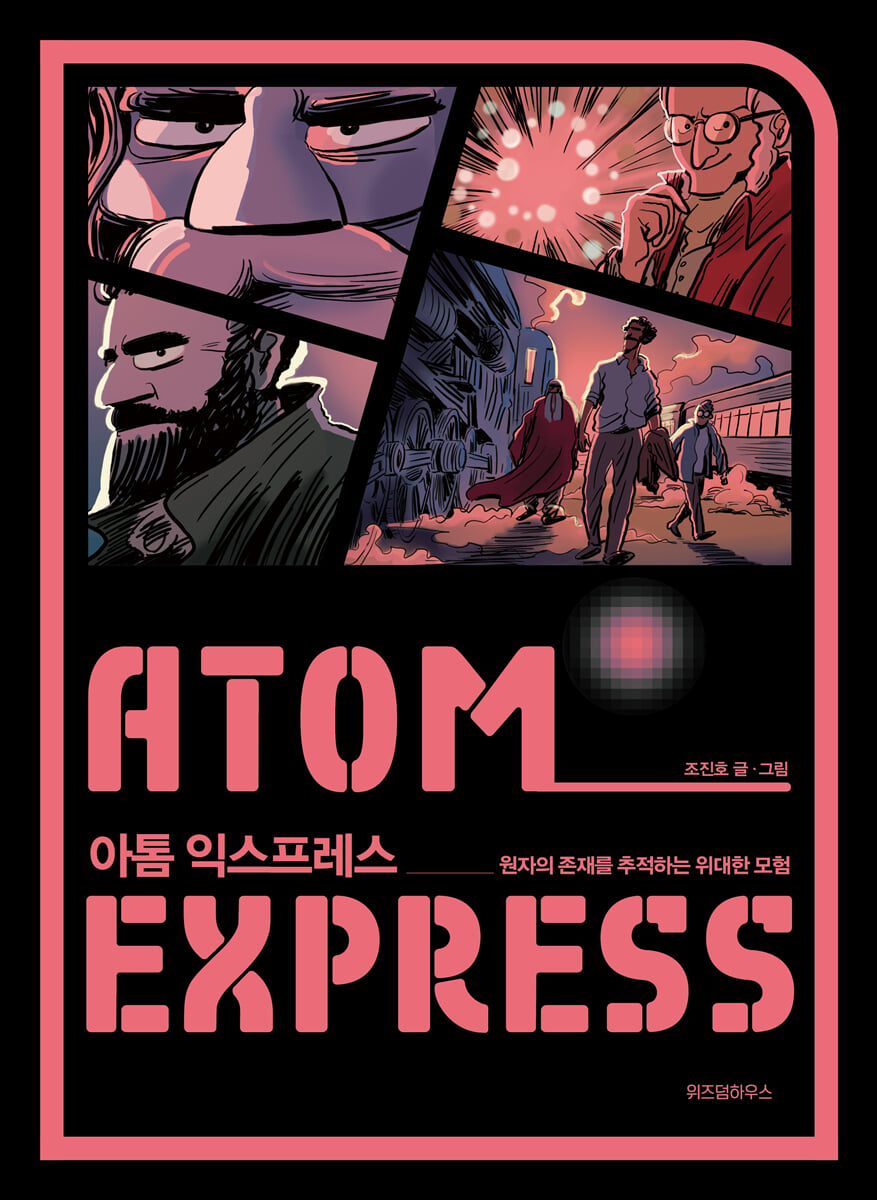 |
Description
Book Introduction
The essence of modern science, the atom.
The great adventure of tracing the existence of atoms has begun.
What is an atom? The only science comic book that answers this question! Supervised and highly recommended by physicist Dr. Kim Sang-wook, author of "All-Round, All-Round."
For all readers curious about atoms, Korea's one and only science cartoonist Jin-ho Jo, who made gravity and genes easy to understand with "Gravity Express" and "Genome Express," presents a new work about atoms, "Atom Express."
The great adventure of tracing the existence of atoms has begun.
What is an atom? The only science comic book that answers this question! Supervised and highly recommended by physicist Dr. Kim Sang-wook, author of "All-Round, All-Round."
For all readers curious about atoms, Korea's one and only science cartoonist Jin-ho Jo, who made gravity and genes easy to understand with "Gravity Express" and "Genome Express," presents a new work about atoms, "Atom Express."
- You can preview some of the book's contents.
Preview
index
Reviewer's Note: From Philosophy to Thermodynamics, the Amazing "Atom Express"
Prologue: Who Saw the Atom?
01 Something Unchanging: A Story That Began in Miletus
02 The Atom Hypothesis: Beginning a Journey with a Smiling Philosopher
03 Hypotheses Blind: Lavoisier Abandons Phlogiston
04 But Hypotheses Are Useful: Avogadro's Molecular Story
05 What is the basis for this? : The great birth of the periodic table
06 Following the Electricity: What Was There Where Faraday Arrived?
07 A faint clue pointing to atoms: When energy and gas meet
08 Gas Proves Atoms!: Theoretical Physicists Change the Game
09 The Incarnation of the Atom: Boltzmann Returns to the Atom Along the Path of Entropy
On the Beach of 10 Atoms: Steps Toward Avogadro's Number
11 Finally Seeing the Atom: Einstein's Telegram
Epilogue: The Atom: Discovery or Invention?
Conclusion: An Atomic Journey to the Meaning of Existence
Character introduction
References
Search
Prologue: Who Saw the Atom?
01 Something Unchanging: A Story That Began in Miletus
02 The Atom Hypothesis: Beginning a Journey with a Smiling Philosopher
03 Hypotheses Blind: Lavoisier Abandons Phlogiston
04 But Hypotheses Are Useful: Avogadro's Molecular Story
05 What is the basis for this? : The great birth of the periodic table
06 Following the Electricity: What Was There Where Faraday Arrived?
07 A faint clue pointing to atoms: When energy and gas meet
08 Gas Proves Atoms!: Theoretical Physicists Change the Game
09 The Incarnation of the Atom: Boltzmann Returns to the Atom Along the Path of Entropy
On the Beach of 10 Atoms: Steps Toward Avogadro's Number
11 Finally Seeing the Atom: Einstein's Telegram
Epilogue: The Atom: Discovery or Invention?
Conclusion: An Atomic Journey to the Meaning of Existence
Character introduction
References
Search
Into the book
The theory that explains atoms is called quantum mechanics.
Although this book does not cover quantum mechanics, its destination is the starting point of quantum mechanics.
Quantum mechanics begins with the history of electricity.
Because the most important force in atoms is the electromagnetic force.
This is why Faraday, who was studying the electrolysis of compounds made up of atoms, discovered the phenomenon of electromagnetic induction.
--- p.4
My favorite part of this book is the section on thermodynamics.
Difficult concepts are addressed in a straightforward manner through the work of masters in this field such as Carnot, Joule, Clausius, and Boltzmann.
As far as I know, there is no comic book in Korea that covers thermodynamics in this depth.
--- p.5
Atomism is… a symbol of science that brings great pride to scientists.
--- p.16
The ultimate particle that cannot be divided further, the ultimate particle that will neither be destroyed nor created, and will exist in its original form from the distant past to the distant future… He said this.
We decided to call it atomos.
--- p.36
Although they were unable to create gold, the descendants of the alchemists continued to experiment with the material, and strangely enough... perhaps because, in the process of studying the material, they occasionally caught a glimpse of something more splendid than gold.
From now on, I will call them chemists, not alchemists.
--- p.57
Are atoms measured? Otherwise, there's no reason to even talk about them.
--- p.85
Dalton's intention was this:
Many other compounds also use the relative mass ratios of their constituent elements to find the relative proportions of their atoms in this way.
By doing this kind of work, you can find the mass ratio of the atoms that make up a substance, and create a table that clearly shows the relative mass ratios of the atoms.
--- p.108
Avogadro did not know why there had to be a whole number ratio between the volumes of gases when they undergo a chemical reaction, but an idea occurred to him, whether rational or intuitive.
The number of gas particles contained within a given volume is the same! --- p.112
Mendeleev spent his entire life refining and revising the periodic table, repeatedly questioning and reconfirming it.
Surprisingly, elements are discovered to fill that void.
Atomic weights and properties are exactly as Mendeleev predicted! The periodic table is a chart that organizes the elements and serves as a useful map for tracking newly discovered elements.
But this is far from enough to explain the value of the periodic table.
The periodic table seemed to say more than that.
I don't know what it is yet, but... --- p.151
If… matter is made of atoms, which I hate to admit, if matter is made of atoms, then electricity is also made of atoms, just like matter.
--- p.189
Mr. Rumford, you were right! Ten is work.
Heat and work are both forms of energy transfer.
Ten? I guess I'll have to give it to a dog, like you said.
Hahaha! --- p.237
There are smaller things inside what they call atoms.
The thing called electron... --- p.368
What we have seen on our arduous journey with atoms may not be atoms at all.
We saw ourselves through that journey.
We saw our potential while also seeing our limitations.
Although this book does not cover quantum mechanics, its destination is the starting point of quantum mechanics.
Quantum mechanics begins with the history of electricity.
Because the most important force in atoms is the electromagnetic force.
This is why Faraday, who was studying the electrolysis of compounds made up of atoms, discovered the phenomenon of electromagnetic induction.
--- p.4
My favorite part of this book is the section on thermodynamics.
Difficult concepts are addressed in a straightforward manner through the work of masters in this field such as Carnot, Joule, Clausius, and Boltzmann.
As far as I know, there is no comic book in Korea that covers thermodynamics in this depth.
--- p.5
Atomism is… a symbol of science that brings great pride to scientists.
--- p.16
The ultimate particle that cannot be divided further, the ultimate particle that will neither be destroyed nor created, and will exist in its original form from the distant past to the distant future… He said this.
We decided to call it atomos.
--- p.36
Although they were unable to create gold, the descendants of the alchemists continued to experiment with the material, and strangely enough... perhaps because, in the process of studying the material, they occasionally caught a glimpse of something more splendid than gold.
From now on, I will call them chemists, not alchemists.
--- p.57
Are atoms measured? Otherwise, there's no reason to even talk about them.
--- p.85
Dalton's intention was this:
Many other compounds also use the relative mass ratios of their constituent elements to find the relative proportions of their atoms in this way.
By doing this kind of work, you can find the mass ratio of the atoms that make up a substance, and create a table that clearly shows the relative mass ratios of the atoms.
--- p.108
Avogadro did not know why there had to be a whole number ratio between the volumes of gases when they undergo a chemical reaction, but an idea occurred to him, whether rational or intuitive.
The number of gas particles contained within a given volume is the same! --- p.112
Mendeleev spent his entire life refining and revising the periodic table, repeatedly questioning and reconfirming it.
Surprisingly, elements are discovered to fill that void.
Atomic weights and properties are exactly as Mendeleev predicted! The periodic table is a chart that organizes the elements and serves as a useful map for tracking newly discovered elements.
But this is far from enough to explain the value of the periodic table.
The periodic table seemed to say more than that.
I don't know what it is yet, but... --- p.151
If… matter is made of atoms, which I hate to admit, if matter is made of atoms, then electricity is also made of atoms, just like matter.
--- p.189
Mr. Rumford, you were right! Ten is work.
Heat and work are both forms of energy transfer.
Ten? I guess I'll have to give it to a dog, like you said.
Hahaha! --- p.237
There are smaller things inside what they call atoms.
The thing called electron... --- p.368
What we have seen on our arduous journey with atoms may not be atoms at all.
We saw ourselves through that journey.
We saw our potential while also seeing our limitations.
--- p.378
Publisher's Review
The existence of atoms that ushered in the era of quantum mechanics
Atoms, the essence of modern science, traced back to their origins.
No one today doubts that matter is made up of tiny 'atoms'.
Science textbooks casually and casually mention the existence of atoms.
But the process of knowing this obvious truth was difficult.
The idea that matter is made of atoms emerged 2,000 years ago, but it has only been proven true for about 100 years.
This is because there is no way to directly detect atoms, which are only one-hundred-millionth of a centimeter in size, with human senses.
So how could we identify atoms? While we cannot see them with our natural eyes, through various scientific methods, humanity has developed new eyes capable of seeing them.
Once we gained the theoretical perspective to see atoms, we then discovered a way to see 'electrons', and a new era of quantum mechanics could begin.
This time, science comic book artist Jin-ho Jo sets out to find the atom, the true powerhouse of modern science.
The third train in Jo Jin-ho's amazing scientific journey 'Express Series', 'Atom Express', begins a new journey.
From philosophy to chemistry, electromagnetism, physics, and thermodynamics...
The story of atoms that crosses all fields of science!
"Atom Express" begins with the philosophical question, "What does it mean to exist?" and moves across various scientific fields, from chemistry to thermodynamics.
In science, confirming the existence of atoms was an equally important and difficult process.
The protagonist, Plato, and Aristotle meet great scientists such as Lavoisier, Dalton, Avogadro, Mendeleev, Faraday, Joule, Clausius, Maxwell, and Boltzmann on their journey to confirm whether atoms really exist.
They break through some of the most difficult concepts in science, such as Avogadro's hypothesis, energy, quanta, and entropy, in a straightforward manner.
As you follow the fascinating events and thought processes of scientists with vivid personalities, you will experience the thrill of understanding scientific knowledge that you previously couldn't even begin to grasp.
Physicists Dr. Sang-wook Kim (Professor of Physics, Kyung Hee University) and Dr. Beom-jun Kim (Professor of Physics, Sungkyunkwan University) jointly reviewed the book, ensuring academic rigor.
The theory that explains atoms is called quantum mechanics.
Although this book does not cover quantum mechanics, its destination is the starting point of quantum mechanics.
Quantum mechanics begins with the history of electricity.
Because the most important force in atoms is the electromagnetic force.
This is why Faraday, who was studying the electrolysis of compounds made up of atoms, discovered the phenomenon of electromagnetic induction.
(…) I am glad that electricity is included in this book's journey to find the atom.
(…) The part of this book that I love the most is the part about thermodynamics.
Difficult concepts are addressed in a straightforward manner through the work of masters in this field such as Carnot, Joule, Clausius, and Boltzmann.
As far as I know, there is no comic book in Korea that covers thermodynamics in this depth.
No, it's hard to find it even in science textbooks, let alone comic books.
Because thermodynamics is so difficult.
The part that required the most revisions during the actual book review process was thermodynamics.
I don't know how readers will evaluate it, but I applaud the author's courage in choosing thermodynamics as the subject of his book.
It is helpful even for science and engineering students.
_From the writings of Kim Sang-wook, the editor
Atoms, the essence of modern science, traced back to their origins.
No one today doubts that matter is made up of tiny 'atoms'.
Science textbooks casually and casually mention the existence of atoms.
But the process of knowing this obvious truth was difficult.
The idea that matter is made of atoms emerged 2,000 years ago, but it has only been proven true for about 100 years.
This is because there is no way to directly detect atoms, which are only one-hundred-millionth of a centimeter in size, with human senses.
So how could we identify atoms? While we cannot see them with our natural eyes, through various scientific methods, humanity has developed new eyes capable of seeing them.
Once we gained the theoretical perspective to see atoms, we then discovered a way to see 'electrons', and a new era of quantum mechanics could begin.
This time, science comic book artist Jin-ho Jo sets out to find the atom, the true powerhouse of modern science.
The third train in Jo Jin-ho's amazing scientific journey 'Express Series', 'Atom Express', begins a new journey.
From philosophy to chemistry, electromagnetism, physics, and thermodynamics...
The story of atoms that crosses all fields of science!
"Atom Express" begins with the philosophical question, "What does it mean to exist?" and moves across various scientific fields, from chemistry to thermodynamics.
In science, confirming the existence of atoms was an equally important and difficult process.
The protagonist, Plato, and Aristotle meet great scientists such as Lavoisier, Dalton, Avogadro, Mendeleev, Faraday, Joule, Clausius, Maxwell, and Boltzmann on their journey to confirm whether atoms really exist.
They break through some of the most difficult concepts in science, such as Avogadro's hypothesis, energy, quanta, and entropy, in a straightforward manner.
As you follow the fascinating events and thought processes of scientists with vivid personalities, you will experience the thrill of understanding scientific knowledge that you previously couldn't even begin to grasp.
Physicists Dr. Sang-wook Kim (Professor of Physics, Kyung Hee University) and Dr. Beom-jun Kim (Professor of Physics, Sungkyunkwan University) jointly reviewed the book, ensuring academic rigor.
The theory that explains atoms is called quantum mechanics.
Although this book does not cover quantum mechanics, its destination is the starting point of quantum mechanics.
Quantum mechanics begins with the history of electricity.
Because the most important force in atoms is the electromagnetic force.
This is why Faraday, who was studying the electrolysis of compounds made up of atoms, discovered the phenomenon of electromagnetic induction.
(…) I am glad that electricity is included in this book's journey to find the atom.
(…) The part of this book that I love the most is the part about thermodynamics.
Difficult concepts are addressed in a straightforward manner through the work of masters in this field such as Carnot, Joule, Clausius, and Boltzmann.
As far as I know, there is no comic book in Korea that covers thermodynamics in this depth.
No, it's hard to find it even in science textbooks, let alone comic books.
Because thermodynamics is so difficult.
The part that required the most revisions during the actual book review process was thermodynamics.
I don't know how readers will evaluate it, but I applaud the author's courage in choosing thermodynamics as the subject of his book.
It is helpful even for science and engineering students.
_From the writings of Kim Sang-wook, the editor
GOODS SPECIFICS
- Date of publication: December 7, 2018
- Page count, weight, size: 396 pages | 1,066g | 188*257*30mm
- ISBN13: 9791162209769
- ISBN10: 1162209763
You may also like
카테고리
korean


korean

![ELLE 엘르 스페셜 에디션 A형 : 12월 [2025]](http://librairie.coreenne.fr/cdn/shop/files/b8e27a3de6c9538896439686c6b0e8fb.jpg?v=1766436872&width=3840)


