

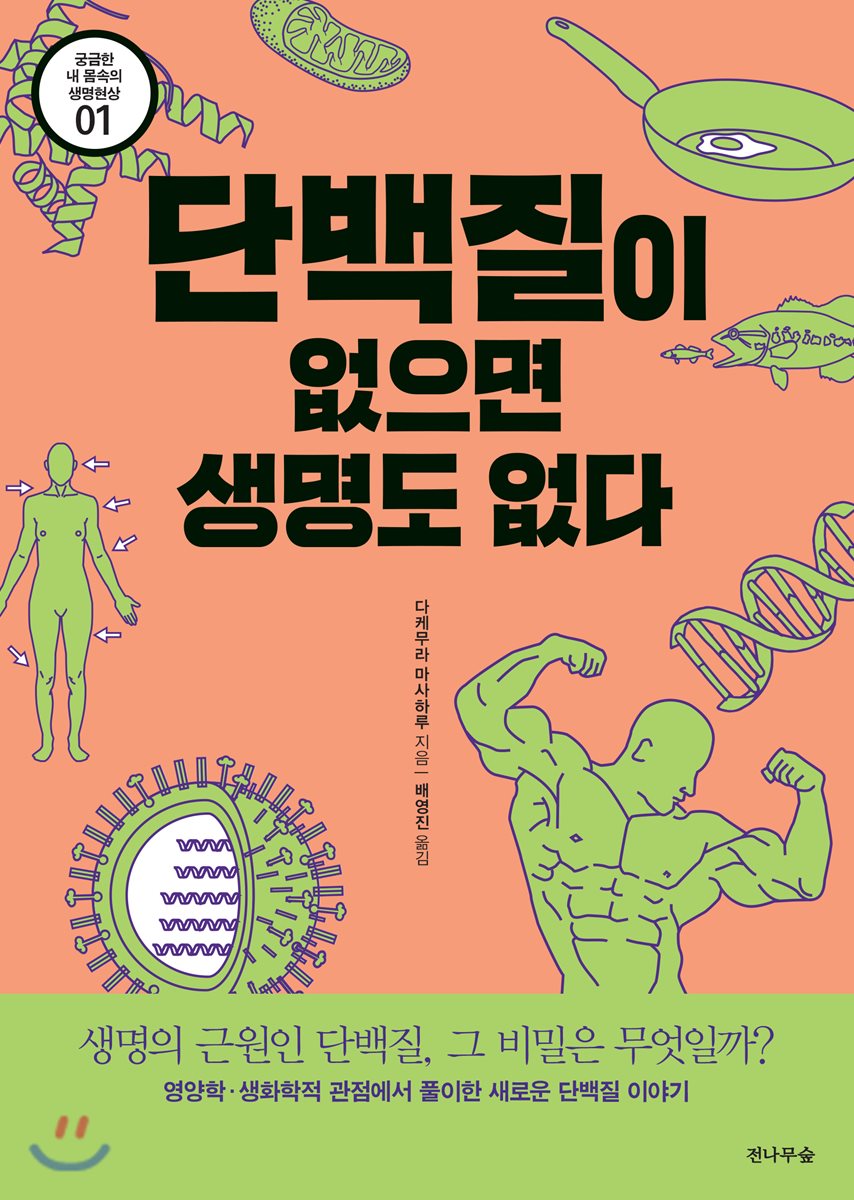
Without protein, there is no life.
 |
Description
Book Introduction
This is a new story about proteins, which is always a cutting-edge field in molecular biology and life sciences, from a 'nutritional and biochemical perspective.'
This book contains only the essential information we need to know, based on basic knowledge of proteins, including how they are made and function in the body, and up to a more advanced level.
It is written in an easy and fun way with various illustrations, so it can be read with interest by both experts and the general public.
Without protein, there's no life! Proteins, of which there are approximately 100,000, are found in our bodies, and are directly linked to vital processes, such as human composition and the maintenance of vital functions.
It explains in an easy-to-understand manner how proteins ingested from food are broken down and transformed in the body, as well as the structure, properties, and genetics of proteins, and what diseases can arise from protein abnormalities.
This book contains only the essential information we need to know, based on basic knowledge of proteins, including how they are made and function in the body, and up to a more advanced level.
It is written in an easy and fun way with various illustrations, so it can be read with interest by both experts and the general public.
Without protein, there's no life! Proteins, of which there are approximately 100,000, are found in our bodies, and are directly linked to vital processes, such as human composition and the maintenance of vital functions.
It explains in an easy-to-understand manner how proteins ingested from food are broken down and transformed in the body, as well as the structure, properties, and genetics of proteins, and what diseases can arise from protein abnormalities.
- You can preview some of the book's contents.
Preview
index
preface
Chapter 1.
Properties of Protein: Why Does Frying a Raw Egg Make a Scrambled Egg?
Section 1: Protein as a Nutrient
How much protein is in breakfast?
Origin of the name protein
Biological value by food
Section 2: The Meaning of Eating Meat
Amino acids, the basic units of proteins
20 types of amino acids and the functions of proteins
What does it mean to eat meat?
Section 3 - What happens when you grill protein?
Fried eggs, bulgogi, grilled squid
secondary structure
tertiary structure
Quaternary structure and subunits
denaturation of proteins
Benefits of Using Fire
column 1 _ Proteins like 'motors'
Chapter 2.
Protein Synthesis: A bodybuilder's life is like an activity of producing protein.
Section 1: Proteins that make up our bodies
Protein in muscles
Types of proteins
Section 2 - From nutrients to proteins that build the body
It is broken down into small pieces during digestion.
Fate of absorbed amino acids
Amino acid complex
Amino acids that are synthesized again into proteins
Section 3: Proteins are made from genetic code
The body of genes is DNA
Amino acid sequence and genetic code
A system that encodes 20 amino acids using 4 types of bases
genes, DNA, RNA
Transcription and Translation
Completion of the polypeptide
Section 4 - How do polypeptides become proteins?
Polypeptide folding
molecular chaperones
heat shock proteins
Column 2 _ Proteins similar to 'lanterns'
Chapter 3.
The Function of Protein: Some fish eat fish, while others break down proteins.
Section 1: Protein breaks down protein
What happens inside the stomach
The action of pepsin
yellow paint
Protein degradation by trypsin
Chemical reactions and enzyme proteins
Types of enzyme proteins and EC numbers
Enzyme proteins and substrates
Substrate specificity
pH dependence of proteins
Section 2: Proteins that maintain body functions
Transport and store nutrients
Helps cells function by transmitting information
Regulates gene expression
Defeat enemies coming from outside
Section 3: Proteins that function at different temperatures
Optimal temperature of protein
Thermophilic bacteria and PCR
Proteins of thermophilic bacteria
floating protein
Section 4: Protein Decorations and Their Uses
Simple proteins and complex proteins
Proteins with sugars attached
Which party will be attached?
The action of lectins
phosphorylating proteins
Section 5: The Death of Protein
Ubiquitin, the ubiquitous protein
Ubiquitin attaches to proteins to be degraded
Protein degradation by ubiquitin and the proteasome
Column 3 _ Proteins that resemble 'real-life'
Chapter 4.
Protein Abnormalities and Diseases: For Better or for Worse, Proteins Exhibit Their Presence in Various Areas
Section 1: The strange behavior of proteins in cancer cells
The program is acting strangely
cancer protein
What evil things do cancer proteins do?
If it's mass produced, it's a big deal.
A protein that acts as a 'brake' on cell proliferation
Section 2 - Minor injuries are the cause
sickle cell anemia
SNPs and proteins
Protein abnormalities associated with lifestyle-related diseases (examples of thrifty genes)
Section 3: Changing and Proliferating Proteins
influenza virus
Mutating hemagglutinin and neuraminidase
A disease caused by a change in the shape of a protein
Normal prions and abnormal (transmissible) prions
Column 4 _ Proteins similar to 'upright walking robots'
Chapter 5.
Q&A! Interesting Protein Stories: Even in the latest molecular biology and life sciences, proteins remain at the cutting edge.
Section 1: Genes and Proteins
Q.
Is there a gene that makes you strong against alcohol?
Q.
Do athletes with exceptional athletic ability have special genes?
Q.
Is there a connection between longevity and genes?
Q.
Is a man's tendency to cheat inherited?
Section 2 _ Protein in Food
Q.
Why are milk and eggs so nutritious?
Q.
What is the largest protein in the human body?
Q.
Why are soybeans called 'meat from the field'?
Q.
Is it true that eating raw beans is bad for your health?
Q.
Rice and wheat flour are carbohydrate (starch) foods, but do they also contain protein?
Section 3: Proteins in our bodies
Q.
What is the most abundant protein in the human body?
Q.
What is the strongest protein in our body?
Q.
Cataracts are said to be caused by proteins in the eye. Is this true?
Q.
Besides food, what other proteins can we find around us?
Column 5 _ A protein similar to a 'syringe'
Conclusion
Translator's Note
Reference books
Chapter 1.
Properties of Protein: Why Does Frying a Raw Egg Make a Scrambled Egg?
Section 1: Protein as a Nutrient
How much protein is in breakfast?
Origin of the name protein
Biological value by food
Section 2: The Meaning of Eating Meat
Amino acids, the basic units of proteins
20 types of amino acids and the functions of proteins
What does it mean to eat meat?
Section 3 - What happens when you grill protein?
Fried eggs, bulgogi, grilled squid
secondary structure
tertiary structure
Quaternary structure and subunits
denaturation of proteins
Benefits of Using Fire
column 1 _ Proteins like 'motors'
Chapter 2.
Protein Synthesis: A bodybuilder's life is like an activity of producing protein.
Section 1: Proteins that make up our bodies
Protein in muscles
Types of proteins
Section 2 - From nutrients to proteins that build the body
It is broken down into small pieces during digestion.
Fate of absorbed amino acids
Amino acid complex
Amino acids that are synthesized again into proteins
Section 3: Proteins are made from genetic code
The body of genes is DNA
Amino acid sequence and genetic code
A system that encodes 20 amino acids using 4 types of bases
genes, DNA, RNA
Transcription and Translation
Completion of the polypeptide
Section 4 - How do polypeptides become proteins?
Polypeptide folding
molecular chaperones
heat shock proteins
Column 2 _ Proteins similar to 'lanterns'
Chapter 3.
The Function of Protein: Some fish eat fish, while others break down proteins.
Section 1: Protein breaks down protein
What happens inside the stomach
The action of pepsin
yellow paint
Protein degradation by trypsin
Chemical reactions and enzyme proteins
Types of enzyme proteins and EC numbers
Enzyme proteins and substrates
Substrate specificity
pH dependence of proteins
Section 2: Proteins that maintain body functions
Transport and store nutrients
Helps cells function by transmitting information
Regulates gene expression
Defeat enemies coming from outside
Section 3: Proteins that function at different temperatures
Optimal temperature of protein
Thermophilic bacteria and PCR
Proteins of thermophilic bacteria
floating protein
Section 4: Protein Decorations and Their Uses
Simple proteins and complex proteins
Proteins with sugars attached
Which party will be attached?
The action of lectins
phosphorylating proteins
Section 5: The Death of Protein
Ubiquitin, the ubiquitous protein
Ubiquitin attaches to proteins to be degraded
Protein degradation by ubiquitin and the proteasome
Column 3 _ Proteins that resemble 'real-life'
Chapter 4.
Protein Abnormalities and Diseases: For Better or for Worse, Proteins Exhibit Their Presence in Various Areas
Section 1: The strange behavior of proteins in cancer cells
The program is acting strangely
cancer protein
What evil things do cancer proteins do?
If it's mass produced, it's a big deal.
A protein that acts as a 'brake' on cell proliferation
Section 2 - Minor injuries are the cause
sickle cell anemia
SNPs and proteins
Protein abnormalities associated with lifestyle-related diseases (examples of thrifty genes)
Section 3: Changing and Proliferating Proteins
influenza virus
Mutating hemagglutinin and neuraminidase
A disease caused by a change in the shape of a protein
Normal prions and abnormal (transmissible) prions
Column 4 _ Proteins similar to 'upright walking robots'
Chapter 5.
Q&A! Interesting Protein Stories: Even in the latest molecular biology and life sciences, proteins remain at the cutting edge.
Section 1: Genes and Proteins
Q.
Is there a gene that makes you strong against alcohol?
Q.
Do athletes with exceptional athletic ability have special genes?
Q.
Is there a connection between longevity and genes?
Q.
Is a man's tendency to cheat inherited?
Section 2 _ Protein in Food
Q.
Why are milk and eggs so nutritious?
Q.
What is the largest protein in the human body?
Q.
Why are soybeans called 'meat from the field'?
Q.
Is it true that eating raw beans is bad for your health?
Q.
Rice and wheat flour are carbohydrate (starch) foods, but do they also contain protein?
Section 3: Proteins in our bodies
Q.
What is the most abundant protein in the human body?
Q.
What is the strongest protein in our body?
Q.
Cataracts are said to be caused by proteins in the eye. Is this true?
Q.
Besides food, what other proteins can we find around us?
Column 5 _ A protein similar to a 'syringe'
Conclusion
Translator's Note
Reference books
Detailed image
Publisher's Review
Without protein, there is no life!
Protein, the source of life, what is its secret?
What comes to mind when you hear the word "protein"? As most people know, protein is one of the three macronutrients essential to the body, along with carbohydrates and fat.
The substance that is created when such proteins are absorbed into the body is muscle.
In that sense, the source of protein is meat such as beef, pork, and chicken, as well as animal muscles.
However, there are endless examples of protein-rich foods, including, in addition to animal muscles, milk, cheese, eggs, beans (soybeans), liver, fish, insects, etc.
If we eat these foods and exercise moderately, appropriate muscles will be built and our body will become muscular.
But protein doesn't just build muscle.
It produces substances that help break down influenza viruses and digest food, as well as nails, hair, saliva, and skin.
It is no exaggeration to say that most of the substances that make up our body are proteins.
However, once protein enters our body, it is not used in its original form.
It is broken down into amino acids and then converted back into protein components before it can be used for life activities.
Our bodies contain approximately 100,000 different types of proteins.
These proteins make up the human body, including the brain, muscles, bones, and hair, and work together to support life activities.
·We can breathe, move our bodies, and perceive objects with our eyes, all thanks to proteins.
And proteins also create and break down proteins themselves.
Ultimately, without protein, there is no life! In short, protein is the most essential substance for all living things on Earth, including us humans.
It is a nano-scale, all-purpose device that creates biological abilities that no high-performance machine can imitate.
So we need to eat protein every day.
But how are proteins broken down in the body and how are they transformed into the body?
How are proteins made and how do they work?
Understanding Life in Our Bodies Through Protein
When you learn about proteins, you learn how chemically all living things, including humans, are.
This book is an introductory book on proteins that explains the invisible functions of proteins in an interesting way with various illustrations.
It provides an easy-to-understand explanation of the mysterious substance 'protein', which still has many unknowns, from its synthesis to its structure, properties, and genetics, and what diseases are caused by protein abnormalities.
As you read from the beginning of the book, you will realize how important protein is to the body, how mysterious the human body's life processes are, and why we must consume protein.
"No Protein, No Life" is composed of five chapters.
Chapter 1 talks about protein as a nutrient.
Almost all foods contain protein, and when protein is consumed, it is broken down into its basic units, amino acids, and then back into protein.
It also provides an interesting explanation of the fact that although it is consumed as a nutrient, it undergoes a chemical reaction the moment it enters the body by talking about the protein denaturation that occurs when protein foods are cooked.
Chapter 2 explains in detail the process by which protein becomes muscle.
The process by which nutrients are ingested, digested, broken down into amino acids, and then synthesized into proteins is a mysterious one.
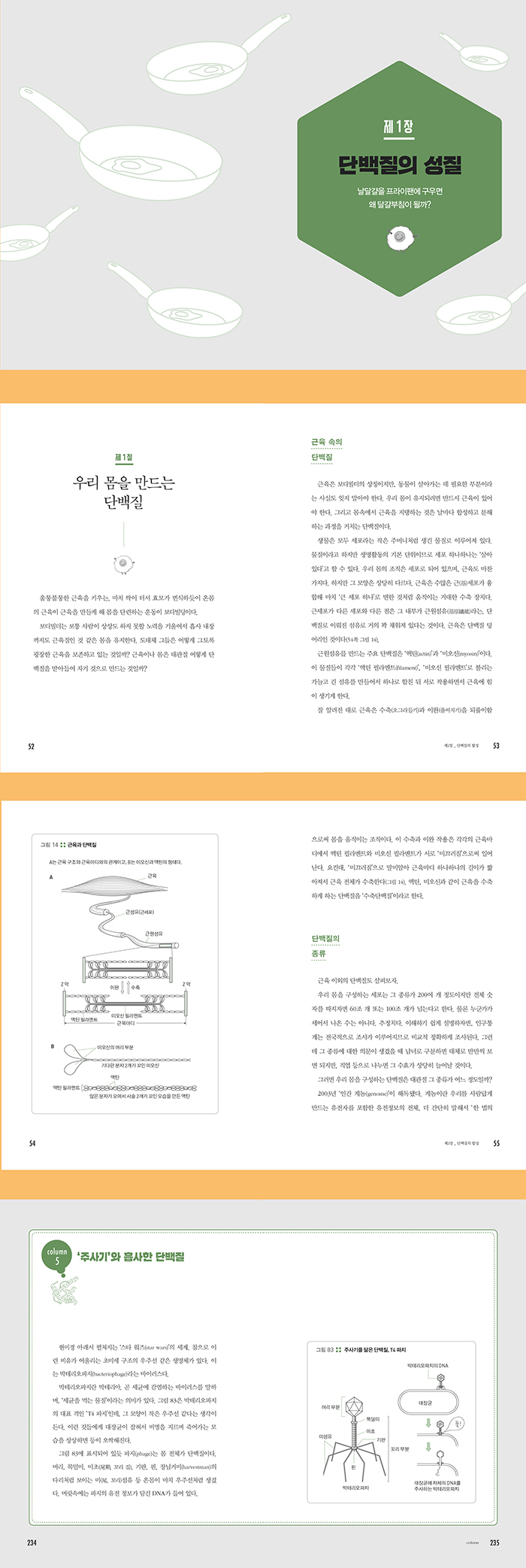
The amino acid sequence, encoding, transcription and translation, and completion of the polypeptide that occur during the process are explained through pictures, making it easy for general readers to understand.
Chapter 3 explains the various functions of proteins.
▲Proteins that help in the digestion process of proteins ▲Proteins that transport and store nutrients ▲Proteins that help cells function by transmitting information ▲Proteins that help in the expression of genes ▲Proteins that fight off enemies coming from outside ▲Proteins that work at various temperatures, etc. Their functions are truly vast.
It also covers the process of identifying proteins that have reached the end of their lifespan and inducing death.
Reading the content, it feels like looking at human life through protein.
Chapter 4 explains how our body reacts when something goes wrong with a protein.
The most representative example is cancer, but it is explained that various other diseases, such as sickle cell anemia, lifestyle-related diseases, and influenza virus, are caused by protein abnormalities.
Chapter 5 is structured in a Q&A format to discuss proteins related to genes, food, and the human body.
It provides simple and clear answers to questions that may arise in our daily lives, such as whether there is a gene for drinking alcohol, whether there is a gene related to athletic ability, whether longevity and genes are related, whether wind resistance is inherited, why are soybeans called "meat from the field", and whether wheat flour contains protein.
Protein, the source of life, what is its secret?
What comes to mind when you hear the word "protein"? As most people know, protein is one of the three macronutrients essential to the body, along with carbohydrates and fat.
The substance that is created when such proteins are absorbed into the body is muscle.
In that sense, the source of protein is meat such as beef, pork, and chicken, as well as animal muscles.
However, there are endless examples of protein-rich foods, including, in addition to animal muscles, milk, cheese, eggs, beans (soybeans), liver, fish, insects, etc.
If we eat these foods and exercise moderately, appropriate muscles will be built and our body will become muscular.
But protein doesn't just build muscle.
It produces substances that help break down influenza viruses and digest food, as well as nails, hair, saliva, and skin.
It is no exaggeration to say that most of the substances that make up our body are proteins.
However, once protein enters our body, it is not used in its original form.
It is broken down into amino acids and then converted back into protein components before it can be used for life activities.
Our bodies contain approximately 100,000 different types of proteins.
These proteins make up the human body, including the brain, muscles, bones, and hair, and work together to support life activities.
·We can breathe, move our bodies, and perceive objects with our eyes, all thanks to proteins.
And proteins also create and break down proteins themselves.
Ultimately, without protein, there is no life! In short, protein is the most essential substance for all living things on Earth, including us humans.
It is a nano-scale, all-purpose device that creates biological abilities that no high-performance machine can imitate.
So we need to eat protein every day.
But how are proteins broken down in the body and how are they transformed into the body?
How are proteins made and how do they work?
Understanding Life in Our Bodies Through Protein
When you learn about proteins, you learn how chemically all living things, including humans, are.
This book is an introductory book on proteins that explains the invisible functions of proteins in an interesting way with various illustrations.
It provides an easy-to-understand explanation of the mysterious substance 'protein', which still has many unknowns, from its synthesis to its structure, properties, and genetics, and what diseases are caused by protein abnormalities.
As you read from the beginning of the book, you will realize how important protein is to the body, how mysterious the human body's life processes are, and why we must consume protein.
"No Protein, No Life" is composed of five chapters.
Chapter 1 talks about protein as a nutrient.
Almost all foods contain protein, and when protein is consumed, it is broken down into its basic units, amino acids, and then back into protein.
It also provides an interesting explanation of the fact that although it is consumed as a nutrient, it undergoes a chemical reaction the moment it enters the body by talking about the protein denaturation that occurs when protein foods are cooked.
Chapter 2 explains in detail the process by which protein becomes muscle.
The process by which nutrients are ingested, digested, broken down into amino acids, and then synthesized into proteins is a mysterious one.
The amino acid sequence, encoding, transcription and translation, and completion of the polypeptide that occur during the process are explained through pictures, making it easy for general readers to understand.
Chapter 3 explains the various functions of proteins.
▲Proteins that help in the digestion process of proteins ▲Proteins that transport and store nutrients ▲Proteins that help cells function by transmitting information ▲Proteins that help in the expression of genes ▲Proteins that fight off enemies coming from outside ▲Proteins that work at various temperatures, etc. Their functions are truly vast.
It also covers the process of identifying proteins that have reached the end of their lifespan and inducing death.
Reading the content, it feels like looking at human life through protein.
Chapter 4 explains how our body reacts when something goes wrong with a protein.
The most representative example is cancer, but it is explained that various other diseases, such as sickle cell anemia, lifestyle-related diseases, and influenza virus, are caused by protein abnormalities.
Chapter 5 is structured in a Q&A format to discuss proteins related to genes, food, and the human body.
It provides simple and clear answers to questions that may arise in our daily lives, such as whether there is a gene for drinking alcohol, whether there is a gene related to athletic ability, whether longevity and genes are related, whether wind resistance is inherited, why are soybeans called "meat from the field", and whether wheat flour contains protein.
GOODS SPECIFICS
- Publication date: November 19, 2018
- Page count, weight, size: 248 pages | 374g | 153*214*20mm
- ISBN13: 9791188544226
- ISBN10: 1188544225
You may also like
카테고리
korean


korean

![ELLE 엘르 스페셜 에디션 A형 : 12월 [2025]](http://librairie.coreenne.fr/cdn/shop/files/b8e27a3de6c9538896439686c6b0e8fb.jpg?v=1766436872&width=3840)


