

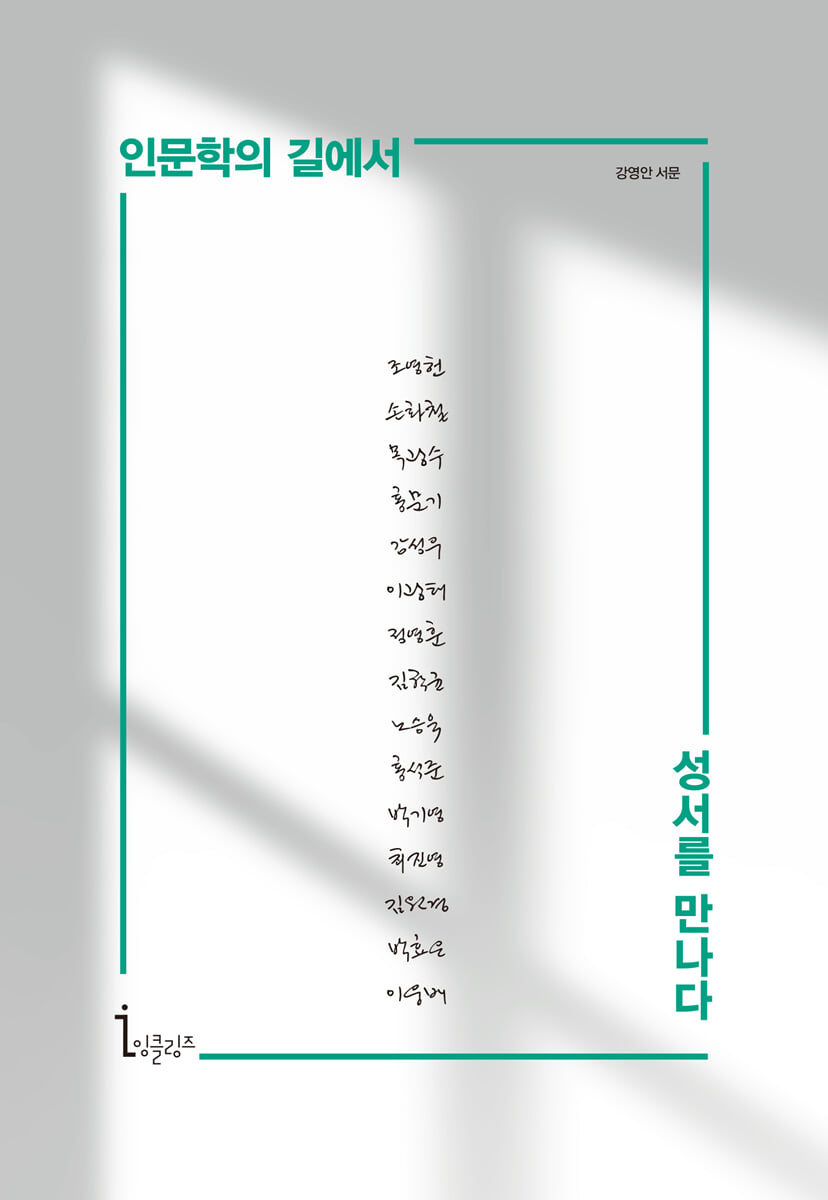
Encountering the Bible on the Path of Humanities
 |
Description
Book Introduction
Can the Humanities and the Bible Illuminate Each Other?
- A personal memoir and academic exploration of 'Encountering and Accompanying the Humanities' written by 15 humanists 'with the Bible in hand'!
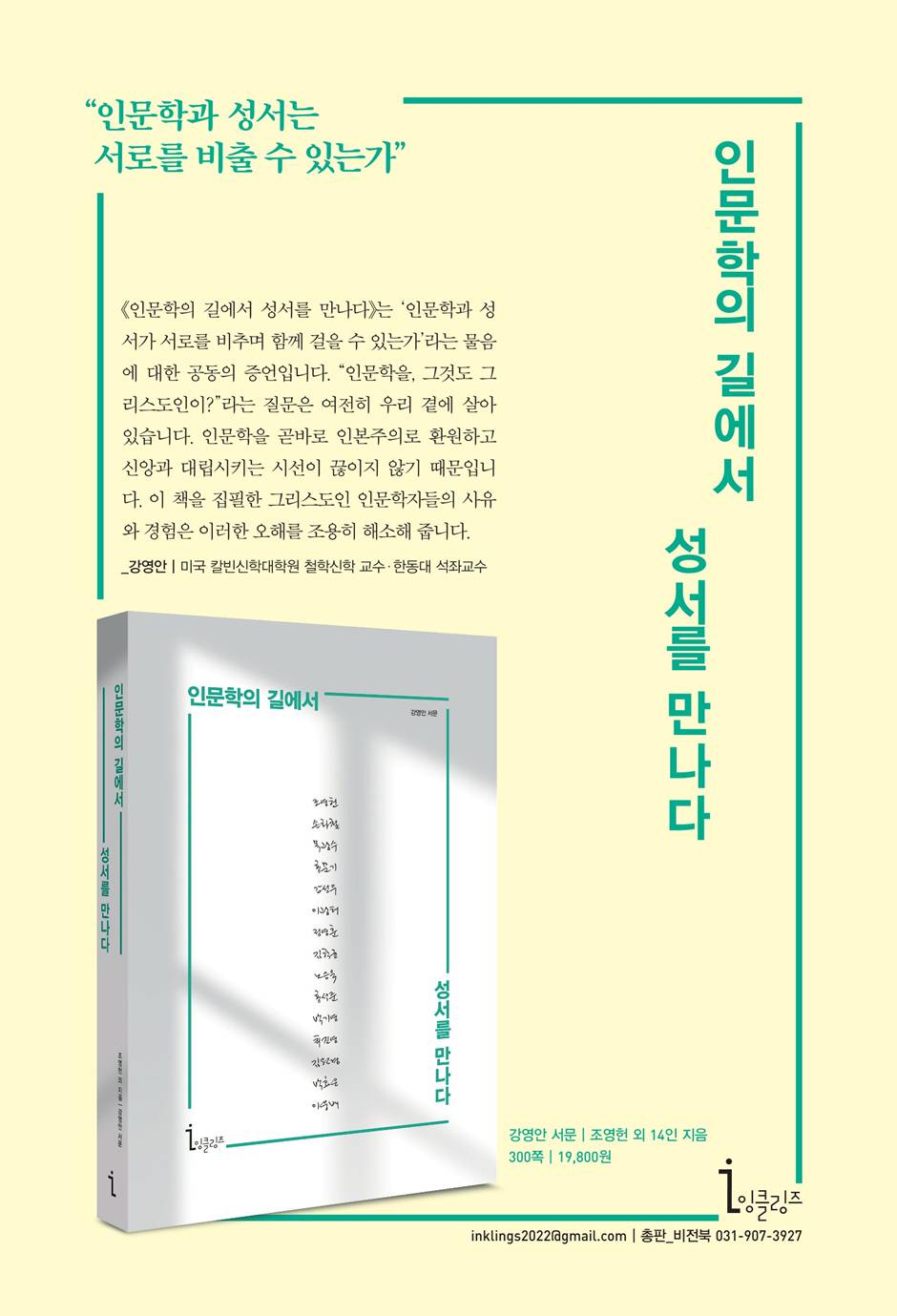
This is a story about the "encounter between humanities and the Bible" as depicted in their own unique style by 15 Christians who have walked the path of the humanities. They reflectively look back on the "journey of faith and scholarship" they have long wrestled with in their respective fields of expertise, including philosophy, literature, history, linguistics, and art.
The fifteen colorful essays contain a record of the thoughts of fifteen humanists who, “with the Bible in hand,” “carried a ‘double allegiance’ between methodological rigor and religious fidelity,” and “passed through that tension without avoiding it.”
Moreover, it honestly shows the failures, frustrations, feelings of inferiority and guilt, and the journey of religious reflection and academic exploration experienced by each person during the process of encountering and accompanying the Bible (faith) and humanities (academics) from their youth through college and graduate school, their time studying abroad, and even recently.
- A personal memoir and academic exploration of 'Encountering and Accompanying the Humanities' written by 15 humanists 'with the Bible in hand'!
This is a story about the "encounter between humanities and the Bible" as depicted in their own unique style by 15 Christians who have walked the path of the humanities. They reflectively look back on the "journey of faith and scholarship" they have long wrestled with in their respective fields of expertise, including philosophy, literature, history, linguistics, and art.
The fifteen colorful essays contain a record of the thoughts of fifteen humanists who, “with the Bible in hand,” “carried a ‘double allegiance’ between methodological rigor and religious fidelity,” and “passed through that tension without avoiding it.”
Moreover, it honestly shows the failures, frustrations, feelings of inferiority and guilt, and the journey of religious reflection and academic exploration experienced by each person during the process of encountering and accompanying the Bible (faith) and humanities (academics) from their youth through college and graduate school, their time studying abroad, and even recently.
- You can preview some of the book's contents.
Preview
index
Preface: Can the Humanities and the Bible Illuminate Each Other? - Kang Young-an
Opening Remarks: "Humanities and the Bible Meet" in Fifteen Colors - Cho Young-heon
Part 1.
The Path of Philosophy
1.
Philosophy that questions reality - Son Hwa-cheol
2.
Philosophy as a Bridge Between Reason and Faith - Mok Gwang-su
Part 2.
The Path of History
3.
The Meaning of Time - Jo Young-heon
4.
Progressive Historiography and Christian Faith - Hong Moon-ki
5.
History for People Without History - Kang Seong-woo
6.
Creating Peripheral Protagonists: The Path of a Central Eurasian Researcher - Lee Kwang-tae
Part 3.
The Path of Literature
7.
Between the Bible and Literature: Two Languages - Jeong Yeong-hun
8.
The Korean Literature Student Who Ran Away to the Table Tennis Court - Kim Hak-gyun
9.
Meeting a Literary Star on the Path of Faith - Noh Seung-wook
Part 4.
The Path of Linguistics
10.
The Usefulness of Korean Linguistics - Hong Seok-jun
11.
A World Within Words, Words Within the World - Park Ki-young
12.
I'm a person who likes linguistics - Choi Jin-young
Part 5.
The Path of Art
13.
A New Light in the Face of a 'Deadly Illness' - Kim Won-kyung
14.
Walking on Water: An Art Historian's Confession of Faith - Park Hyo-eun
15.
Between Making and Believing - Lee Woong-bae
Closing Remarks_ Dreaming of a 'Onhakmun School' - Cho Young-heon
Opening Remarks: "Humanities and the Bible Meet" in Fifteen Colors - Cho Young-heon
Part 1.
The Path of Philosophy
1.
Philosophy that questions reality - Son Hwa-cheol
2.
Philosophy as a Bridge Between Reason and Faith - Mok Gwang-su
Part 2.
The Path of History
3.
The Meaning of Time - Jo Young-heon
4.
Progressive Historiography and Christian Faith - Hong Moon-ki
5.
History for People Without History - Kang Seong-woo
6.
Creating Peripheral Protagonists: The Path of a Central Eurasian Researcher - Lee Kwang-tae
Part 3.
The Path of Literature
7.
Between the Bible and Literature: Two Languages - Jeong Yeong-hun
8.
The Korean Literature Student Who Ran Away to the Table Tennis Court - Kim Hak-gyun
9.
Meeting a Literary Star on the Path of Faith - Noh Seung-wook
Part 4.
The Path of Linguistics
10.
The Usefulness of Korean Linguistics - Hong Seok-jun
11.
A World Within Words, Words Within the World - Park Ki-young
12.
I'm a person who likes linguistics - Choi Jin-young
Part 5.
The Path of Art
13.
A New Light in the Face of a 'Deadly Illness' - Kim Won-kyung
14.
Walking on Water: An Art Historian's Confession of Faith - Park Hyo-eun
15.
Between Making and Believing - Lee Woong-bae
Closing Remarks_ Dreaming of a 'Onhakmun School' - Cho Young-heon
Detailed image
Into the book
Learning awakens the blindness of faith, and faith corrects the arrogance of learning.
Scholars who hold the Bible in their hands must maintain a "double loyalty" between methodological rigor and religious fidelity.
The writings in this book are a record of my thoughts on navigating that tension without avoiding it, and I hope to share that process transparently with my readers.
--- From the "Preface" on p.8-9
In writing this book, we agreed to explore how our own scholarship and lives were transformed by encountering the Bible and Jesus. Beyond our personal experiences, we also agreed to present terminology and concepts that would illuminate our specialized disciplines.
This is why the rich topics of the humanities, such as the philosophy of technology, the theory of justice, the concept of Kairos time, empathy for suffering, history for those without history, sympathy for the marginalized, respect for complex contexts, the integration of the public and private spheres, the secret language of literature, the usefulness of Korean linguistics, words that exert a positive influence in the world, the linguistics of communication, the awe encountered at the depths of despair, the allure of art history, and the spirit of the artist (writer), appear without filtering.
As you read, you will be surprised to find that the writing styles of experts in each field, such as philosophy, history, literature, linguistics, and art, reflect the characteristics of their respective fields.
In addition, rather than telling so-called "success stories," I decided to reveal the struggles and "failures" I experienced as a believer who studies, without hiding or exaggerating them.
--- p.16 From the “Opening Remarks”
Overcoming my interest or anxiety about studying philosophy did not mean I had confidence in my path as a scholar.
My studies were progressing moderately, and God didn't seem to be giving me any particular signs, so I decided to just continue on my way.
But whenever my studies became difficult due to such a half-hearted decision, I would inevitably think, 'Who am I? Where am I?'
During my time studying abroad, I diligently attended a church where international students from all over the world gathered to worship. Seeing the many missionaries I met there made my studies seem trivial.
While I was dating a Dutch missionary couple who were working as doctors in Yemen, I began to wonder if following them to Yemen and working as a cleaner and driver in a hospital might be a better option than pursuing a doctorate.
I wondered what the point of writing a thick doctoral thesis was, since it would only be read by me and my advisor.
--- p.27-28 From “1. Philosophy that Asks About Reality”
It seemed truly foolish for a Korean to study Central Eurasian history, a subject that hardly anyone in the United States cared about, let alone Korean history.
… After going through many hardships in 2020, I finally graduated and returned to Korea without even attending the graduation ceremony due to COVID-19.
And I've heard countless questions like, "Central Eurasian studies? Why are we doing that?"
I believe that the mission of historians is to eliminate misunderstandings and prejudices by clarifying the complex circumstances of the time through historical evaluation.
Just as understanding a person requires understanding their life journey, studying their history is essential to understanding Central Eurasia.
Through my study of Central Eurasia's history, I aim to point out the reality in which protagonists are often marginalized and help them realize that they are the protagonists themselves.
--- p.124-125 「6.
From "Creating Peripheral Protagonists: The Path of a Central Eurasian Researcher"
I'm stuck between two languages right now.
On one side is the language of the church, and on the other side is the language of literature and scholarship.
I can't say with certainty that I know either one well, but I still think that I live my life asking myself how the two languages differ, what misunderstandings they have, and whether it would be possible to translate them into each other's languages.
It is said that many of the ideas that changed the world came from the space between, from moving between the two.
On the other hand, it has also been common in history for those who have tried to mediate conflicts to end up being rejected by both sides.
Standing in between doesn't necessarily guarantee a happy ending.
I try not to predict what path lies ahead of me.
Wouldn't it be enough if I lived my life with a clear awareness of where I stand?
--- p.147 「7.
From “Between the Bible and Literature, Two Languages”
In my late 30s, after regaining my health, by God's grace I was able to work as a researcher in Luxembourg.
This gave me the opportunity to study a bit about education and sociology, work as a project manager, and plan events.
These things weren't bad, but they weren't all that enjoyable either.
Then, when I started teaching Korean to foreigners, I realized that linguistics, which I had studied since my undergraduate years until I received my doctorate, was the most interesting subject, and that I found the most joy in thinking about, analyzing, and theorizing about Korean data.
It made me laugh that I ended up back in linguistics in my 40s.
--- p.220 「12.
"I am a person who likes linguistics"
I believe that art offers a free perspective that is not bound by institutionalized religion and standardized morality.
I believe that art helps us imagine, understand, and follow the seemingly impossible life of Jesus Christ, who walked the narrow path.
Doesn't faith have to do with transcendence and require an attitude that allows one to think beyond reality?
In this way, faith leads humans to transcend their narrow egos and connect with God.
To me, art is creating images using various materials and techniques based on what I have experienced or imagined on that journey.
Scholars who hold the Bible in their hands must maintain a "double loyalty" between methodological rigor and religious fidelity.
The writings in this book are a record of my thoughts on navigating that tension without avoiding it, and I hope to share that process transparently with my readers.
--- From the "Preface" on p.8-9
In writing this book, we agreed to explore how our own scholarship and lives were transformed by encountering the Bible and Jesus. Beyond our personal experiences, we also agreed to present terminology and concepts that would illuminate our specialized disciplines.
This is why the rich topics of the humanities, such as the philosophy of technology, the theory of justice, the concept of Kairos time, empathy for suffering, history for those without history, sympathy for the marginalized, respect for complex contexts, the integration of the public and private spheres, the secret language of literature, the usefulness of Korean linguistics, words that exert a positive influence in the world, the linguistics of communication, the awe encountered at the depths of despair, the allure of art history, and the spirit of the artist (writer), appear without filtering.
As you read, you will be surprised to find that the writing styles of experts in each field, such as philosophy, history, literature, linguistics, and art, reflect the characteristics of their respective fields.
In addition, rather than telling so-called "success stories," I decided to reveal the struggles and "failures" I experienced as a believer who studies, without hiding or exaggerating them.
--- p.16 From the “Opening Remarks”
Overcoming my interest or anxiety about studying philosophy did not mean I had confidence in my path as a scholar.
My studies were progressing moderately, and God didn't seem to be giving me any particular signs, so I decided to just continue on my way.
But whenever my studies became difficult due to such a half-hearted decision, I would inevitably think, 'Who am I? Where am I?'
During my time studying abroad, I diligently attended a church where international students from all over the world gathered to worship. Seeing the many missionaries I met there made my studies seem trivial.
While I was dating a Dutch missionary couple who were working as doctors in Yemen, I began to wonder if following them to Yemen and working as a cleaner and driver in a hospital might be a better option than pursuing a doctorate.
I wondered what the point of writing a thick doctoral thesis was, since it would only be read by me and my advisor.
--- p.27-28 From “1. Philosophy that Asks About Reality”
It seemed truly foolish for a Korean to study Central Eurasian history, a subject that hardly anyone in the United States cared about, let alone Korean history.
… After going through many hardships in 2020, I finally graduated and returned to Korea without even attending the graduation ceremony due to COVID-19.
And I've heard countless questions like, "Central Eurasian studies? Why are we doing that?"
I believe that the mission of historians is to eliminate misunderstandings and prejudices by clarifying the complex circumstances of the time through historical evaluation.
Just as understanding a person requires understanding their life journey, studying their history is essential to understanding Central Eurasia.
Through my study of Central Eurasia's history, I aim to point out the reality in which protagonists are often marginalized and help them realize that they are the protagonists themselves.
--- p.124-125 「6.
From "Creating Peripheral Protagonists: The Path of a Central Eurasian Researcher"
I'm stuck between two languages right now.
On one side is the language of the church, and on the other side is the language of literature and scholarship.
I can't say with certainty that I know either one well, but I still think that I live my life asking myself how the two languages differ, what misunderstandings they have, and whether it would be possible to translate them into each other's languages.
It is said that many of the ideas that changed the world came from the space between, from moving between the two.
On the other hand, it has also been common in history for those who have tried to mediate conflicts to end up being rejected by both sides.
Standing in between doesn't necessarily guarantee a happy ending.
I try not to predict what path lies ahead of me.
Wouldn't it be enough if I lived my life with a clear awareness of where I stand?
--- p.147 「7.
From “Between the Bible and Literature, Two Languages”
In my late 30s, after regaining my health, by God's grace I was able to work as a researcher in Luxembourg.
This gave me the opportunity to study a bit about education and sociology, work as a project manager, and plan events.
These things weren't bad, but they weren't all that enjoyable either.
Then, when I started teaching Korean to foreigners, I realized that linguistics, which I had studied since my undergraduate years until I received my doctorate, was the most interesting subject, and that I found the most joy in thinking about, analyzing, and theorizing about Korean data.
It made me laugh that I ended up back in linguistics in my 40s.
--- p.220 「12.
"I am a person who likes linguistics"
I believe that art offers a free perspective that is not bound by institutionalized religion and standardized morality.
I believe that art helps us imagine, understand, and follow the seemingly impossible life of Jesus Christ, who walked the narrow path.
Doesn't faith have to do with transcendence and require an attitude that allows one to think beyond reality?
In this way, faith leads humans to transcend their narrow egos and connect with God.
To me, art is creating images using various materials and techniques based on what I have experienced or imagined on that journey.
--- p.293 「15.
From "Between Making and Believing"
From "Between Making and Believing"
Publisher's Review
For readers
- Teenagers considering college admission and major selection
- College students or graduate students considering graduate school and their career paths after graduation
- College students, graduate students, and researchers seeking a path toward the integration of academics and faith.
- Church leaders and pastors who teach and guide youth and young adults
- Christians and communities that consider religious perspectives on various fields of humanities
- Christians and communities that consider the coexistence and companionship of the two traditions of the Bible and the humanities.
- Teenagers considering college admission and major selection
- College students or graduate students considering graduate school and their career paths after graduation
- College students, graduate students, and researchers seeking a path toward the integration of academics and faith.
- Church leaders and pastors who teach and guide youth and young adults
- Christians and communities that consider religious perspectives on various fields of humanities
- Christians and communities that consider the coexistence and companionship of the two traditions of the Bible and the humanities.
GOODS SPECIFICS
- Date of issue: November 20, 2025
- Page count, weight, size: 300 pages | 145*210*20mm
- ISBN13: 9791197598791
- ISBN10: 1197598790
You may also like
카테고리
korean


korean

![GQ KOREA Mark (Monthly): December [2025]](http://librairie.coreenne.fr/cdn/shop/files/8ef265dbbfbf186523ed75ba7319009d.jpg?v=1765340328&width=3840)


