

Your beautiful world
 |
Description
Book Introduction
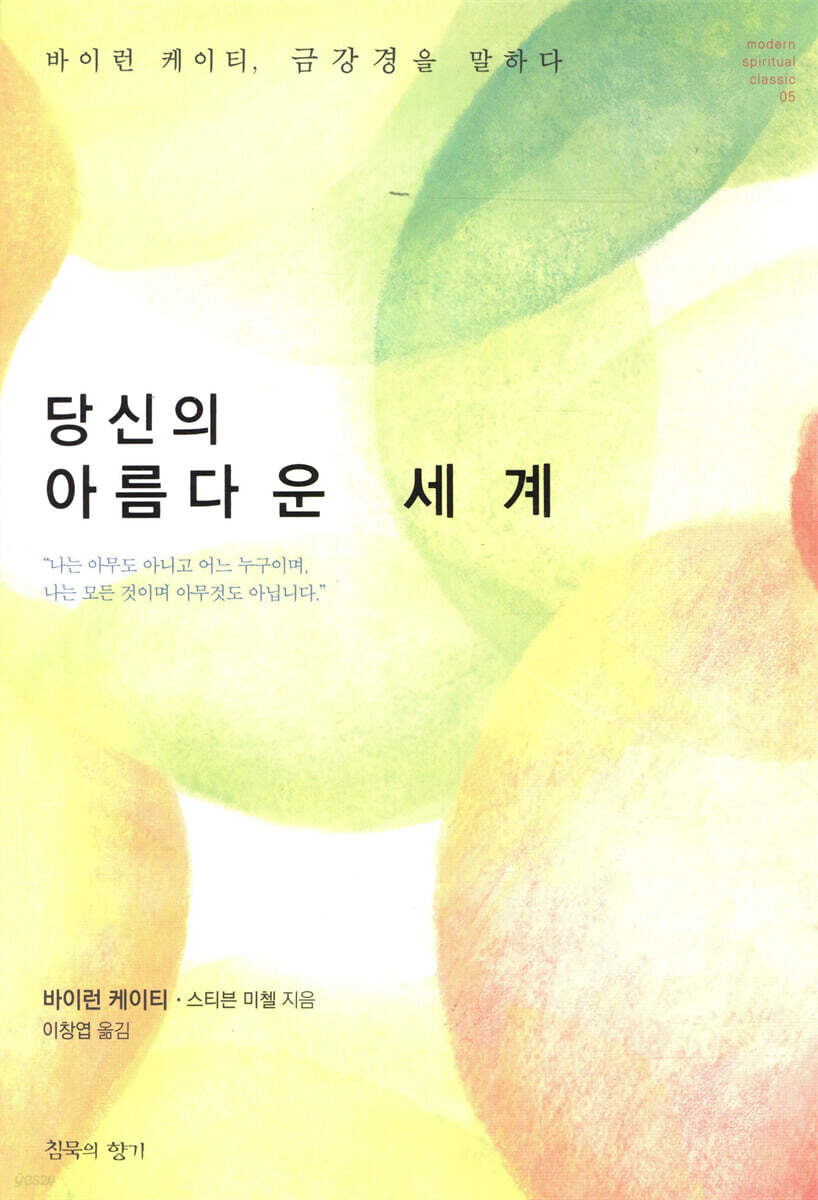
Byron Katie, world-renowned spiritual leader,
Speaking the Diamond Sutra
Byron Katie, a leading Western spiritual leader, talks about the Diamond Sutra, the central scripture of Zen Buddhism.
With profound insight and moving language, it tells us what the ultimate truth is, how those who have awakened to this truth see the world and live, and how we too can enjoy complete freedom and profound peace.
It consists of 32 chapters, five case studies of 'work' with Byron Katie, and an appendix that provides detailed guidance on 'work', a simple yet powerful method for breaking free from the shackles of thought.
Speaking the Diamond Sutra
Byron Katie, a leading Western spiritual leader, talks about the Diamond Sutra, the central scripture of Zen Buddhism.
With profound insight and moving language, it tells us what the ultimate truth is, how those who have awakened to this truth see the world and live, and how we too can enjoy complete freedom and profound peace.
It consists of 32 chapters, five case studies of 'work' with Byron Katie, and an appendix that provides detailed guidance on 'work', a simple yet powerful method for breaking free from the shackles of thought.
- You can preview some of the book's contents.
Preview
index
preface
About the quest
About the Diamond Sutra
About this book's translation of the Diamond Sutra
1.
cosmic joke
2.
Bow to the grains of sand
3.
A brightly shining moment
4.
To give is to receive
-Task: “Dave ignored me.”
5.
Buddhas in Everyday Life
6.
The mind is everything, and the mind is good.
7.
Staying at home during daily life
8.
Ultimate Mercy
9.
Love returns to you
10.
Living in Exploration
11.
The Gift of Criticism
12.
Teaching a cat to bark like a dog
-Task: “My mother is attacking me.”
13.
The World Beyond Names
14.
Nothing is ours
15.
Return home
16.
Not everything happens to you
It happens for you
17.
Life without separation
18.
Not believing in the idea of freedom
-Task: “My daughter doesn’t listen to me.”
19.
Unimaginable wealth
20.
perfect body
21.
Nothing to lose
22.
Pick up trash
23.
Gratitude has no reason
24.
The cause of all suffering
-Task: “My husband doesn’t keep his promises.”
25.
Equal wisdom
26.
Buddha at home
27.
The space between thoughts
28.
“Brush your teeth!”
29.
Transparency
30.
A completely friendly world
-Task: “My son is drinking again.”
31.
The nature of everything
32.
Love your dreams
Appendix: How to do the job
Acknowledgements
About the quest
About the Diamond Sutra
About this book's translation of the Diamond Sutra
1.
cosmic joke
2.
Bow to the grains of sand
3.
A brightly shining moment
4.
To give is to receive
-Task: “Dave ignored me.”
5.
Buddhas in Everyday Life
6.
The mind is everything, and the mind is good.
7.
Staying at home during daily life
8.
Ultimate Mercy
9.
Love returns to you
10.
Living in Exploration
11.
The Gift of Criticism
12.
Teaching a cat to bark like a dog
-Task: “My mother is attacking me.”
13.
The World Beyond Names
14.
Nothing is ours
15.
Return home
16.
Not everything happens to you
It happens for you
17.
Life without separation
18.
Not believing in the idea of freedom
-Task: “My daughter doesn’t listen to me.”
19.
Unimaginable wealth
20.
perfect body
21.
Nothing to lose
22.
Pick up trash
23.
Gratitude has no reason
24.
The cause of all suffering
-Task: “My husband doesn’t keep his promises.”
25.
Equal wisdom
26.
Buddha at home
27.
The space between thoughts
28.
“Brush your teeth!”
29.
Transparency
30.
A completely friendly world
-Task: “My son is drinking again.”
31.
The nature of everything
32.
Love your dreams
Appendix: How to do the job
Acknowledgements
Into the book
When you realize that you are not, you realize that there is no death.
Death is simply the death of identity, and that is a beautiful thing.
Because when all the identities that the mind has built up disappear through inquiry, you are not born, as you have no identity.
The 'me' of the past and future no longer exists, and what remains is only the imagined.
When the mind stops, there is no mind to know that there is no mind.
Perfect! Death has a terrible reputation, but that's just a rumor.
--- p.130
The only thing you need to know about enlightenment is whether or not believing certain thoughts is stressful.
Does that thought break your heart or not? If it doesn't, that's okay.
Enjoy the thought.
If that thought hurts you, causes you sadness, anger, or any discomfort, question that thought.
So let yourself become aware of that thought.
Pain is a choice we make.
Pain doesn't have to last for years.
It can be reduced to months, weeks, days, minutes, and seconds.
If you do this, you will be able to feel at ease even when thoughts that used to bother you in the past arise.
--- pp.139-140
Exploration brings you back to a place of clear mind.
It makes me realize that you are the one who comes before all my thoughts.
How fun it is to return to reality! I won't stop coming back.
It is a privilege to open my eyes and see myself in the mirror.
But there is no such thing as a permanently clear mind.
Because there is no future in a clear mind.
We are not always awake.
Just wake up now.
Can you question your thoughts and be happy right now? People have wonderful experiences of spiritual awakening, but these experiences aren't "that."
The moment they thought, “I want this wonderful experience to last forever,” they were transported into the future and lost touch with reality.
Right now, 'this' is it.
It's that simple.
Only this exists.
--- p.140
What would life be like without an ego? Nothing would happen.
Even life.
Everything you see, hear, touch, smell, taste, and think is already over before the act begins.
My feet just moved, and when I watch them move, I am only looking into the past.
It seems like it's happening now, but even when I see it, that now is already past.
This is the power and goodness of the enlightened mind.
I can't even drink tea.
It's gone before it happens, and there's nothing I can do about it.
--- p.143
Whatever the mind perceives, the mind is prior to it.
The mind is clear and pure, completely open to everything.
We are open to what seems ugly as well as what seems beautiful, to rejection as well as acceptance, to failure as well as success.
The mind knows that it is always safe.
The mind experiences life as a continuous flow.
The mind sets its feet nowhere.
Because there is no need to, and I know that wherever I set foot, there are limits.
The mind is aware of every thought it thinks, but it does not believe any of them.
The mind realizes that it has no solid foundation on which to stand.
From that realization comes freedom.
‘Nowhere to stand’ is where the heart stands.
There is joy in the heart.
When the quest lives within you, every thought you think ends with a question mark, not a period.
And that is the end of suffering.
--- pp.153-154
Consider the pain you create when you believe their thoughts about you, and when you believe your thoughts about them in response.
The pain is very great and lasts a long time.
The method is simple.
Ask yourself what thoughts come to mind when someone—your mother, father, husband, wife, or someone who seems like an enemy—criticizes you.
Neither painful feelings nor any other discomfort can be caused by other people.
No one outside of yourself can hurt you.
That's impossible.
You can only feel heartbroken if you believe the stories about them.
So the person who is hurting you is yourself.
This is very good news.
Because you don't have to stop others from hurting you or change them in any way.
The only person who can stop you from harming yourself is you.
Only you.
Death is simply the death of identity, and that is a beautiful thing.
Because when all the identities that the mind has built up disappear through inquiry, you are not born, as you have no identity.
The 'me' of the past and future no longer exists, and what remains is only the imagined.
When the mind stops, there is no mind to know that there is no mind.
Perfect! Death has a terrible reputation, but that's just a rumor.
--- p.130
The only thing you need to know about enlightenment is whether or not believing certain thoughts is stressful.
Does that thought break your heart or not? If it doesn't, that's okay.
Enjoy the thought.
If that thought hurts you, causes you sadness, anger, or any discomfort, question that thought.
So let yourself become aware of that thought.
Pain is a choice we make.
Pain doesn't have to last for years.
It can be reduced to months, weeks, days, minutes, and seconds.
If you do this, you will be able to feel at ease even when thoughts that used to bother you in the past arise.
--- pp.139-140
Exploration brings you back to a place of clear mind.
It makes me realize that you are the one who comes before all my thoughts.
How fun it is to return to reality! I won't stop coming back.
It is a privilege to open my eyes and see myself in the mirror.
But there is no such thing as a permanently clear mind.
Because there is no future in a clear mind.
We are not always awake.
Just wake up now.
Can you question your thoughts and be happy right now? People have wonderful experiences of spiritual awakening, but these experiences aren't "that."
The moment they thought, “I want this wonderful experience to last forever,” they were transported into the future and lost touch with reality.
Right now, 'this' is it.
It's that simple.
Only this exists.
--- p.140
What would life be like without an ego? Nothing would happen.
Even life.
Everything you see, hear, touch, smell, taste, and think is already over before the act begins.
My feet just moved, and when I watch them move, I am only looking into the past.
It seems like it's happening now, but even when I see it, that now is already past.
This is the power and goodness of the enlightened mind.
I can't even drink tea.
It's gone before it happens, and there's nothing I can do about it.
--- p.143
Whatever the mind perceives, the mind is prior to it.
The mind is clear and pure, completely open to everything.
We are open to what seems ugly as well as what seems beautiful, to rejection as well as acceptance, to failure as well as success.
The mind knows that it is always safe.
The mind experiences life as a continuous flow.
The mind sets its feet nowhere.
Because there is no need to, and I know that wherever I set foot, there are limits.
The mind is aware of every thought it thinks, but it does not believe any of them.
The mind realizes that it has no solid foundation on which to stand.
From that realization comes freedom.
‘Nowhere to stand’ is where the heart stands.
There is joy in the heart.
When the quest lives within you, every thought you think ends with a question mark, not a period.
And that is the end of suffering.
--- pp.153-154
Consider the pain you create when you believe their thoughts about you, and when you believe your thoughts about them in response.
The pain is very great and lasts a long time.
The method is simple.
Ask yourself what thoughts come to mind when someone—your mother, father, husband, wife, or someone who seems like an enemy—criticizes you.
Neither painful feelings nor any other discomfort can be caused by other people.
No one outside of yourself can hurt you.
That's impossible.
You can only feel heartbroken if you believe the stories about them.
So the person who is hurting you is yourself.
This is very good news.
Because you don't have to stop others from hurting you or change them in any way.
The only person who can stop you from harming yourself is you.
Only you.
--- p.162
Publisher's Review
Byron Katie, a spiritual teacher representing the West,
Discover a simple way to be free from all stress and pain.
Byron Katie, now in his late 70s, is one of the most prominent spiritual teachers in the West, along with Eckhart Tolle.
Her book, The Four Questions, which contains a revolutionary method to liberate oneself from all stress and suffering and find complete freedom and peace, is a beloved international bestseller translated into 29 languages.
Byron Katie, an ordinary housewife living in a small town in the southern California desert, suffered from depression for over a decade following her divorce. Then, one morning in 1986, she suddenly woke up in a state of joy (what people call enlightenment).
The truth she discovered then was simple.
The cause of all stress and suffering is believing 'thoughts' that are not true.
If you believe in your thoughts, you will be stressed and in pain, and if you don't believe in your thoughts, you will be peaceful and happy.
“I have found that when I believe my thoughts I suffer, but when I don’t believe them I don’t suffer, and this is true for everyone.
Freedom is that simple.
I've come to realize that suffering is a choice we make.
The joy I discovered within me then has never disappeared for a moment.
That joy is always within everyone.”
Upon waking, she discovered 'The Work', a simple yet wondrous method of self-inquiry consisting of 'four questions' and reversals of thinking, which liberates us from the shackles of thought.
Eckhart Tolle, author of "Live in the Now," praised this "work" as a great blessing for our planet.
Byron Katie meets the Diamond Sutra,
The ultimate truth and free life she speaks of
The Diamond Sutra is the most widely recited and considered the most important sutra in East Asia.
This book, "Your Beautiful World," uses the Diamond Sutra as its subject matter to speak with profound insight and moving language about what the ultimate truth is, how those who have awakened to this truth view the world and live their lives, and how we too can fully enjoy such freedom and peace.
The Diamond Sutra translation included in the book was translated into simple and concise language so that even modern people can easily understand it by Stephen Mitchell, who studied Zen Buddhism under Venerable Seung Sahn for a while.
He read the Diamond Sutra he had translated to Byron Katie and compiled her comments on it into a book.
The book consists of 32 chapters, five case studies of 'work' done with Katie, and an appendix provides detailed instructions on how to do 'work'.
In this book, Byron Katie talks about the ultimate truth.
The ultimate truth, like the truth revealed by quantum physics, is very different from our common sense and difficult to understand with our common sense.
But why have spiritual masters spoken of this truth since ancient times?
Because if you want to discover and enjoy boundless freedom and profound peace, not just a bubble of freedom and peace, but a complete liberation from stress and suffering, you must know this truth.
And this truth, even if it seems difficult at first, can be discovered by anyone who looks carefully and consistently pays attention to what the good knowledge points out.
Above all, this truth is not separate from ourselves, but is always present here and now.
But what would the world look like to someone who has opened their eyes to this truth?
Let us take just one example among the author's many expressions.
“They gradually come to know the real world.
It is a world without fear, without name, without beauty, without love, a world where nothing is separate, a world where creativity is allowed to flow unhindered, a world where you see and appreciate something new every moment, a world where you are always alone with yourself, a world where you are everyone and everything, a world where you are free to take full responsibility as the creator of the whole world—your world, your imaginary world.” (p. 309)
Her unique insights, experiences, and expressions of this truth, which unfold sequentially from Chapter 1 to Chapter 32 of the Diamond Sutra, are like a garland densely adorned with jewels, each shining with its own brilliance. Their diversity and depth cannot be summarized in a few words.
What makes this book most different from other commentaries on the Diamond Sutra is that it tells the story of her own life, living out the truth of the Sutra.
There are many writings and teachings that talk about complete freedom and peace, joy and happiness, love and compassion, and enlightenment, but it is difficult to find writings that show how to live a life that fully embodies these principles.
Her words and actions, her truth and her life are no different.
For example, even when facing death, he remains detached and grateful; even when faced with a violent man who shouts and threatens to kill him, he remains peaceful; he embraces with love anyone, whether they are a dirty, foul-smelling homeless person or a rough-looking young man; and he readily gives up a house steeped in his family's history to someone who desperately wants one.
She says that there is no such thing as enlightenment, but she also says this:
“If you think you're enlightened, you'll love getting your car towed.
That's the real evidence! How do you react when your child gets sick? How do you react when your husband asks for a divorce? Does your heart flutter as you watch him live the life he wants? Do you truly love him when you help him pack to leave home? If not, what thoughts stand between you and pure compassion? (p. 64)
We are not who we think we are.
What is our true self?
But if such a life were only for Byron Katie or a very small number of people, if it were only possible for a special few who are different from the ordinary majority of us, then such words and writing would be of little value and useless.
But for Byron Katie, who sees no separation in the universe, she is soon one of us.
She is not separate from us.
She says that anyone can know such truth if they only believe in thoughts, if they only free themselves from thoughts, ideas and names.
“It is true that there is no me and no one else.
It is true that there is no truth or untruth.
There are no separate things, and there are no unseparated things.
There is no world outside you, and there is no world inside you.
Because before you believe there is one 'you', you have not yet created the world.
If you believe there is a world, then there are two things in you—you and the world.
Even if you believe there is no world outside of you, you still have those two things.
But in fact, there are no two.
Both are the creation of a confused mind.
There is only one, and not even that.
There is no world, no self, no matter.
“There is only nameless awareness (knowledge).” (pp. 113-114)
This book, filled with precious words about the ultimate truth, about living that truth, and about how to awaken to that truth, is a precious and excellent work of spiritual literature that will be most welcomed by readers interested in such truth, and by those who long to be free from all stress and suffering and deeply enjoy complete freedom and peace.
Discover a simple way to be free from all stress and pain.
Byron Katie, now in his late 70s, is one of the most prominent spiritual teachers in the West, along with Eckhart Tolle.
Her book, The Four Questions, which contains a revolutionary method to liberate oneself from all stress and suffering and find complete freedom and peace, is a beloved international bestseller translated into 29 languages.
Byron Katie, an ordinary housewife living in a small town in the southern California desert, suffered from depression for over a decade following her divorce. Then, one morning in 1986, she suddenly woke up in a state of joy (what people call enlightenment).
The truth she discovered then was simple.
The cause of all stress and suffering is believing 'thoughts' that are not true.
If you believe in your thoughts, you will be stressed and in pain, and if you don't believe in your thoughts, you will be peaceful and happy.
“I have found that when I believe my thoughts I suffer, but when I don’t believe them I don’t suffer, and this is true for everyone.
Freedom is that simple.
I've come to realize that suffering is a choice we make.
The joy I discovered within me then has never disappeared for a moment.
That joy is always within everyone.”
Upon waking, she discovered 'The Work', a simple yet wondrous method of self-inquiry consisting of 'four questions' and reversals of thinking, which liberates us from the shackles of thought.
Eckhart Tolle, author of "Live in the Now," praised this "work" as a great blessing for our planet.
Byron Katie meets the Diamond Sutra,
The ultimate truth and free life she speaks of
The Diamond Sutra is the most widely recited and considered the most important sutra in East Asia.
This book, "Your Beautiful World," uses the Diamond Sutra as its subject matter to speak with profound insight and moving language about what the ultimate truth is, how those who have awakened to this truth view the world and live their lives, and how we too can fully enjoy such freedom and peace.
The Diamond Sutra translation included in the book was translated into simple and concise language so that even modern people can easily understand it by Stephen Mitchell, who studied Zen Buddhism under Venerable Seung Sahn for a while.
He read the Diamond Sutra he had translated to Byron Katie and compiled her comments on it into a book.
The book consists of 32 chapters, five case studies of 'work' done with Katie, and an appendix provides detailed instructions on how to do 'work'.
In this book, Byron Katie talks about the ultimate truth.
The ultimate truth, like the truth revealed by quantum physics, is very different from our common sense and difficult to understand with our common sense.
But why have spiritual masters spoken of this truth since ancient times?
Because if you want to discover and enjoy boundless freedom and profound peace, not just a bubble of freedom and peace, but a complete liberation from stress and suffering, you must know this truth.
And this truth, even if it seems difficult at first, can be discovered by anyone who looks carefully and consistently pays attention to what the good knowledge points out.
Above all, this truth is not separate from ourselves, but is always present here and now.
But what would the world look like to someone who has opened their eyes to this truth?
Let us take just one example among the author's many expressions.
“They gradually come to know the real world.
It is a world without fear, without name, without beauty, without love, a world where nothing is separate, a world where creativity is allowed to flow unhindered, a world where you see and appreciate something new every moment, a world where you are always alone with yourself, a world where you are everyone and everything, a world where you are free to take full responsibility as the creator of the whole world—your world, your imaginary world.” (p. 309)
Her unique insights, experiences, and expressions of this truth, which unfold sequentially from Chapter 1 to Chapter 32 of the Diamond Sutra, are like a garland densely adorned with jewels, each shining with its own brilliance. Their diversity and depth cannot be summarized in a few words.
What makes this book most different from other commentaries on the Diamond Sutra is that it tells the story of her own life, living out the truth of the Sutra.
There are many writings and teachings that talk about complete freedom and peace, joy and happiness, love and compassion, and enlightenment, but it is difficult to find writings that show how to live a life that fully embodies these principles.
Her words and actions, her truth and her life are no different.
For example, even when facing death, he remains detached and grateful; even when faced with a violent man who shouts and threatens to kill him, he remains peaceful; he embraces with love anyone, whether they are a dirty, foul-smelling homeless person or a rough-looking young man; and he readily gives up a house steeped in his family's history to someone who desperately wants one.
She says that there is no such thing as enlightenment, but she also says this:
“If you think you're enlightened, you'll love getting your car towed.
That's the real evidence! How do you react when your child gets sick? How do you react when your husband asks for a divorce? Does your heart flutter as you watch him live the life he wants? Do you truly love him when you help him pack to leave home? If not, what thoughts stand between you and pure compassion? (p. 64)
We are not who we think we are.
What is our true self?
But if such a life were only for Byron Katie or a very small number of people, if it were only possible for a special few who are different from the ordinary majority of us, then such words and writing would be of little value and useless.
But for Byron Katie, who sees no separation in the universe, she is soon one of us.
She is not separate from us.
She says that anyone can know such truth if they only believe in thoughts, if they only free themselves from thoughts, ideas and names.
“It is true that there is no me and no one else.
It is true that there is no truth or untruth.
There are no separate things, and there are no unseparated things.
There is no world outside you, and there is no world inside you.
Because before you believe there is one 'you', you have not yet created the world.
If you believe there is a world, then there are two things in you—you and the world.
Even if you believe there is no world outside of you, you still have those two things.
But in fact, there are no two.
Both are the creation of a confused mind.
There is only one, and not even that.
There is no world, no self, no matter.
“There is only nameless awareness (knowledge).” (pp. 113-114)
This book, filled with precious words about the ultimate truth, about living that truth, and about how to awaken to that truth, is a precious and excellent work of spiritual literature that will be most welcomed by readers interested in such truth, and by those who long to be free from all stress and suffering and deeply enjoy complete freedom and peace.
GOODS SPECIFICS
- Date of issue: September 30, 2019
- Page count, weight, size: 415 pages | 592g | 150*220*30mm
- ISBN13: 9788989590767
- ISBN10: 8989590760
You may also like
카테고리
korean


korean

![GQ KOREA Mark (Monthly): December [2025]](http://librairie.coreenne.fr/cdn/shop/files/8ef265dbbfbf186523ed75ba7319009d.jpg?v=1765340328&width=3840)


