

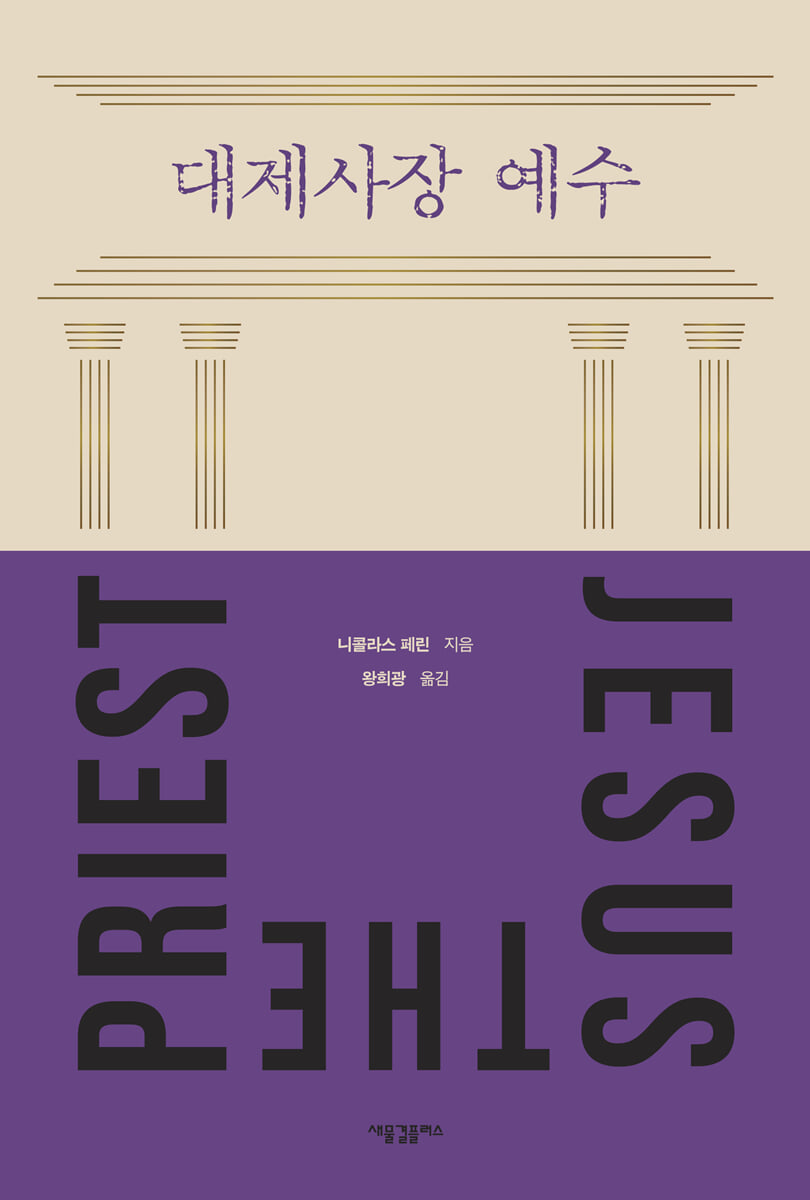
High Priest Jesus
 |
Description
Book Introduction
This book is the second in Nicholas Perrin's trilogy: Jesus and the Temple (originally published in 2010; Saemulgyeol Plus 2021), Jesus the High Priest (2018; Saemulgyeol Plus 2025), and Jesus the Sacrifice (published in the near future).
By examining Jesus' ministry from a priestly perspective, this book persuasively argues that Jesus perceived himself as "Israel's eschatological high priest."
In other words, Jesus is the fulfillment of the long-awaited high priestly messiah of Second Temple Judaism.
The author believes that understanding Jesus' high priestly office provides clear insight into the kingdom of God, and to support this claim, he provides detailed commentary on several relevant New Testament passages.
It relies on Old and intertestamental literature, as well as various later Jewish documents.
This book is largely divided into seven chapters.
By examining Jesus' ministry from a priestly perspective, this book persuasively argues that Jesus perceived himself as "Israel's eschatological high priest."
In other words, Jesus is the fulfillment of the long-awaited high priestly messiah of Second Temple Judaism.
The author believes that understanding Jesus' high priestly office provides clear insight into the kingdom of God, and to support this claim, he provides detailed commentary on several relevant New Testament passages.
It relies on Old and intertestamental literature, as well as various later Jewish documents.
This book is largely divided into seven chapters.
- You can preview some of the book's contents.
Preview
index
introduction
abbreviation
introduction
1.
Treasures salvaged from scrap heaps
2.
A Tale of Two Jesus Scholars: Schweitzer and Bultmann
3.
Revisiting Schweitzer and Bultmann
4.
A few more notes
5.
How to develop an argument
Chapter 1 Jesus' Prayer
1.
introduction
2.
The Meaning of "Father": A Challenge for Historical Criticism
3.
Early Christian and Jewish traditions describing Yahweh as “Father”
1) The early Christian tradition of describing Yahweh as “Father”
2) The Jewish tradition of describing Yahweh as “Father”
3) Comprehensive
4.
The Exodus narrative as the background for the concept of “Yahweh the Father”
5.
The Lord's Prayer: A Consistently Eschatological Prayer
1) First Petition: “Hallowed be your name” (11:2b)
2) Various priestly themes: from the second to the seventh petition
6.
summation
Chapter 2 The Baptism of Jesus
1.
introduction
2.
John's Baptism
3.
Baptism and Theophany as History
1) Review of the data
2) Questions surrounding Shin Hyun
3) Back to Shinhyeon
4.
The significance of Jesus' baptism in Mark 1:11 and its parallel passages
1) Source of the biblical quote (parallel passage to Mark 1:11)
2) How the Old Testament passages cited in Mark 1:11 were accepted into the Second Temple period.
3) Comprehensive
5.
How to Understand Jesus' Baptism in the Synoptic Gospel Narratives
1) The Gospel of Mark
2) The Gospel of Matthew
3) The Gospel of Luke
4) Comprehensive
6.
summation
Chapter 3 The Kingdom of Jesus
1.
The Apocalyptic Structure of the Kingdom: The Parable of the Sower (Mark 4:4-9)
1) Interpreting the Parable of the Sower: Step One
2) The type of eschatological expectation that appears in the three “seed texts” preceding the Parable of the Sower
3) Revisiting the Parable of the Sower
4) The Parable of the Sower and the Historical Jesus
2.
Visions of the Kingdom's Future: The Parable of the Salt (Matthew 5:13/Mark 9:50/Luke 14:34-35)
1) The Parable of Salt in the Gospel of Matthew (Matthew 5:13)
2) The Parable of Salt in the Gospel of Luke (Luke 14:34-35)
3) The Parable of Salt in the Gospel of Mark (Mark 9:50)
4) The Parable of Salt and the Historical Jesus
3.
The Present Outline of the Kingdom of God: “The Blessing” (Q 6:20-21)
1) The meaning of reinforcement regarding blessings
2) “The Poor” and the Historical Jesus
3) Strengthening the Blessing and the Historical Jesus
4.
summation
Chapter 4 Jesus, the Son of David
1.
Jesus, the “Son of David”
1) Jesus, the descendant of David, as seen from the early Christian tradition
2) The descendants of David and the historical Jesus
2.
David as a Priestly Figure and the “Son of David”
1) What David and Solomon did as priests
2) How can we explain the unusual priestly status of David and Solomon?
3.
Jesus, the priestly “Son of David”
4.
summation
Chapter 5: Factors
1.
Who is the Son of Man in the Book of Daniel?
1) The sacrificial nature of the Book of Daniel
2) Background of the title “Son of Man” in the Book of Daniel
3) Who are the “saints”?
4) Comprehensive
2.
The historical Jesus and the Son of Man in Daniel
1) Preliminary Considerations
2) Healing of the paralytic (parallel passage with Mark 2:1-10)
3.
summation
Chapter 6: Reexamining Jesus' Priestly Ministry
1.
Sabbath Observance: The Wheatfield Dispute (Parallel to Mark 2:23-28)
1) The Wheat Field Dispute in the Gospel of Mark
2) The historical Jesus and the wheat field debate
3) Summary
2.
Differing Approaches to the Priesthood: The Influentials of Jerusalem and Jesus' Followers (Q 9:58)
1) A person who has no place to lay his head
2) Alternative Ethics: The Commandments on Loving God and Loving Your Neighbor (Parallel to Mark 12:28-34)
3) Comprehensive
3.
A Meal Together: The Parable of the Children Sitting in the Marketplace (Q 7:31-35 = Matt 11:16-19 //Luke 7:31-35)
1) Hearing the voice of Jesus hidden behind the traditions
2) The Works of Wisdom (Matthew 11:16-19)
3) Wisdom and Her Children (Luke 7:31-35)
4) Comprehensive
4.
summation
Chapter 7: The Final Showdown
1.
introduction
2.
Taxes to Caesar (parallel passage with Mark 13:13-17)
1) Problems with the standard interpretation of Mark 12:13-17
2) The meaning of “shape” and “text”
3) “God’s work” in the Book of Daniel
4) “The Work of God” in Paul’s Letters (1 Corinthians 2:1-14)
5) God's work in the Gospel of Mark
6) “God’s” from Jesus’ perspective
3.
The Trial of Jesus (parallel passage to Mark 14:53-65)
1) The trial narrative presented in the Gospel of Mark
2) Historical issues related to the trial
3) Conversations that took place in court
4) The nature of the blasphemy charge against Jesus (Mark 14:62)
4.
summation
conclusion
References
Index of Ancient Sources and Scriptures
abbreviation
introduction
1.
Treasures salvaged from scrap heaps
2.
A Tale of Two Jesus Scholars: Schweitzer and Bultmann
3.
Revisiting Schweitzer and Bultmann
4.
A few more notes
5.
How to develop an argument
Chapter 1 Jesus' Prayer
1.
introduction
2.
The Meaning of "Father": A Challenge for Historical Criticism
3.
Early Christian and Jewish traditions describing Yahweh as “Father”
1) The early Christian tradition of describing Yahweh as “Father”
2) The Jewish tradition of describing Yahweh as “Father”
3) Comprehensive
4.
The Exodus narrative as the background for the concept of “Yahweh the Father”
5.
The Lord's Prayer: A Consistently Eschatological Prayer
1) First Petition: “Hallowed be your name” (11:2b)
2) Various priestly themes: from the second to the seventh petition
6.
summation
Chapter 2 The Baptism of Jesus
1.
introduction
2.
John's Baptism
3.
Baptism and Theophany as History
1) Review of the data
2) Questions surrounding Shin Hyun
3) Back to Shinhyeon
4.
The significance of Jesus' baptism in Mark 1:11 and its parallel passages
1) Source of the biblical quote (parallel passage to Mark 1:11)
2) How the Old Testament passages cited in Mark 1:11 were accepted into the Second Temple period.
3) Comprehensive
5.
How to Understand Jesus' Baptism in the Synoptic Gospel Narratives
1) The Gospel of Mark
2) The Gospel of Matthew
3) The Gospel of Luke
4) Comprehensive
6.
summation
Chapter 3 The Kingdom of Jesus
1.
The Apocalyptic Structure of the Kingdom: The Parable of the Sower (Mark 4:4-9)
1) Interpreting the Parable of the Sower: Step One
2) The type of eschatological expectation that appears in the three “seed texts” preceding the Parable of the Sower
3) Revisiting the Parable of the Sower
4) The Parable of the Sower and the Historical Jesus
2.
Visions of the Kingdom's Future: The Parable of the Salt (Matthew 5:13/Mark 9:50/Luke 14:34-35)
1) The Parable of Salt in the Gospel of Matthew (Matthew 5:13)
2) The Parable of Salt in the Gospel of Luke (Luke 14:34-35)
3) The Parable of Salt in the Gospel of Mark (Mark 9:50)
4) The Parable of Salt and the Historical Jesus
3.
The Present Outline of the Kingdom of God: “The Blessing” (Q 6:20-21)
1) The meaning of reinforcement regarding blessings
2) “The Poor” and the Historical Jesus
3) Strengthening the Blessing and the Historical Jesus
4.
summation
Chapter 4 Jesus, the Son of David
1.
Jesus, the “Son of David”
1) Jesus, the descendant of David, as seen from the early Christian tradition
2) The descendants of David and the historical Jesus
2.
David as a Priestly Figure and the “Son of David”
1) What David and Solomon did as priests
2) How can we explain the unusual priestly status of David and Solomon?
3.
Jesus, the priestly “Son of David”
4.
summation
Chapter 5: Factors
1.
Who is the Son of Man in the Book of Daniel?
1) The sacrificial nature of the Book of Daniel
2) Background of the title “Son of Man” in the Book of Daniel
3) Who are the “saints”?
4) Comprehensive
2.
The historical Jesus and the Son of Man in Daniel
1) Preliminary Considerations
2) Healing of the paralytic (parallel passage with Mark 2:1-10)
3.
summation
Chapter 6: Reexamining Jesus' Priestly Ministry
1.
Sabbath Observance: The Wheatfield Dispute (Parallel to Mark 2:23-28)
1) The Wheat Field Dispute in the Gospel of Mark
2) The historical Jesus and the wheat field debate
3) Summary
2.
Differing Approaches to the Priesthood: The Influentials of Jerusalem and Jesus' Followers (Q 9:58)
1) A person who has no place to lay his head
2) Alternative Ethics: The Commandments on Loving God and Loving Your Neighbor (Parallel to Mark 12:28-34)
3) Comprehensive
3.
A Meal Together: The Parable of the Children Sitting in the Marketplace (Q 7:31-35 = Matt 11:16-19 //Luke 7:31-35)
1) Hearing the voice of Jesus hidden behind the traditions
2) The Works of Wisdom (Matthew 11:16-19)
3) Wisdom and Her Children (Luke 7:31-35)
4) Comprehensive
4.
summation
Chapter 7: The Final Showdown
1.
introduction
2.
Taxes to Caesar (parallel passage with Mark 13:13-17)
1) Problems with the standard interpretation of Mark 12:13-17
2) The meaning of “shape” and “text”
3) “God’s work” in the Book of Daniel
4) “The Work of God” in Paul’s Letters (1 Corinthians 2:1-14)
5) God's work in the Gospel of Mark
6) “God’s” from Jesus’ perspective
3.
The Trial of Jesus (parallel passage to Mark 14:53-65)
1) The trial narrative presented in the Gospel of Mark
2) Historical issues related to the trial
3) Conversations that took place in court
4) The nature of the blasphemy charge against Jesus (Mark 14:62)
4.
summation
conclusion
References
Index of Ancient Sources and Scriptures
Into the book
If my interpretation of the Lord's Prayer is correct, then Jesus' prayer is not simply a prayer, but a brilliant summary of all that he expected and dreamed of his companions and followers.
To summarize, the Lord's Prayer we have was originally given as a mission statement by the historical Jesus.
This is a charter proclaiming a new priesthood, a new office not given to genealogical descendants but to those who have been called by Jesus.
Those who wish to confirm their office under this new priesthood can achieve their goal only by resolutely offering this prayer within the community.
This is the most comprehensive and yet most exclusive prayer.
--- 「Chapter 1.
From “Jesus’ Prayer”
In the scene of his baptism, Jesus realized that he had been given the mission to rebuild the temple, based on a psalm of David (Psalm 2).
Jesus also began to recognize that through his baptism he would be involved in some way in consecrating the sanctuary he would rebuild (Gen. 22).
There is no doubt that Jesus understood these two aspects as related to his identity as Son of God and Priest.
From the moment Jesus was called by God to this role before numerous witnesses, he considered his only mission to be carrying out the command he had received from God, a mission that, of course, foresaw his Passion, which was inseparable from the new sacred space.
Although it is still unclear what exactly that suffering will be.
Jesus may have anticipated that the sufferings that awaited him would be unique in that he was designated “son” in a unique sense.
--- Chapter 2.
From “The Baptism of Jesus”
Jesus' teachings about the kingdom of God also provide some clues about the nature and conditions of his calling.
Those who entered his community came, above all, from socially despised classes, and they interpreted his invitation to become “poor” as a theological exaggeration.
The most important condition to be met in order to remain in the community of Jesus was to constantly devote oneself to accepting the teachings of Jesus (the seeds of the Word).
Even if this devotion is challenged by various pressures both within and outside the community, especially persecution and idolatrous ideologies.
At the center of the organized community that followed Jesus were the twelve disciples, and with them was Jesus himself, the high priest following the example of Isaac.
In Jewish society, Jesus was a controversial figure, especially among those in power sociopolitical circles, and the movement he led was no exception.
But from Jesus' perspective, as inferred from the Lord's Prayer, such opposition was the very means by which the eschatological community realized its true self, faithfully reflecting the eschatological blueprint with which they were already familiar.
Therefore, even if there were doubts within the Jesus movement due to the contempt Jesus and his disciples experienced, such doubts could have been dispelled by appealing to the movement's long-term vision—that is, to the promise that Yahweh would use suffering as a tool to lead the newly organized priesthood into the kingdom of God.
--- 「Chapter 3.
From “The Kingdom of Jesus”
While it is true that Second Temple Judaism rested on the hope of a future descendant of the Davidic dynasty, it is also true that the central significance of this eschatological figure did not lie in his political role, but in the fulfillment of his priestly mission of rebuilding the sacrificial space.
Jesus' companions had hoped that the final ascension of the Davidic Messiah to the throne would be the turning point when foreign powers would be overcome and Israel's political autonomy would be restored, but this was not the ultimate goal.
The establishment of an irresistible ruler from the house of David and the centralization of the cult space by reuniting the twelve tribes were merely political prerequisites for fulfilling Israel's religious calling, namely, the calling of a unified people to worship one God in one place.
If, as I have argued, Second Temple Judaism held a universal expectation that an eschatological descendant of David would usher in a theocratic monarchy, then Jesus's declaration that he was the "Son of David" inherently implies a temple-oriented agenda.
--- 「Chapter 4.
From “Jesus, the Son of David”
Do we have any evidence that Jesus himself interpreted the Son of Man as an eschatological high priest? I suggest we do, based on my analysis of Mark 2:1-12.
Mark 2:1-12 is one of several passages in the Synoptic Gospels where Jesus pronounces forgiveness of sins. What is particularly striking about this passage, which is generally accepted as authentic, is that Jesus pronounces forgiveness in a priestly manner, associating himself with the mysterious figure of Daniel 7.
--- Chapter 5.
Among the "Arms"
Notable features of Jesus' "Son of Man" movement were its impressive mix of ceremonial practices, itinerant movements, and social inclusiveness.
Here we can once again confirm that the concept of “Son of Man” is not a mere title for Jesus, but a “story.”
To be more precise, it is a collection of stories and biblical passages based on Daniel 7.
In Jesus' time, there could be no one-to-one correspondence between the Son of Man and the Messiah, because the term "Son of Man" was not a title or label, but a small protrusion in the narrative, like an iceberg, which harbored a paradox of shame and glory beneath the surface.
When we understand Jesus' use of the term "Son of Man" in this way, we can explain why Jesus gave a central role to communal suffering, as we saw earlier in Chapter 3.
As we know, Jesus promised his followers that joining him would entail some suffering, but that suffering would be the catalyst for Israel's redemption.
Whatever role and responsibility Jesus assigned to himself in this heavy burden that the Christian community had to bear, he saw such suffering as largely collective in character and as a defining characteristic of his movement.
Jesus promised that his followers would faithfully persevere, fulfilling their specific priestly calling, and ultimately become instruments of the coming of the kingdom of God by overthrowing Yahweh's enemies and restoring the role of sacred space.
--- Chapter 6.
From “Reexamining the Priestly Ministry of Jesus”
In this chapter, Jesus engages in a direct confrontation with the high priestly ruler (the emperor) whom the Romans call “the Son of God,” and here we observe Jesus integrating his two titles as priest in the order of Melchizedek and David and as Son of Man in connection with his foreseen act of atonement.
So when the early Christians began to reflect on Jesus as the “Son of God,” it would have been seen as consistent not only with the prayer Jesus taught and the baptism he received, but also with Jesus’s claim that he was the one who would replace Tiberius and Caiaphas as the “Son of David” and the “Son of Man.”
So to speak, when the early Christians began to speak of Jesus as “the Son of God,” they likely had in mind, above all, his self-appointed role as priestly mediator appointed by God.
So if there is a thread that connects Jesus' prayers, baptism, teachings, titles, and "final confrontation," it is the brightly colored cord of the eschatological high priest's ephod.
Even in his final confrontation with Caiaphas, literally on the brink of death, Jesus still thought of himself as the high priest wearing the ephod, and hoped to be remembered as such.
To summarize, the Lord's Prayer we have was originally given as a mission statement by the historical Jesus.
This is a charter proclaiming a new priesthood, a new office not given to genealogical descendants but to those who have been called by Jesus.
Those who wish to confirm their office under this new priesthood can achieve their goal only by resolutely offering this prayer within the community.
This is the most comprehensive and yet most exclusive prayer.
--- 「Chapter 1.
From “Jesus’ Prayer”
In the scene of his baptism, Jesus realized that he had been given the mission to rebuild the temple, based on a psalm of David (Psalm 2).
Jesus also began to recognize that through his baptism he would be involved in some way in consecrating the sanctuary he would rebuild (Gen. 22).
There is no doubt that Jesus understood these two aspects as related to his identity as Son of God and Priest.
From the moment Jesus was called by God to this role before numerous witnesses, he considered his only mission to be carrying out the command he had received from God, a mission that, of course, foresaw his Passion, which was inseparable from the new sacred space.
Although it is still unclear what exactly that suffering will be.
Jesus may have anticipated that the sufferings that awaited him would be unique in that he was designated “son” in a unique sense.
--- Chapter 2.
From “The Baptism of Jesus”
Jesus' teachings about the kingdom of God also provide some clues about the nature and conditions of his calling.
Those who entered his community came, above all, from socially despised classes, and they interpreted his invitation to become “poor” as a theological exaggeration.
The most important condition to be met in order to remain in the community of Jesus was to constantly devote oneself to accepting the teachings of Jesus (the seeds of the Word).
Even if this devotion is challenged by various pressures both within and outside the community, especially persecution and idolatrous ideologies.
At the center of the organized community that followed Jesus were the twelve disciples, and with them was Jesus himself, the high priest following the example of Isaac.
In Jewish society, Jesus was a controversial figure, especially among those in power sociopolitical circles, and the movement he led was no exception.
But from Jesus' perspective, as inferred from the Lord's Prayer, such opposition was the very means by which the eschatological community realized its true self, faithfully reflecting the eschatological blueprint with which they were already familiar.
Therefore, even if there were doubts within the Jesus movement due to the contempt Jesus and his disciples experienced, such doubts could have been dispelled by appealing to the movement's long-term vision—that is, to the promise that Yahweh would use suffering as a tool to lead the newly organized priesthood into the kingdom of God.
--- 「Chapter 3.
From “The Kingdom of Jesus”
While it is true that Second Temple Judaism rested on the hope of a future descendant of the Davidic dynasty, it is also true that the central significance of this eschatological figure did not lie in his political role, but in the fulfillment of his priestly mission of rebuilding the sacrificial space.
Jesus' companions had hoped that the final ascension of the Davidic Messiah to the throne would be the turning point when foreign powers would be overcome and Israel's political autonomy would be restored, but this was not the ultimate goal.
The establishment of an irresistible ruler from the house of David and the centralization of the cult space by reuniting the twelve tribes were merely political prerequisites for fulfilling Israel's religious calling, namely, the calling of a unified people to worship one God in one place.
If, as I have argued, Second Temple Judaism held a universal expectation that an eschatological descendant of David would usher in a theocratic monarchy, then Jesus's declaration that he was the "Son of David" inherently implies a temple-oriented agenda.
--- 「Chapter 4.
From “Jesus, the Son of David”
Do we have any evidence that Jesus himself interpreted the Son of Man as an eschatological high priest? I suggest we do, based on my analysis of Mark 2:1-12.
Mark 2:1-12 is one of several passages in the Synoptic Gospels where Jesus pronounces forgiveness of sins. What is particularly striking about this passage, which is generally accepted as authentic, is that Jesus pronounces forgiveness in a priestly manner, associating himself with the mysterious figure of Daniel 7.
--- Chapter 5.
Among the "Arms"
Notable features of Jesus' "Son of Man" movement were its impressive mix of ceremonial practices, itinerant movements, and social inclusiveness.
Here we can once again confirm that the concept of “Son of Man” is not a mere title for Jesus, but a “story.”
To be more precise, it is a collection of stories and biblical passages based on Daniel 7.
In Jesus' time, there could be no one-to-one correspondence between the Son of Man and the Messiah, because the term "Son of Man" was not a title or label, but a small protrusion in the narrative, like an iceberg, which harbored a paradox of shame and glory beneath the surface.
When we understand Jesus' use of the term "Son of Man" in this way, we can explain why Jesus gave a central role to communal suffering, as we saw earlier in Chapter 3.
As we know, Jesus promised his followers that joining him would entail some suffering, but that suffering would be the catalyst for Israel's redemption.
Whatever role and responsibility Jesus assigned to himself in this heavy burden that the Christian community had to bear, he saw such suffering as largely collective in character and as a defining characteristic of his movement.
Jesus promised that his followers would faithfully persevere, fulfilling their specific priestly calling, and ultimately become instruments of the coming of the kingdom of God by overthrowing Yahweh's enemies and restoring the role of sacred space.
--- Chapter 6.
From “Reexamining the Priestly Ministry of Jesus”
In this chapter, Jesus engages in a direct confrontation with the high priestly ruler (the emperor) whom the Romans call “the Son of God,” and here we observe Jesus integrating his two titles as priest in the order of Melchizedek and David and as Son of Man in connection with his foreseen act of atonement.
So when the early Christians began to reflect on Jesus as the “Son of God,” it would have been seen as consistent not only with the prayer Jesus taught and the baptism he received, but also with Jesus’s claim that he was the one who would replace Tiberius and Caiaphas as the “Son of David” and the “Son of Man.”
So to speak, when the early Christians began to speak of Jesus as “the Son of God,” they likely had in mind, above all, his self-appointed role as priestly mediator appointed by God.
So if there is a thread that connects Jesus' prayers, baptism, teachings, titles, and "final confrontation," it is the brightly colored cord of the eschatological high priest's ephod.
Even in his final confrontation with Caiaphas, literally on the brink of death, Jesus still thought of himself as the high priest wearing the ephod, and hoped to be remembered as such.
--- Chapter 7.
From "The Final Showdown"
From "The Final Showdown"
Publisher's Review
Chapter 1, “The Jesus Prayer,” discusses the relationship between Jesus’ role as high priest and the Lord’s Prayer.
After asking the question, “How can we historically explain the self-identity of the historical Jesus as the Son of God in a unique sense, and the self-identity of Jesus’ followers as sons of God in a different sense?” the author focuses on the first sentence of the Lord’s Prayer and explains the relationship between the call to “Father” and God’s unique “son” in relation to the newly distinct priestly office and understanding of sacred space.
Chapter 2, “The Baptism of Jesus,” deals with the relationship between Jesus’ early experiences as the Son of God and his self-consciousness as a priest.
Through an analysis of the theophany scene (parallel to Mark 1:11) that appeared when Jesus was baptized by John in the Jordan River at the beginning of his public ministry, we argue how understanding Jesus as the Son of God can be justified.
Chapter 3, “The Kingdom of Jesus,” clearly demonstrates that Jesus’ priestly calling inevitably entails suffering.
On the one hand, it is important to emphasize that emphasizing Jesus' priestly office does not negate Jesus' other prominent roles, such as his role as "Messiah-King."
The author seeks to demonstrate that Jesus's royal identity is subordinate to his priestly identity.
Chapter 4 reveals the ceremonial meaning and significance of the title “Jesus, the Son of David.”
Through an analysis of Psalm 110, the author presents how the royal and priestly functions were integrated in the lives of two great kings, David and Solomon.
The expectations that Second Temple Judaism had about the eschatological descendants of David inherently implied a temple-oriented agenda.
In Chapter 5, we seek to discover the sacrificial nature of the figure of “Son of Man” in the Book of Daniel in the historical Jesus.
While acknowledging the apocalyptic nature of the vision in Daniel 7, the author emphasizes that its sectarian significance cannot be overlooked.
Chapter 6, “Revisiting Jesus’ Priestly Ministry,” expands on the topics covered in Chapter 5.
After a careful exegesis of three texts in the Gospels dealing with the “Son of Man” (Mark 2:23-28; Luke 9:58; Luke 7:31-35), the author argues that the expression “Son of Man” in these texts is not simply a title indicating Jesus’ identity, but rather that Jesus used the narrative of Daniel 7 as a guidepost and guide for his ministry.
In Chapter 7, “The Final Confrontation,” the author discovers Jesus’ priestly self-understanding through the dialogue between him and his opponents.
The argument for Jesus' priestly office is further strengthened in the debate over paying taxes to Caesar and in the conversation that took place during the hearing before Caiaphas.
However, this book does not fully explain the relationship between the high priest Jesus and atonement, a topic that will be explored in depth in the follow-up work, Jesus the Sacrifice.
This book's challenge to position Jesus as high priest also connects with the larger trend of reading the Gospels, Jesus, and the New Testament within the context of the Old Testament and Jewish cultic theology.
"Jesus the High Priest" will present a new challenge to mainstream Protestant scholarship, which has so far been indifferent to Jesus' high priesthood within the Gospels, excluding Hebrews, while also serving as a counterbalance to another Protestant tendency that has sought to reduce Jesus' sacrifice to a political event and salvation to political liberation.
This book will serve as a creative and constructive catalyst that will open new horizons in the exploration of the historical Jesus.
After asking the question, “How can we historically explain the self-identity of the historical Jesus as the Son of God in a unique sense, and the self-identity of Jesus’ followers as sons of God in a different sense?” the author focuses on the first sentence of the Lord’s Prayer and explains the relationship between the call to “Father” and God’s unique “son” in relation to the newly distinct priestly office and understanding of sacred space.
Chapter 2, “The Baptism of Jesus,” deals with the relationship between Jesus’ early experiences as the Son of God and his self-consciousness as a priest.
Through an analysis of the theophany scene (parallel to Mark 1:11) that appeared when Jesus was baptized by John in the Jordan River at the beginning of his public ministry, we argue how understanding Jesus as the Son of God can be justified.
Chapter 3, “The Kingdom of Jesus,” clearly demonstrates that Jesus’ priestly calling inevitably entails suffering.
On the one hand, it is important to emphasize that emphasizing Jesus' priestly office does not negate Jesus' other prominent roles, such as his role as "Messiah-King."
The author seeks to demonstrate that Jesus's royal identity is subordinate to his priestly identity.
Chapter 4 reveals the ceremonial meaning and significance of the title “Jesus, the Son of David.”
Through an analysis of Psalm 110, the author presents how the royal and priestly functions were integrated in the lives of two great kings, David and Solomon.
The expectations that Second Temple Judaism had about the eschatological descendants of David inherently implied a temple-oriented agenda.
In Chapter 5, we seek to discover the sacrificial nature of the figure of “Son of Man” in the Book of Daniel in the historical Jesus.
While acknowledging the apocalyptic nature of the vision in Daniel 7, the author emphasizes that its sectarian significance cannot be overlooked.
Chapter 6, “Revisiting Jesus’ Priestly Ministry,” expands on the topics covered in Chapter 5.
After a careful exegesis of three texts in the Gospels dealing with the “Son of Man” (Mark 2:23-28; Luke 9:58; Luke 7:31-35), the author argues that the expression “Son of Man” in these texts is not simply a title indicating Jesus’ identity, but rather that Jesus used the narrative of Daniel 7 as a guidepost and guide for his ministry.
In Chapter 7, “The Final Confrontation,” the author discovers Jesus’ priestly self-understanding through the dialogue between him and his opponents.
The argument for Jesus' priestly office is further strengthened in the debate over paying taxes to Caesar and in the conversation that took place during the hearing before Caiaphas.
However, this book does not fully explain the relationship between the high priest Jesus and atonement, a topic that will be explored in depth in the follow-up work, Jesus the Sacrifice.
This book's challenge to position Jesus as high priest also connects with the larger trend of reading the Gospels, Jesus, and the New Testament within the context of the Old Testament and Jewish cultic theology.
"Jesus the High Priest" will present a new challenge to mainstream Protestant scholarship, which has so far been indifferent to Jesus' high priesthood within the Gospels, excluding Hebrews, while also serving as a counterbalance to another Protestant tendency that has sought to reduce Jesus' sacrifice to a political event and salvation to political liberation.
This book will serve as a creative and constructive catalyst that will open new horizons in the exploration of the historical Jesus.
GOODS SPECIFICS
- Date of issue: June 20, 2025
- Page count, weight, size: 660 pages | 152*225*35mm
- ISBN13: 9791161293028
- ISBN10: 1161293027
You may also like
카테고리
korean


korean

![GQ KOREA Mark (Monthly): December [2025]](http://librairie.coreenne.fr/cdn/shop/files/8ef265dbbfbf186523ed75ba7319009d.jpg?v=1765340328&width=3840)


