

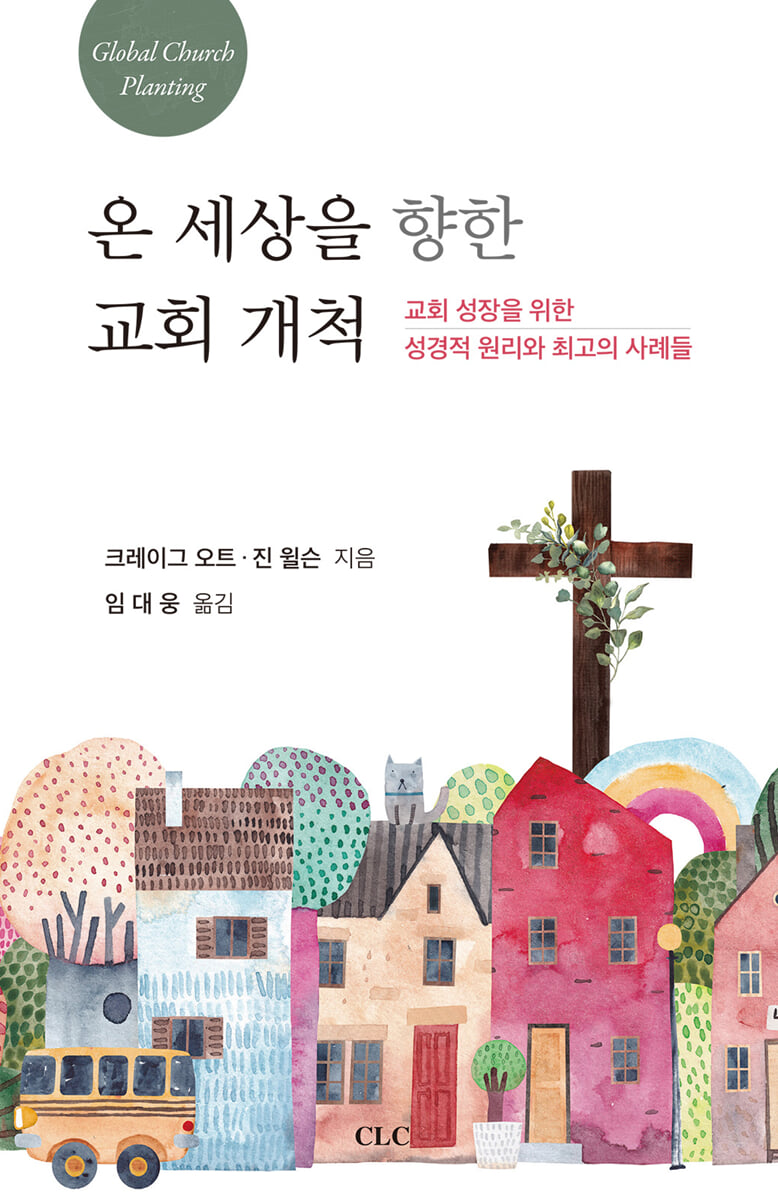
Church planting for the whole world
 |
Description
Book Introduction
This book is designed to provide practical assistance to church planters serving in diverse cultural settings by gathering biblical principles and practical examples that can be effectively applied around the world.
The authors bring not only academic insight but also decades of experience planting churches around the world, serving as trainers and counselors, and interacting and working with church planters and pastors around the world.
The academic and practical material contained in this book is extensive.
Accordingly, the authors encourage you to evaluate the various methodologies, models, and examples provided in this book and consider which ones best fit your circumstances.
This book is divided into four parts and contains the following contents:
In Part 1, we examine the mission and importance of church planting based on the Bible, as well as examples of church planting found in the New Testament.
Part 2 addresses decisions that must be made in the early planning stages, including the nature of church growth and indigenization, the role of church planters, church types based on context, and church planting models and approaches.
Part 3 examines the stages most church planters experience and provides practical guidance for reaching the reproduction stage from the beginning of the planting process.
Part 4 examines the elements that support church planting, including the personal lives of pioneers, the team, the self-development of leaders, the use of resources and co-workers, and the impact of the kingdom of God.
The authors say they devoted the most space to discussing the apostolic church planting model following the example of the Apostle Paul.
This material provides detailed guidance on the ministry of establishing churches that, like the Apostle Paul, establish churches by temporarily staying in the local area and acting as a catalyst, thereby reproducing believers into people like himself, and helping them grow quantitatively and reproduce based on local leadership and strategy. It will be of great practical help to those preparing to plant a church.
The authors bring not only academic insight but also decades of experience planting churches around the world, serving as trainers and counselors, and interacting and working with church planters and pastors around the world.
The academic and practical material contained in this book is extensive.
Accordingly, the authors encourage you to evaluate the various methodologies, models, and examples provided in this book and consider which ones best fit your circumstances.
This book is divided into four parts and contains the following contents:
In Part 1, we examine the mission and importance of church planting based on the Bible, as well as examples of church planting found in the New Testament.
Part 2 addresses decisions that must be made in the early planning stages, including the nature of church growth and indigenization, the role of church planters, church types based on context, and church planting models and approaches.
Part 3 examines the stages most church planters experience and provides practical guidance for reaching the reproduction stage from the beginning of the planting process.
Part 4 examines the elements that support church planting, including the personal lives of pioneers, the team, the self-development of leaders, the use of resources and co-workers, and the impact of the kingdom of God.
The authors say they devoted the most space to discussing the apostolic church planting model following the example of the Apostle Paul.
This material provides detailed guidance on the ministry of establishing churches that, like the Apostle Paul, establish churches by temporarily staying in the local area and acting as a catalyst, thereby reproducing believers into people like himself, and helping them grow quantitatively and reproduce based on local leadership and strategy. It will be of great practical help to those preparing to plant a church.
- You can preview some of the book's contents.
Preview
index
Recommendation 1 Dr. Lim Yoon-taek │ Director of the Doctoral Program in Missionary Studies, Jangshin University in the Americas 1
Recommendation 2 Dr. Wonjin Choi │ Professor of Mission Studies, Korea Baptist Theological University 3
Recommendation 3 Dr. Juyeon Eom │ Professor, Korea Mission Training Institute, Director, Korea Mission Policy Research Institute 5
Testimonial 4 Dr. Rick Warren │ Senior Pastor, Saddleback Church 8
Author's Preface 16
Translator's Preface 21
Prologue: The Apple Tree Story 24
Part 1: Biblical Foundation 28
Chapter 1: The Challenges of Church Planting 29
Chapter 2: Reasons for Church Planting 52
Chapter 3: Beginning with the New Testament 83
Part 2: Strategic Review 117
Chapter 4: The Church's Growth and the Native Church Planting Movement 118
Chapter 5: Apostolic Church Pioneers 152
Chapter 6: The Form of the Church 178
Chapter 7: Pioneers, Reproduction, and Regional Approaches to Church Planting 206
Part 3 Development Stage 240
Chapter 8: Developmental Phases of Church Planting: Overview 241
Chapter 9 Preparation 1: Setting Goals and Organizing a Committee 256
Chapter 10 Preparation 2: Understanding and Strategizing 282
Chapter 11: Beginning: Evangelism and Discipleship 315
Chapter 12: Establishment: Gathering and Maturity 362
Chapter 13: Structuring: Extensions and Authorization 394
Chapter 14: Reproduction: Reinforcement and Dispatch 422
Part 4: Important Elements 443
Chapter 15: The Personal Life of a Church Planter 444
Chapter 16: Church Planting Team 480
Chapter 17: Developing Followers, Leaders, and Pioneers 508
Chapter 18: Partnerships and Resources for Church Planting 540
Chapter 19: Church Planting to Transform the World 576
Epilogue 610
Reference 614
Recommendation 2 Dr. Wonjin Choi │ Professor of Mission Studies, Korea Baptist Theological University 3
Recommendation 3 Dr. Juyeon Eom │ Professor, Korea Mission Training Institute, Director, Korea Mission Policy Research Institute 5
Testimonial 4 Dr. Rick Warren │ Senior Pastor, Saddleback Church 8
Author's Preface 16
Translator's Preface 21
Prologue: The Apple Tree Story 24
Part 1: Biblical Foundation 28
Chapter 1: The Challenges of Church Planting 29
Chapter 2: Reasons for Church Planting 52
Chapter 3: Beginning with the New Testament 83
Part 2: Strategic Review 117
Chapter 4: The Church's Growth and the Native Church Planting Movement 118
Chapter 5: Apostolic Church Pioneers 152
Chapter 6: The Form of the Church 178
Chapter 7: Pioneers, Reproduction, and Regional Approaches to Church Planting 206
Part 3 Development Stage 240
Chapter 8: Developmental Phases of Church Planting: Overview 241
Chapter 9 Preparation 1: Setting Goals and Organizing a Committee 256
Chapter 10 Preparation 2: Understanding and Strategizing 282
Chapter 11: Beginning: Evangelism and Discipleship 315
Chapter 12: Establishment: Gathering and Maturity 362
Chapter 13: Structuring: Extensions and Authorization 394
Chapter 14: Reproduction: Reinforcement and Dispatch 422
Part 4: Important Elements 443
Chapter 15: The Personal Life of a Church Planter 444
Chapter 16: Church Planting Team 480
Chapter 17: Developing Followers, Leaders, and Pioneers 508
Chapter 18: Partnerships and Resources for Church Planting 540
Chapter 19: Church Planting to Transform the World 576
Epilogue 610
Reference 614
Into the book
Church planters must have their ecclesiology clearly in mind before they begin planting a church.
A biblical study of the nature of the church must be included in the early stages of church planting,1 and believers in the area should be consulted to help them determine what form the church should take to fulfill its biblical purpose in their local context.
While there is no other framework to keep in mind for understanding the church besides the Bible, it is valuable to learn what history teaches about the church and how the church was formed in various environments (see Chapter 6 on the formation and contextualization of the church).2
--- p.31
Now that we have defined what a church is, 'church planting' can be simply defined as the ministry of establishing new churches.
This work is accomplished through evangelism, discipleship training, and bringing these people together into functioning communities.
Most church plantings also have a long-term goal of multiplying growth.
By synthesizing these things, I define church planting as follows:
Church planting is the ministry of building a community of believers in Jesus Christ who, under the guidance of spiritual leadership, strive to achieve biblical purposes while reproducing the kingdom of God through evangelism and discipleship.
--- p.36
More importantly, the churches Paul established in the New Testament era quickly fell under the Lord's protection and leadership of the region (Acts 14:23; 20:32).
Paul's missionary team did not exercise long-term leadership in the churches they pioneered.
They traveled and moved to new areas, keeping in touch only sparingly with the churches they had founded.
These churches were indigenous in that they were rooted in their local culture, led by local leaders, and supported by the community.
Most of them were led by unpaid elders and met in private homes.
--- p.122
Kendall suggests that church planters serve in two or three locations simultaneously, reducing dependence on pioneers and empowering local laypeople to develop their own churches and ministries.
Work in two or three places at the same time.
You will truly help the new church by becoming a collaborator rather than a protagonist.
By serving in two or three locations simultaneously, we gain some distance from the field and provide opportunities for local leaders to grow.
If you don't plan for when you will be gone, you will be squeezing new local leaders (1988, 221).
--- p.164
Church planting movements can grow in the same way as strawberry trees or grapevines.
It's about starting one church and then continuing another one from one city to the next.
It can extend along major commercial roads or highways.
A pioneer church becomes a starting point for other churches to be planted in adjacent cities or towns along the road.
A good example of this approach is the Evangelical Free Church in southern Romania, led by American missionaries after the fall of communism (Figure 7.3).
Although it wasn't a particularly fast-growing vine, it exemplifies this approach well.
--- p.235
Entry strategies begin with analyzing the tendencies of respondents.
This is a tendency that becomes an important entry point for ordinary people, families, and the gospel.
This idea was popularized by Bill Hybels' depiction of "unchurched Harry and Mary."
Rick Warren called it “Saddleback Sam” (Warren 1995).
This orientation analysis helps church planters personalize and visualize who God has called their team to go to.
There are four main areas to focus on: your needs, your aspirations in life, how you make decisions, and how you react.
However, it should be kept in mind that these propensity analyses have complex characteristics.
No personality analysis can fully reflect a person.
A biblical study of the nature of the church must be included in the early stages of church planting,1 and believers in the area should be consulted to help them determine what form the church should take to fulfill its biblical purpose in their local context.
While there is no other framework to keep in mind for understanding the church besides the Bible, it is valuable to learn what history teaches about the church and how the church was formed in various environments (see Chapter 6 on the formation and contextualization of the church).2
--- p.31
Now that we have defined what a church is, 'church planting' can be simply defined as the ministry of establishing new churches.
This work is accomplished through evangelism, discipleship training, and bringing these people together into functioning communities.
Most church plantings also have a long-term goal of multiplying growth.
By synthesizing these things, I define church planting as follows:
Church planting is the ministry of building a community of believers in Jesus Christ who, under the guidance of spiritual leadership, strive to achieve biblical purposes while reproducing the kingdom of God through evangelism and discipleship.
--- p.36
More importantly, the churches Paul established in the New Testament era quickly fell under the Lord's protection and leadership of the region (Acts 14:23; 20:32).
Paul's missionary team did not exercise long-term leadership in the churches they pioneered.
They traveled and moved to new areas, keeping in touch only sparingly with the churches they had founded.
These churches were indigenous in that they were rooted in their local culture, led by local leaders, and supported by the community.
Most of them were led by unpaid elders and met in private homes.
--- p.122
Kendall suggests that church planters serve in two or three locations simultaneously, reducing dependence on pioneers and empowering local laypeople to develop their own churches and ministries.
Work in two or three places at the same time.
You will truly help the new church by becoming a collaborator rather than a protagonist.
By serving in two or three locations simultaneously, we gain some distance from the field and provide opportunities for local leaders to grow.
If you don't plan for when you will be gone, you will be squeezing new local leaders (1988, 221).
--- p.164
Church planting movements can grow in the same way as strawberry trees or grapevines.
It's about starting one church and then continuing another one from one city to the next.
It can extend along major commercial roads or highways.
A pioneer church becomes a starting point for other churches to be planted in adjacent cities or towns along the road.
A good example of this approach is the Evangelical Free Church in southern Romania, led by American missionaries after the fall of communism (Figure 7.3).
Although it wasn't a particularly fast-growing vine, it exemplifies this approach well.
--- p.235
Entry strategies begin with analyzing the tendencies of respondents.
This is a tendency that becomes an important entry point for ordinary people, families, and the gospel.
This idea was popularized by Bill Hybels' depiction of "unchurched Harry and Mary."
Rick Warren called it “Saddleback Sam” (Warren 1995).
This orientation analysis helps church planters personalize and visualize who God has called their team to go to.
There are four main areas to focus on: your needs, your aspirations in life, how you make decisions, and how you react.
However, it should be kept in mind that these propensity analyses have complex characteristics.
No personality analysis can fully reflect a person.
--- p.301
GOODS SPECIFICS
- Date of issue: June 25, 2023
- Page count, weight, size: 636 pages | 152*225*35mm
- ISBN13: 9788934125600
- ISBN10: 8934125608
You may also like
카테고리
korean


korean

![GQ KOREA Mark (Monthly): December [2025]](http://librairie.coreenne.fr/cdn/shop/files/8ef265dbbfbf186523ed75ba7319009d.jpg?v=1765340328&width=3840)


