

When holiness and beauty kiss
 |
Description
Book Introduction
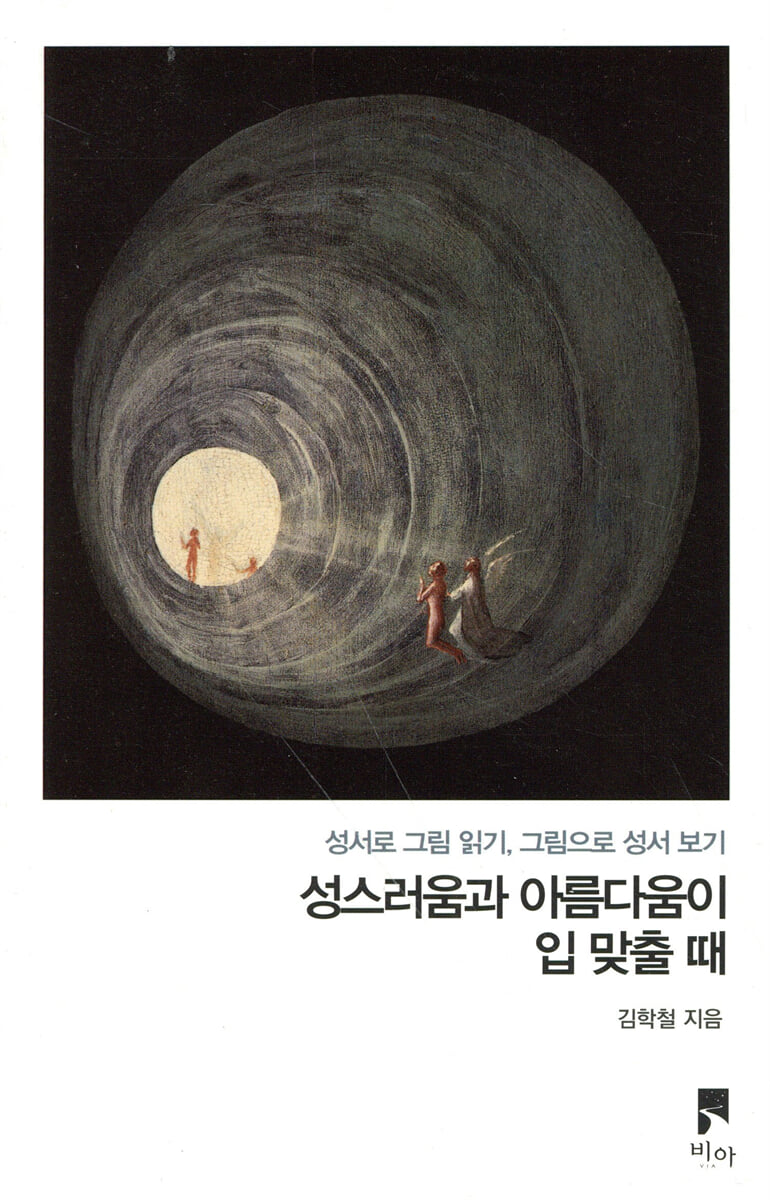
A theological essay by Kim Hak-cheol, a Christian liberal arts scholar and New Testament scholar, exploring the meaning of life through the lens of the Bible and the Bible. By carefully examining the Bible text and various biblical illustrations, we gain insight into the questions, "Where did we come from? What are we? Where are we going?" Since Christianity took root in Western civilization, biblical paintings based on biblical texts have occupied a significant portion of art history. Mosaics in the Basilica of San Vitale in Ravenna, Andrei Rublev's 'Holy Trinity', Hieronymus Bosch's 'Behold the Man', Leonardo da Vinci's 'The Last Supper', Michelangelo's 'The Creation of Adam' and 'The Last Judgment', Raphael, Albrecht Dürer, Rembrandt, Rubens, Gauguin, Georges Rouault, Chagall, etc. Many masters of Western art history read and interpreted the biblical text and expressed it in their paintings. In other words, they all did biblical commentary and theology as art. However, not many people viewed their work in that light, and few theologians or biblical scholars used their theological insights as a source of inspiration. Rather, biblical scholars who base their work on history and linguistics and who place importance on the 'original meaning of the text' and theologians who value doctrine often criticize their works for being contrary to the 'original meaning of the text' and for distorting it. Art historians, who have focused on the techniques used in each work, the artist's talent, and its art historical significance, have also paid relatively little attention to the theological interpretations contained in the work. The author, who paid attention to the theological meaning contained in the works of artists through 『Rembrandt, Painting the Bible』 and his thesis on Andy Warhol, examines the works of familiar painters such as Michelangelo, Rembrandt, and Rubens, as well as relatively unknown painters such as Samuel Park, Frederick Goodall, and William James Webb, paying attention to their theological interpretations and combining the author's own thoughts with biblical knowledge to shed new light on the biblical text. Through this process, insights are revealed that allow us to think more deeply about the core questions of life. For those seeking a text that accurately expresses the Bible in Korean while also encouraging deep reflection on faith, those interested in Christian art, and those contemplating eternity, truth, goodness, and beauty in everyday life, this book will offer refreshing stimulation and much help. |
- You can preview some of the book's contents.
Preview
index
Opening remarks
Reading the Bible Visually and Living with God
Visual Reading of the Bible
Living as a god
The Story of Humanity and Creation
Michelangelo's The Creation of Adam
Samuel Park's Creation in War
Samuel Park's Bereshit Bara
Hand of Faith
Hagar's unfortunate fate and a sympathetic gaze
The Hand of a Mother of Faith that Transcends Misfortune and Pity
A tightly closed reality, a hand pointing upwards
The hand that tests faith
Steps of Hope
Look at the stars that have stayed
Widows seeking their rights
What did Joseph of Arimathea find?
A heart that cannot bear to do it and justice
The unbearable heart of the righteous Joseph
Joseph, the son of comfort
The vineyard owner's justice and unbearable heart
Inside the miracle
Today's place where 'miracles' are placed
The Samaritan woman at the well
One thing I know
Ethics of Memory
Remembering Hosea's Family
Christmas and the Rejected Comfort
Do you remember this woman?
The power of love
Welcome Phoebe with due courtesy.
Accepting Philemon's useless servant as a beloved brother
The tragedy of deception
Where is Dina?
What is repeated?
Pilate's unwashable hands
The Walk of Compassion - Jesus on the Road -
Going out words
Boron
Reading the Bible Visually and Living with God
Visual Reading of the Bible
Living as a god
The Story of Humanity and Creation
Michelangelo's The Creation of Adam
Samuel Park's Creation in War
Samuel Park's Bereshit Bara
Hand of Faith
Hagar's unfortunate fate and a sympathetic gaze
The Hand of a Mother of Faith that Transcends Misfortune and Pity
A tightly closed reality, a hand pointing upwards
The hand that tests faith
Steps of Hope
Look at the stars that have stayed
Widows seeking their rights
What did Joseph of Arimathea find?
A heart that cannot bear to do it and justice
The unbearable heart of the righteous Joseph
Joseph, the son of comfort
The vineyard owner's justice and unbearable heart
Inside the miracle
Today's place where 'miracles' are placed
The Samaritan woman at the well
One thing I know
Ethics of Memory
Remembering Hosea's Family
Christmas and the Rejected Comfort
Do you remember this woman?
The power of love
Welcome Phoebe with due courtesy.
Accepting Philemon's useless servant as a beloved brother
The tragedy of deception
Where is Dina?
What is repeated?
Pilate's unwashable hands
The Walk of Compassion - Jesus on the Road -
Going out words
Boron
Into the book
I hope this book can do what Gauguin's paintings did.
Let us hold onto the biblical passages written over 2,000 years ago, and carefully examine the paintings of the artist who painted them with his own soul, spirit, and body, and let us ask the questions of life that we have put off as unimportant, and let us linger there for a moment.
As we ask about eternity and humbly share our knowledge and experiences with one another, we become more human and thus come closer to God.
Those who have many questions, especially questions about eternity, truth, and beauty, can come closer to God than those who have many correct answers.
It is impossible for the Spirit of God not to be gracious to those who ask about the essence of life.
This book aims to help you do just that.
Rather than providing answers, I want to ask and think about greater and more delicate questions with my readers.
--- p.
14
The commandment not to make any idol representing Yahweh God must be read against the background of the declaration that humans were created in the image of God.
This means that humans are the statues of God, so we should respect them as if they were God, and not commit the foolish act of creating other statues and bowing down to them.
Since there is no need to create a separate statue, there is no need for a separate temple to house it.
This does not mean that we completely deny the temple where we meet God and where he appears, but rather that any place where there are humans who bear the image of God is a temple.
So, from the beginning, the Bible is a radical teaching that declares the entire world as a temple and all humans as gods.
Jesus Christ, the Son of God, showed us how to live in this world as a temple in His image.
His body was a temple, and through him, he lived so that all people could experience God with their five senses.
Therefore, the body of those who follow him and their gathering cannot but be a temple.
The gathering of people who offer their lives as a holy sacrifice becomes the temple of Emmanuel.
It is a moving temple where God's will is revealed and the dream of a new world is realized while opposing this world.
Believers live according to the will of the Bible, treating the world as a temple and worshipping it as a god.
So when someone calls a “stone upon stone” a temple, we must tell them that this is not biblical faith.
In this way, the visual reading of the Bible ultimately leads to living as an image of God.
In other words, this is the religious-artistic embodiment of our lives.
The effort to visualize and further artistically transform the biblical text leads to the visualization of our lives and further to the art of faith.
Those who read the Bible ultimately seek to shape their lives into works of faith and art.
--- pp.33~34
Frederick Goodall (1822-1904) offers a different interpretation of Hagar and Ishmael than the conventional wisdom (Figure 10).
Hagar turns around with young Ishmael and does not look at Abraham's house.
He believes in God's covenant rather than Abraham's.
Although what lies before my eyes is a vast and vast wilderness where I can only wander aimlessly, all I have on my person is a bucket of water and a loaf of bread.
The child is young, and she is a woman who is easily abused.
But Hagar walks on.
His clenched right hand shows his faith and will.
Hagar carries her water jar on her shoulder and tries to be sure that the steps she takes will not lead her to death.
Even though hunger and extreme thirst await him on his way out, he believes in God's care.
Ishmael doesn't act up either.
He carries a bag of bread and tries to do his share of the work.
The child looks at his mother and will unconsciously learn her determined attitude.
Faith is not a passive attitude that seeks comfort from the misfortune and suffering that evokes pity.
It is in the firmly held hands that move forward believing in God's covenant.
The Bible reports that God did not forget the hand that was held so tightly.
--- p.64~65
Raphael painted an oil painting based on Mark 9:2-8 (parallel text Matthew 17:1-13, Luke 9:28-36), which many artists often paint under the title "Transfiguration of Jesus" or "Jesus on the Mount of Transfiguration" between 1516 and 1520 (Figure 11).
It is not particularly new for an Italian Catholic painter to paint a picture of the Mount of Transfiguration around the time of the Renaissance.
However, his interpretation of the text was very delicate, unlike that of other painters before and after him, and this was uniquely reflected in his paintings.
This painting was Raphael's last work and was probably left unfinished.
His disciples were compelled to finish the work, which, though unfinished, already had the potential to become a masterpiece.
The most striking feature that distinguishes this painting from other depictions of Jesus on the Mount of Transfiguration is that it depicts what happened at the foot of the mountain at the same time as Jesus was transfigured on the mountain.
In other words, Raphael sees the transfiguration of Jesus on the mountain and the events that occurred at the bottom of the mountain as simultaneous events, and suggests that the two events be understood together.
In linking the events of the Transfiguration on the mountain and the events at the bottom of the mountain simultaneously, he used a technique called chiaroscuro.
Chiaroscuro is a way of handling light in a painting, and in this painting, Raphael divides the area above the mountain and below the mountain into areas of light and dark, respectively.
This distinct distinction was what the German philosopher Friedrich Nietzsche called the image of the conflict between the Apollonian and Dionysian principles in his book The Birth of Tragedy.
Although Nietzsche was right in reading a clear distinction in the painting, he failed to clarify and name the criteria for that distinction.
The contrast between the realms of light and darkness that Raphael intended is not a conflict between the Apollonian and the Dionysian, but a contrast between the glory and power of God and the helplessness of man.
This dramatic contrast, as we have already seen, artistically expresses the state of Jesus on the mountain, through his transfiguration, revealing his power and glory, while the people at the bottom of the mountain are unable to escape their state of powerlessness and misery.
--- p.71~72
Given Pilate's usual cruelty, it is unlikely that he would have been cautious in judging a country bumpkin from the backwaters of Nazareth.
Perhaps, under normal circumstances, they would have told the Jewish leaders to do whatever they wanted without even meeting someone of that caliber.
However, the Gospel of Matthew tells us that something special happened to Pilate, who knew that the accusations against Jesus were motivated by jealousy among the Jewish leaders.
His wife knew in a dream who the man before Pilate was.
Therefore, Pilate's wife earnestly informs him that Jesus is a righteous man and that if Pilate passes a wrong judgment on him, he will be directly going against God's will.
So Pilate tries his best.
The Gospel of Matthew reports that Barabbas, a Jewish revolutionary, wanted Jesus released instead of a notorious prisoner.
But the Jewish leaders and those who were incited by them insisted that Jesus, not Barabbas, should be crucified, a punishment given to those who rebelled against Rome.
Pilate was once again faced with the strong demands of the Jews.
The signs of another civil unrest also felt threatening.
Pilate, as historians report, would have resorted to further violence to get his way.
But he takes the easy way out.
It was easier to kill one innocent person than to kill countless others.
Why is the life of a Nazarene country bumpkin named Jesus so important?
The only thing that feels a bit unsettling is the dream his wife told him, but isn't the intent and execution of the murder carried out under the Jewish people's insistence anyway?
Pilate washes his hands in front of the crowd.
“I am innocent of this man’s blood; see to it yourselves.” With this he satisfied his conscience and also transferred the wrath of God, which might have been poured out on him, to their own account.
Today, 2,000 years later, billions of Christians recite the Apostles' Creed every Sunday, accusing Pontius Pilate of causing Jesus' suffering and crucifying him.
He who washed his hands, he who could not overcome the Jews' sanctification and threats, he who still wanted to save Jesus.
Although Pilate washed his hands before the crowd and heard the Jews say, “His blood be on us and on our children,” later generations clearly recorded that he was ultimately responsible for Jesus’ suffering and death.
Why is that? Because he has the power to impose the death penalty.
Those who have authority also have responsibilities.
Pilate could have washed his hands and claimed his innocence before the crowd at that time, but before God and history, he is a man with bloody hands that he could never wash.
Let us hold onto the biblical passages written over 2,000 years ago, and carefully examine the paintings of the artist who painted them with his own soul, spirit, and body, and let us ask the questions of life that we have put off as unimportant, and let us linger there for a moment.
As we ask about eternity and humbly share our knowledge and experiences with one another, we become more human and thus come closer to God.
Those who have many questions, especially questions about eternity, truth, and beauty, can come closer to God than those who have many correct answers.
It is impossible for the Spirit of God not to be gracious to those who ask about the essence of life.
This book aims to help you do just that.
Rather than providing answers, I want to ask and think about greater and more delicate questions with my readers.
--- p.
14
The commandment not to make any idol representing Yahweh God must be read against the background of the declaration that humans were created in the image of God.
This means that humans are the statues of God, so we should respect them as if they were God, and not commit the foolish act of creating other statues and bowing down to them.
Since there is no need to create a separate statue, there is no need for a separate temple to house it.
This does not mean that we completely deny the temple where we meet God and where he appears, but rather that any place where there are humans who bear the image of God is a temple.
So, from the beginning, the Bible is a radical teaching that declares the entire world as a temple and all humans as gods.
Jesus Christ, the Son of God, showed us how to live in this world as a temple in His image.
His body was a temple, and through him, he lived so that all people could experience God with their five senses.
Therefore, the body of those who follow him and their gathering cannot but be a temple.
The gathering of people who offer their lives as a holy sacrifice becomes the temple of Emmanuel.
It is a moving temple where God's will is revealed and the dream of a new world is realized while opposing this world.
Believers live according to the will of the Bible, treating the world as a temple and worshipping it as a god.
So when someone calls a “stone upon stone” a temple, we must tell them that this is not biblical faith.
In this way, the visual reading of the Bible ultimately leads to living as an image of God.
In other words, this is the religious-artistic embodiment of our lives.
The effort to visualize and further artistically transform the biblical text leads to the visualization of our lives and further to the art of faith.
Those who read the Bible ultimately seek to shape their lives into works of faith and art.
--- pp.33~34
Frederick Goodall (1822-1904) offers a different interpretation of Hagar and Ishmael than the conventional wisdom (Figure 10).
Hagar turns around with young Ishmael and does not look at Abraham's house.
He believes in God's covenant rather than Abraham's.
Although what lies before my eyes is a vast and vast wilderness where I can only wander aimlessly, all I have on my person is a bucket of water and a loaf of bread.
The child is young, and she is a woman who is easily abused.
But Hagar walks on.
His clenched right hand shows his faith and will.
Hagar carries her water jar on her shoulder and tries to be sure that the steps she takes will not lead her to death.
Even though hunger and extreme thirst await him on his way out, he believes in God's care.
Ishmael doesn't act up either.
He carries a bag of bread and tries to do his share of the work.
The child looks at his mother and will unconsciously learn her determined attitude.
Faith is not a passive attitude that seeks comfort from the misfortune and suffering that evokes pity.
It is in the firmly held hands that move forward believing in God's covenant.
The Bible reports that God did not forget the hand that was held so tightly.
--- p.64~65
Raphael painted an oil painting based on Mark 9:2-8 (parallel text Matthew 17:1-13, Luke 9:28-36), which many artists often paint under the title "Transfiguration of Jesus" or "Jesus on the Mount of Transfiguration" between 1516 and 1520 (Figure 11).
It is not particularly new for an Italian Catholic painter to paint a picture of the Mount of Transfiguration around the time of the Renaissance.
However, his interpretation of the text was very delicate, unlike that of other painters before and after him, and this was uniquely reflected in his paintings.
This painting was Raphael's last work and was probably left unfinished.
His disciples were compelled to finish the work, which, though unfinished, already had the potential to become a masterpiece.
The most striking feature that distinguishes this painting from other depictions of Jesus on the Mount of Transfiguration is that it depicts what happened at the foot of the mountain at the same time as Jesus was transfigured on the mountain.
In other words, Raphael sees the transfiguration of Jesus on the mountain and the events that occurred at the bottom of the mountain as simultaneous events, and suggests that the two events be understood together.
In linking the events of the Transfiguration on the mountain and the events at the bottom of the mountain simultaneously, he used a technique called chiaroscuro.
Chiaroscuro is a way of handling light in a painting, and in this painting, Raphael divides the area above the mountain and below the mountain into areas of light and dark, respectively.
This distinct distinction was what the German philosopher Friedrich Nietzsche called the image of the conflict between the Apollonian and Dionysian principles in his book The Birth of Tragedy.
Although Nietzsche was right in reading a clear distinction in the painting, he failed to clarify and name the criteria for that distinction.
The contrast between the realms of light and darkness that Raphael intended is not a conflict between the Apollonian and the Dionysian, but a contrast between the glory and power of God and the helplessness of man.
This dramatic contrast, as we have already seen, artistically expresses the state of Jesus on the mountain, through his transfiguration, revealing his power and glory, while the people at the bottom of the mountain are unable to escape their state of powerlessness and misery.
--- p.71~72
Given Pilate's usual cruelty, it is unlikely that he would have been cautious in judging a country bumpkin from the backwaters of Nazareth.
Perhaps, under normal circumstances, they would have told the Jewish leaders to do whatever they wanted without even meeting someone of that caliber.
However, the Gospel of Matthew tells us that something special happened to Pilate, who knew that the accusations against Jesus were motivated by jealousy among the Jewish leaders.
His wife knew in a dream who the man before Pilate was.
Therefore, Pilate's wife earnestly informs him that Jesus is a righteous man and that if Pilate passes a wrong judgment on him, he will be directly going against God's will.
So Pilate tries his best.
The Gospel of Matthew reports that Barabbas, a Jewish revolutionary, wanted Jesus released instead of a notorious prisoner.
But the Jewish leaders and those who were incited by them insisted that Jesus, not Barabbas, should be crucified, a punishment given to those who rebelled against Rome.
Pilate was once again faced with the strong demands of the Jews.
The signs of another civil unrest also felt threatening.
Pilate, as historians report, would have resorted to further violence to get his way.
But he takes the easy way out.
It was easier to kill one innocent person than to kill countless others.
Why is the life of a Nazarene country bumpkin named Jesus so important?
The only thing that feels a bit unsettling is the dream his wife told him, but isn't the intent and execution of the murder carried out under the Jewish people's insistence anyway?
Pilate washes his hands in front of the crowd.
“I am innocent of this man’s blood; see to it yourselves.” With this he satisfied his conscience and also transferred the wrath of God, which might have been poured out on him, to their own account.
Today, 2,000 years later, billions of Christians recite the Apostles' Creed every Sunday, accusing Pontius Pilate of causing Jesus' suffering and crucifying him.
He who washed his hands, he who could not overcome the Jews' sanctification and threats, he who still wanted to save Jesus.
Although Pilate washed his hands before the crowd and heard the Jews say, “His blood be on us and on our children,” later generations clearly recorded that he was ultimately responsible for Jesus’ suffering and death.
Why is that? Because he has the power to impose the death penalty.
Those who have authority also have responsibilities.
Pilate could have washed his hands and claimed his innocence before the crowd at that time, but before God and history, he is a man with bloody hands that he could never wash.
--- pp.195~196
Publisher's Review
“Let us hold onto the biblical passages written over 2,000 years ago, and carefully examine the paintings of the artist who painted them with his own soul, spirit, and body. Let us ask ourselves the questions of life that we have put off as unimportant, and let us dwell on them for a moment.
As we ask about eternity and humbly share our knowledge and experiences with one another, we become more human and thus can draw closer to God.
all.
Those who have many questions, especially questions about eternity, truth, and beauty, can come closer to God than those who have many correct answers.
It is impossible for the Spirit of God not to be gracious to those who ask about the essence of life.
This book aims to help with that.” - From the opening remarks
A theological essay by Kim Hak-cheol, a Christian liberal arts scholar and New Testament scholar, exploring the meaning of life through the lens of the Bible and the Bible.
By carefully examining the Bible text and various biblical illustrations, we gain insight into the questions, "Where did we come from? What are we? Where are we going?"
Since Christianity took root in Western civilization, biblical paintings based on biblical texts have occupied a significant portion of art history.
Mosaics in the Basilica of San Vitale in Ravenna, Andrei Rublev's 'Holy Trinity', Hieronymus Bosch's 'Behold the Man', Leonardo da Vinci's 'The Last Supper', Michelangelo's 'The Creation of Adam' and 'The Last Judgment', Raphael, Albrecht Dürer, Rembrandt, Rubens, Gauguin, Georges Rouault, Chagall, etc.
Many masters of Western art history read and interpreted the biblical text and expressed it in their paintings.
In other words, they all did biblical commentary and theology as art.
However, not many people viewed their work in that light, and few theologians or biblical scholars used their theological insights as a source of inspiration.
Rather, biblical scholars who base their work on history and linguistics and who place importance on the 'original meaning of the text' and theologians who value doctrine often criticize their works for being contrary to the 'original meaning of the text' and for distorting it.
Art historians, who have focused on the techniques used in each work, the artist's talent, and its art historical significance, have also paid relatively little attention to the theological interpretations contained in the work.
The author, who paid attention to the theological meaning contained in the works of artists through 『Rembrandt, Painting the Bible』 and his thesis on Andy Warhol, examines the works of familiar painters such as Michelangelo, Rembrandt, and Rubens, as well as relatively unknown painters such as Samuel Park, Frederick Goodall, and William James Webb, paying attention to their theological interpretations and combining the author's own thoughts with biblical knowledge to shed new light on the biblical text.
Through this process, insights are revealed that allow us to think more deeply about the core questions of life.
For those seeking a text that accurately expresses the Bible in Korean while also encouraging deep reflection on faith, those interested in Christian art, and those contemplating eternity, truth, goodness, and beauty in everyday life, this book will offer refreshing stimulation and much help.
As we ask about eternity and humbly share our knowledge and experiences with one another, we become more human and thus can draw closer to God.
all.
Those who have many questions, especially questions about eternity, truth, and beauty, can come closer to God than those who have many correct answers.
It is impossible for the Spirit of God not to be gracious to those who ask about the essence of life.
This book aims to help with that.” - From the opening remarks
A theological essay by Kim Hak-cheol, a Christian liberal arts scholar and New Testament scholar, exploring the meaning of life through the lens of the Bible and the Bible.
By carefully examining the Bible text and various biblical illustrations, we gain insight into the questions, "Where did we come from? What are we? Where are we going?"
Since Christianity took root in Western civilization, biblical paintings based on biblical texts have occupied a significant portion of art history.
Mosaics in the Basilica of San Vitale in Ravenna, Andrei Rublev's 'Holy Trinity', Hieronymus Bosch's 'Behold the Man', Leonardo da Vinci's 'The Last Supper', Michelangelo's 'The Creation of Adam' and 'The Last Judgment', Raphael, Albrecht Dürer, Rembrandt, Rubens, Gauguin, Georges Rouault, Chagall, etc.
Many masters of Western art history read and interpreted the biblical text and expressed it in their paintings.
In other words, they all did biblical commentary and theology as art.
However, not many people viewed their work in that light, and few theologians or biblical scholars used their theological insights as a source of inspiration.
Rather, biblical scholars who base their work on history and linguistics and who place importance on the 'original meaning of the text' and theologians who value doctrine often criticize their works for being contrary to the 'original meaning of the text' and for distorting it.
Art historians, who have focused on the techniques used in each work, the artist's talent, and its art historical significance, have also paid relatively little attention to the theological interpretations contained in the work.
The author, who paid attention to the theological meaning contained in the works of artists through 『Rembrandt, Painting the Bible』 and his thesis on Andy Warhol, examines the works of familiar painters such as Michelangelo, Rembrandt, and Rubens, as well as relatively unknown painters such as Samuel Park, Frederick Goodall, and William James Webb, paying attention to their theological interpretations and combining the author's own thoughts with biblical knowledge to shed new light on the biblical text.
Through this process, insights are revealed that allow us to think more deeply about the core questions of life.
For those seeking a text that accurately expresses the Bible in Korean while also encouraging deep reflection on faith, those interested in Christian art, and those contemplating eternity, truth, goodness, and beauty in everyday life, this book will offer refreshing stimulation and much help.
GOODS SPECIFICS
- Publication date: July 28, 2022
- Page count, weight, size: 256 pages | 374g | 200*130*16mm
- ISBN13: 9791191239850
- ISBN10: 1191239853
You may also like
카테고리
korean


korean

![GQ KOREA Mark (Monthly): December [2025]](http://librairie.coreenne.fr/cdn/shop/files/8ef265dbbfbf186523ed75ba7319009d.jpg?v=1765340328&width=3840)


