

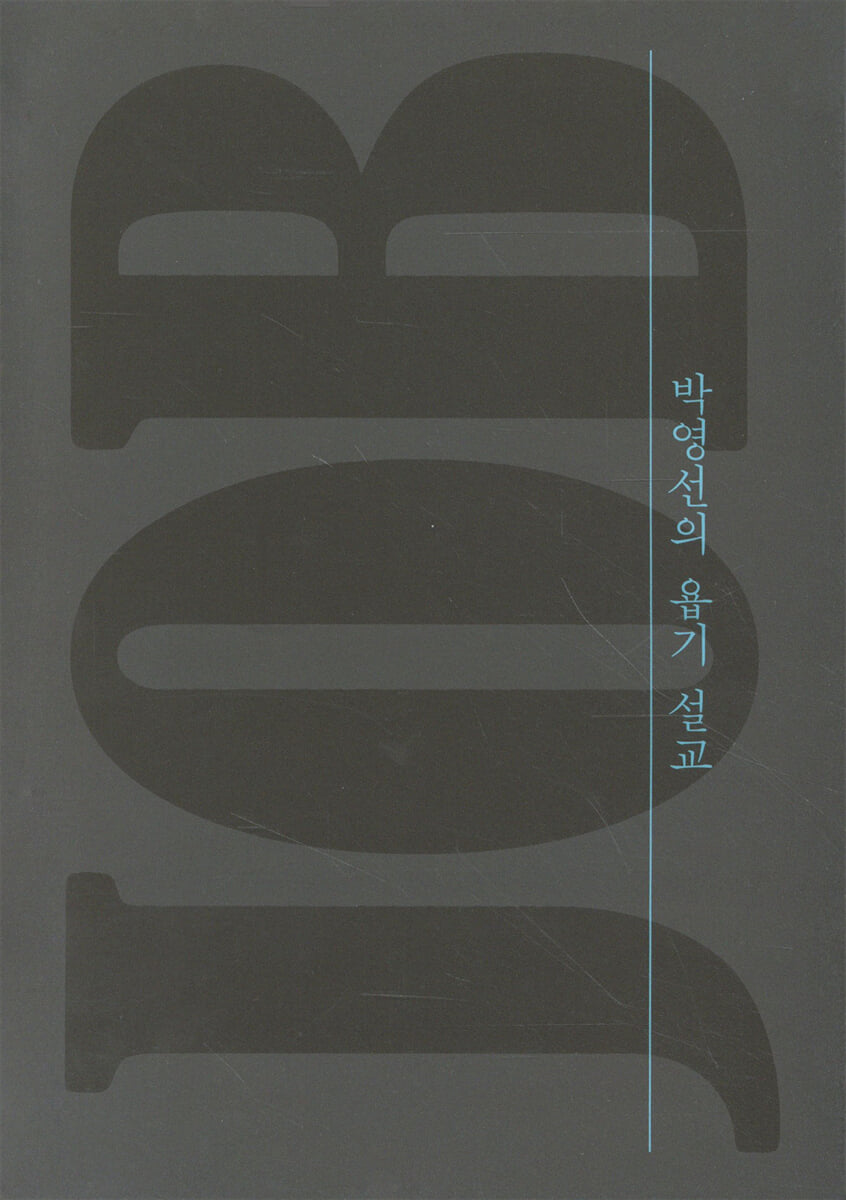
Park Young-sun's Sermon on the Book of Job
 |
Description
Book Introduction
Pastor Park Young-sun, an outstanding preacher, has revised and newly published the sermons on the Book of Job he preached at Nampo Church's Wednesday services from the spring of 2012 to the spring of the following year.
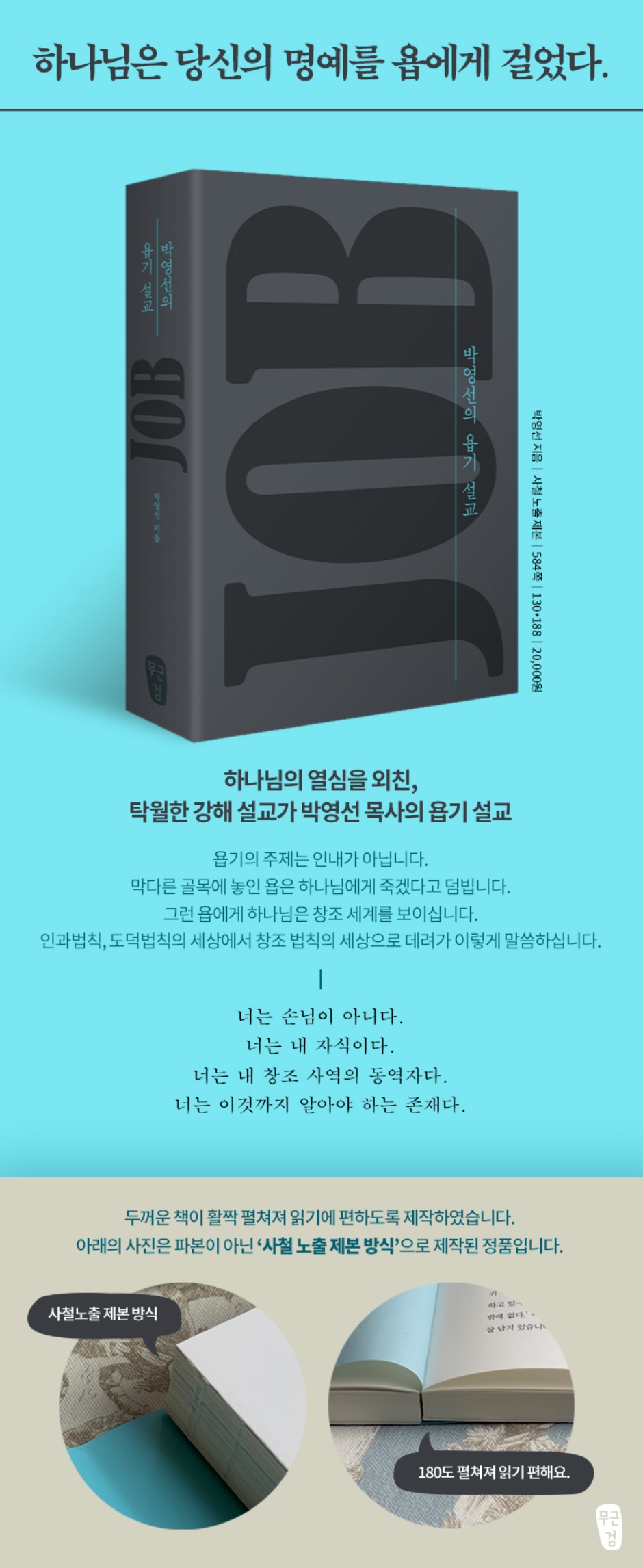
While the first edition (Yeong-eumsa, 2014) was edited to bring out the vividness and presence of the sermon, the second edition (Mugeun-geom, 2017) focused on editing to more clearly reveal the core of the sermon through a new cover and format. This third edition (Mugeungeom, 2021) stands out for its editing, which helps readers fully understand the meaning hidden between the lines of the second edition by putting it into print. It is noteworthy that the number of pages has increased by about 70 compared to the second edition, and that it has been newly presented in a 'four-season exposure binding method' that allows for easy opening and readability. |
index
To the Fellow Church Members · 006
Introduction · 008
Recommendation · 011
01 Suffering: God's Shaking (Job 1:1-22) · 018
02 Suffering_ God's Work (Job 2:1-13) · 036
03 Job: What Should I Do? (Job 3:1-26) · 054
04 Eliphaz: Moral Order is Everything (Job 4:1-5:27) · 072
05 Job: Suffering Comes to the Noble Man (Job 6:1-7:21) · 088
06 Bildad: Obey Tradition and Wait (Job 8:1-22) · 108
Job 07: There is One Greater Than Tradition (Job 10:1-22) · 126
08. Look at your own mistakes (Job 11:1-20) · 140
09 Job: The Right Answer Doesn't Work (Job 12:1-25) · 158
Job 10: God Must Be God (Job 13:1-28) · 176
Job 11: I Saw My Limits (Job 14:1-22) · 194
12 Eliphaz: No Need to Go to God (Job 15:1-35) · 208
Job 13: God, Why Are You Against Me? (Job 16:1-17:16) · 222
14 Bildad: Isn't it enough to live blamelessly? (Job 18:1-21) · 238
Job 15: There Will Be a Resurrection (Job 19:1-29) · 254
16. You brought this upon yourself (Job 20:1-29) · 272
Job 17: Do the Wicked Prosper in Reality? (Job 21:1-34) · 286
18 Eliphaz: Say, "You have been arrogant" (Job 22:1-30) · 304
Job 19: God's Will is Unchangeable (Job 23:1-17) · 320
Job 20: God Did Not Meet Him at the Right Time (Job 24:1-25) · 334
21 Bildad and Job: Speaking of God's Exaltation (Job 25:1-27:23) · 352
Job 22: It is wise to live by entrusting everything to God (Job 28:1-28) · 372
Job 23: It's God's Turn to Answer (Job 29:1-31:40) · 388
24 Elihu: I Speak Without Selfishness (Job 32:1-22) · 408
25 Elihu: God is so clear (Job 34:1-37) · 422
26 Elihu: God Works According to Causality (Job 36:26-37:13) · 438
27 God: You Must Know These Things (Job 38:1-11) · 456
28 God: I am working like a storm (Job 38:4-21) · 472
29 God - Gird up your loins like a man (Job 38:22-39:30) · 486
30 God: Can You Conquer Everyone? (Job 40:1-14) · 516
31 God: You are the one who will rule over them (Job 40:15-41:11) · 532
Job 32: God is at work here (Job 42:1-6) · 466
33 Suffering: God's Blessing (Job 42:1-6) · 546
34 Suffering: The Christian Way: Different from the World (Job 42:7-17) · 566
Introduction · 008
Recommendation · 011
01 Suffering: God's Shaking (Job 1:1-22) · 018
02 Suffering_ God's Work (Job 2:1-13) · 036
03 Job: What Should I Do? (Job 3:1-26) · 054
04 Eliphaz: Moral Order is Everything (Job 4:1-5:27) · 072
05 Job: Suffering Comes to the Noble Man (Job 6:1-7:21) · 088
06 Bildad: Obey Tradition and Wait (Job 8:1-22) · 108
Job 07: There is One Greater Than Tradition (Job 10:1-22) · 126
08. Look at your own mistakes (Job 11:1-20) · 140
09 Job: The Right Answer Doesn't Work (Job 12:1-25) · 158
Job 10: God Must Be God (Job 13:1-28) · 176
Job 11: I Saw My Limits (Job 14:1-22) · 194
12 Eliphaz: No Need to Go to God (Job 15:1-35) · 208
Job 13: God, Why Are You Against Me? (Job 16:1-17:16) · 222
14 Bildad: Isn't it enough to live blamelessly? (Job 18:1-21) · 238
Job 15: There Will Be a Resurrection (Job 19:1-29) · 254
16. You brought this upon yourself (Job 20:1-29) · 272
Job 17: Do the Wicked Prosper in Reality? (Job 21:1-34) · 286
18 Eliphaz: Say, "You have been arrogant" (Job 22:1-30) · 304
Job 19: God's Will is Unchangeable (Job 23:1-17) · 320
Job 20: God Did Not Meet Him at the Right Time (Job 24:1-25) · 334
21 Bildad and Job: Speaking of God's Exaltation (Job 25:1-27:23) · 352
Job 22: It is wise to live by entrusting everything to God (Job 28:1-28) · 372
Job 23: It's God's Turn to Answer (Job 29:1-31:40) · 388
24 Elihu: I Speak Without Selfishness (Job 32:1-22) · 408
25 Elihu: God is so clear (Job 34:1-37) · 422
26 Elihu: God Works According to Causality (Job 36:26-37:13) · 438
27 God: You Must Know These Things (Job 38:1-11) · 456
28 God: I am working like a storm (Job 38:4-21) · 472
29 God - Gird up your loins like a man (Job 38:22-39:30) · 486
30 God: Can You Conquer Everyone? (Job 40:1-14) · 516
31 God: You are the one who will rule over them (Job 40:15-41:11) · 532
Job 32: God is at work here (Job 42:1-6) · 466
33 Suffering: God's Blessing (Job 42:1-6) · 546
34 Suffering: The Christian Way: Different from the World (Job 42:7-17) · 566
Detailed image
Publisher's Review
The Book of Job is the first book in the Bible that a believer reaches for when faced with hardship.
But when you're lost in the chaos of a conversation that's hard to get a handle on, the first book you put down is the Book of Job.
I opened the Book of Job to find a cure for suffering, but Job's cries, the advice of his three friends, and even God's final conclusion all felt somewhat unsatisfactory.
If you can't even grasp the characters' positions even after reading patiently, if the endless debates are boring, if you don't see the differences and progress in each argument that unfolds until the third round, and if you find it difficult to understand how God's appearance at the end of the Book of Job is the ultimate answer to Job's suffering, then it's time for an introductory book on the Book of Job.
For laypeople who have always found the Book of Job difficult and have only read it from the perspective of familiar propositions and unrelated justifications, 『Park Young-sun's Sermons on the Book of Job』, which can be said to be 'the Book of Job next to the Book of Job', has been published in a new binding method (the four-season exposure binding method).
This book can be said to be an 'introduction to the Book of Job' that helps those who have difficulty reading the difficult Book of Job understand it correctly and easily from a biblical perspective.
The author also mentioned this in the preface:
“The Book of Job was a homework assignment that all Christians had to solve at least once.
Now I feel like I've found my way.
I hope that my juniors will pave the road, add signs, and improve it to make it more useful.”
Although it is introduced as an 'introduction to the Book of Job,' this is merely an expression to emphasize that it makes the Book of Job easy to understand. The content of this sermon is extremely profound.
This is because it is a sermon that penetrates the essence of faith as taught by Christianity through the character of Job, guiding us beyond the simple formula of cause and effect to the holy purpose of the Creator hidden behind the suffering of believers.
It may seem like you've just begun reading the Book of Job, but as you read on, you'll feel a sense of accomplishment.
If you have read the Book of Job along with this book, I hope you will now be able to savor and delve into it raw, unearthing a deeper treasure of truth.
Author's Preface
The Book of Job is an interesting book.
Some scholars estimate that the period was set during the period of the Four Sages.
The era of the Judges was one of the most turbulent times in Israel's history.
In this chaos, if the scholars' guesses are correct, God has used Job to prove His faithfulness and the power of His grace.
However, unlike the books of Judges and Ruth, the Book of Job testifies to God's power of creation.
Humans have an ethical religion by nature.
These are the principles of karma and retribution, ethical values represented by the punishment of evil and the promotion of good, and shamanism, which states that intelligence can move heaven.
Even though we are believers, we often neglect God, His authority, His will, and His plans, unable to shed these things.
Some people misunderstand the ideals and ethics they have established themselves as the core of their faith.
Sometimes we become absorbed in something we understand or desire.
By doing this, we create a religion that is different from the Bible and cling to it, which is truly a useless suffering.
The Book of Job clearly declares who God is.
It is said that all existence, order, content, and purpose of the created world come from God.
How Job comes to know this God is an important theme of the Book of Job.
He begins by recognizing the shortcomings of the religion he created.
Even with ethics and morals, passion and dedication, happiness and peace cannot be found.
Job suddenly finds himself in extreme suffering.
Why did this happen? His friends repeatedly insisted that Job was being punished for his wrongdoings.
But Job could not accept it.
It is not that there was any wrong cause that brought about the punishment.
Although he refuted it like this, it didn't mean he had any other explanation.
In this incomprehensible reality, he had no choice but to live in resignation like a naturalist or die.
God comes to us in this dead-end reality.
God constantly tells him to look at the creatures he has made.
He says that their existence, value, and meaning belong to God.
As God created them, He is the owner of the meaning, purpose, and outcome of the existence of creation.
The created world is not a product of necessity and principle, but a reality according to God's good pleasure.
The created world is not limited to the existence of material things, but contains within it the joyful glory of God.
This means that the glory of God becomes the glory of creation.
At this point, Job finally confesses:
“I had heard of you by the hearing of the ear, but now my eye sees you” (Job 42:5).
That is, he sees the power, mystery, and glory of creation.
It is seeing the specific glory of God.
As Simeon, holding the baby Jesus, confessed, “For my eyes have seen your salvation” (Luke 2:30).
The Book of Job was a homework assignment that all Christians had to solve at least once.
Now I feel like I've found my way.
I hope that my juniors will pave the road, add signs, improve it, and make it more useful.
But when you're lost in the chaos of a conversation that's hard to get a handle on, the first book you put down is the Book of Job.
I opened the Book of Job to find a cure for suffering, but Job's cries, the advice of his three friends, and even God's final conclusion all felt somewhat unsatisfactory.
If you can't even grasp the characters' positions even after reading patiently, if the endless debates are boring, if you don't see the differences and progress in each argument that unfolds until the third round, and if you find it difficult to understand how God's appearance at the end of the Book of Job is the ultimate answer to Job's suffering, then it's time for an introductory book on the Book of Job.
For laypeople who have always found the Book of Job difficult and have only read it from the perspective of familiar propositions and unrelated justifications, 『Park Young-sun's Sermons on the Book of Job』, which can be said to be 'the Book of Job next to the Book of Job', has been published in a new binding method (the four-season exposure binding method).
This book can be said to be an 'introduction to the Book of Job' that helps those who have difficulty reading the difficult Book of Job understand it correctly and easily from a biblical perspective.
The author also mentioned this in the preface:
“The Book of Job was a homework assignment that all Christians had to solve at least once.
Now I feel like I've found my way.
I hope that my juniors will pave the road, add signs, and improve it to make it more useful.”
Although it is introduced as an 'introduction to the Book of Job,' this is merely an expression to emphasize that it makes the Book of Job easy to understand. The content of this sermon is extremely profound.
This is because it is a sermon that penetrates the essence of faith as taught by Christianity through the character of Job, guiding us beyond the simple formula of cause and effect to the holy purpose of the Creator hidden behind the suffering of believers.
It may seem like you've just begun reading the Book of Job, but as you read on, you'll feel a sense of accomplishment.
If you have read the Book of Job along with this book, I hope you will now be able to savor and delve into it raw, unearthing a deeper treasure of truth.
Author's Preface
The Book of Job is an interesting book.
Some scholars estimate that the period was set during the period of the Four Sages.
The era of the Judges was one of the most turbulent times in Israel's history.
In this chaos, if the scholars' guesses are correct, God has used Job to prove His faithfulness and the power of His grace.
However, unlike the books of Judges and Ruth, the Book of Job testifies to God's power of creation.
Humans have an ethical religion by nature.
These are the principles of karma and retribution, ethical values represented by the punishment of evil and the promotion of good, and shamanism, which states that intelligence can move heaven.
Even though we are believers, we often neglect God, His authority, His will, and His plans, unable to shed these things.
Some people misunderstand the ideals and ethics they have established themselves as the core of their faith.
Sometimes we become absorbed in something we understand or desire.
By doing this, we create a religion that is different from the Bible and cling to it, which is truly a useless suffering.
The Book of Job clearly declares who God is.
It is said that all existence, order, content, and purpose of the created world come from God.
How Job comes to know this God is an important theme of the Book of Job.
He begins by recognizing the shortcomings of the religion he created.
Even with ethics and morals, passion and dedication, happiness and peace cannot be found.
Job suddenly finds himself in extreme suffering.
Why did this happen? His friends repeatedly insisted that Job was being punished for his wrongdoings.
But Job could not accept it.
It is not that there was any wrong cause that brought about the punishment.
Although he refuted it like this, it didn't mean he had any other explanation.
In this incomprehensible reality, he had no choice but to live in resignation like a naturalist or die.
God comes to us in this dead-end reality.
God constantly tells him to look at the creatures he has made.
He says that their existence, value, and meaning belong to God.
As God created them, He is the owner of the meaning, purpose, and outcome of the existence of creation.
The created world is not a product of necessity and principle, but a reality according to God's good pleasure.
The created world is not limited to the existence of material things, but contains within it the joyful glory of God.
This means that the glory of God becomes the glory of creation.
At this point, Job finally confesses:
“I had heard of you by the hearing of the ear, but now my eye sees you” (Job 42:5).
That is, he sees the power, mystery, and glory of creation.
It is seeing the specific glory of God.
As Simeon, holding the baby Jesus, confessed, “For my eyes have seen your salvation” (Luke 2:30).
The Book of Job was a homework assignment that all Christians had to solve at least once.
Now I feel like I've found my way.
I hope that my juniors will pave the road, add signs, improve it, and make it more useful.
GOODS SPECIFICS
- Publication date: November 22, 2021
- Page count, weight, size: 584 pages | 130*188*35mm
- ISBN13: 9791187506621
- ISBN10: 1187506621
You may also like
카테고리
korean


korean

![GQ KOREA Mark (Monthly): December [2025]](http://librairie.coreenne.fr/cdn/shop/files/8ef265dbbfbf186523ed75ba7319009d.jpg?v=1765340328&width=3840)


