

Like the Huguenots
 |
Description
Book Introduction
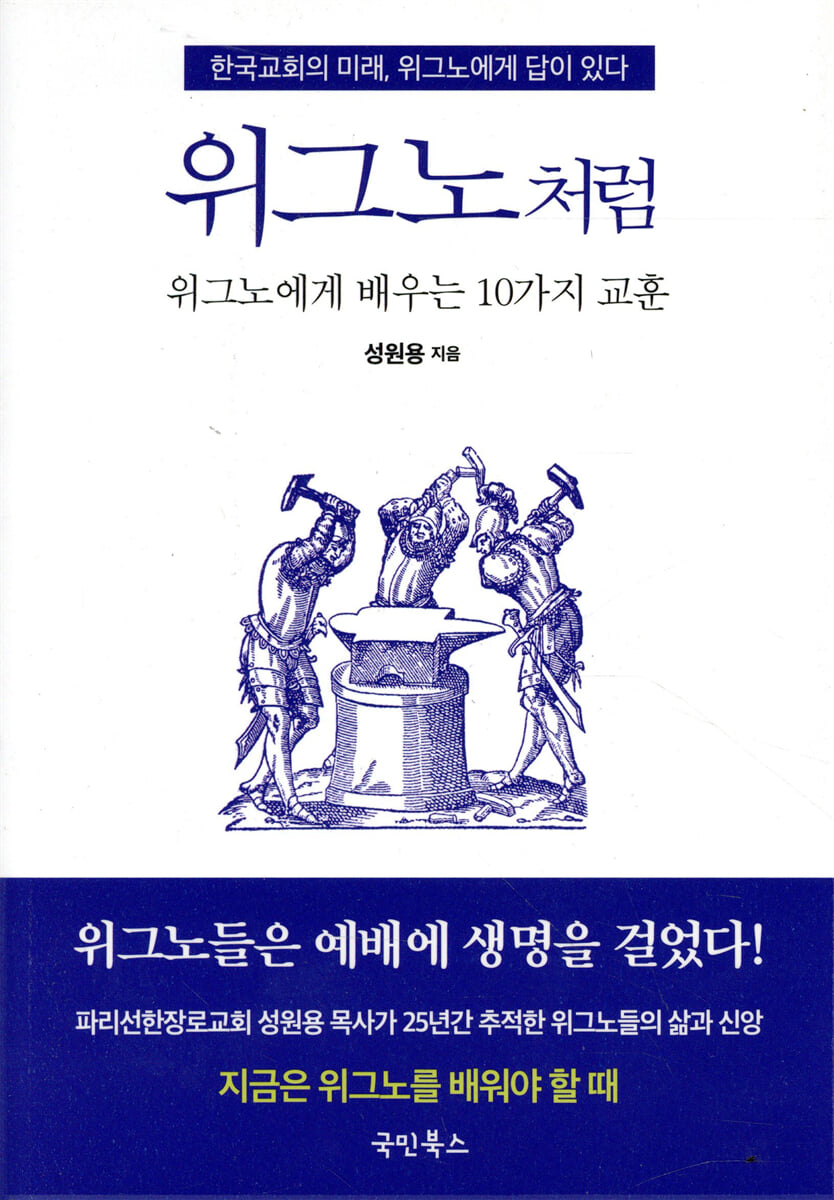
[Like a Huguenot] 10 Lessons from the Huguenots Huguenot refers to French Protestants of the 16th to 18th centuries who followed the theology of religious reformer John Calvin. The word 'Huguenots' comes from the German word 'Eidgenossen'. It means 'alliance' or 'comrades connected by one teaching'. This word was shortened to 'Eignot', which later became 'Hugeunots'. What makes the Huguenots important in Christian history is that they risked their lives and struggled to preserve the essence of their faith despite all kinds of persecution. In Catholic France, the Huguenots fought for religious freedom for over 500 years. Despite the brutal persecution that resulted in the deaths of countless people, their faith ultimately triumphed, and continues to this day in France, Europe, and even Korea. Pastor Seongwon Yong (Pastor of Paris Good Presbyterian Church) is a Huguenot expert who has studied the Huguenots for over 20 years and has visited the site countless times to trace their history. Pastor Sung compiled the secrets of how the Huguenots were able to keep their faith at the risk of their lives into 10 lessons and published them in a book titled “Like a Huguenot.” This book contains stories about the Huguenots and the Huguenots, the history of Christianity seen through them, lessons learned from the Huguenots, and Huguenot historical sites worth visiting. |
- You can preview some of the book's contents.
Preview
index
Recommendation
1.
prolog
2.
Who are the Huguenots?
3.
Christian History Through the Eyes of the Huguenots
1) 16th century - the birth and expansion of the Protestant Church
2) 17th century - limited church growth
3) 18th century - Wilderness Church Era
4) 19th century - freedom and revival of the church
5) 20th Century - The Church's Crisis
6) The 21st Century - The French Church Moving Toward Hope
4.
Like a Huguenot: 10 Lessons from the Huguenots
1) Take courage
2) Endure hardships
3) Resist
4) Live a life of diaspora
5) Stand as a reformer
6) Be tolerant
7) Remember the 5 solares
8) Pursue true Protestantism.
9) Let the church be the church.
10) Be happy in the Lord
5.
Let's go, in search of Huguenot traces - Huguenot sites
1) Latin Street in Paris
2) Little Geneva
3) The scene of suffering
4) Near Paris
5) Central and western France
6) Southern France
7) Eastern France
8) Geneva
6.
Epilogue
1.
prolog
2.
Who are the Huguenots?
3.
Christian History Through the Eyes of the Huguenots
1) 16th century - the birth and expansion of the Protestant Church
2) 17th century - limited church growth
3) 18th century - Wilderness Church Era
4) 19th century - freedom and revival of the church
5) 20th Century - The Church's Crisis
6) The 21st Century - The French Church Moving Toward Hope
4.
Like a Huguenot: 10 Lessons from the Huguenots
1) Take courage
2) Endure hardships
3) Resist
4) Live a life of diaspora
5) Stand as a reformer
6) Be tolerant
7) Remember the 5 solares
8) Pursue true Protestantism.
9) Let the church be the church.
10) Be happy in the Lord
5.
Let's go, in search of Huguenot traces - Huguenot sites
1) Latin Street in Paris
2) Little Geneva
3) The scene of suffering
4) Near Paris
5) Central and western France
6) Southern France
7) Eastern France
8) Geneva
6.
Epilogue
Into the book
Reading about the 500-year history of the Huguenots leaves me breathless and my heart aching.
There are so many moments that it's hard to read without crying, and sometimes I feel like closing the book.
I find myself recalling the words of French Huguenot scholar Samuel Mouret: "If these oppressions had not occurred, France would have been a prominent Protestant nation." But what good is that? History, they say, has no "what ifs."
So I can't help but ask this.
"Why did God abandon them to such dire suffering? What is God's providence toward them? What is the meaning of their suffering?"
--- p.24
French church historians call the 102 years between Louis XIV's revocation of the Edict of Nantes with the Edict of Fontainebleau and Louis XVI's promulgation of the Edict of Versailles (November 7, 1787), also known as the Edict of Toleration, the "era of the church in the wilderness" (La periode l'eglise au desert).
Here, the wilderness is based on the 40 years that the Israelites spent in the wilderness with Moses after leaving Egypt.
For the Israelites, the time of the wilderness was a time of light, not darkness, a time of hope, not despair.
They walked with God, who was their light, in the wilderness and lived in hope of entering the promised land, Canaan.
The same was true of French Protestants.
They lost everything and had to live as wanderers in the wilderness, but they experienced light in that dark tunnel of suffering, and although it seemed bleak at the moment, they walked that path with the hope that the day of freedom would come someday.
--- p.51
I also want to live a life that leaves a lasting impression.
Rather than living a life of great achievements, I would like to leave this world with a gentle impression.
I pray that my life will be one that has a moving finale, as I abandon worldly desires and long for the kingdom of God.
This is one of the precious lessons the Huguenots gave me.
I am indebted to the Huguenots and therefore I am always grateful to them.
I hope that this feeling of gratitude will also be conveyed to Korean Christians, who are also descendants of the Huguenots.
--- p.81
Marie Durand carved text around the water hole in the center of the prison.
‘Resister’ means ‘resist’.
It means resisting untruth, resisting to protect freedom of conscience, and resisting for the sake of the gospel.
By looking at that text every moment, she was able to re-establish herself when she was wavering in the face of painful life and Catholic persuasion, and to support the wandering hearts of her colleagues.
The 'Registe' she carved into the stone was later engraved in the souls of French Protestants.
It became the motto and identity of Protestant believers.
In that spirit, the Huguenots lived according to the freedom of conscience and became courageous people who changed the world.
The noun form of 'resistance' is 'resistance'.
In the mid-20th century, 200 years later, the Résisté became the origin of the resistance that protected the pride of modern French history.
André Ducasse said, “Resisté is a motto opposing collaboration with German Nazism (the Vichy government’s policy of collaboration with Germany during World War II) and is the origin of the word resistance.”
--- p.117
What would it be like to live as a reformer? Hesitating and hesitating before embarking on that path, but once certain of the calling is established, immediately and faithfully offering one's heart to the Lord—that is the life of a reformer, and the life of all ministers.
It was the same when the Lord called the disciples who were fishermen in Galilee.
At the Lord's words, "Follow me," they left everything behind and immediately and faithfully followed Him.
This is a characteristic not only of the twelve disciples, including Peter, but of all God's people on this earth who became disciples of the Lord.
The moment they realized their calling, they left everything and immediately followed the Lord.
Only those who have made such decisions and made such dedication can live a life worthy of their calling.
--- p.158
It is no wonder that in each country and city where the French Huguenots lived as a diaspora, industry developed, prosperity arose, and history changed.
Because they are ‘descendants of Calvin.’
They were people who lived their lives according to the calling given by God.
So they lived honestly and frugally for the glory of God wherever they were.
They were all missionaries.
A city where such missionaries gather cannot but prosper.
--- p.190
I believe that simplicity is the spirit that the Korean church should pursue today.
Before we knew it, the Korean church had become a complex church rather than a simple church.
Rather than a simple chapel, it boasts a magnificent chapel that makes those around it frown.
It must change now.
More important than the number of believers, the ornate chapel, the wealth of finances, or the outstanding programs is to follow the example of Christ, who lived a simple life.
This is the most important thing.
This is where the Korean church must stake its life.
--- p.211
We must learn something from the Huguenots.
Their faith and devotion, their unwavering courage, their burning passion, the spirituality of the Eight Beatitudes they experienced on this earth, and the thrilling happiness they felt in the Lord…
The Huguenots speak to the believers of the Korean church living in the advanced civilized society of the 21st century.
“Life is finite.
Don't chase after this fleeting world, but live in pursuit of eternity.
May all glory be to the Lord alone.
“I hope you find happiness in the Lord….”
There are so many moments that it's hard to read without crying, and sometimes I feel like closing the book.
I find myself recalling the words of French Huguenot scholar Samuel Mouret: "If these oppressions had not occurred, France would have been a prominent Protestant nation." But what good is that? History, they say, has no "what ifs."
So I can't help but ask this.
"Why did God abandon them to such dire suffering? What is God's providence toward them? What is the meaning of their suffering?"
--- p.24
French church historians call the 102 years between Louis XIV's revocation of the Edict of Nantes with the Edict of Fontainebleau and Louis XVI's promulgation of the Edict of Versailles (November 7, 1787), also known as the Edict of Toleration, the "era of the church in the wilderness" (La periode l'eglise au desert).
Here, the wilderness is based on the 40 years that the Israelites spent in the wilderness with Moses after leaving Egypt.
For the Israelites, the time of the wilderness was a time of light, not darkness, a time of hope, not despair.
They walked with God, who was their light, in the wilderness and lived in hope of entering the promised land, Canaan.
The same was true of French Protestants.
They lost everything and had to live as wanderers in the wilderness, but they experienced light in that dark tunnel of suffering, and although it seemed bleak at the moment, they walked that path with the hope that the day of freedom would come someday.
--- p.51
I also want to live a life that leaves a lasting impression.
Rather than living a life of great achievements, I would like to leave this world with a gentle impression.
I pray that my life will be one that has a moving finale, as I abandon worldly desires and long for the kingdom of God.
This is one of the precious lessons the Huguenots gave me.
I am indebted to the Huguenots and therefore I am always grateful to them.
I hope that this feeling of gratitude will also be conveyed to Korean Christians, who are also descendants of the Huguenots.
--- p.81
Marie Durand carved text around the water hole in the center of the prison.
‘Resister’ means ‘resist’.
It means resisting untruth, resisting to protect freedom of conscience, and resisting for the sake of the gospel.
By looking at that text every moment, she was able to re-establish herself when she was wavering in the face of painful life and Catholic persuasion, and to support the wandering hearts of her colleagues.
The 'Registe' she carved into the stone was later engraved in the souls of French Protestants.
It became the motto and identity of Protestant believers.
In that spirit, the Huguenots lived according to the freedom of conscience and became courageous people who changed the world.
The noun form of 'resistance' is 'resistance'.
In the mid-20th century, 200 years later, the Résisté became the origin of the resistance that protected the pride of modern French history.
André Ducasse said, “Resisté is a motto opposing collaboration with German Nazism (the Vichy government’s policy of collaboration with Germany during World War II) and is the origin of the word resistance.”
--- p.117
What would it be like to live as a reformer? Hesitating and hesitating before embarking on that path, but once certain of the calling is established, immediately and faithfully offering one's heart to the Lord—that is the life of a reformer, and the life of all ministers.
It was the same when the Lord called the disciples who were fishermen in Galilee.
At the Lord's words, "Follow me," they left everything behind and immediately and faithfully followed Him.
This is a characteristic not only of the twelve disciples, including Peter, but of all God's people on this earth who became disciples of the Lord.
The moment they realized their calling, they left everything and immediately followed the Lord.
Only those who have made such decisions and made such dedication can live a life worthy of their calling.
--- p.158
It is no wonder that in each country and city where the French Huguenots lived as a diaspora, industry developed, prosperity arose, and history changed.
Because they are ‘descendants of Calvin.’
They were people who lived their lives according to the calling given by God.
So they lived honestly and frugally for the glory of God wherever they were.
They were all missionaries.
A city where such missionaries gather cannot but prosper.
--- p.190
I believe that simplicity is the spirit that the Korean church should pursue today.
Before we knew it, the Korean church had become a complex church rather than a simple church.
Rather than a simple chapel, it boasts a magnificent chapel that makes those around it frown.
It must change now.
More important than the number of believers, the ornate chapel, the wealth of finances, or the outstanding programs is to follow the example of Christ, who lived a simple life.
This is the most important thing.
This is where the Korean church must stake its life.
--- p.211
We must learn something from the Huguenots.
Their faith and devotion, their unwavering courage, their burning passion, the spirituality of the Eight Beatitudes they experienced on this earth, and the thrilling happiness they felt in the Lord…
The Huguenots speak to the believers of the Korean church living in the advanced civilized society of the 21st century.
“Life is finite.
Don't chase after this fleeting world, but live in pursuit of eternity.
May all glory be to the Lord alone.
“I hope you find happiness in the Lord….”
--- p.225
Publisher's Review
Huguenots: People Who Kept Their Faith Despite Persecution
Huguenot refers to French Protestants from the 16th to 18th centuries, but even today, French Protestants do not hesitate to call themselves Huguenots and cling to their Huguenot identity.
They were briefly granted freedom by the Edict of Nantes (L'edit de Nantes) issued by Henry IV, a Huguenot, on April 13, 1598.
However, in October 1685, Louis XIV, the grandson of Henry IV, issued the Edict of Fontainebleau (L'edit de Fontainebleau) to abolish the Edict of Nantes, ending the 87-year period of freedom and entering a long and difficult 102-year journey.
During that period, Protestant places of worship were torn down or burned, and pastors and preachers who could not escape abroad were captured and killed or taken as slaves, where they spent their lives rowing in the holds of ships and dying.
The rest were forcibly converted, and those who did not convert were imprisoned or killed.
Louis XIV closed the borders, blocking the escape of Huguenots abroad.
The brutal persecution began.
French Protestant history calls this period the "wilderness of the church."
In this way, the 500-year history of the Huguenots is a history of maintaining their faith even in the face of oppression and persecution. Their devotion and sacrifice toward the essence of faith are passed down from generation to generation, awakening us from our slumber.
The Resonance of the Huguenot Story on the Korean Church
Why is the story of the Huguenots so necessary for the Korean church today? It's because the Korean church has strayed far from the essence of faith.
The Korean church is currently wandering, lost and without direction, amidst rampant materialism and secularism.
We need a new milestone to lead the Korean church.
Especially during the pandemic era when the coronavirus was rampant, Korean churches had to hold non-face-to-face worship services.
In a way, we are faced with the challenge of a new type of faith that is of a different dimension.
In times like these, the life and faith of the Huguenots, who risked their lives to keep their faith and even prepared a portable pulpit to worship while being driven into the wilderness, are precisely what the Korean church should emulate.
If the Korean church and its believers, from now on, take the life and faith of the Huguenots as a guide and live like them, a new revival will begin.
With that wish in mind, Kookmin Books titled this book 'Like a Huguenot'.
Ten Lessons from the Huguenots
Pastor Sung Won-yong, the author, summarized the ten lessons he learned from the Huguenots as follows:
1) Be courageous 2) Endure suffering 3) Resist 4) Live a life of diaspora 5) Be reformers 6) Be tolerant 7) Remember the five solas 8) Pursue true Protestantism 9) Let the church be the church 10) Be happy in the Lord
I hope that readers of this book will savor each of the ten lessons it contains and apply them to their own lives.
Huguenot refers to French Protestants from the 16th to 18th centuries, but even today, French Protestants do not hesitate to call themselves Huguenots and cling to their Huguenot identity.
They were briefly granted freedom by the Edict of Nantes (L'edit de Nantes) issued by Henry IV, a Huguenot, on April 13, 1598.
However, in October 1685, Louis XIV, the grandson of Henry IV, issued the Edict of Fontainebleau (L'edit de Fontainebleau) to abolish the Edict of Nantes, ending the 87-year period of freedom and entering a long and difficult 102-year journey.
During that period, Protestant places of worship were torn down or burned, and pastors and preachers who could not escape abroad were captured and killed or taken as slaves, where they spent their lives rowing in the holds of ships and dying.
The rest were forcibly converted, and those who did not convert were imprisoned or killed.
Louis XIV closed the borders, blocking the escape of Huguenots abroad.
The brutal persecution began.
French Protestant history calls this period the "wilderness of the church."
In this way, the 500-year history of the Huguenots is a history of maintaining their faith even in the face of oppression and persecution. Their devotion and sacrifice toward the essence of faith are passed down from generation to generation, awakening us from our slumber.
The Resonance of the Huguenot Story on the Korean Church
Why is the story of the Huguenots so necessary for the Korean church today? It's because the Korean church has strayed far from the essence of faith.
The Korean church is currently wandering, lost and without direction, amidst rampant materialism and secularism.
We need a new milestone to lead the Korean church.
Especially during the pandemic era when the coronavirus was rampant, Korean churches had to hold non-face-to-face worship services.
In a way, we are faced with the challenge of a new type of faith that is of a different dimension.
In times like these, the life and faith of the Huguenots, who risked their lives to keep their faith and even prepared a portable pulpit to worship while being driven into the wilderness, are precisely what the Korean church should emulate.
If the Korean church and its believers, from now on, take the life and faith of the Huguenots as a guide and live like them, a new revival will begin.
With that wish in mind, Kookmin Books titled this book 'Like a Huguenot'.
Ten Lessons from the Huguenots
Pastor Sung Won-yong, the author, summarized the ten lessons he learned from the Huguenots as follows:
1) Be courageous 2) Endure suffering 3) Resist 4) Live a life of diaspora 5) Be reformers 6) Be tolerant 7) Remember the five solas 8) Pursue true Protestantism 9) Let the church be the church 10) Be happy in the Lord
I hope that readers of this book will savor each of the ten lessons it contains and apply them to their own lives.
GOODS SPECIFICS
- Publication date: July 12, 2021
- Page count, weight, size: 248 pages | 322g | 140*200*20mm
- ISBN13: 9791188125388
- ISBN10: 1188125389
You may also like
카테고리
korean


korean

![GQ KOREA Mark (Monthly): December [2025]](http://librairie.coreenne.fr/cdn/shop/files/8ef265dbbfbf186523ed75ba7319009d.jpg?v=1765340328&width=3840)


