

How to interview
 |
Description
Book Introduction
- A word from MD
-
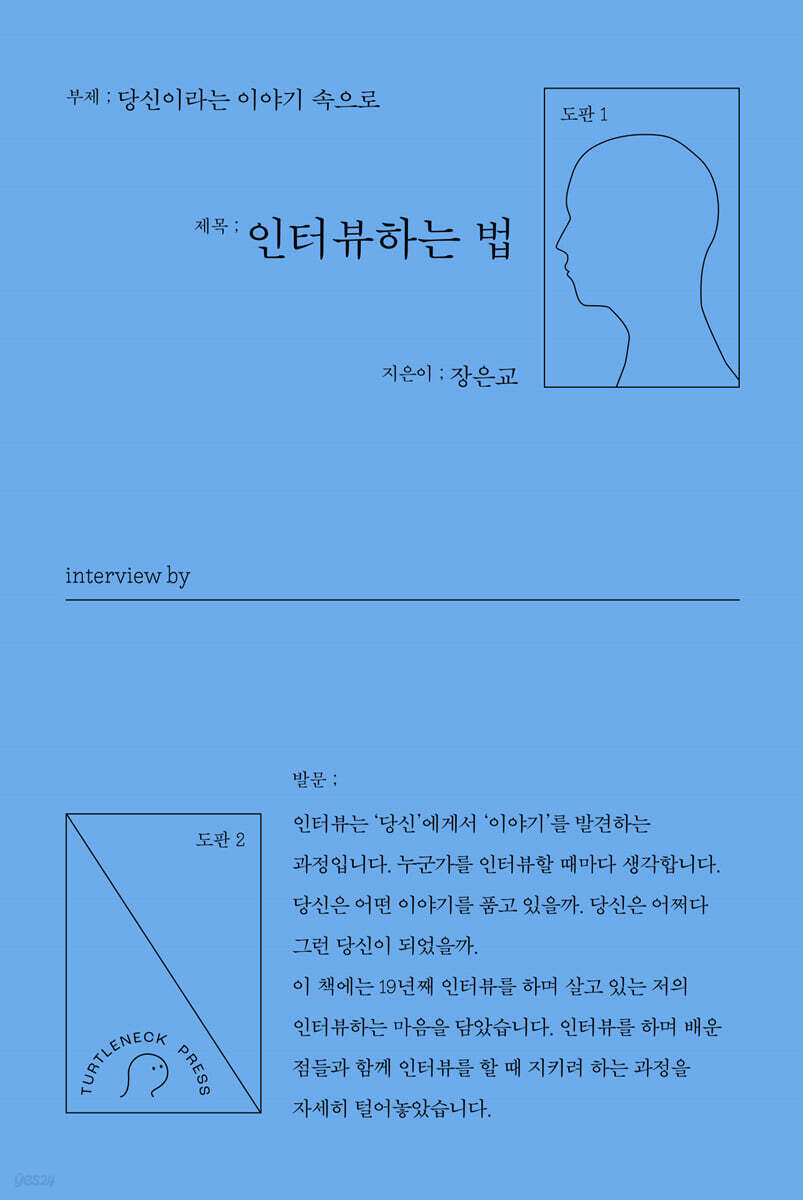
What kind of world does that person have in his heart?A book containing the know-how of writer Jang Eun-kyo, a journalist and interviewer.
From planning to casting, great questions, and reviews, everything about interviews is covered.
Just as the phrase "interview" suggests, "the process of finding the voices and stories we need now" invites readers into the world of interviews, where they can broaden their horizons and encounter diverse worlds.
July 23, 2024. Art PD Ahn Hyun-jae
For those who want to create content through interviews
The Only Guide [How to Interview]
A book filled with the experiences and know-how of author Jang Eun-kyo, who has been interviewing various people for 19 years as a newspaper reporter and interviewer.
We provide detailed guidance on everything from interview planning, recruiting, conducting, organizing content, writing the interview, and final review.
It's also packed with helpful hints for anyone looking to ask good questions, including how to craft "key questions" that will naturally open up the interviewee's mind.
The Only Guide [How to Interview]
A book filled with the experiences and know-how of author Jang Eun-kyo, who has been interviewing various people for 19 years as a newspaper reporter and interviewer.
We provide detailed guidance on everything from interview planning, recruiting, conducting, organizing content, writing the interview, and final review.
It's also packed with helpful hints for anyone looking to ask good questions, including how to craft "key questions" that will naturally open up the interviewee's mind.
- You can preview some of the book's contents.
Preview
index
[Prologue] We are clumsy in every aspect of our lives.
Interview process
Interview: 1.
Planning an interview
[The Meaning of Interview] What Should We Call an Interview?
[Finding Your Interview Preferences] What kind of interviews do you like?
[Two Types of Interviews] Whatever you want to know, who you want to meet
[Interview Planning Direction] Draw a circle with your toes and point east, west, south, and north.
[Creating the First Plan] Preliminarily Walking the Path We Will Take Together
[Interviewer's Attitude] We are all beings with stories.
Interview: 2.
Creating good questions
[Attitude toward preparing questions] Questions to ask before asking a question
[Preliminary Research or Getting to Know You] Words That Resemble You
[Question Types] Four Paths to a Good Interview
[The first key question to open your heart] How did you become who you are?
[A question that brings vividness and specialness] Can you imagine his day?
[Questions that Change Locations] Where Good Questions Take You
Interview: 3.
Interviewing and Recruiting Interviewees
[Interviewing Method] How will we meet?
[Interviewee Recruitment] Into the Story of You
[Writing a Recruitment Email] What kind of letter would you like to receive?
[Things to keep in mind on the day of the interview] A single event that connects you and me today
Interview: 4.
Writing called interview
[Magic question: “How was it?” “What did you say?”] What will be the story of our meeting?
[The starting point of the interview summary] One scene, and one sentence
[Social Distancing and Creating Your Own Recording] Back to the Beginning of the Story
[Interview Content Format and Expression Method] A vessel to contain the interview
[Interview Content Editing] Hello, this is Homo Editingus.
[Writing, rewriting, reviewing] Our ending should be regrettable.
[Epilogue] Today's Underline, Today's Question Mark
Interview process
Interview: 1.
Planning an interview
[The Meaning of Interview] What Should We Call an Interview?
[Finding Your Interview Preferences] What kind of interviews do you like?
[Two Types of Interviews] Whatever you want to know, who you want to meet
[Interview Planning Direction] Draw a circle with your toes and point east, west, south, and north.
[Creating the First Plan] Preliminarily Walking the Path We Will Take Together
[Interviewer's Attitude] We are all beings with stories.
Interview: 2.
Creating good questions
[Attitude toward preparing questions] Questions to ask before asking a question
[Preliminary Research or Getting to Know You] Words That Resemble You
[Question Types] Four Paths to a Good Interview
[The first key question to open your heart] How did you become who you are?
[A question that brings vividness and specialness] Can you imagine his day?
[Questions that Change Locations] Where Good Questions Take You
Interview: 3.
Interviewing and Recruiting Interviewees
[Interviewing Method] How will we meet?
[Interviewee Recruitment] Into the Story of You
[Writing a Recruitment Email] What kind of letter would you like to receive?
[Things to keep in mind on the day of the interview] A single event that connects you and me today
Interview: 4.
Writing called interview
[Magic question: “How was it?” “What did you say?”] What will be the story of our meeting?
[The starting point of the interview summary] One scene, and one sentence
[Social Distancing and Creating Your Own Recording] Back to the Beginning of the Story
[Interview Content Format and Expression Method] A vessel to contain the interview
[Interview Content Editing] Hello, this is Homo Editingus.
[Writing, rewriting, reviewing] Our ending should be regrettable.
[Epilogue] Today's Underline, Today's Question Mark
Detailed image

Into the book
Every time I interview someone, I think about it.
What kind of world does that person have in his heart?
--- p.10
I think an interview is a process of discovering a person's light and shadow.
Everyone lives with light and darkness.
--- p.11
Anyone can be an interviewer, and anyone can be an interviewee.
We need both loud and small voices.
We need big stories and small stories.
--- p.28
Now, would you like to plan an interview?
Write down one question (concern) that comes to mind.
And think of the one person closest to you (related to the topic) with whom you can share that question.
--- p.68
We don't necessarily have to be 'people people'.
We just need to have a 'heart that is curious about people'.
--- p.94
'What you're most curious about' may be an obvious and common question.
If there are 100 interviewers, this is a question that all 100 of them will ask.
This is also a question that you can expect the interviewer to ask, saying, "Yeah, I knew you'd ask that."
(...) The fact that it is a common question that everyone would expect means that it is basic and important.
--- p.128
When you're interviewing, you may feel pressured to ask special or unusual questions.
Like in movies or dramas, you might think that you have to surprise the other person or ask a surprising question to get an answer.
Such a mindset leads us to fall into the 'fallacy of specialness'.
--- p.129
Questions that reveal the interviewee's uniqueness are those that seek to reveal the person's unique qualities that cannot be captured in numbers or conditions.
You don't have to think that even the questions have to be special.
Rather, you can discover what makes someone special by asking ordinary questions.
--- p.135
Can you imagine a day in the life of the person you're interviewing? When I interview someone, I try to imagine their day.
What kind of morning did he have to come here today? Did he sleep well yesterday? What did he have for lunch? What is his workspace like? Where will he go back to after this interview? What kind of expression does he usually have on his face?
--- p.161
After an interview, I usually think, “What’s one sentence that can summarize today’s meeting?”
This one sentence is not a 'topic' or a 'summary of the story'.
This is a representative sentence that best describes today's interview and conveys the interview to those who weren't there.
--- p.241
From now on, we need to think about the 'purpose of the interview content' rather than the 'purpose of the interview'.
Is the purpose of the interview different from the purpose of the interview content? Yes, they are.
The perspective changes.
If the purpose of the interview begins with my own curiosity or inquisitiveness, the purpose of the interview we create should be tailored to the curiosity or inquisitiveness of the people being interviewed.
“I’m curious about ~, Mr. Donggeul.”
This is the purpose of the interview.
That's what I wanted to ask Dongguk, that's what I wanted to hear.
The purpose of interview content changes like this:
“What are people curious about Mr. Dong-geul?”
What kind of world does that person have in his heart?
--- p.10
I think an interview is a process of discovering a person's light and shadow.
Everyone lives with light and darkness.
--- p.11
Anyone can be an interviewer, and anyone can be an interviewee.
We need both loud and small voices.
We need big stories and small stories.
--- p.28
Now, would you like to plan an interview?
Write down one question (concern) that comes to mind.
And think of the one person closest to you (related to the topic) with whom you can share that question.
--- p.68
We don't necessarily have to be 'people people'.
We just need to have a 'heart that is curious about people'.
--- p.94
'What you're most curious about' may be an obvious and common question.
If there are 100 interviewers, this is a question that all 100 of them will ask.
This is also a question that you can expect the interviewer to ask, saying, "Yeah, I knew you'd ask that."
(...) The fact that it is a common question that everyone would expect means that it is basic and important.
--- p.128
When you're interviewing, you may feel pressured to ask special or unusual questions.
Like in movies or dramas, you might think that you have to surprise the other person or ask a surprising question to get an answer.
Such a mindset leads us to fall into the 'fallacy of specialness'.
--- p.129
Questions that reveal the interviewee's uniqueness are those that seek to reveal the person's unique qualities that cannot be captured in numbers or conditions.
You don't have to think that even the questions have to be special.
Rather, you can discover what makes someone special by asking ordinary questions.
--- p.135
Can you imagine a day in the life of the person you're interviewing? When I interview someone, I try to imagine their day.
What kind of morning did he have to come here today? Did he sleep well yesterday? What did he have for lunch? What is his workspace like? Where will he go back to after this interview? What kind of expression does he usually have on his face?
--- p.161
After an interview, I usually think, “What’s one sentence that can summarize today’s meeting?”
This one sentence is not a 'topic' or a 'summary of the story'.
This is a representative sentence that best describes today's interview and conveys the interview to those who weren't there.
--- p.241
From now on, we need to think about the 'purpose of the interview content' rather than the 'purpose of the interview'.
Is the purpose of the interview different from the purpose of the interview content? Yes, they are.
The perspective changes.
If the purpose of the interview begins with my own curiosity or inquisitiveness, the purpose of the interview we create should be tailored to the curiosity or inquisitiveness of the people being interviewed.
“I’m curious about ~, Mr. Donggeul.”
This is the purpose of the interview.
That's what I wanted to ask Dongguk, that's what I wanted to hear.
The purpose of interview content changes like this:
“What are people curious about Mr. Dong-geul?”
--- p.270
GOODS SPECIFICS
- Date of issue: July 15, 2024
- Page count, weight, size: 336 pages | 342g | 126*183*30mm
- ISBN13: 9791198340955
- ISBN10: 1198340959
You may also like
카테고리
korean


korean

![GQ KOREA Mark (Monthly): December [2025]](http://librairie.coreenne.fr/cdn/shop/files/8ef265dbbfbf186523ed75ba7319009d.jpg?v=1765340328&width=3840)


