

Power Metal
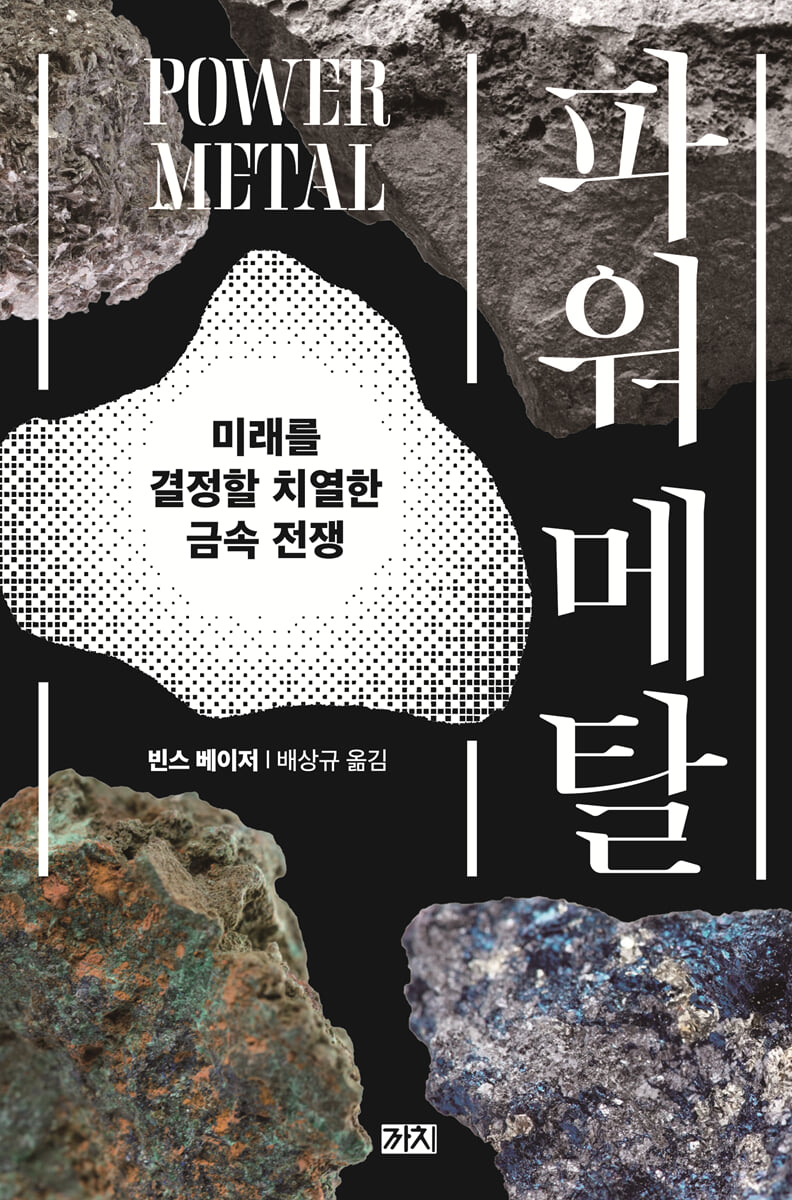 |
Description
Book Introduction
Lithium, copper, nickel, cobalt, rare earth elements, etc. are essential for the electric and digital era.
A fierce battle for key metals
Clearly proposing what we must do today for a sustainable tomorrow.
Interest and enthusiasm for eco-friendly technologies to combat climate change are hotter than ever.
Green technologies are now part of our daily lives, such as buying electric cars instead of gasoline-powered ones and installing solar panels to generate clean energy.
In his previous work, "A World Made of Sand," Vince Beiser, who rose to the ranks of bestselling authors by exposing the reality behind the material called sand and uncovering its secrets that we had not yet seen, now explores the world of key metals that will determine our future.
To understand the realities of lithium, copper, nickel, cobalt, and rare earth elements—essential to underpinning eco-friendly technologies and enabling the digital world—we travel the globe, meeting people from scrap metal collectors to billionaires, from Chile to Nigeria to the United States.
In it, the author confronts the truth that everything comes with a price.
For most of us to enjoy the benefits of technology, some people, invisible to us, have to pay a heavy price.
Meeting security guards who lost their lives protecting copper wires, miners who mine ore in harsh conditions, indigenous people concerned about the ecosystem of the Atacama Desert, and people sorting electronic waste in the midst of a bustling market, the author reveals the harsh reality of the fierce battles surrounding key metals.
Furthermore, the author suggests what we should do right now.
Actively recycle e-waste, reuse old or broken electronic devices to give them new life, and reduce consumption wherever possible while maintaining our quality of life.
For readers facing a time of profound transition to the electric-digital age, this book clearly suggests ways to transform all that humanity enjoys into a sustainable tomorrow, while also vividly urging each individual to take action, conveying voices from the field.
A fierce battle for key metals
Clearly proposing what we must do today for a sustainable tomorrow.
Interest and enthusiasm for eco-friendly technologies to combat climate change are hotter than ever.
Green technologies are now part of our daily lives, such as buying electric cars instead of gasoline-powered ones and installing solar panels to generate clean energy.
In his previous work, "A World Made of Sand," Vince Beiser, who rose to the ranks of bestselling authors by exposing the reality behind the material called sand and uncovering its secrets that we had not yet seen, now explores the world of key metals that will determine our future.
To understand the realities of lithium, copper, nickel, cobalt, and rare earth elements—essential to underpinning eco-friendly technologies and enabling the digital world—we travel the globe, meeting people from scrap metal collectors to billionaires, from Chile to Nigeria to the United States.
In it, the author confronts the truth that everything comes with a price.
For most of us to enjoy the benefits of technology, some people, invisible to us, have to pay a heavy price.
Meeting security guards who lost their lives protecting copper wires, miners who mine ore in harsh conditions, indigenous people concerned about the ecosystem of the Atacama Desert, and people sorting electronic waste in the midst of a bustling market, the author reveals the harsh reality of the fierce battles surrounding key metals.
Furthermore, the author suggests what we should do right now.
Actively recycle e-waste, reuse old or broken electronic devices to give them new life, and reduce consumption wherever possible while maintaining our quality of life.
For readers facing a time of profound transition to the electric-digital age, this book clearly suggests ways to transform all that humanity enjoys into a sustainable tomorrow, while also vividly urging each individual to take action, conveying voices from the field.
- You can preview some of the book's contents.
Preview
index
Entering
1. The Electric-Digital Era
Part 1: Resources for the Future
2 Resource Superpowers
3 Treasure Hunts Around the World
Copper that calls for 4 murders
5 batteries
6 Deserts in Peril
7 Masters of Deep Sea Mining
Part 2: Reverse Supply Chain
8 Concrete Jungle Mines
9 High-Tech Waste
Part 3: A Better Way Than Recycling
10 New life for old things
11 Future Transportation
Acknowledgements
main
References
Translator's Note
Biographical Index
1. The Electric-Digital Era
Part 1: Resources for the Future
2 Resource Superpowers
3 Treasure Hunts Around the World
Copper that calls for 4 murders
5 batteries
6 Deserts in Peril
7 Masters of Deep Sea Mining
Part 2: Reverse Supply Chain
8 Concrete Jungle Mines
9 High-Tech Waste
Part 3: A Better Way Than Recycling
10 New life for old things
11 Future Transportation
Acknowledgements
main
References
Translator's Note
Biographical Index
Detailed image

Publisher's Review
Today, we conveniently use various electronic devices.
The moment you plug your smartphone charger into an outlet, it charges instantly, and you can send and receive emails online and communicate with people online.
All of this has long since become a natural part of our daily lives in today's electric and digital age.
The smartphones we can't put down contain a lot of metal.
Batteries are made from lithium, cobalt, and nickel.
Gold goes into the circuit, tin goes into the circuit board, and nickel goes into the microphone.
In addition, small amounts of indium used in the screen help the device recognize finger touches more precisely, europium improves the screen's color, and neodymium, dysprosium, and terbium are used in a small device that vibrates the smartphone.
As you can see, a lot of metal is used in just one smartphone.
So, electronic devices, including laptops, as well as the wires that supply electricity to them, solar panels that produce electricity in the first place, and wind turbines, require huge amounts of metal.
Even today, we extract more metals from the Earth than humanity has ever mined in history, but demand is expected to increase even further in the future.
The more mining is done, the greater the scale and scope of the damage becomes.
Rainforests are being destroyed, and toxic substances are being released into rivers and the ground, polluting the environment.
However, metal is absolutely necessary for the transition to the electric-digital era.
To achieve a sustainable tomorrow, we must find new perspectives and methods.
Part 1: Resources for the Future vividly captures the current state of metal mining.
The first mineral we encounter is rare earth elements.
Rare earth elements, which are essential for digital devices, are not actually dirt or rare, but they are difficult and expensive to extract.
China, which currently holds a near-monopoly on rare earth exports, is demonstrating its power by controlling rare earth exports.
As other countries, alarmed by China's ban, seek to diversify their rare earth supply, the author visits a rare earth mining site in California, USA.
There, the process of blasting rocks into chunks of stone and then separating and concentrating only the ore grains containing rare earth elements takes place.
The enormous amount of wastewater and ore waste generated in this process places a tremendous burden on the environment.
Even China, which has the world's dominant rare earth refining capacity, is currently struggling with environmental issues, and Myanmar, which exports rare earths to China, is also struggling with environmental issues.
Next up is the copper scene, where demand for electricity increases and huge demands are created each time the power grid is expanded.
As copper prices rise, conflicts are intensifying in South Africa between power companies trying to protect the copper used in their cables and thieves trying to steal it.
Power line guards are being murdered, power lines are being stolen, and people are being left without power, bearing the brunt of the damage.
Copper theft is occurring not only in Africa but also in Chile, the world's largest copper exporter, and the United States.
Next, we face the inconvenient truth that even though Russia invaded Ukraine and started a war, the economic sanctions against Russia quietly excluded nickel, a key metal essential for batteries, and thus money ended up flowing into Russia.
Indonesia, seeking to replace Russia's monopoly, is expanding its nickel industry despite the environmental damage caused by nickel mining, the acid waste generated during refining, air pollution, and energy consumption.
Meanwhile, 70 percent of the world's supply of cobalt comes from just one source: the Democratic Republic of the Congo, where mines are notorious for their harsh conditions.
Not only miners risking their lives working in artisanal mines, but even children are being mobilized for labor.
The increased demand for these metals is due to the growing need for large-capacity batteries as electric vehicles become more widespread, and lithium, another key battery material, is mined from water, not land.
Heading to the Atacama Desert in Chile, the author observes how brine from beneath the desert is pumped out and, through a natural evaporation process, concentrated into a lithium-rich liquid.
Extracting lithium from water without digging up the ground or destroying rainforests might seem like a no-brainer, but it's actually devastating deserts.
Finally, the author heads to the deep sea, where there may be a way to obtain key metals without digging mines.
Deep in the Pacific Ocean lie small boulders called polymetallic nodules, and an Australian billionaire businessman is attempting to mine them for metals.
But the deep sea is a place shared by all of humanity, a place teeming with diversity of life.
No one can be certain what damage might occur if mining were conducted in such deep waters.
The more fundamental problem is that damage is unavoidable as long as mining takes place, whether on land, in water, or in the deep sea.
“Part 2: Reverse Supply Chain” is about “recycling” that individuals can do without endangering the environment.
First, the author meets a man who collects scrap metal in Vancouver and follows his journey to find metal in people's discarded trash.
Metals removed from electronic devices are separated and sold to scrap metal dealers, who then pass the collected scrap metal on to larger recyclers.
The stream of metal recycling, which has grown exponentially through these mergers, ultimately heads to one place: China.
While metal recycling is beneficial to the environment, the process of separating the metals in a product and returning them to their pure form is extremely difficult and can have negative side effects.
But as its value increases, scrap metal is becoming a treasure.
Next, the author dives into Nigeria's bustling markets to meet people who are creating new opportunities using scrap metal.
In one building at the market, I meet people who separate components from electronic waste and collect them for export, and I hear stories of people melting down metals for recycling at a landfill without any protective gear.
E-waste generated in Africa is collected, then valuable components like circuit boards and cameras are removed and exported to China, where they are remanufactured into electronic components, creating wealth.
In developed countries, unlike other products, recycling of electronic devices is rarely done, and more attention should be paid to the utilization of electronic waste.
While recycling certainly helps, it is no substitute for mining.
Part 3: Better Than Recycling: Beyond Recycling explores the demand for key metals and proposes solutions.
The story begins with an engineering student attending college in California.
After dropping his laptop in the dorm, he decided to fix it himself, like any engineering student should.
Contrary to my expectations that the repair would be easy given my experience working at an Apple store, disassembling the laptop was not easy.
After many twists and turns and trial and error, he finally repaired his own laptop. This made him question why personal repair of electronic devices is so difficult. This question resonated and led him to become the operator of a website that helps people repair electronic devices themselves.
In this way, consumers can repair broken electronic products and use them again instead of buying new ones.
Additionally, methods for recycling expired electric vehicle batteries are emerging one after another.
Not only are companies using batteries from discarded electric vehicles to store electricity generated during the day using solar panels and supply it to the city at night, but automakers are also working on projects to reuse old electric vehicle batteries in electricity storage facilities.
Finally, a new story unfolds about our transportation.
We are so accustomed to living our lives centered around roads where cars travel.
However, this is merely an environment that has been thoroughly redesigned through lobbying by the automobile industry.
By designing roads around cars, people were relegated to the status of jaywalkers, criminals.
What's even more shocking is that most cars spend 95 percent of their lives just taking up space.
This means that a huge amount of space is needed for the growing number of cars.
To address these issues, major cities around the world are expanding bicycle lanes and encouraging people to use bicycles through shared bicycles.
Spaces left empty of cars could be converted into residential or office space, and best of all, bicycles produce zero carbon emissions and require no fuel.
The author argues that now, as we enter the electric-digital age and begin efforts to replace fossil fuels with renewable energy, is a crucial moment for humanity.
Our future depends on these key metals, and the choices we make now will undoubtedly have profound implications for the future.
We must mine these metals with minimal environmental impact and do our best to protect the miners and the local communities where they work.
We need to recycle, reuse, and reduce our energy needs as much as possible.
By doing this, the author argues, we will be able to open up the world we want.
“It’s bold.
Beiser urges us to rethink the concept of sustainability.” ? Scientific American
The moment you plug your smartphone charger into an outlet, it charges instantly, and you can send and receive emails online and communicate with people online.
All of this has long since become a natural part of our daily lives in today's electric and digital age.
The smartphones we can't put down contain a lot of metal.
Batteries are made from lithium, cobalt, and nickel.
Gold goes into the circuit, tin goes into the circuit board, and nickel goes into the microphone.
In addition, small amounts of indium used in the screen help the device recognize finger touches more precisely, europium improves the screen's color, and neodymium, dysprosium, and terbium are used in a small device that vibrates the smartphone.
As you can see, a lot of metal is used in just one smartphone.
So, electronic devices, including laptops, as well as the wires that supply electricity to them, solar panels that produce electricity in the first place, and wind turbines, require huge amounts of metal.
Even today, we extract more metals from the Earth than humanity has ever mined in history, but demand is expected to increase even further in the future.
The more mining is done, the greater the scale and scope of the damage becomes.
Rainforests are being destroyed, and toxic substances are being released into rivers and the ground, polluting the environment.
However, metal is absolutely necessary for the transition to the electric-digital era.
To achieve a sustainable tomorrow, we must find new perspectives and methods.
Part 1: Resources for the Future vividly captures the current state of metal mining.
The first mineral we encounter is rare earth elements.
Rare earth elements, which are essential for digital devices, are not actually dirt or rare, but they are difficult and expensive to extract.
China, which currently holds a near-monopoly on rare earth exports, is demonstrating its power by controlling rare earth exports.
As other countries, alarmed by China's ban, seek to diversify their rare earth supply, the author visits a rare earth mining site in California, USA.
There, the process of blasting rocks into chunks of stone and then separating and concentrating only the ore grains containing rare earth elements takes place.
The enormous amount of wastewater and ore waste generated in this process places a tremendous burden on the environment.
Even China, which has the world's dominant rare earth refining capacity, is currently struggling with environmental issues, and Myanmar, which exports rare earths to China, is also struggling with environmental issues.
Next up is the copper scene, where demand for electricity increases and huge demands are created each time the power grid is expanded.
As copper prices rise, conflicts are intensifying in South Africa between power companies trying to protect the copper used in their cables and thieves trying to steal it.
Power line guards are being murdered, power lines are being stolen, and people are being left without power, bearing the brunt of the damage.
Copper theft is occurring not only in Africa but also in Chile, the world's largest copper exporter, and the United States.
Next, we face the inconvenient truth that even though Russia invaded Ukraine and started a war, the economic sanctions against Russia quietly excluded nickel, a key metal essential for batteries, and thus money ended up flowing into Russia.
Indonesia, seeking to replace Russia's monopoly, is expanding its nickel industry despite the environmental damage caused by nickel mining, the acid waste generated during refining, air pollution, and energy consumption.
Meanwhile, 70 percent of the world's supply of cobalt comes from just one source: the Democratic Republic of the Congo, where mines are notorious for their harsh conditions.
Not only miners risking their lives working in artisanal mines, but even children are being mobilized for labor.
The increased demand for these metals is due to the growing need for large-capacity batteries as electric vehicles become more widespread, and lithium, another key battery material, is mined from water, not land.
Heading to the Atacama Desert in Chile, the author observes how brine from beneath the desert is pumped out and, through a natural evaporation process, concentrated into a lithium-rich liquid.
Extracting lithium from water without digging up the ground or destroying rainforests might seem like a no-brainer, but it's actually devastating deserts.
Finally, the author heads to the deep sea, where there may be a way to obtain key metals without digging mines.
Deep in the Pacific Ocean lie small boulders called polymetallic nodules, and an Australian billionaire businessman is attempting to mine them for metals.
But the deep sea is a place shared by all of humanity, a place teeming with diversity of life.
No one can be certain what damage might occur if mining were conducted in such deep waters.
The more fundamental problem is that damage is unavoidable as long as mining takes place, whether on land, in water, or in the deep sea.
“Part 2: Reverse Supply Chain” is about “recycling” that individuals can do without endangering the environment.
First, the author meets a man who collects scrap metal in Vancouver and follows his journey to find metal in people's discarded trash.
Metals removed from electronic devices are separated and sold to scrap metal dealers, who then pass the collected scrap metal on to larger recyclers.
The stream of metal recycling, which has grown exponentially through these mergers, ultimately heads to one place: China.
While metal recycling is beneficial to the environment, the process of separating the metals in a product and returning them to their pure form is extremely difficult and can have negative side effects.
But as its value increases, scrap metal is becoming a treasure.
Next, the author dives into Nigeria's bustling markets to meet people who are creating new opportunities using scrap metal.
In one building at the market, I meet people who separate components from electronic waste and collect them for export, and I hear stories of people melting down metals for recycling at a landfill without any protective gear.
E-waste generated in Africa is collected, then valuable components like circuit boards and cameras are removed and exported to China, where they are remanufactured into electronic components, creating wealth.
In developed countries, unlike other products, recycling of electronic devices is rarely done, and more attention should be paid to the utilization of electronic waste.
While recycling certainly helps, it is no substitute for mining.
Part 3: Better Than Recycling: Beyond Recycling explores the demand for key metals and proposes solutions.
The story begins with an engineering student attending college in California.
After dropping his laptop in the dorm, he decided to fix it himself, like any engineering student should.
Contrary to my expectations that the repair would be easy given my experience working at an Apple store, disassembling the laptop was not easy.
After many twists and turns and trial and error, he finally repaired his own laptop. This made him question why personal repair of electronic devices is so difficult. This question resonated and led him to become the operator of a website that helps people repair electronic devices themselves.
In this way, consumers can repair broken electronic products and use them again instead of buying new ones.
Additionally, methods for recycling expired electric vehicle batteries are emerging one after another.
Not only are companies using batteries from discarded electric vehicles to store electricity generated during the day using solar panels and supply it to the city at night, but automakers are also working on projects to reuse old electric vehicle batteries in electricity storage facilities.
Finally, a new story unfolds about our transportation.
We are so accustomed to living our lives centered around roads where cars travel.
However, this is merely an environment that has been thoroughly redesigned through lobbying by the automobile industry.
By designing roads around cars, people were relegated to the status of jaywalkers, criminals.
What's even more shocking is that most cars spend 95 percent of their lives just taking up space.
This means that a huge amount of space is needed for the growing number of cars.
To address these issues, major cities around the world are expanding bicycle lanes and encouraging people to use bicycles through shared bicycles.
Spaces left empty of cars could be converted into residential or office space, and best of all, bicycles produce zero carbon emissions and require no fuel.
The author argues that now, as we enter the electric-digital age and begin efforts to replace fossil fuels with renewable energy, is a crucial moment for humanity.
Our future depends on these key metals, and the choices we make now will undoubtedly have profound implications for the future.
We must mine these metals with minimal environmental impact and do our best to protect the miners and the local communities where they work.
We need to recycle, reuse, and reduce our energy needs as much as possible.
By doing this, the author argues, we will be able to open up the world we want.
“It’s bold.
Beiser urges us to rethink the concept of sustainability.” ? Scientific American
GOODS SPECIFICS
- Date of issue: July 25, 2025
- Page count, weight, size: 328 pages | 474g | 145*220*20mm
- ISBN13: 9788972918790
- ISBN10: 8972918792
You may also like
카테고리
korean


korean

![GQ KOREA Mark (Monthly): December [2025]](http://librairie.coreenne.fr/cdn/shop/files/8ef265dbbfbf186523ed75ba7319009d.jpg?v=1765340328&width=3840)


