

Bone and Joint Structure Textbook
 |
Description
Book Introduction
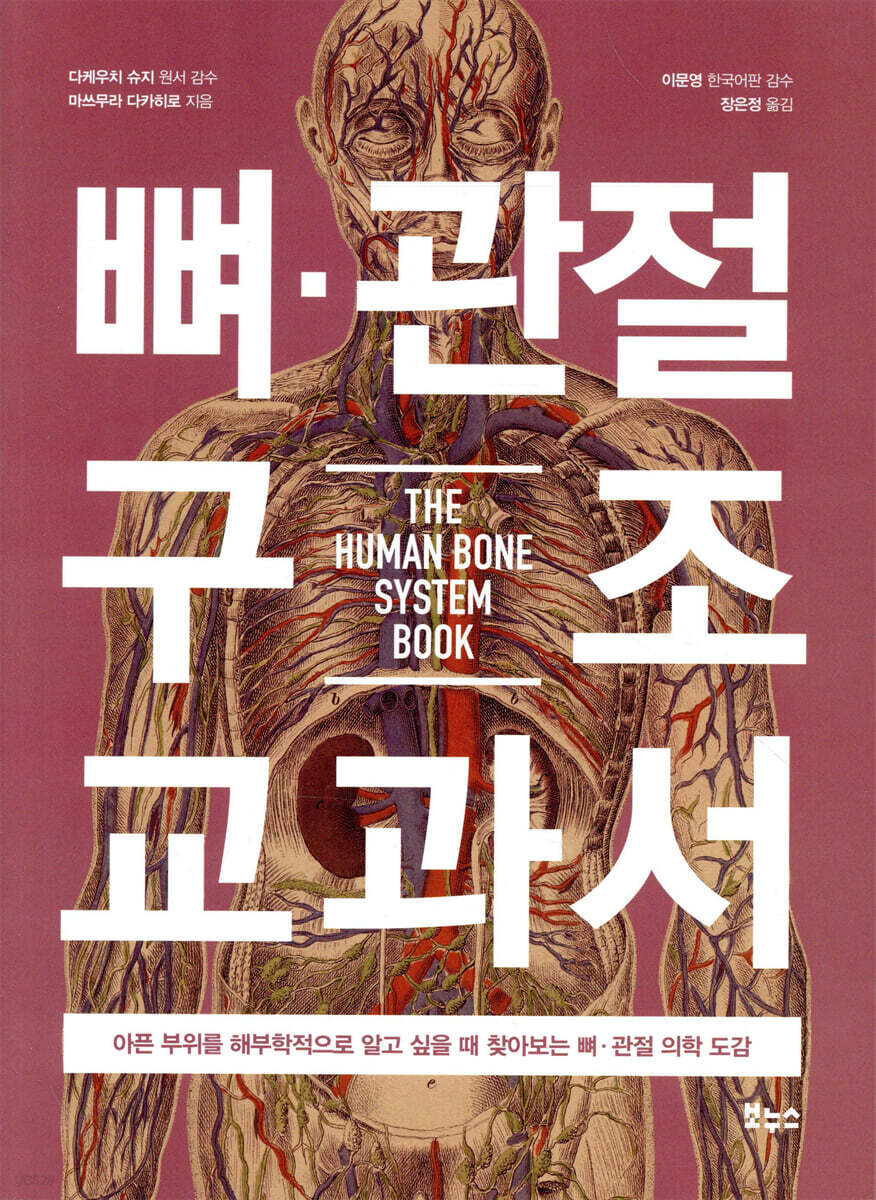
The 『Textbook of Bone and Joint Structure』 contains specialized knowledge of the anatomy of the skeletal system, which is composed of bones, joints, and ligaments, and is organized to help understand the mechanisms of bone and joint diseases, including cervical disc herniation, lumbar disc herniation, back pain, and osteoporosis.
If you want to understand the fundamental causes of the pain and symptoms your body feels, we provide a detailed explanation of the structure of bones and joints, which you must know, with vivid illustrations and descriptions.
If you want to understand the fundamental causes of the pain and symptoms your body feels, we provide a detailed explanation of the structure of bones and joints, which you must know, with vivid illustrations and descriptions.
- You can preview some of the book's contents.
Preview
index
Author's Note
How to read this book
Chapter 1: Basic Knowledge of Osteology
Role and Classification of Bones
Bone structure
Bone development and growth
Names of each bone part
movable joints
Immobile joint
Types of joint movements
Types of movable joints
Joints and ligaments
Chapter 2 Arm Bones
Bones and joints of the arm
clavicle
shoulder blade
humerus
ulna
Nose bone
wrist bones
metacarpal bones and finger bones
Chapter 3 Leg Bones
Bones and joints of the legs
sacrum
hip bone
ischium
pubic bone
pelvis
femur
shinbone
fibula
ankle bone
metatarsal bones
toe bones
kneecap
Chapter 4 Bones of the Torso
Bones and joints of the torso
spine
spine
Heart cage
sternum
ribs
cervical vertebrae
collarbone
scapula
spine
lumbar vertebrae
sacrum and tailbone
Chapter 5 The Skull
Structure of the skull
frontal bone
Parietal bone
occipital bone
honeycomb bone
temporal bone
Butterfly bone
maxilla
nose bone
scapular bone
cheekbone
lacrimal bone
inferior nasal bone
hyoid bone
lower jaw
palatine bone
Koan
Snowdrop
skull
Inner surface of the base of the skull and outer surface of the base of the skull
supplement
Proximal and distal muscle attachment sites and characteristics as seen from the bone
Indication and measurement of joint range of motion
Comparison table of new and old terms
Search
References
A look at the major structures of bones and joints
How to read this book
Chapter 1: Basic Knowledge of Osteology
Role and Classification of Bones
Bone structure
Bone development and growth
Names of each bone part
movable joints
Immobile joint
Types of joint movements
Types of movable joints
Joints and ligaments
Chapter 2 Arm Bones
Bones and joints of the arm
clavicle
shoulder blade
humerus
ulna
Nose bone
wrist bones
metacarpal bones and finger bones
Chapter 3 Leg Bones
Bones and joints of the legs
sacrum
hip bone
ischium
pubic bone
pelvis
femur
shinbone
fibula
ankle bone
metatarsal bones
toe bones
kneecap
Chapter 4 Bones of the Torso
Bones and joints of the torso
spine
spine
Heart cage
sternum
ribs
cervical vertebrae
collarbone
scapula
spine
lumbar vertebrae
sacrum and tailbone
Chapter 5 The Skull
Structure of the skull
frontal bone
Parietal bone
occipital bone
honeycomb bone
temporal bone
Butterfly bone
maxilla
nose bone
scapular bone
cheekbone
lacrimal bone
inferior nasal bone
hyoid bone
lower jaw
palatine bone
Koan
Snowdrop
skull
Inner surface of the base of the skull and outer surface of the base of the skull
supplement
Proximal and distal muscle attachment sites and characteristics as seen from the bone
Indication and measurement of joint range of motion
Comparison table of new and old terms
Search
References
A look at the major structures of bones and joints
Detailed image
.jpg)
Publisher's Review
Understanding the anatomical mechanisms of disc herniation, back pain, arthritis, and osteoporosis
An explanation of bone and joint structures to understand the nature of diseases and symptoms.
Why are the spine in the cervical and lumbar regions particularly susceptible to disc disease? Understanding bone structure can help us understand the root cause.
The spine in the back area is relatively less burdened because the ribs attached to the spine share and support the weight of the body.
However, the spine in the neck and waist does not have a strong reinforcing structure like the ribs due to the design of the human body, so the ligaments and muscles that support the spine play a large role.
Therefore, if you do not strengthen your ligaments and muscles through regular exercise or treatment, you will be easily exposed to diseases.
The lumbar spine in particular is very vulnerable to disc problems caused by compression of the spine, as it has to support the weight of the bones, joints, and internal organs concentrated in the upper body.
There are structural factors that also contribute to arthritis and dislocations that frequently occur in the knees, hands, and ankles.
For example, the kneecap, unlike other major bones in the human body, is a type of sesamoid bone, and its unique shape and the direction of force applied by the meniscus and quadriceps femoris make it vulnerable to various diseases, including dislocation.
By understanding the location and characteristics of joints in this way, the fundamental causes of various diseases and symptoms can be revealed.
The easiest way to understand the human body is to understand the nature of the bones and joints that make up its basic structure.
Knowing the structure of the skeletal system, which consists of bones, joints, and ligaments, gives us a big picture of the huge organism that is the human body.
『Textbook of Bone and Joint Structure』 not only explains the location and characteristics of bones and joints, but also allows readers to clearly understand the mechanisms of which parts of the skeletal system are abnormal and cause pain and symptoms.
Understanding the structure of bones and joints can help us understand pain scientifically.
An essential job in the construction industry is that of a structural engineer.
Structural engineers closely analyze the framework and structure of a building to identify and diagnose vulnerabilities and risk factors in the building.
Thanks to structural engineers, many buildings are extending their lifespan by strengthening vulnerabilities and minimizing the risk of collapse.
The human body is like a building with muscles, skin, and various organs systematically arranged on top of the basic structure of bones and joints.
In other words, understanding the structure of bones and joints is the first step to identifying the weak points and symptoms of our body and creating a healthy human body.
In particular, if the spine, which is the pillar of the human body, or the joints connecting each bone are painful, it is a warning signal from our body.
Neglecting this or simply visiting hospitals without properly understanding the structure of vulnerable areas cannot provide a fundamental solution. "Textbook of Bone and Joint Structure" is filled with specialized medical knowledge that accurately identifies vulnerabilities throughout the body, including the spine, knees, pelvis, hands, and ankles, much like a structural engineer diagnosing your body. This helps you effectively improve them and extend your healthy lifespan.
An illustrated guide to bone and joint anatomy with over 240 vivid illustrations and photographs.
This book classifies all the bones and joints of the human body in various ways and contains specialized knowledge from various fields, so that readers can acquire the necessary knowledge regardless of their purpose of reading the book.
Unlike existing anatomy books that were difficult to understand because they had more text than pictures or that focused on pictures and had relatively little text, this book also utilized a variety of cross-sections from various viewpoints and simplified drawings of the actual structure.
Even if it is the same part, the observable parts are different when the cross-section is cut vertically and when the cross-section is cut horizontally.
Of course, the view from above and the view from below are different.
The 『Bone and Joint Structure Textbook』 is organized in a systematic and easy-to-read format, containing as much information and knowledge as possible through a variety of visual aids, including cross-sections, enlarged views, and perspective views.
With over 240 different CG illustrations and photographs, you can gain vivid knowledge as if you were learning by directly seeing it with your own eyes, with detailed explanations pointing out every observable part.
It not only provides an easy-to-understand explanation of the most basic knowledge in bone and joint anatomy, but also includes specialized knowledge required by various fields of the medical field, such as physical therapists, occupational therapists, and emergency medical technicians.
It covers basic knowledge including the classification, role, and development of bones, as well as detailed medical information on the spine, kneecaps, pelvis, skull, shoulder blades, limb bones, and hand and foot bones, as well as the connecting structures of joints and ligaments including the knee and elbow joints.
An explanation of bone and joint structures to understand the nature of diseases and symptoms.
Why are the spine in the cervical and lumbar regions particularly susceptible to disc disease? Understanding bone structure can help us understand the root cause.
The spine in the back area is relatively less burdened because the ribs attached to the spine share and support the weight of the body.
However, the spine in the neck and waist does not have a strong reinforcing structure like the ribs due to the design of the human body, so the ligaments and muscles that support the spine play a large role.
Therefore, if you do not strengthen your ligaments and muscles through regular exercise or treatment, you will be easily exposed to diseases.
The lumbar spine in particular is very vulnerable to disc problems caused by compression of the spine, as it has to support the weight of the bones, joints, and internal organs concentrated in the upper body.
There are structural factors that also contribute to arthritis and dislocations that frequently occur in the knees, hands, and ankles.
For example, the kneecap, unlike other major bones in the human body, is a type of sesamoid bone, and its unique shape and the direction of force applied by the meniscus and quadriceps femoris make it vulnerable to various diseases, including dislocation.
By understanding the location and characteristics of joints in this way, the fundamental causes of various diseases and symptoms can be revealed.
The easiest way to understand the human body is to understand the nature of the bones and joints that make up its basic structure.
Knowing the structure of the skeletal system, which consists of bones, joints, and ligaments, gives us a big picture of the huge organism that is the human body.
『Textbook of Bone and Joint Structure』 not only explains the location and characteristics of bones and joints, but also allows readers to clearly understand the mechanisms of which parts of the skeletal system are abnormal and cause pain and symptoms.
Understanding the structure of bones and joints can help us understand pain scientifically.
An essential job in the construction industry is that of a structural engineer.
Structural engineers closely analyze the framework and structure of a building to identify and diagnose vulnerabilities and risk factors in the building.
Thanks to structural engineers, many buildings are extending their lifespan by strengthening vulnerabilities and minimizing the risk of collapse.
The human body is like a building with muscles, skin, and various organs systematically arranged on top of the basic structure of bones and joints.
In other words, understanding the structure of bones and joints is the first step to identifying the weak points and symptoms of our body and creating a healthy human body.
In particular, if the spine, which is the pillar of the human body, or the joints connecting each bone are painful, it is a warning signal from our body.
Neglecting this or simply visiting hospitals without properly understanding the structure of vulnerable areas cannot provide a fundamental solution. "Textbook of Bone and Joint Structure" is filled with specialized medical knowledge that accurately identifies vulnerabilities throughout the body, including the spine, knees, pelvis, hands, and ankles, much like a structural engineer diagnosing your body. This helps you effectively improve them and extend your healthy lifespan.
An illustrated guide to bone and joint anatomy with over 240 vivid illustrations and photographs.
This book classifies all the bones and joints of the human body in various ways and contains specialized knowledge from various fields, so that readers can acquire the necessary knowledge regardless of their purpose of reading the book.
Unlike existing anatomy books that were difficult to understand because they had more text than pictures or that focused on pictures and had relatively little text, this book also utilized a variety of cross-sections from various viewpoints and simplified drawings of the actual structure.
Even if it is the same part, the observable parts are different when the cross-section is cut vertically and when the cross-section is cut horizontally.
Of course, the view from above and the view from below are different.
The 『Bone and Joint Structure Textbook』 is organized in a systematic and easy-to-read format, containing as much information and knowledge as possible through a variety of visual aids, including cross-sections, enlarged views, and perspective views.
With over 240 different CG illustrations and photographs, you can gain vivid knowledge as if you were learning by directly seeing it with your own eyes, with detailed explanations pointing out every observable part.
It not only provides an easy-to-understand explanation of the most basic knowledge in bone and joint anatomy, but also includes specialized knowledge required by various fields of the medical field, such as physical therapists, occupational therapists, and emergency medical technicians.
It covers basic knowledge including the classification, role, and development of bones, as well as detailed medical information on the spine, kneecaps, pelvis, skull, shoulder blades, limb bones, and hand and foot bones, as well as the connecting structures of joints and ligaments including the knee and elbow joints.
GOODS SPECIFICS
- Date of issue: February 5, 2020
- Page count, weight, size: 204 pages | 554g | 172*235*20mm
- ISBN13: 9788964944134
- ISBN10: 8964944135
You may also like
카테고리
korean


korean

![GQ KOREA Mark (Monthly): December [2025]](http://librairie.coreenne.fr/cdn/shop/files/8ef265dbbfbf186523ed75ba7319009d.jpg?v=1765340328&width=3840)


