

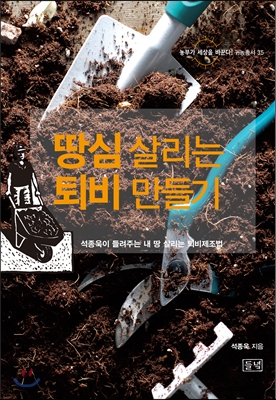
Making compost to revive the soil
 |
Description
Book Introduction
Farming will only survive if the soil is nourished!
"What is Ecological Agriculture?", Volume 35 of the "Farmers Change the World" series, which shows how farmers change the world.
Introducing the mechanism of compost and soil fertilization.
Through my experience in the field of compost manufacturing for over 30 years and organic farming for over 10 years, I have learned that not only is it impossible to revitalize the soil without high-quality compost, but organic farming, even among eco-friendly farming, is impossible.
This explains everything from the selection of materials to the technical manufacturing method and effects of use to create high-quality compost that increases soil organic matter and secures soil depth.
The author's know-how in raising the soil level is revealed in detail.
We provide help to those who purchase the right compost to revitalize the soil, as well as those who use compost themselves.
"What is Ecological Agriculture?", Volume 35 of the "Farmers Change the World" series, which shows how farmers change the world.
Introducing the mechanism of compost and soil fertilization.
Through my experience in the field of compost manufacturing for over 30 years and organic farming for over 10 years, I have learned that not only is it impossible to revitalize the soil without high-quality compost, but organic farming, even among eco-friendly farming, is impossible.
This explains everything from the selection of materials to the technical manufacturing method and effects of use to create high-quality compost that increases soil organic matter and secures soil depth.
The author's know-how in raising the soil level is revealed in detail.
We provide help to those who purchase the right compost to revitalize the soil, as well as those who use compost themselves.
- You can preview some of the book's contents.
Preview
index
Part 1: The Relationship Between Food Production and Soil
1.
What is the earth heart?
2.
What are the conditions that a landowner must have?
3.
What is the difference between organic and inorganic matter?
4.
Why should I add a lot of compost?
5.
Soil testing
6.
Soil organic matter and humus
7.
Causes and countermeasures for continuous cropping disorder
Part 2: How to Make Good Compost
Chapter 1 Compost
1.
What is compost?
2.
Types of compost and raw materials used
3.
Contaminated compost directly damages crops.
4.
Purpose of making compost
5.
composting process
6.
Relationship between the death of bacteria and parasites according to fermentation temperature
7.
Is aerobic or anaerobic compost better?
8.
What are complete and incomplete compost?
9.
What is the difference between fermented compost and rotted compost?
10.
Nematode investigation according to fermentation period
11.
Investigation of actinomycete density in commercial compost according to fermentation period
12.
The effect of using sawdust and fermented compost on vine splitting disease in foreign countries
Chapter 2 Compost Production
1.
Stages of the composting process
2.
Basic process diagram for compost production
3.
What is the longest-lasting compost that solves continuous cropping problems?
4.
The fastest and most effective material to increase soil fertility is sawdust compost.
5.
The history of Korean rice husks and sawdust
6.
Stories Behind the Development of Sawdust Compost
7.
Manufacturing of sawdust compost
8.
Production of various types of compost
Chapter 3: Manufacturing and Use of Various Composts for Urban Agriculture (Various Horticulture)
1.
Composting food waste
2.
Making leaf mold
3.
Making compost from fallen leaves from street trees and gardens
4.
Composting at Home
Part 3: Differences between compost and oil cake among byproduct fertilizers
1.
Types of fertilizers
2.
Types of byproduct fertilizers
3.
Precautions when using organic matter in compost
4.
Organic sources used in soil must be fermented products.
5.
What is mixed fermented organic fertilizer?
Part 4: Use of Green Manure Crops
1.
What is a green manure crop?
2.
Types of green manure crops
3.
Use of green manure crops
4.
Effects of green manure crop use by cropping system
5.
The effect of major green manure crops replacing fertilizer (kg/ha)
6.
Cultivation of major green manure crops and technologies used in rice farming
7.
Green manure crops available for special purposes
Part 5: Making Soil
Chapter 1: Three Elements for Creating Good Soil
Chapter 2: Soil Diagnosis and Prescription
1.
Is it viscous or sandy?
2.
Is water drainage good or bad?
3.
Is your soil high or low in organic matter?
4.
Is it acidic or alkaline?
5.
What about other soil nutrient deficiencies?
6.
Improvement of paddy soil
Chapter 3: How to Improve Soil
1.
physical improvements
2.
chemical modification
3.
Biological improvement
Chapter 4: The Key to Raising the Ground
1.
Choosing Compost Materials
2.
Choosing a Compost Fermentation Method
3.
Estimated amount required to increase the appropriate humus content of each type of compost
Part 6: Soil Management Plan for Eco-Friendly Agriculture
1.
Soil analysis of rice fields
2.
Maintaining soil organic matter content
3.
Soil acidity (pH) correction and precautions
4.
Determination of soil microbiota improvement and soil disinfection
5.
Establishment of a rotation and intercropping system
6.
Method and order of supplying nutrients
7.
Promote soil biodiversity by avoiding herbicides
8.
Use uncontaminated, oxygen-rich water
supplement
1.
Carbon content and fertilizer component content by compost material
2.
Understanding Soil Analysis Reports
3.
Tips for Collecting Soil Samples
4.
Types of soil organisms and microorganisms
5.
Revision of the method for testing the quality of compost and the criteria for sampling
6.
Let's get some gold
7.
Distribution of heavy metal content by major organic waste types
References
1.
What is the earth heart?
2.
What are the conditions that a landowner must have?
3.
What is the difference between organic and inorganic matter?
4.
Why should I add a lot of compost?
5.
Soil testing
6.
Soil organic matter and humus
7.
Causes and countermeasures for continuous cropping disorder
Part 2: How to Make Good Compost
Chapter 1 Compost
1.
What is compost?
2.
Types of compost and raw materials used
3.
Contaminated compost directly damages crops.
4.
Purpose of making compost
5.
composting process
6.
Relationship between the death of bacteria and parasites according to fermentation temperature
7.
Is aerobic or anaerobic compost better?
8.
What are complete and incomplete compost?
9.
What is the difference between fermented compost and rotted compost?
10.
Nematode investigation according to fermentation period
11.
Investigation of actinomycete density in commercial compost according to fermentation period
12.
The effect of using sawdust and fermented compost on vine splitting disease in foreign countries
Chapter 2 Compost Production
1.
Stages of the composting process
2.
Basic process diagram for compost production
3.
What is the longest-lasting compost that solves continuous cropping problems?
4.
The fastest and most effective material to increase soil fertility is sawdust compost.
5.
The history of Korean rice husks and sawdust
6.
Stories Behind the Development of Sawdust Compost
7.
Manufacturing of sawdust compost
8.
Production of various types of compost
Chapter 3: Manufacturing and Use of Various Composts for Urban Agriculture (Various Horticulture)
1.
Composting food waste
2.
Making leaf mold
3.
Making compost from fallen leaves from street trees and gardens
4.
Composting at Home
Part 3: Differences between compost and oil cake among byproduct fertilizers
1.
Types of fertilizers
2.
Types of byproduct fertilizers
3.
Precautions when using organic matter in compost
4.
Organic sources used in soil must be fermented products.
5.
What is mixed fermented organic fertilizer?
Part 4: Use of Green Manure Crops
1.
What is a green manure crop?
2.
Types of green manure crops
3.
Use of green manure crops
4.
Effects of green manure crop use by cropping system
5.
The effect of major green manure crops replacing fertilizer (kg/ha)
6.
Cultivation of major green manure crops and technologies used in rice farming
7.
Green manure crops available for special purposes
Part 5: Making Soil
Chapter 1: Three Elements for Creating Good Soil
Chapter 2: Soil Diagnosis and Prescription
1.
Is it viscous or sandy?
2.
Is water drainage good or bad?
3.
Is your soil high or low in organic matter?
4.
Is it acidic or alkaline?
5.
What about other soil nutrient deficiencies?
6.
Improvement of paddy soil
Chapter 3: How to Improve Soil
1.
physical improvements
2.
chemical modification
3.
Biological improvement
Chapter 4: The Key to Raising the Ground
1.
Choosing Compost Materials
2.
Choosing a Compost Fermentation Method
3.
Estimated amount required to increase the appropriate humus content of each type of compost
Part 6: Soil Management Plan for Eco-Friendly Agriculture
1.
Soil analysis of rice fields
2.
Maintaining soil organic matter content
3.
Soil acidity (pH) correction and precautions
4.
Determination of soil microbiota improvement and soil disinfection
5.
Establishment of a rotation and intercropping system
6.
Method and order of supplying nutrients
7.
Promote soil biodiversity by avoiding herbicides
8.
Use uncontaminated, oxygen-rich water
supplement
1.
Carbon content and fertilizer component content by compost material
2.
Understanding Soil Analysis Reports
3.
Tips for Collecting Soil Samples
4.
Types of soil organisms and microorganisms
5.
Revision of the method for testing the quality of compost and the criteria for sampling
6.
Let's get some gold
7.
Distribution of heavy metal content by major organic waste types
References
Into the book
The most important thing to secure soil is organic matter.
Many people believe that if you just give organic matter, the soil will improve, but that is not true.
Because using organic matter causes fermentation in the soil and damages crops, it must be fermented in advance and turned into compost before use.
It is difficult to find fully fermented compost among the composts available on the market.
A significant portion is less mature compost that is closer to the raw material.
Oil cake, which is commonly made into pellets and used, is also a raw organic material and is not suitable for revitalizing the soil.
-Page 16
What is soil fertility? Simply put, soil fertility refers to the power of the soil to produce healthy crops and increase yields.
Soil with good depth is said to be soil where soil microorganisms are in harmony, crops can absorb nutrients evenly, and crop roots spread deep and widely into the ground to absorb nutrients well.
In other words, good soil refers to soil that has well-balanced physical and chemical conditions (water, air, nutrients, temperature, light, and microorganisms free of harmful factors).
-Page 21
Compost also varies greatly in quality.
Well-fermented compost contains many beneficial microorganisms that eat pathogens in the soil, so adding this compost to the soil will gradually improve it.
On the other hand, if you use rotten compost, it may contain many pathogens, which may end up making the soil worse.
Well-fermented compost will show white, snow-like things during the post-ripening stage; these are beneficial actinomycetes.
… … Crops grown in this soil are disease-free, grow well, and are rich in flavor and nutrition.
When you eat these agricultural products, you are essentially consuming natural antibiotics.
This is the principle of compost farming, circular farming, and organic farming, and why eating organic produce is good for your health.
-Page 34
Why does the amount of compost in soil vary depending on the raw material? For example, if one side were to load a large truckload of cabbage and radish waste, abundant during kimchi season, while another side were to compost a cartload of sawdust, which would produce more compost? The answer is sawdust.
There is so little left in the soil that you cannot find any traces of cabbage or radish waste.
Most people say it's because of moisture, but that's wrong.
This is because sawdust contains at least 20-50% moisture, although this varies depending on the degree of drying.
-Page 54
There is one point I would like to particularly emphasize here, and that is the part about microbes and nutrients.
Even if you only use microorganisms and nutrients, farming will definitely be successful for 2-3 years.
It can't be helped because we are supplementing nutrients and microorganisms to soil that is lacking in microorganisms and nutrients.
But this alone is not enough to continue farming successfully for a long time.
Currently, Korean agricultural soil contains less than half of the optimal amount of soil organic matter (about 2%).
If only microorganisms and nutrients are used in this condition, the soil organic matter content may decrease further as the nutrients are quickly consumed as food for the microorganisms.
If this happens, the functions of soil organic matter described above, such as water retention and water holding capacity, will drop sharply, and the soil will harden and become increasingly poor.
If we use an analogy to our body, it means that it is like having fun by taking Viagra without building up your stamina, and then one day suddenly finding yourself weak.
-Page 65
40-50 years ago, every farmhouse would write and hang a sign in their yard with the words 'Ipchundaegil ( ? ??)' and 'Sojihwanggeumchul ( ???? )'.
This means that if you sweep the yard, collect the waste from farming, make good compost, and farm well, you can earn income (gold).
This passage may be pointing out the importance of compost.
In old agricultural books, it is recorded that our ancestors considered compost making to be the foundation of farming and put the most effort into it.
-Page 98
Many people believe that if you just give organic matter, the soil will improve, but that is not true.
Because using organic matter causes fermentation in the soil and damages crops, it must be fermented in advance and turned into compost before use.
It is difficult to find fully fermented compost among the composts available on the market.
A significant portion is less mature compost that is closer to the raw material.
Oil cake, which is commonly made into pellets and used, is also a raw organic material and is not suitable for revitalizing the soil.
-Page 16
What is soil fertility? Simply put, soil fertility refers to the power of the soil to produce healthy crops and increase yields.
Soil with good depth is said to be soil where soil microorganisms are in harmony, crops can absorb nutrients evenly, and crop roots spread deep and widely into the ground to absorb nutrients well.
In other words, good soil refers to soil that has well-balanced physical and chemical conditions (water, air, nutrients, temperature, light, and microorganisms free of harmful factors).
-Page 21
Compost also varies greatly in quality.
Well-fermented compost contains many beneficial microorganisms that eat pathogens in the soil, so adding this compost to the soil will gradually improve it.
On the other hand, if you use rotten compost, it may contain many pathogens, which may end up making the soil worse.
Well-fermented compost will show white, snow-like things during the post-ripening stage; these are beneficial actinomycetes.
… … Crops grown in this soil are disease-free, grow well, and are rich in flavor and nutrition.
When you eat these agricultural products, you are essentially consuming natural antibiotics.
This is the principle of compost farming, circular farming, and organic farming, and why eating organic produce is good for your health.
-Page 34
Why does the amount of compost in soil vary depending on the raw material? For example, if one side were to load a large truckload of cabbage and radish waste, abundant during kimchi season, while another side were to compost a cartload of sawdust, which would produce more compost? The answer is sawdust.
There is so little left in the soil that you cannot find any traces of cabbage or radish waste.
Most people say it's because of moisture, but that's wrong.
This is because sawdust contains at least 20-50% moisture, although this varies depending on the degree of drying.
-Page 54
There is one point I would like to particularly emphasize here, and that is the part about microbes and nutrients.
Even if you only use microorganisms and nutrients, farming will definitely be successful for 2-3 years.
It can't be helped because we are supplementing nutrients and microorganisms to soil that is lacking in microorganisms and nutrients.
But this alone is not enough to continue farming successfully for a long time.
Currently, Korean agricultural soil contains less than half of the optimal amount of soil organic matter (about 2%).
If only microorganisms and nutrients are used in this condition, the soil organic matter content may decrease further as the nutrients are quickly consumed as food for the microorganisms.
If this happens, the functions of soil organic matter described above, such as water retention and water holding capacity, will drop sharply, and the soil will harden and become increasingly poor.
If we use an analogy to our body, it means that it is like having fun by taking Viagra without building up your stamina, and then one day suddenly finding yourself weak.
-Page 65
40-50 years ago, every farmhouse would write and hang a sign in their yard with the words 'Ipchundaegil ( ? ??)' and 'Sojihwanggeumchul ( ???? )'.
This means that if you sweep the yard, collect the waste from farming, make good compost, and farm well, you can earn income (gold).
This passage may be pointing out the importance of compost.
In old agricultural books, it is recorded that our ancestors considered compost making to be the foundation of farming and put the most effort into it.
-Page 98
---From the text
Publisher's Review
Everything You Need to Know About Compost from a Landshim Evangelist
A book that tells everything about compost has finally been published.
We are a fermentation nation, so much so that we are unrivaled in fermentation. However, when it comes to compost, which is the pinnacle of fermentation technology, we have remained largely ignorant.
Now that we are in an era where organic farming is the trend, many farmers are turning their attention to farming without using chemical fertilizers and pesticides.
However, many of them are fed up with poor crop growth and insect infestation and want to go back to pesticides and chemical fertilizers.
Why does this happen? The biggest reason is a lack of understanding of the principles of soil.
The foundation of organic farming lies in the soil.
Organic farming is possible only when the soil is alive.
However, there is little interest in soil and only various organic materials are being focused on.
This is because of the reality that we need to harvest a lot right away.
In fact, it takes time to revive the soil.
However, once the soil comes to life, it can have a greater effect than any other agricultural material.
The root cause of most pests and diseases is soil deterioration.
When the soil comes alive, the microorganisms in the soil become diverse, and because the natural antibiotics released by the beneficial microorganisms act as pesticides, pests and diseases cannot become extreme in the living soil.
The fundamental way to revive soil is to make compost.
The author of this book, Seok Jong-wook, is Korea's leading authority on compost.
He is opening new horizons for our organic farming by combining traditional methods with modern agriculture.
The author has been immersed in compost research for decades, traveling both domestically and internationally, seeking ways to increase yields while maintaining the soil's sustainable productivity.
The results are contained entirely in this one book.
This book provides invaluable farming strategies to those practicing organic farming.
Our bodies will survive only if we keep our compost alive.
The most basic thing that indicates soil fertility is soil organic matter.
However, if you add a lot of raw organic matter such as rice straw at once to increase this unconditionally or add a large amount of livestock manure with high fertilizer content without fermenting it, the result may be worse than not adding it for several years.
Most organic farming fails for reasons like these.
This is because only fertilizer was applied without basic knowledge of the relationship between soil and compost.
These days, there are many farmers who buy compost rather than making it themselves.
However, the compost sold is not only of poor quality but also costs more to produce.
Another problem is that it is far from being a circular compost system.
We have become a world where we import fertilizer, and considering that even livestock manure is made from imported feed, we can say that we have become a world where we import even manure.
For the body and the soil to become one, the compost that goes into the soil must also come from this land, from the region, from my land and my body.
This is why circular filtering is important.
It explains in detail the technology to turn organic waste from my land and my body into the best compost.
Along with the basic knowledge of compost that farmers must know, the author has organized in an easy-to-understand manner the production methods of beneficial compost, including sawdust compost, which he developed for the first time in Korea.
A book that tells everything about compost has finally been published.
We are a fermentation nation, so much so that we are unrivaled in fermentation. However, when it comes to compost, which is the pinnacle of fermentation technology, we have remained largely ignorant.
Now that we are in an era where organic farming is the trend, many farmers are turning their attention to farming without using chemical fertilizers and pesticides.
However, many of them are fed up with poor crop growth and insect infestation and want to go back to pesticides and chemical fertilizers.
Why does this happen? The biggest reason is a lack of understanding of the principles of soil.
The foundation of organic farming lies in the soil.
Organic farming is possible only when the soil is alive.
However, there is little interest in soil and only various organic materials are being focused on.
This is because of the reality that we need to harvest a lot right away.
In fact, it takes time to revive the soil.
However, once the soil comes to life, it can have a greater effect than any other agricultural material.
The root cause of most pests and diseases is soil deterioration.
When the soil comes alive, the microorganisms in the soil become diverse, and because the natural antibiotics released by the beneficial microorganisms act as pesticides, pests and diseases cannot become extreme in the living soil.
The fundamental way to revive soil is to make compost.
The author of this book, Seok Jong-wook, is Korea's leading authority on compost.
He is opening new horizons for our organic farming by combining traditional methods with modern agriculture.
The author has been immersed in compost research for decades, traveling both domestically and internationally, seeking ways to increase yields while maintaining the soil's sustainable productivity.
The results are contained entirely in this one book.
This book provides invaluable farming strategies to those practicing organic farming.
Our bodies will survive only if we keep our compost alive.
The most basic thing that indicates soil fertility is soil organic matter.
However, if you add a lot of raw organic matter such as rice straw at once to increase this unconditionally or add a large amount of livestock manure with high fertilizer content without fermenting it, the result may be worse than not adding it for several years.
Most organic farming fails for reasons like these.
This is because only fertilizer was applied without basic knowledge of the relationship between soil and compost.
These days, there are many farmers who buy compost rather than making it themselves.
However, the compost sold is not only of poor quality but also costs more to produce.
Another problem is that it is far from being a circular compost system.
We have become a world where we import fertilizer, and considering that even livestock manure is made from imported feed, we can say that we have become a world where we import even manure.
For the body and the soil to become one, the compost that goes into the soil must also come from this land, from the region, from my land and my body.
This is why circular filtering is important.
It explains in detail the technology to turn organic waste from my land and my body into the best compost.
Along with the basic knowledge of compost that farmers must know, the author has organized in an easy-to-understand manner the production methods of beneficial compost, including sawdust compost, which he developed for the first time in Korea.
GOODS SPECIFICS
- Date of publication: April 26, 2013
- Page count, weight, size: 259 pages | 369g | 150*210*20mm
- ISBN13: 9788975276729
- ISBN10: 8975276724
You may also like
카테고리
korean


korean

![ELLE 엘르 스페셜 에디션 A형 : 12월 [2025]](http://librairie.coreenne.fr/cdn/shop/files/b8e27a3de6c9538896439686c6b0e8fb.jpg?v=1766436872&width=3840)


