

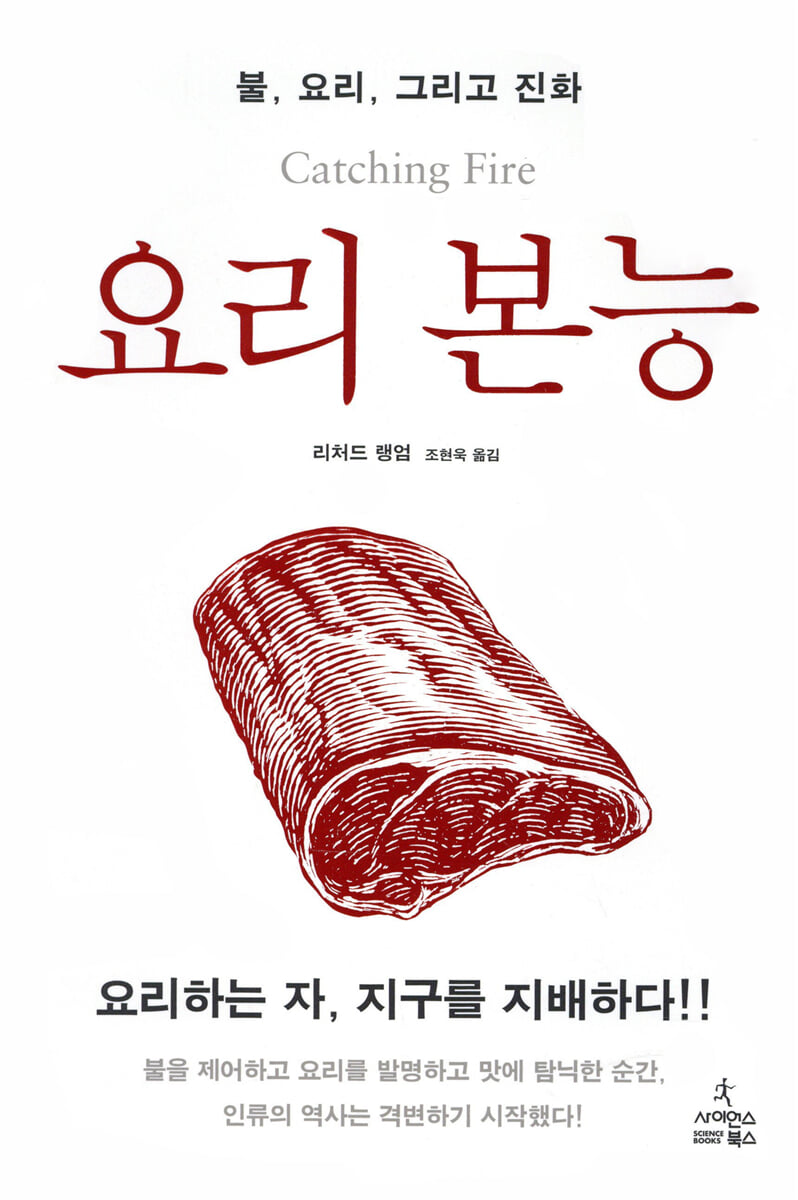
Cooking instinct
 |
Description
Book Introduction
Food, considered one of the three essential elements of survival, is meant to fill hungry stomachs and provide the energy needed for physical and mental activities.
However, food is no longer just a necessity for survival; it has grown into a form of entertainment, a culture, and a huge industry.
For some, cooking can be a tool for healing wounds, like the characters in "Babette's Feast" or "Seagull Restaurant," while for others, it can be a battle of pride, like in "Sikgaek" or "Yes, Chef."
Food and cooking are becoming increasingly important in our lives in various forms.
"Cooking Instinct" looks at these from a new perspective, reexamining the value of cooking through the origins of cooking and the origins of humanity, and revealing the myth of the birth of humanity.
Richard Wrangham, a professor at Harvard University and renowned evolutionary anthropologist, explores the evolutionary history of cooking and humanity based on decades of observation and research on the feeding behavior and ecology of chimpanzees, our closest living relatives, anthropological reports on remote, primitive tribes who have preserved the lifestyles of our ancestors relatively intact, and recently unearthed archaeological evidence of prehistoric humans.
Dr. Wrangham argues that our physical characteristics, which make us unsuited to eating hard, chewy foods, are not proof that we did not eat meat, but rather biological evidence that we evolved to eat cooked food, whether vegetarian or meat-eating.
And it is theorized that this act led to physiological, psychological, and social changes in humans, which served as a driving force for the revolutionary evolution of the entire human species.
As humans began to freely control fire and cook food over it, they shed their ape-like appearance and no longer feared the dark nights and cold winters.
They developed the character necessary for living in groups by gathering around a fire and sharing cooked food, and gave birth to the institutional union between men and women called gender division of labor and marriage.
The abundance of calories from cooked food allowed us to have brains larger than any other species, leading to highly developed languages and civilized societies.
What made all this possible was the invention of cooking.
However, food is no longer just a necessity for survival; it has grown into a form of entertainment, a culture, and a huge industry.
For some, cooking can be a tool for healing wounds, like the characters in "Babette's Feast" or "Seagull Restaurant," while for others, it can be a battle of pride, like in "Sikgaek" or "Yes, Chef."
Food and cooking are becoming increasingly important in our lives in various forms.
"Cooking Instinct" looks at these from a new perspective, reexamining the value of cooking through the origins of cooking and the origins of humanity, and revealing the myth of the birth of humanity.
Richard Wrangham, a professor at Harvard University and renowned evolutionary anthropologist, explores the evolutionary history of cooking and humanity based on decades of observation and research on the feeding behavior and ecology of chimpanzees, our closest living relatives, anthropological reports on remote, primitive tribes who have preserved the lifestyles of our ancestors relatively intact, and recently unearthed archaeological evidence of prehistoric humans.
Dr. Wrangham argues that our physical characteristics, which make us unsuited to eating hard, chewy foods, are not proof that we did not eat meat, but rather biological evidence that we evolved to eat cooked food, whether vegetarian or meat-eating.
And it is theorized that this act led to physiological, psychological, and social changes in humans, which served as a driving force for the revolutionary evolution of the entire human species.
As humans began to freely control fire and cook food over it, they shed their ape-like appearance and no longer feared the dark nights and cold winters.
They developed the character necessary for living in groups by gathering around a fire and sharing cooked food, and gave birth to the institutional union between men and women called gender division of labor and marriage.
The abundance of calories from cooked food allowed us to have brains larger than any other species, leading to highly developed languages and civilized societies.
What made all this possible was the invention of cooking.
- You can preview some of the book's contents.
Preview
index
From the discovery of fire to the invention of cooking
Preface: In the beginning there was cooking.
Chapter 1: In Search of Rawatists
Chapter 2: The Cooking Ape
Chapter 3: The Amazing Benefits of Cooking
Chapter 4 The Day Cooking First Began
Chapter 5: Food, the Driving Force of Brain Growth
Chapter 6 Cooking Will Set Man Free
Chapter 7: The Married Life of a Cook
Chapter 8: Cooking, the Spark of Human Evolution
Cooking instinct
The Evolution of Post-Cooking, the Physics of Cooking
Acknowledgements
main
Translator's Note
Photo copyright
Preface: In the beginning there was cooking.
Chapter 1: In Search of Rawatists
Chapter 2: The Cooking Ape
Chapter 3: The Amazing Benefits of Cooking
Chapter 4 The Day Cooking First Began
Chapter 5: Food, the Driving Force of Brain Growth
Chapter 6 Cooking Will Set Man Free
Chapter 7: The Married Life of a Cook
Chapter 8: Cooking, the Spark of Human Evolution
Cooking instinct
The Evolution of Post-Cooking, the Physics of Cooking
Acknowledgements
main
Translator's Note
Photo copyright
Publisher's Review
From a simple breakfast where families chatter to a splendid dinner where guests are dressed up and noisy, from a quick bowl of soup whipped up at the market to a classic French course meal where you leisurely wait for the next course, the presence of food to people is as diverse as the countless menus and recipes that exist around the world.
For some, like the characters in the novel "Babette's Feast" or the movie "Kamome Diner," cooking becomes a tool of communication that heals wounds and restores trust. For others, it becomes a life-or-death battle of pride, like the manga "Sikgaek" or the survival program "Yes Chef." For others, it becomes memories, a work of art, and the last happiness in their lives.
What is clear is that the humble task of preparing food for myself and my family to fill hungry bellies and replenish the energy needed for physical and mental activities is no longer merely a necessity for survival, but has grown into a form of enjoyment, a culture, and a massive industry.
Food and cooking, which are becoming increasingly important in our lives in various forms, are being looked at from a new perspective. By looking back at the origins of cooking, the origins of mankind, and the long history of mankind and cooking, a book that sheds new light on the value of cooking and reveals the myth of the birth of mankind has been published by Science Books.
『Cooking Instinct (Catching Fire)』 is a book that delves into the history of cooking and human evolution based on the results of decades of observation and research on the feeding behavior and ecology of chimpanzees, our closest living relatives on Earth, by Dr. Richard Wrangham, a professor at Harvard University and renowned evolutionary anthropologist, as well as anthropological reports on primitive tribes living in remote areas who have preserved the lifestyle of our ancestors relatively intact, and archaeological evidence of prehistoric humans unearthed to date.
The author's first popular book, 『Demonic Male』 (1996, co-authored), which caused controversy and buzz by exploring the origins of human violence, such as war and murder, through comparative research with male primates, is 『Cooking Instinct』, which was written and published independently by the author after 10 years. This book, too, was published immediately after its publication in major scientific journals such as 『Nature』, 『Scientific American』, 『New York Times』, 『Washington Post』, 『Guardian』, and 『Telegraph』, due to its unprecedented new ideas and persuasive and solid arguments. ) and other influential media outlets around the world, and was invited to famous cooking magazines such as 《Gourmet (u000b Gourmetu000b)》 and popular cooking-related broadcast programs, drawing a hot response from the cooking industry.
In 2010, the BBC produced and aired a documentary titled "Did Cooking Make Us Human" based on the main content and experiments featured in "The Cooking Instinct" and an interview with Dr. Wrangham.
In "The Cooking Instinct," Dr. Wrangham traces the origins of cooking, the first use of fire to prepare food, using archaeological and anthropological evidence. He then examines the biological traces etched on the bodies of modern humans to reveal that cooking has influenced every aspect of human life, from the physical to the mental, and has played a key role in shaping humanity into what it is today.
The moment we mastered fire, invented cooking, and indulged in flavor, human evolution began to shift dramatically! "The Cooking Instinct" argues that the most important and greatest invention in human history wasn't tools, language, agriculture, or civilization, but cooking!
The first ancestors of mankind were cooks?!
The growth and globalization of the food industry, while offering the benefits of maximum convenience and pleasure, also have fatal drawbacks: chronic diseases like obesity and diabetes, and even life-threatening conditions like cancer and heart attack.
As the safety and reality of modernized and industrialized foods become increasingly public, and the very act of growing, harvesting, selling, buying, preparing, and eating food becomes increasingly crucial to the survival of individuals and all of humanity, there is a growing movement to return to nature and find a healthy diet that humans were originally designed to eat.
Some people, based on the physical characteristics of humans, argue that humans were originally vegetarians who did not eat meat, or raw foodists who consumed food in an uncooked state as much as possible.
It is clear that humans were not born as natural gladiators, possessing neither sharp claws, massive physiques, lethal venom, nor even thick armor.
Their jaws are weak, their mouths are small, and their teeth are dull, making them unsuitable for chewing tough meat.
Given these external characteristics, some argue that humans were originally vegetarians who consumed plant-based foods, rather than predators who hunted and ate animals, and that fire was only introduced into human life not long ago, making a raw food diet suitable for humans.
Are we truly born vegetarians or raw foodists? If so, when did meat-eating, fire, and the act of cooking—the act of cooking over fire—enter human life? When and how did animal products and fire-cooked foods, now beloved menu items on modern dinner tables, finally make their way onto our tables?
Dr. Wrangham first analyzed the physiological and nutritional studies of raw foodists to determine what foods we humans have adapted to consume.
In fact, people who follow a strict reproduction diet are not guaranteed an adequate energy supply, and in women, menstruation stops completely (50 percent) or becomes irregular (10 percent), and in men, sexual function also declines.
Moreover, while today's raw foodists can easily find and eat the artificially increased energy content of modern agriculture products anytime and anywhere, our ancestors long before the advent of agriculture would have experienced periodic hunger periods when food was difficult to obtain depending on the season, as might be expected from the existing primitive tribes that depended on a gathering economy, and among these, by-products such as good fruits and honey were especially difficult to obtain.
The severely insufficient energy supply and decline in reproductive function due to large seasonal fluctuations suggest that it would have been difficult for individuals who only reproduced to survive and reach the present day throughout evolutionary history.
We are not born to eat raw food or to be vegetarian.
Delicious Evolution
Dr. Wrangham argues that our physical characteristics, which make us unsuited to eating hard, chewy foods, are not proof that we did not eat meat, but rather biological evidence that we evolved to eat cooked food, whether vegetarian or meat-eating.
And he proposes a surprising theory that cooking, the act of cooking over fire, not only induced anatomical changes in humans, but also led to physiological, psychological, and social changes, acting as a driving force for the revolutionary evolution of the entire human species.
The question of what we actually eat can have profound implications not only for an individual but for the entire species.
The importance of food is confirmed in the natural world by the fact that changes in eating habits bring about anatomical changes at the species level, and at a rapid pace, as in the Galapagos finches, whose beaks changed to be larger across the entire species in less than a year to enable them to eat large, hard seeds when food became scarce due to drought, or in the case of gorillas and chimpanzees, who show various morphological and behavioral ecological differences due to seemingly trivial differences in eating habits such as whether they can survive by eating only leaves.
Dr. Wrangham, who has observed the feeding behavior of wild chimpanzees in Africa for decades, says that even small differences such as leaves and fruits can lead to different behavioral ecologies among different species, so how much more significant would be the difference between cooked and raw food?
In fact, it has been reported that when food is cooked over fire, starch becomes gelatinized and the protein collagen changes into a jelly-like state, making hard and tough fibers or meat, whether plant or animal, soft and tender.
This reduces the time it takes to chew and digest food and increases the amount of energy that can be absorbed, thus improving overall digestibility.
According to Dr. Wrangham, cooking food over fire has allowed humans to save about four hours a day in chewing food and 10 percent of the energy consumed for digestion.
Eventually, as they began to eat soft, tender foods, they ended up with small, blunt teeth (the smallest of any primate relative to body size), weak jaws, and a relatively small digestive system (the entire digestive tract, including the stomach and large intestine, is smaller in size and volume than that of other mammals of similar weight to great apes) instead of large, sharp teeth, strong jaws, and a bulky, long digestive system.
In addition to the benefits of increasing digestibility and saving time and energy for digestion, cooking also eliminates bacteria and other pathogens, making food safer to consume and freeing up time and energy for other activities, including arduous hunting.
Moreover, the extra energy gained from cooked food compared to raw food, combined with the energy saved from shrinking digestive organs, allowed us to develop a massive brain, boasting a larger brain capacity relative to body size than any other animal on Earth.
Cooking, the driving force behind brain growth
Humans have developed a highly developed civilized society, using language more sophisticated than any other animal on Earth, engaging in complex social behaviors such as cooperation, war, culture, religion, and ethics.
No one would doubt that behind all this there is a large brain and high intelligence.
Dr. Wrangham goes beyond the existing academic view that the evolution of such a large brain in humans was possible thanks to language, tool use, mating, or social cooperation, and proposes a new argument that 'cooking with fire' is the driving force behind the development of the human brain.
The brain is a high-cost tissue, accounting for 20 percent of the basal metabolic rate (compared to an average of 13 percent in primates and 8-10 percent in other mammals), although it accounts for only 2.5 percent of the total body weight.
In order to maintain an organ that consumes such a large amount of energy, that is, to evolve to have such a large brain, first of all, the brain must have the ability to continuously and stably supply energy.
Given that the basal metabolic rate in humans relative to body weight is not significantly different from that of other primates, the energy supplied to other parts of the body would have to be reduced by that amount for the extra energy to be supplied to the brain.
Dr. Wrangham argues that the digestive system, which performs energy-intensive functions like the brain, naturally shrinks as food is cooked, ultimately supplying the brain with the extra energy, making it grow larger.
Dr. Wrangham says that this correlation between brain development and cooking is not a one-time thing that happened at a certain time when humans were born, but rather it is likely that it has been in effect for a long time since cooking was first invented.
Humans, with their developed brains, developed diverse and complex recipes for each food, and the improvements in cooking efficiency must have in turn influenced the growth of the brain.
Indeed, archaeological evidence indicates that brain size has steadily increased over the past two million years since the emergence of early human species, with each successive generation.
Cooking with fire not only allowed us to eat better food, thus enabling us to become the physically gifted humans we are today, but it also gave us a uniquely large brain, giving our frail bodies a brilliant mentality.
Cooking Ape
So when exactly in human evolutionary history did cooking emerge? Finding archaeological evidence proving the use of fire to cook food is challenging.
Traces of fire disappear in the wind and rain after just a few days, meat can be cooked easily without burning the bones, and vegetables and fruits do not leave any by-products.
For this reason, some scholars date fire's introduction into human life and its use for cooking to the late Paleolithic period, 40,000 years ago, while others argue that it began even earlier, 200,000 or 500,000 years ago. There have been differing views on the origins of fire and cooking for a long time.
However, Dr. Wrangham argues that humans were controlling and using fire at least 790,000 years ago, based on the Gesher Benot Ya'akov site near the Jordan River in Israel, where hand axes, bones, burnt seeds, wood and flint have been excavated, and that the evolution from habilis to upright hominins (Homo erectus) showed greater anatomical changes than any other stage in history, suggesting that humans began cooking with fire around 2 million years ago.
Habilis had many similarities to apes, having strong and agile arms and a small body that were adept at climbing trees.
Although they walked upright, they also lived a tree-walking life like Australopithecus.
Moreover, the chewing teeth (molars) were very large compared to other Homo species that appeared later, suggesting that they would have chewed and eaten large amounts of food for a long time.
However, upright hominins, which appeared between 1.9 and 1.8 million years ago, did not have simian characteristics, unlike Habilis and Australapithecus before Habilis.
The transition from habilis to upright hominins resulted in the largest decrease in teeth and the largest increase in body size in 6 million years of human evolutionary history, and the loss of the shoulder, arm, and trunk adaptations that had made habilis a tree climber.
Additionally, the upright posture suggests that the ribcage was less open and the pelvis was narrower than that of Australopithecus, suggesting a shorter digestive period.
Brain capacity increased by 42 percent (the brain capacity of Habilis was 612 cc, while that of Homo erectus was 871 cc).
Upright hominins were the first in the human lineage to spread out of Africa, leaving evidence in Southwest Asia 1.7 million years ago, Indonesia in Southeast Asia 1.6 million years ago, and Spain 1.4 million years ago.
These signs of reduced tooth size, increased brain and body size, and increased energy efficiency, along with the reduction of the digestive system and the ability to colonize new areas for habitat, all suggest that a very important event occurred in human history during the evolutionary transition from habilis to upright ape-man, and that event was the invention of fire for cooking, Wrangham says.
We are all cooks!
Experiments conducted on wild chimpanzees and other apes in the Chimpunga region of the Congo showed that even apes that had never previously eaten cooked food preferred it over raw once they had tasted it.
Chimpanzees in Senegal would search under trees for ripe fruit after a fire had swept through, even though they would not normally eat the fruit of the plant.
The sweet taste that cooked food gives on the tip of the tongue suggests high calories.
Since the discovery of fire, our ancestors have spent increasing amounts of time around it, efficiently controlling it without putting it out. If they had accidentally dropped food into the fire or tasted food cooked around the edges by a spark, they would have preferred the cooked food over the raw food.
Moreover, by consuming cooked food, they would have gained additional energy and been able to focus on hunting for animal prey over long distances, giving them an advantage over raw-eating individuals in terms of reproduction and survival.
As we began to freely control fire and cook our food over it, we shed our ape-like past and began to fight against the dark nights, cold winters, and large carnivores, gradually expanding out of the African continent.
They developed the patience and perseverance necessary for living in groups by gathering around a fire and sharing the food they hunted together, and gave birth to the gender division of labor between hunters and cooks, and the institutional union between men and women called marriage.
The abundance of calories from cooked food allowed us to have larger brains than any other species on Earth, which ultimately led to highly developed language and civilized societies.
What made all this possible was the invention of cooking.
The origins and evolutionary history of humanity are hidden in the soybean paste stew that my mother made in a jiffy, in the stir-fried pork that the cafeteria lady carefully prepared, and in the main dish that the chef cooked with all his heart and soul.
As you read "Cooking Instinct," I hope you'll rediscover the value of cooking you never knew before and experience the grand journey that cooking and humanity have taken together.
For some, like the characters in the novel "Babette's Feast" or the movie "Kamome Diner," cooking becomes a tool of communication that heals wounds and restores trust. For others, it becomes a life-or-death battle of pride, like the manga "Sikgaek" or the survival program "Yes Chef." For others, it becomes memories, a work of art, and the last happiness in their lives.
What is clear is that the humble task of preparing food for myself and my family to fill hungry bellies and replenish the energy needed for physical and mental activities is no longer merely a necessity for survival, but has grown into a form of enjoyment, a culture, and a massive industry.
Food and cooking, which are becoming increasingly important in our lives in various forms, are being looked at from a new perspective. By looking back at the origins of cooking, the origins of mankind, and the long history of mankind and cooking, a book that sheds new light on the value of cooking and reveals the myth of the birth of mankind has been published by Science Books.
『Cooking Instinct (Catching Fire)』 is a book that delves into the history of cooking and human evolution based on the results of decades of observation and research on the feeding behavior and ecology of chimpanzees, our closest living relatives on Earth, by Dr. Richard Wrangham, a professor at Harvard University and renowned evolutionary anthropologist, as well as anthropological reports on primitive tribes living in remote areas who have preserved the lifestyle of our ancestors relatively intact, and archaeological evidence of prehistoric humans unearthed to date.
The author's first popular book, 『Demonic Male』 (1996, co-authored), which caused controversy and buzz by exploring the origins of human violence, such as war and murder, through comparative research with male primates, is 『Cooking Instinct』, which was written and published independently by the author after 10 years. This book, too, was published immediately after its publication in major scientific journals such as 『Nature』, 『Scientific American』, 『New York Times』, 『Washington Post』, 『Guardian』, and 『Telegraph』, due to its unprecedented new ideas and persuasive and solid arguments. ) and other influential media outlets around the world, and was invited to famous cooking magazines such as 《Gourmet (u000b Gourmetu000b)》 and popular cooking-related broadcast programs, drawing a hot response from the cooking industry.
In 2010, the BBC produced and aired a documentary titled "Did Cooking Make Us Human" based on the main content and experiments featured in "The Cooking Instinct" and an interview with Dr. Wrangham.
In "The Cooking Instinct," Dr. Wrangham traces the origins of cooking, the first use of fire to prepare food, using archaeological and anthropological evidence. He then examines the biological traces etched on the bodies of modern humans to reveal that cooking has influenced every aspect of human life, from the physical to the mental, and has played a key role in shaping humanity into what it is today.
The moment we mastered fire, invented cooking, and indulged in flavor, human evolution began to shift dramatically! "The Cooking Instinct" argues that the most important and greatest invention in human history wasn't tools, language, agriculture, or civilization, but cooking!
The first ancestors of mankind were cooks?!
The growth and globalization of the food industry, while offering the benefits of maximum convenience and pleasure, also have fatal drawbacks: chronic diseases like obesity and diabetes, and even life-threatening conditions like cancer and heart attack.
As the safety and reality of modernized and industrialized foods become increasingly public, and the very act of growing, harvesting, selling, buying, preparing, and eating food becomes increasingly crucial to the survival of individuals and all of humanity, there is a growing movement to return to nature and find a healthy diet that humans were originally designed to eat.
Some people, based on the physical characteristics of humans, argue that humans were originally vegetarians who did not eat meat, or raw foodists who consumed food in an uncooked state as much as possible.
It is clear that humans were not born as natural gladiators, possessing neither sharp claws, massive physiques, lethal venom, nor even thick armor.
Their jaws are weak, their mouths are small, and their teeth are dull, making them unsuitable for chewing tough meat.
Given these external characteristics, some argue that humans were originally vegetarians who consumed plant-based foods, rather than predators who hunted and ate animals, and that fire was only introduced into human life not long ago, making a raw food diet suitable for humans.
Are we truly born vegetarians or raw foodists? If so, when did meat-eating, fire, and the act of cooking—the act of cooking over fire—enter human life? When and how did animal products and fire-cooked foods, now beloved menu items on modern dinner tables, finally make their way onto our tables?
Dr. Wrangham first analyzed the physiological and nutritional studies of raw foodists to determine what foods we humans have adapted to consume.
In fact, people who follow a strict reproduction diet are not guaranteed an adequate energy supply, and in women, menstruation stops completely (50 percent) or becomes irregular (10 percent), and in men, sexual function also declines.
Moreover, while today's raw foodists can easily find and eat the artificially increased energy content of modern agriculture products anytime and anywhere, our ancestors long before the advent of agriculture would have experienced periodic hunger periods when food was difficult to obtain depending on the season, as might be expected from the existing primitive tribes that depended on a gathering economy, and among these, by-products such as good fruits and honey were especially difficult to obtain.
The severely insufficient energy supply and decline in reproductive function due to large seasonal fluctuations suggest that it would have been difficult for individuals who only reproduced to survive and reach the present day throughout evolutionary history.
We are not born to eat raw food or to be vegetarian.
Delicious Evolution
Dr. Wrangham argues that our physical characteristics, which make us unsuited to eating hard, chewy foods, are not proof that we did not eat meat, but rather biological evidence that we evolved to eat cooked food, whether vegetarian or meat-eating.
And he proposes a surprising theory that cooking, the act of cooking over fire, not only induced anatomical changes in humans, but also led to physiological, psychological, and social changes, acting as a driving force for the revolutionary evolution of the entire human species.
The question of what we actually eat can have profound implications not only for an individual but for the entire species.
The importance of food is confirmed in the natural world by the fact that changes in eating habits bring about anatomical changes at the species level, and at a rapid pace, as in the Galapagos finches, whose beaks changed to be larger across the entire species in less than a year to enable them to eat large, hard seeds when food became scarce due to drought, or in the case of gorillas and chimpanzees, who show various morphological and behavioral ecological differences due to seemingly trivial differences in eating habits such as whether they can survive by eating only leaves.
Dr. Wrangham, who has observed the feeding behavior of wild chimpanzees in Africa for decades, says that even small differences such as leaves and fruits can lead to different behavioral ecologies among different species, so how much more significant would be the difference between cooked and raw food?
In fact, it has been reported that when food is cooked over fire, starch becomes gelatinized and the protein collagen changes into a jelly-like state, making hard and tough fibers or meat, whether plant or animal, soft and tender.
This reduces the time it takes to chew and digest food and increases the amount of energy that can be absorbed, thus improving overall digestibility.
According to Dr. Wrangham, cooking food over fire has allowed humans to save about four hours a day in chewing food and 10 percent of the energy consumed for digestion.
Eventually, as they began to eat soft, tender foods, they ended up with small, blunt teeth (the smallest of any primate relative to body size), weak jaws, and a relatively small digestive system (the entire digestive tract, including the stomach and large intestine, is smaller in size and volume than that of other mammals of similar weight to great apes) instead of large, sharp teeth, strong jaws, and a bulky, long digestive system.
In addition to the benefits of increasing digestibility and saving time and energy for digestion, cooking also eliminates bacteria and other pathogens, making food safer to consume and freeing up time and energy for other activities, including arduous hunting.
Moreover, the extra energy gained from cooked food compared to raw food, combined with the energy saved from shrinking digestive organs, allowed us to develop a massive brain, boasting a larger brain capacity relative to body size than any other animal on Earth.
Cooking, the driving force behind brain growth
Humans have developed a highly developed civilized society, using language more sophisticated than any other animal on Earth, engaging in complex social behaviors such as cooperation, war, culture, religion, and ethics.
No one would doubt that behind all this there is a large brain and high intelligence.
Dr. Wrangham goes beyond the existing academic view that the evolution of such a large brain in humans was possible thanks to language, tool use, mating, or social cooperation, and proposes a new argument that 'cooking with fire' is the driving force behind the development of the human brain.
The brain is a high-cost tissue, accounting for 20 percent of the basal metabolic rate (compared to an average of 13 percent in primates and 8-10 percent in other mammals), although it accounts for only 2.5 percent of the total body weight.
In order to maintain an organ that consumes such a large amount of energy, that is, to evolve to have such a large brain, first of all, the brain must have the ability to continuously and stably supply energy.
Given that the basal metabolic rate in humans relative to body weight is not significantly different from that of other primates, the energy supplied to other parts of the body would have to be reduced by that amount for the extra energy to be supplied to the brain.
Dr. Wrangham argues that the digestive system, which performs energy-intensive functions like the brain, naturally shrinks as food is cooked, ultimately supplying the brain with the extra energy, making it grow larger.
Dr. Wrangham says that this correlation between brain development and cooking is not a one-time thing that happened at a certain time when humans were born, but rather it is likely that it has been in effect for a long time since cooking was first invented.
Humans, with their developed brains, developed diverse and complex recipes for each food, and the improvements in cooking efficiency must have in turn influenced the growth of the brain.
Indeed, archaeological evidence indicates that brain size has steadily increased over the past two million years since the emergence of early human species, with each successive generation.
Cooking with fire not only allowed us to eat better food, thus enabling us to become the physically gifted humans we are today, but it also gave us a uniquely large brain, giving our frail bodies a brilliant mentality.
Cooking Ape
So when exactly in human evolutionary history did cooking emerge? Finding archaeological evidence proving the use of fire to cook food is challenging.
Traces of fire disappear in the wind and rain after just a few days, meat can be cooked easily without burning the bones, and vegetables and fruits do not leave any by-products.
For this reason, some scholars date fire's introduction into human life and its use for cooking to the late Paleolithic period, 40,000 years ago, while others argue that it began even earlier, 200,000 or 500,000 years ago. There have been differing views on the origins of fire and cooking for a long time.
However, Dr. Wrangham argues that humans were controlling and using fire at least 790,000 years ago, based on the Gesher Benot Ya'akov site near the Jordan River in Israel, where hand axes, bones, burnt seeds, wood and flint have been excavated, and that the evolution from habilis to upright hominins (Homo erectus) showed greater anatomical changes than any other stage in history, suggesting that humans began cooking with fire around 2 million years ago.
Habilis had many similarities to apes, having strong and agile arms and a small body that were adept at climbing trees.
Although they walked upright, they also lived a tree-walking life like Australopithecus.
Moreover, the chewing teeth (molars) were very large compared to other Homo species that appeared later, suggesting that they would have chewed and eaten large amounts of food for a long time.
However, upright hominins, which appeared between 1.9 and 1.8 million years ago, did not have simian characteristics, unlike Habilis and Australapithecus before Habilis.
The transition from habilis to upright hominins resulted in the largest decrease in teeth and the largest increase in body size in 6 million years of human evolutionary history, and the loss of the shoulder, arm, and trunk adaptations that had made habilis a tree climber.
Additionally, the upright posture suggests that the ribcage was less open and the pelvis was narrower than that of Australopithecus, suggesting a shorter digestive period.
Brain capacity increased by 42 percent (the brain capacity of Habilis was 612 cc, while that of Homo erectus was 871 cc).
Upright hominins were the first in the human lineage to spread out of Africa, leaving evidence in Southwest Asia 1.7 million years ago, Indonesia in Southeast Asia 1.6 million years ago, and Spain 1.4 million years ago.
These signs of reduced tooth size, increased brain and body size, and increased energy efficiency, along with the reduction of the digestive system and the ability to colonize new areas for habitat, all suggest that a very important event occurred in human history during the evolutionary transition from habilis to upright ape-man, and that event was the invention of fire for cooking, Wrangham says.
We are all cooks!
Experiments conducted on wild chimpanzees and other apes in the Chimpunga region of the Congo showed that even apes that had never previously eaten cooked food preferred it over raw once they had tasted it.
Chimpanzees in Senegal would search under trees for ripe fruit after a fire had swept through, even though they would not normally eat the fruit of the plant.
The sweet taste that cooked food gives on the tip of the tongue suggests high calories.
Since the discovery of fire, our ancestors have spent increasing amounts of time around it, efficiently controlling it without putting it out. If they had accidentally dropped food into the fire or tasted food cooked around the edges by a spark, they would have preferred the cooked food over the raw food.
Moreover, by consuming cooked food, they would have gained additional energy and been able to focus on hunting for animal prey over long distances, giving them an advantage over raw-eating individuals in terms of reproduction and survival.
As we began to freely control fire and cook our food over it, we shed our ape-like past and began to fight against the dark nights, cold winters, and large carnivores, gradually expanding out of the African continent.
They developed the patience and perseverance necessary for living in groups by gathering around a fire and sharing the food they hunted together, and gave birth to the gender division of labor between hunters and cooks, and the institutional union between men and women called marriage.
The abundance of calories from cooked food allowed us to have larger brains than any other species on Earth, which ultimately led to highly developed language and civilized societies.
What made all this possible was the invention of cooking.
The origins and evolutionary history of humanity are hidden in the soybean paste stew that my mother made in a jiffy, in the stir-fried pork that the cafeteria lady carefully prepared, and in the main dish that the chef cooked with all his heart and soul.
As you read "Cooking Instinct," I hope you'll rediscover the value of cooking you never knew before and experience the grand journey that cooking and humanity have taken together.
GOODS SPECIFICS
- Date of issue: October 14, 2011
- Page count, weight, size: 309 pages | 536g | 148*220*30mm
- ISBN13: 9788983715807
- ISBN10: 8983715804
You may also like
카테고리
korean


korean

![ELLE 엘르 스페셜 에디션 A형 : 12월 [2025]](http://librairie.coreenne.fr/cdn/shop/files/b8e27a3de6c9538896439686c6b0e8fb.jpg?v=1766436872&width=3840)


