

Theory and Practice of Forest Experience Education for Young Children
 |
Description
Book Introduction
For several years now, our society has recognized forests as spaces for rest, healing, and education, and has been actively experiencing forests through hiking, forest healing experiences, forest therapy, prenatal education in the forest, and forest education.
This means that the forest has come closer to our lives.
Early childhood education institutions provide forest experience education by visiting forests once a month to three times a week, and some parents are increasingly choosing educational institutions or forest kindergartens that provide forest experience.
This phenomenon is because it is believed that the forest as a place promotes children's creativity, allows for natural character education, and helps promote healthy physical development.
Although books that convey forest experiences have been published in response to social changes, some of them contain content that is difficult to apply to infants and toddlers, such as not reflecting the developmental characteristics of infants and toddlers or being composed of content that conveys ecological knowledge of the forest.
Additionally, it is a reality that there is a shortage of books that stimulate the five senses of infants and toddlers, help develop physical, language, cognitive, social/emotional, and exploratory skills, and provide information related to forest experiences that take developmental characteristics into account.
While teaching in early childhood education settings and at universities, I had many doubts about whether educational activities in forests for young children were possible, to what extent they could be applied, and how the results could be measured.
My master's thesis, "The Effects of Mathematical Exploration Activities through Forest Experience on Young Children's Mathematical Problem-Solving Abilities and Attitudes toward Mathematics," led me to participate in the opening of the 'SK Forestry Co., Ltd. Supeai Forest Kindergarten', and after operating it for about four years, I realized the need for forest experience teaching materials that are easily accessible to everyone.
This book is based on the doctoral dissertation, “Development and Application Effects of an Integrated Forest Experience Education Program for Early Childhood Focused on Natural Objects” (2014), and is composed of content developed and applied to an early childhood forest experience education program suitable for the development of young children.
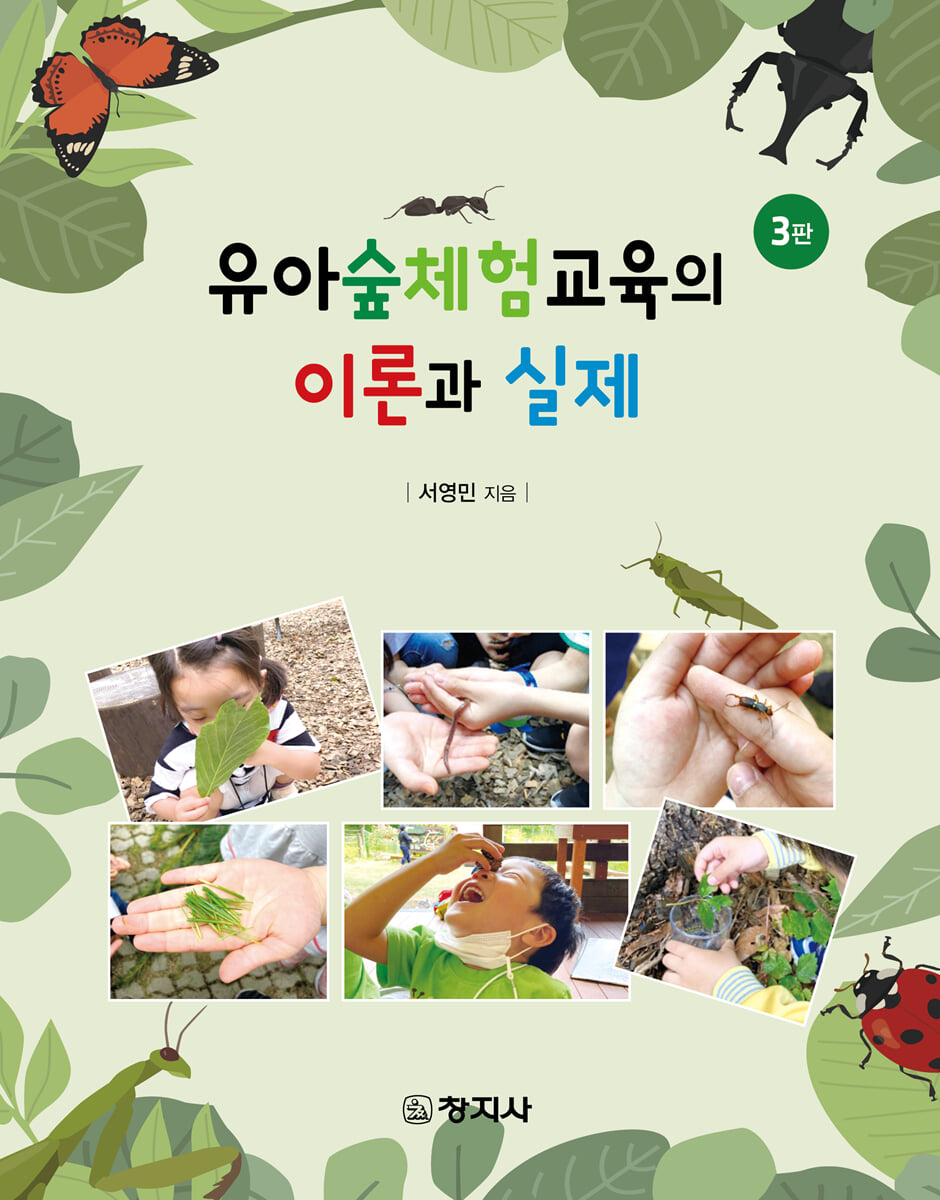
It is composed of theory and practice so that it can be used in universities or early childhood education institutions that provide forest experience education, and the practical part presents specific materials with various photos to make it easy to provide forest experience education.
I hope this will be helpful to many people who are implementing forest experience education for young children.
This means that the forest has come closer to our lives.
Early childhood education institutions provide forest experience education by visiting forests once a month to three times a week, and some parents are increasingly choosing educational institutions or forest kindergartens that provide forest experience.
This phenomenon is because it is believed that the forest as a place promotes children's creativity, allows for natural character education, and helps promote healthy physical development.
Although books that convey forest experiences have been published in response to social changes, some of them contain content that is difficult to apply to infants and toddlers, such as not reflecting the developmental characteristics of infants and toddlers or being composed of content that conveys ecological knowledge of the forest.
Additionally, it is a reality that there is a shortage of books that stimulate the five senses of infants and toddlers, help develop physical, language, cognitive, social/emotional, and exploratory skills, and provide information related to forest experiences that take developmental characteristics into account.
While teaching in early childhood education settings and at universities, I had many doubts about whether educational activities in forests for young children were possible, to what extent they could be applied, and how the results could be measured.
My master's thesis, "The Effects of Mathematical Exploration Activities through Forest Experience on Young Children's Mathematical Problem-Solving Abilities and Attitudes toward Mathematics," led me to participate in the opening of the 'SK Forestry Co., Ltd. Supeai Forest Kindergarten', and after operating it for about four years, I realized the need for forest experience teaching materials that are easily accessible to everyone.
This book is based on the doctoral dissertation, “Development and Application Effects of an Integrated Forest Experience Education Program for Early Childhood Focused on Natural Objects” (2014), and is composed of content developed and applied to an early childhood forest experience education program suitable for the development of young children.
It is composed of theory and practice so that it can be used in universities or early childhood education institutions that provide forest experience education, and the practical part presents specific materials with various photos to make it easy to provide forest experience education.
I hope this will be helpful to many people who are implementing forest experience education for young children.
index
I.
Theory of Forest Experience Education for Young Children
1.
Nature and Naturalism 10
1.
The Meaning of Nature 10
2.
The Value of Nature 18
3.
Naturalism Education 26
2.
Naturalistic Education for Young Children 30
1.
Nature-Friendly Education 30
2.
Forest Experience Education 33
3.
The Effects of Naturalistic Education for Young Children 39
3.
Forest Kindergarten Education for Toddlers 45
1.
Forest Kindergarten (Forest Experience Center for Toddlers) Concept 45
2.
History of Forest Kindergarten 46
3.
Forest Kindergarten Educational Content 48
4.
Current Status of Domestic Forest Experience Centers for Children 50
5.
53 Domestic and International Cases of Forest Kindergartens
II.
The reality of forest experience education for young children
1.
Forest Experience Education Program for Young Children 73
1.
Purpose and Objectives 73
2.
Training Content 74
3.
Teaching and Learning Methods 76
4.
Rating: 85
5.
The Teacher's Role 86
6.
Forest Safety Guide 88
2.
Animal-themed forest experience program for children 97
1.
Caterpillar 97
2.
Insect 108
3.
Spider 122
4.
Tadpoles and Frogs 134
5.
Earthworm 144
6.
New 152
3.
160 Plant-Themed Forest Experience Education Program for Young Children
1.
Tree 160
2.
Leaf 176
3.
Flower 194
4.
Fruits and Seeds 208
5.
Winter Snow and Rosette 222
Reference 234
Search 239
About the Author 243
Theory of Forest Experience Education for Young Children
1.
Nature and Naturalism 10
1.
The Meaning of Nature 10
2.
The Value of Nature 18
3.
Naturalism Education 26
2.
Naturalistic Education for Young Children 30
1.
Nature-Friendly Education 30
2.
Forest Experience Education 33
3.
The Effects of Naturalistic Education for Young Children 39
3.
Forest Kindergarten Education for Toddlers 45
1.
Forest Kindergarten (Forest Experience Center for Toddlers) Concept 45
2.
History of Forest Kindergarten 46
3.
Forest Kindergarten Educational Content 48
4.
Current Status of Domestic Forest Experience Centers for Children 50
5.
53 Domestic and International Cases of Forest Kindergartens
II.
The reality of forest experience education for young children
1.
Forest Experience Education Program for Young Children 73
1.
Purpose and Objectives 73
2.
Training Content 74
3.
Teaching and Learning Methods 76
4.
Rating: 85
5.
The Teacher's Role 86
6.
Forest Safety Guide 88
2.
Animal-themed forest experience program for children 97
1.
Caterpillar 97
2.
Insect 108
3.
Spider 122
4.
Tadpoles and Frogs 134
5.
Earthworm 144
6.
New 152
3.
160 Plant-Themed Forest Experience Education Program for Young Children
1.
Tree 160
2.
Leaf 176
3.
Flower 194
4.
Fruits and Seeds 208
5.
Winter Snow and Rosette 222
Reference 234
Search 239
About the Author 243
Publisher's Review
-This book consists of Part 1, which is the theory part of early childhood forest experience education, and Part 2, which is the practical part of early childhood forest experience education.
Part 1 consists of 'Nature and Naturalism', 'Naturalism Education for Young Children', and 'Forest Kindergarten Education for Young Children', examining the relationship between nature and humans through the collapse of the ecosystem due to the climate crisis, and presenting the direction in which nature-friendly education should advance by covering ecological literacy and sustainable development education.
In addition, we looked at various naturalistic education programs for young children, and examined the history, educational purposes, educational content, and domestic and international trends of forest kindergartens. We also covered the role of teachers and safety guidance for each risk factor in the forest.
Part 2 introduces the components of the forest experience education program for young children developed in the doctoral thesis, and explains the actual activities with photographs on the subjects of ‘larvae, insects, spiders, tadpoles and frogs, earthworms, birds, trees, leaves, flowers, fruits and seeds, winter buds and rosettes’ that can be frequently encountered in the forest.
Part 1 consists of 'Nature and Naturalism', 'Naturalism Education for Young Children', and 'Forest Kindergarten Education for Young Children', examining the relationship between nature and humans through the collapse of the ecosystem due to the climate crisis, and presenting the direction in which nature-friendly education should advance by covering ecological literacy and sustainable development education.
In addition, we looked at various naturalistic education programs for young children, and examined the history, educational purposes, educational content, and domestic and international trends of forest kindergartens. We also covered the role of teachers and safety guidance for each risk factor in the forest.
Part 2 introduces the components of the forest experience education program for young children developed in the doctoral thesis, and explains the actual activities with photographs on the subjects of ‘larvae, insects, spiders, tadpoles and frogs, earthworms, birds, trees, leaves, flowers, fruits and seeds, winter buds and rosettes’ that can be frequently encountered in the forest.
GOODS SPECIFICS
- Date of issue: February 23, 2024
- Page count, weight, size: 244 pages | 188*257*20mm
- ISBN13: 9788942618255
- ISBN10: 8942618251
You may also like
카테고리
korean


korean

![GQ KOREA Mark (Monthly): December [2025]](http://librairie.coreenne.fr/cdn/shop/files/8ef265dbbfbf186523ed75ba7319009d.jpg?v=1765340328&width=3840)


