

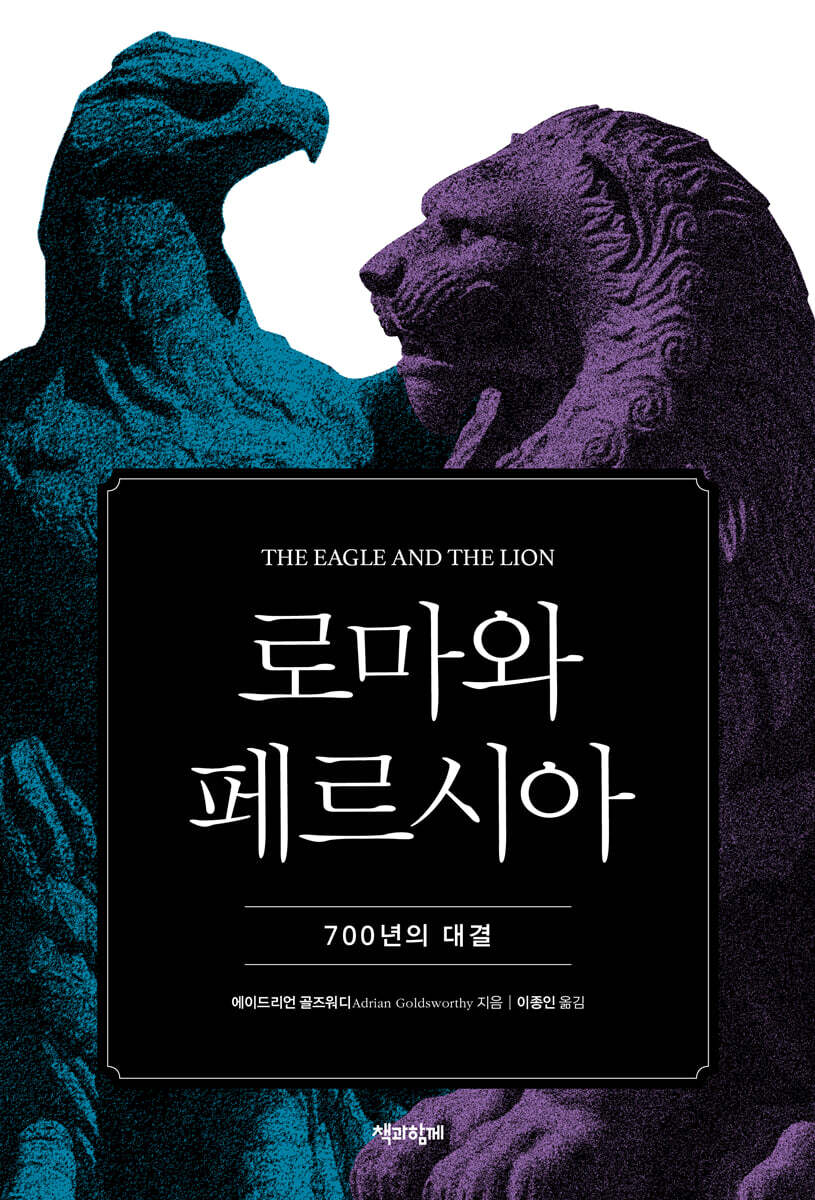
Rome and Persia
 |
Description
Book Introduction
- A word from MD
-
Competition, coexistence, and peace between two empiresAn epic tale of the Roman and Parthian-Persian empires that rivaled each other for 700 years.
Despite their constant conflict, the two empires were unable to completely destroy each other, and they changed each other and influenced the surrounding countries.
This perspective on relationships illuminates the ongoing evolution of adaptation and innovation in ancient history.
January 31, 2025. History PD Ahn Hyun-jae
“This is a story of continuous adaptation and innovation.”
A long epic between two great powers, sometimes fierce and sometimes peaceful.
The Roman Empire was an empire with a powerful national power and territorial reach that no other country could match.
The only rival to this great empire, which ruled over vast territories, was the Parthian-Persian Empire, which was centered in present-day Iran.
Rome had never shared its borders with such a vast and sophisticated empire for so long.
For about 700 years, Parthia-Persia and Rome lived as neighbors, sometimes at war and sometimes at peace.
Rome and Persia is a story about the rivalry between two empires, but it is also a story about the coexistence and peace they achieved.
Despite their endless conflicts, the two empires were unable to permanently destroy each other.
The most characteristic feature of the war between the two empires was that its scale, duration, and outcome were very limited.
While victory in war was important, the ultimate goal was to gain the upper hand through agreement.
Adrian Goldsworthy, a renowned historian of ancient warfare, traces the conflict between the two great powers, clearly showing the scale of their success and the duration of their existence.
This book examines how two great empires could coexist for such a long time, and how that experience transformed each other and influenced surrounding nations. It offers a unique perspective on Roman history.
A long epic between two great powers, sometimes fierce and sometimes peaceful.
The Roman Empire was an empire with a powerful national power and territorial reach that no other country could match.
The only rival to this great empire, which ruled over vast territories, was the Parthian-Persian Empire, which was centered in present-day Iran.
Rome had never shared its borders with such a vast and sophisticated empire for so long.
For about 700 years, Parthia-Persia and Rome lived as neighbors, sometimes at war and sometimes at peace.
Rome and Persia is a story about the rivalry between two empires, but it is also a story about the coexistence and peace they achieved.
Despite their endless conflicts, the two empires were unable to permanently destroy each other.
The most characteristic feature of the war between the two empires was that its scale, duration, and outcome were very limited.
While victory in war was important, the ultimate goal was to gain the upper hand through agreement.
Adrian Goldsworthy, a renowned historian of ancient warfare, traces the conflict between the two great powers, clearly showing the scale of their success and the duration of their existence.
This book examines how two great empires could coexist for such a long time, and how that experience transformed each other and influenced surrounding nations. It offers a unique perspective on Roman history.
- You can preview some of the book's contents.
Preview
index
preface
introduction
1.
Felix, 90s BC
2.
King of Kings, 247-70 BC
3.
Wars and Rumors, 70-54 BC
4.
Battle, 53-50 BC
5.
Invasion, 49-30 BC
6.
The Eagle and the Prince, 30 BC–4 AD
7.
Between Two Great Empires, 5-68
8.
People skilled in commerce, 1st-2nd centuries
9.
Glory and Tears, 70-198
10.
Dynasties, 199-240
11.
The Roman Emperor Lies Again, 240-265
12.
The Brilliant Queen and the Restorer of the World, 265-282
13.
Sieges and Expeditions, Late 3rd–4th Centuries
14.
The World's Two Eyes, 5th Century
15.
Soldiers, Walls, and Gold, late 5th-early 6th century
16.
War and Permanent Peace, 518-600
17.
Peak, 600-621
18.
Victory and Disaster, 621-632
19.
When that day comes, all believers will rejoice greatly, 632-700
conclusion
King of Kings and Emperor
Chronology
Acknowledgements
Translator's Note
main
References
Source of the illustration
Search
introduction
1.
Felix, 90s BC
2.
King of Kings, 247-70 BC
3.
Wars and Rumors, 70-54 BC
4.
Battle, 53-50 BC
5.
Invasion, 49-30 BC
6.
The Eagle and the Prince, 30 BC–4 AD
7.
Between Two Great Empires, 5-68
8.
People skilled in commerce, 1st-2nd centuries
9.
Glory and Tears, 70-198
10.
Dynasties, 199-240
11.
The Roman Emperor Lies Again, 240-265
12.
The Brilliant Queen and the Restorer of the World, 265-282
13.
Sieges and Expeditions, Late 3rd–4th Centuries
14.
The World's Two Eyes, 5th Century
15.
Soldiers, Walls, and Gold, late 5th-early 6th century
16.
War and Permanent Peace, 518-600
17.
Peak, 600-621
18.
Victory and Disaster, 621-632
19.
When that day comes, all believers will rejoice greatly, 632-700
conclusion
King of Kings and Emperor
Chronology
Acknowledgements
Translator's Note
main
References
Source of the illustration
Search
Into the book
The first official meeting between Rome and Parthia was, in retrospect, a much more significant event than was initially thought.
Plutarch considered this important because he knew what happened next, and he also recorded some of the later events and conflicts in detail elsewhere.
From a broader perspective, his notes and sources on the talks illustrate many of the problems faced when trying to understand the history of the two empires.
A representative example is that all existing records come from Rome, and none come from Parthia.
Events such as the execution of Orobazus are based on what Greco-Roman sources think happened in Parthia and why, information that is entirely unreliable.
(…) It was a valuable achievement for a Roman governor to meet an envoy from another nation for the first time and establish diplomatic relations while preserving Rome's dignity and respectability.
If it could be described as an event in which a powerful barbarian tribe recognized the superior military power and moral values of Rome, it would be an achievement of military glory and prestige equal to, if not equal to, a victory in war.
---「1.
From "Felix"
The Arsacid dynasty was fortunate to navigate the remainder of the 2nd century BC under the leadership of Mithradates II, who ascended the throne in 121 BC.
Like his predecessor, Mithradates I, he spent most of his reign on the battlefield, steadily recovering territory lost in the preceding decades.
Although there is limited information about his period of struggle against local nomadic tribes and other rulers, Mithradates II not only regained lost territories but also greatly expanded the empire.
He soon advanced westward and made Armenia an allied vassal state in 112 or 111 BC.
Around this time, the title 'King of Kings' began to appear on the coins he issued.
This is a revival of the traditions of the Achaemenid era, but it is unclear to what extent this was intentional, and if so, how memories of the older era were preserved.
The issuance of such coins was a direct declaration that the Arsacean monarch was the master of the great empire, and that other regional dynasties were merely vassals.
---「2.
From "King of Kings"
The Battle of Carrhae was the first significant engagement between Rome and Parthia.
Moreover, it is more insightful because more details have been handed down to later generations than any other battle between two great powers.
This battle deserves a closer look, as so many sweeping conclusions have been drawn so far that they don't quite line up with the actual evidence.
Equally important are the ramifications of this war.
Both sides appear to have been relatively unenthusiastic in the early stages of the war initiated by Crassus.
Our sources show that Rome was preoccupied with other matters during this period, and that Parthia was only one of many concerns of the Roman Senate and later emperors.
And even when battles actually took place, the war was not the most important or priority concern of the Romans.
---「4.
In "Battle"
“I forced the Parthians to return the standards and spoils of war lost to three Roman legions, and I led them as supplicants to beg for good relations with the Roman people,” Augustus wrote on a large inscription outside his tomb.
He had copies of this declaration distributed throughout the empire.
In his view, the return of the Parthian flag was a recognition of Rome's powerful military power and a demonstration of respect for the ruler's authority.
In the Aeneid, the poet Virgil said that Rome's destiny was to "protect the vanquished and subdue the proud by war."
Parthia was not conquered by war.
However, the presence and prestige of Augustus, Tiberius, the Roman legions and auxiliary troops in the eastern provinces 'forced' the Parthians to return their banners and also to ask for peace as 'petitioners'.
The glory of victory in a war where thousands of enemy soldiers died was always great, but voluntary submission to the Roman military was also something that the Roman citizens readily accepted.
---「6.
From "The Eagle and the Prince"
Tacitus described Armenia as “a land between two great empires.”
Although Vologaises I worked very hard to secure the throne of the kingdom for his brother, it is worth considering the underlying meaning of this action.
It is too narrow a view to view everything as a rivalry between great powers and to see Armenia now as a Parthian colony rather than a Roman territory.
As was the case with many Eastern countries, in the history of Arsaces, brothers or relatives were more often rivals than allies, as was clearly shown when Tiridates complained that his brother did not help him.
In a sense, Tiridates became less of a threat because he was preoccupied with subduing the rebellious Armenian nobility.
The younger brother would have desperately wanted his older brother's support, and therefore was more likely to be cooperative when there were disputes with neighboring lords.
---「7.
From "Between Two Great Empires"
In retrospect, the Sassanid dynasty ruled for four centuries, almost as long as the Arsacid dynasty.
Therefore, it became customary to speak of the period up to 224 as Parthia and Parthians, and from then on as Persia and Persians.
Historians tend to view the reign of Ardashir I as a time when not only religion, but also government, culture, and military actions all marked a clear break from the past.
Certainly, many aspects of the state under the Sassanid Empire were markedly different from those of Arsacid Parthia.
Royal authority became more centralized and was subject to the sanction of the 'state religion', and the language and symbols of power were different.
Change has occurred, but it is difficult to know when and why it occurred, as some things have remained unproven for generations.
Plutarch considered this important because he knew what happened next, and he also recorded some of the later events and conflicts in detail elsewhere.
From a broader perspective, his notes and sources on the talks illustrate many of the problems faced when trying to understand the history of the two empires.
A representative example is that all existing records come from Rome, and none come from Parthia.
Events such as the execution of Orobazus are based on what Greco-Roman sources think happened in Parthia and why, information that is entirely unreliable.
(…) It was a valuable achievement for a Roman governor to meet an envoy from another nation for the first time and establish diplomatic relations while preserving Rome's dignity and respectability.
If it could be described as an event in which a powerful barbarian tribe recognized the superior military power and moral values of Rome, it would be an achievement of military glory and prestige equal to, if not equal to, a victory in war.
---「1.
From "Felix"
The Arsacid dynasty was fortunate to navigate the remainder of the 2nd century BC under the leadership of Mithradates II, who ascended the throne in 121 BC.
Like his predecessor, Mithradates I, he spent most of his reign on the battlefield, steadily recovering territory lost in the preceding decades.
Although there is limited information about his period of struggle against local nomadic tribes and other rulers, Mithradates II not only regained lost territories but also greatly expanded the empire.
He soon advanced westward and made Armenia an allied vassal state in 112 or 111 BC.
Around this time, the title 'King of Kings' began to appear on the coins he issued.
This is a revival of the traditions of the Achaemenid era, but it is unclear to what extent this was intentional, and if so, how memories of the older era were preserved.
The issuance of such coins was a direct declaration that the Arsacean monarch was the master of the great empire, and that other regional dynasties were merely vassals.
---「2.
From "King of Kings"
The Battle of Carrhae was the first significant engagement between Rome and Parthia.
Moreover, it is more insightful because more details have been handed down to later generations than any other battle between two great powers.
This battle deserves a closer look, as so many sweeping conclusions have been drawn so far that they don't quite line up with the actual evidence.
Equally important are the ramifications of this war.
Both sides appear to have been relatively unenthusiastic in the early stages of the war initiated by Crassus.
Our sources show that Rome was preoccupied with other matters during this period, and that Parthia was only one of many concerns of the Roman Senate and later emperors.
And even when battles actually took place, the war was not the most important or priority concern of the Romans.
---「4.
In "Battle"
“I forced the Parthians to return the standards and spoils of war lost to three Roman legions, and I led them as supplicants to beg for good relations with the Roman people,” Augustus wrote on a large inscription outside his tomb.
He had copies of this declaration distributed throughout the empire.
In his view, the return of the Parthian flag was a recognition of Rome's powerful military power and a demonstration of respect for the ruler's authority.
In the Aeneid, the poet Virgil said that Rome's destiny was to "protect the vanquished and subdue the proud by war."
Parthia was not conquered by war.
However, the presence and prestige of Augustus, Tiberius, the Roman legions and auxiliary troops in the eastern provinces 'forced' the Parthians to return their banners and also to ask for peace as 'petitioners'.
The glory of victory in a war where thousands of enemy soldiers died was always great, but voluntary submission to the Roman military was also something that the Roman citizens readily accepted.
---「6.
From "The Eagle and the Prince"
Tacitus described Armenia as “a land between two great empires.”
Although Vologaises I worked very hard to secure the throne of the kingdom for his brother, it is worth considering the underlying meaning of this action.
It is too narrow a view to view everything as a rivalry between great powers and to see Armenia now as a Parthian colony rather than a Roman territory.
As was the case with many Eastern countries, in the history of Arsaces, brothers or relatives were more often rivals than allies, as was clearly shown when Tiridates complained that his brother did not help him.
In a sense, Tiridates became less of a threat because he was preoccupied with subduing the rebellious Armenian nobility.
The younger brother would have desperately wanted his older brother's support, and therefore was more likely to be cooperative when there were disputes with neighboring lords.
---「7.
From "Between Two Great Empires"
In retrospect, the Sassanid dynasty ruled for four centuries, almost as long as the Arsacid dynasty.
Therefore, it became customary to speak of the period up to 224 as Parthia and Parthians, and from then on as Persia and Persians.
Historians tend to view the reign of Ardashir I as a time when not only religion, but also government, culture, and military actions all marked a clear break from the past.
Certainly, many aspects of the state under the Sassanid Empire were markedly different from those of Arsacid Parthia.
Royal authority became more centralized and was subject to the sanction of the 'state religion', and the language and symbols of power were different.
Change has occurred, but it is difficult to know when and why it occurred, as some things have remained unproven for generations.
---「10.
Among the “dynasties”
Among the “dynasties”
Publisher's Review
Sometimes it was fierce and sometimes it was peaceful
The long epic of two great powers
Adrian Goldsworthy, who in his previous work, Philip and Alexander, restored as much of the achievements of King Philip of Macedon as possible, which had previously been overlooked by the academic world, now focuses on the epic confrontation with Persia, which is rarely mentioned in Roman history.
Rome and Persia is a book about the rivalry between two great empires of the ancient world.
Rome and Parthia-Persia lived along their border for over 700 years, sometimes at war and sometimes at peace.
Adrian Goldsworthy, who argues that the rivalry with Persia was a crucial event in Roman history, traces the conflict between the two great powers, clearly showing the scale of their success and the duration of their existence.
This book examines how two great empires could coexist for such a long time, and how that experience transformed each other and influenced surrounding nations. It offers a unique perspective on Roman history.
A 700-year war in which neither side could win
Rome and Parthia first encountered each other in the early 1st century BC.
After the Parthian dynasty collapsed in the 3rd century, the Sassanid dynasty took its place and lasted until the 7th century.
Although the ruling dynasty and form of government changed somewhat, the Sassanid Persian Empire ruled the same territory and the same people, and if the two dynasties were viewed as different stages of the same political system, the Parthian-Persian Empire lasted for more than 800 years.
For about seven centuries, Parthia-Persia was constantly conscious of and in competition with Rome.
The Roman Empire, which had been in power for 500 years since the founding of the Augustan dynasty in the latter half of the 1st century BC, had the ideal of building a true world empire by liquidating the previous 500 years of republican rule and expanding eastward based on the power it had gained over all of Western Europe, North Africa, and Asia Minor, and conquering India.
Following the great conquests of Alexander the Great was a very old tradition within Roman society.
Since Sulla, Roman heroes such as Crassus, Caesar, Antony, Trajan, Verus, Severus, Constantine, and Julian had dreamed of conquering Parthia for the sake of empire and glory.
But the Parthian Empire also had the same dream of expanding westward and forming a world empire.
Asia Minor and Mesopotamia became the battleground of a great struggle between the ambitions and military might of two empires.
However, even when the two empires went to war, it was limited to local conflicts, and at the appropriate time they compromised, signed peace treaties, and retreated.
The conflict between the two empires became a struggle for comparative advantage rather than complete conquest of the other.
While this book deals with the rivalry between two empires, it is also a story of coexistence and peace achieved between the two empires.
Despite their endless conflicts, the two empires were unable to permanently destroy each other.
The most characteristic feature of the war between the two empires was that its scale, duration, and outcome were very limited.
Whatever the outcome of the war, it was propagandized as a victory to the people of each empire, and the goal of the war became to instill 'perception' rather than 'reality'.
“This is a story of continuous adaptation and innovation.”
What did the confrontation between the two empires leave behind?
The rivalry between the two empires is a story of constant adaptation and innovation.
Both sides learned from the other and tried to turn the odds of victory in their favor.
As time passed, the two sides became more and more similar to each other, and in the 6th and 7th centuries the differences between the two armies were minimal.
Adrian Goldsworthy shows how two great powers influenced each other and thus developed.
Trade between the two empires, which continued behind the scenes of the conflict, also enriched each other.
However, by the mid-7th century, the two empires were engaged in a desperate war, exhausting their national strength and ultimately failing to adequately face challenges such as the Arab conquests, leading to their demise.
The rise and fall of the two empires clearly show how empires are built, expand their territory, reach their peak, and then face internal conflict and external attacks, leading to their demise.
In retrospect, the confrontation between the two empires achieved little and ended abruptly due to the emergence of an unexpected force.
In just 20 years, Arab forces conquered not only the Persian Empire but also most of the provinces of the Eastern Roman Empire.
Given these results, the rivalry between the two countries may seem futile, but it also serves as a testament to the longevity of both empires.
Historically, no empire has lasted as long, been as sophisticated, and run as successfully as these great powers.
The story of neighboring countries actively participating in the competition between the two empires.
The book also covers many other nations and leaders caught up in the rivalry between the two empires.
They were not simply pawns in the confrontation between great powers, nor could they be simply defined as pro-Roman or pro-Parthian.
They were supporting actors who actively participated in the competition between the two superpowers, each with their own ambitions.
Even small countries did their best to take advantage of the competition between the great powers.
Despite their great power, Rome and Parthia-Persia were unable to fully govern their allies, including leaders and groups beyond their borders.
For example, the conflict between the two countries over Armenia began very early, and Armenia's unstable political situation often fueled the conflict.
The loyalties of the various kingdoms of the Caucasus region, including Iberia, Georgia, and Lazica, were also a major concern for both empires and a source of conflict.
The first attempt to comprehensively compile a forgotten and overlooked history
To understand the rivalry between the two neighboring empires, it is necessary to view history from the perspective of Parthia-Persia as well as Rome.
However, in a situation where Roman sources were overwhelmingly abundant, Adrian Goldsworthy attempted to objectively reconstruct the story of the two empires based on coins minted by the Parthian-Persian rulers, inscriptions, various archaeological evidence, and limited literary records.
He says it was a complex undertaking that required reviewing the entire history of contact and traversing unfamiliar territory previously untried.
By carefully selecting and focusing from a vast array of sources, this book strikes the right balance between whole and part, overview and detail, compellingly conveying the long history of two forgotten and overlooked empires.
The long epic of two great powers
Adrian Goldsworthy, who in his previous work, Philip and Alexander, restored as much of the achievements of King Philip of Macedon as possible, which had previously been overlooked by the academic world, now focuses on the epic confrontation with Persia, which is rarely mentioned in Roman history.
Rome and Persia is a book about the rivalry between two great empires of the ancient world.
Rome and Parthia-Persia lived along their border for over 700 years, sometimes at war and sometimes at peace.
Adrian Goldsworthy, who argues that the rivalry with Persia was a crucial event in Roman history, traces the conflict between the two great powers, clearly showing the scale of their success and the duration of their existence.
This book examines how two great empires could coexist for such a long time, and how that experience transformed each other and influenced surrounding nations. It offers a unique perspective on Roman history.
A 700-year war in which neither side could win
Rome and Parthia first encountered each other in the early 1st century BC.
After the Parthian dynasty collapsed in the 3rd century, the Sassanid dynasty took its place and lasted until the 7th century.
Although the ruling dynasty and form of government changed somewhat, the Sassanid Persian Empire ruled the same territory and the same people, and if the two dynasties were viewed as different stages of the same political system, the Parthian-Persian Empire lasted for more than 800 years.
For about seven centuries, Parthia-Persia was constantly conscious of and in competition with Rome.
The Roman Empire, which had been in power for 500 years since the founding of the Augustan dynasty in the latter half of the 1st century BC, had the ideal of building a true world empire by liquidating the previous 500 years of republican rule and expanding eastward based on the power it had gained over all of Western Europe, North Africa, and Asia Minor, and conquering India.
Following the great conquests of Alexander the Great was a very old tradition within Roman society.
Since Sulla, Roman heroes such as Crassus, Caesar, Antony, Trajan, Verus, Severus, Constantine, and Julian had dreamed of conquering Parthia for the sake of empire and glory.
But the Parthian Empire also had the same dream of expanding westward and forming a world empire.
Asia Minor and Mesopotamia became the battleground of a great struggle between the ambitions and military might of two empires.
However, even when the two empires went to war, it was limited to local conflicts, and at the appropriate time they compromised, signed peace treaties, and retreated.
The conflict between the two empires became a struggle for comparative advantage rather than complete conquest of the other.
While this book deals with the rivalry between two empires, it is also a story of coexistence and peace achieved between the two empires.
Despite their endless conflicts, the two empires were unable to permanently destroy each other.
The most characteristic feature of the war between the two empires was that its scale, duration, and outcome were very limited.
Whatever the outcome of the war, it was propagandized as a victory to the people of each empire, and the goal of the war became to instill 'perception' rather than 'reality'.
“This is a story of continuous adaptation and innovation.”
What did the confrontation between the two empires leave behind?
The rivalry between the two empires is a story of constant adaptation and innovation.
Both sides learned from the other and tried to turn the odds of victory in their favor.
As time passed, the two sides became more and more similar to each other, and in the 6th and 7th centuries the differences between the two armies were minimal.
Adrian Goldsworthy shows how two great powers influenced each other and thus developed.
Trade between the two empires, which continued behind the scenes of the conflict, also enriched each other.
However, by the mid-7th century, the two empires were engaged in a desperate war, exhausting their national strength and ultimately failing to adequately face challenges such as the Arab conquests, leading to their demise.
The rise and fall of the two empires clearly show how empires are built, expand their territory, reach their peak, and then face internal conflict and external attacks, leading to their demise.
In retrospect, the confrontation between the two empires achieved little and ended abruptly due to the emergence of an unexpected force.
In just 20 years, Arab forces conquered not only the Persian Empire but also most of the provinces of the Eastern Roman Empire.
Given these results, the rivalry between the two countries may seem futile, but it also serves as a testament to the longevity of both empires.
Historically, no empire has lasted as long, been as sophisticated, and run as successfully as these great powers.
The story of neighboring countries actively participating in the competition between the two empires.
The book also covers many other nations and leaders caught up in the rivalry between the two empires.
They were not simply pawns in the confrontation between great powers, nor could they be simply defined as pro-Roman or pro-Parthian.
They were supporting actors who actively participated in the competition between the two superpowers, each with their own ambitions.
Even small countries did their best to take advantage of the competition between the great powers.
Despite their great power, Rome and Parthia-Persia were unable to fully govern their allies, including leaders and groups beyond their borders.
For example, the conflict between the two countries over Armenia began very early, and Armenia's unstable political situation often fueled the conflict.
The loyalties of the various kingdoms of the Caucasus region, including Iberia, Georgia, and Lazica, were also a major concern for both empires and a source of conflict.
The first attempt to comprehensively compile a forgotten and overlooked history
To understand the rivalry between the two neighboring empires, it is necessary to view history from the perspective of Parthia-Persia as well as Rome.
However, in a situation where Roman sources were overwhelmingly abundant, Adrian Goldsworthy attempted to objectively reconstruct the story of the two empires based on coins minted by the Parthian-Persian rulers, inscriptions, various archaeological evidence, and limited literary records.
He says it was a complex undertaking that required reviewing the entire history of contact and traversing unfamiliar territory previously untried.
By carefully selecting and focusing from a vast array of sources, this book strikes the right balance between whole and part, overview and detail, compellingly conveying the long history of two forgotten and overlooked empires.
GOODS SPECIFICS
- Date of issue: January 17, 2025
- Format: Hardcover book binding method guide
- Page count, weight, size: 816 pages | 1,276g | 160*234*43mm
- ISBN13: 9791194263234
- ISBN10: 1194263232
You may also like
카테고리
korean


korean

![GQ KOREA Mark (Monthly): December [2025]](http://librairie.coreenne.fr/cdn/shop/files/8ef265dbbfbf186523ed75ba7319009d.jpg?v=1765340328&width=3840)


