

A History of English in 100 Words
 |
Description
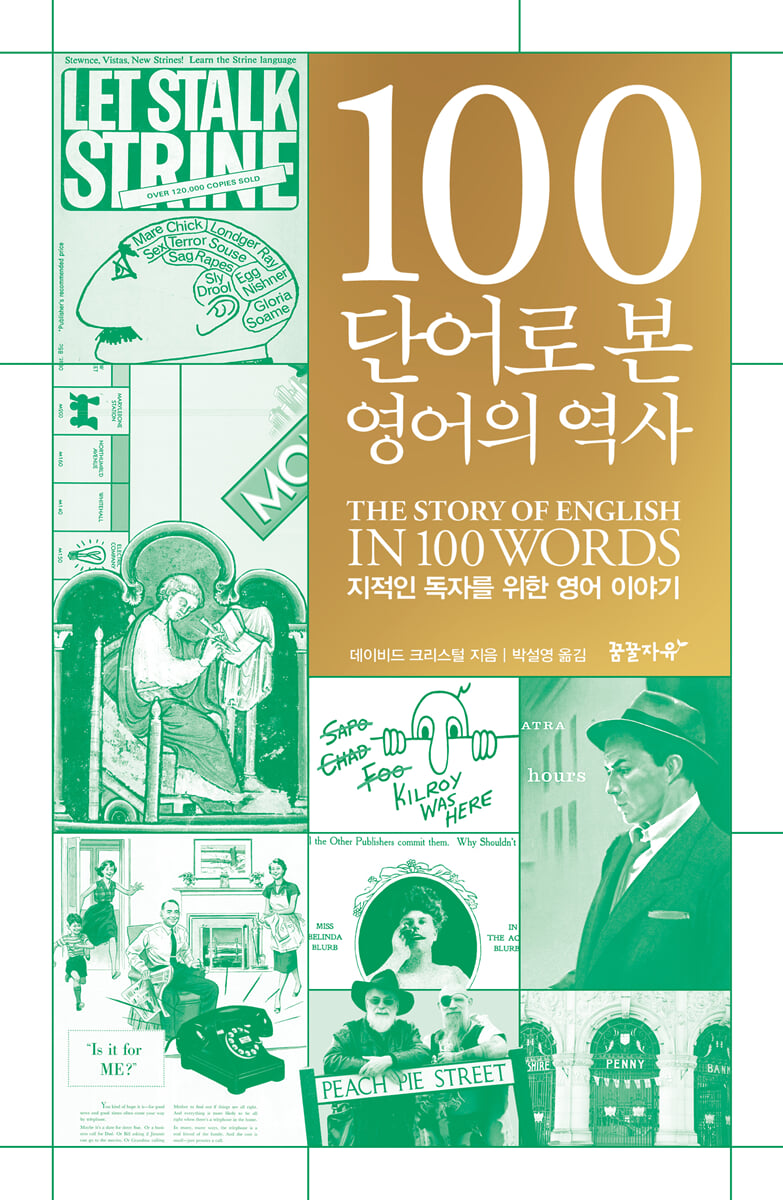
Book Introduction
David Crystal, the world's leading English scholar
He tells the story of the history of English through 100 words!
What was the first English word? Where did it come from? What is the single word that defined the 20th century? How has the Internet transformed English, and indeed the world's languages? This book vividly illustrates, in just 100 words, how English, once a humble island language, absorbed everything around it and became a global language.
David Crystal, one of the world's leading linguists and experts on English etymology, navigates the labyrinthine history of the English language with remarkable erudition and dazzling wit.
A gift that will bring unexpected joy to those who love English as a subject of humanities!
“David Crystal calls himself a ‘word lover,’ which is akin to calling the Palace of Versailles home.” - Kirkus Reviews
He tells the story of the history of English through 100 words!
What was the first English word? Where did it come from? What is the single word that defined the 20th century? How has the Internet transformed English, and indeed the world's languages? This book vividly illustrates, in just 100 words, how English, once a humble island language, absorbed everything around it and became a global language.
David Crystal, one of the world's leading linguists and experts on English etymology, navigates the labyrinthine history of the English language with remarkable erudition and dazzling wit.
A gift that will bring unexpected joy to those who love English as a subject of humanities!
“David Crystal calls himself a ‘word lover,’ which is akin to calling the Palace of Versailles home.” - Kirkus Reviews
- You can preview some of the book's contents.
Preview
index
1 Roe's first word 5th century
2 Lea place name 8th century
3 And early abbreviations 8th century
4 Loaf Unexpected Origins 9th Century
5 Out Changing Grammar in the 9th Century
6 Street Latin borrowing 9th century
7 Mead A Window into History 9th Century
8 Merry surviving dialects of the 9th century
9 Playing with Riddle Language 10th Century
10 What early exclamations of the 10th century
11 Bone-house A vivid depiction of the 10th century
12 Brock Arrival of Celtic in the 10th century
13 Names of the English Language 10th Century
14 Bridegroom Popular Etymology 11th century
15 Arse Rude Words 11th Century
16 Swain poetic expression 12th century
17 Pork Elegant Words 13th Century
18 Chattels Legal Words 13th Century
19 Dame title 13th century
20 Skirt Double-breasted 13th century
21 Jail Competing Words 13th Century
22 Take away verb 13th century
23 Cuckoo phonetic symbol 13th century
24 Cunt Taboo 13th century
25 Wicked Radical Changes in the 13th Century
26 Wee A word from Scotland, 14th century
27 Grammar Amazing Connections 14th Century
28 Valentine's name became a word in the 14th century
29 Egg Which Dialect to Choose 14th Century
30 Royal Triplets Words 14th Century
31 Money Productive Idioms 14th Century
32 Music Spelling Revolution 14th Century
33 Taffeta Early trade term 14th century
34 Information(s) (un)countable noun 14th century
35 Gaggle collective noun 15th century
36 Doable Mixture of Languages 15th Century
37 Matrix Words created by Tyndale in the 16th century
38 A word about writing the alphabet in the 16th century
39 Potato Imported into Europe in the 16th century
40 Debt Spelling Reform 16th Century
41 Ink-horn The flood of classicism in the 16th century
42 Dialect Regional Variations 16th Century
43 Bodgery New Word Makers 16th Century
44 Undeaf Words coined by Shakespeare in the 16th century
45 Skunk Early American idiom of the 17th century
46 Shibboleth A word coined by King James in the 17th century
47 The emergence of bloody profanity in the 17th century
48 Lakh words from India in the 17th century
49 Fopdoodle Lost Words 17th Century
50 Billion Confusing Ambiguities of the 17th Century
51 Choose a spelling for Yogurt 17th century
52 Gazette newspaper articles from the 17th century
53 Tea Social Words 17th Century
54 Disinterested Confusing Words of the 17th Century
55 Polite Manners Problem 17th Century
56 Dilly-dally repeated word 17th century
57 Rep abbreviated 17th century
58 Americanism New Nation 18th Century
59 Edit Retrograde 18th century
Classifying 60 Species in the 18th Century
61 Ain't Right and Wrong 18th Century
62 Trek Words from Africa 19th century
63 Hello Technology Advances in the 19th Century
64 Dragsman Thief's Slang 19th Century
65 Lunch Linguistic Class Wars 19th Century
66 Dude Cool Phrase 19th Century
67 Brunch portmanteau 19th century
68 Dinkum Words from Australia 19th century
69 Mipela Pidgin English 19th century
70 Schmooze Yiddish phrases 19th century
71 OK Origins Debate 19th Century
72 Ology suffixes in words from the 19th century
73 Y'all new pronoun 19th century
74 Speech-craft Anglo-Saxonism 19th century
75 DNA Science Terms of the 20th Century
76 Garage Pronunciation Problems 20th Century
77 Escalator Names incorporated into the word 20th century
78 Robot Global Travel 20th Century
79 UFO Alternative Forms 20th Century
80 Watergate place names with words from the 20th century
81 Doublespeak Ambiguous Words 20th Century
82 Doobry Meaningless but useful words 20th century
83 Blurb Moment of Influx 20th Century
84 Strine comic effect 20th century
85 Alzheimer's A person's last name became a word in the 20th century
86 Grand slang for money in the 20th century
87 Mega prefixes in words from the 20th century
88 Gotcha Unconventional Spelling 20th Century
89 PC Political Correctness 20th Century
90 Bagonise temporary language 20th century
91 Webzine Internet Compound Words 20th Century
92 App-Changing Acronyms of the 20th Century
93 Cherry-picking Business Terms of the 20th Century
94 LOL Text Message Expressions 20th Century
95 Jazz Words of the Century 20th Century
96 Sudoku Modern Loanwords 21st Century
97 Muggle Fictional Words of the 21st Century
98 Chillax: A portmanteau of the 21st century
99 Unfriend New Era 21st Century
Where is the future of the Twittersphere headed? The 21st century.
Image source
Translator's Note
index
2 Lea place name 8th century
3 And early abbreviations 8th century
4 Loaf Unexpected Origins 9th Century
5 Out Changing Grammar in the 9th Century
6 Street Latin borrowing 9th century
7 Mead A Window into History 9th Century
8 Merry surviving dialects of the 9th century
9 Playing with Riddle Language 10th Century
10 What early exclamations of the 10th century
11 Bone-house A vivid depiction of the 10th century
12 Brock Arrival of Celtic in the 10th century
13 Names of the English Language 10th Century
14 Bridegroom Popular Etymology 11th century
15 Arse Rude Words 11th Century
16 Swain poetic expression 12th century
17 Pork Elegant Words 13th Century
18 Chattels Legal Words 13th Century
19 Dame title 13th century
20 Skirt Double-breasted 13th century
21 Jail Competing Words 13th Century
22 Take away verb 13th century
23 Cuckoo phonetic symbol 13th century
24 Cunt Taboo 13th century
25 Wicked Radical Changes in the 13th Century
26 Wee A word from Scotland, 14th century
27 Grammar Amazing Connections 14th Century
28 Valentine's name became a word in the 14th century
29 Egg Which Dialect to Choose 14th Century
30 Royal Triplets Words 14th Century
31 Money Productive Idioms 14th Century
32 Music Spelling Revolution 14th Century
33 Taffeta Early trade term 14th century
34 Information(s) (un)countable noun 14th century
35 Gaggle collective noun 15th century
36 Doable Mixture of Languages 15th Century
37 Matrix Words created by Tyndale in the 16th century
38 A word about writing the alphabet in the 16th century
39 Potato Imported into Europe in the 16th century
40 Debt Spelling Reform 16th Century
41 Ink-horn The flood of classicism in the 16th century
42 Dialect Regional Variations 16th Century
43 Bodgery New Word Makers 16th Century
44 Undeaf Words coined by Shakespeare in the 16th century
45 Skunk Early American idiom of the 17th century
46 Shibboleth A word coined by King James in the 17th century
47 The emergence of bloody profanity in the 17th century
48 Lakh words from India in the 17th century
49 Fopdoodle Lost Words 17th Century
50 Billion Confusing Ambiguities of the 17th Century
51 Choose a spelling for Yogurt 17th century
52 Gazette newspaper articles from the 17th century
53 Tea Social Words 17th Century
54 Disinterested Confusing Words of the 17th Century
55 Polite Manners Problem 17th Century
56 Dilly-dally repeated word 17th century
57 Rep abbreviated 17th century
58 Americanism New Nation 18th Century
59 Edit Retrograde 18th century
Classifying 60 Species in the 18th Century
61 Ain't Right and Wrong 18th Century
62 Trek Words from Africa 19th century
63 Hello Technology Advances in the 19th Century
64 Dragsman Thief's Slang 19th Century
65 Lunch Linguistic Class Wars 19th Century
66 Dude Cool Phrase 19th Century
67 Brunch portmanteau 19th century
68 Dinkum Words from Australia 19th century
69 Mipela Pidgin English 19th century
70 Schmooze Yiddish phrases 19th century
71 OK Origins Debate 19th Century
72 Ology suffixes in words from the 19th century
73 Y'all new pronoun 19th century
74 Speech-craft Anglo-Saxonism 19th century
75 DNA Science Terms of the 20th Century
76 Garage Pronunciation Problems 20th Century
77 Escalator Names incorporated into the word 20th century
78 Robot Global Travel 20th Century
79 UFO Alternative Forms 20th Century
80 Watergate place names with words from the 20th century
81 Doublespeak Ambiguous Words 20th Century
82 Doobry Meaningless but useful words 20th century
83 Blurb Moment of Influx 20th Century
84 Strine comic effect 20th century
85 Alzheimer's A person's last name became a word in the 20th century
86 Grand slang for money in the 20th century
87 Mega prefixes in words from the 20th century
88 Gotcha Unconventional Spelling 20th Century
89 PC Political Correctness 20th Century
90 Bagonise temporary language 20th century
91 Webzine Internet Compound Words 20th Century
92 App-Changing Acronyms of the 20th Century
93 Cherry-picking Business Terms of the 20th Century
94 LOL Text Message Expressions 20th Century
95 Jazz Words of the Century 20th Century
96 Sudoku Modern Loanwords 21st Century
97 Muggle Fictional Words of the 21st Century
98 Chillax: A portmanteau of the 21st century
99 Unfriend New Era 21st Century
Where is the future of the Twittersphere headed? The 21st century.
Image source
Translator's Note
index
Into the book
The natural characteristics of the reclaimed land were also reflected in the name.
Morley's clearing was on moorland, Dingley's was in a deep, narrow valley (dingle).
Evenley's land would have been flat, Rowley's rough, Stanley's stony, and Langley's long-shaped.
It is also common for the first part of a name to indicate the tree that grew there, such as Ashley, Oakleigh, and Thornley.
Tree names can sometimes be tricky to figure out.
Berkeley has a birch, Bronley has a bramble, Uley has a yew, and Acle has an oak, though it's hard to guess from the spelling.
Some of the names with Lea in them refer to plants that grow there.
It's pretty clear what plants grow in Cloverley, but Farleigh (ferns) and Ridley (reeds) are a bit more difficult.
--- p.28
The social status of mead changed in medieval Britain.
As wine became established as a drink of the upper class, mead, along with ale and cider, became the drink of the poor.
It was pushed to second place, giving way to ales and ciders, which are much easier to make.
In Shakespeare's works, ale appears 15 times, but mead is not used even once.
However, mead gradually became popular again, and new uses and meanings occasionally emerged.
In the 17th century, it referred to all sweet drinks.
In 1632, Robert Burton used the term meadinn (a tavern serving mainly mead) to refer to Russian drinking practices.
In the 18th century, the British drank mead wine.
In the United States, the name was used in a completely different sense, referring to a sweet carbonated drink flavored with sarsaparilla root.
Even today, Americans are very interested in mead.
There is an International Mead Association that holds a festival in Colorado every year.
Related words are also continuously created.
Meadfest (honey wine)
There are numerous meaderies and mead-lovers, as well as festivals.
If you want, you can take a meadmaking course, attend a meading, or read a meadzine.
--- p.44
What! is still used today as an exclamation of surprise or amazement, often mixed with annoyance or anger.
You can also expand the expression by using it with emphatic phrases such as "What the devil! What the dickens! What on earth!"
When I'm overwhelmed by emotion and speechless, I sometimes just leave the next sentence blank.
What in the name of…!(What the heck…) What the…!(Why…)
During World War II, when all supplies were in short supply, the word "what" was spelled "wot" and attracted attention as an exclamation.
A painting of a small, round-headed man with a long nose and both hands raised above a wall, peeking out, appeared throughout Europe.
His name was 'Mr. Chad' and he always complained about the lack of supplies.
'Wot, no eggs?', 'Wot, no petrol?' Chad's name changed to 'Kilroy' in the US.
The cartoon caption also started out as 'Kilroy was here', but then changed back to 'Foo was here' in Australia.
The origins of Chad are uncertain, but it is thought to be derived from the nickname Chat, given to cartoonist George Edward Chatterton.
Wot became a buzzword and remained popular long after the wartime shortages subsided.
And it still remains with us.
I recently saw someone leave graffiti on a wall complaining about poor cell phone connectivity.
'Wot, no signal?'
--- p.54
Scottish English emerged as a very distinctive dialect from very early on.
It all started in 1066 when the Normans invaded England and English supporters fled to Scotland.
They were welcomed, and by the 13th century English had become the dominant language in the lowlands of southeast Scotland.
Then, in 1296, Edward I of England invaded Scotland, beginning a 300-year war.
With Scottish identity at stake, English evolved to take on a regional character quite distinct from that south of the River Tweed.
There is nothing strange about that.
Today, Scottish English is alive and well in various dialects and thousands of regional words such as gang (go), richt (right), bonnie (pretty) and mickle (great).
Some words and expressions spread outside Scotland.
One of them is wee.
But if we were to go out and give an award for the most successful Scottish expression, it would have to go to Robert Burns's poem "Auld Lang Syne," traditionally sung at New Year's Day.
This is a dialect of 'old long since' and means 'for the old days'.
Its lyrics and melody have captured the hearts of singers like Billy Joel and Bobby Darin, and have been featured in dozens of films.
Not bad for a regional dialect in Britain.
--- p.98
The history of the matrix is interesting.
The word comes from the Latin mater, meaning 'mother'.
Tyndale is used to mean 'womb', which is one of the meanings of the Latin word mater.
In the 16th century, it expanded to mean the place where something begins, in the 18th century to mean a structure or substance in which something is deeply embedded, and in the 19th century to mean the elements that make up something that appears to be a network.
Then, the term started to be used in social networks, an example of which is 'political matrix'.
It began to be used in the business world in the mid-20th century.
For example, an organization in which communication takes place through a network of relationships is called 'matrix management.'
In the meantime, the term has been borrowed from various technical fields.
Dentists call the material that fills the gap caused by a cavity and acts like a temporary wall a "matrix."
Photographers used the term to describe the process of making prints, printers used it to describe the molds used to cast metal type, and electrical engineers used it to describe circuits.
And in the 1990s, it became a popular term in computing to refer to a global electronic communications network.
The stage was set for Keanu Reeves.
Now, matrix has come to mean, on the one hand, the organizational network, and on the other hand, the electronic network that constitutes cyberspace.
It was only a matter of time before this word was used in science fiction.
Come to think of it, the word 'time' is really appropriate.
The first work to use the 'Matrix' in this genre was the Doctor Who series that aired in 1976.
Morley's clearing was on moorland, Dingley's was in a deep, narrow valley (dingle).
Evenley's land would have been flat, Rowley's rough, Stanley's stony, and Langley's long-shaped.
It is also common for the first part of a name to indicate the tree that grew there, such as Ashley, Oakleigh, and Thornley.
Tree names can sometimes be tricky to figure out.
Berkeley has a birch, Bronley has a bramble, Uley has a yew, and Acle has an oak, though it's hard to guess from the spelling.
Some of the names with Lea in them refer to plants that grow there.
It's pretty clear what plants grow in Cloverley, but Farleigh (ferns) and Ridley (reeds) are a bit more difficult.
--- p.28
The social status of mead changed in medieval Britain.
As wine became established as a drink of the upper class, mead, along with ale and cider, became the drink of the poor.
It was pushed to second place, giving way to ales and ciders, which are much easier to make.
In Shakespeare's works, ale appears 15 times, but mead is not used even once.
However, mead gradually became popular again, and new uses and meanings occasionally emerged.
In the 17th century, it referred to all sweet drinks.
In 1632, Robert Burton used the term meadinn (a tavern serving mainly mead) to refer to Russian drinking practices.
In the 18th century, the British drank mead wine.
In the United States, the name was used in a completely different sense, referring to a sweet carbonated drink flavored with sarsaparilla root.
Even today, Americans are very interested in mead.
There is an International Mead Association that holds a festival in Colorado every year.
Related words are also continuously created.
Meadfest (honey wine)
There are numerous meaderies and mead-lovers, as well as festivals.
If you want, you can take a meadmaking course, attend a meading, or read a meadzine.
--- p.44
What! is still used today as an exclamation of surprise or amazement, often mixed with annoyance or anger.
You can also expand the expression by using it with emphatic phrases such as "What the devil! What the dickens! What on earth!"
When I'm overwhelmed by emotion and speechless, I sometimes just leave the next sentence blank.
What in the name of…!(What the heck…) What the…!(Why…)
During World War II, when all supplies were in short supply, the word "what" was spelled "wot" and attracted attention as an exclamation.
A painting of a small, round-headed man with a long nose and both hands raised above a wall, peeking out, appeared throughout Europe.
His name was 'Mr. Chad' and he always complained about the lack of supplies.
'Wot, no eggs?', 'Wot, no petrol?' Chad's name changed to 'Kilroy' in the US.
The cartoon caption also started out as 'Kilroy was here', but then changed back to 'Foo was here' in Australia.
The origins of Chad are uncertain, but it is thought to be derived from the nickname Chat, given to cartoonist George Edward Chatterton.
Wot became a buzzword and remained popular long after the wartime shortages subsided.
And it still remains with us.
I recently saw someone leave graffiti on a wall complaining about poor cell phone connectivity.
'Wot, no signal?'
--- p.54
Scottish English emerged as a very distinctive dialect from very early on.
It all started in 1066 when the Normans invaded England and English supporters fled to Scotland.
They were welcomed, and by the 13th century English had become the dominant language in the lowlands of southeast Scotland.
Then, in 1296, Edward I of England invaded Scotland, beginning a 300-year war.
With Scottish identity at stake, English evolved to take on a regional character quite distinct from that south of the River Tweed.
There is nothing strange about that.
Today, Scottish English is alive and well in various dialects and thousands of regional words such as gang (go), richt (right), bonnie (pretty) and mickle (great).
Some words and expressions spread outside Scotland.
One of them is wee.
But if we were to go out and give an award for the most successful Scottish expression, it would have to go to Robert Burns's poem "Auld Lang Syne," traditionally sung at New Year's Day.
This is a dialect of 'old long since' and means 'for the old days'.
Its lyrics and melody have captured the hearts of singers like Billy Joel and Bobby Darin, and have been featured in dozens of films.
Not bad for a regional dialect in Britain.
--- p.98
The history of the matrix is interesting.
The word comes from the Latin mater, meaning 'mother'.
Tyndale is used to mean 'womb', which is one of the meanings of the Latin word mater.
In the 16th century, it expanded to mean the place where something begins, in the 18th century to mean a structure or substance in which something is deeply embedded, and in the 19th century to mean the elements that make up something that appears to be a network.
Then, the term started to be used in social networks, an example of which is 'political matrix'.
It began to be used in the business world in the mid-20th century.
For example, an organization in which communication takes place through a network of relationships is called 'matrix management.'
In the meantime, the term has been borrowed from various technical fields.
Dentists call the material that fills the gap caused by a cavity and acts like a temporary wall a "matrix."
Photographers used the term to describe the process of making prints, printers used it to describe the molds used to cast metal type, and electrical engineers used it to describe circuits.
And in the 1990s, it became a popular term in computing to refer to a global electronic communications network.
The stage was set for Keanu Reeves.
Now, matrix has come to mean, on the one hand, the organizational network, and on the other hand, the electronic network that constitutes cyberspace.
It was only a matter of time before this word was used in science fiction.
Come to think of it, the word 'time' is really appropriate.
The first work to use the 'Matrix' in this genre was the Doctor Who series that aired in 1976.
--- p.126
Publisher's Review
A fresh and novel way to look at the history of the English language.
English became a global language because, over its long history, it sucked in all surrounding linguistic influences like a black hole.
Naturally, the tangled history is bound to be complex.
All kinds of stories and twists and turns, traditions and customs, social changes and developments, and personal joys and sorrows have transformed the landscape of English.
But what, specifically, is the landscape of English? Isn't it the smallest unit of language, the word? The history of English is so vast that even a cursory glance can be overwhelming.
But what about words? If you could examine the evolution of a single word, wouldn't it be possible without much effort, prior knowledge, or time? Moreover, if a knowledgeable, kind, and humorous teacher provided a step-by-step explanation, wouldn't you be able to follow along without a hitch?
A breathtaking story of words you can savor in bite-sized portions!
What was the first English word? Which of the following came first: "What," "egg," "money," or "music"? Was "OK" a person's name? What word was chosen as the most representative word of the 20th century? What word is there to describe the pain of getting off a plane and waiting for your luggage to arrive? How has the internet changed the English language? The 100-word story is written in a light and witty manner, making it accessible to anyone, but the journey each word takes is surprising, rich, quirky, and unexpected.
As you take each bite, you will soon find yourself in an intellectual feast that will fill your stomach.
The sly remarks of a knowledgeable English scholar's grandfather
David Crystal is one of the greatest living English scholars.
Having edited the Cambridge Encyclopedia of Languages and the Cambridge Encyclopedia of the English Language, no further explanation is needed.
He is also popular for his columns and broadcasts to the public, and the secret to this is his wit.
He uses a wit that is unassuming, polite, yet leaves a lasting impression, making you smile and say, "Aha!" when you carefully consider the words he casually throws out.
When reading this book, pay attention to the last paragraph of each chapter.
An image of an old English scholar with a bushy beard, a gentle smile, and mischievous eyes shining behind his glasses will naturally come to mind.
English became a global language because, over its long history, it sucked in all surrounding linguistic influences like a black hole.
Naturally, the tangled history is bound to be complex.
All kinds of stories and twists and turns, traditions and customs, social changes and developments, and personal joys and sorrows have transformed the landscape of English.
But what, specifically, is the landscape of English? Isn't it the smallest unit of language, the word? The history of English is so vast that even a cursory glance can be overwhelming.
But what about words? If you could examine the evolution of a single word, wouldn't it be possible without much effort, prior knowledge, or time? Moreover, if a knowledgeable, kind, and humorous teacher provided a step-by-step explanation, wouldn't you be able to follow along without a hitch?
A breathtaking story of words you can savor in bite-sized portions!
What was the first English word? Which of the following came first: "What," "egg," "money," or "music"? Was "OK" a person's name? What word was chosen as the most representative word of the 20th century? What word is there to describe the pain of getting off a plane and waiting for your luggage to arrive? How has the internet changed the English language? The 100-word story is written in a light and witty manner, making it accessible to anyone, but the journey each word takes is surprising, rich, quirky, and unexpected.
As you take each bite, you will soon find yourself in an intellectual feast that will fill your stomach.
The sly remarks of a knowledgeable English scholar's grandfather
David Crystal is one of the greatest living English scholars.
Having edited the Cambridge Encyclopedia of Languages and the Cambridge Encyclopedia of the English Language, no further explanation is needed.
He is also popular for his columns and broadcasts to the public, and the secret to this is his wit.
He uses a wit that is unassuming, polite, yet leaves a lasting impression, making you smile and say, "Aha!" when you carefully consider the words he casually throws out.
When reading this book, pay attention to the last paragraph of each chapter.
An image of an old English scholar with a bushy beard, a gentle smile, and mischievous eyes shining behind his glasses will naturally come to mind.
GOODS SPECIFICS
- Date of issue: October 1, 2024
- Page count, weight, size: 304 pages | 137*215*30mm
- ISBN13: 9791187313755
- ISBN10: 1187313750
You may also like
카테고리
korean


korean

![GQ KOREA Mark (Monthly): December [2025]](http://librairie.coreenne.fr/cdn/shop/files/8ef265dbbfbf186523ed75ba7319009d.jpg?v=1765340328&width=3840)


