

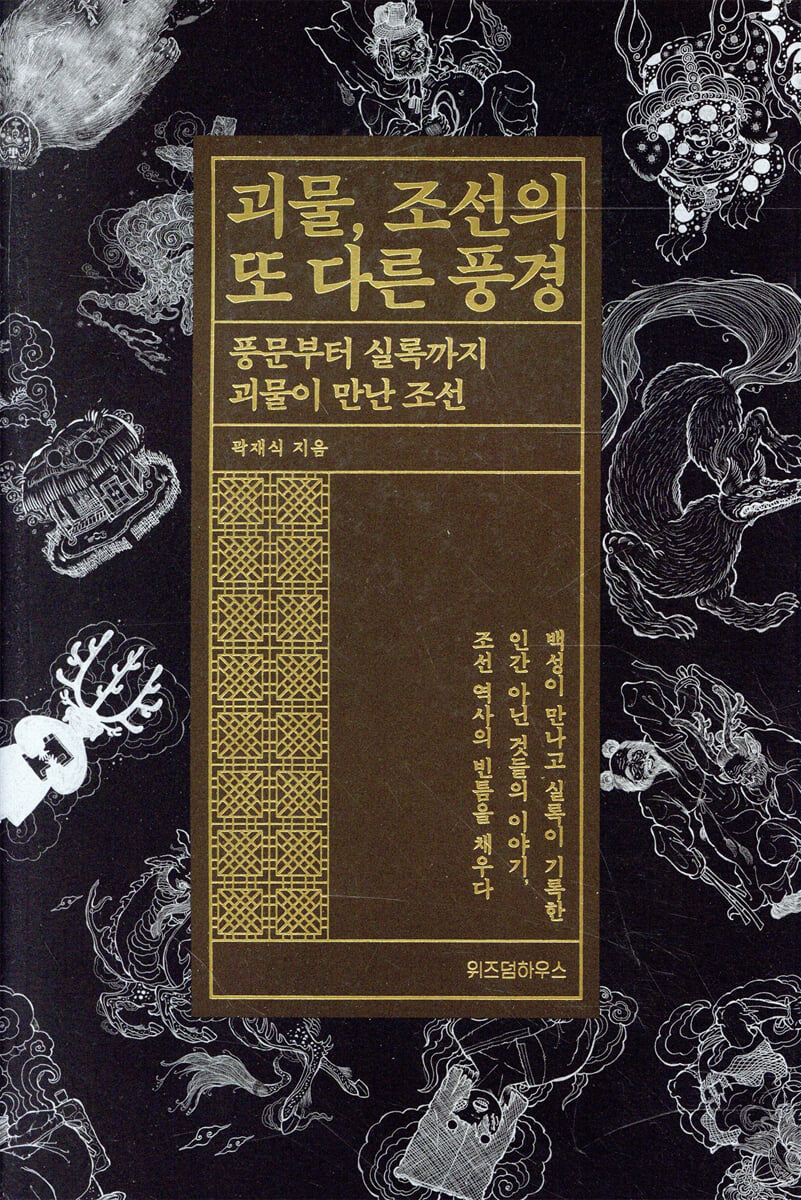
Monster, another landscape of Joseon
 |
Description
Book Introduction
“A monster lived in Joseon!”
Strange Joseon meets twenty monsters
If you look at the Annals of the Joseon Dynasty, ‘monsters’ are mentioned repeatedly.
Not only do they cite myths and folktales, they also describe encounters with monsters in detail and ponder why they happened.
For this reason, Joseon monster stories contain the specific lifestyle, social conditions, and issues of the time.
This book uniquely depicts the landscape of Joseon, focusing on twenty monsters found in various historical materials, including the Annals of the Joseon Dynasty.
Its significance lies in its inclusion of the culture and history of the time, moving beyond the encyclopedic narrative.
Strange Joseon meets twenty monsters
If you look at the Annals of the Joseon Dynasty, ‘monsters’ are mentioned repeatedly.
Not only do they cite myths and folktales, they also describe encounters with monsters in detail and ponder why they happened.
For this reason, Joseon monster stories contain the specific lifestyle, social conditions, and issues of the time.
This book uniquely depicts the landscape of Joseon, focusing on twenty monsters found in various historical materials, including the Annals of the Joseon Dynasty.
Its significance lies in its inclusion of the culture and history of the time, moving beyond the encyclopedic narrative.
- You can preview some of the book's contents.
Preview
index
Preface│Monsters of Joseon: The History of Day, The Stories of Night
Chapter 1: The Monster Grows by Feeding on the People's Words
Monsters that roamed the land of Samcheolli
The War-Destroyed Jine Hotel: O Park (Chungcheong Province)
A Joseon monster story that connects with Hollywood movies│A marten and a toad have a showdown│The humor of calling an insect a bride│Where is Oh Gong-won?
The Fox Who Targeted Jeon Woo-chi: White Fox (Jeolla Province)
Foxes are plentiful, but nine-tailed foxes are rare. │ A star raised by 20th-century popular culture. │ The white fox that played with Goguryeo and Baekje. │ Jeon Woo-chi and the white fox deceive each other.
A lucky letter predicting good and bad harvests: Samguildugwi (Jeolla Province)
One Head, Three Mouths│The Weather Forecast That Confused the Public│Joseon's Version of a Fortune Letter│Capturing the Lives of Joseon's People
A Farmer's Enemy Worse Than Drought and Flood: Steel (Gyeongsang Province)
A monster representing Joseon│Bringing down rain or blazing sun│A Joseon version of a chimera that eats iron│“Where steel passes, autumn is like spring.”
The Star That Paints the South Sea Red: Cheongu-seong (Gyeongsang Province)
A Puppy Flying in the Sky│An Evil Monster Attacks the Earth│The Terror of the Red Sea│Good Guests, Bad Guests, Strange Guests│The Pride of Joseon Astronomy│The Soul of Gidae Seung Becomes a Star
Mermaid Oil: Better Than Whale Oil: Mermaid (Gangwon-do)
The Cool Taste of Our Mermaid Story│Something Human and Something Beastly│A Confessor Who Sheds Pearl Tears│Kangchi Knows the Secret
Chapter 2: Protect the Sanggam Mama
The monsters that shook the palace
The Dragon Lineage Leading to Wang Geon: Yongson (Gyeonggi Province)
The Goryeo version of the Odyssey│The dragon's daughter who resembles Avalokitesvara│Joining forces to catch the old fox│If Wang Geon's grandmother was a pirate
Sejo's warning after becoming a Buddha: Saengsagui (Jeolla Province)
A Soldier's Dream That Shook Joseon│A Four-Dimensional Mystery That Surpasses Interstellar│What Clothes Does the Grim Reaper Wear│An Underworld Guarded by Beasts and Ruled by Civil Servants│"The King Can't Rest Easy Because of Jang Yeong-gi"
The Underground Ghost That Captured King Seongjong's Attention: The Underground Ghost (Seoul)
Joseon's Best Ghost Story│Even Ghosts Are Afraid of Guns and Cannons│No Upper Body, But Lower Body│Bone-Legged Legs│Poltergeist, or Gas Poisoning
The Shadow of King Yeonsangun, Who Trembled King Jungjong: The Su-geop (Seoul)
The emergence of the water monster│Frightened soldiers│The king moves his residence│Queen Jeonghyeon's trauma│Politics that ignores the suffering of the people
A dark aura appears when a race dies: The Night of the Water Monster (Hwanghae Province)
In search of Dangun's shrine│The angry spirits spread an epidemic│Politics are in turmoil and the people are in a state of turmoil
Curse of the Crown Prince: Goblin (Jeolla Province)
Targeting the King's Son│The Two Faces of the Goblin│The Immenseness of Korea, China, and Japan│Reveal Yourself│The Millennium Goblin
The Deer and Bear that Confused King Jeongjo's Heart: Nokjeong and Ungjeong (Gyeongsang Province)
A Life Trapped in Treason│Jiri Mountain Seonwon Village Becomes a Base of Conspiracy│Choi Chi-won Becomes a Immortal, a Deer Becomes Human│Fake News Begins in "Jeonggamnok"│Traces of Ancient Northern Culture
Chapter 3: Borders Can't Stop It
Monsters that crossed the sea
Joseon's Bigfoot is a master of the wall: Ansikaek (Gangwon Province)
Eternal Life: A Blessing or a Curse? │A Different Kind of Original Nature │Not a Monkey, Not a Bigfoot │The Lessons of a Blue-Haired Practitioner
The Land of Giants Across the Sea: Giants (Gangwon-do)
A Collaboration of History and Legend│The Story of Giants from Silla to Joseon│Were the Cyclops of Joseon Dutch?│The Giant Named Disgust
Symbol of Good Fortune, Symbol of Bad Fortune: Golden Toad (Gangwon-do)
The Multi-Ethnic State of Goguryeo and the Toad│The Dark Paradox of the Golden Toad│Sudden Fortune Leads to Death│Handle the Golden Toad with Care
The Deer-Horned Woman Who Ended the War: Lady Nokjok (Pyongyang)
The Deer-footed Lady and Her Nine Sons│A Timeless Symbol of Peace│Traces of the Deer-footed Lady Found in India│Revived after 1,000 Years
Elephants, Zebras, and Bulgasal: Park and Mac (Pyeongan Province)
The immortal monster│A herd of long-nosed beasts│Shooting a tiger to kill it│The troublesome tiger becomes an unkillable animal│The tiger that ate a tiger and a leopard
The Lion Who Made Tigers Tremble: Sanye (Hamgyeong Province)
The Boundary Between Reality and Imagination│Dancing Lions│Crossing the Desert to the Korean Peninsula│The Mountain King Who Made Tigers Tremble
The snake that drank the blood of ten thousand people: Maninsa Temple (Hamgyeong Province)
The Dragon King's Son Becomes an Imoogi│Speaks Humanly and Holds a Bead│Snake Monster Hunting Method│Knowledge of Worshiping Like a Spirit│Explore the Unknown World
References
Chapter 1: The Monster Grows by Feeding on the People's Words
Monsters that roamed the land of Samcheolli
The War-Destroyed Jine Hotel: O Park (Chungcheong Province)
A Joseon monster story that connects with Hollywood movies│A marten and a toad have a showdown│The humor of calling an insect a bride│Where is Oh Gong-won?
The Fox Who Targeted Jeon Woo-chi: White Fox (Jeolla Province)
Foxes are plentiful, but nine-tailed foxes are rare. │ A star raised by 20th-century popular culture. │ The white fox that played with Goguryeo and Baekje. │ Jeon Woo-chi and the white fox deceive each other.
A lucky letter predicting good and bad harvests: Samguildugwi (Jeolla Province)
One Head, Three Mouths│The Weather Forecast That Confused the Public│Joseon's Version of a Fortune Letter│Capturing the Lives of Joseon's People
A Farmer's Enemy Worse Than Drought and Flood: Steel (Gyeongsang Province)
A monster representing Joseon│Bringing down rain or blazing sun│A Joseon version of a chimera that eats iron│“Where steel passes, autumn is like spring.”
The Star That Paints the South Sea Red: Cheongu-seong (Gyeongsang Province)
A Puppy Flying in the Sky│An Evil Monster Attacks the Earth│The Terror of the Red Sea│Good Guests, Bad Guests, Strange Guests│The Pride of Joseon Astronomy│The Soul of Gidae Seung Becomes a Star
Mermaid Oil: Better Than Whale Oil: Mermaid (Gangwon-do)
The Cool Taste of Our Mermaid Story│Something Human and Something Beastly│A Confessor Who Sheds Pearl Tears│Kangchi Knows the Secret
Chapter 2: Protect the Sanggam Mama
The monsters that shook the palace
The Dragon Lineage Leading to Wang Geon: Yongson (Gyeonggi Province)
The Goryeo version of the Odyssey│The dragon's daughter who resembles Avalokitesvara│Joining forces to catch the old fox│If Wang Geon's grandmother was a pirate
Sejo's warning after becoming a Buddha: Saengsagui (Jeolla Province)
A Soldier's Dream That Shook Joseon│A Four-Dimensional Mystery That Surpasses Interstellar│What Clothes Does the Grim Reaper Wear│An Underworld Guarded by Beasts and Ruled by Civil Servants│"The King Can't Rest Easy Because of Jang Yeong-gi"
The Underground Ghost That Captured King Seongjong's Attention: The Underground Ghost (Seoul)
Joseon's Best Ghost Story│Even Ghosts Are Afraid of Guns and Cannons│No Upper Body, But Lower Body│Bone-Legged Legs│Poltergeist, or Gas Poisoning
The Shadow of King Yeonsangun, Who Trembled King Jungjong: The Su-geop (Seoul)
The emergence of the water monster│Frightened soldiers│The king moves his residence│Queen Jeonghyeon's trauma│Politics that ignores the suffering of the people
A dark aura appears when a race dies: The Night of the Water Monster (Hwanghae Province)
In search of Dangun's shrine│The angry spirits spread an epidemic│Politics are in turmoil and the people are in a state of turmoil
Curse of the Crown Prince: Goblin (Jeolla Province)
Targeting the King's Son│The Two Faces of the Goblin│The Immenseness of Korea, China, and Japan│Reveal Yourself│The Millennium Goblin
The Deer and Bear that Confused King Jeongjo's Heart: Nokjeong and Ungjeong (Gyeongsang Province)
A Life Trapped in Treason│Jiri Mountain Seonwon Village Becomes a Base of Conspiracy│Choi Chi-won Becomes a Immortal, a Deer Becomes Human│Fake News Begins in "Jeonggamnok"│Traces of Ancient Northern Culture
Chapter 3: Borders Can't Stop It
Monsters that crossed the sea
Joseon's Bigfoot is a master of the wall: Ansikaek (Gangwon Province)
Eternal Life: A Blessing or a Curse? │A Different Kind of Original Nature │Not a Monkey, Not a Bigfoot │The Lessons of a Blue-Haired Practitioner
The Land of Giants Across the Sea: Giants (Gangwon-do)
A Collaboration of History and Legend│The Story of Giants from Silla to Joseon│Were the Cyclops of Joseon Dutch?│The Giant Named Disgust
Symbol of Good Fortune, Symbol of Bad Fortune: Golden Toad (Gangwon-do)
The Multi-Ethnic State of Goguryeo and the Toad│The Dark Paradox of the Golden Toad│Sudden Fortune Leads to Death│Handle the Golden Toad with Care
The Deer-Horned Woman Who Ended the War: Lady Nokjok (Pyongyang)
The Deer-footed Lady and Her Nine Sons│A Timeless Symbol of Peace│Traces of the Deer-footed Lady Found in India│Revived after 1,000 Years
Elephants, Zebras, and Bulgasal: Park and Mac (Pyeongan Province)
The immortal monster│A herd of long-nosed beasts│Shooting a tiger to kill it│The troublesome tiger becomes an unkillable animal│The tiger that ate a tiger and a leopard
The Lion Who Made Tigers Tremble: Sanye (Hamgyeong Province)
The Boundary Between Reality and Imagination│Dancing Lions│Crossing the Desert to the Korean Peninsula│The Mountain King Who Made Tigers Tremble
The snake that drank the blood of ten thousand people: Maninsa Temple (Hamgyeong Province)
The Dragon King's Son Becomes an Imoogi│Speaks Humanly and Holds a Bead│Snake Monster Hunting Method│Knowledge of Worshiping Like a Spirit│Explore the Unknown World
References
Detailed image

Into the book
Why did the story of the civet monster arise and become popular in the late Joseon Dynasty?
As Catholicism spread throughout Joseon society in the 18th century, it may have been influenced by the European culture that came with it.
Or, as the circulation of novels dealing with various subjects increased, it could have spread due to the influence of those subjects or descriptions.
---From "The Jine Hotel Declined by War: O Park (Chungcheong Province)"
Rather than drawing such serious conclusions from monster stories, I find it more interesting to delve into the lives and mindsets of people at the time when monster stories were being spread.
This is because the stories of monsters that circulate through rumors contain the lives of ordinary people that the history written about kings and ministers or the epics praising heroes cannot contain.
For example, in the story of 'Samguildugwi (Three Mouths, One Head Ghost)', we can get a glimpse into the lives of ordinary people living in Jeolla Province during the early Joseon Dynasty.
---From "A Lucky Letter Predicting Harvests and Famines: Samguildugwi (Jeolla Province)"
So, maybe the word steel wasn't originally the name of a monster.
For example, it could mean war with words symbolizing spears, swords, and cannons.
… … If not, it could be a modified form of some foreign word that was brought to us by soldiers from China or Japan during the Imjin War.
---From "A Farmer's Enemy Worse Than Drought and Flood: Steel (Gyeongsang Province)"
In Joseon Dynasty tales, mermaids are neither mysterious and noble sea royalty nor monsters possessing magical allure that seduce sailors.
It's just a rare beast.
She is captured by a fisherman, who tells her of her usefulness as a 'oil extractor'.
---From "Mermaid Oil, Better Than Whale Oil: Mermaid (Gangwon-do)"
In the storybook "Eou Yadam" from the mid-Joseon Dynasty, there is a legend that King U of Goryeo, just before he died, claimed that he was also a descendant of a dragon and took off his upper garment to show his skin covered in dragon scales as proof.
When Lee Seong-gye's faction tried to execute him because he was not a descendant of the Goryeo king but the son of Shin Don, he protested by showing them dragon scales, saying that he was a descendant of the Goryeo king.
---From "The Dragon's Genealogy Leading to Wang Geon: Yongson (Gyeonggi Province)"
In fact, the appearance of the grim reaper in the Annals of the Joseon Dynasty is very different from the grim reaper wearing black clothes and a black hat.
It is said that the Saengsa-gwi has a black body and five horns that grow outward.
… … It should be said that the Grim Reaper is closer to the appearance of a baby or a young child than the middle-aged man that comes to mind when thinking of the Grim Reaper.
---From "The Warning of King Sejo, Who Became a Buddha: Life and Death (Jeolla Province)"
A goblin is a ghost or spirit that a shaman serves or asks for something from.
It even seems to grant him a dark spell that would harm the king's son.
… … It is worth speculating that the shamans and their followers of the Yeongjo era believed that goblins were monsters similar to ghosts of infectious diseases.
---From "The Curse Against the Crown Prince: Goblin (Jeolla Province)"
Even in the 21st century, there are still quite a few people in Korea who believe that living in a remote, deep-mountainous area and eating only what they can find there is good for their health.
I think the fact that this kind of thinking is still quite widespread in our society may be due to the indirect influence of the various Byeokgok stories that were popular in the late Joseon Dynasty.
---From "Joseon's Bigfoot is the Master of the Wall: Ansikaek (Gangwon-do)"
In fact, there was a time when Dutch people like Hendrik Hamel washed up on Jeju Island.
As time went by and they began to communicate with each other… … let’s say someone unravels the story of the Cyclops from ancient Greek mythology.
Then, wouldn't it be possible for historical facts and various stories to intertwine to create a story about a giant who resembles a red-haired European?
---From "The Land of Giants Across the Sea: Giants (Gangwon-do)"
It is natural to view the story of Lady Nokjok, which was popular in the late Joseon Dynasty, as a story that was transformed and born after being transmitted to the Korean Peninsula along with Buddhism from India.
There are similar examples because Buddhism was introduced to Japan as well.
… … There is a recorded legend that Empress Komyo, a noble Japanese figure, was born from a relationship between a monk and a deer.
There is also a legend that the reason tabi, traditional Japanese socks, appear to have two toes is because the feet of Lady Noknyeo were shaped like a deer.
---From "The Deer-footed Woman Who Ended the War: Lady Nokjok (Pyongyang)"
Whatever the identity, the expression 'firing' suggests that the soldiers ultimately attacked and killed them with rifles.
When the soldiers skinned the skin and sent it to Seoul, some officials said it looked like a gourd, while others said it looked like a macaw.
---From "Elephants, Zebras, and the Bulgar: Park and Mac (Pyeongan Province)"
Monsters, whether good or evil, appear in various forms, whether close to home or far away, like foreign countries, and do not follow any single standard or prejudice.
As Catholicism spread throughout Joseon society in the 18th century, it may have been influenced by the European culture that came with it.
Or, as the circulation of novels dealing with various subjects increased, it could have spread due to the influence of those subjects or descriptions.
---From "The Jine Hotel Declined by War: O Park (Chungcheong Province)"
Rather than drawing such serious conclusions from monster stories, I find it more interesting to delve into the lives and mindsets of people at the time when monster stories were being spread.
This is because the stories of monsters that circulate through rumors contain the lives of ordinary people that the history written about kings and ministers or the epics praising heroes cannot contain.
For example, in the story of 'Samguildugwi (Three Mouths, One Head Ghost)', we can get a glimpse into the lives of ordinary people living in Jeolla Province during the early Joseon Dynasty.
---From "A Lucky Letter Predicting Harvests and Famines: Samguildugwi (Jeolla Province)"
So, maybe the word steel wasn't originally the name of a monster.
For example, it could mean war with words symbolizing spears, swords, and cannons.
… … If not, it could be a modified form of some foreign word that was brought to us by soldiers from China or Japan during the Imjin War.
---From "A Farmer's Enemy Worse Than Drought and Flood: Steel (Gyeongsang Province)"
In Joseon Dynasty tales, mermaids are neither mysterious and noble sea royalty nor monsters possessing magical allure that seduce sailors.
It's just a rare beast.
She is captured by a fisherman, who tells her of her usefulness as a 'oil extractor'.
---From "Mermaid Oil, Better Than Whale Oil: Mermaid (Gangwon-do)"
In the storybook "Eou Yadam" from the mid-Joseon Dynasty, there is a legend that King U of Goryeo, just before he died, claimed that he was also a descendant of a dragon and took off his upper garment to show his skin covered in dragon scales as proof.
When Lee Seong-gye's faction tried to execute him because he was not a descendant of the Goryeo king but the son of Shin Don, he protested by showing them dragon scales, saying that he was a descendant of the Goryeo king.
---From "The Dragon's Genealogy Leading to Wang Geon: Yongson (Gyeonggi Province)"
In fact, the appearance of the grim reaper in the Annals of the Joseon Dynasty is very different from the grim reaper wearing black clothes and a black hat.
It is said that the Saengsa-gwi has a black body and five horns that grow outward.
… … It should be said that the Grim Reaper is closer to the appearance of a baby or a young child than the middle-aged man that comes to mind when thinking of the Grim Reaper.
---From "The Warning of King Sejo, Who Became a Buddha: Life and Death (Jeolla Province)"
A goblin is a ghost or spirit that a shaman serves or asks for something from.
It even seems to grant him a dark spell that would harm the king's son.
… … It is worth speculating that the shamans and their followers of the Yeongjo era believed that goblins were monsters similar to ghosts of infectious diseases.
---From "The Curse Against the Crown Prince: Goblin (Jeolla Province)"
Even in the 21st century, there are still quite a few people in Korea who believe that living in a remote, deep-mountainous area and eating only what they can find there is good for their health.
I think the fact that this kind of thinking is still quite widespread in our society may be due to the indirect influence of the various Byeokgok stories that were popular in the late Joseon Dynasty.
---From "Joseon's Bigfoot is the Master of the Wall: Ansikaek (Gangwon-do)"
In fact, there was a time when Dutch people like Hendrik Hamel washed up on Jeju Island.
As time went by and they began to communicate with each other… … let’s say someone unravels the story of the Cyclops from ancient Greek mythology.
Then, wouldn't it be possible for historical facts and various stories to intertwine to create a story about a giant who resembles a red-haired European?
---From "The Land of Giants Across the Sea: Giants (Gangwon-do)"
It is natural to view the story of Lady Nokjok, which was popular in the late Joseon Dynasty, as a story that was transformed and born after being transmitted to the Korean Peninsula along with Buddhism from India.
There are similar examples because Buddhism was introduced to Japan as well.
… … There is a recorded legend that Empress Komyo, a noble Japanese figure, was born from a relationship between a monk and a deer.
There is also a legend that the reason tabi, traditional Japanese socks, appear to have two toes is because the feet of Lady Noknyeo were shaped like a deer.
---From "The Deer-footed Woman Who Ended the War: Lady Nokjok (Pyongyang)"
Whatever the identity, the expression 'firing' suggests that the soldiers ultimately attacked and killed them with rifles.
When the soldiers skinned the skin and sent it to Seoul, some officials said it looked like a gourd, while others said it looked like a macaw.
---From "Elephants, Zebras, and the Bulgar: Park and Mac (Pyeongan Province)"
Monsters, whether good or evil, appear in various forms, whether close to home or far away, like foreign countries, and do not follow any single standard or prejudice.
---From "The Snake That Drank the Blood of Ten Thousand People: Maninsa Temple (Hamgyeong Province)"
Publisher's Review
There lived a monster in Joseon.
This is not an absurd story.
If you look at the Annals of the Joseon Dynasty, you will find that stories of monsters that roamed the land of three thousand miles appear continuously.
The record is very specific and catches the eye.
Some monsters shook the hearts of the people, some monsters turned the palace upside down, and some monsters came from far away and reigned as kings of the mountains of Baekdudaegan.
The king, his subjects, and the people were troubled by who had encountered the monster and under what circumstances, why it had appeared, and how to deal with it.
So, when we look at the records of Joseon's monsters, we can naturally see the lifestyles and social conditions of the people at the time, their understanding of the world, and their awareness of the problems.
This book tells the story of Joseon centered around twenty monsters discovered from various historical materials, from the Annals of the Joseon Dynasty to the Yeolha Diary.
Author Kwak Jae-sik, who has been collecting and introducing Korean monsters since 2007, breaks away from the conventional encyclopedic narrative and unfolds monster stories as a new material that encounters Joseon.
It depicts the diverse landscapes of Joseon through stories of familiar monsters such as the 'goblin' and the 'white fox', as well as unfamiliar monsters such as the 'three-mouthed, one-headed ghost' and the 'deer-footed woman'.
The 『Joseon Monster Map』, which shows at a glance where monsters lived in the eight provinces of Joseon, and the illustrations of Gomgome (Kim Jin-young), an illustrator who reinterprets each country's myths in a Korean style, add to the viewing experience.
“Meeting at the scene of life”
Monsters that made the people laugh and cry
This book is divided into three chapters, each with a different theme: 'People and Monsters', 'Kings and Monsters', and 'Monsters from Foreign Countries'.
Many people encountered monsters throughout Joseon.
The meeting at that time was not a simple sighting or encounter.
People believed in the existence of monsters to understand and predict the world, and the stronger the belief, the greater the influence the monsters had on the people's lives.
These interactions were most active over food and shelter.
This is why there are many stories of monsters related to agriculture and fishing.
Representative examples include Samguildugwi, who came down from the sky and predicted the weather in return for receiving a lot of food; Gangcheol (?鐵), who brought drought and floods and was regarded as a disaster; Cheonguseong (天狗星), who dyed the sea red and killed fish; and Mermaid (人魚), who could extract high-quality oil and became a good means of making money.
What's interesting is that the monsters' stories are very three-dimensional.
In addition to the daily routine of making a living, the experiences and feelings we have in life are reflected in the monster story.
For example, the story of steel is based on the desolate emotions created by the Imjin War.
The proverb, “Where steel passes, autumn is like spring,” means that no matter how much effort is put into something, it is helpless when a great disaster strikes, and it conveys the futility of the people who face the destructive situation of war.
In this way, monster stories allow us to look at Joseon from the perspective of its people.
The clue to how ancient people understood their world lies in non-human beings, namely monsters.
“Climbing over the palace wall”
Monsters that disturbed the king's mind
Even though he was king, he was not free from monsters.
For example, King Seongjong had a heated debate with his subjects about how to deal with the ghost 'Jihajiin (the man from below)' who appeared in the homes of Prime Minister Jeong Chang-son and Lee Du, the left-hand official of the Ministry of Taxation.
In addition to this, the Annals of the Joseon Dynasty contain a story about a black aura called "Mulgoe Yahaeng" that enveloped Seoul on the day King Injong closed his eyes, causing the people to be terrified, and a story about a group of people who tried to assassinate Crown Prince Sado by mobilizing goblins, but were caught and incurred King Yeongjo's wrath.
The most notable of these is the 'beast monster' that made King Jungjong worry.
The monster, who is also famous as the subject of the movie "The Monster," suddenly appeared in the middle of the palace in 1511 and 1527, turning the government upside down.
Records show that it looked like a dog and was as big as a horse, and rumors spread widely when Queen Jeonghyeon was afraid and moved her residence.
The author of this book links the appearance of the water monster to King Yeonsangun.
Queen Jeonghyeon raised Yeonsangun as if he were her own child, but at a crucial moment, she participated in driving him out.
He must have harbored complex emotions, a mixture of guilt about the crooked Yeonsangun and the fear that even those with absolute power could be ousted overnight.
The appearance of the water monster may have acted as a trigger for these emotions to explode, making Queen Jeonghyeon tremble in fear.
The author also notes the record that it 'looked like a dog'.
King Yeonsangun kept numerous animals and hunting dogs in the palace, and it is said that some of them lost their owners and ran away to nearby mountains or forests before returning.
Finally, the author makes one more plausible guess.
Records show that a few days before the first appearance of the water demon in 1511, a large fire broke out in houses near the palace.
What if, at this time, the despair of the people was on the back burner and the high-ranking officials, preoccupied with their own struggles for power, saw a stray dog that had entered the palace to escape the fire as a monster?
In this way, monster stories reveal the thoughts and feelings of those in power, while also containing the people's wishes about how and for whom power should be used.
“Monsters have no borders.”
Monsters who came to Joseon from across the sea and desert
No matter how closed a country is, the flow of culture cannot be stopped.
The same goes for monster stories.
If we can uncover how foreign monster stories were transmitted to Korea and how they were transformed and what became popular, it will be of great help in understanding the characteristics and culture of Koreans at the time.
So what kind of foreign monsters came to Joseon?
First of all, we can choose ‘Golden Toad’.
Although it is so familiar as a symbol of wealth that it is usually thought of as a native monster, the golden toad originated from the ancient Chinese tale of 'Chang'e'.
The same goes for ‘Sanye (?猊, lion)’.
The image of the lion in traditional lion dances such as the Bukcheong Lion Dance was influenced by Indian Buddhist literature.
There are also monsters that were introduced to Joseon as a result of national policy rather than natural cultural exchange.
It is the 'Maninsa (萬人蛇)' that is said to have eaten 10,000 people.
This monster was originally famous among the northern immigrant people of Jurchen descent.
However, the story flowed into Joseon through Sejong's northern expansion.
It is said that Maninsa Temple holds the 'Manin Blood Stone', which is made up of the blood of 10,000 people, and it seems to contain the fierce history of the North, where various forces constantly clashed.
In this way, monster stories contain traces of cultural exchange between nations at the time and their historical context.
This clearly shows a different side of Joseon that is not commonly thought of, interacting with its surroundings.
This is not an absurd story.
If you look at the Annals of the Joseon Dynasty, you will find that stories of monsters that roamed the land of three thousand miles appear continuously.
The record is very specific and catches the eye.
Some monsters shook the hearts of the people, some monsters turned the palace upside down, and some monsters came from far away and reigned as kings of the mountains of Baekdudaegan.
The king, his subjects, and the people were troubled by who had encountered the monster and under what circumstances, why it had appeared, and how to deal with it.
So, when we look at the records of Joseon's monsters, we can naturally see the lifestyles and social conditions of the people at the time, their understanding of the world, and their awareness of the problems.
This book tells the story of Joseon centered around twenty monsters discovered from various historical materials, from the Annals of the Joseon Dynasty to the Yeolha Diary.
Author Kwak Jae-sik, who has been collecting and introducing Korean monsters since 2007, breaks away from the conventional encyclopedic narrative and unfolds monster stories as a new material that encounters Joseon.
It depicts the diverse landscapes of Joseon through stories of familiar monsters such as the 'goblin' and the 'white fox', as well as unfamiliar monsters such as the 'three-mouthed, one-headed ghost' and the 'deer-footed woman'.
The 『Joseon Monster Map』, which shows at a glance where monsters lived in the eight provinces of Joseon, and the illustrations of Gomgome (Kim Jin-young), an illustrator who reinterprets each country's myths in a Korean style, add to the viewing experience.
“Meeting at the scene of life”
Monsters that made the people laugh and cry
This book is divided into three chapters, each with a different theme: 'People and Monsters', 'Kings and Monsters', and 'Monsters from Foreign Countries'.
Many people encountered monsters throughout Joseon.
The meeting at that time was not a simple sighting or encounter.
People believed in the existence of monsters to understand and predict the world, and the stronger the belief, the greater the influence the monsters had on the people's lives.
These interactions were most active over food and shelter.
This is why there are many stories of monsters related to agriculture and fishing.
Representative examples include Samguildugwi, who came down from the sky and predicted the weather in return for receiving a lot of food; Gangcheol (?鐵), who brought drought and floods and was regarded as a disaster; Cheonguseong (天狗星), who dyed the sea red and killed fish; and Mermaid (人魚), who could extract high-quality oil and became a good means of making money.
What's interesting is that the monsters' stories are very three-dimensional.
In addition to the daily routine of making a living, the experiences and feelings we have in life are reflected in the monster story.
For example, the story of steel is based on the desolate emotions created by the Imjin War.
The proverb, “Where steel passes, autumn is like spring,” means that no matter how much effort is put into something, it is helpless when a great disaster strikes, and it conveys the futility of the people who face the destructive situation of war.
In this way, monster stories allow us to look at Joseon from the perspective of its people.
The clue to how ancient people understood their world lies in non-human beings, namely monsters.
“Climbing over the palace wall”
Monsters that disturbed the king's mind
Even though he was king, he was not free from monsters.
For example, King Seongjong had a heated debate with his subjects about how to deal with the ghost 'Jihajiin (the man from below)' who appeared in the homes of Prime Minister Jeong Chang-son and Lee Du, the left-hand official of the Ministry of Taxation.
In addition to this, the Annals of the Joseon Dynasty contain a story about a black aura called "Mulgoe Yahaeng" that enveloped Seoul on the day King Injong closed his eyes, causing the people to be terrified, and a story about a group of people who tried to assassinate Crown Prince Sado by mobilizing goblins, but were caught and incurred King Yeongjo's wrath.
The most notable of these is the 'beast monster' that made King Jungjong worry.
The monster, who is also famous as the subject of the movie "The Monster," suddenly appeared in the middle of the palace in 1511 and 1527, turning the government upside down.
Records show that it looked like a dog and was as big as a horse, and rumors spread widely when Queen Jeonghyeon was afraid and moved her residence.
The author of this book links the appearance of the water monster to King Yeonsangun.
Queen Jeonghyeon raised Yeonsangun as if he were her own child, but at a crucial moment, she participated in driving him out.
He must have harbored complex emotions, a mixture of guilt about the crooked Yeonsangun and the fear that even those with absolute power could be ousted overnight.
The appearance of the water monster may have acted as a trigger for these emotions to explode, making Queen Jeonghyeon tremble in fear.
The author also notes the record that it 'looked like a dog'.
King Yeonsangun kept numerous animals and hunting dogs in the palace, and it is said that some of them lost their owners and ran away to nearby mountains or forests before returning.
Finally, the author makes one more plausible guess.
Records show that a few days before the first appearance of the water demon in 1511, a large fire broke out in houses near the palace.
What if, at this time, the despair of the people was on the back burner and the high-ranking officials, preoccupied with their own struggles for power, saw a stray dog that had entered the palace to escape the fire as a monster?
In this way, monster stories reveal the thoughts and feelings of those in power, while also containing the people's wishes about how and for whom power should be used.
“Monsters have no borders.”
Monsters who came to Joseon from across the sea and desert
No matter how closed a country is, the flow of culture cannot be stopped.
The same goes for monster stories.
If we can uncover how foreign monster stories were transmitted to Korea and how they were transformed and what became popular, it will be of great help in understanding the characteristics and culture of Koreans at the time.
So what kind of foreign monsters came to Joseon?
First of all, we can choose ‘Golden Toad’.
Although it is so familiar as a symbol of wealth that it is usually thought of as a native monster, the golden toad originated from the ancient Chinese tale of 'Chang'e'.
The same goes for ‘Sanye (?猊, lion)’.
The image of the lion in traditional lion dances such as the Bukcheong Lion Dance was influenced by Indian Buddhist literature.
There are also monsters that were introduced to Joseon as a result of national policy rather than natural cultural exchange.
It is the 'Maninsa (萬人蛇)' that is said to have eaten 10,000 people.
This monster was originally famous among the northern immigrant people of Jurchen descent.
However, the story flowed into Joseon through Sejong's northern expansion.
It is said that Maninsa Temple holds the 'Manin Blood Stone', which is made up of the blood of 10,000 people, and it seems to contain the fierce history of the North, where various forces constantly clashed.
In this way, monster stories contain traces of cultural exchange between nations at the time and their historical context.
This clearly shows a different side of Joseon that is not commonly thought of, interacting with its surroundings.
GOODS SPECIFICS
- Date of issue: January 21, 2021
- Page count, weight, size: 292 pages | 438g | 140*210*17mm
- ISBN13: 9791191308228
- ISBN10: 1191308227
You may also like
카테고리
korean


korean

![GQ KOREA Mark (Monthly): December [2025]](http://librairie.coreenne.fr/cdn/shop/files/8ef265dbbfbf186523ed75ba7319009d.jpg?v=1765340328&width=3840)


