

Descendants of the samurai and shogun
 |
Description
Book Introduction
It deals with the succession of power and political changes in the Japanese era, focusing on Fujiwara Michinaga.
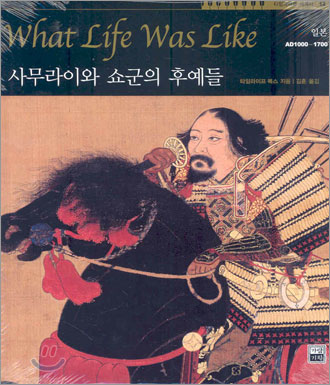
The Heian period was a period of great power for the samurai class, and in 1192 Yoritomo became the shogun of Japan, establishing a military regime known as the Kamakura shogunate. This book follows the footsteps of medieval Japanese kings over the succession to the shogunate.
It contains scenes of art flourishing, merchants amassing wealth, and people living peacefully.
It also showcases Japan's vibrant and colorful lifestyle, where Kabuki, puppetry, popular literature, art, architecture, and sculpture flourished.
The Heian period was a period of great power for the samurai class, and in 1192 Yoritomo became the shogun of Japan, establishing a military regime known as the Kamakura shogunate. This book follows the footsteps of medieval Japanese kings over the succession to the shogunate.
It contains scenes of art flourishing, merchants amassing wealth, and people living peacefully.
It also showcases Japan's vibrant and colorful lifestyle, where Kabuki, puppetry, popular literature, art, architecture, and sculpture flourished.
index
_Land of the Rising Sun - Overview and Chronology of Japan
1.
The Shining Prince's Palace
2.
samurai sword
3.
Peace and the Ephemeral World
ESSAY 1.
Courtship and Marriage in the Heian Period
ESSAY 2.
Creating beauty in everyday life
ESSAY 3.
Gardens for Zen practice
1.
The Shining Prince's Palace
2.
samurai sword
3.
Peace and the Ephemeral World
ESSAY 1.
Courtship and Marriage in the Heian Period
ESSAY 2.
Creating beauty in everyday life
ESSAY 3.
Gardens for Zen practice
Publisher's Review
“People flocked to the red-light district, and its splendor, freedom, and excitement brought a rare sense of liberation to those burdened by the strictures of social life.
The street was a city that never sleeps.
Playwright Chikamatsu described a street in Osaka like this:
“The early winter night in Sonezaki Shinchi was faintly illuminated by the light of the teahouse lanterns.
In every crowded street, young rascals strolled leisurely, singing folk songs, reciting lines from puppet shows, and imitating the lines and performances of famous actors.
“On the second floor of the crowded teahouse, the lively melody of the shamisen drifted.”
Queen Dowager Senshi, the mother of King Ichijo, was furious when she heard that Korechika, who had ambitions to become regent, was “slandering her and Michinaga in front of King Ichijo at every opportunity.”
Sensi was a popular woman in the palace who was respected by many and wielded a certain amount of power.
Gorechika was a handsome and intelligent, but arrogant young man who often acted as a friend to the king.
If Korechika's father had not died early, he would have naturally passed the regency to his beloved son, so Korechika believed that he had the right to become regent.
But even a god-like king had to listen to his mother.
Senshi, accompanied by Michinaga, stormed into the king's residence.
While Senshi was in the king's inner chambers, Michinaga, the candidate for regent, waited anxiously in the waiting room.
When Sensei finally appeared in the waiting room, just seeing her smiling face drove me crazy, so I didn't have to ask her anything.
It focuses on the lives of kings, artisans, warriors, poets, courtesans, and monks of medieval Japan, as well as their battles on the battlefield.
In particular, the unique and colorful scroll illustrations in this book vividly bring to life the Japanese people, places, and events of Japan.
In these paintings, we can see Heian-era nobles enjoying leisure activities such as picnics and boating, warriors preparing for battle and fighting, and many people wandering the pleasure districts in search of fleeting pleasures.
Here, gold and silver lacquered crafts, ornately embroidered silk kimonos, and eerie samurai armor also showcase Japan's unique cultural traditions.
The street was a city that never sleeps.
Playwright Chikamatsu described a street in Osaka like this:
“The early winter night in Sonezaki Shinchi was faintly illuminated by the light of the teahouse lanterns.
In every crowded street, young rascals strolled leisurely, singing folk songs, reciting lines from puppet shows, and imitating the lines and performances of famous actors.
“On the second floor of the crowded teahouse, the lively melody of the shamisen drifted.”
Queen Dowager Senshi, the mother of King Ichijo, was furious when she heard that Korechika, who had ambitions to become regent, was “slandering her and Michinaga in front of King Ichijo at every opportunity.”
Sensi was a popular woman in the palace who was respected by many and wielded a certain amount of power.
Gorechika was a handsome and intelligent, but arrogant young man who often acted as a friend to the king.
If Korechika's father had not died early, he would have naturally passed the regency to his beloved son, so Korechika believed that he had the right to become regent.
But even a god-like king had to listen to his mother.
Senshi, accompanied by Michinaga, stormed into the king's residence.
While Senshi was in the king's inner chambers, Michinaga, the candidate for regent, waited anxiously in the waiting room.
When Sensei finally appeared in the waiting room, just seeing her smiling face drove me crazy, so I didn't have to ask her anything.
It focuses on the lives of kings, artisans, warriors, poets, courtesans, and monks of medieval Japan, as well as their battles on the battlefield.
In particular, the unique and colorful scroll illustrations in this book vividly bring to life the Japanese people, places, and events of Japan.
In these paintings, we can see Heian-era nobles enjoying leisure activities such as picnics and boating, warriors preparing for battle and fighting, and many people wandering the pleasure districts in search of fleeting pleasures.
Here, gold and silver lacquered crafts, ornately embroidered silk kimonos, and eerie samurai armor also showcase Japan's unique cultural traditions.
GOODS SPECIFICS
- Date of issue: April 20, 2005
- Format: Hardcover book binding method guide
- Page count, weight, size: 175 pages | 888g | 222*250*20mm
- ISBN13: 9788984351844
- ISBN10: 8984351849
You may also like
카테고리
korean


korean

![GQ KOREA Mark (Monthly): December [2025]](http://librairie.coreenne.fr/cdn/shop/files/8ef265dbbfbf186523ed75ba7319009d.jpg?v=1765340328&width=3840)


