

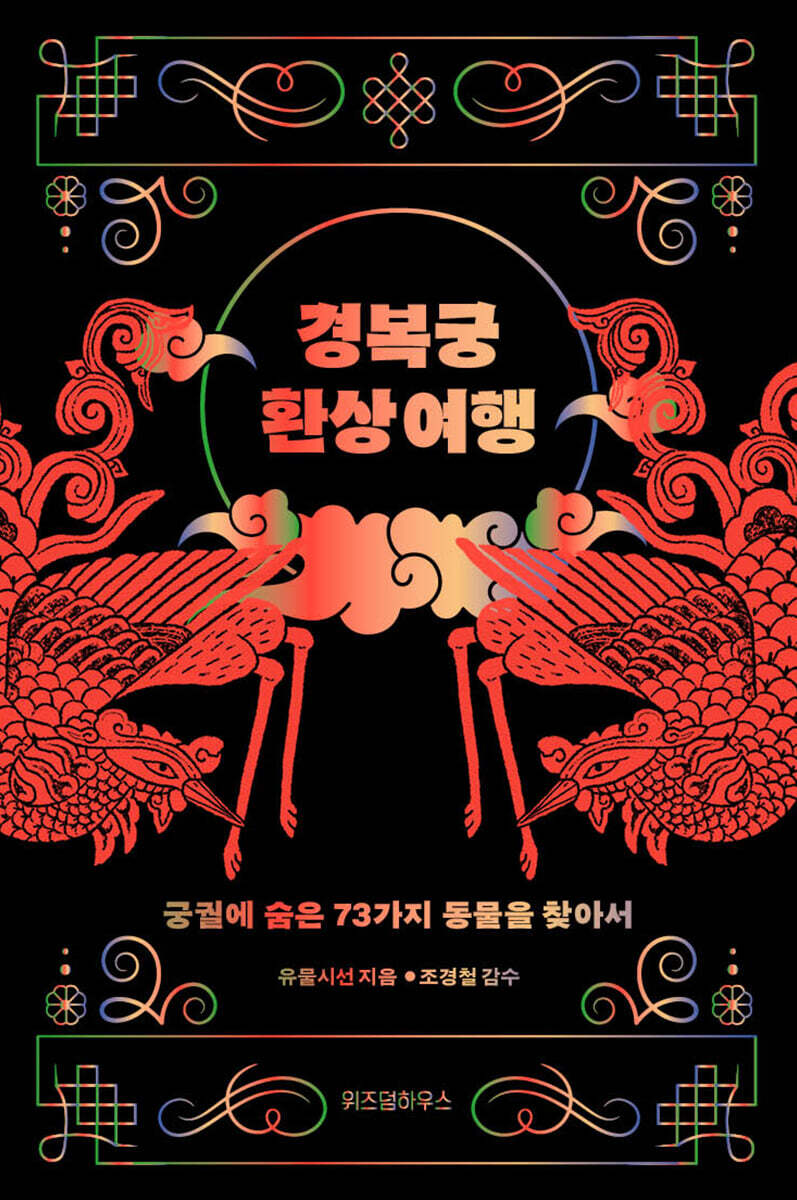
Gyeongbokgung Palace Fantasy Tour
 |
Description
Book Introduction
- A word from MD
- [The Mysterious World of the Palace] A book about over 100 mysterious animals that reside throughout Gyeongbokgung Palace, including the eaves, deep in the ceiling, chimneys, and halls.
The story of the 'Animal Guard' who protect the palace from fire and misfortune not only sheds new light on the familiar Gyeongbokgung Palace, but also visually presents the philosophy and ideal world of the time, and the beauty contained within.
- Ahn Hyeon-jae, History PD
When you go to a palace, you may have seen a statue on the eaves and thought, 'What on earth is that?'
Furthermore, there may be some who pretended to know, saying, "That's ridiculous. There's Tripitaka, the Monkey King, and Pigsy from Journey to the West."
But did you know? Gyeongbokgung Palace is actually home to over 100 animals, including the Haechi at Gwanghwamun and the 28 constellations of Geunjeongjeon Hall! Depending on their location (direction, building use, and occupant), these creatures each possess distinct origins and worldviews, and they display unique expressions and poses.
For example, when you enter Gwanghwamun, under the Yeongjegyo Bridge, there is a 'Cheonrok' sticking out its tongue.
Cheonrok is an imaginary animal, a deer-like divine beast with a body covered in scales and horns. In Ik's "Seonghosaeseol," Cheonrok is described as having "a five-colored light emanating from the tips of its horns and running 18,000 li a day."
Cheonrok is a 'wall' that blocks external invasions and evil spirits, and was usually placed in front of doors, on bridges, or at the entrance to tombs.
The Cheonrok of Yeongjegyo Bridge in Gyeongbokgung Palace was placed to protect the palace and the king from evil spirits crossing the bridge and waterway.
Unlike other palace guides, this book does not examine the appearance or history of the palace buildings.
As we head from Gwanghwamun, the south gate of Gyeongbokgung Palace, to Sinmumun, the north gate, we follow 73 animals, looking into every nook and cranny that others don't see, including under bridges, the edge of eaves, the edge of the Woldae, deep within the ceiling, and even the stone walls beneath chimneys.
When you tour the palace with the new keyword of animals, you will experience a fantastical experience where relics from the past that you may have passed by without noticing come to life.
In particular, thanks to the illustrations that embody the detailed expressions and poses of each animal character, you can 'visually' experience the philosophy, ideal world, and beauty of the time.
This is a new palace history guide that explores the stories of various animals, including the familiar haechi, phoenix, dragon, and black tortoise, as well as the bulgasari, gwimyeon, sanye, gongbok, and moon toad, each with their own story and where they guard, and what messages people in the past left behind in the hopes that Gyeongbokgung Palace would survive to this day.
Furthermore, there may be some who pretended to know, saying, "That's ridiculous. There's Tripitaka, the Monkey King, and Pigsy from Journey to the West."
But did you know? Gyeongbokgung Palace is actually home to over 100 animals, including the Haechi at Gwanghwamun and the 28 constellations of Geunjeongjeon Hall! Depending on their location (direction, building use, and occupant), these creatures each possess distinct origins and worldviews, and they display unique expressions and poses.
For example, when you enter Gwanghwamun, under the Yeongjegyo Bridge, there is a 'Cheonrok' sticking out its tongue.
Cheonrok is an imaginary animal, a deer-like divine beast with a body covered in scales and horns. In Ik's "Seonghosaeseol," Cheonrok is described as having "a five-colored light emanating from the tips of its horns and running 18,000 li a day."
Cheonrok is a 'wall' that blocks external invasions and evil spirits, and was usually placed in front of doors, on bridges, or at the entrance to tombs.
The Cheonrok of Yeongjegyo Bridge in Gyeongbokgung Palace was placed to protect the palace and the king from evil spirits crossing the bridge and waterway.
Unlike other palace guides, this book does not examine the appearance or history of the palace buildings.
As we head from Gwanghwamun, the south gate of Gyeongbokgung Palace, to Sinmumun, the north gate, we follow 73 animals, looking into every nook and cranny that others don't see, including under bridges, the edge of eaves, the edge of the Woldae, deep within the ceiling, and even the stone walls beneath chimneys.
When you tour the palace with the new keyword of animals, you will experience a fantastical experience where relics from the past that you may have passed by without noticing come to life.
In particular, thanks to the illustrations that embody the detailed expressions and poses of each animal character, you can 'visually' experience the philosophy, ideal world, and beauty of the time.
This is a new palace history guide that explores the stories of various animals, including the familiar haechi, phoenix, dragon, and black tortoise, as well as the bulgasari, gwimyeon, sanye, gongbok, and moon toad, each with their own story and where they guard, and what messages people in the past left behind in the hopes that Gyeongbokgung Palace would survive to this day.
- You can preview some of the book's contents.
Preview
index
Gyeongbokgung Palace Animal Pilgrimage Map
Gwanghwamun (光化門): The King's great virtue illuminates the entire nation... 12
· Guard in front of Gwanghwamun: Haechi · New resident: Haechi · Gwanghwamun's old guard: Haechi · Symbol under the chin: Dragon · Three guardians of the gates: Dragon · Guardian of the central gate: Twin peaks · Guardian of the eastern side gate: Yongma · Guardian of the western side gate: Turtle · Mouth spitting out the dragon's ridge: Dragon · Head raised: Dragon
Heungryemun (興禮門): Widely promoting etiquette… 38
Yeongjegyo (永濟橋): Save the people forever… 40
· Geumcheon's bodyguard: Cheonrok · King's bodyguard: Yong (Gongbok)
Geunjeongjeon (勤政殿): Manage state affairs diligently… 48
· The King's Way: Phoenix and Haechi · East Four Guardians: Blue Dragon · West Four Guardians: White Tiger · South Four Guardians: Red Bird · North Four Guardians: Black Tortoise · Twin Dragons on the Ceiling of Geunjeongjeon Hall: Seven Dragons · East Seven Guardians: Jiaolong (Snake) · East Seven Guardians: Nak (Cow) · East Seven Guardians: Rabbit · West Seven Guardians: Wolf (Goat) · West Seven Guardians: Monkey · West Seven Guardians: Chicken · South Seven Guardians: An (Wild Dog) · South Seven Guardians: Horse · North Seven Guardians: Rat · Growls, warding off evil spirits: Beopsu · Affectionate family: Twin Beopsu · Lion-like dragon: Sanye · Tail stretching high into the sky: Dragon
〉Plan of the entire animal stone statue layout of Geunjeongjeon Hall
Sajeongjeon (思政殿): Always think deeply about the people… 96
· Teasing the Yeouiju: Twin Dragons
Gangnyeongjeon (康寧殿): Correct your mind and cultivate virtue… 100
· Climb the Dragon Gate: Carp
Gyo Tae-jeon (交泰殿): The energies of heaven and earth harmonize… 104
· Queen's Garden: Amisha Chimney Relief · Ghost's Face: Ghost Mask · Wishing for a Long Life: Crane · Mysterious Appearance: Starfish · Dignity of a Beast: Leopard · Bringing Good Fortune: Bat · Stealing the Herb of Immortality: Toad
Jasindang (資善堂): Cultivating good character… 122
Hamwonjeon (含元殿): Preserving vital energy… 124
· First weight: Turtle (Bihee)
Jageungjeon (慈慶殿): Wishing for Mother's Joyful Affection… 128
· Ten Longevity Symbols Chimney: Ten Longevity Symbols and Bats, Cranes, Starfish, and Ghost Mask · Single Life: Haechi
Gyeonghoeru (慶會樓): Where the King and His Subjects Meet Through Virtue… 134
· Dragon's cub: Lee · Faith and loyalty: Chuu · Welcoming the king: Dragon · Joseon's unicorn: Kirin · Lucky symbol: Elephant · Gyeongbokgung Palace's mascot: Haechi · Shimmering in the pond: Bronze dragon · Roof containing Journey to the West: Miscellaneous statues
〉 Gyeonghoeru Animal Statue Layout
Geoncheonggung (乾淸宮): Emperor Gojong's independence and frustration are immature... 160
Hyangwonjeong (Fragrance Pavilion): The farther away the fragrance, the clearer it becomes… 162
· The Phoenix that Decorates the Sky
Jibokjae (集玉齋): A place filled with precious treasures like jade… 166
· Library Guardians: Yongdu, Cheonrok, Haechi · With a single beard: Yong
· Facing: Phoenix
Jipgyeongdang (緝敬堂): Continuing to pay homage… 174
· The end of the roof: Dragon
· Dongmun Geunchunmun: Twin dragons · Northmun Sinmumun: Twin volcanoes · Westmun Yeongchumun: Twin tigers
Appendix: Gyeongbokgung Palace, Untold Stories… 185
References and Figure Sources … 211
Week … 215
Gwanghwamun (光化門): The King's great virtue illuminates the entire nation... 12
· Guard in front of Gwanghwamun: Haechi · New resident: Haechi · Gwanghwamun's old guard: Haechi · Symbol under the chin: Dragon · Three guardians of the gates: Dragon · Guardian of the central gate: Twin peaks · Guardian of the eastern side gate: Yongma · Guardian of the western side gate: Turtle · Mouth spitting out the dragon's ridge: Dragon · Head raised: Dragon
Heungryemun (興禮門): Widely promoting etiquette… 38
Yeongjegyo (永濟橋): Save the people forever… 40
· Geumcheon's bodyguard: Cheonrok · King's bodyguard: Yong (Gongbok)
Geunjeongjeon (勤政殿): Manage state affairs diligently… 48
· The King's Way: Phoenix and Haechi · East Four Guardians: Blue Dragon · West Four Guardians: White Tiger · South Four Guardians: Red Bird · North Four Guardians: Black Tortoise · Twin Dragons on the Ceiling of Geunjeongjeon Hall: Seven Dragons · East Seven Guardians: Jiaolong (Snake) · East Seven Guardians: Nak (Cow) · East Seven Guardians: Rabbit · West Seven Guardians: Wolf (Goat) · West Seven Guardians: Monkey · West Seven Guardians: Chicken · South Seven Guardians: An (Wild Dog) · South Seven Guardians: Horse · North Seven Guardians: Rat · Growls, warding off evil spirits: Beopsu · Affectionate family: Twin Beopsu · Lion-like dragon: Sanye · Tail stretching high into the sky: Dragon
〉Plan of the entire animal stone statue layout of Geunjeongjeon Hall
Sajeongjeon (思政殿): Always think deeply about the people… 96
· Teasing the Yeouiju: Twin Dragons
Gangnyeongjeon (康寧殿): Correct your mind and cultivate virtue… 100
· Climb the Dragon Gate: Carp
Gyo Tae-jeon (交泰殿): The energies of heaven and earth harmonize… 104
· Queen's Garden: Amisha Chimney Relief · Ghost's Face: Ghost Mask · Wishing for a Long Life: Crane · Mysterious Appearance: Starfish · Dignity of a Beast: Leopard · Bringing Good Fortune: Bat · Stealing the Herb of Immortality: Toad
Jasindang (資善堂): Cultivating good character… 122
Hamwonjeon (含元殿): Preserving vital energy… 124
· First weight: Turtle (Bihee)
Jageungjeon (慈慶殿): Wishing for Mother's Joyful Affection… 128
· Ten Longevity Symbols Chimney: Ten Longevity Symbols and Bats, Cranes, Starfish, and Ghost Mask · Single Life: Haechi
Gyeonghoeru (慶會樓): Where the King and His Subjects Meet Through Virtue… 134
· Dragon's cub: Lee · Faith and loyalty: Chuu · Welcoming the king: Dragon · Joseon's unicorn: Kirin · Lucky symbol: Elephant · Gyeongbokgung Palace's mascot: Haechi · Shimmering in the pond: Bronze dragon · Roof containing Journey to the West: Miscellaneous statues
〉 Gyeonghoeru Animal Statue Layout
Geoncheonggung (乾淸宮): Emperor Gojong's independence and frustration are immature... 160
Hyangwonjeong (Fragrance Pavilion): The farther away the fragrance, the clearer it becomes… 162
· The Phoenix that Decorates the Sky
Jibokjae (集玉齋): A place filled with precious treasures like jade… 166
· Library Guardians: Yongdu, Cheonrok, Haechi · With a single beard: Yong
· Facing: Phoenix
Jipgyeongdang (緝敬堂): Continuing to pay homage… 174
· The end of the roof: Dragon
· Dongmun Geunchunmun: Twin dragons · Northmun Sinmumun: Twin volcanoes · Westmun Yeongchumun: Twin tigers
Appendix: Gyeongbokgung Palace, Untold Stories… 185
References and Figure Sources … 211
Week … 215
Detailed image

Into the book
Gwanghwamun was rebuilt four times.
It was first established by King Taejo Yi Seong-gye when he founded the new nation of Joseon.
About 200 years later, the Imjin War broke out.
The ancestors abandoned the palace and left.
During the riots, both Gyeongbokgung Palace and Gwanghwamun were burned down.
270 long years have passed at Gyeongbokgung Palace without the main gate disappearing.
King Gojong's father, Heungseon Daewongun, rebuilt Gwanghwamun.
Heungseon Daewongun must have hoped that only good things would come through this gate.
---From "Gwanghwamun: The King's Great Virtue Shines upon the Entire Nation"
You may have heard the tale of the baby general who grew wings from his armpits when he was young.
The story goes that a baby general who was born into a poor family and grew up to be extraordinary was captured by government troops and killed. Then, the dragon horse that was supposed to carry the baby general appeared late and cried while searching for its owner.
What's interesting is that there is also a legend that the baby Jangsu Uturi was killed by King Yi Seong-gye, who came riding a dragon horse.
It is a combination of the dragon horse, which symbolizes the ruling class, and a baby general who is of extraordinary commoner origin.
This is a passage where we can read the common people's resentment toward the king.
This is a story that comes to mind at the entrance of Gyeongbokgung Palace, the first symbolic building of Joseon built by Yi Seong-gye.
---From "Guardian of the East Gate: Dragon Horse"
Guo Bo, a scholar of the Eastern Jin Dynasty in China who commented on the Classic of Mountains and Seas, described the gyorong as follows: “It is like a snake, has four legs, a small head and a thin neck, and a white bump on its neck. The largest one is about ten bundles long. The eggs it lays are shaped like pottery and are the size of one or two islands. It devours people.”
In the Chinese Song Dynasty literature, Biaya (?雅), the Shiyue section states, “Gyo-ryong mates and lays eggs with their eyebrows,” and Shuowen Zhizi records, “A hornless dragon is a gy-ryong.”
---From "Eastern Seven Constellations / Twelve Zodiac Signs: Dragon / Snake"
The bulgasari is an imaginary animal that wards off evil spirits and has the appearance of several animals mixed together.
In the 1961 Korean Dictionary written by Lee Hee-seung, the bulgasari is described as having “the body of a bear, the trunk of an elephant, the eyes of a rhinoceros, the hair of a needle, and the tail of a tiger.”
The starfish on the Amisa chimney has its head turned back and is growling.
He looks sturdy enough to deflect any evil spirits that may be present.
---From "The Mysterious Appearance: The Starfish"
It is also related to Prince Chuudo.
It was a guardian animal drawn on the Donggungyeon (East Palace Carriage), the palanquin in which the Crown Prince rode.
According to the Commentary on the Classic of Poetry, the white tiger had black stripes, did not eat living creatures, and was considered a righteous animal that appeared only when one had the utmost faith.
It is also said that it appears when the king practices good politics.
Could it be that the hope is that the future crown prince, who will become a dragon, will build a just Joseon based on utmost faith?
---From "Faith and Loyalty: Cold Rain"
The following year, Gojong stood in front of Geonchunmun Gate to seek refuge once again.
The king and crown prince hurriedly escaped to the Russian embassy through Geonchunmun Gate.
After Gojong left through Geonchunmun Gate, he never returned to Gyeongbokgung Palace.
It is understandable that the queen died a tragic death in Gyeongbokgung Palace, which her father, Heungseon Daewongun, had rebuilt to show off his power.
On the ceiling of the Geonchunmun Hongye, a blue dragon representing the east direction is painted.
You can enter the Geunchunmun Gate and look at it, but passage through it is prohibited.
The ceiling painting was also faded and worn compared to the other doors.
---From "Dongmun Geunchunmun (建春門): Twin Dragons"
When you ask people which palace is the most beautiful, many of them choose Changdeokgung Palace, which blends well with nature.
If you ask what the beauty of Gyeongbokgung Palace is, it is difficult to give a quick answer.
As I looked at the symbols of Gyeongbokgung Palace, the beauty I felt was ‘heart.’
Gyeongbokgung Palace is a place where everyone's hopes for the palace to be protected are embedded.
Looking at Gyeongbokgung Palace from afar from the top of Gwanaksan Mountain, I want to pray that Gyeongbokgung Palace will not burn down and will be with us forever.
It was first established by King Taejo Yi Seong-gye when he founded the new nation of Joseon.
About 200 years later, the Imjin War broke out.
The ancestors abandoned the palace and left.
During the riots, both Gyeongbokgung Palace and Gwanghwamun were burned down.
270 long years have passed at Gyeongbokgung Palace without the main gate disappearing.
King Gojong's father, Heungseon Daewongun, rebuilt Gwanghwamun.
Heungseon Daewongun must have hoped that only good things would come through this gate.
---From "Gwanghwamun: The King's Great Virtue Shines upon the Entire Nation"
You may have heard the tale of the baby general who grew wings from his armpits when he was young.
The story goes that a baby general who was born into a poor family and grew up to be extraordinary was captured by government troops and killed. Then, the dragon horse that was supposed to carry the baby general appeared late and cried while searching for its owner.
What's interesting is that there is also a legend that the baby Jangsu Uturi was killed by King Yi Seong-gye, who came riding a dragon horse.
It is a combination of the dragon horse, which symbolizes the ruling class, and a baby general who is of extraordinary commoner origin.
This is a passage where we can read the common people's resentment toward the king.
This is a story that comes to mind at the entrance of Gyeongbokgung Palace, the first symbolic building of Joseon built by Yi Seong-gye.
---From "Guardian of the East Gate: Dragon Horse"
Guo Bo, a scholar of the Eastern Jin Dynasty in China who commented on the Classic of Mountains and Seas, described the gyorong as follows: “It is like a snake, has four legs, a small head and a thin neck, and a white bump on its neck. The largest one is about ten bundles long. The eggs it lays are shaped like pottery and are the size of one or two islands. It devours people.”
In the Chinese Song Dynasty literature, Biaya (?雅), the Shiyue section states, “Gyo-ryong mates and lays eggs with their eyebrows,” and Shuowen Zhizi records, “A hornless dragon is a gy-ryong.”
---From "Eastern Seven Constellations / Twelve Zodiac Signs: Dragon / Snake"
The bulgasari is an imaginary animal that wards off evil spirits and has the appearance of several animals mixed together.
In the 1961 Korean Dictionary written by Lee Hee-seung, the bulgasari is described as having “the body of a bear, the trunk of an elephant, the eyes of a rhinoceros, the hair of a needle, and the tail of a tiger.”
The starfish on the Amisa chimney has its head turned back and is growling.
He looks sturdy enough to deflect any evil spirits that may be present.
---From "The Mysterious Appearance: The Starfish"
It is also related to Prince Chuudo.
It was a guardian animal drawn on the Donggungyeon (East Palace Carriage), the palanquin in which the Crown Prince rode.
According to the Commentary on the Classic of Poetry, the white tiger had black stripes, did not eat living creatures, and was considered a righteous animal that appeared only when one had the utmost faith.
It is also said that it appears when the king practices good politics.
Could it be that the hope is that the future crown prince, who will become a dragon, will build a just Joseon based on utmost faith?
---From "Faith and Loyalty: Cold Rain"
The following year, Gojong stood in front of Geonchunmun Gate to seek refuge once again.
The king and crown prince hurriedly escaped to the Russian embassy through Geonchunmun Gate.
After Gojong left through Geonchunmun Gate, he never returned to Gyeongbokgung Palace.
It is understandable that the queen died a tragic death in Gyeongbokgung Palace, which her father, Heungseon Daewongun, had rebuilt to show off his power.
On the ceiling of the Geonchunmun Hongye, a blue dragon representing the east direction is painted.
You can enter the Geunchunmun Gate and look at it, but passage through it is prohibited.
The ceiling painting was also faded and worn compared to the other doors.
---From "Dongmun Geunchunmun (建春門): Twin Dragons"
When you ask people which palace is the most beautiful, many of them choose Changdeokgung Palace, which blends well with nature.
If you ask what the beauty of Gyeongbokgung Palace is, it is difficult to give a quick answer.
As I looked at the symbols of Gyeongbokgung Palace, the beauty I felt was ‘heart.’
Gyeongbokgung Palace is a place where everyone's hopes for the palace to be protected are embedded.
Looking at Gyeongbokgung Palace from afar from the top of Gwanaksan Mountain, I want to pray that Gyeongbokgung Palace will not burn down and will be with us forever.
---From "Appendix: Gyeongbokgung Palace, Stop the Fire!"
Publisher's Review
At the edge of the palace eaves, deep within the ceiling,
Hidden in the smoke of the chimney, at the edge of the pavilion
The story of the 'Animal Patrol' who protect the palace from fire and misfortune.
When you go to a palace, you may have seen a statue on the eaves and thought, 'What on earth is that?'
Furthermore, there may be some who pretend to know something like, “That’s ridiculous, there’s Tripitaka, the Monkey King, and Pigsy from Journey to the West.”
But did you know? Gyeongbokgung Palace is actually home to over 100 animals, including the Haechi at Gwanghwamun and the 28 constellations of Geunjeongjeon Hall! Depending on their location (direction, building use, and occupant), these creatures each possess distinct origins and worldviews, and they display unique expressions and poses.
For example, when you enter Gwanghwamun, under the Yeongjegyo Bridge, there is a 'Cheonrok' sticking out its tongue.
Cheonrok is an imaginary animal, a deer-like divine beast with a body covered in scales and horns. In Ik's "Seonghosaeseol," Cheonrok is described as having "a five-colored light emanating from the tips of its horns and running 18,000 li a day."
Cheonrok is a 'wall' that blocks external invasions and evil spirits, and was usually placed in front of doors, on bridges, or at the entrance to tombs.
The Cheonrok of Yeongjegyo Bridge in Gyeongbokgung Palace was placed to protect the palace and the king from evil spirits crossing the bridge and waterway.
Unlike other palace guides, this book does not examine the appearance or history of the palace buildings.
As we head from Gwanghwamun, the south gate of Gyeongbokgung Palace, to Sinmumun, the north gate, we follow 73 animals, looking into every nook and cranny that others don't see, including under bridges, the edge of eaves, the edge of the Woldae, deep within the ceiling, and even the stone walls beneath chimneys.
When you tour the palace with the new keyword of animals, you will experience a fantastical experience where relics from the past that you may have passed by without noticing come to life.
In particular, thanks to the illustrations that embody the detailed expressions and poses of each animal character, you can 'visually' experience the philosophy, ideal world, and beauty of the time.
This is a new palace history guide that explores the stories of various animals, including the familiar haechi, phoenix, dragon, and black tortoise, as well as the bulgasari, gwimyeon, sanye, gongbok, and moon toad, each with their own story and where they guard, and what messages people in the past left behind in the hopes that Gyeongbokgung Palace would survive to this day.
The open-mouthed dragon of Gwanghwamun, filled with water,
The giraffe and elephant guarding Gyeonghoeru Pavilion,
Animals each assigned a task
《Gyeongbokgung Palace Fantasy Journey》 begins with choosing your own 'guardian animal' at Gwanghwamun.
How many people know that animals live in the ceilings of the three gates, let alone Gwanghwamun? A phoenix frolics in the ceiling of the central gate, where the king passes through; a dragon horse in the east gate; and a pair of turtles in the west gate.
If you entered through the East Gate, where civil officials once passed through, your guardian animal is the flying dragon horse! The dragon horse is a divine beast with the head of a dragon and the body of a horse. Legend has it that "the dragon horse appears when a wise ruler is present," and it was used as a royal flag during royal processions.
It is said that both the baby general 'Uturi' and 'Lee Seong-gye', who founded the Joseon Dynasty, rode on dragon horses, so the dragon horse symbolizes the 'dignity of the king.'
Once you've decided on your guardian animal, it's time to enter Gwanghwamun and look up at the top of the roof.
When you raise your head, you see the shape of a dragon with its mouth open and saying 'Ah'.
If you look closely, you can see a symbol under the chin.
This is the 'Gam-Gwae(?)', one of the Eight Trigrams of the Book of Changes, and is a symbol that symbolizes water.
But why was a dragon-headed water-descent stone engraved with the "Water Trigram" placed on the Gwanghwamun stone wall? In the theory of yin-yang and the five elements, the south symbolizes "fire."
Gwanghwamun is the south gate of Gyeongbokgung Palace, and if you head south from there, you will come across Gwanaksan Mountain. People in the past thought that Gwanaksan Mountain had strong fire energy.
The scariest thing in a wooden building is, of course, fire.
So, they tried to ward off this by putting a 'water hexagram' on a 'water-descent stone' shaped like a 'dragon' symbolizing water.
It's literally water, water, water!
As we head from Gwanghwamun, the south gate of Gyeongbokgung Palace, to Sinmumun, the north gate, we take a look at the animals that guard each pavilion, their duties, and their meanings.
Why are there incongruous starfish and bats in the "Amisa" (a shrine dedicated to the ancestors of Gyotaejeon)? Why is there a sword stuck in the roof's wickerwork? Why do elephants and giraffes, animals that never lived in Joseon, sit in Gyeonghoeru? Once you understand their duties and the messages they convey, every corner of the palace becomes brimming with stories.
Geunjeongjeon Hall with the Four Guardian Deities, 28 Constellations, and Seven Dragons
Geoncheonggung Palace, the only palace without any animals
Various stories related to the building
Which building in Gyeongbokgung Palace houses the most animals? Interestingly, the importance of a building and the number of animals it houses almost always coincide.
Geunjeongjeon, the largest wooden building in Korea, where the king administered state affairs, is home to about 60 animals, from phoenixes on the stairs to animals on the platform and seven dragons on the ceiling.
Among them, the animals of Woldae are by far the highlight of Geunjeongjeon Hall! While they were previously referred to as the 12 zodiac animals, the discovery of the Gyeongbokgung Yeonggeon Ilgi (Diary of the Royal Family) at Waseda University in Japan in 2018 revealed them to be the 28 zodiac animals.
The 28 constellations refer to the seven constellations arranged in the east, west, south, and north of the night sky. Accordingly, it is presumed that the seven-clawed dragon on the ceiling of Geunjeongjeon, which has been a mystery for a long time, also governs the seven constellations in the four directions from the center.
The author introduces the mystical animals of the palace, including these constellation animals, based on ancient Chinese mythology collections such as “Shan Hai Jing,” “Shuo Wen Jie Zi,” and “Samguk Sagi,” as well as “Joseon Wangjo Sillok” and various folk tales.
Gyeongbokgung Palace has buildings like Geunjeongjeon Hall guarded by numerous animals, but there are also buildings without even a single animal or ornate Dancheong (paintings on the walls).
This is Geoncheonggung Palace, the residence of King Gojong, built with royal treasury funds in the 10th year of his reign.
Geoncheonggung Palace, located in the innermost part of Gyeongbokgung Palace, is a wooden building built like a nobleman's house, and does not even have the miscellaneous statues that are found everywhere in the palace.
Perhaps that's why some of the most bizarre incidents to ever occur in the Joseon royal family occurred right here.
Queen Myeongseong was assassinated, and King Gojong left Geoncheonggung Palace and went to the Russian Embassy, never returning to Gyeongbokgung Palace, which was then demolished by the Japanese.
The Geoncheonggung Palace we see today was restored in 2007.
The relics perspective also looks into the stories surrounding the buildings, focusing on animals.
Through Haechi, who sits alone in the Jakyeongjeon Hall, we look back on the incident in which the Japanese destroyed our palace, and through the dragon sculpture on the stone bridge of Gyeonghoeru Pavilion, we examine the final days of the unfortunate king, Danjong.
As you travel through the palace following the animals, events that felt stiff in history books and buildings that were merely cultural assets come to life in a three-dimensional way, as if you could almost touch them.
Even the smallest animals that we pass by without noticing and cannot be seen with the naked eye,
73 animal illustrations drawn with a relic-oriented perspective
Team Myulgiseon, which interprets Korean relics in a modern way with unique illustrations, created a craze by producing a large number of gilt-bronze incense burner 'fans' with the so-called 'authentic Korean relic enthusiast' book, 'Baekje Gilt-bronze Incense Burner Animal Encyclopedia'.
The Korean version of Fantastic Beasts and Where to Find Them, which featured 85 characters in an incense burner that was only about 65 centimeters tall, stimulated the hearts of readers in their 20s and 30s.
This time, the relic gaze finds 73 guardian animals from every corner of Gyeongbokgung Palace, which covers approximately 430,000 square meters, and summons them to the present day.
Gyeongbokgung Palace, which was completed in 1395 during the founding of the Joseon Dynasty, burned down about 200 years after its construction and remained in ruins for about 270 years.
When Gyeongbokgung Palace was rebuilt in 1868, Heungseon Daewongun and the people who built the palace placed messages in every little object in the building.
The 'bronze dragon' discovered in the Hyangwonjeong pond was placed on a stone bridge with the hope that it would never burn again, and the 'giraffe' in Gyeonghoeru was placed on a stone bridge with the hope that it would bring peace.
At the end of the eaves of Gangnyeongjeon, the king's residence, a 'carp'-shaped earthenware vessel was placed to pray for the prosperity of descendants, and on the leg of the incense burner on the Woldae of Geunjeongjeon, 'Sanye', the son of a dragon who loves fire and smoke, was carved to cherish fire.
The animals of Gyeongbokgung Palace were a visual representation of that message.
The relic gaze faithfully reproduces the appearances of animals that we pass by without noticing and that are too far away to be seen with the naked eye through illustrations.
By following the drawings that breathe dynamism into the movements and expressions and the descriptions of each animal, you can experience Gyeongbokgung Palace in a completely different way than simply browsing the buildings.
A truly 'fantasy journey' to discover Joseon's 'ideal world' and the 'hearts' of the ancient people will begin.
Hidden in the smoke of the chimney, at the edge of the pavilion
The story of the 'Animal Patrol' who protect the palace from fire and misfortune.
When you go to a palace, you may have seen a statue on the eaves and thought, 'What on earth is that?'
Furthermore, there may be some who pretend to know something like, “That’s ridiculous, there’s Tripitaka, the Monkey King, and Pigsy from Journey to the West.”
But did you know? Gyeongbokgung Palace is actually home to over 100 animals, including the Haechi at Gwanghwamun and the 28 constellations of Geunjeongjeon Hall! Depending on their location (direction, building use, and occupant), these creatures each possess distinct origins and worldviews, and they display unique expressions and poses.
For example, when you enter Gwanghwamun, under the Yeongjegyo Bridge, there is a 'Cheonrok' sticking out its tongue.
Cheonrok is an imaginary animal, a deer-like divine beast with a body covered in scales and horns. In Ik's "Seonghosaeseol," Cheonrok is described as having "a five-colored light emanating from the tips of its horns and running 18,000 li a day."
Cheonrok is a 'wall' that blocks external invasions and evil spirits, and was usually placed in front of doors, on bridges, or at the entrance to tombs.
The Cheonrok of Yeongjegyo Bridge in Gyeongbokgung Palace was placed to protect the palace and the king from evil spirits crossing the bridge and waterway.
Unlike other palace guides, this book does not examine the appearance or history of the palace buildings.
As we head from Gwanghwamun, the south gate of Gyeongbokgung Palace, to Sinmumun, the north gate, we follow 73 animals, looking into every nook and cranny that others don't see, including under bridges, the edge of eaves, the edge of the Woldae, deep within the ceiling, and even the stone walls beneath chimneys.
When you tour the palace with the new keyword of animals, you will experience a fantastical experience where relics from the past that you may have passed by without noticing come to life.
In particular, thanks to the illustrations that embody the detailed expressions and poses of each animal character, you can 'visually' experience the philosophy, ideal world, and beauty of the time.
This is a new palace history guide that explores the stories of various animals, including the familiar haechi, phoenix, dragon, and black tortoise, as well as the bulgasari, gwimyeon, sanye, gongbok, and moon toad, each with their own story and where they guard, and what messages people in the past left behind in the hopes that Gyeongbokgung Palace would survive to this day.
The open-mouthed dragon of Gwanghwamun, filled with water,
The giraffe and elephant guarding Gyeonghoeru Pavilion,
Animals each assigned a task
《Gyeongbokgung Palace Fantasy Journey》 begins with choosing your own 'guardian animal' at Gwanghwamun.
How many people know that animals live in the ceilings of the three gates, let alone Gwanghwamun? A phoenix frolics in the ceiling of the central gate, where the king passes through; a dragon horse in the east gate; and a pair of turtles in the west gate.
If you entered through the East Gate, where civil officials once passed through, your guardian animal is the flying dragon horse! The dragon horse is a divine beast with the head of a dragon and the body of a horse. Legend has it that "the dragon horse appears when a wise ruler is present," and it was used as a royal flag during royal processions.
It is said that both the baby general 'Uturi' and 'Lee Seong-gye', who founded the Joseon Dynasty, rode on dragon horses, so the dragon horse symbolizes the 'dignity of the king.'
Once you've decided on your guardian animal, it's time to enter Gwanghwamun and look up at the top of the roof.
When you raise your head, you see the shape of a dragon with its mouth open and saying 'Ah'.
If you look closely, you can see a symbol under the chin.
This is the 'Gam-Gwae(?)', one of the Eight Trigrams of the Book of Changes, and is a symbol that symbolizes water.
But why was a dragon-headed water-descent stone engraved with the "Water Trigram" placed on the Gwanghwamun stone wall? In the theory of yin-yang and the five elements, the south symbolizes "fire."
Gwanghwamun is the south gate of Gyeongbokgung Palace, and if you head south from there, you will come across Gwanaksan Mountain. People in the past thought that Gwanaksan Mountain had strong fire energy.
The scariest thing in a wooden building is, of course, fire.
So, they tried to ward off this by putting a 'water hexagram' on a 'water-descent stone' shaped like a 'dragon' symbolizing water.
It's literally water, water, water!
As we head from Gwanghwamun, the south gate of Gyeongbokgung Palace, to Sinmumun, the north gate, we take a look at the animals that guard each pavilion, their duties, and their meanings.
Why are there incongruous starfish and bats in the "Amisa" (a shrine dedicated to the ancestors of Gyotaejeon)? Why is there a sword stuck in the roof's wickerwork? Why do elephants and giraffes, animals that never lived in Joseon, sit in Gyeonghoeru? Once you understand their duties and the messages they convey, every corner of the palace becomes brimming with stories.
Geunjeongjeon Hall with the Four Guardian Deities, 28 Constellations, and Seven Dragons
Geoncheonggung Palace, the only palace without any animals
Various stories related to the building
Which building in Gyeongbokgung Palace houses the most animals? Interestingly, the importance of a building and the number of animals it houses almost always coincide.
Geunjeongjeon, the largest wooden building in Korea, where the king administered state affairs, is home to about 60 animals, from phoenixes on the stairs to animals on the platform and seven dragons on the ceiling.
Among them, the animals of Woldae are by far the highlight of Geunjeongjeon Hall! While they were previously referred to as the 12 zodiac animals, the discovery of the Gyeongbokgung Yeonggeon Ilgi (Diary of the Royal Family) at Waseda University in Japan in 2018 revealed them to be the 28 zodiac animals.
The 28 constellations refer to the seven constellations arranged in the east, west, south, and north of the night sky. Accordingly, it is presumed that the seven-clawed dragon on the ceiling of Geunjeongjeon, which has been a mystery for a long time, also governs the seven constellations in the four directions from the center.
The author introduces the mystical animals of the palace, including these constellation animals, based on ancient Chinese mythology collections such as “Shan Hai Jing,” “Shuo Wen Jie Zi,” and “Samguk Sagi,” as well as “Joseon Wangjo Sillok” and various folk tales.
Gyeongbokgung Palace has buildings like Geunjeongjeon Hall guarded by numerous animals, but there are also buildings without even a single animal or ornate Dancheong (paintings on the walls).
This is Geoncheonggung Palace, the residence of King Gojong, built with royal treasury funds in the 10th year of his reign.
Geoncheonggung Palace, located in the innermost part of Gyeongbokgung Palace, is a wooden building built like a nobleman's house, and does not even have the miscellaneous statues that are found everywhere in the palace.
Perhaps that's why some of the most bizarre incidents to ever occur in the Joseon royal family occurred right here.
Queen Myeongseong was assassinated, and King Gojong left Geoncheonggung Palace and went to the Russian Embassy, never returning to Gyeongbokgung Palace, which was then demolished by the Japanese.
The Geoncheonggung Palace we see today was restored in 2007.
The relics perspective also looks into the stories surrounding the buildings, focusing on animals.
Through Haechi, who sits alone in the Jakyeongjeon Hall, we look back on the incident in which the Japanese destroyed our palace, and through the dragon sculpture on the stone bridge of Gyeonghoeru Pavilion, we examine the final days of the unfortunate king, Danjong.
As you travel through the palace following the animals, events that felt stiff in history books and buildings that were merely cultural assets come to life in a three-dimensional way, as if you could almost touch them.
Even the smallest animals that we pass by without noticing and cannot be seen with the naked eye,
73 animal illustrations drawn with a relic-oriented perspective
Team Myulgiseon, which interprets Korean relics in a modern way with unique illustrations, created a craze by producing a large number of gilt-bronze incense burner 'fans' with the so-called 'authentic Korean relic enthusiast' book, 'Baekje Gilt-bronze Incense Burner Animal Encyclopedia'.
The Korean version of Fantastic Beasts and Where to Find Them, which featured 85 characters in an incense burner that was only about 65 centimeters tall, stimulated the hearts of readers in their 20s and 30s.
This time, the relic gaze finds 73 guardian animals from every corner of Gyeongbokgung Palace, which covers approximately 430,000 square meters, and summons them to the present day.
Gyeongbokgung Palace, which was completed in 1395 during the founding of the Joseon Dynasty, burned down about 200 years after its construction and remained in ruins for about 270 years.
When Gyeongbokgung Palace was rebuilt in 1868, Heungseon Daewongun and the people who built the palace placed messages in every little object in the building.
The 'bronze dragon' discovered in the Hyangwonjeong pond was placed on a stone bridge with the hope that it would never burn again, and the 'giraffe' in Gyeonghoeru was placed on a stone bridge with the hope that it would bring peace.
At the end of the eaves of Gangnyeongjeon, the king's residence, a 'carp'-shaped earthenware vessel was placed to pray for the prosperity of descendants, and on the leg of the incense burner on the Woldae of Geunjeongjeon, 'Sanye', the son of a dragon who loves fire and smoke, was carved to cherish fire.
The animals of Gyeongbokgung Palace were a visual representation of that message.
The relic gaze faithfully reproduces the appearances of animals that we pass by without noticing and that are too far away to be seen with the naked eye through illustrations.
By following the drawings that breathe dynamism into the movements and expressions and the descriptions of each animal, you can experience Gyeongbokgung Palace in a completely different way than simply browsing the buildings.
A truly 'fantasy journey' to discover Joseon's 'ideal world' and the 'hearts' of the ancient people will begin.
GOODS SPECIFICS
- Date of issue: March 12, 2025
- Page count, weight, size: 220 pages | 278g | 126*188*19mm
- ISBN13: 9791171712977
- ISBN10: 1171712979
You may also like
카테고리
korean


korean

![GQ KOREA Mark (Monthly): December [2025]](http://librairie.coreenne.fr/cdn/shop/files/8ef265dbbfbf186523ed75ba7319009d.jpg?v=1765340328&width=3840)


