

History of Wine
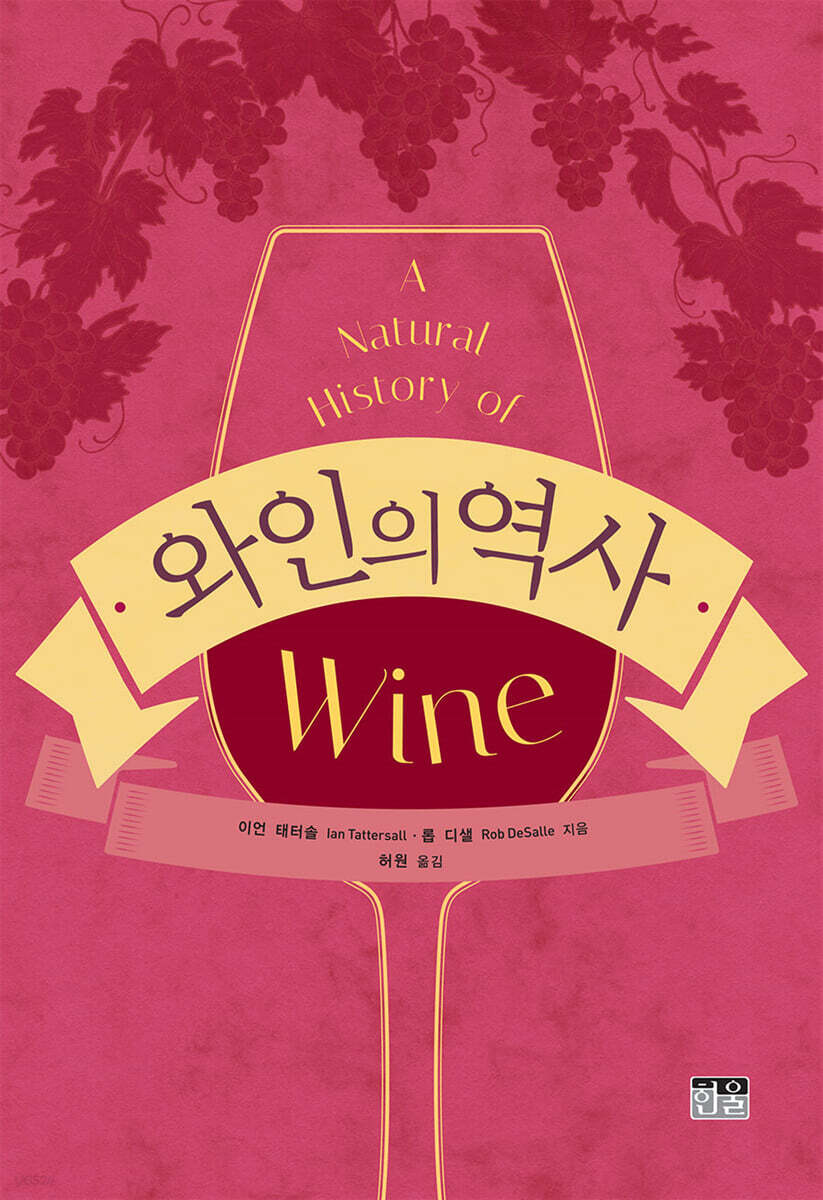 |
Description
Book Introduction
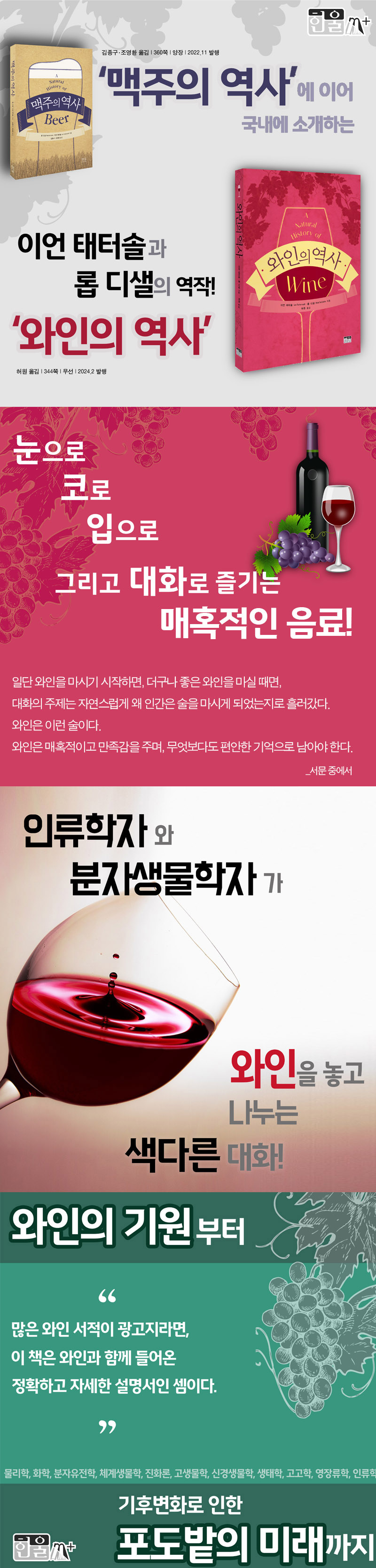
Following "The History of Beer," Ian Tattersall and Rob DeSall's masterpiece is introduced to Korea!
The sweet color of rose wine, which has been filling the liquor corner for some time now, catches the eye.
This fascinating drink, which has been loved worldwide throughout human history, has gradually become a part of Koreans' daily lives.
From a time when it was a symbol of luxury, class, or culture, it has become a drink that anyone can enjoy at receptions, even in Korea.
Anthropologist Ian Tattersall and molecular biologist Rob Dissall work together as curators at the American Museum of Natural History, and their conversations have inspired each other.
They published several books resulting from their conversations across a wide range of disciplines, including physics, chemistry, molecular genetics, systems biology, evolution, paleontology, neurobiology, ecology, archaeology, and anthropology.
Hanul Mplus Co., Ltd. translated The Natural History of Beer (2019) into The History of Beer (translated by Kim Jong-gu and Jo Young-hwan, 2022) and introduced it first in Korea.
The book being presented this time is 『History of Wine』, a translation of The Natural History of Wine (2015).
The Areni-1 ruins in Armenia, discovered while researching where residents might be evacuated in the event of a nuclear attack, reveal humanity's longing for fermented grape beverages.
This book begins in this place known as the birthplace of wine.
The sweet color of rose wine, which has been filling the liquor corner for some time now, catches the eye.
This fascinating drink, which has been loved worldwide throughout human history, has gradually become a part of Koreans' daily lives.
From a time when it was a symbol of luxury, class, or culture, it has become a drink that anyone can enjoy at receptions, even in Korea.
Anthropologist Ian Tattersall and molecular biologist Rob Dissall work together as curators at the American Museum of Natural History, and their conversations have inspired each other.
They published several books resulting from their conversations across a wide range of disciplines, including physics, chemistry, molecular genetics, systems biology, evolution, paleontology, neurobiology, ecology, archaeology, and anthropology.
Hanul Mplus Co., Ltd. translated The Natural History of Beer (2019) into The History of Beer (translated by Kim Jong-gu and Jo Young-hwan, 2022) and introduced it first in Korea.
The book being presented this time is 『History of Wine』, a translation of The Natural History of Wine (2015).
The Areni-1 ruins in Armenia, discovered while researching where residents might be evacuated in the event of a nuclear attack, reveal humanity's longing for fermented grape beverages.
This book begins in this place known as the birthplace of wine.
- You can preview some of the book's contents.
Preview
index
1.
The Roots of Wine: Wine and People
2.
Why we drink wine
3.
Wine is a Stardust: Grapes and Chemical Reactions
4.
Grapes and Vines: A Theme of Identity
5.
Wine Yeast: Wine and Microorganisms
6.
Interaction: Ecology of Vineyards and Wineries
7.
Disease from America: The Bug That Nearly Destroyed the Wine Industry
8.
The Power of Terroir: Wine and the Land
9.
Wine and the Five Senses
10.
Spontaneous Madness: The Psychological Effects of Wine
11.
Wine and Technology
12.
Franken Vine and Climate Change
Translator's Note
The Roots of Wine: Wine and People
2.
Why we drink wine
3.
Wine is a Stardust: Grapes and Chemical Reactions
4.
Grapes and Vines: A Theme of Identity
5.
Wine Yeast: Wine and Microorganisms
6.
Interaction: Ecology of Vineyards and Wineries
7.
Disease from America: The Bug That Nearly Destroyed the Wine Industry
8.
The Power of Terroir: Wine and the Land
9.
Wine and the Five Senses
10.
Spontaneous Madness: The Psychological Effects of Wine
11.
Wine and Technology
12.
Franken Vine and Climate Change
Translator's Note
Detailed image
Into the book
The Romans discovered that burning sulfur dioxide in empty wine bottles could eliminate the vinegar smell, so they began adding sulfur dioxide to wine as a preservative.
So wine became a commodity that could be preserved for a long time, and taxes were levied on it according to its quality.
It was also common to pay taxes in wine.
Roman officials used wine obtained in this way to consolidate their connections or to lobby barbarians who threatened the empire's frontiers.
For example, Rome also sent large quantities of wine to Gaul.
After the Etruscans introduced wine in 500 BC, low-quality wines were also produced in Gaul.
Wine imported from Rome was destined for ports at the mouth of the Rhone River.
At the port, Celtic merchants transferred the wine from amphorae into wooden barrels and transported it upriver, where they traded it for honey or wood.
Here began a new tradition of storing wine in wooden barrels.
--- p.29, from “Chapter 1: The Roots of Wine”
Prohibition is a prime example of a well-intentioned anti-alcohol policy that failed.
But there were many similar attempts besides the American "Prohibition."
As recently as the 20th century, the sale of alcohol was banned in Christian-dominated countries such as Russia, the Faroe Islands, parts of Scandinavia, and Hungary.
The reason for the ban was always the same.
Alcohol is clearly the number one contributor to improving the quality of life.
But God's gifts can be subject to terrible abuse and cause immense suffering.
From this perspective, alcohol is a mirror reflecting humanity.
It shows both civilization and barbarism, and reveals the worst and the best in humanity.
As long as alcohol exerts such conflicting effects on us—as long as we exist as a complex and ambivalent species—people will continue to have a complex, contradictory, and conflicted relationship with wine and alcohol.
--- p.36, from Chapter 1, “The Roots of Wine”
Ultimately, the amount of ethanol that yeast can produce is determined solely by the amount of sugar in the grape juice to begin with.
Once all the sugars in the grape juice have been converted to ethanol and carbon dioxide, the yeast begins to starve, stops growing, and slowly dies.
This happens even if there is sugar left.
When the ethanol produced by the yeast reaches 15 percent and begins to become toxic to the cells, the yeast can no longer produce ethanol and slowly dies off.
This is why most wines have an alcohol content of 9 to 15 percent.
So after fermentation is complete, there is bound to be a sediment of dead yeast left at the bottom.
--- p.75, from Chapter 3, “Wine is a Star Crumb”
People tend to think only of the positive, but we always need to be careful.
As has been the case in every aspect of our experience.
It is best to limit consumption of any alcohol, including wine.
This is not only to avoid the temporary effects of excessive drinking, but also to prevent alcohol addiction in the long term.
But as we celebrate throughout this book, wine has played a special role in human life, a symbol of civilization since ancient times, enhancing our experience of life.
Simply put, there is no substitute for wine.
However, we cannot offer any alternatives other than general recommendations.
Let's drink in moderation.
--- p.263, from Chapter 10, “Spontaneous Madness”
Collectors increasingly demanded older, top-quality, pre-phylloxera, and expensive wines, if possible.
By the 1960s, the demand for these wines had grown tremendously, and auction prices had soared.
However, it is likely that these wines are well past their prime.
The reason is that no matter how strong and tannic a wine may initially be, and no matter how well it evolves during bottle aging, eventually the wine will deteriorate as it ages.
There is no eternal wine.
The finest wines were not born with the fate of being consumed only to be consumed.
As the price of high-end wine soars, the world of fraud becomes more profitable and less likely to be caught.
So, compared to other common fraud cases, only a few of the wine frauds were revealed.
So wine became a commodity that could be preserved for a long time, and taxes were levied on it according to its quality.
It was also common to pay taxes in wine.
Roman officials used wine obtained in this way to consolidate their connections or to lobby barbarians who threatened the empire's frontiers.
For example, Rome also sent large quantities of wine to Gaul.
After the Etruscans introduced wine in 500 BC, low-quality wines were also produced in Gaul.
Wine imported from Rome was destined for ports at the mouth of the Rhone River.
At the port, Celtic merchants transferred the wine from amphorae into wooden barrels and transported it upriver, where they traded it for honey or wood.
Here began a new tradition of storing wine in wooden barrels.
--- p.29, from “Chapter 1: The Roots of Wine”
Prohibition is a prime example of a well-intentioned anti-alcohol policy that failed.
But there were many similar attempts besides the American "Prohibition."
As recently as the 20th century, the sale of alcohol was banned in Christian-dominated countries such as Russia, the Faroe Islands, parts of Scandinavia, and Hungary.
The reason for the ban was always the same.
Alcohol is clearly the number one contributor to improving the quality of life.
But God's gifts can be subject to terrible abuse and cause immense suffering.
From this perspective, alcohol is a mirror reflecting humanity.
It shows both civilization and barbarism, and reveals the worst and the best in humanity.
As long as alcohol exerts such conflicting effects on us—as long as we exist as a complex and ambivalent species—people will continue to have a complex, contradictory, and conflicted relationship with wine and alcohol.
--- p.36, from Chapter 1, “The Roots of Wine”
Ultimately, the amount of ethanol that yeast can produce is determined solely by the amount of sugar in the grape juice to begin with.
Once all the sugars in the grape juice have been converted to ethanol and carbon dioxide, the yeast begins to starve, stops growing, and slowly dies.
This happens even if there is sugar left.
When the ethanol produced by the yeast reaches 15 percent and begins to become toxic to the cells, the yeast can no longer produce ethanol and slowly dies off.
This is why most wines have an alcohol content of 9 to 15 percent.
So after fermentation is complete, there is bound to be a sediment of dead yeast left at the bottom.
--- p.75, from Chapter 3, “Wine is a Star Crumb”
People tend to think only of the positive, but we always need to be careful.
As has been the case in every aspect of our experience.
It is best to limit consumption of any alcohol, including wine.
This is not only to avoid the temporary effects of excessive drinking, but also to prevent alcohol addiction in the long term.
But as we celebrate throughout this book, wine has played a special role in human life, a symbol of civilization since ancient times, enhancing our experience of life.
Simply put, there is no substitute for wine.
However, we cannot offer any alternatives other than general recommendations.
Let's drink in moderation.
--- p.263, from Chapter 10, “Spontaneous Madness”
Collectors increasingly demanded older, top-quality, pre-phylloxera, and expensive wines, if possible.
By the 1960s, the demand for these wines had grown tremendously, and auction prices had soared.
However, it is likely that these wines are well past their prime.
The reason is that no matter how strong and tannic a wine may initially be, and no matter how well it evolves during bottle aging, eventually the wine will deteriorate as it ages.
There is no eternal wine.
The finest wines were not born with the fate of being consumed only to be consumed.
As the price of high-end wine soars, the world of fraud becomes more profitable and less likely to be caught.
So, compared to other common fraud cases, only a few of the wine frauds were revealed.
--- p.281, from Chapter 11, “Wine and Technology”
Publisher's Review
Anthropologists and molecular biologists
Sharing wine
Let's dive into that unique conversation!
From the funeral rites of Areni-1 to the religious rites of Christianity
The Areni-1 brewery is located within a cemetery, making it the first known example of fermented beverages being used in funeral rites.
In ancient Egypt, wine was a spiritual symbol, as well as a symbol of luxury and class.
In the delta region, winemaking was already standardized, and the Egyptians even developed a system for classifying wines.
When a wealthy person died, it was customary to wash their body with wine before mummification and be buried in a cemetery with excellent wine.
The Roman Empire, which won the Punic Wars and became the new master of the Mediterranean order, created a manual for wine cultivation that covered not only grape cultivation but also propagation, fertilization, irrigation, pruning, pressing, and aging.
This material, written by Cato the Elder, based on the text of Mago the Carthaginian, is known as the earliest surviving Latin text.
The Greek and Roman culture of drinking until drunk is associated with the cult of Dionysus.
In the Roman Empire and Greece, wine was a symbol of civilization and a socially and economically important product.
Wine spread around the world through the sea and land routes created by the Roman Empire.
Christianity was also tolerant of wine.
It is said that the first thing Noah did after getting off the ark was to plant a grapevine.
Afterwards, wine became a drink symbolizing the Eucharist as the 'embodied blood of Jesus', and also became a symbol connecting the Roman Empire and the Middle Ages in time.
From the atoms that initiate fermentation to the changes in vineyards due to climate change.
Our tree-dwelling ancestors were drawn to the scent of naturally fermented ethanol and would have sought out the sweetest, ripest fruit hanging high.
Every ancient civilization in history knew how to turn sugary juice into alcohol.
To explain this chemical reaction called fermentation to the reader, the authors begin by going back to the atoms.
Wine, enjoyed with the eyes, nose, mouth, and conversation, may seem like a simple liquid, but it is a remarkably complex mixture that stimulates our five senses in various ways.
Moreover, wine production is a skill that is quite difficult to master without science.
The authors emphasize that wine is the result of the interaction of chemicals and enzymes that determine color, aroma, taste, and alcohol content; the interaction of various microorganisms living on the inside and outside of the grapes and in the fermentation tank; and the interaction of microorganisms living on the tree, including the surrounding environment.
In addition, the authors provide detailed and engaging explanations across numerous academic disciplines, including the reasons why humans drink alcohol, phylloxera, which began to spread in the late 19th century and led to the destruction of the wine industry, terroir, the totality of the environment surrounding grapevines, the genetics of alcoholism, the importance of climate in determining terroir, and the future of vineyards due to climate change.
The Wine Industry's Secret: Fraud
“I’m not saying that you need to read this book or have a deep knowledge of wine to properly enjoy wine.
In fact, the more you know, the less you enjoy the alcohol.
“Because it shows the other side that you want to hide.” _From the translator’s note
Counterfeiting, the practice of repurposing old wine by transferring popular labels from old bottles, has been prevalent since ancient times, not just today.
Pliny the Elder was outraged by the proliferation of counterfeit wines, and most of the Falerno wine that was so popular in the Roman Empire was not the real thing.
The poet Chaucer warned wine buyers to be especially careful when purchasing Spanish products.
Thomas Jefferson loved claret during his time in Paris, but after learning how to buy it directly from the vineyards, he stopped trusting the tricks of wine merchants.
The fraud, which affected 1.5 million bottles worldwide, was uncovered after an audit found that the volume of Lavoisier wine, which should have been lost to evaporation, was not decreasing.
The Rodenstock fraud case, which occurred in the 1980s, still leaves unresolved both in terms of wine appraisal and legal issues.
In 1985, Austria's wine export industry almost collapsed after an antifreeze called diethylene glycol was mixed into wine.
The following year, at least 20 people died in Italy after cheap wine was laced with methanol.
The authors say that if there was money to be made by messing with wine, someone would do it.
They even say that as the price of high-end wines soars, the profitability of the fraudulent world increases and the chances of detection decrease.
Sharing wine
Let's dive into that unique conversation!
From the funeral rites of Areni-1 to the religious rites of Christianity
The Areni-1 brewery is located within a cemetery, making it the first known example of fermented beverages being used in funeral rites.
In ancient Egypt, wine was a spiritual symbol, as well as a symbol of luxury and class.
In the delta region, winemaking was already standardized, and the Egyptians even developed a system for classifying wines.
When a wealthy person died, it was customary to wash their body with wine before mummification and be buried in a cemetery with excellent wine.
The Roman Empire, which won the Punic Wars and became the new master of the Mediterranean order, created a manual for wine cultivation that covered not only grape cultivation but also propagation, fertilization, irrigation, pruning, pressing, and aging.
This material, written by Cato the Elder, based on the text of Mago the Carthaginian, is known as the earliest surviving Latin text.
The Greek and Roman culture of drinking until drunk is associated with the cult of Dionysus.
In the Roman Empire and Greece, wine was a symbol of civilization and a socially and economically important product.
Wine spread around the world through the sea and land routes created by the Roman Empire.
Christianity was also tolerant of wine.
It is said that the first thing Noah did after getting off the ark was to plant a grapevine.
Afterwards, wine became a drink symbolizing the Eucharist as the 'embodied blood of Jesus', and also became a symbol connecting the Roman Empire and the Middle Ages in time.
From the atoms that initiate fermentation to the changes in vineyards due to climate change.
Our tree-dwelling ancestors were drawn to the scent of naturally fermented ethanol and would have sought out the sweetest, ripest fruit hanging high.
Every ancient civilization in history knew how to turn sugary juice into alcohol.
To explain this chemical reaction called fermentation to the reader, the authors begin by going back to the atoms.
Wine, enjoyed with the eyes, nose, mouth, and conversation, may seem like a simple liquid, but it is a remarkably complex mixture that stimulates our five senses in various ways.
Moreover, wine production is a skill that is quite difficult to master without science.
The authors emphasize that wine is the result of the interaction of chemicals and enzymes that determine color, aroma, taste, and alcohol content; the interaction of various microorganisms living on the inside and outside of the grapes and in the fermentation tank; and the interaction of microorganisms living on the tree, including the surrounding environment.
In addition, the authors provide detailed and engaging explanations across numerous academic disciplines, including the reasons why humans drink alcohol, phylloxera, which began to spread in the late 19th century and led to the destruction of the wine industry, terroir, the totality of the environment surrounding grapevines, the genetics of alcoholism, the importance of climate in determining terroir, and the future of vineyards due to climate change.
The Wine Industry's Secret: Fraud
“I’m not saying that you need to read this book or have a deep knowledge of wine to properly enjoy wine.
In fact, the more you know, the less you enjoy the alcohol.
“Because it shows the other side that you want to hide.” _From the translator’s note
Counterfeiting, the practice of repurposing old wine by transferring popular labels from old bottles, has been prevalent since ancient times, not just today.
Pliny the Elder was outraged by the proliferation of counterfeit wines, and most of the Falerno wine that was so popular in the Roman Empire was not the real thing.
The poet Chaucer warned wine buyers to be especially careful when purchasing Spanish products.
Thomas Jefferson loved claret during his time in Paris, but after learning how to buy it directly from the vineyards, he stopped trusting the tricks of wine merchants.
The fraud, which affected 1.5 million bottles worldwide, was uncovered after an audit found that the volume of Lavoisier wine, which should have been lost to evaporation, was not decreasing.
The Rodenstock fraud case, which occurred in the 1980s, still leaves unresolved both in terms of wine appraisal and legal issues.
In 1985, Austria's wine export industry almost collapsed after an antifreeze called diethylene glycol was mixed into wine.
The following year, at least 20 people died in Italy after cheap wine was laced with methanol.
The authors say that if there was money to be made by messing with wine, someone would do it.
They even say that as the price of high-end wines soars, the profitability of the fraudulent world increases and the chances of detection decrease.
GOODS SPECIFICS
- Date of issue: February 15, 2024
- Page count, weight, size: 344 pages | 153*224*20mm
- ISBN13: 9788946082366
You may also like
카테고리
korean


korean

![GQ KOREA Mark (Monthly): December [2025]](http://librairie.coreenne.fr/cdn/shop/files/8ef265dbbfbf186523ed75ba7319009d.jpg?v=1765340328&width=3840)


