

Reading the World Germany
 |
Description
Book Introduction
Meet Germany, a nation of perfectionists born from a history of chaos: the "unification model."
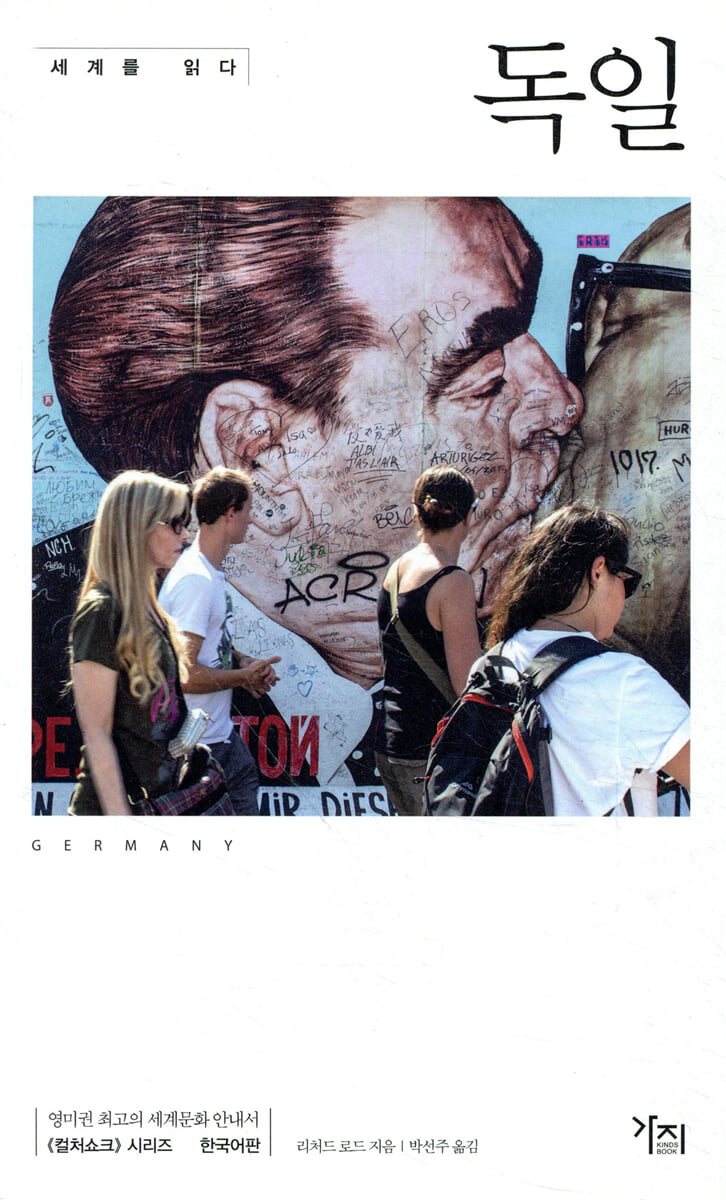
"Reading the World: Germany" shows how Germany, which endured a modern history of greed and destruction, and even 40 years of national division during the Cold War, was able to rapidly leap forward as the center of the European economy.
The author devotes particular attention to reading the minds of Germans, who are still recovering from the wounds of World War II and the division between East and West, and points out the somewhat discriminatory meaning of "foreigner" in this society.
And it provides practical advice on how to settle into a diverse culture, work, study, and spend a lot of free time there.
We provide real estate agents who can help foreigners find suitable homes, inform them about important health insurance and education systems, and prepare them for the German business environment, where people work some of the shortest hours in the world while managing everything perfectly.
Admire the beautiful castles along the Rhine River, explore cities and towns with a greater sense of pride in their region than in their country, and enjoy a wide variety of sausages and beers.
"Reading the World: Germany" shows how Germany, which endured a modern history of greed and destruction, and even 40 years of national division during the Cold War, was able to rapidly leap forward as the center of the European economy.
The author devotes particular attention to reading the minds of Germans, who are still recovering from the wounds of World War II and the division between East and West, and points out the somewhat discriminatory meaning of "foreigner" in this society.
And it provides practical advice on how to settle into a diverse culture, work, study, and spend a lot of free time there.
We provide real estate agents who can help foreigners find suitable homes, inform them about important health insurance and education systems, and prepare them for the German business environment, where people work some of the shortest hours in the world while managing everything perfectly.
Admire the beautiful castles along the Rhine River, explore cities and towns with a greater sense of pride in their region than in their country, and enjoy a wide variety of sausages and beers.
- You can preview some of the book's contents.
Preview
index
introduction
map
Chapter 1 First Impressions
Find Germans
Where am I?
Why come to Germany
The center of complaints
Chapter 2: The Country of Germany
Geography and Natural Environment
climate
resources
population
The power of diversity
regional differences
Differences between East and West
history
Chapter 3: The German People
What history has left behind
Values that Germans value
attitude toward life
German character
Transformation of values
religion
law and order
Chapter 4: A Look Inside German Society
Foreigner issues
Who is German
The importance of foreign communities
skinhead phenomenon
Bright side
Foreigner ranking
German-style multiculturalism
psychological obstacles
Recovering from shock
Public self and private self
Rules of family life
Invitations and visits
Understanding customs
It's worth it
Chapter 5: Living in Germany
Become another member
The jungle of government offices
Finding a house
Equipping public facilities
Banking transactions
housekeeper
shopping
health
education
teenagers
pets
traffic
Chapter 6: German Food
traditional food
vegetable
regional cuisine
confectionery
German meal structure
Dining culture
beer
wine
Other drinks
Chapter 7 Play and Art in Germany
6 weeks of vacation
statutory holidays
Spending leisure time
Kneipen culture
street festival
mass media
art
Chapter 8: Learning German
Good news and bad news
How to learn German
Useful words and expressions
Notation of time, date, and numbers
Name and title by occupation
Chapter 9 Working in Germany
positive work environment
Labor policy
Basic principles of the German economy
German perfectionism
Finding a job
service industry
Job characteristics
Corporate structure
working women
Starting a Business
The role of banks
Follow the rules
Entering the market
tax issues
A power struggle with Brussels
Useful advice for real-world use
Chapter 10 German Property Notes
Germany Country Information
famous people of German descent
Conversation topics
Culture Quiz
Do's and Don'ts
Comprehensive information guide
Translator's note
map
Chapter 1 First Impressions
Find Germans
Where am I?
Why come to Germany
The center of complaints
Chapter 2: The Country of Germany
Geography and Natural Environment
climate
resources
population
The power of diversity
regional differences
Differences between East and West
history
Chapter 3: The German People
What history has left behind
Values that Germans value
attitude toward life
German character
Transformation of values
religion
law and order
Chapter 4: A Look Inside German Society
Foreigner issues
Who is German
The importance of foreign communities
skinhead phenomenon
Bright side
Foreigner ranking
German-style multiculturalism
psychological obstacles
Recovering from shock
Public self and private self
Rules of family life
Invitations and visits
Understanding customs
It's worth it
Chapter 5: Living in Germany
Become another member
The jungle of government offices
Finding a house
Equipping public facilities
Banking transactions
housekeeper
shopping
health
education
teenagers
pets
traffic
Chapter 6: German Food
traditional food
vegetable
regional cuisine
confectionery
German meal structure
Dining culture
beer
wine
Other drinks
Chapter 7 Play and Art in Germany
6 weeks of vacation
statutory holidays
Spending leisure time
Kneipen culture
street festival
mass media
art
Chapter 8: Learning German
Good news and bad news
How to learn German
Useful words and expressions
Notation of time, date, and numbers
Name and title by occupation
Chapter 9 Working in Germany
positive work environment
Labor policy
Basic principles of the German economy
German perfectionism
Finding a job
service industry
Job characteristics
Corporate structure
working women
Starting a Business
The role of banks
Follow the rules
Entering the market
tax issues
A power struggle with Brussels
Useful advice for real-world use
Chapter 10 German Property Notes
Germany Country Information
famous people of German descent
Conversation topics
Culture Quiz
Do's and Don'ts
Comprehensive information guide
Translator's note
Detailed image

Into the book
In fact, it is not easy for a country's history to be directly revealed in people's lives.
But Germany's tragic history affects all of us living in the 21st century, including those who have just arrived in this country.
p.19 First impressions
German history can be likened to a roller coaster ride, with breathtaking rises and falls, wild turns and turns, and frenetic fluctuations.
No nation has ever experienced hopes and fears, dreams, loyalties and extremism, destiny and passion with such intensity as modern Germany.
p.40 The country called Germany
The experience of Nazism had a profound impact on the character of modern Germans.
Today's Germans are less trusting of authority and less respectful of uniforms than their ancestors.
Strong skepticism about the military permeates German society, with a significant number of Germans adopting a pacifist perspective.
p.51 German people
Goethe, the great German poet, declared through his most famous creation, Doctor Faustus, “Two souls beat in my breast.”
The words of the good old doctor can be said to be the lament of many German compatriots.
Germans often feel divided, caught up in a variety of passions, and tenaciously cling to seemingly contradictory viewpoints.
p.65 German people
One of the qualities that Germany's dark history has left to its people is a deep-seated sense of depression.
Germans are very anxious because they know all too well that any situation can turn terribly bad in an instant.
If there were no problems to worry about, why would you worry about something that is not there?
p.66 German people
There's an old joke about hell where the French control the traffic, the British cook, and the Germans tell jokes.
But just as British culinary skills have improved remarkably over the past 30 years, Germans' sense of humor has also developed positively.
p.103 A Look Inside German Society
In Germany, there is a term called polterabend, which means 'noisy evening' in relation to marriage.
(a noisy gathering the night before the wedding)
The couple who are getting married invites a wide range of friends, acquaintances, relatives, and colleagues. The invitees bring old plates, cups, and porcelain, and throw them on the ground, breaking them.
It is the job of the couple to clear away the mountain of debris.
p.118 A Look Inside German Society
'Behorde' and 'amt' are German words that refer to the various government offices and government offices that play a key role in ensuring that the country of Germany runs smoothly.
Like everyone else who comes to Germany, you will soon discover that there are three things you cannot avoid in Germany: death, taxes, and Behörde.
p.123 A Look Inside German Society
In German cuisine, pork is considered sacred.
Not only is it easy to grow, but it also provides both nutrition and calories at the same time.
Interestingly, studies by culinary historians show that even centuries ago, Germans generally considered pork to be the most delicious food.
… … There is also an old saying that German cuisine uses every part of the pig except the squeal.
p.166 German food
Drinking beer in Germany is a pure pleasure in itself.
This is especially true when considering the strict regulations governing beer brewing, the Reinheitsgebot, also known as the German Beer Purity Law.
This is a law first enacted by the Bavarian monarchs in 1516, which states that beer in Germany must be brewed only with hops, barley, yeast, and water.
Thanks to this law, German beer has not only maintained its pure taste, but has also been able to prevent headaches and other side effects that can arise when adding miscellaneous ingredients.
p.185 German food
One of the most impressive and vibrant examples of German street festivals is the massive Christmas market, or Weihnachtsmarkt.
The roots of Christmas markets, also known as 'wine markets', predate street festivals by centuries.
In the past, craftsmen in major cities would set up markets in the city center to sell their wares before Christmas, and this has continued into today's wine markets.
p.210 Play and Art in Germany
Perhaps the oldest stereotype about Germans is that of the "hard-working German."
Outside of Germany, almost everyone is convinced that this is a 'country of workaholics'.
But there is a shocking fact.
Germans, known as the world's most workaholic people, actually work far fewer hours than people in other countries.
p.233 Working in Germany
The term 'task-centered' is synonymous with 'problem-centered society'.
In a business context, it explains the German tendency to wait for problems to surface on their own and then solve them with German perfectionism.
Certainly, Germans are more reactive than preventive.
They are not adventurers or pioneers.
Unlike Asians or North Americans, they do not anticipate problems and find solutions on their own, but only move to solve problems after they have surfaced.
Never take the initiative before a problem arises.
p.242 Working in Germany
But Germany's tragic history affects all of us living in the 21st century, including those who have just arrived in this country.
p.19 First impressions
German history can be likened to a roller coaster ride, with breathtaking rises and falls, wild turns and turns, and frenetic fluctuations.
No nation has ever experienced hopes and fears, dreams, loyalties and extremism, destiny and passion with such intensity as modern Germany.
p.40 The country called Germany
The experience of Nazism had a profound impact on the character of modern Germans.
Today's Germans are less trusting of authority and less respectful of uniforms than their ancestors.
Strong skepticism about the military permeates German society, with a significant number of Germans adopting a pacifist perspective.
p.51 German people
Goethe, the great German poet, declared through his most famous creation, Doctor Faustus, “Two souls beat in my breast.”
The words of the good old doctor can be said to be the lament of many German compatriots.
Germans often feel divided, caught up in a variety of passions, and tenaciously cling to seemingly contradictory viewpoints.
p.65 German people
One of the qualities that Germany's dark history has left to its people is a deep-seated sense of depression.
Germans are very anxious because they know all too well that any situation can turn terribly bad in an instant.
If there were no problems to worry about, why would you worry about something that is not there?
p.66 German people
There's an old joke about hell where the French control the traffic, the British cook, and the Germans tell jokes.
But just as British culinary skills have improved remarkably over the past 30 years, Germans' sense of humor has also developed positively.
p.103 A Look Inside German Society
In Germany, there is a term called polterabend, which means 'noisy evening' in relation to marriage.
(a noisy gathering the night before the wedding)
The couple who are getting married invites a wide range of friends, acquaintances, relatives, and colleagues. The invitees bring old plates, cups, and porcelain, and throw them on the ground, breaking them.
It is the job of the couple to clear away the mountain of debris.
p.118 A Look Inside German Society
'Behorde' and 'amt' are German words that refer to the various government offices and government offices that play a key role in ensuring that the country of Germany runs smoothly.
Like everyone else who comes to Germany, you will soon discover that there are three things you cannot avoid in Germany: death, taxes, and Behörde.
p.123 A Look Inside German Society
In German cuisine, pork is considered sacred.
Not only is it easy to grow, but it also provides both nutrition and calories at the same time.
Interestingly, studies by culinary historians show that even centuries ago, Germans generally considered pork to be the most delicious food.
… … There is also an old saying that German cuisine uses every part of the pig except the squeal.
p.166 German food
Drinking beer in Germany is a pure pleasure in itself.
This is especially true when considering the strict regulations governing beer brewing, the Reinheitsgebot, also known as the German Beer Purity Law.
This is a law first enacted by the Bavarian monarchs in 1516, which states that beer in Germany must be brewed only with hops, barley, yeast, and water.
Thanks to this law, German beer has not only maintained its pure taste, but has also been able to prevent headaches and other side effects that can arise when adding miscellaneous ingredients.
p.185 German food
One of the most impressive and vibrant examples of German street festivals is the massive Christmas market, or Weihnachtsmarkt.
The roots of Christmas markets, also known as 'wine markets', predate street festivals by centuries.
In the past, craftsmen in major cities would set up markets in the city center to sell their wares before Christmas, and this has continued into today's wine markets.
p.210 Play and Art in Germany
Perhaps the oldest stereotype about Germans is that of the "hard-working German."
Outside of Germany, almost everyone is convinced that this is a 'country of workaholics'.
But there is a shocking fact.
Germans, known as the world's most workaholic people, actually work far fewer hours than people in other countries.
p.233 Working in Germany
The term 'task-centered' is synonymous with 'problem-centered society'.
In a business context, it explains the German tendency to wait for problems to surface on their own and then solve them with German perfectionism.
Certainly, Germans are more reactive than preventive.
They are not adventurers or pioneers.
Unlike Asians or North Americans, they do not anticipate problems and find solutions on their own, but only move to solve problems after they have surfaced.
Never take the initiative before a problem arises.
p.242 Working in Germany
__From the text
Publisher's Review
100% Real Germany & German People, as told by someone who has lived there.
When we think of 'Germany', there is a painful history that people all over the world carry with them like a trauma.
These are the horrific racial crimes committed in connection with Nazism during World War II.
This is similar to how when Koreans hear the word 'Japan', they think of the horrors of the colonial era.
Even after the end of World War II, Germany, as a symbol of the Cold War era, endured a period of ideological division between East and West.
This also resembles the story of us who still live with the pain of division.
The author asserts that the shadow of this history casts a deep and wide shadow on each German, and that without understanding it, one cannot understand German life today.
Perhaps these words can also be applied to us. This is why this book can inevitably be read as a cultural guide to preparing for unification.
This book, which follows the same structure as all the other books in the Reading the World series, takes a detailed look at the country of Germany in order of geography, climate, history, social structure, people's lifestyles, food, culture and arts, language, and business, and the author provides a persuasive explanation based on his own experiences and feelings while living there.
In other words, this book is a comprehensive guide to the history and culture of a single country called Germany, and a very realistic introduction to people who have lived with similar pain somewhere on the other side of the globe.
Located at the heart of the European continent, Germany boasts a diverse natural landscape, from its northern coastline bordering the North Sea and Baltic Sea to the towering Alps in the south, and borders eight European countries.
Germany, with the European Union headquarters in Brussels, is today the de facto engine of the European economy and is also one of the world's fourth or fifth largest economies.
Of the current population of over 82 million, 10 percent are foreigners, including, interestingly, many Eastern European Jews who were victims of the war, and guest workers, or Gastarbeiters, who were invited from all over the world to help with post-war reconstruction.
However, German society still has a strong conservative tendency when it comes to racial issues, as it has only been about 10 years since it officially accepted foreigners as "immigrants" rather than "guests."
In Germany, a country divided into East and West, living under different systems for 40 years, and even more recently as a confederation of large and small regional states, national identity exists as a stubborn cultural difference between each region.
The imposing medieval castles lining the banks of the Rhine River are a testament to the power of the once-splendid regional states, and in the capital, Berlin, one can vividly read about the modern history of division, the Cold War, and reunification.
Many cities and towns, including Munich, the city Germans most want to live in, Heidelberg, Augsburg, Rothenburg, Düsseldorf, Cologne, and Dresden, each boast their own unique character, showcasing Germany's past and present.
The author, who has built a career in the fields of theater criticism, acting, and directing, has devoted his efforts above all else to analyzing the inner world of Germans.
Having experienced the devastating impact of history on individual lives through two world wars, Germans are very security-oriented, dislike authority, and tend to plan and compartmentalize everything.
They are staunch perfectionists in business, and their diligence and professionalism, which are more important than any other ethnic group, became ingrained in them during the process of rapidly rebuilding the national economy after the war.
On the other hand, the German personality, which is generally arrogant, mechanical, and difficult to get along with, is in stark contrast to their 'private self', which is actually very pleasant and sociable.
Meanwhile, this book is packed with helpful information for those who plan to settle down here, such as Germany's excellent social security and education systems; German foods that people enjoy eating and their origins, such as beer, wurst (sausage), sauerkraut (pickled cabbage), and schweinshaxe (pig's feet); various street festivals represented by the famous Oktoberfest and Christmas markets; other entertainment culture; popular arts; learning the difficult German language; and manners and information that you must know when working or doing business in Germany.
When we think of 'Germany', there is a painful history that people all over the world carry with them like a trauma.
These are the horrific racial crimes committed in connection with Nazism during World War II.
This is similar to how when Koreans hear the word 'Japan', they think of the horrors of the colonial era.
Even after the end of World War II, Germany, as a symbol of the Cold War era, endured a period of ideological division between East and West.
This also resembles the story of us who still live with the pain of division.
The author asserts that the shadow of this history casts a deep and wide shadow on each German, and that without understanding it, one cannot understand German life today.
Perhaps these words can also be applied to us. This is why this book can inevitably be read as a cultural guide to preparing for unification.
This book, which follows the same structure as all the other books in the Reading the World series, takes a detailed look at the country of Germany in order of geography, climate, history, social structure, people's lifestyles, food, culture and arts, language, and business, and the author provides a persuasive explanation based on his own experiences and feelings while living there.
In other words, this book is a comprehensive guide to the history and culture of a single country called Germany, and a very realistic introduction to people who have lived with similar pain somewhere on the other side of the globe.
Located at the heart of the European continent, Germany boasts a diverse natural landscape, from its northern coastline bordering the North Sea and Baltic Sea to the towering Alps in the south, and borders eight European countries.
Germany, with the European Union headquarters in Brussels, is today the de facto engine of the European economy and is also one of the world's fourth or fifth largest economies.
Of the current population of over 82 million, 10 percent are foreigners, including, interestingly, many Eastern European Jews who were victims of the war, and guest workers, or Gastarbeiters, who were invited from all over the world to help with post-war reconstruction.
However, German society still has a strong conservative tendency when it comes to racial issues, as it has only been about 10 years since it officially accepted foreigners as "immigrants" rather than "guests."
In Germany, a country divided into East and West, living under different systems for 40 years, and even more recently as a confederation of large and small regional states, national identity exists as a stubborn cultural difference between each region.
The imposing medieval castles lining the banks of the Rhine River are a testament to the power of the once-splendid regional states, and in the capital, Berlin, one can vividly read about the modern history of division, the Cold War, and reunification.
Many cities and towns, including Munich, the city Germans most want to live in, Heidelberg, Augsburg, Rothenburg, Düsseldorf, Cologne, and Dresden, each boast their own unique character, showcasing Germany's past and present.
The author, who has built a career in the fields of theater criticism, acting, and directing, has devoted his efforts above all else to analyzing the inner world of Germans.
Having experienced the devastating impact of history on individual lives through two world wars, Germans are very security-oriented, dislike authority, and tend to plan and compartmentalize everything.
They are staunch perfectionists in business, and their diligence and professionalism, which are more important than any other ethnic group, became ingrained in them during the process of rapidly rebuilding the national economy after the war.
On the other hand, the German personality, which is generally arrogant, mechanical, and difficult to get along with, is in stark contrast to their 'private self', which is actually very pleasant and sociable.
Meanwhile, this book is packed with helpful information for those who plan to settle down here, such as Germany's excellent social security and education systems; German foods that people enjoy eating and their origins, such as beer, wurst (sausage), sauerkraut (pickled cabbage), and schweinshaxe (pig's feet); various street festivals represented by the famous Oktoberfest and Christmas markets; other entertainment culture; popular arts; learning the difficult German language; and manners and information that you must know when working or doing business in Germany.
GOODS SPECIFICS
- Date of issue: July 10, 2016
- Page count, weight, size: 280 pages | 128*188*20mm
- ISBN13: 9791186440063
- ISBN10: 1186440066
You may also like
카테고리
korean


korean

![GQ KOREA Mark (Monthly): December [2025]](http://librairie.coreenne.fr/cdn/shop/files/8ef265dbbfbf186523ed75ba7319009d.jpg?v=1765340328&width=3840)


