

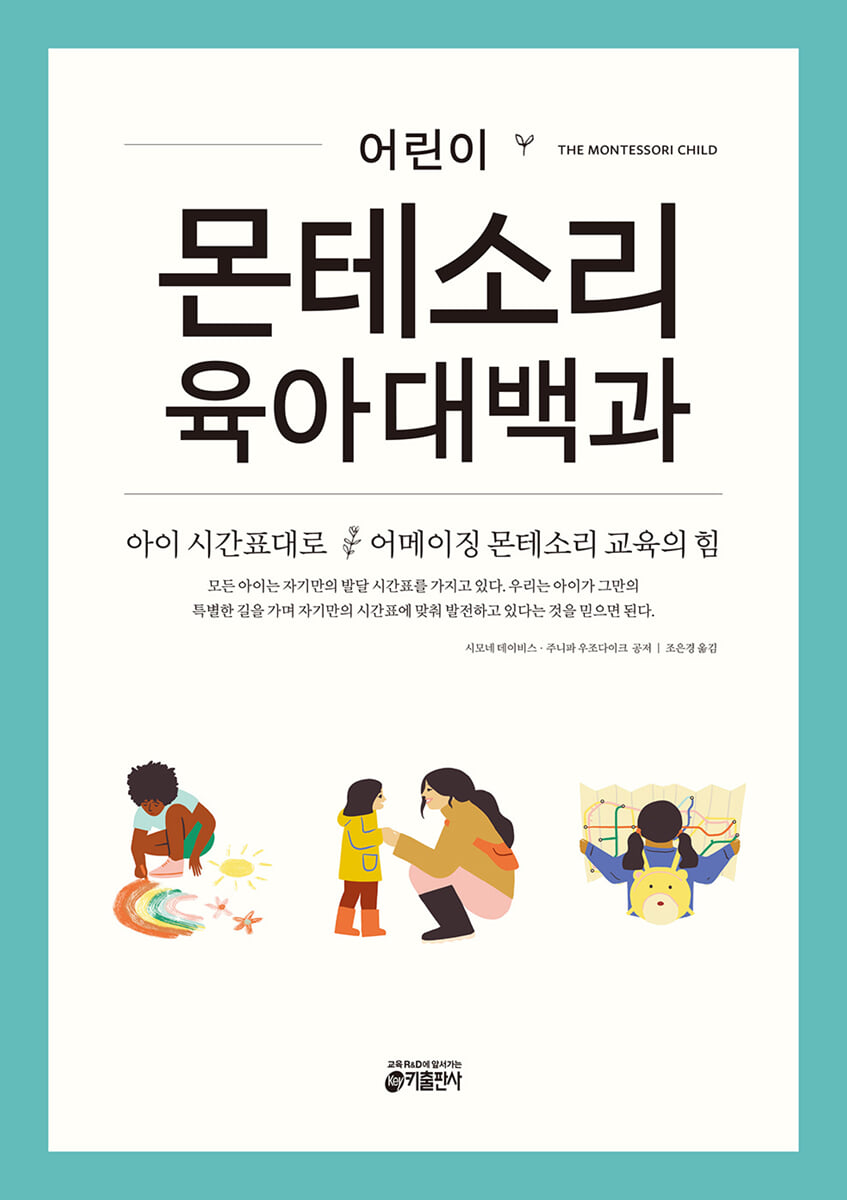
Children's Montessori Encyclopedia of Parenting
 |
Description
Book Introduction
The Power of Montessori Education for Babies, Toddlers, and Beyond
Simone Davis, author of the best-selling "The Encyclopedia of Montessori Parenting for Infants and Toddlers," has published the "Encyclopedia of Montessori Parenting for Babies" with Junifa Uzodyk, and has finally returned with the "Encyclopedia of Montessori Parenting for Children."
Based on the principles developed by Dr. Maria Montessori, it offers parents of children ages 3 to 12 ways to encourage their children's natural curiosity and independence through connection, cooperation, and joy.
The book also includes tips for reducing distractions, clutter, and screen time, and simplifying family life.
Simone Davis, author of the best-selling "The Encyclopedia of Montessori Parenting for Infants and Toddlers," has published the "Encyclopedia of Montessori Parenting for Babies" with Junifa Uzodyk, and has finally returned with the "Encyclopedia of Montessori Parenting for Children."
Based on the principles developed by Dr. Maria Montessori, it offers parents of children ages 3 to 12 ways to encourage their children's natural curiosity and independence through connection, cooperation, and joy.
The book also includes tips for reducing distractions, clutter, and screen time, and simplifying family life.
- You can preview some of the book's contents.
Preview
index
CHAPTER 1.
Daily life with toddlers
Why Montessori is Needed
About the Author
About this book
Montessori for Every Child
- Characteristics of children aged 3 to 6
- Characteristics of children aged 6 to 12
CHAPTER 2.
Important Montessori Principles for Children Ages 3 to 12
A Brief History of Montessori
What is Montessori?
human tendencies
Four stages of development
CHAPTER 3.
Montessori Child Raising
Become your child's guide
- Laying a solid foundation
- Learning about children
- Self-discipline and intrinsic motivation
- Fostering independence and responsibility
- Raising a curious child
-
Montessori case
Nigeria
Junipa, Uzo, Solulu, Metu, Biendu, Nalu
Duoma Montessori
CHAPTER 4.
Preparing for home
Things to Consider When Preparing Your Physical Environment
space inside the house
- Entrance and passage
- living room
- Kitchen and dining area
- Child's bedroom
- Bathroom
- Adult space
- Playroom
- Outdoor
psychological preparation
Montessori case
UK & Malaysia
Nusayba and Noah
Rumi Montessori
CHAPTER 5.
Montessori Activities for Kids
Things to Consider When Supporting Your Child's Development
Why Montessori Activities Are Important
Common Questions About Supporting Your Child's Development
Montessori case
Netherlands & Ukraine
Yulia, Claes-Willem, Ivan, Natasha
Welcome to Montessori
CHAPTER 6.
Supporting children's social and moral development
Fostering social development
Fostering moral development
Additional Considerations for Social and Moral Development in Children Ages 6 to 12
Fostering manners
Go out
How to deal with commonly occurring moral problems and behavioral difficulties
Becoming a citizen of society
Fostering family culture
Montessori case
Dine & Acoma Pueblo, New Mexico, Navajo Nation
Joshua, Caleb, Kateri
@ndnslp & Johns Hopkins Professor
Bloomberg School of Public Health
CHAPTER 7.
Put it into practice
PART 1.
Applying Montessori to Real Life
The rhythm of daily life
The rhythm of the seasons
Eating and Meal Times
Sleep
Toilet training and nighttime diaper removal
Taking care of your teeth
PART 2.
Practical questions
When to help your child and when not to help your child
How to encourage independence
Child staying home alone
Traveling with children
Bilingual/multilingual
Montessori for Children with Disabilities and Neurodiversity
PART 3.
When a difficult situation arises
Building collaborative relationships
When a child is hurt
Be gentle when necessary, but be firm and set clear limits.
Solve problems together
Resolving conflicts between the two
Apologize and make amends
Common Problems
PART 4.
Discussing sensitive topics
Talking about death
Talking about sex
Talking about the body
Talking about money
Talk about stealing
Talking about cutting-edge technology
Talk about gunplay
Talking about war and climate change
Talking about faith
PART 5.
Working with others
About a specific relationship
Montessori case
Singapore & UK
Jasmine, Andrew and their children, ages 1, 9, and 10
Three Minute Montessori
CHAPTER 8.
Preparing for adulthood
To support a child
To support ourselves
How we grow
How to cultivate self-reflection practices
How to make your child fly?
Montessori case
USA
Sveta, Johann, Maya, Nina
Montessori is practical life.
CHAPTER 9.
Next steps
Transition to Stage 3 of Development
Who are the children and adolescents in Stage 3?
What did Dr. Montessori envision for young people?
Montessori Youth at Home
Youth and Academics
Youth in a rapidly changing world
Maturity: The Four Stages of Development
The Road to Peace
supplement
Activity Appendix
A letter to parents, guardians, and loved ones
Montessori's Ten Commandments
Online sources
Daily life with toddlers
Why Montessori is Needed
About the Author
About this book
Montessori for Every Child
- Characteristics of children aged 3 to 6
- Characteristics of children aged 6 to 12
CHAPTER 2.
Important Montessori Principles for Children Ages 3 to 12
A Brief History of Montessori
What is Montessori?
human tendencies
Four stages of development
CHAPTER 3.
Montessori Child Raising
Become your child's guide
- Laying a solid foundation
- Learning about children
- Self-discipline and intrinsic motivation
- Fostering independence and responsibility
- Raising a curious child
-
Montessori case
Nigeria
Junipa, Uzo, Solulu, Metu, Biendu, Nalu
Duoma Montessori
CHAPTER 4.
Preparing for home
Things to Consider When Preparing Your Physical Environment
space inside the house
- Entrance and passage
- living room
- Kitchen and dining area
- Child's bedroom
- Bathroom
- Adult space
- Playroom
- Outdoor
psychological preparation
Montessori case
UK & Malaysia
Nusayba and Noah
Rumi Montessori
CHAPTER 5.
Montessori Activities for Kids
Things to Consider When Supporting Your Child's Development
Why Montessori Activities Are Important
Common Questions About Supporting Your Child's Development
Montessori case
Netherlands & Ukraine
Yulia, Claes-Willem, Ivan, Natasha
Welcome to Montessori
CHAPTER 6.
Supporting children's social and moral development
Fostering social development
Fostering moral development
Additional Considerations for Social and Moral Development in Children Ages 6 to 12
Fostering manners
Go out
How to deal with commonly occurring moral problems and behavioral difficulties
Becoming a citizen of society
Fostering family culture
Montessori case
Dine & Acoma Pueblo, New Mexico, Navajo Nation
Joshua, Caleb, Kateri
@ndnslp & Johns Hopkins Professor
Bloomberg School of Public Health
CHAPTER 7.
Put it into practice
PART 1.
Applying Montessori to Real Life
The rhythm of daily life
The rhythm of the seasons
Eating and Meal Times
Sleep
Toilet training and nighttime diaper removal
Taking care of your teeth
PART 2.
Practical questions
When to help your child and when not to help your child
How to encourage independence
Child staying home alone
Traveling with children
Bilingual/multilingual
Montessori for Children with Disabilities and Neurodiversity
PART 3.
When a difficult situation arises
Building collaborative relationships
When a child is hurt
Be gentle when necessary, but be firm and set clear limits.
Solve problems together
Resolving conflicts between the two
Apologize and make amends
Common Problems
PART 4.
Discussing sensitive topics
Talking about death
Talking about sex
Talking about the body
Talking about money
Talk about stealing
Talking about cutting-edge technology
Talk about gunplay
Talking about war and climate change
Talking about faith
PART 5.
Working with others
About a specific relationship
Montessori case
Singapore & UK
Jasmine, Andrew and their children, ages 1, 9, and 10
Three Minute Montessori
CHAPTER 8.
Preparing for adulthood
To support a child
To support ourselves
How we grow
How to cultivate self-reflection practices
How to make your child fly?
Montessori case
USA
Sveta, Johann, Maya, Nina
Montessori is practical life.
CHAPTER 9.
Next steps
Transition to Stage 3 of Development
Who are the children and adolescents in Stage 3?
What did Dr. Montessori envision for young people?
Montessori Youth at Home
Youth and Academics
Youth in a rapidly changing world
Maturity: The Four Stages of Development
The Road to Peace
supplement
Activity Appendix
A letter to parents, guardians, and loved ones
Montessori's Ten Commandments
Online sources
Detailed image

Into the book
We feel especially sympathetic towards children between the ages of 6 and 12.
Children at this age are often scolded for being rude, unruly, and talking back.
You may be wondering what happened to our lovely child.
At this time, the child is entering a new stage of development (stage 2), so the support method must be changed.
--- p.20
Montessori educators are called “guides” rather than “teachers.”
This is the core of Montessori's philosophy.
Montessori guides observe children in the classroom, set up the classroom environment to meet the children's needs and desires, help children connect with each other, and adjust as needed.
This is different from teachers arbitrarily creating schedules or curricula and teaching what children should learn.
--- p.50
It can feel like a courageous act to step in and set boundaries calmly and clearly to keep everyone safe.
When your child says or does something that is offensive or hurtful to others, don't get angry. Instead, model how to set boundaries with others in a loving, yet firm and clear way.
Of course, patience is required.
However, it is important to remember that Montessori is a long-term approach, not an immediate solution.
We will build a foundation of trust and connection, letting your child know that they can come to us even when they are not feeling their best.
We love our children even in their worst situations and will guide them to become independent individuals who can help themselves and others.
Children at this age are often scolded for being rude, unruly, and talking back.
You may be wondering what happened to our lovely child.
At this time, the child is entering a new stage of development (stage 2), so the support method must be changed.
--- p.20
Montessori educators are called “guides” rather than “teachers.”
This is the core of Montessori's philosophy.
Montessori guides observe children in the classroom, set up the classroom environment to meet the children's needs and desires, help children connect with each other, and adjust as needed.
This is different from teachers arbitrarily creating schedules or curricula and teaching what children should learn.
--- p.50
It can feel like a courageous act to step in and set boundaries calmly and clearly to keep everyone safe.
When your child says or does something that is offensive or hurtful to others, don't get angry. Instead, model how to set boundaries with others in a loving, yet firm and clear way.
Of course, patience is required.
However, it is important to remember that Montessori is a long-term approach, not an immediate solution.
We will build a foundation of trust and connection, letting your child know that they can come to us even when they are not feeling their best.
We love our children even in their worst situations and will guide them to become independent individuals who can help themselves and others.
--- p.51
Publisher's Review
“Just as a caterpillar goes through numerous physical and behavioral changes before becoming a butterfly,
“Children also grow according to their developmental stages.”
Dr. Montessori used the metaphor of a caterpillar changing from an egg to a larva, then a pupa, and finally a butterfly to explain a child's development.
Because children, like caterpillars, appear to be completely different beings at each stage of development.
A child grows from a baby to a toddler, and from a toddler to a child, changing physically and mentally.
During this time, your child may seem like a completely different being.
Dr. Montessori explains that although these changes are uncomfortable and difficult to understand for both children and adults, they are part of the natural developmental path toward adulthood, and explains the educational methods we (parents) need.
“After you showered, I saw that your towel was on the bathroom floor?”
When teaching children between the ages of 6 and 12, it is better to observe rather than be overt.
In Montessori education, parents do not follow their children around to clean up, dress, and feed them.
Recognize what the child can do on his own and simply serve as a guide by his side.
Instead of cleaning up a towel that your child dropped on the floor, you let your child check his or her own actions and suggest what to do with the towel, ultimately empowering your child to do it all on his or her own.
“Young people who have experienced the Montessori philosophy are very self-directed.”
By trusting, loving, and respecting children according to Montessori principles, children are prepared to become purposeful and responsible global citizens.
Montessori philosophy teaches us how to build trust with our children and how to cultivate our emotional and mental states to positively influence them.
Children who grow up with the Montessori philosophy, which applies to real-life situations such as eating, mealtimes, and sleep, as well as how to prepare spaces in the home such as the living room, kitchen, dining area, child's bedroom, and playroom, are prepared to become proactive, purposeful, and responsible global citizens.
And above all, we will be able to deeply empathize with Dr. Montessori's philosophy, which allows us to fully experience the joy of watching our children grow on their own.
“Children also grow according to their developmental stages.”
Dr. Montessori used the metaphor of a caterpillar changing from an egg to a larva, then a pupa, and finally a butterfly to explain a child's development.
Because children, like caterpillars, appear to be completely different beings at each stage of development.
A child grows from a baby to a toddler, and from a toddler to a child, changing physically and mentally.
During this time, your child may seem like a completely different being.
Dr. Montessori explains that although these changes are uncomfortable and difficult to understand for both children and adults, they are part of the natural developmental path toward adulthood, and explains the educational methods we (parents) need.
“After you showered, I saw that your towel was on the bathroom floor?”
When teaching children between the ages of 6 and 12, it is better to observe rather than be overt.
In Montessori education, parents do not follow their children around to clean up, dress, and feed them.
Recognize what the child can do on his own and simply serve as a guide by his side.
Instead of cleaning up a towel that your child dropped on the floor, you let your child check his or her own actions and suggest what to do with the towel, ultimately empowering your child to do it all on his or her own.
“Young people who have experienced the Montessori philosophy are very self-directed.”
By trusting, loving, and respecting children according to Montessori principles, children are prepared to become purposeful and responsible global citizens.
Montessori philosophy teaches us how to build trust with our children and how to cultivate our emotional and mental states to positively influence them.
Children who grow up with the Montessori philosophy, which applies to real-life situations such as eating, mealtimes, and sleep, as well as how to prepare spaces in the home such as the living room, kitchen, dining area, child's bedroom, and playroom, are prepared to become proactive, purposeful, and responsible global citizens.
And above all, we will be able to deeply empathize with Dr. Montessori's philosophy, which allows us to fully experience the joy of watching our children grow on their own.
GOODS SPECIFICS
- Date of issue: May 19, 2025
- Page count, weight, size: 336 pages | 168*238*19mm
- ISBN13: 9791165263171
- ISBN10: 1165263173
You may also like
카테고리
korean


korean

![GQ KOREA Mark (Monthly): December [2025]](http://librairie.coreenne.fr/cdn/shop/files/8ef265dbbfbf186523ed75ba7319009d.jpg?v=1765340328&width=3840)


