

Running Man
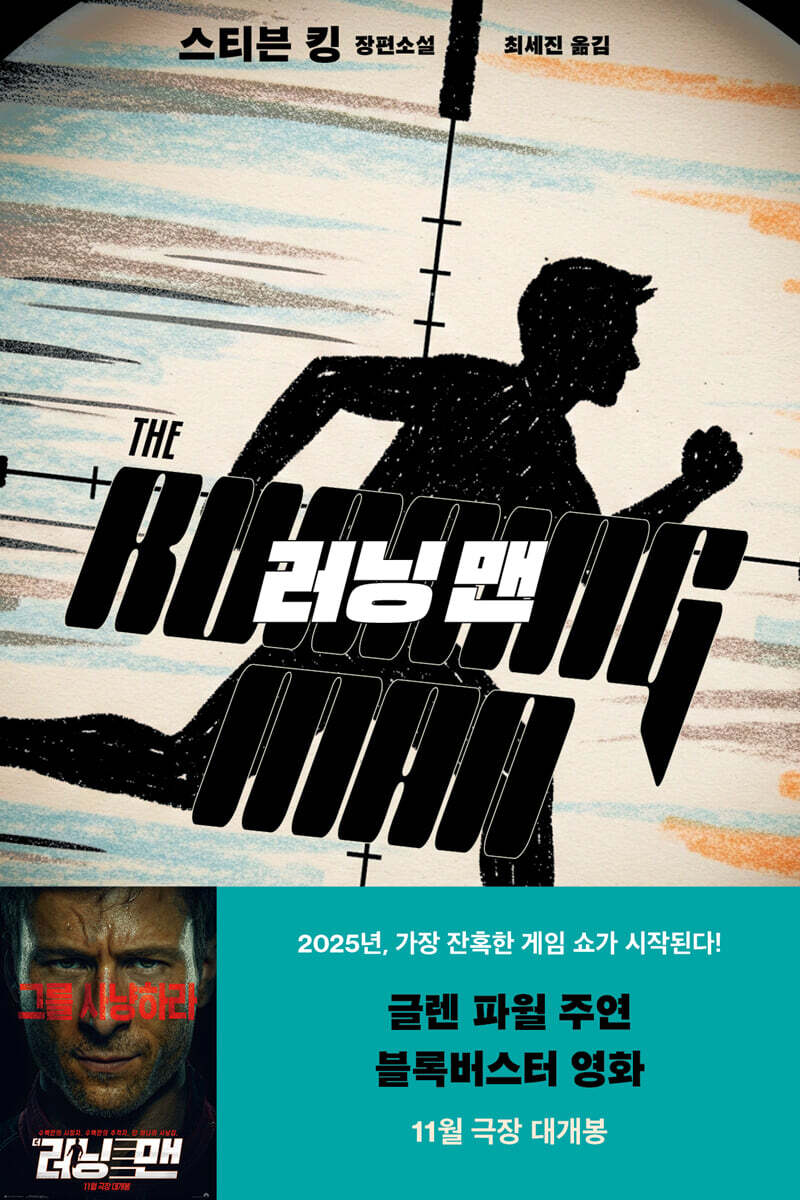 |
Description
Book Introduction
A prophetic book foreseeing a 21st century dominated by the gap between rich and poor and violent media.
The Running Man, a 1982 novel by Stephen King published under another pen name, Richard Bachman, was published by Golden Bough.
Along with Bachman's other masterpiece, The Long Walk, The Running Man is considered to have had a significant influence on the death game genre. It is set in a brutal survival game show that takes place in a totalitarian state in the United States.
Ben Richards, a young man who joins the show to save his family, must survive for 30 days while being tracked, a process that is broadcast nationwide daily in a sensationalized and edited broadcast.
According to Stephen King's writing guide, "On Writing," this work, which was completed in just one week, consists of 101 short chapters and is fast-paced and easy to read, but it also truly demonstrates the master's genius in that it portrays the 21st century, dominated by the gap between the rich and the poor, environmental pollution, and stimulating media, with surprising insight 40 years ago.
"The Running Man" was made into a popular action film starring Arnold Schwarzenegger in 1987, and a remake of the film, "The Running Man," directed by Edgar Wright and starring Glen Powell, is scheduled to be released in November of this year.
The Running Man, a 1982 novel by Stephen King published under another pen name, Richard Bachman, was published by Golden Bough.
Along with Bachman's other masterpiece, The Long Walk, The Running Man is considered to have had a significant influence on the death game genre. It is set in a brutal survival game show that takes place in a totalitarian state in the United States.
Ben Richards, a young man who joins the show to save his family, must survive for 30 days while being tracked, a process that is broadcast nationwide daily in a sensationalized and edited broadcast.
According to Stephen King's writing guide, "On Writing," this work, which was completed in just one week, consists of 101 short chapters and is fast-paced and easy to read, but it also truly demonstrates the master's genius in that it portrays the 21st century, dominated by the gap between the rich and the poor, environmental pollution, and stimulating media, with surprising insight 40 years ago.
"The Running Man" was made into a popular action film starring Arnold Schwarzenegger in 1987, and a remake of the film, "The Running Man," directed by Edgar Wright and starring Glen Powell, is scheduled to be released in November of this year.
- You can preview some of the book's contents.
Preview
Publisher's Review
Every evening, a deadly game unfolds before 500 million viewers!
In 2025, the world economy is in ruins, severe environmental pollution threatens lives, and most of the population is unemployed.
Twenty-eight-year-old Ben Richards was blacklisted from his job as an engine cleaner for the giant manufacturing company General Atomics after a fight with his boss and was unable to find a proper job, barely scraping by doing day labor.
But when he reached a desperate situation where he could not afford to pay for the medicine for his seriously ill daughter Catherine, the only option left was to appear on a game show run by a government-sanctioned network game company.
The network aimed to boost ratings by broadcasting grueling programs, such as one where people with heart or respiratory diseases could earn prize money by running on a treadmill, on the "freebie" televisions that were distributed to every home in the country.
After passing the test, Richards is selected as a contestant on the most popular, profitable, and dangerous show in the area: "Running Man."
Participants who are released first after a grace period are forced to avoid searches by public authorities, network "hunters," and viewers' surveillance, and record their own videos every day and send them to the network.
The final prize is $1 billion for surviving 30 days, with additional bonuses for each hour you remain undetected and each time you kill a pursuer.
Will Ben Richards' escape be successful?
A society where survival becomes entertainment and despair becomes ratings.
A near future where economic hardship and unemployment are severe, drugs and violence run rampant on the streets, environmental pollution causes a soaring death rate, and the gap between rich and poor causes even death to be divided by class.
In the dystopia of "Running Man," the government makes extensive use of the media as a means to effectively control a populace that feels dissatisfied and angry at the unfairness of the world.
The network, a broadcaster in collusion with the government, shows edited images, turns the performers into public enemies, and incites public hatred, encouraging people to revel in the performers' misfortune.
Ironically, the method that protagonist Ben Richards uses to survive while being mercilessly pursued by the authorities and assassins is also media.
Even amidst countless eyes of surveillance, all eyeing the rewards given to informants, there is also support for Richard, who raises the middle finger at the broadcasting company that is engaging in manipulation and distortion.
For those who wanted the 'show' to continue, Richard was a tenacious hero who would not be easily defeated, and for those who felt anger at the totalitarian government, he was a 'trigger' that would trigger an incident.
Stephen King foresaw the harmful effects of sensational media before camcorders became widely available, predicting the rise of reality shows that stimulated public voyeurism and violence.
In today's world, dominated by sensational media, the warning uttered by a master over 40 years ago raises a sharp question in a world that consumes the downfall of others as entertainment.
The wonderful year 2025 was filled with nothing but the stench of decay.
The freeway cable was safely buried beneath the road.
No one would damage a cable unless they were a fool or a revolutionary.
Freebies were the raw material of dreams and a means of livelihood.
Heroin costs $12 a bag, Frisco Push costs $20 a pill, but Freebee gets you high for free.
- From the text
“Don’t be fooled by the flashiness of the word ‘performer.’
“You are not a freebie star, you are just an ordinary worker who gets paid very well for doing dangerous work.” - From the text
“No one talks about that disease.
Boston's pollution index is 20 even on a good day.
Just breathing is like smoking four packs of cigarettes a day.
(…) A $200 nose filter is useless.
All you have to do is place a small piece of cotton soaked in disinfectant between the two membranes.
That's all.
The only usable items are those from General Atomics.
Only rich people can afford it.
They're playing freebies to keep us out of the house.
"They want us to just sit here and breathe and die without causing any problems." - From the text
“Listen carefully.
When the game first started, people said it was the greatest pastime in the world.
Because there was no game like this before.
But it wasn't that original.
Even in Roman times, gladiators did the same thing.
There's another game too.
poker.
(…) “Running Man” is similar to that.
The only difference is that I don't have money to bet, and they have manpower, firepower, and time.
We're playing in their casino with their cards and their chips.
If I get caught, I have to quit the game.
But maybe I manipulated the board a little bit.
(…) A man told me to stick close to people like me.
He probably didn't realize how right he was.
“One of the reasons they treat me so carefully is because there are people like me here.” - From the text
In 2025, the world economy is in ruins, severe environmental pollution threatens lives, and most of the population is unemployed.
Twenty-eight-year-old Ben Richards was blacklisted from his job as an engine cleaner for the giant manufacturing company General Atomics after a fight with his boss and was unable to find a proper job, barely scraping by doing day labor.
But when he reached a desperate situation where he could not afford to pay for the medicine for his seriously ill daughter Catherine, the only option left was to appear on a game show run by a government-sanctioned network game company.
The network aimed to boost ratings by broadcasting grueling programs, such as one where people with heart or respiratory diseases could earn prize money by running on a treadmill, on the "freebie" televisions that were distributed to every home in the country.
After passing the test, Richards is selected as a contestant on the most popular, profitable, and dangerous show in the area: "Running Man."
Participants who are released first after a grace period are forced to avoid searches by public authorities, network "hunters," and viewers' surveillance, and record their own videos every day and send them to the network.
The final prize is $1 billion for surviving 30 days, with additional bonuses for each hour you remain undetected and each time you kill a pursuer.
Will Ben Richards' escape be successful?
A society where survival becomes entertainment and despair becomes ratings.
A near future where economic hardship and unemployment are severe, drugs and violence run rampant on the streets, environmental pollution causes a soaring death rate, and the gap between rich and poor causes even death to be divided by class.
In the dystopia of "Running Man," the government makes extensive use of the media as a means to effectively control a populace that feels dissatisfied and angry at the unfairness of the world.
The network, a broadcaster in collusion with the government, shows edited images, turns the performers into public enemies, and incites public hatred, encouraging people to revel in the performers' misfortune.
Ironically, the method that protagonist Ben Richards uses to survive while being mercilessly pursued by the authorities and assassins is also media.
Even amidst countless eyes of surveillance, all eyeing the rewards given to informants, there is also support for Richard, who raises the middle finger at the broadcasting company that is engaging in manipulation and distortion.
For those who wanted the 'show' to continue, Richard was a tenacious hero who would not be easily defeated, and for those who felt anger at the totalitarian government, he was a 'trigger' that would trigger an incident.
Stephen King foresaw the harmful effects of sensational media before camcorders became widely available, predicting the rise of reality shows that stimulated public voyeurism and violence.
In today's world, dominated by sensational media, the warning uttered by a master over 40 years ago raises a sharp question in a world that consumes the downfall of others as entertainment.
The wonderful year 2025 was filled with nothing but the stench of decay.
The freeway cable was safely buried beneath the road.
No one would damage a cable unless they were a fool or a revolutionary.
Freebies were the raw material of dreams and a means of livelihood.
Heroin costs $12 a bag, Frisco Push costs $20 a pill, but Freebee gets you high for free.
- From the text
“Don’t be fooled by the flashiness of the word ‘performer.’
“You are not a freebie star, you are just an ordinary worker who gets paid very well for doing dangerous work.” - From the text
“No one talks about that disease.
Boston's pollution index is 20 even on a good day.
Just breathing is like smoking four packs of cigarettes a day.
(…) A $200 nose filter is useless.
All you have to do is place a small piece of cotton soaked in disinfectant between the two membranes.
That's all.
The only usable items are those from General Atomics.
Only rich people can afford it.
They're playing freebies to keep us out of the house.
"They want us to just sit here and breathe and die without causing any problems." - From the text
“Listen carefully.
When the game first started, people said it was the greatest pastime in the world.
Because there was no game like this before.
But it wasn't that original.
Even in Roman times, gladiators did the same thing.
There's another game too.
poker.
(…) “Running Man” is similar to that.
The only difference is that I don't have money to bet, and they have manpower, firepower, and time.
We're playing in their casino with their cards and their chips.
If I get caught, I have to quit the game.
But maybe I manipulated the board a little bit.
(…) A man told me to stick close to people like me.
He probably didn't realize how right he was.
“One of the reasons they treat me so carefully is because there are people like me here.” - From the text
GOODS SPECIFICS
- Date of issue: September 12, 2025
- Page count, weight, size: 344 pages | 402g | 140*210*20mm
- ISBN13: 9791170526506
- ISBN10: 1170526500
You may also like
카테고리
korean


korean

![ELLE 엘르 스페셜 에디션 A형 : 12월 [2025]](http://librairie.coreenne.fr/cdn/shop/files/b8e27a3de6c9538896439686c6b0e8fb.jpg?v=1766436872&width=3840)


