

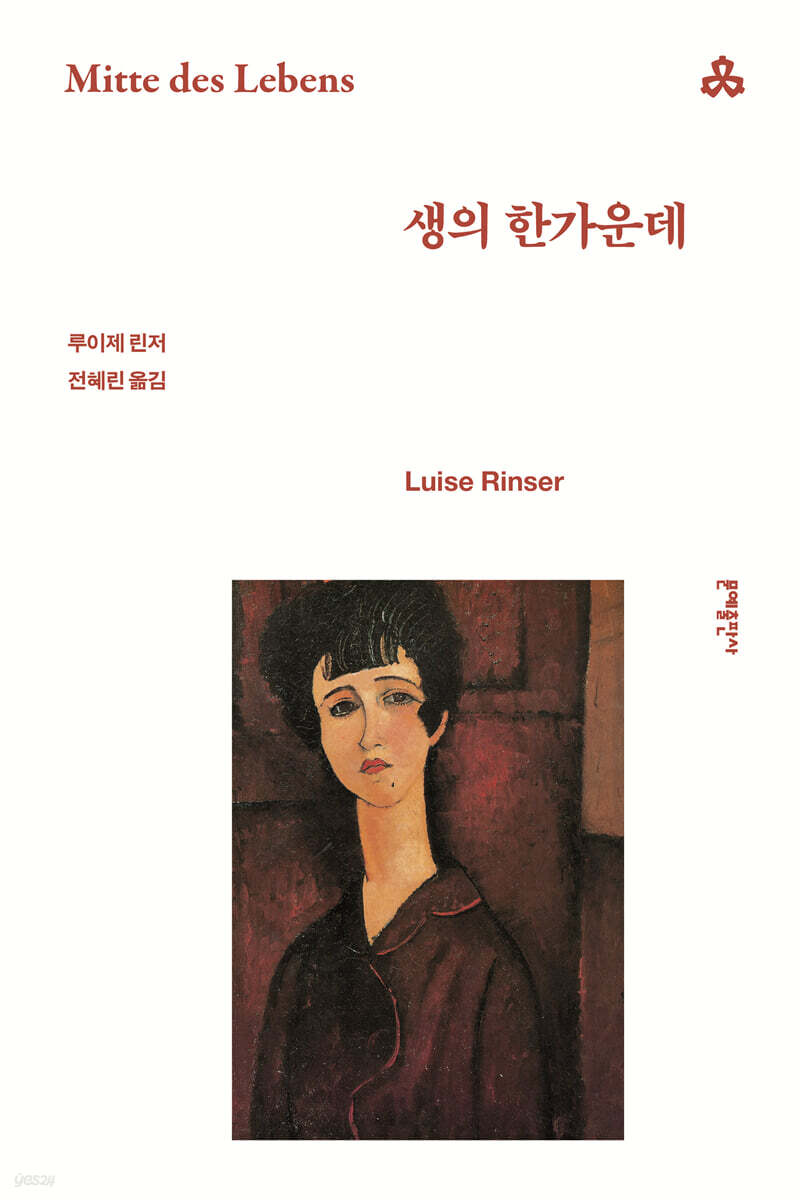
In the middle of life
 |
Description
Book Introduction
Germany's most outstanding prose writer after the war
To Louise Linzer
A masterpiece that brought world-class fame
This is a representative work published in 1950 by Louise Rinser, a writer who is considered one of the two great figures of modern women's literature along with Simone de Beauvoir.
The first Korean translation of this work was done by Jeon Hye-rin, who was highly praised as a “once-in-a-century genius.” It attracted great interest and attention when it was published by Shingumunhwasa in 1961, and was republished by Munye Publishing in 1967, continuing the Jeon Hye-rin translation.
This novel is the story of the unrequited love of Stein, a man twenty years his senior who loves the protagonist Nina Buschmann. It is formally composed of Stein's diary and letters, and brief meetings and conversations between Nina and her older sister Margret over a few days.
Also, the content contains elements of the author's autobiography.
The contrast between the unique characters and their different approaches to life is striking.
This work shows complete positivity and focus on life through Nina, a woman who loved perfectly until every moment of her life and walked her own path with a strong will for freedom, and Stein, who loved even her stubbornness, as well as Nina, who never tolerated deception or compromise.
Nina, a unique and charming character created by Linzer, captivated young people around the world and created the 'Nina Syndrome'.
To Louise Linzer
A masterpiece that brought world-class fame
This is a representative work published in 1950 by Louise Rinser, a writer who is considered one of the two great figures of modern women's literature along with Simone de Beauvoir.
The first Korean translation of this work was done by Jeon Hye-rin, who was highly praised as a “once-in-a-century genius.” It attracted great interest and attention when it was published by Shingumunhwasa in 1961, and was republished by Munye Publishing in 1967, continuing the Jeon Hye-rin translation.
This novel is the story of the unrequited love of Stein, a man twenty years his senior who loves the protagonist Nina Buschmann. It is formally composed of Stein's diary and letters, and brief meetings and conversations between Nina and her older sister Margret over a few days.
Also, the content contains elements of the author's autobiography.
The contrast between the unique characters and their different approaches to life is striking.
This work shows complete positivity and focus on life through Nina, a woman who loved perfectly until every moment of her life and walked her own path with a strong will for freedom, and Stein, who loved even her stubbornness, as well as Nina, who never tolerated deception or compromise.
Nina, a unique and charming character created by Linzer, captivated young people around the world and created the 'Nina Syndrome'.
- You can preview some of the book's contents.
Preview
index
Chapter 1
Chapter 2
Chapter 3
Commentary on the work
Louise Rinser Chronology
Chapter 2
Chapter 3
Commentary on the work
Louise Rinser Chronology
Detailed image

Into the book
I was thrown back into the middle of life.
I was terribly ashamed of myself.
Because I knew that my great opportunity had passed me by and that I had to live like everyone else.
I cried then.
Leaning against the window.
The window was open and it was bright early morning.
--- p.53
I hate people who try to make everything simple when everything is so scary, complicated, and confusing.
--- p.163
I am wandering through life.
Like a gypsy.
Even though I have kids, I don't belong anywhere.
What doesn't belong to me?
--- p.82
Because I've known for a long time that I shouldn't do evil.
It's not because of the criminal law or the Ten Commandments, but because I know that doing evil doesn't add up.
Evil is so unproductive.
--- p.164
My depression hasn't cleared up one bit even after several weeks.
It's exactly the same as what I wrote back then.
I lost Nina forever.
--- pp.176-177
We looked at each other for a moment.
And that moment confirmed for me what I had been feeling for a long time.
In other words, Nina was a human being who could not fool anyone and was full of distrust toward all humans.
Nina didn't see me as an exception.
I had no choice but to be satisfied with that.
--- p.184
I looked at my grandmother for a long time and felt for the first time in my life.
Life is just a terrible thing if we don't save ourselves in our minds.
Because Grandma was sitting here, but it wasn't an exceptional case, and Grandma's downfall wasn't hers alone.
--- p.203
I will never say that again.
A human like me should never have been born.
I take my life from Nina's hands.
--- p.207
I had to surrender my body without weapons to the agony of surrender.
Should I confess to myself that it was not love, but, as Aunt Annette said, 'hope for life,' and that my agony at losing Nina was nothing more than the agony of having a toy taken away?
--- p.291
All that remains is the sadness of giving up.
It becomes the background for a new cheerfulness.
Nina may be a symbol.
It may be a metaphor for everything I want to have and become.
I wish Nina could always be like that!
--- p.291
So you're telling me to stop living? Have I ever lived before? I want to live.
I love everything about life.
But you won't understand my feelings.
Because you have never lived.
You avoided life.
You have never taken a risk.
So I gained nothing and lost nothing.
--- p.367
"Life, life? What the hell does that mean?" I shouted.
Not all life is human.
You are just blindly fascinated by life and stand before it recklessly.
Do you think sleeping in the arms of this man or that man is life?
I was terribly ashamed of myself.
Because I knew that my great opportunity had passed me by and that I had to live like everyone else.
I cried then.
Leaning against the window.
The window was open and it was bright early morning.
--- p.53
I hate people who try to make everything simple when everything is so scary, complicated, and confusing.
--- p.163
I am wandering through life.
Like a gypsy.
Even though I have kids, I don't belong anywhere.
What doesn't belong to me?
--- p.82
Because I've known for a long time that I shouldn't do evil.
It's not because of the criminal law or the Ten Commandments, but because I know that doing evil doesn't add up.
Evil is so unproductive.
--- p.164
My depression hasn't cleared up one bit even after several weeks.
It's exactly the same as what I wrote back then.
I lost Nina forever.
--- pp.176-177
We looked at each other for a moment.
And that moment confirmed for me what I had been feeling for a long time.
In other words, Nina was a human being who could not fool anyone and was full of distrust toward all humans.
Nina didn't see me as an exception.
I had no choice but to be satisfied with that.
--- p.184
I looked at my grandmother for a long time and felt for the first time in my life.
Life is just a terrible thing if we don't save ourselves in our minds.
Because Grandma was sitting here, but it wasn't an exceptional case, and Grandma's downfall wasn't hers alone.
--- p.203
I will never say that again.
A human like me should never have been born.
I take my life from Nina's hands.
--- p.207
I had to surrender my body without weapons to the agony of surrender.
Should I confess to myself that it was not love, but, as Aunt Annette said, 'hope for life,' and that my agony at losing Nina was nothing more than the agony of having a toy taken away?
--- p.291
All that remains is the sadness of giving up.
It becomes the background for a new cheerfulness.
Nina may be a symbol.
It may be a metaphor for everything I want to have and become.
I wish Nina could always be like that!
--- p.291
So you're telling me to stop living? Have I ever lived before? I want to live.
I love everything about life.
But you won't understand my feelings.
Because you have never lived.
You avoided life.
You have never taken a risk.
So I gained nothing and lost nothing.
--- p.367
"Life, life? What the hell does that mean?" I shouted.
Not all life is human.
You are just blindly fascinated by life and stand before it recklessly.
Do you think sleeping in the arms of this man or that man is life?
--- p.367
Publisher's Review
“Everything is so scary and complicated and confusing.
“I hate people who try to make everything simple.”
Luise Rinser's masterpiece, "In the Middle of Life," published in 1950, is called the "Nina novel" along with "Moral Adventures" (1957), published later.
This novel, which depicts the protagonist Nina Buschmann's journey of self-discovery as a woman in German society after World War II, contains autobiographical elements of the author.
Nina is an intelligent and independent woman who challenges society's expectations of traditional women and seeks her own path in life.
Through her relationships with several men, she delves into the meaning of love, desire, freedom, and responsibility, but she remains self-centered and reliant on others.
The novel centers on the unrequited love story of Stein, a man twenty years older than Nina who loves her.
The author's understanding and deep insight into life are revealed through Stein's diary and letters, brief encounters and conversations between Nina and her sister Margret over a few days, and the contrast between the characters' different approaches to life.
Through Nina, a woman who loved perfectly until every moment of her life and walked her own path with a strong will for freedom, and through Stein, who loved even her stubbornness, Nina, who never tolerated deception or compromise, shows complete positivity and focus on life.
Nina Buschmann, a unique and charming character created by Linzer, captivated young people around the world and created the so-called 'Nina Syndrome'.
I threw it away because I truly loved it
The adventure and freedom of those who can be liberated,
A life of passion that never compromises
The masterpiece "In the Middle of Life," which sold over a million copies in Germany and was translated into over 20 countries, attracted great interest and attention when it was published in Korea in 1961 through the translation by Jeon Hye-rin, who was highly praised as a "once-in-a-century genius."
In 1967, it was republished by Munye Publishing Company, and in a new edition as part of the Munye World Literature Series, “In the Middle of Life” was carefully reviewed and meticulously revised to ensure accuracy and readability while respecting the translator’s intentions and writing style.
In the 'Work Commentary', the translator focuses on the novel's unique and three-dimensional protagonist, 'Nina', as well as various other characters.
Nina is a woman, but she is a novelist with a masculine reputation and a figure richly adorned with feminine charm.
The translator commented that through Nina, Linzer was testing how well a woman belonging to the intellectual class of the time she lived in could maintain her consciousness amidst the conflicts and strife surrounding her.
As the translator points out, this author's intention is clearly revealed in Nina's sincerity toward her work even in the midst of pain and despair, and in her attitude of self-imposed suffering due to her extreme fear of compromise or self-deception in interpersonal relationships.
Nina's sincerity is also revealed in her love life, where she only allows fleeting 'encounters' with numerous men.
Translator Jeon Hye-rin analyzed in her essay “And Then She Said Nothing” that “for Nina, who devotes all her passion and intellect to the task of creating another typical and transcendent self on a white piece of paper, men are like shadows that pass by.”
Meanwhile, Stein, a contrasting figure to Nina, represents loyalty.
Stein repeatedly pursues and sustains the fleeting fascination of soul-to-soul collision, thereby realizing lifelong fidelity.
The counterpart to Stein, the 'incarnation of complete self-consciousness', is Nina's first husband, Hal.
He is a possessive and sensual young man with a healthy body and mind, blond hair, and no complexity or depth of soul, the 'incarnation of immediate existence' for whom love is impossible but marriage is always possible.
In addition, the novel presents a holistic view of Rinser's beliefs about God, death, humanity, the world, love, marriage, art, and above all, life, through the conflicts between various characters and the differences of opinion between Nina and her older sister Margret.
Germany's greatest prose writer of the post-war period
To Louise Linzer
A masterpiece that brought world-class fame
Gabriel Marcel, the philosopher and critic who wrote Existence and Objectivity (1925), which is recognized as the first existentialist text of the 20th century, praised Luise Rinser as “the most outstanding modern writer.”
Luise Rinser, a writer who is considered one of the two great figures of modern women's literature along with Simone de Beauvoir, majored in education and psychology at the University of Munich and worked as an elementary school teacher when she was asked to join the Nazis, but she refused and quit her job.
After embarking on the path of becoming a writer, she published her first work and debut novel, “The Glass Ring” (or “The Disruption”), in 1940.
Hermann Hesse, who was bedridden at the time, read this work and personally sent it a letter of praise, which was so enthusiastic that its publication was banned because it opposed the Hitler regime, and the author was arrested and imprisoned, but was released the following year after the war.
His experiences at this time and his sharp criticism of the Nazis were reflected in his later works, such as the novel "Prisoner's Diary" and the short story "Jan Lobel from Warsaw."
German playwright Karl Zuckmayr called Jan Lovell from Warsaw “the finest prose in postwar Germany.”
"In the Middle of Life" brought Linzer worldwide fame and great success, and was particularly praised for its formal novelty.
In her work, Linzer creates a new form by mixing various forms such as dialogue, memoirs, diaries, letters, recollections, and the protagonist Nina's creations, and attempts a conscious yet technical stylistic composition.
Through the protagonist Nina, a reflection of the author herself, Linzer successfully portrays a typical example of a woman pursuing a true life even in the bleak and desperate circumstances of post-war Germany.
Through this work, Rinser breathed new life into the German literary world, which had been stagnant since World War II, and this work, which depicts a fascinating human being who constantly pursues and searches for the meaning of life, is still loved by young people around the world.
“I hate people who try to make everything simple.”
Luise Rinser's masterpiece, "In the Middle of Life," published in 1950, is called the "Nina novel" along with "Moral Adventures" (1957), published later.
This novel, which depicts the protagonist Nina Buschmann's journey of self-discovery as a woman in German society after World War II, contains autobiographical elements of the author.
Nina is an intelligent and independent woman who challenges society's expectations of traditional women and seeks her own path in life.
Through her relationships with several men, she delves into the meaning of love, desire, freedom, and responsibility, but she remains self-centered and reliant on others.
The novel centers on the unrequited love story of Stein, a man twenty years older than Nina who loves her.
The author's understanding and deep insight into life are revealed through Stein's diary and letters, brief encounters and conversations between Nina and her sister Margret over a few days, and the contrast between the characters' different approaches to life.
Through Nina, a woman who loved perfectly until every moment of her life and walked her own path with a strong will for freedom, and through Stein, who loved even her stubbornness, Nina, who never tolerated deception or compromise, shows complete positivity and focus on life.
Nina Buschmann, a unique and charming character created by Linzer, captivated young people around the world and created the so-called 'Nina Syndrome'.
I threw it away because I truly loved it
The adventure and freedom of those who can be liberated,
A life of passion that never compromises
The masterpiece "In the Middle of Life," which sold over a million copies in Germany and was translated into over 20 countries, attracted great interest and attention when it was published in Korea in 1961 through the translation by Jeon Hye-rin, who was highly praised as a "once-in-a-century genius."
In 1967, it was republished by Munye Publishing Company, and in a new edition as part of the Munye World Literature Series, “In the Middle of Life” was carefully reviewed and meticulously revised to ensure accuracy and readability while respecting the translator’s intentions and writing style.
In the 'Work Commentary', the translator focuses on the novel's unique and three-dimensional protagonist, 'Nina', as well as various other characters.
Nina is a woman, but she is a novelist with a masculine reputation and a figure richly adorned with feminine charm.
The translator commented that through Nina, Linzer was testing how well a woman belonging to the intellectual class of the time she lived in could maintain her consciousness amidst the conflicts and strife surrounding her.
As the translator points out, this author's intention is clearly revealed in Nina's sincerity toward her work even in the midst of pain and despair, and in her attitude of self-imposed suffering due to her extreme fear of compromise or self-deception in interpersonal relationships.
Nina's sincerity is also revealed in her love life, where she only allows fleeting 'encounters' with numerous men.
Translator Jeon Hye-rin analyzed in her essay “And Then She Said Nothing” that “for Nina, who devotes all her passion and intellect to the task of creating another typical and transcendent self on a white piece of paper, men are like shadows that pass by.”
Meanwhile, Stein, a contrasting figure to Nina, represents loyalty.
Stein repeatedly pursues and sustains the fleeting fascination of soul-to-soul collision, thereby realizing lifelong fidelity.
The counterpart to Stein, the 'incarnation of complete self-consciousness', is Nina's first husband, Hal.
He is a possessive and sensual young man with a healthy body and mind, blond hair, and no complexity or depth of soul, the 'incarnation of immediate existence' for whom love is impossible but marriage is always possible.
In addition, the novel presents a holistic view of Rinser's beliefs about God, death, humanity, the world, love, marriage, art, and above all, life, through the conflicts between various characters and the differences of opinion between Nina and her older sister Margret.
Germany's greatest prose writer of the post-war period
To Louise Linzer
A masterpiece that brought world-class fame
Gabriel Marcel, the philosopher and critic who wrote Existence and Objectivity (1925), which is recognized as the first existentialist text of the 20th century, praised Luise Rinser as “the most outstanding modern writer.”
Luise Rinser, a writer who is considered one of the two great figures of modern women's literature along with Simone de Beauvoir, majored in education and psychology at the University of Munich and worked as an elementary school teacher when she was asked to join the Nazis, but she refused and quit her job.
After embarking on the path of becoming a writer, she published her first work and debut novel, “The Glass Ring” (or “The Disruption”), in 1940.
Hermann Hesse, who was bedridden at the time, read this work and personally sent it a letter of praise, which was so enthusiastic that its publication was banned because it opposed the Hitler regime, and the author was arrested and imprisoned, but was released the following year after the war.
His experiences at this time and his sharp criticism of the Nazis were reflected in his later works, such as the novel "Prisoner's Diary" and the short story "Jan Lobel from Warsaw."
German playwright Karl Zuckmayr called Jan Lovell from Warsaw “the finest prose in postwar Germany.”
"In the Middle of Life" brought Linzer worldwide fame and great success, and was particularly praised for its formal novelty.
In her work, Linzer creates a new form by mixing various forms such as dialogue, memoirs, diaries, letters, recollections, and the protagonist Nina's creations, and attempts a conscious yet technical stylistic composition.
Through the protagonist Nina, a reflection of the author herself, Linzer successfully portrays a typical example of a woman pursuing a true life even in the bleak and desperate circumstances of post-war Germany.
Through this work, Rinser breathed new life into the German literary world, which had been stagnant since World War II, and this work, which depicts a fascinating human being who constantly pursues and searches for the meaning of life, is still loved by young people around the world.
GOODS SPECIFICS
- Date of issue: May 23, 2025
- Page count, weight, size: 408 pages | 140*210*30mm
- ISBN13: 9788931024999
- ISBN10: 8931024991
You may also like
카테고리
korean


korean

![ELLE 엘르 스페셜 에디션 A형 : 12월 [2025]](http://librairie.coreenne.fr/cdn/shop/files/b8e27a3de6c9538896439686c6b0e8fb.jpg?v=1766436872&width=3840)


