

My Woman's Fruit
 |
Description
Book Introduction
2024 Nobel Prize in Literature winner Han Kang
To live as a human being in this world until the end,
About that miraculous event
A classic of Han River literature reborn
On the road, quietly tie a knot
A deep line drawn by connecting three dots
Read the Han River of yesterday that made the Han River of today.
This is a revised edition of all the short story collections (three volumes in total) published by Han Kang to date, who began her literary career in 1993 when she published the poem “Winter of Seoul” and four other pieces in the winter edition of the quarterly Literature and Society and the following year when her short story “Red Anchor” was selected for the Seoul Shinmun New Year’s literary contest.
Han Kang, winner of the Korean Novel Literature Award (1999), Today's Young Artist Award (2000), Yi Sang Literary Award (2005), Dongni Literature Award (2010), Manhae Literature Award (2014), Hwang Sun-won Literature Award (2015), International Booker Prize (2016), Malaparte Literature Award (2017), Kim Yu-jeong Literature Award (2018), San Clemente Literature Award (2019), Daesan Literature Award (2022), Médicis Prize for Foreign Literature (2023), Émile Guimet Prize for Asian Literature (2024), and Nobel Prize in Literature (2024), resonates with our times as she examines the loneliness and pain at the root of life through her solid and delicate prose.
Han Kang, Korea's first Nobel Prize winner in Literature, has published three short story collections to date.
The three books, which contain works written over a period of 17 years, from 1995 to 2012, were reissued in 2018.
It could be said that it was a task of carefully connecting three books, each with different colors and formats, and placing them on a single line.
Han Kang's first collection of short stories, "Love in Yeosu," published in 1995, is a collection of short stories written in a flurry over the course of a year by the author when she was twenty-three or twenty-four.
In her second collection of short stories, 『The Fruit of My Woman』, published after five years, Han Kang seems to have encountered the simple truth that “the process of change, like flowing water, is me,” but soon asks again.
“Who was the person who wrote each of these novels?” (Author’s Note) And 12 years later, he published his third collection of short stories, “Yellow-Patterned Eternity.”
In the meantime, the novels 『Your Cold Hands』 『The Vegetarian』 『The Wind Blows, Go Away』 and 『Greek Lessons』 were written.
The short story has something like a match spark.
First, pull the fire and watch with all your might until it goes out.
Those moments pushed me forward with all my might.
―'Author's Note' (2012), 『Yellow-Striped Eternity』
To live as a human being in this world until the end,
About that miraculous event
A classic of Han River literature reborn
On the road, quietly tie a knot
A deep line drawn by connecting three dots
Read the Han River of yesterday that made the Han River of today.
This is a revised edition of all the short story collections (three volumes in total) published by Han Kang to date, who began her literary career in 1993 when she published the poem “Winter of Seoul” and four other pieces in the winter edition of the quarterly Literature and Society and the following year when her short story “Red Anchor” was selected for the Seoul Shinmun New Year’s literary contest.
Han Kang, winner of the Korean Novel Literature Award (1999), Today's Young Artist Award (2000), Yi Sang Literary Award (2005), Dongni Literature Award (2010), Manhae Literature Award (2014), Hwang Sun-won Literature Award (2015), International Booker Prize (2016), Malaparte Literature Award (2017), Kim Yu-jeong Literature Award (2018), San Clemente Literature Award (2019), Daesan Literature Award (2022), Médicis Prize for Foreign Literature (2023), Émile Guimet Prize for Asian Literature (2024), and Nobel Prize in Literature (2024), resonates with our times as she examines the loneliness and pain at the root of life through her solid and delicate prose.
Han Kang, Korea's first Nobel Prize winner in Literature, has published three short story collections to date.
The three books, which contain works written over a period of 17 years, from 1995 to 2012, were reissued in 2018.
It could be said that it was a task of carefully connecting three books, each with different colors and formats, and placing them on a single line.
Han Kang's first collection of short stories, "Love in Yeosu," published in 1995, is a collection of short stories written in a flurry over the course of a year by the author when she was twenty-three or twenty-four.
In her second collection of short stories, 『The Fruit of My Woman』, published after five years, Han Kang seems to have encountered the simple truth that “the process of change, like flowing water, is me,” but soon asks again.
“Who was the person who wrote each of these novels?” (Author’s Note) And 12 years later, he published his third collection of short stories, “Yellow-Patterned Eternity.”
In the meantime, the novels 『Your Cold Hands』 『The Vegetarian』 『The Wind Blows, Go Away』 and 『Greek Lessons』 were written.
The short story has something like a match spark.
First, pull the fire and watch with all your might until it goes out.
Those moments pushed me forward with all my might.
―'Author's Note' (2012), 『Yellow-Striped Eternity』
- You can preview some of the book's contents.
Preview
index
My Woman's Fruit
What do dogs feel like at sunset?
Baby Buddha
One day he
Among the red flowers
Nine Stories
white flowers
River flowing through the railroad
Commentary | The Dance of Plants Towards the Light_Kang Ji-hee
Author's Note
What do dogs feel like at sunset?
Baby Buddha
One day he
Among the red flowers
Nine Stories
white flowers
River flowing through the railroad
Commentary | The Dance of Plants Towards the Light_Kang Ji-hee
Author's Note
Into the book
I ran to the sink as if possessed.
I filled a plastic tub with water to the brim.
I returned to the veranda, pouring the water onto the living room floor, sloshing around in time with my quick steps.
The moment he poured it on his wife's chest, her body came to life, rippling like the leaves of a giant plant.
He drew water again and poured it over his wife's head.
My wife's hair stood up as if she was dancing.
I shook my head as I watched my wife's gleaming green body blossom refreshingly in my baptism.
My wife has never been so beautiful.
--- p.30 From “The Fruit of My Woman”
… … It is very simple to make people cold and ruthless.
Do you think it will take decades? At least five or six years? No, it won't.
In two or three years, or as fast as six months… … Depending on the person, it can be over in two or three months if done intensively.
What I do is, I keep him busy.
It makes you so tired that you want to fall into a decades-long sleep right away, but it doesn't let you rest when you want to.
Even when you do rest, it's so little that it's painful, and you're constantly humiliated and made to hate yourself during your waking hours.
It's a film about a city that creates misery for millions, a city that spits out millions of tired people.
I'll title it 'Winter in Seoul'.
A city filled with nothing but winter... This is a film about the city I risked my life to love.
I filled a plastic tub with water to the brim.
I returned to the veranda, pouring the water onto the living room floor, sloshing around in time with my quick steps.
The moment he poured it on his wife's chest, her body came to life, rippling like the leaves of a giant plant.
He drew water again and poured it over his wife's head.
My wife's hair stood up as if she was dancing.
I shook my head as I watched my wife's gleaming green body blossom refreshingly in my baptism.
My wife has never been so beautiful.
--- p.30 From “The Fruit of My Woman”
… … It is very simple to make people cold and ruthless.
Do you think it will take decades? At least five or six years? No, it won't.
In two or three years, or as fast as six months… … Depending on the person, it can be over in two or three months if done intensively.
What I do is, I keep him busy.
It makes you so tired that you want to fall into a decades-long sleep right away, but it doesn't let you rest when you want to.
Even when you do rest, it's so little that it's painful, and you're constantly humiliated and made to hate yourself during your waking hours.
It's a film about a city that creates misery for millions, a city that spits out millions of tired people.
I'll title it 'Winter in Seoul'.
A city filled with nothing but winter... This is a film about the city I risked my life to love.
--- pp.361~362 From “The River Flowing Through the Railroad”
Publisher's Review
You have to look back to find the trajectory.
Over the course of the three volumes of her short stories, there are some things that have changed and some that have not changed in Han Kang's short stories.
In 『Love of Yeosu』, the lonely and isolated beings who desperately express their longing for humanity and the world, and who leave, abandon, wander, and fall, end up falling out of sync and getting hurt as they clumsily try to accept the world and each other that they so desperately longed for in 『The Fruit of My Woman』.
And in 『Yellow Patterned Eternity』, the will to regenerate and the life force burn even stronger in despair.
The dignified being, still in pain, finally tries to embrace the other.
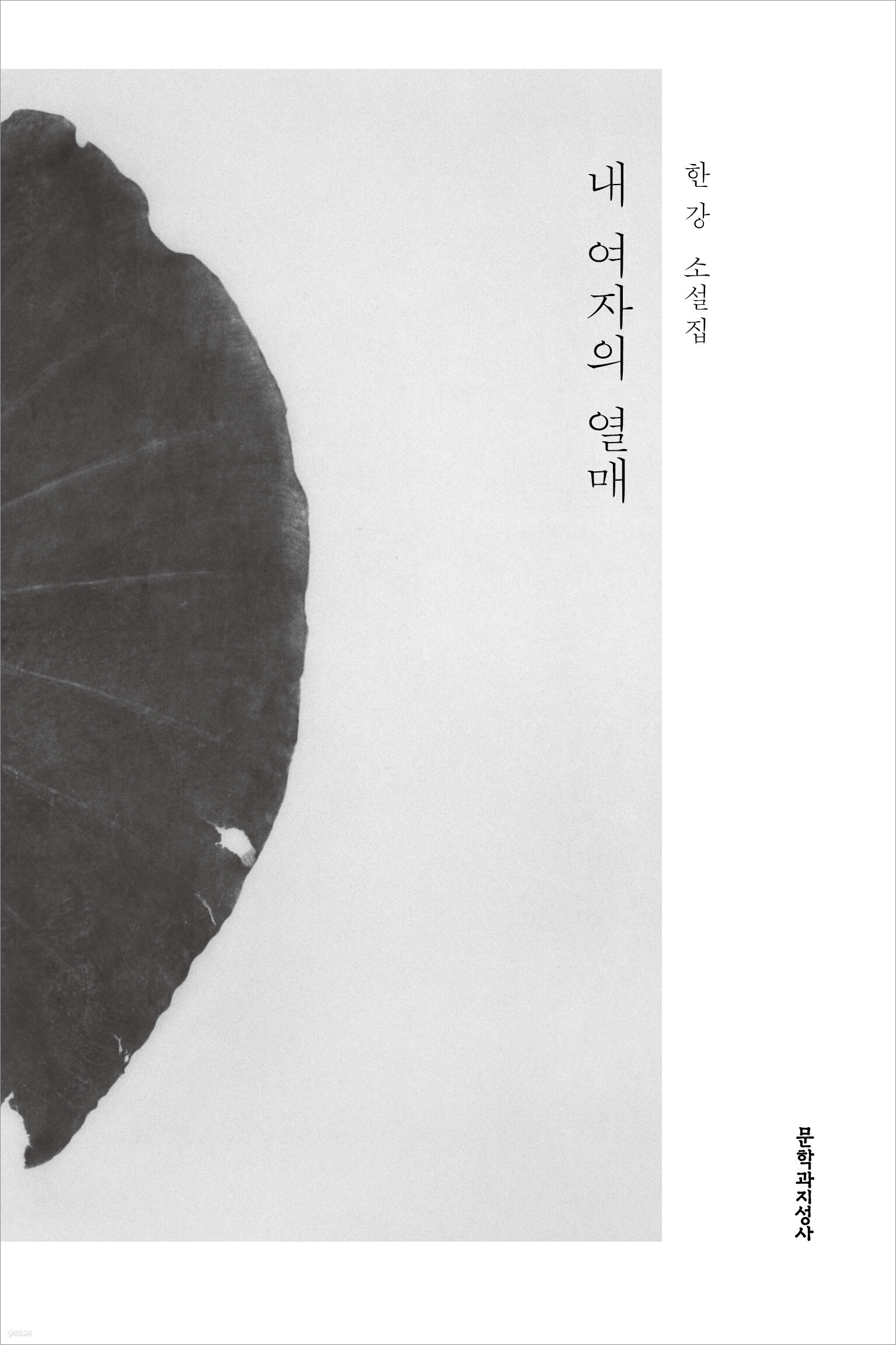
The place we must eventually return to, the leaves pushing up their veins, the flowers blooming during the recovery period, the natural changes and flow that we tried to capture during the 'connecting the dots' work are in harmony with the work of photographer Lee Jeong-jin used on the cover.
On the other hand, isn't the Han River's fierce question unchanging?
He never lets go of the questions, “I want to live, I must live, how should I live?” and asks about human existence, life and death, and this world throughout his twenty-one novels, but inevitably he cannot reach an answer.
But the question itself, like a faint flame, and the heat of loneliness and delicate sadness that arise from the question, become the force that draws them in the work and keeps us, the ones we love, alive.
Because it has changed but not changed, I have carefully rearranged the arrangement of the novels and touched up some expressions, but left what needed to be left as is.
In response to the author's own question in "The Fruit of My Woman," which previously asked "who," we will now look at the author's newly written words in "Yellow-Patterned Eternity."
I encourage you to retrace that trajectory together.
Someone has been writing alone for over twenty years.
The Han River is still walking.
I know.
The twelve years I spent writing these novels can no longer be returned, nor can I ever meet the vivid self that wrote all these sentences again.
I don't think that fact should be felt as a loss.
This should never be a goodbye, because I am someone who wants to live and keep writing.
―Author's Note (2018), 『Yellow-Striped Eternity』
To a place that is extremely simple, clean, and intuitive
A refreshing sense of life that suddenly comes to you
The Fruit of My Woman
This is the second collection of short stories published five years after the first collection.
Eight short stories, including “The Fruit of My Woman,” which became the seed of the “Vegetarian” series, are presented anew with a changed layout and refined expressions and sentences.
In "The Fruit of My Woman," humans are fragile beings, as easily destroyed as small magpies, but they also fight for life, trying to breathe life into their fragmented and torn lives and be reborn.
Literary critic Kang Ji-hee, who has taken on the new commentary, focuses on the female characters in Han Kang's novels.
“They neither give up nor fight fiercely, but sit quietly, yet they are filled with a desire stronger and more vibrant than anyone else.”
In the title piece, "The Fruit of My Woman," the wife's plans for freedom are halted when she puts her savings into a deposit.
From the beginning, the husband treats his wife's dream of going to "the end of the world," "the farthest place," and "the other side of the world, slowly" as an unrealistic and romantic fantasy (p.
19).
Marriage is to her husband “like the hot water of a bathtub, with everything just warmed up” (p.
35) It was warm, but the wife gradually lost her voice and yearned for sunlight, and blue bruises spread all over her skin.
The day her husband returns from his business trip, his wife has become a plant.
The wife who has turned into a plant becomes more vivid and full of strong energy.
It has become a being that can no longer be hurt or destroyed by anything.
The 'I' of "Baby Buddha" who is tired of superficial married life, the woman who has to endure a listless time in "The River Flowing Through the Railroad," the child in "What Do Dogs Feel Like at Sunset" who wanders with his father who has fallen into madness after his mother leaves, the characters in the novel quietly and fiercely reject the difficult world that weighs them down, and dream of a leap into a clear and bright world through internal struggle.
Author's Note
These are short stories written at fairly long intervals, over a period of seven years after publishing my first collection of creative works, and during that time, I also wrote my first full-length novel for three years.
They say that once you tie up your first collection of short stories, it becomes a knot and changes the next collection.
Rereading these novels, I realized what that meant.
In this book, I am moving forward.
He slowly twists and turns, advancing at a snail's pace, at the maximum speed and strength he can muster.
I changed the arrangement of the novels and revised some expressions.
I bow my head in gratitude to all who helped me place this revised edition of the book alongside my first and third collections of short stories.
I would also like to thank author Lee Jeong-jin for allowing me to use his photo on the cover.
Fall 2018, in Seoul
Han River
Over the course of the three volumes of her short stories, there are some things that have changed and some that have not changed in Han Kang's short stories.
In 『Love of Yeosu』, the lonely and isolated beings who desperately express their longing for humanity and the world, and who leave, abandon, wander, and fall, end up falling out of sync and getting hurt as they clumsily try to accept the world and each other that they so desperately longed for in 『The Fruit of My Woman』.
And in 『Yellow Patterned Eternity』, the will to regenerate and the life force burn even stronger in despair.
The dignified being, still in pain, finally tries to embrace the other.
The place we must eventually return to, the leaves pushing up their veins, the flowers blooming during the recovery period, the natural changes and flow that we tried to capture during the 'connecting the dots' work are in harmony with the work of photographer Lee Jeong-jin used on the cover.
On the other hand, isn't the Han River's fierce question unchanging?
He never lets go of the questions, “I want to live, I must live, how should I live?” and asks about human existence, life and death, and this world throughout his twenty-one novels, but inevitably he cannot reach an answer.
But the question itself, like a faint flame, and the heat of loneliness and delicate sadness that arise from the question, become the force that draws them in the work and keeps us, the ones we love, alive.
Because it has changed but not changed, I have carefully rearranged the arrangement of the novels and touched up some expressions, but left what needed to be left as is.
In response to the author's own question in "The Fruit of My Woman," which previously asked "who," we will now look at the author's newly written words in "Yellow-Patterned Eternity."
I encourage you to retrace that trajectory together.
Someone has been writing alone for over twenty years.
The Han River is still walking.
I know.
The twelve years I spent writing these novels can no longer be returned, nor can I ever meet the vivid self that wrote all these sentences again.
I don't think that fact should be felt as a loss.
This should never be a goodbye, because I am someone who wants to live and keep writing.
―Author's Note (2018), 『Yellow-Striped Eternity』
To a place that is extremely simple, clean, and intuitive
A refreshing sense of life that suddenly comes to you
The Fruit of My Woman
This is the second collection of short stories published five years after the first collection.
Eight short stories, including “The Fruit of My Woman,” which became the seed of the “Vegetarian” series, are presented anew with a changed layout and refined expressions and sentences.
In "The Fruit of My Woman," humans are fragile beings, as easily destroyed as small magpies, but they also fight for life, trying to breathe life into their fragmented and torn lives and be reborn.
Literary critic Kang Ji-hee, who has taken on the new commentary, focuses on the female characters in Han Kang's novels.
“They neither give up nor fight fiercely, but sit quietly, yet they are filled with a desire stronger and more vibrant than anyone else.”
In the title piece, "The Fruit of My Woman," the wife's plans for freedom are halted when she puts her savings into a deposit.
From the beginning, the husband treats his wife's dream of going to "the end of the world," "the farthest place," and "the other side of the world, slowly" as an unrealistic and romantic fantasy (p.
19).
Marriage is to her husband “like the hot water of a bathtub, with everything just warmed up” (p.
35) It was warm, but the wife gradually lost her voice and yearned for sunlight, and blue bruises spread all over her skin.
The day her husband returns from his business trip, his wife has become a plant.
The wife who has turned into a plant becomes more vivid and full of strong energy.
It has become a being that can no longer be hurt or destroyed by anything.
The 'I' of "Baby Buddha" who is tired of superficial married life, the woman who has to endure a listless time in "The River Flowing Through the Railroad," the child in "What Do Dogs Feel Like at Sunset" who wanders with his father who has fallen into madness after his mother leaves, the characters in the novel quietly and fiercely reject the difficult world that weighs them down, and dream of a leap into a clear and bright world through internal struggle.
Author's Note
These are short stories written at fairly long intervals, over a period of seven years after publishing my first collection of creative works, and during that time, I also wrote my first full-length novel for three years.
They say that once you tie up your first collection of short stories, it becomes a knot and changes the next collection.
Rereading these novels, I realized what that meant.
In this book, I am moving forward.
He slowly twists and turns, advancing at a snail's pace, at the maximum speed and strength he can muster.
I changed the arrangement of the novels and revised some expressions.
I bow my head in gratitude to all who helped me place this revised edition of the book alongside my first and third collections of short stories.
I would also like to thank author Lee Jeong-jin for allowing me to use his photo on the cover.
Fall 2018, in Seoul
Han River
GOODS SPECIFICS
- Publication date: November 9, 2018
- Page count, weight, size: 408 pages | 466g | 130*195*30mm
- ISBN13: 9788932034829
- ISBN10: 8932034826
You may also like
카테고리
korean


korean

![ELLE 엘르 스페셜 에디션 A형 : 12월 [2025]](http://librairie.coreenne.fr/cdn/shop/files/b8e27a3de6c9538896439686c6b0e8fb.jpg?v=1766436872&width=3840)


